
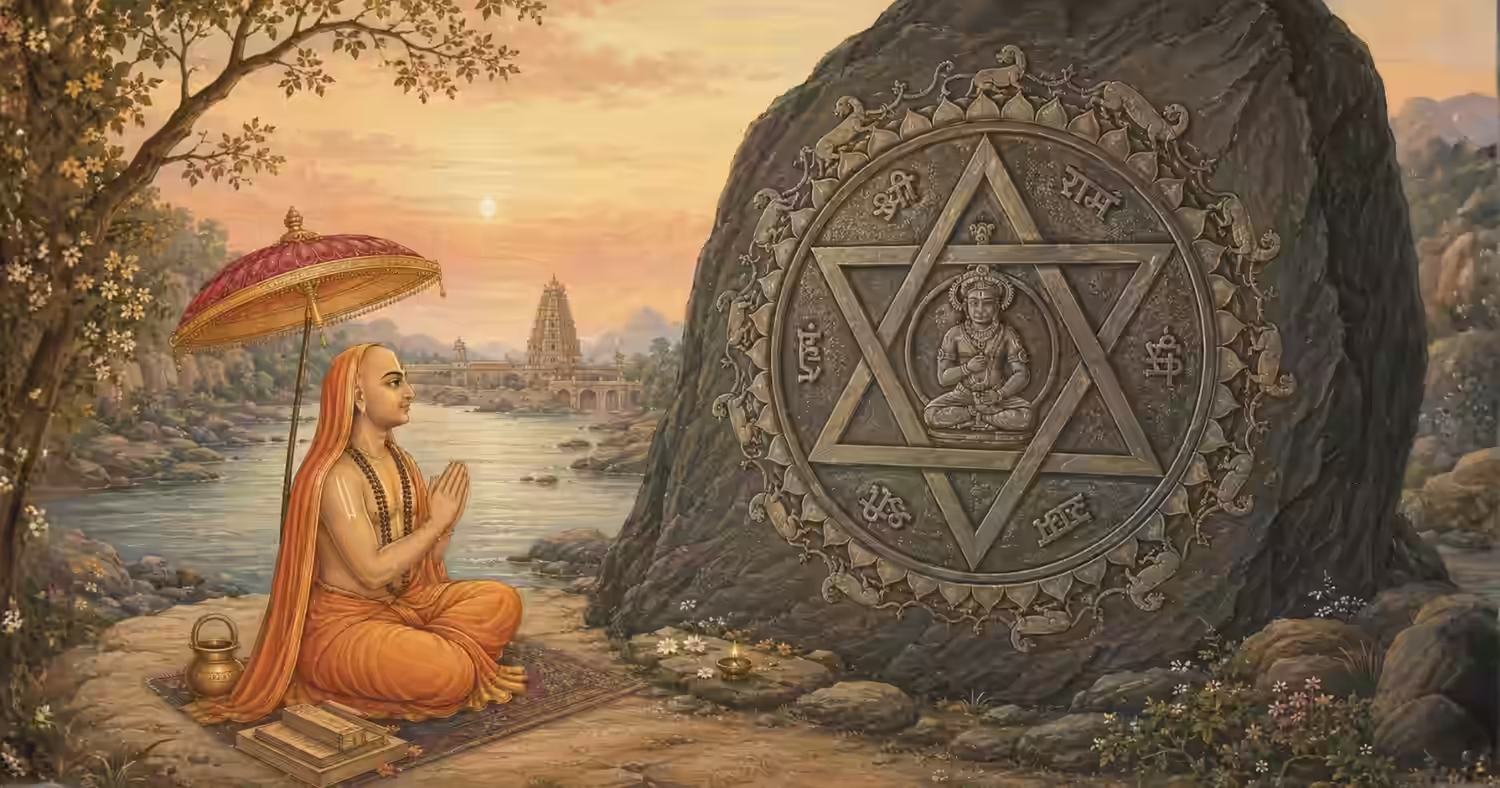
May the powerful Grace of the Yantrodharaka Sri Hanuman Yantra and Stotram be with every reader who reads this blessed post. The Yantrodharaka Yantra comes from the lineage of Sri Madhwa, being one of the rarest and most potent Yantras of Sri Hanuman ji Maharaj. The Yantrodharaka Stotram is sung in front of this Yantra.
The story of its origin is awe inspiring and conveys a deep message for seekers, highlighting the role of a Guru in revealing Bhagawan.
This Yantra is considered ‘Swayambhu’ as manifested after the Darshan of Sri Hanuman Ji Maharaj. Moreover, it houses the power of Acharyas and Gurus who are devoted to Sri Hanuman ji Maharaj.
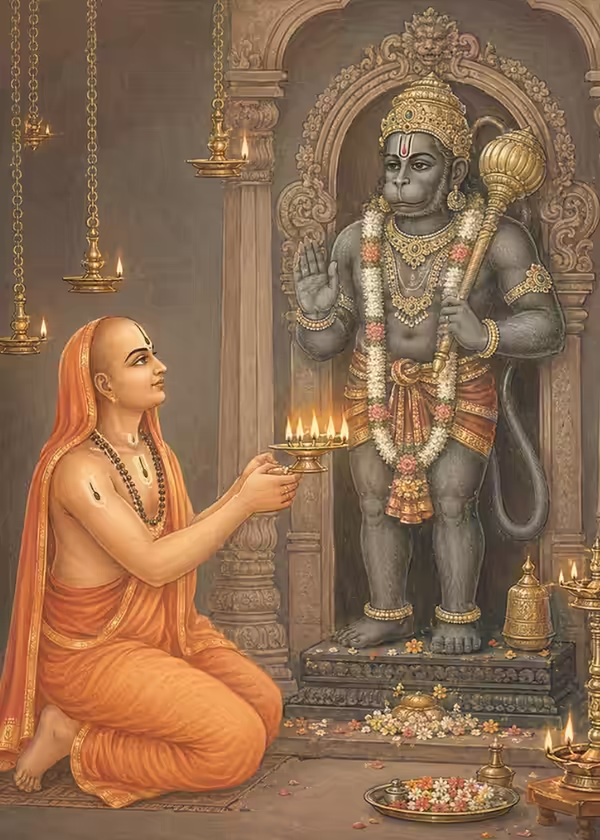
Therefore, it is always advised to receive the Yantra from a Guru, Sampradaya or Sadhaka who is devoted to Sri Hanuman ji Maharaj to unlock its full potential. Only then it holds the key to Bhakti that removes Ashraddha from the heart.
Gradually, all kinds of material indulgence, inner enemies and life issues resolve through Grace.
Guruji regards this Yantra as the one that establishes Sri Hanumanji Maharaj as the Supreme Yantra Devata. At YantraChants.com Sri Hanumanji Maharaj is celebrated.
Above all we celebrate the science of Yantras where the deity and yantra are considered non different. This is Guruji’s firm conviction.
Story Behind the Origin of the Yantrodharaka Yantra
Sri Vyasathirtha was the pontiff/Mahant of Sri Madhwa Matha. He was the chief saint advisor of Sri Krishnadevaraya- the famous ruler of Hampi Vijayanagara.
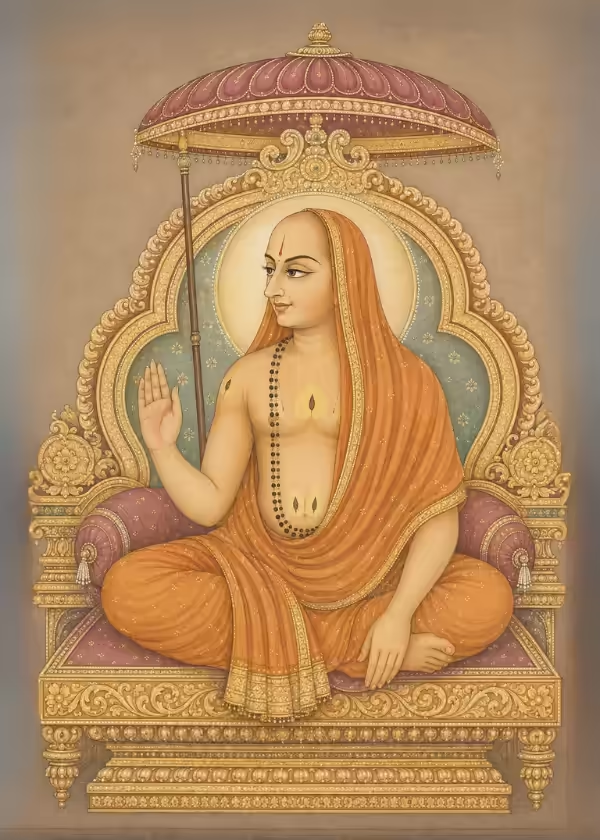
Sri Rama is the chief deity of the Sri Madhwa Matha and therefore initiated saints of the great Dwaita movement consider themselves as the servants of Sri Hanumanji Maharaj. Sri Madhwa himself is considered to be a partial incarnation of Sri Hanuman.
Sri Vyasatirtha regularly meditated on the banks of the river Tugabhadra. One day as he meditated he had a vivid inner revelation (Manasa Darshana) of Lord Hanuman.
Strangely the visualization occurred only at a particular place near the river, where a big rock stood on one of its banks. He tried recollecting the Darshan from another spot but in vain. This was very strange.
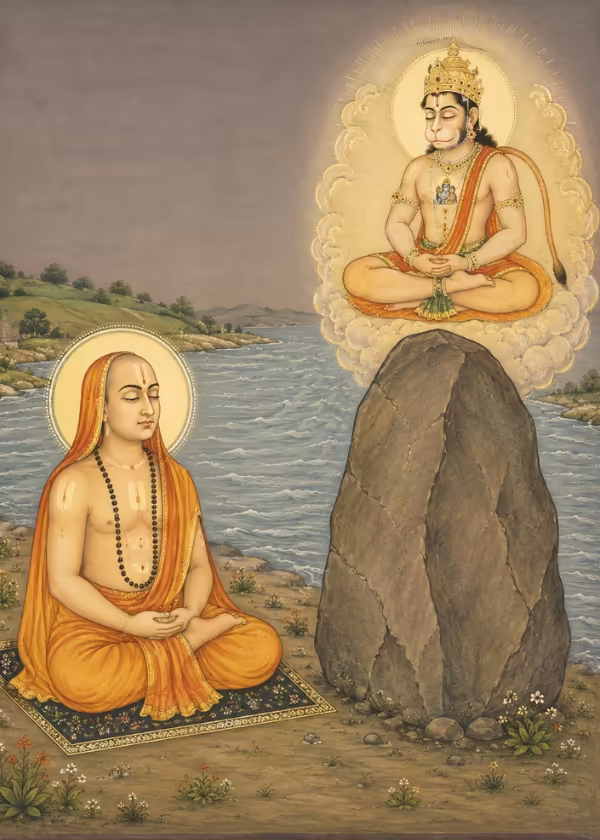
The Divine Darshan
So, Sri Vyasatirtha proceeded towards the specific spot and drew Hanumanji on the face of the rock through divine inspiration. The imagery depicted the Lord in deep meditation.
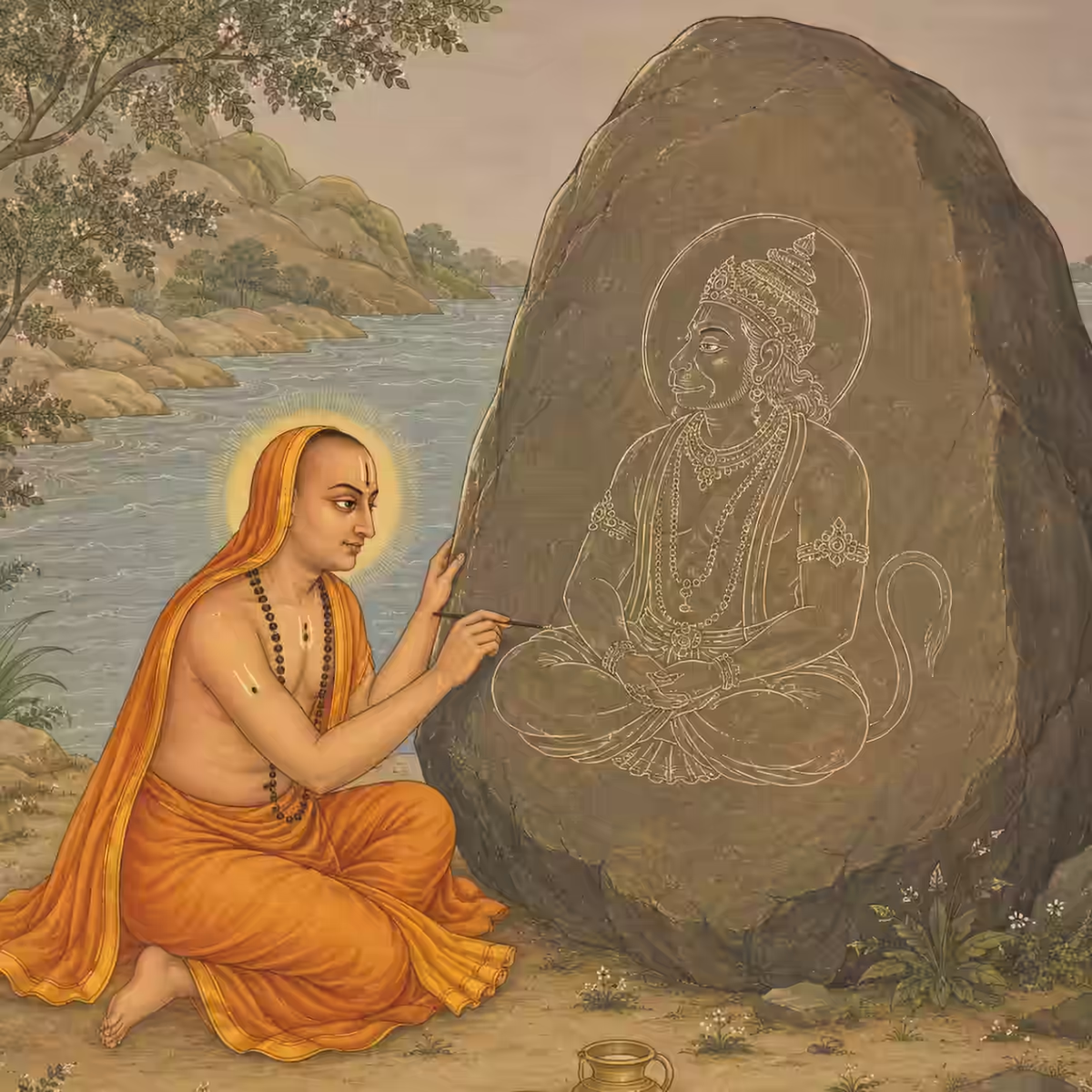
He sat like a Yogi in Padmasana. His hands were beautifully resting in Yogic Mudras. This exquisite Yantra reveals Hanuman ji’s prayerful mood. It is therefore an embodiment of Pure Bhakti and Dasya Bhava.
When he was satisfied, Sri Vyasatirtha tried meditating on the physical image drawn by him on the rock. Suddenly, a real Vanara jumped out of the image and ran away. The drawing of Hanuman ji was no longer on the rock.
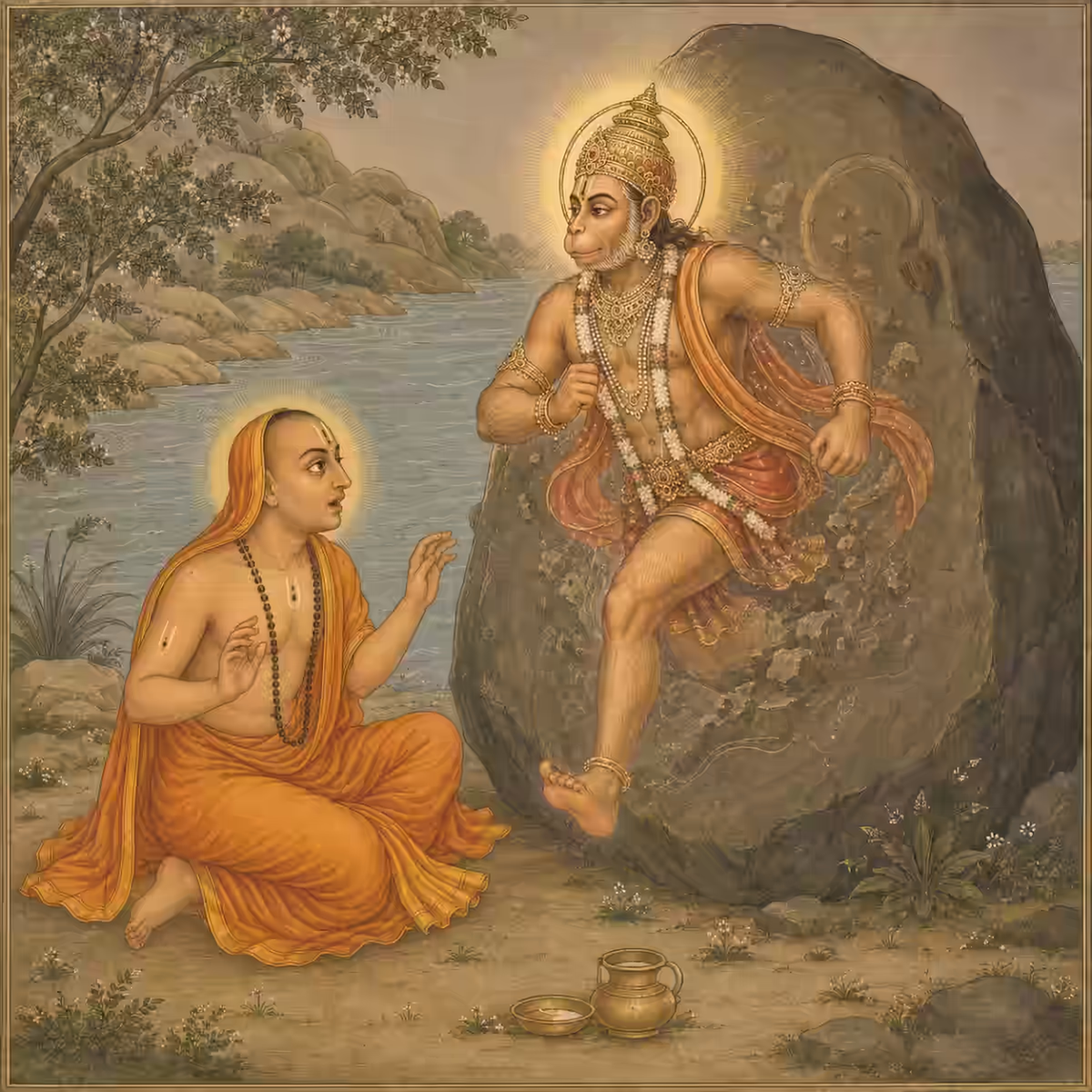
Twelve-Day Miracle of Sri Hanuman Yantra
Sri Vyasatirtha was determined to meditate on Hanuman ji’s image. So, he repeated the same process of Dhyana (recollecting the form) and Rachana (making it on the Rock).
Every day Sri Vyasatirtha would draw the Vanara Lord. The image would come alive only to escape out of the rock. This was his real experience that repeated for 12 consecutive days.
But then Sri Vyasatirtha understood the deep significance of what happened. The next day he drew the Vanara Lord and then trapped the image inside a Shatkona.
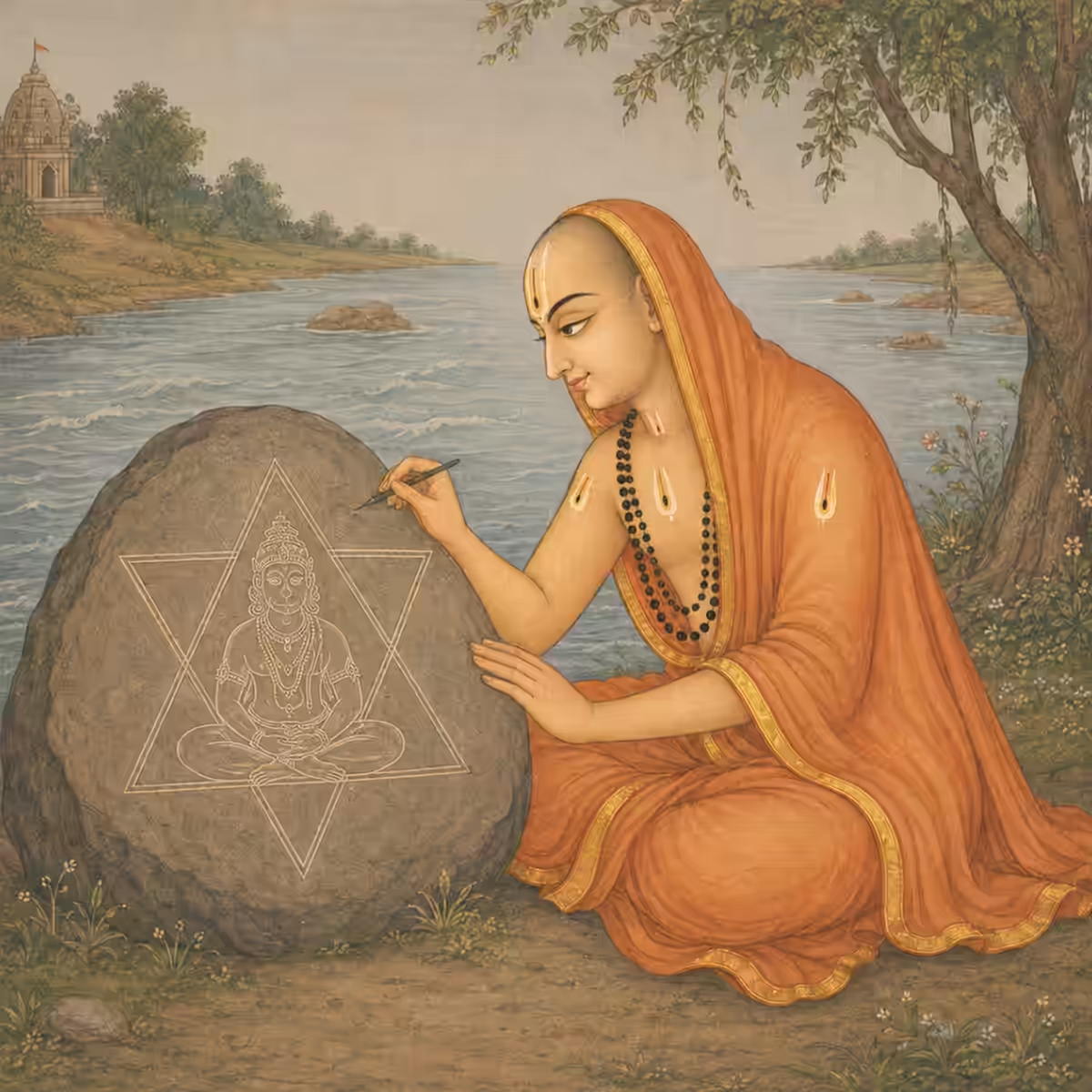
This was a star with a hexagon inside which Lord Hanuman remained. After 12 days of Sadhana and Prayer, Sri Vyasatirtha brought to light the Yantrodharaka Yantra.
Sri Hanumanji was in a relaxed calm position seated inside the Yantra. It was Hanumanji who inspired the great saint to create this new Yantra, for all the round welfare of beings tormented by the pangs of material nature.
This Yantrodharaka Yantra is very popular amongst the Tattvavadis. YantraChants.com highly recommends this simple but powerful Sri Hanuman Yantrodharaka Yantra for all round benefit.
Composing the Yantrodharaka Stotram for the Yantra Worship
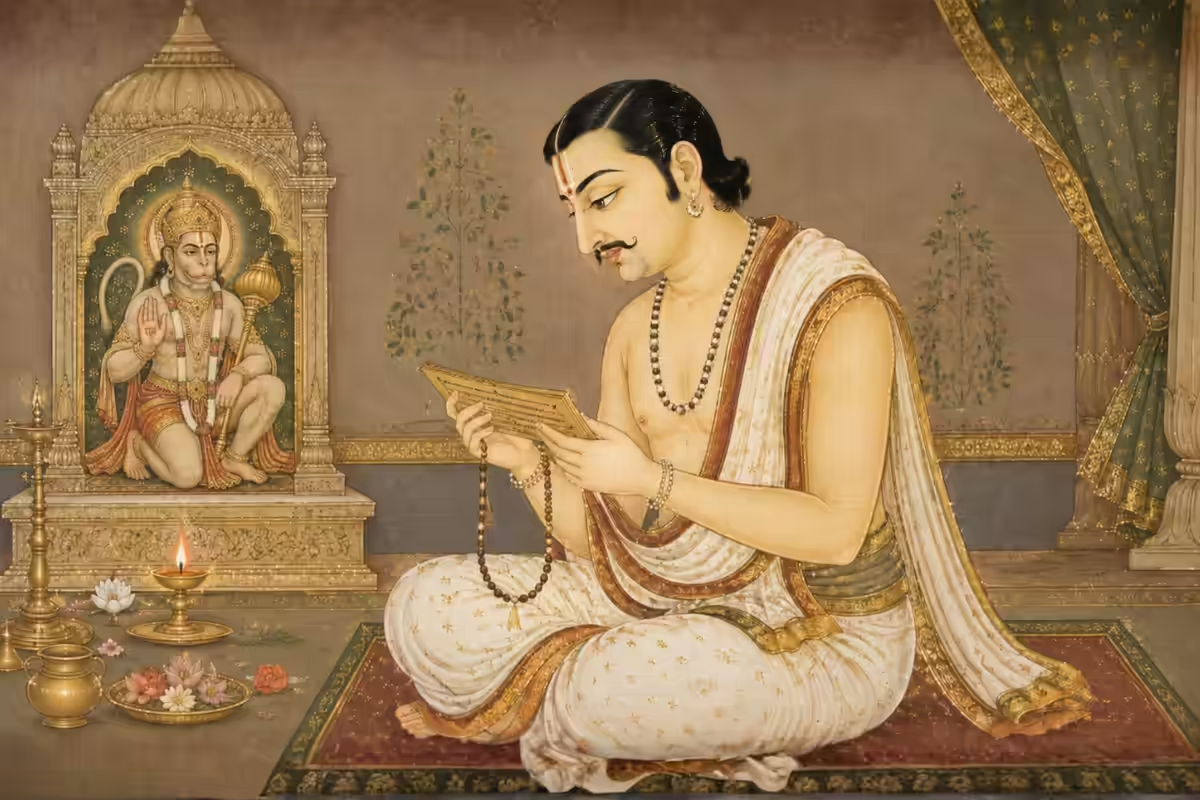
Seeing the Lord stationed in the Yantra, Sri Vyasatirtha composed a Hymn in praise of Sri Hanuman ji Maharaj. This came to be known as the Yantrodharaka Stotram.
This hymn can be recited by anyone. It is most beneficial when sung in front of the Shri Yantrodharaka Yantra as it glorifies this specific manifestation of Sri Hanuman ji.
Significance of Shri Yantrodharaka Yantra on Bhojpatra
The Yantrodharaka Hanuman Yantra manifests best when it is prepared on a highly potent material like the Himalayan Birch or Bhojpatra. The Yantra is an epitome of spiritual purity. Therefore, it should be acquired by a person who is a devotee of Sri Hanuman ji Maharaj.
Bhojpatra Yantras preserve the spiritualized intent coming from the heart of the Guru. Then, the consecration process as laid down by the Parampara seals its energy for the receiver.
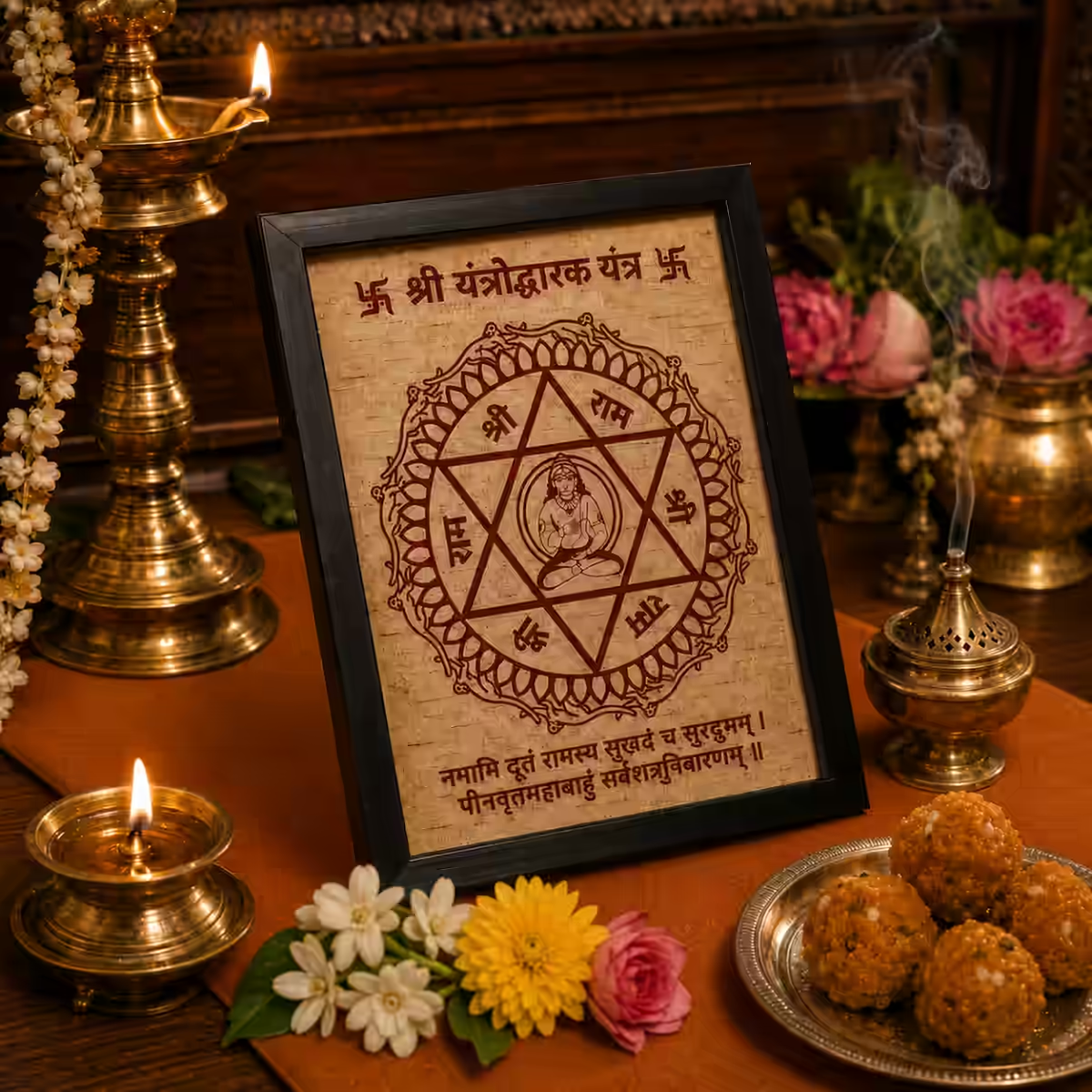
Shri Yantrodharaka Yantra
- Increases Bhakti and Faith
- Fulfils Dharmic Wishes of the Devotee
- Bestows Good Wealth, Progeny and Knowledge
- Reduces Mental Agitation and Hallucination
- Energized with Birth Details During Brahma Muhurtha
- Size- 5x7 inches
- Detailed PDF that guides through the Installation Process, Worship and Mantra
Given below is the original Kannada version (in Devanagari) of the Stotram with Roman Transliteration and meaning in english. While there are Special Considerations for Bajarang Baan, this stotram can be chanted by anyone, during any phase of their life.
Benefits, Lyrics and Meaning of the Yantrodharaka Stotram
नमामि दूतं रामस्य सुखदं च सुरद्रुमम् ।
श्री मारुतात्मसम्भूतं विद्युत्काञ्चन सन्निभम् ॥ १ ॥
namāmi dūtaṁ rāmasya sukhadaṁ ca suradrumam |
śrī mārutātmasambhūtaṁ vidyutkāñcana sannibham || 1 ||
Translation: I bow to the messenger of Sri Rama, who gives happiness and is like a divine wish-fulfilling tree. He is born from Sri Maruta, Vayu Deva, and shines like lightning mixed with gold.
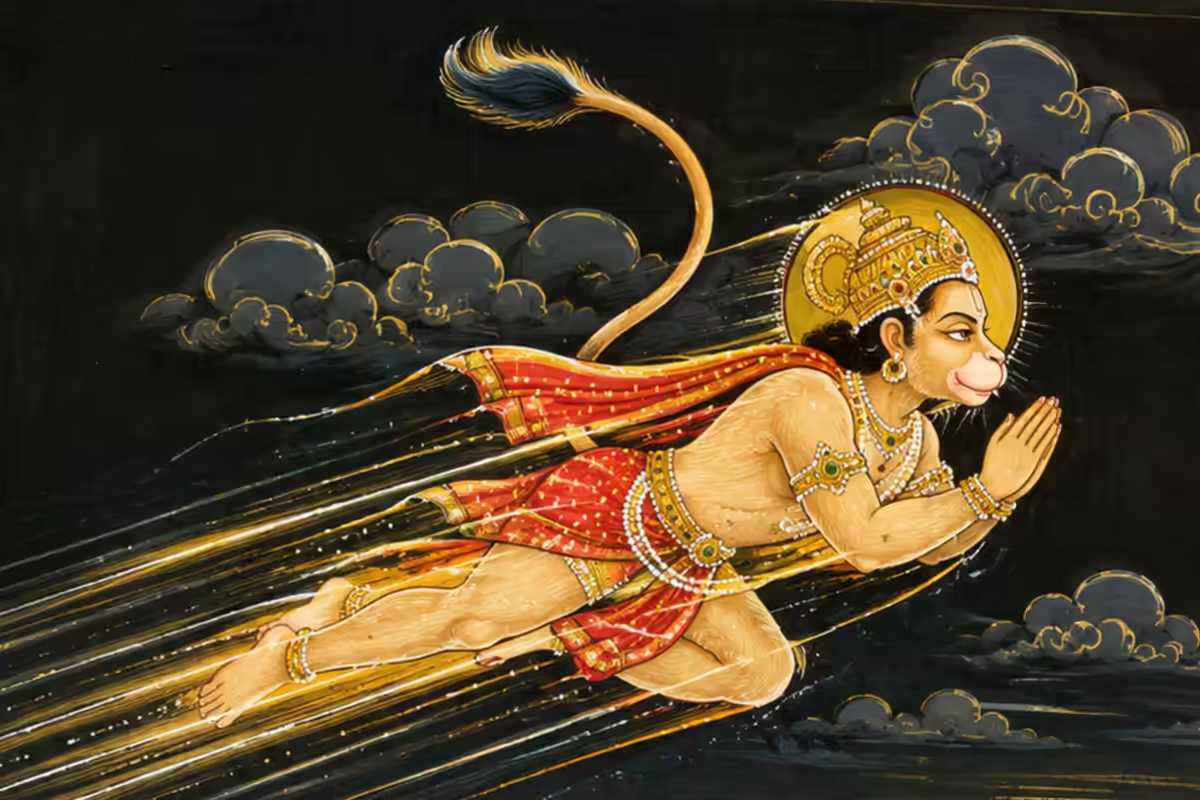
पीनवृत्तं महाबाहुं सर्वशत्रुनिवारणम् ।
रामप्रियतमं देवं भक्ताभीष्टप्रदायकम् ॥ २ ॥
pīnavṛttaṁ mahābāhuṁ sarvaśatrunivāraṇam |
rāmapriyatamaṁ devaṁ bhaktābhīṣṭapradāyakam || 2 ||
Translation: I bow to the strong, well-built, mighty-armed Lord who removes all enemies. He is most dear to Sri Rama and grants the sincere wishes of devotees.
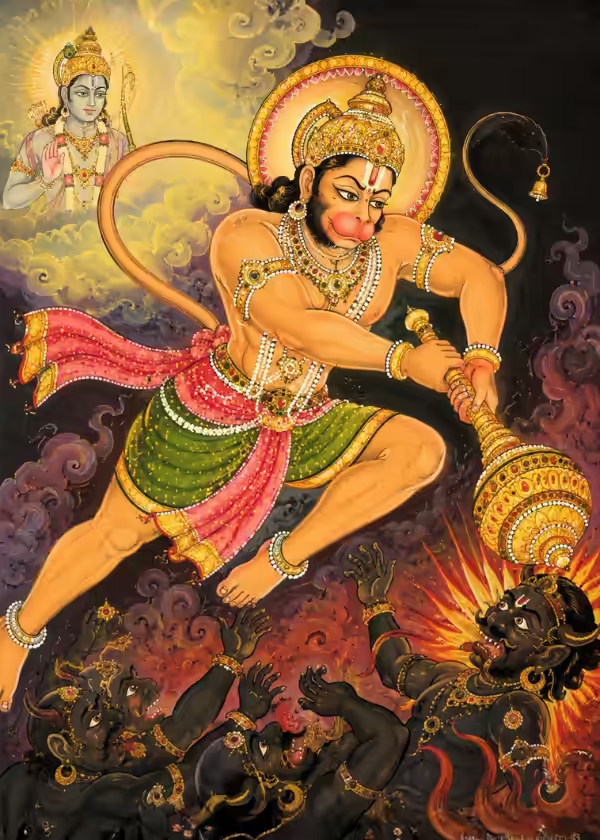
नानारत्नसमायुक्तं कुण्डलादिविराजितम् ।
द्वात्रिंशल्लक्षणोपेतं स्वर्णपीठविराजितम् ॥ ३ ॥
nānāratnasamāyuktaṁ kuṇḍalādivirājitam |
dvātriṁśallakṣaṇopetaṁ svarṇapīṭhavirājitam || 3 ||
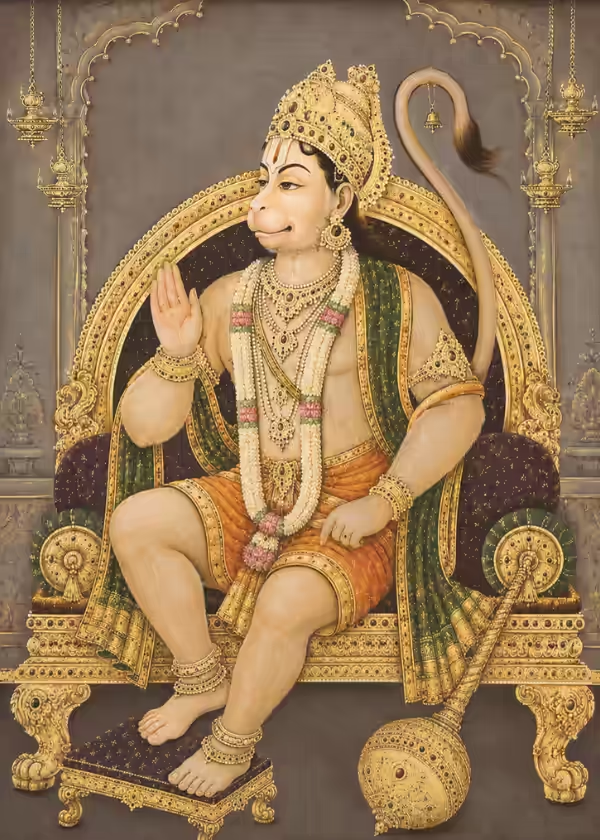
Translation: He is adorned with many precious gems and shines with earrings and ornaments. He possesses the thirty-two auspicious marks and is seated gloriously on a golden seat.
त्रिंशत्कोटिबीजसम्युक्तं द्वादशावर्ति प्रतिष्ठितम् ।
पद्मासनस्थितं देवं षट्कोणमण्डलमध्यगम् ॥ ४ ॥
triṁśatkoṭibījasamyuktaṁ dvādaśāvarti pratiṣṭhitam |
padmāsanasthitaṁ devaṁ ṣaṭkoṇamaṇḍalamadhyagam || 4 ||
Translation: He is connected with thirty classes of sacred seed powers and is established within the twelve-fold enclosure. He sits in Padmasana at the center of the six-cornered mandala.
चतुर्भुजं महाकायं सर्ववैष्णवशेखरम् ।
गदाऽभयकरं हस्तौ हृदिस्थो सुकृताञ्जलिम् ॥ ५ ॥
caturbhujaṁ mahākāyaṁ sarvavaiṣṇavaśekharam |
gadā’bhayakaraṁ hastau hṛdistho sukṛtāñjalim || 5 ||
Translation: He has four arms and a vast, powerful form. He is the crest-jewel among all Vaishnavas. His hands hold the mace and the gesture of protection, while his heart remains filled with blessed reverence.
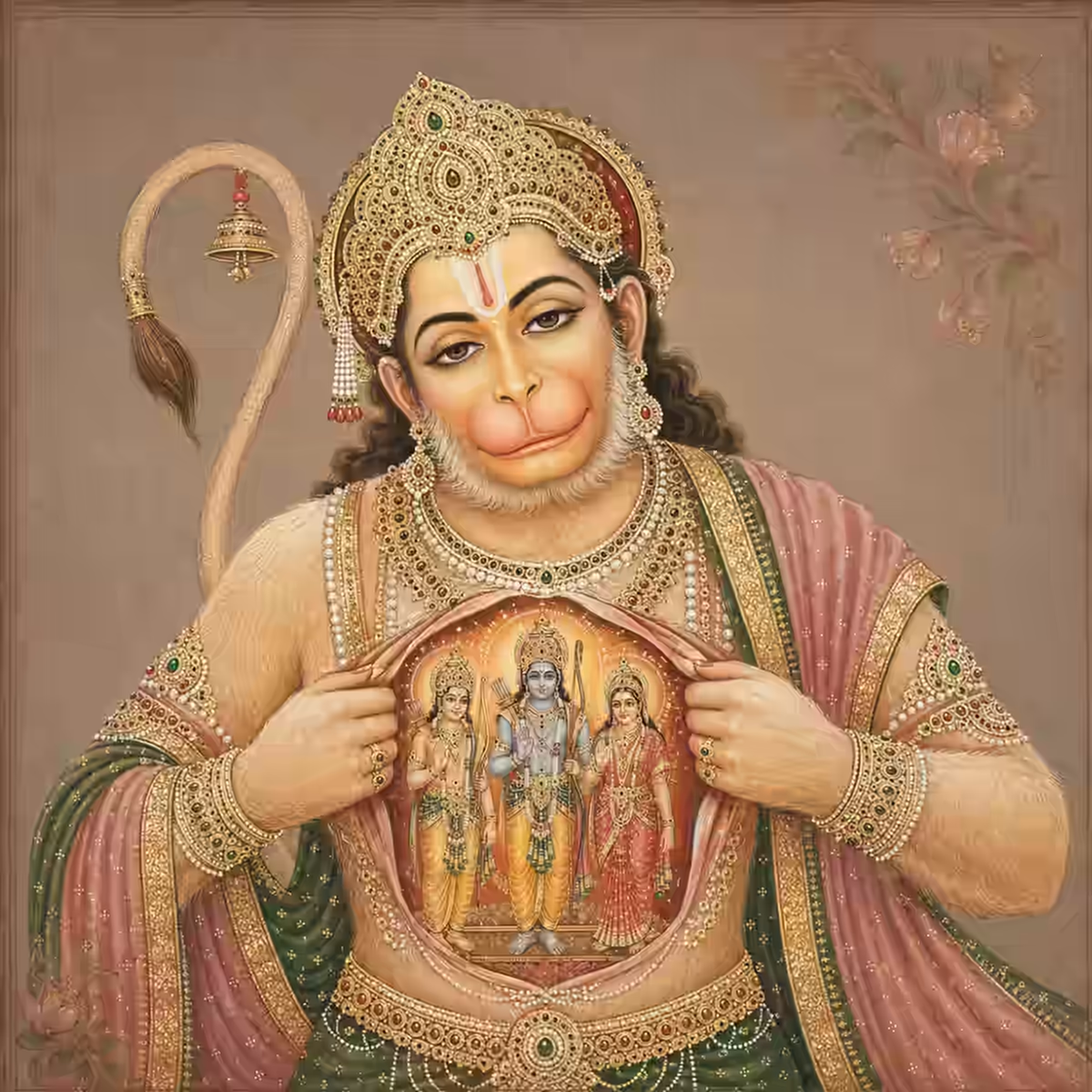
हंसमन्त्र प्रवक्तारं सर्वजीवनियामकम् ।
प्रभञ्जनशब्दवाच्येण सर्वदुर्मतभञ्जकम् ॥ ६ ॥
haṁsamantra pravaktāraṁ sarvajīvaniyāmakam |
prabhañjanaśabdavācyeṇa sarvadurmatabhañjakam || 6 ||
Translation: He is the revealer of the Hamsa Mantra and the regulator of all living beings. Known by the name Prabhanjana, he destroys all wrong understanding and false thinking.
सर्वदाऽभीष्टदातारं सतां वै दृढमहवे ।
अञ्जनागर्भसम्भूतं सर्वशास्त्रविशारदम् ॥ ७ ॥
sarvadā’bhīṣṭadātāraṁ satāṁ vai dṛḍhamahave |
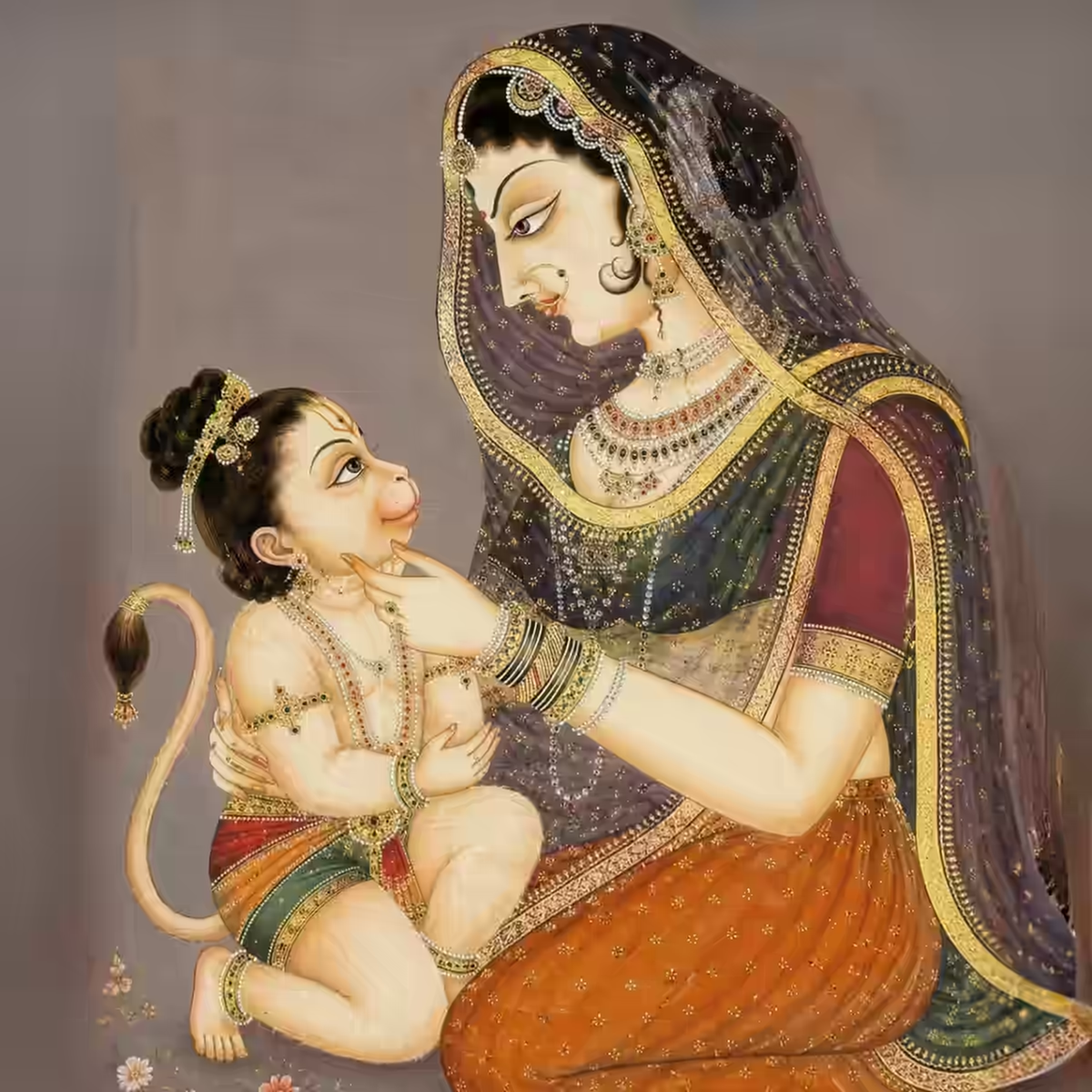
añjanāgarbhasambhūtaṁ sarvaśāstraviśāradam || 7 ||
Translation: He always grants the cherished wishes of the noble and remains firm in mighty battle. He was born from the womb of Devi Anjana and is deeply knowledgable in all scriptures.
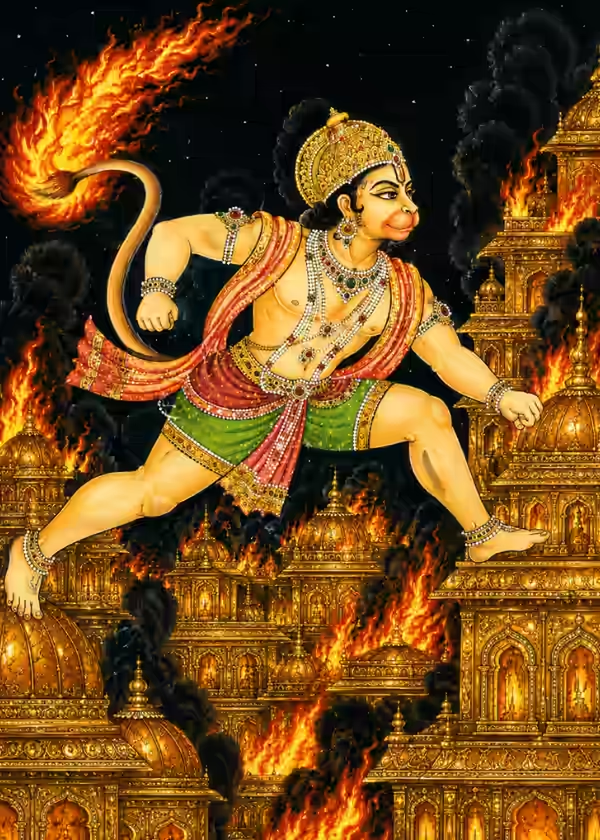
कपीनां प्राणदातारं सीतान्वेषणतत्परम् ।
अक्षादिप्राणहन्तारं लङ्कादहनतत्परम् ॥ ८ ॥
kapīnāṁ prāṇadātāraṁ sītānveṣaṇatatparam |
akṣādiprāṇahantāraṁ laṅkādahanatatparam || 8 ||
Translation: He gives strength and life to the Vanaras and is fully devoted to searching for Devi Sita. He destroys Aksha and other enemies and is intent on burning Lanka.
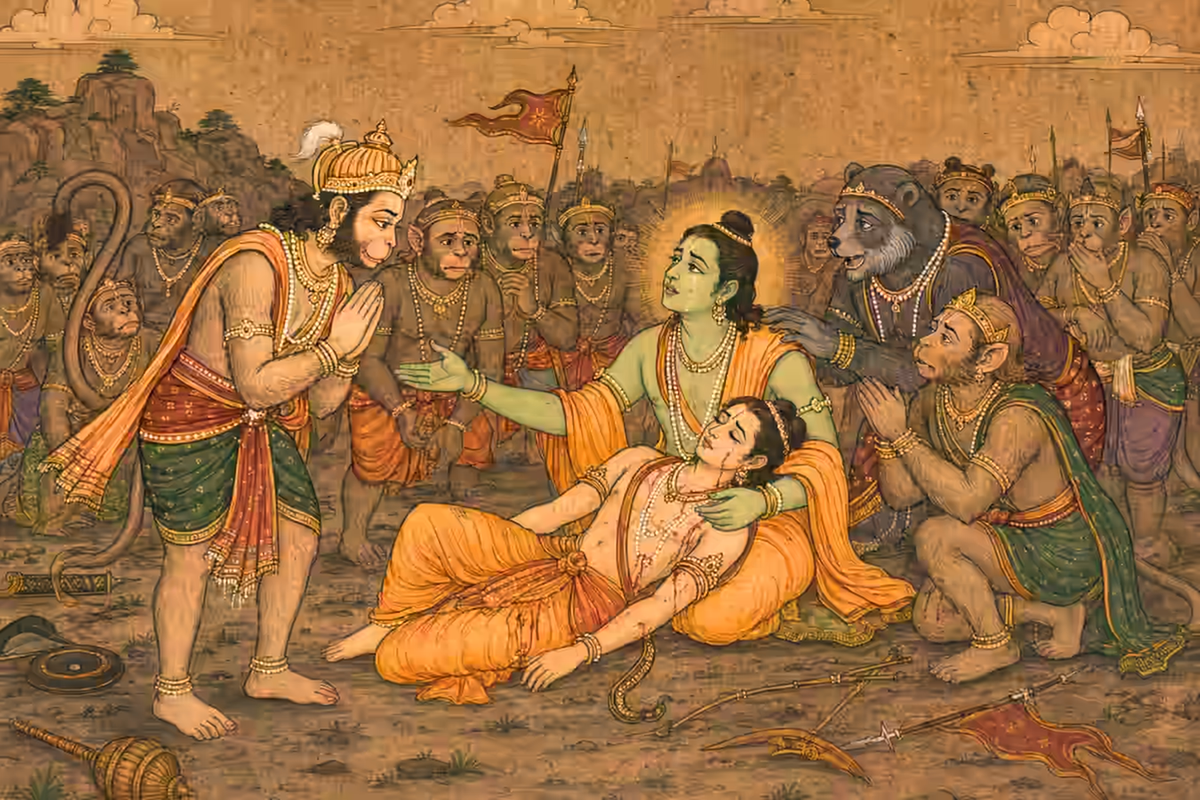
लक्ष्मणप्राणदातारं सर्ववानरयूथपम् ।
किङ्कराः सर्वदेवाद्याः जानकीनाथस्य किङ्करम् ॥ ९ ॥
lakṣmaṇaprāṇadātāraṁ sarvavānarayūthapam |
kiṅkarāḥ sarvadevādyāḥ jānakīnāthasya kiṅkaram || 9 ||
Translation: He restored the life of Sri Lakshmana and is the leader of all Vanara groups. Even great divine beings are servants before him, yet he remains the humble servant of Sri Rama, the Lord of Devi Janaki.
वासिनं चक्रतीर्थस्य दक्षिणस्थ गिरौ सदा ।
तुङ्गाम्भोदि तरङ्गस्य वातेन परिशोभिते ॥ १० ॥
vāsinaṁ cakratīrthasya dakṣiṇastha girau sadā |
tuṅgāmbhodi taraṅgasya vātena pariśobhite || 10 ||
Translation: He always resides on the southern hill near Chakra Tirtha. (The hilltop is the Anjanadri Mountain). The breeze rising from the tunga waters enhance this region.
नानादेशगतैः सद्भिः सेव्यमानं नृपोत्तमैः ।
धूपदीपादि नैवेद्यैः पञ्चखाद्यैश्च शक्तितः ॥ ११ ॥
nānādeśagataiḥ sadbhiḥ sevyamānaṁ nṛpottamaiḥ |
dhūpadīpādi naivedyaiḥ pañcakhādyaiśca śaktitaḥ || 11 ||
Translation: He is worshipped by noble devotees from many lands and by great kings. They serve him according to their capacity with incense, lamps, offerings, and five kinds of sacred food.
भजामि श्रीहनूमन्तं हेमकान्तिसमप्रभम् ।
व्यासतीर्थयतीन्द्रेण पूजितं च विधानतः ॥ १२ ॥
bhajāmi śrīhanūmantaṁ hemakāntisamaprabham |
vyāsatīrthayatīndreṇa pūjitaṁ ca vidhānataḥ || 12 ||
Translation: I worship Sri Hanuman, whose radiance is like the glow of gold. Sri Vyasa Tirtha Yatindra worshipped Him with deep concentration and devotion.
त्रिवारं यः पठेन्नित्यं स्तोत्रम् भक्त्या द्विजोत्तमः ।
वाञ्छितं लभतेऽभीष्टं षण्मासाभ्यन्तरे खलु ॥ १३ ॥
trivāraṁ yaḥ paṭhennityaṁ stotram bhaktyā dvijottamaḥ |
vāñchitaṁ labhate’bhīṣṭaṁ ṣaṇmāsābhyantare khalu || 13 ||
Translation: The noble devotee who recites this stotram three times daily with devotion receives the desired blessing within six months.
पुत्रार्थी लभते पुत्रं यशोऽर्थी लभते यशः ।
विद्यार्थी लभते विद्यां धनार्थी लभते धनम् ॥ १४ ॥
putrārthī labhate putraṁ yaśo’rthī labhate yaśaḥ |
vidyārthī labhate vidyāṁ dhanārthī labhate dhanam || 14 ||
Translation: One who seeks a son receives a son. One who seeks fame receives fame. One who seeks knowledge receives knowledge. One who seeks wealth receives wealth.
सर्वथा माऽस्तु सन्देहो हरिः साक्षी जगत्पतिः ।
यः करोत्यत्र सन्देहं स याति नरकं ध्रुवम् ॥ १५ ॥
sarvathā mā’stu sandeho hariḥ sākṣī jagatpatiḥ |
yaḥ karotyatra sandehaṁ sa yāti narakaṁ dhruvam || 15 ||
Translation: Let there be no doubt at all. Sri Hari, the Lord of the universe, is witness to this truth. One who doubts this falls into a dark and painful state.
यन्त्रोधारकस्तोत्रम् षोडशश्लोकसम्युतम् ।
श्रवणं कीर्तनं वा सर्वपापैः प्रमुच्यते ॥ १६ ॥
yantrodhārakastotram ṣoḍaśaśloka samyutam |
śravaṇaṁ kīrtanaṁ vā sarvapāpaiḥ pramucyate || 16 ||
Translation: This Yantrodhāraka Stotram is made of sixteen verses. By listening to it or chanting it, one becomes freed from all sins.
इति श्री व्यासराजकृत यन्त्रोधारक हनुमत् स्तोत्रम् ॥
iti śrī vyāsarājakṛta yantrodhāraka hanumat stotram ||
Translation: Thus ends the Yantrodhāraka Hanumat Stotram composed by Sri Vyasaraja.
Geometry of the Yantrodharaka Hanuman Yantra
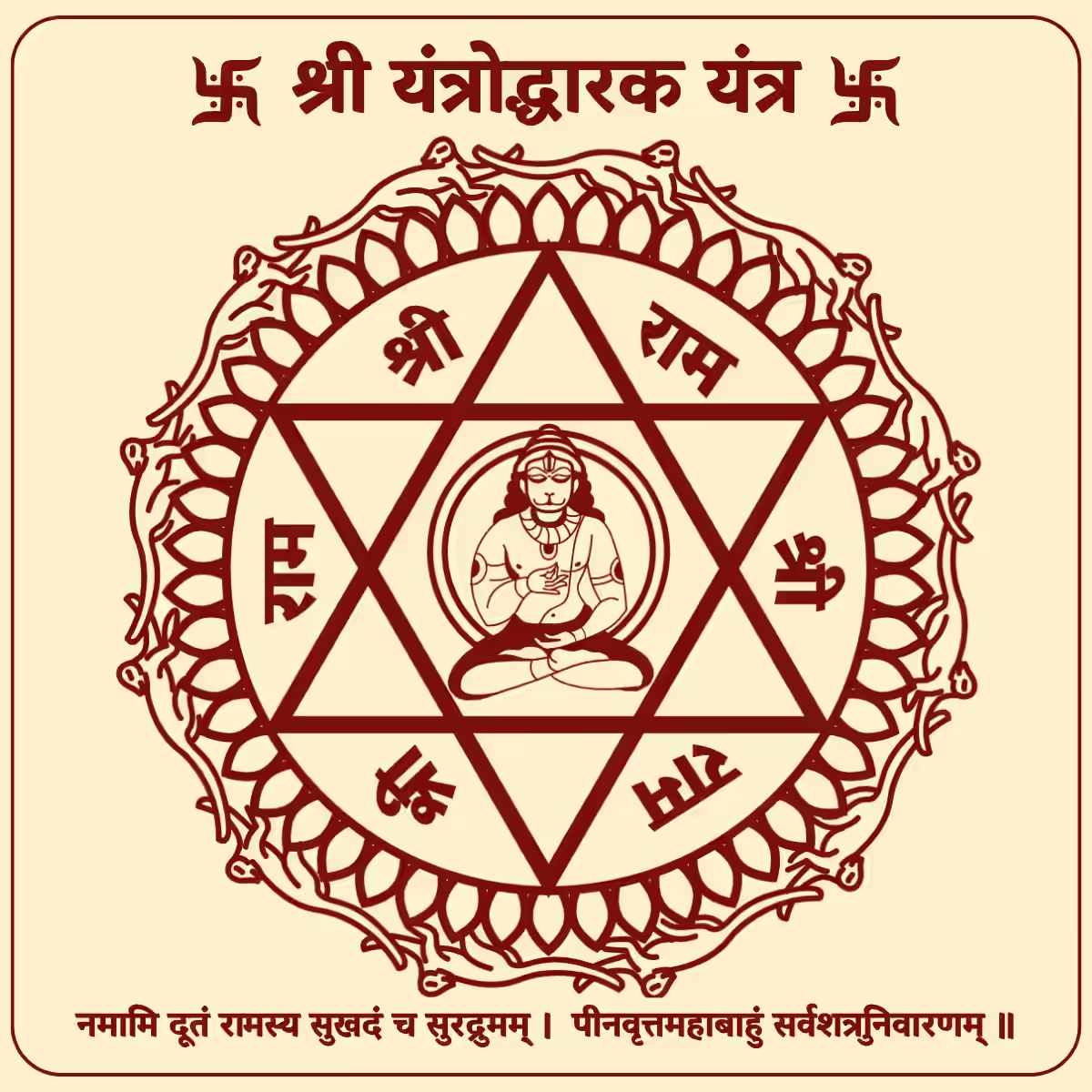
Let us decode the structure and symbolism of this yantra which is simple yet extremely profound.
The real power behind this Yantra lies in the way it was revealed to Sri Vyasatirtha, the humble successor in the line of the Sri Madhwa Sampradaya.
Sri Hanumanji Maharaj Himself revealed the Yantra to this great devotee and this makes the Yantra a Swayambhu Manifestation. Its most distinct aspect is that it does not have the typical 4 gated Bhupura. The structure consists of 3 fundamental elements that are unique to this yantra alone.
- A circular layer of 12 Vanaras.
- The six pointed Star Shape (found in other meditative yantras as well).
- Unique image of Sri Hanumanji seated in Dhyana.
1. The 12 Vanara Chakra
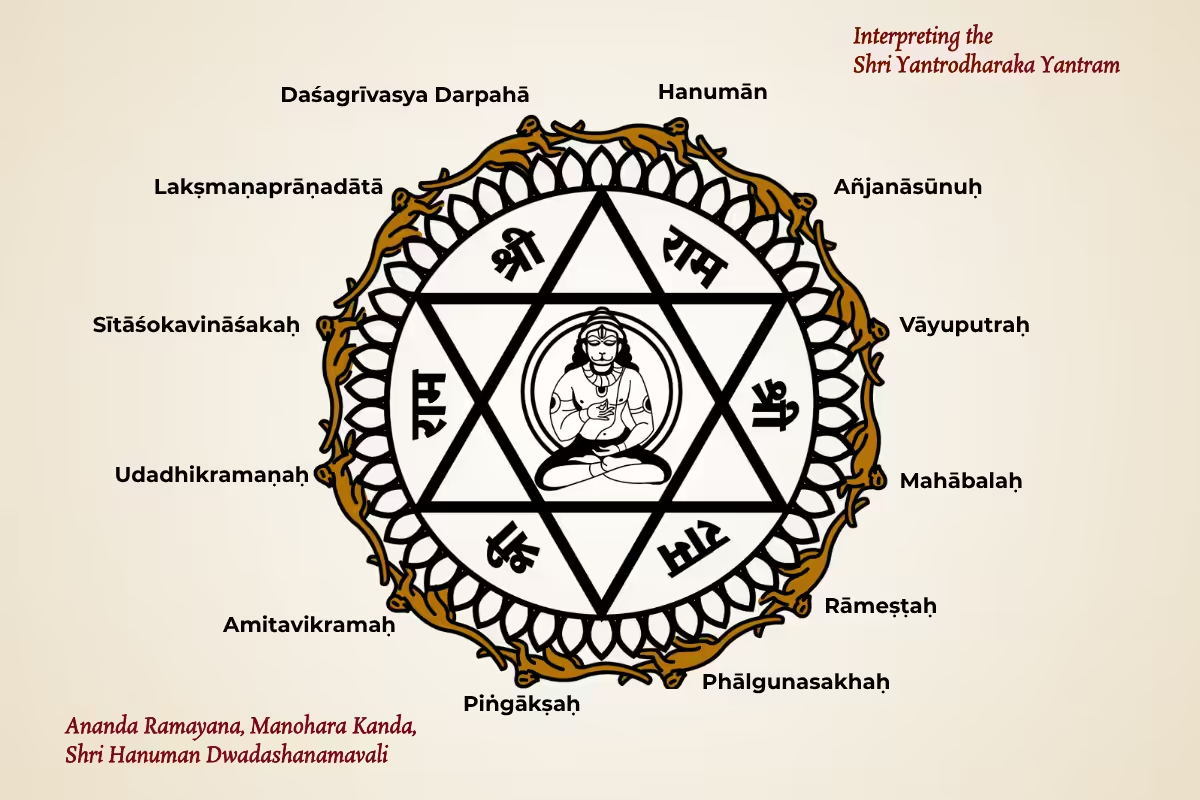
The most magnificent part of the Yantra is its outer layer that consists of 12 Vanaras holding the tail of another with their face turned backward. After 12 days of self effort, Sri Vyasatirtha was finally guided towards preparing the Yantrodharaka Yantra. During these 12 days, 12 forms of Hanuman ji emerged, but each of them escaped. The 12 Vanaras also correspond Sri Hanuman’s Dwadasha Namavali as presented in the Ananda Ramayana.
हनुमानञ्जनासूनुर्वायुपुत्रो महाबलः ।
रामेष्टः फाल्गुनसखः पिङ्गाक्षोऽमितविक्रमः ॥
उदधिक्रमणश्चैव सीताशोकविनाशकः ।
लक्ष्मणप्राणदाता च दशग्रीवस्य दर्पहा ॥
द्वादशैतानि नामानि कपीन्द्रस्य महात्मनः ।
स्वापकाले पठेन्नित्यं यात्राकाले विशेषतः ॥
तस्य मृत्युभयं नास्ति सर्वत्र विजयी भवेत् ॥Ananda Ramayana, Manohara Kanda, Sarga 13.
These are the 12 forms and names of Hanuman ji Maharaj:
- Hanumān– The one with a prominent or powerful jaw
- Añjanāsūnuḥ– Son of Mother Añjanā.
- Vāyuputraḥ– Son of Vāyu Deva, the Wind God.
- Mahābalaḥ– Possessor of immense strength and power.
- Rāmeṣṭaḥ– The beloved devotee of Sri Rama or the One who is dearest to Sri Rama .
- Phālgunasakhaḥ– Friend of Phalguna (Arjuna).
- Piṅgākṣaḥ– The golden-brown eyed one.
- Amitavikramaḥ– One of immeasurable valor and boundless heroism.
- Udadhikramaṇaḥ– The one who crossed the ocean.
- Sītāśokavināśakaḥ– Destroyer of Sita Mata’s sorrow.
- Lakṣmaṇaprāṇadātā– Restorer of Lakshmana’s life.
- Daśagrīvasya Darpahā– Destroyer of the 10-headed Ravana’s pride and arrogance
2. Symbolism of the 6 Pointed Star
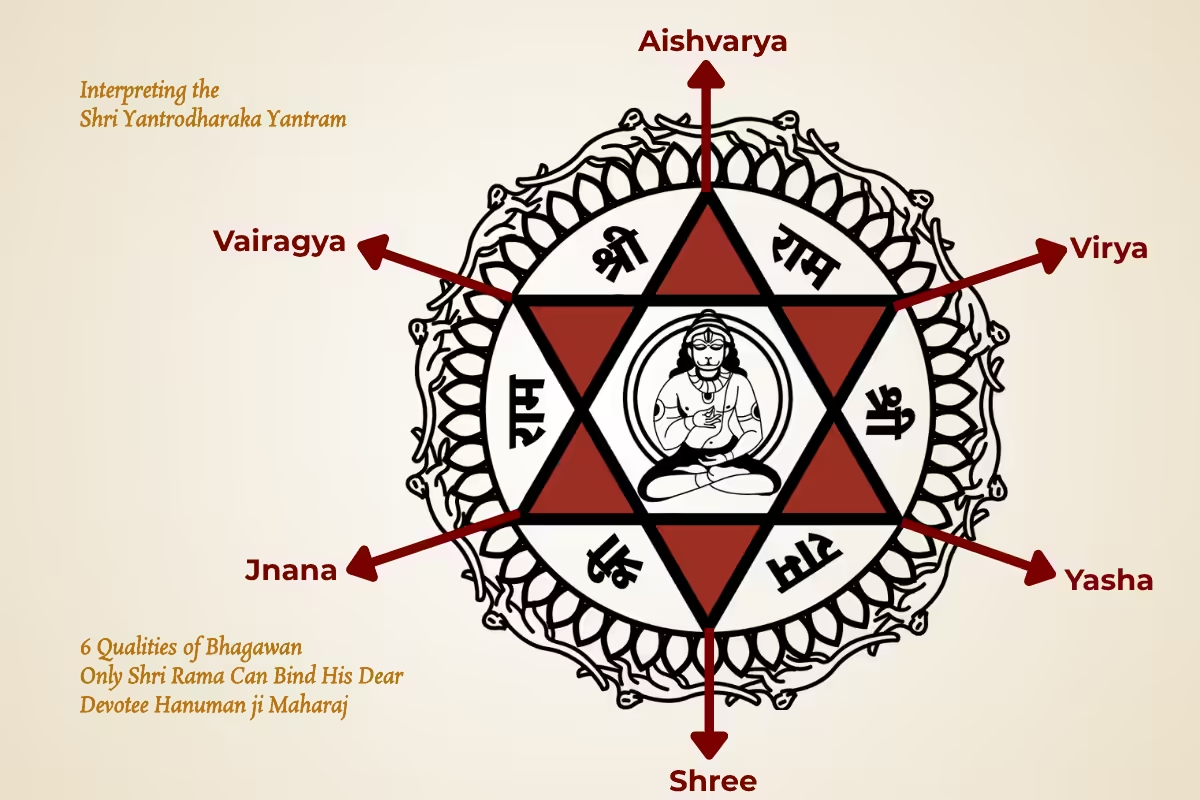
The 6 pointed star symbolises the 6 attributes of Bhagawan.
- Limitless strength
- Unparalleled beauty
- Inexhaustible power and fame
- Unlimited knowledge
- Immeasurable wealth
- Ultimate renunciation.
Who possesses all those six aspects simultaneously?
Human Beings cannot possess these qualities simultaneously and infinitely, only Bhagawan can.
In fact, the very meaning of Bhagawan means
- Bhaga- Radiance and fortune
- Vaan- the possessor.
In the Yantra, the 6 star symbolizes that only within those boundaries does Sri Hanuman allow Himself to be bound. He obeys the commands of Sri Rama alone.
Nothing else can contain this great devotee who is Shiva-amsa. Thus the star here represents the Potency of Bhagawan Sri Rama and Hanumanji seated within represents devotion, under whom all the siddhis stand with hands folded.
The Yantra thus becomes a reservoir of divine force that contains the spirit of both Bhagawan and Sri Hanumanji Maharaj.
3. Symbolism of Hanuman Ji Maharaj in the Yantrodharaka Yantra
Hanuman ji Maharaj is portrayed uniquely in this Yantra. His hands rest in Mudras that are of deep significance.
Mudra and Asana of Hanuman ji in the Yantra
His right hand shows the Vyakhyana Mudra which forms a circuit when the index and thumb join in a circular manner. This Mudra depicts the continuous flow of knowledge (Jnana). It represents the Guru Tattva or Shiva Tattva resonating with deity forms like Shri Dakshinamurthy and Shri Hayagreeva.
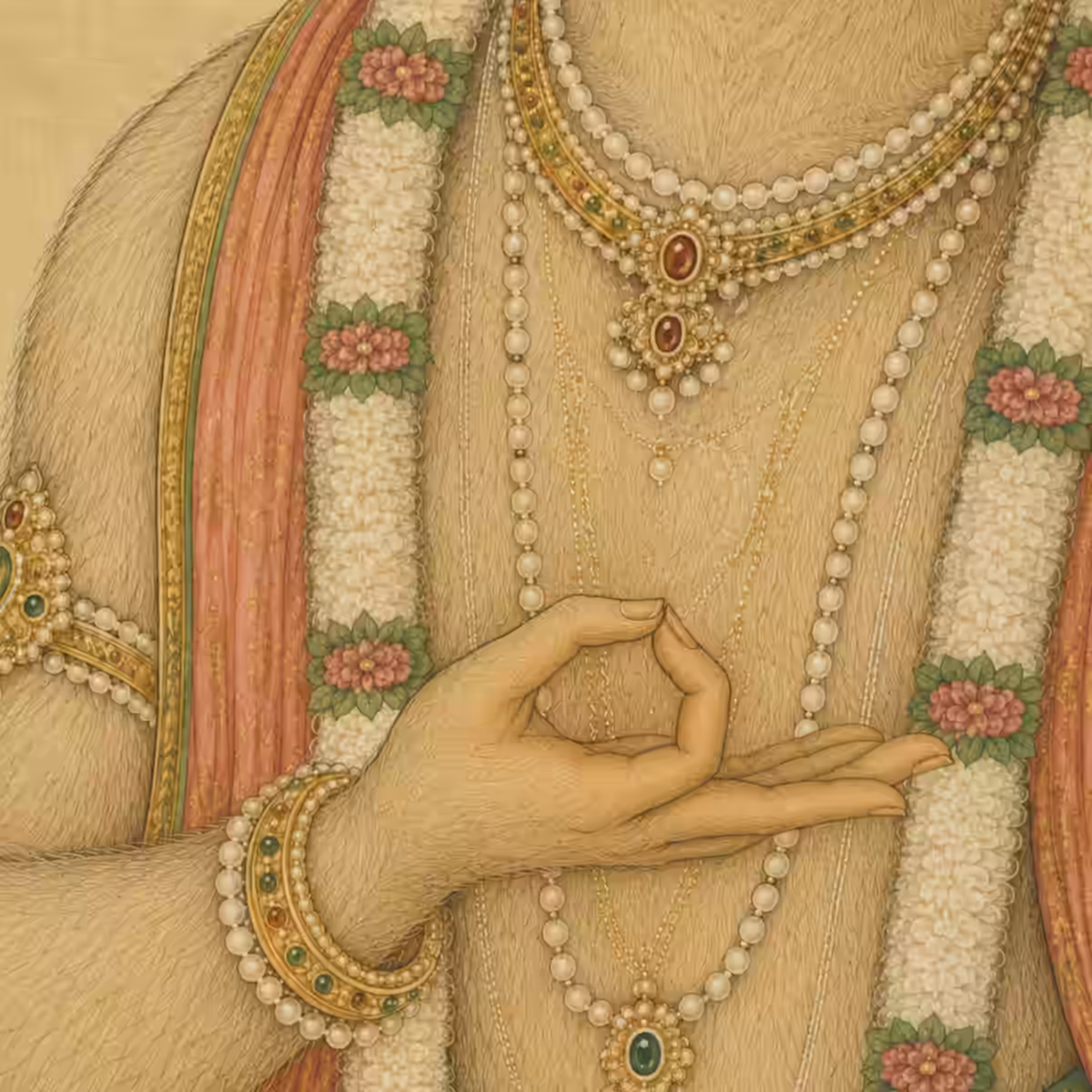
His left hand is resting in the Dhyana Mudra which reflects Hanuman Ji Maharaj’s constant contemplation on Sri Ramachandra. Meditating on this exquisite form of Lord Hanuman lights the lamp of Bhakti in the heart of devotees. He sits in the yogic asana of Padmasana or the lotus pose.
Mystery of the Tail Crown
There is another lesser known characteristic of this form. Sri Hanuman ji Maharaj’s tail is coiled to form His crown. This has a deep symbolism.
A crown signifies sovereignty, and responsibility of a ruler toward his subjects and kingdom. However, the crown of Hanuman ji is not bestowed by anyone else but is formed by His own tail.
This establishes Him as independent and unconquerable. It means that there is no external force that can bind Him.
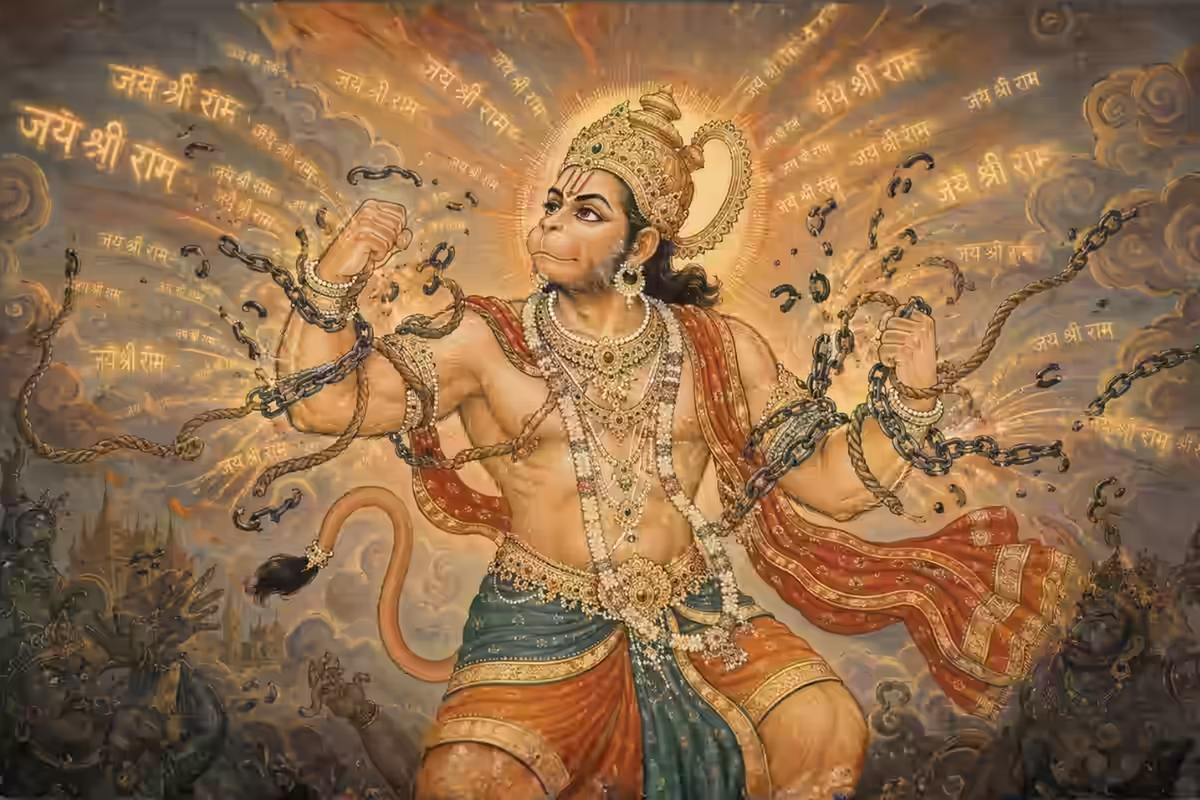
Likewise, no one can realize or attain Him merely through self effort. This is seen evidently in the pastime of Vyasatirtha and Sri Hanuman ji Maharaj. Only when He Wills can a devotee realize Him.
Moreover, Hanuman ji’s tail has itself got great significance across various scriptures.
It repels negative forces and inauspiciousness. This form of Hanuman ji reassures us that when He manifests out of compassion, the responsibility for the devotee’s protection and welfare naturally comes under His divine care.
Just as a king safeguards his subjects, Hanumanji assumes the role of guardian deflecting all adversity.
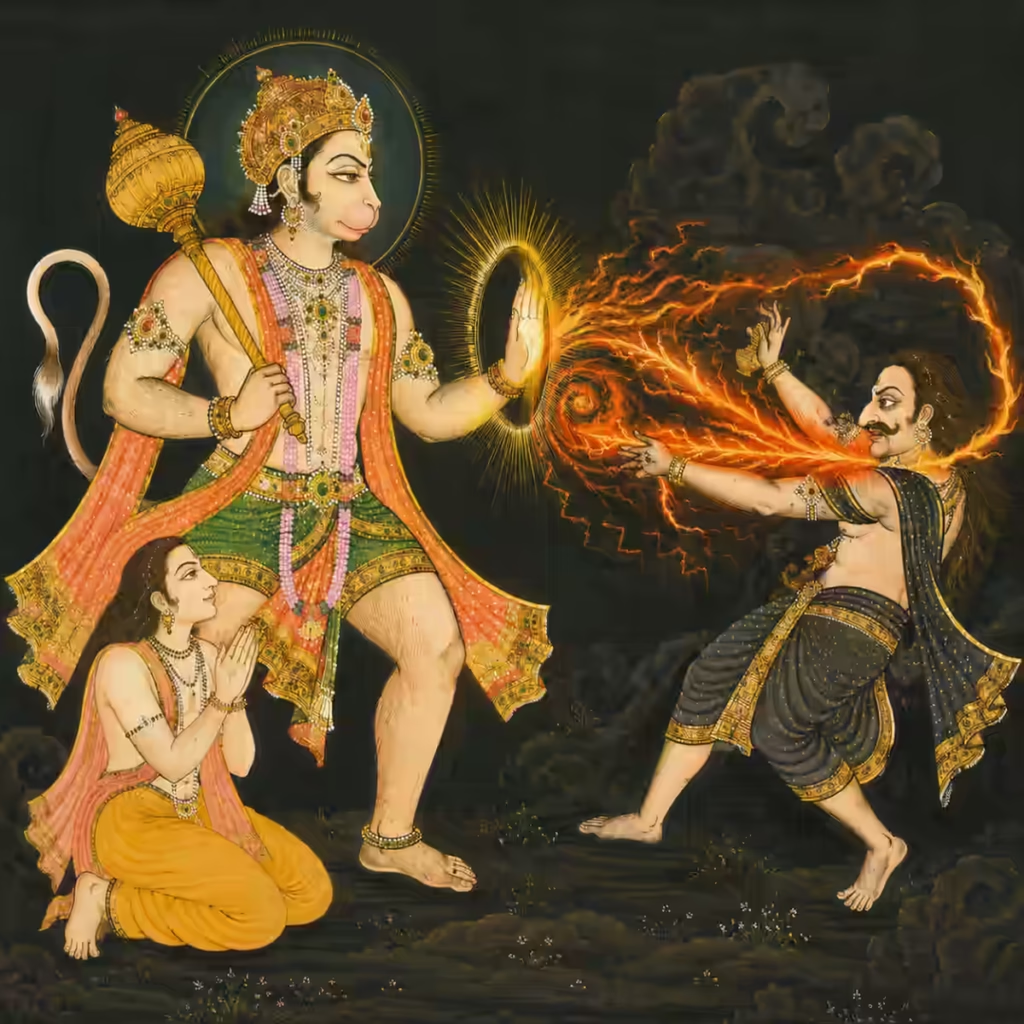
The Yantra also delivers another message. It says that Guru and Bhagawan represented by Sri Hanumanji Maharaj can also be contained by the Shad Sampat or 6 Virtues of a Sadhaka. This also corresponds to the 6 pointed star. The devotee’s spiritual discipline, mood and character can urge Sri Hanuman to bestow His Divine Grace. This is the inner significance of the Yantrodharaka Hanuman Yantra.

Vani Devi Dasi

Rohini Devi Dasi