
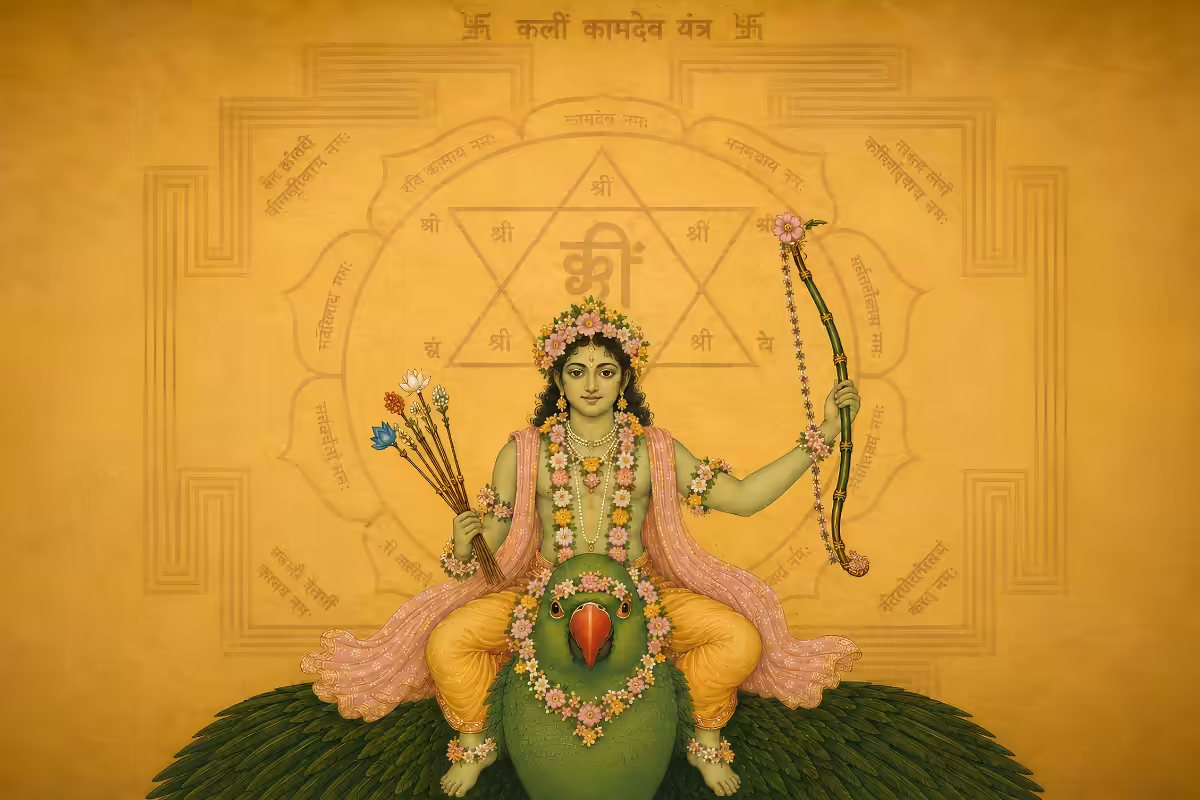
In this blogpost we will exclusively study the structure and significance of the Shri Kamadeva Yantra and learn to meditate on it for manifesting desirable outcomes.
Kleem: The Core of the Shri Kamadeva Yantra
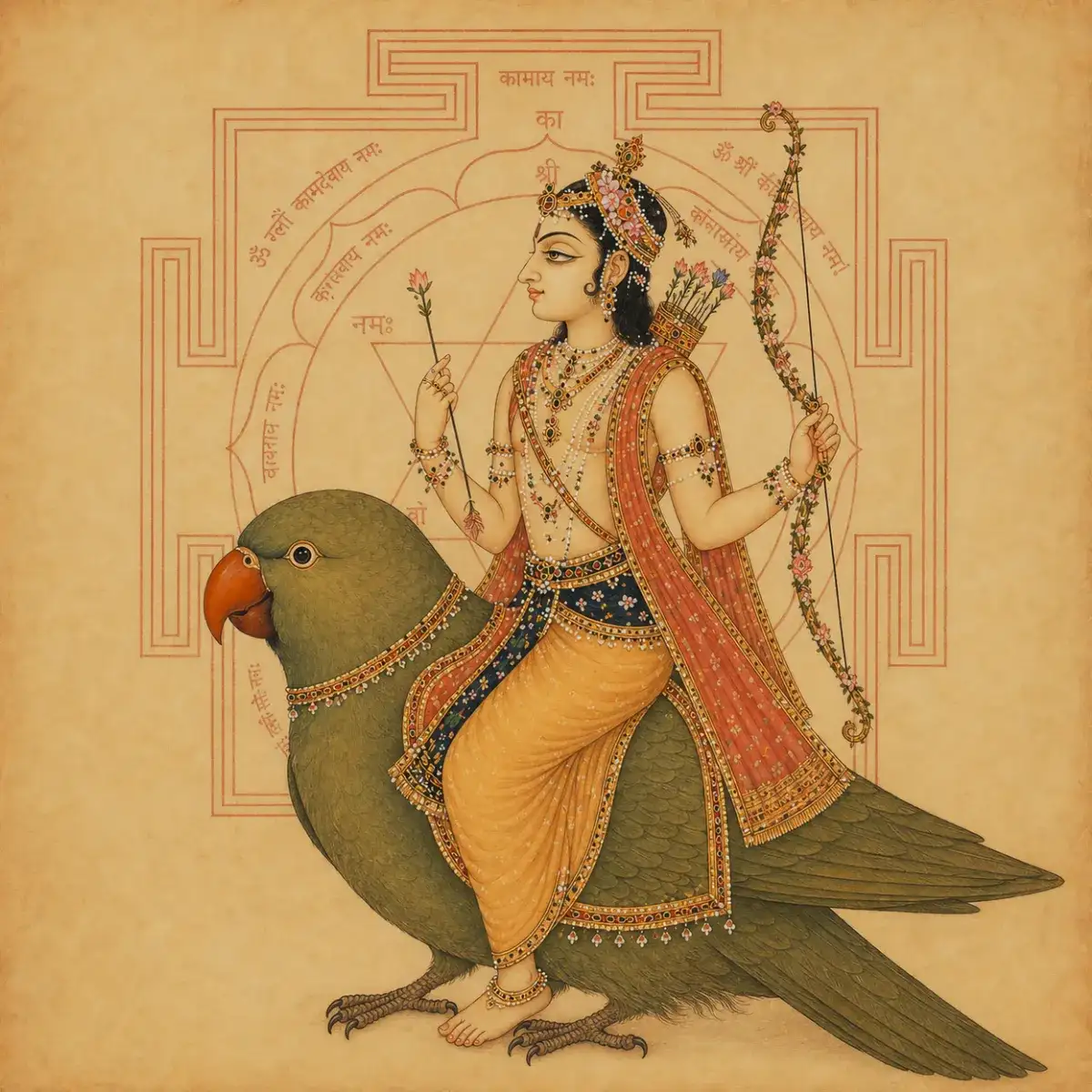
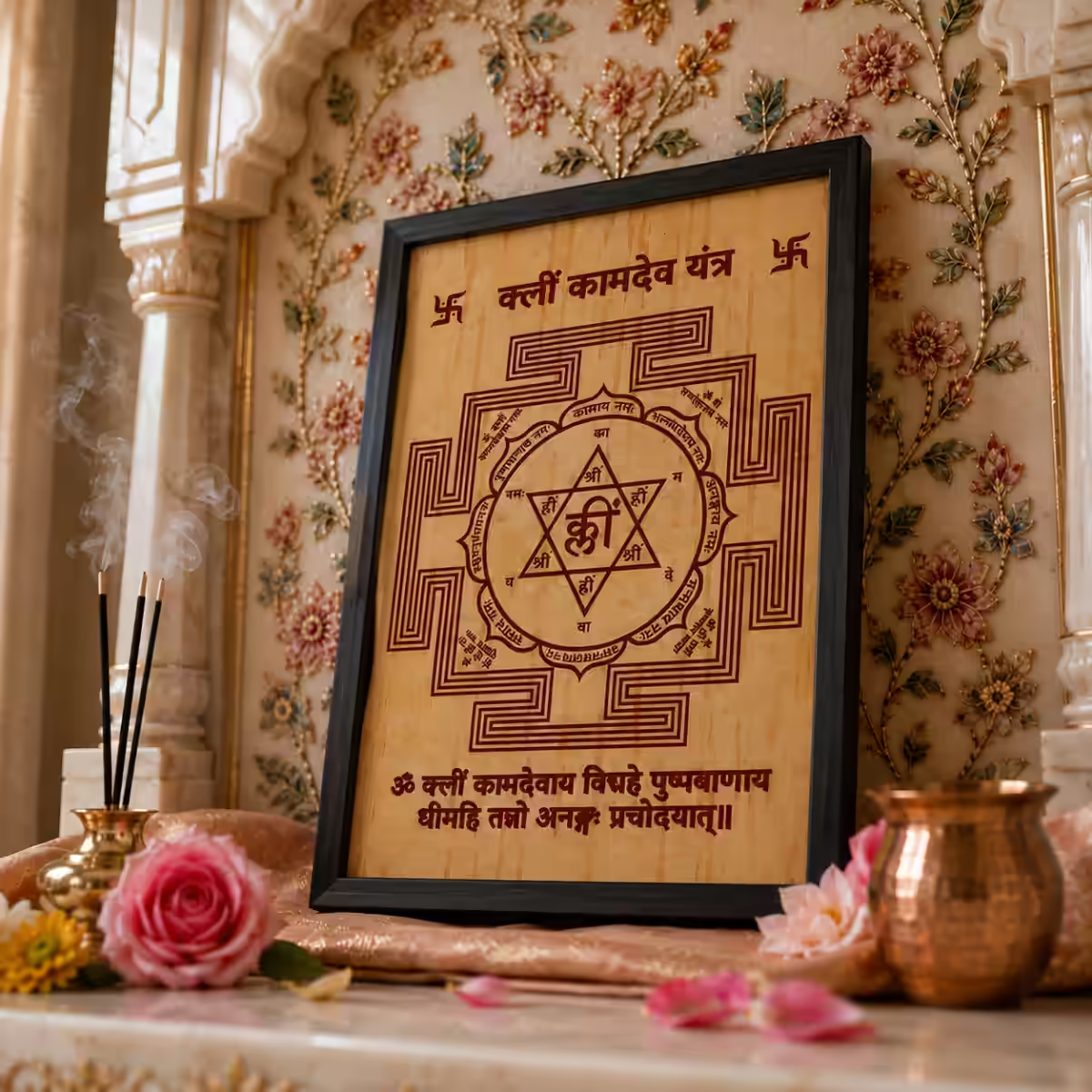
The center of a Yantra is the dwelling abode of the deity. In this Yantra Kleem occupies the center. Therefore, it represents both Shri Krishna as well as Shri Kamadeva, the primary deity of the yantra. Kleem is housed at the core for a couple of other reasons as well.
The prime reason is that it is the Kama Beeja, representing the concentrated qualities of Shri Kamadeva, mainly the attraction aspect.
Kleem serves as the magnet point for worshippers who want to manifest Suitable Results around Love and Attraction. It symbolizes creation, the root of existence that is faciliated by Akarshana Shakti. The Kamadeva Yantra can be worshipped for its many benefits while also retaining its identity with Sri Krishna due to the common Kleem Beeja at the center. Therefore, those facing repeated sexual thoughts should meditate on the image of Shri Krishna as it is a safer and equally effective practice.
If your intention is not desire-control but emotional purification, devotion, and relationship steadiness, study this guide on safe Krishna-oriented Kleem practice before choosing a yantra.
Shatkona: Six Pointed Star Hexagram in the Kamadeva Yantra?
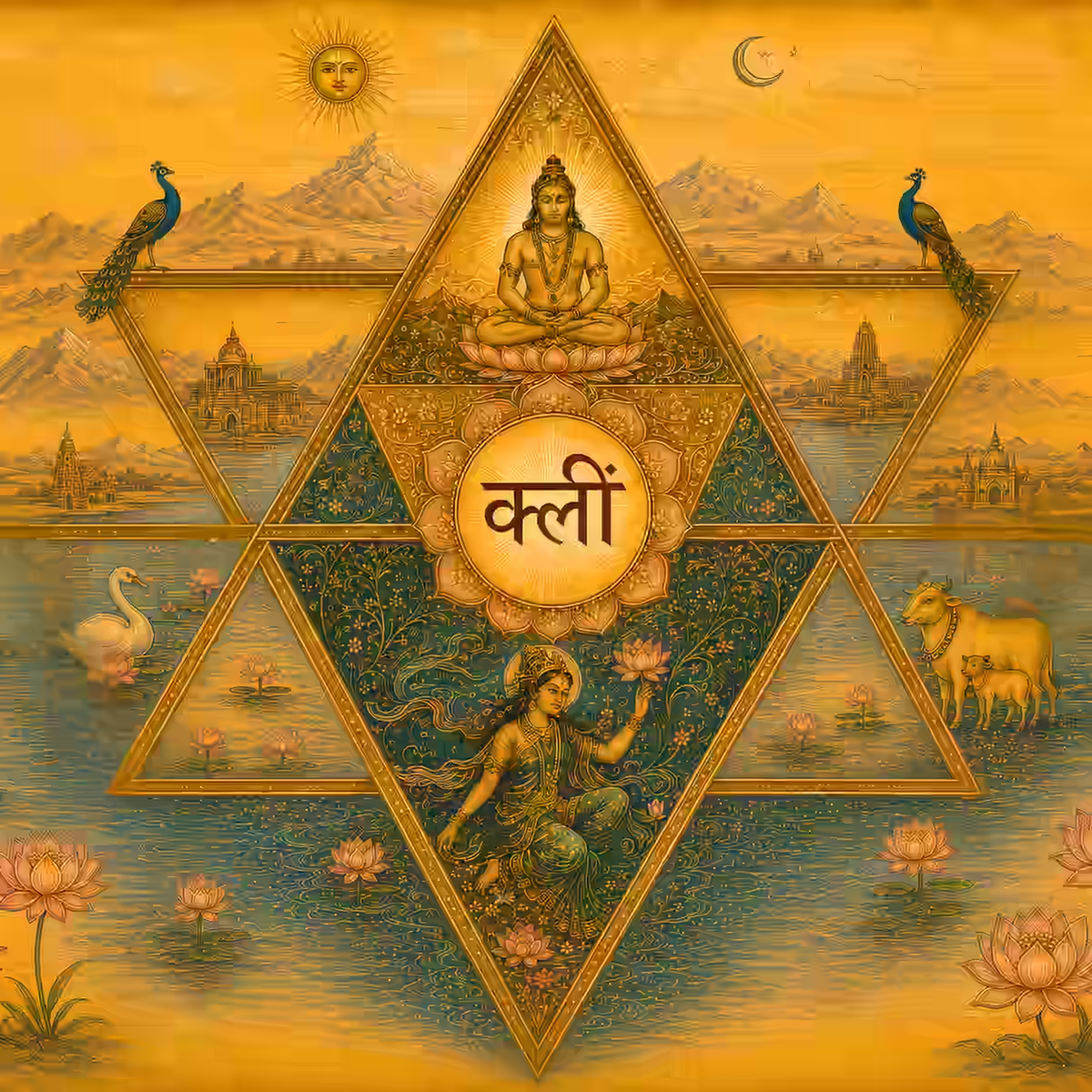
In this yantra, the upward facing triangle represents the unmoving masculine energy. The downward pointing triangle represents the mobile energy, Prakriti, that manifests and moves consciousness. They intersect, forming 6 triangles surrounding the Kleem Beeja.
The presence of Shreem and Hreem in these surrounding sub-triangles have deep significance in the Kamadeva Yantra.
Shreem represents Beauty and Charm (Srimati Lakshmi Devi) while Hreem represents dynamism and animation of the material universe (Devi Bhuvaneshwari). They are the two feminine powers of the Kleem Beeja.
The 8 Petalled Lotus: 8 Names and their Hidden Symbolism
In the yantra, the 8 lotus petals (Ashtadalas) depict the eight prime names of Shri Kamadeva. Each name indicates a distinct or symbolic quality of Shri Kamadeva that manifests in people’s lives.
We shall study from the first central petal and move clockwise.
1. Kama: Embodiment of Love and Desire
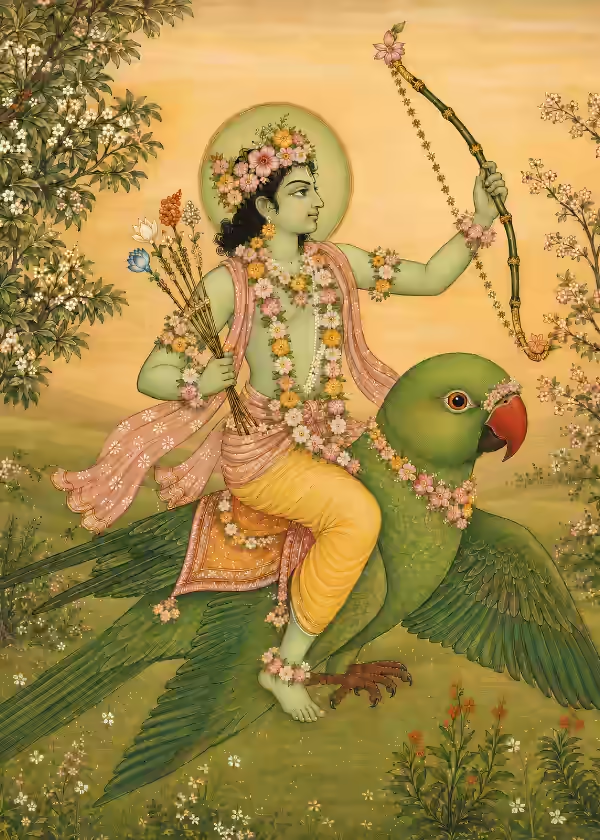
Kama is generally understood as the desire for sense gratification or pleasure-seeking tendency. It is given numerous synonyms like attraction, companionship, passion, etc
Prioritizing the demands of the senses gives rise to Kama or desire.
Desire is the mother of creation. Without desire, life cannot continue.
Kama or desire operates via the three modes of material nature.
In the mode of Tamas, desire expresses itself as self-destructive habits like intoxication and possessiveness. It also leads to immorality, as the person seeks pleasure without regard for the other person. In this state, desire loses its tenderness, becoming a source of bondage and suffering.
In the mode of Rajas it comes forth as ambition, passion and sensual longing. It brings desire to action, but also drags along restlessness or the problem of power control in relationships. Hence, Dharma becomes extremely crucial to remain balanced.
However, in the mode of Sattva desire is expressed as affection, and sacrificing love. Here, personal desire is not given first place. More attention is given to the other person, so that harmony is preserved. A person begins to look beyond physical beauty, which is often the first doorway through which Kama arises.
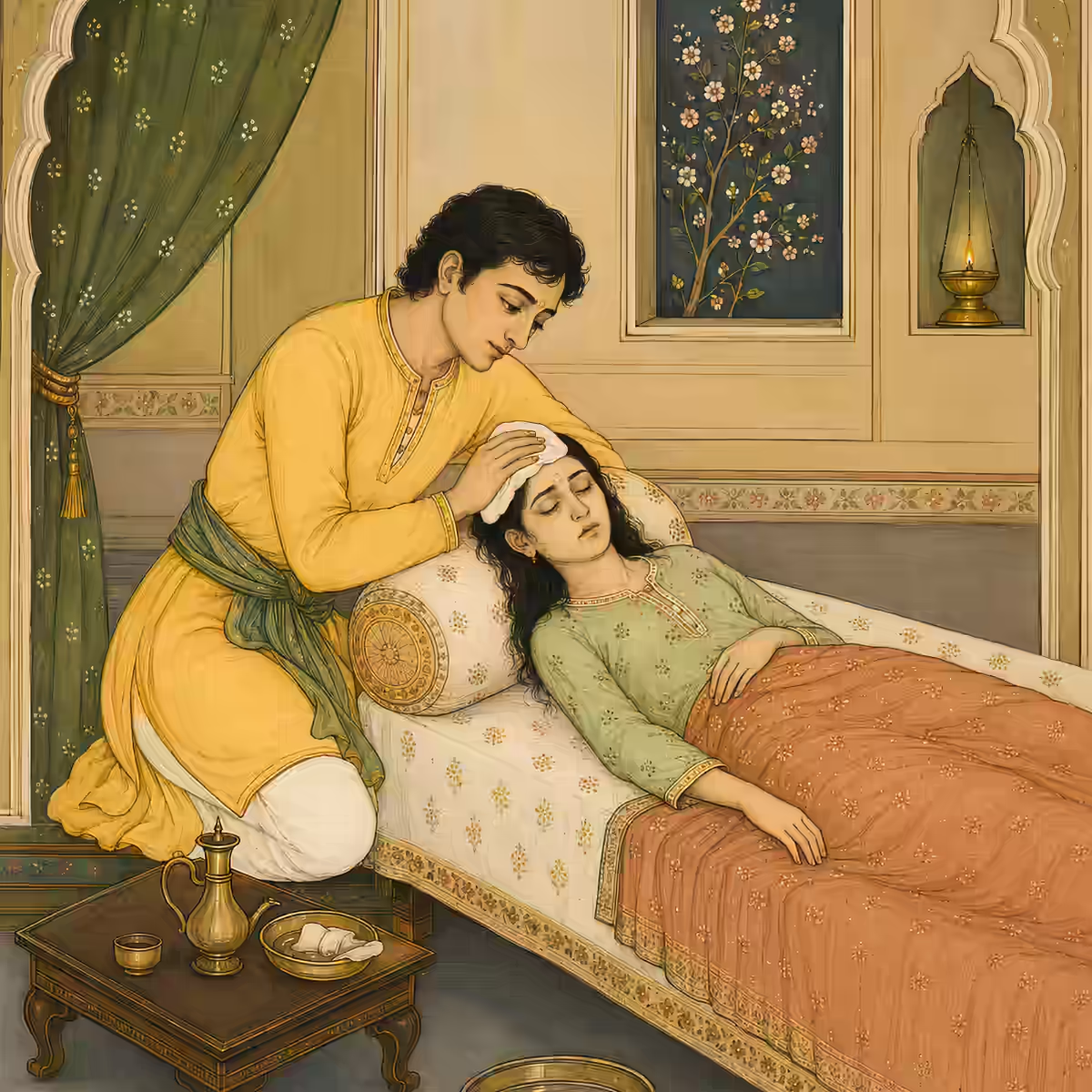
In Sattva, desire is hinged to the sublime qualities of a person. Attraction persists longer due to a more stable foundation because it is no longer dependent only on outer appearance, which is temporary, subject to the ever-changing effects of time.
Beyond these three states lies the state of Shuddha Sattva. Here, lust is fully transformed into the pure and pristine state of Shuddha Prema that Radharani has towards Sri Krishna. The lower influence of the three gunas have no trace in the realm of Bhava and Bhakti. In this state, the mind is attracted only to the Divine Lord, dedicated to His service alone. No other object or person charms the person.
So, at one level, Kama can be compared to a beam of white light which has all frequencies of colors, all shades of desire. Meditating on this petal works according to the intention and aim of the seeker
2. Bhasmasarira: Burnt to Ashes
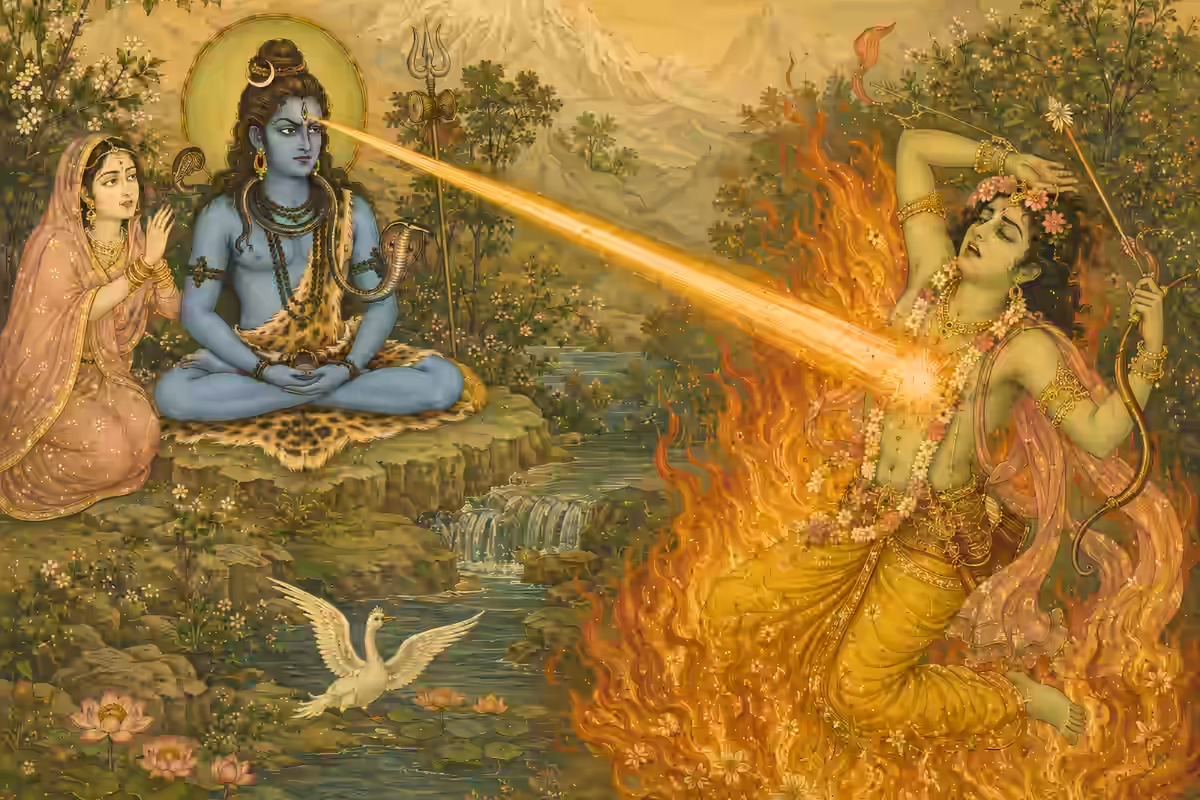
Bhasma or ash is not perceived negatively in Vedic scriptures. Rather it is one of the most purifying elements, expressing the truth of life very sharply. For regular people, Bhasma induces fear as it is associated with death. It is obtained after the body perishes and therefore marks the disidentification with the body and ego.
Body is the prime instrument of lust. But, here Kamadev is burnt to ashes by Lord Shiva. Bhasma Sharira literally means “the One whose Body was burnt to ashes”
Therefore, the core trait of passion is curtailed in this formless identity of Kamadeva. As Shri Bhasmasharira, he exists and yet he does not exist, just as fragrance exists even after the flower is no longer seen. It means that a person can remain joyful without bodily indulgence. Here, the grossness is replaced and subtlety is introduced, wherein physical activity is completely retrained.
The pride and identification with the body ceases to exist as attention is diverted towards the subtlest tattva, the soul. This is the essence of Brahmacharya.
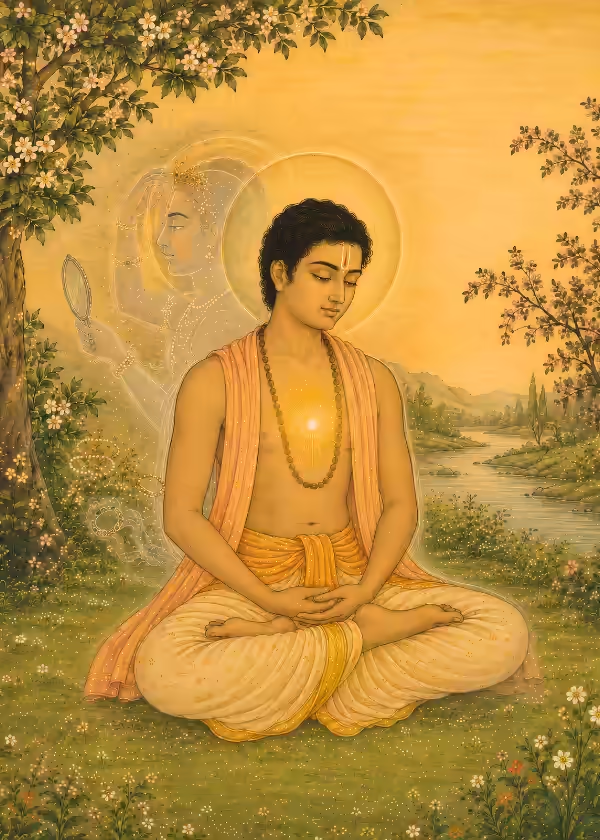
Meditating on the Bhasmasarira petal gives the realization that the body, beauty, and sensual attraction are all temporary. It helps cut loops of repeated indulgence that deplete the vital fluid. This petal is ideal to inculcate self-control or Brahmacharya.
While meditating on this petal, first pay respects to Sri Shiva, the Guru Tattva as He grants the state beyond lust. Lust and Death are immortal beings. But, the power of Lord Shiva is such that he has attained victory over both lust and death.
3. Anaṅga: The One without a Body
Meditating on this petal awakens love that is independent of outer charm or physical beauty. Decay is the final truth of the body. Beauty fades away. But, if love were to fade away too, then every person would eventually become lonely.
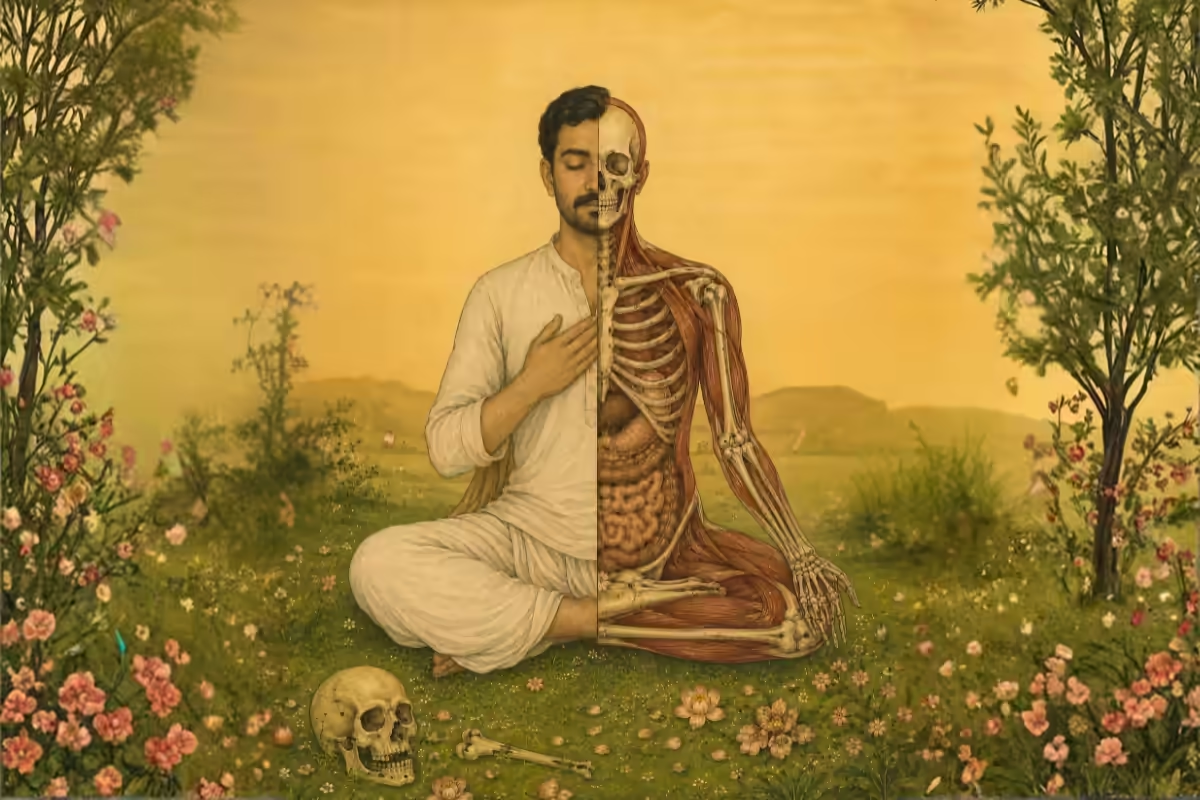
The weakness of material love is that it mostly remains tied to the body. A person is judged as more lovable because of appearance, complexion, youth, status, and background.
But true love moves beyond the body.
In the life of Gandhari, the blindness of Dhritarshtra did not shake her away from chastity and executing her duties towards him. She accepted and stood with him through a life of difficulty.
Devi Sukanya, sets a similar example. Though she was a young and beautiful princess, she served her husband Rishi Chyavana who was much older and physically weak.
These examples highlight the meaning of Anaṅga.
Hence meditating on this petal reduces obsession with the body and image consciousness.
4. Manmatha: The Agitator of the mind
“Matha” indicates churning. “Manas” refers to the mind. Manmatha means the one who churns the mind. This name shows how desire sets in by causing restlessness.
Agitation is a quality of Kama (lust) while the natural state of the soul is Sat-Chit-Anand (Existence-Consciousness-Bliss). The soul is situated in a perfect state of equilibrium. But, when lust rises in the mind, it creates ripples. It pulls the mind in multiple directions towards satisfying the senses, thereby creating confusion and pangs of separation.
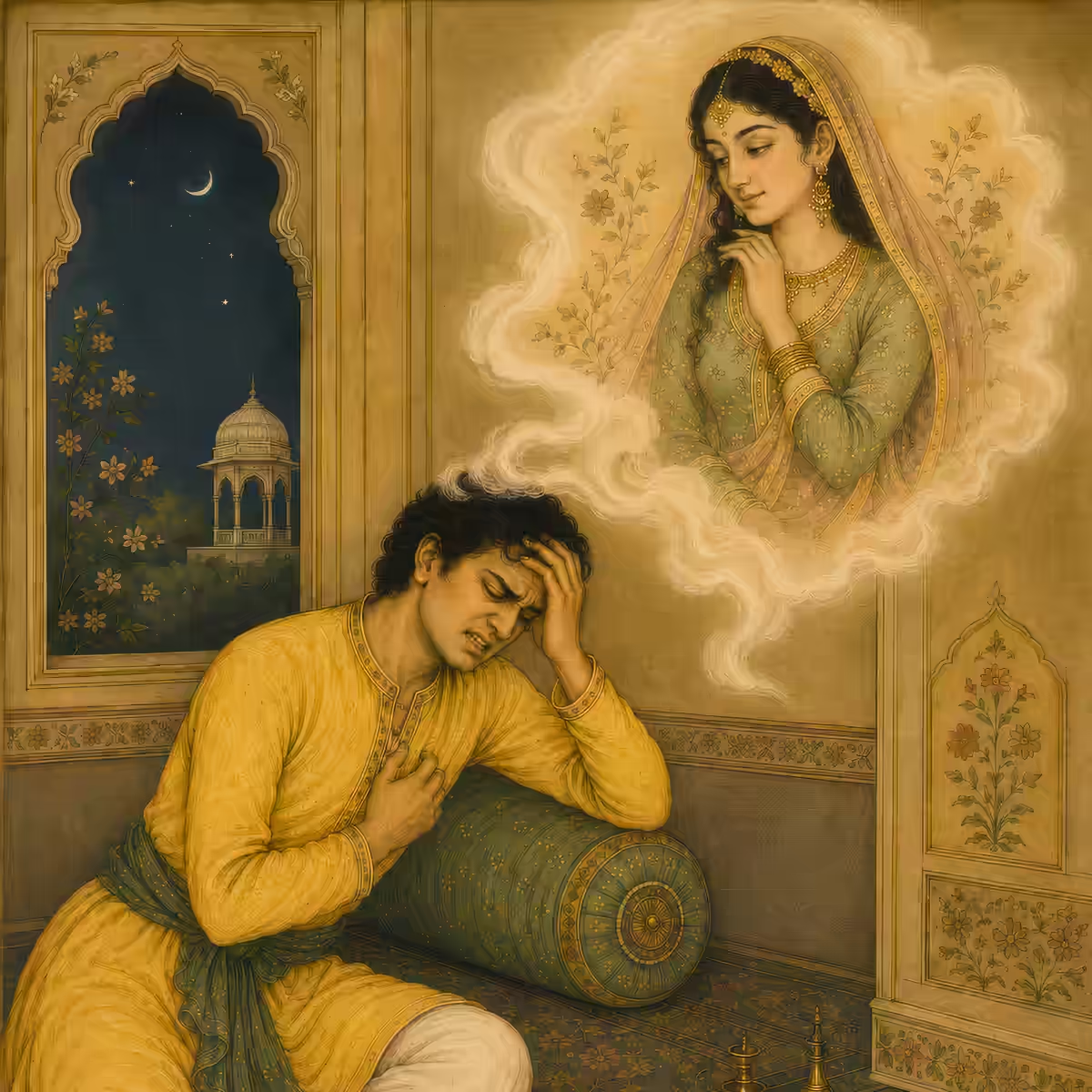
Meditating on this petal helps the seeker observe lust before it causes mental unrest. One is able to be a witness of how lust agitates the mind (Man-Matha). Therefore, regular meditation brings awareness in the mind before agitation sets in.
It is important to perform this meditation process along with a Guru-Energized Yantra for optimum results. This is because, when the guru prepare the yantra, keeping in mind the seeker and his worries, the Yantra responds to the prayer of the Guru. Yantra rachana for people is a means to extend grace.
So, a lot of Guru’s Shakti and Parampara Grace is infused into an energized Yantra. This power starts manifesting gradually when the seeker too reciprocates by his sincerity and commitment towards the worship/ meditation process. When this happens, a spiritual circuit is established between the Guru, Seeker and Deity that ultimately bring transformation.
5. Vasanta-Sakha: The friend of spring
Vasanta means the season of spring. Spring arrives after the harshness of winter.
This name of Shri Kamadeva represents the return of warmth after a period of neglect or isolation. Meditating on this petal brings freshness, and the fragrance of love into married life. Words and actions become less about oneself and more caring about the other person.
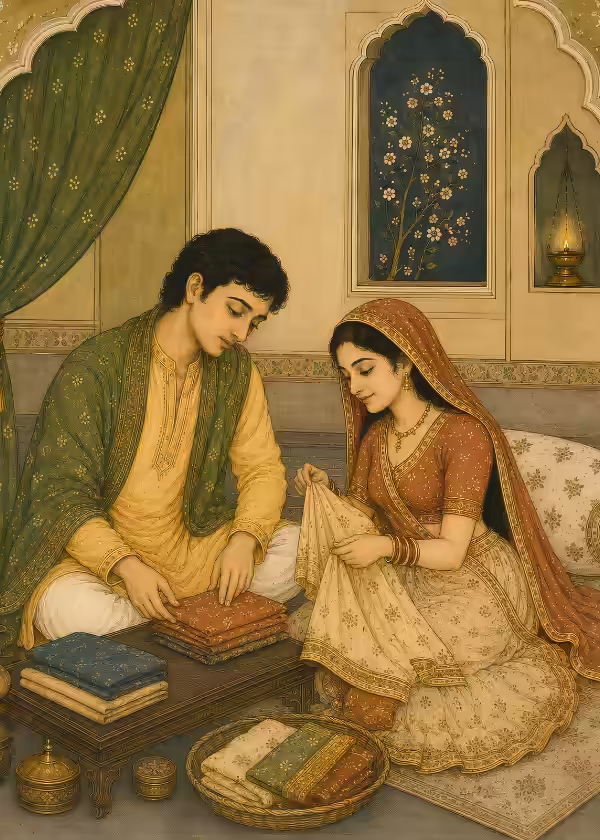
It enables newly married couples to understand each other and feel emotionally seen. For strained marriages, this yantra creates renewal just like how Spring revives the seasonal climate. It creates an atmosphere for expressing deep emotions without the interference of harsh emotions like pride or ego.
6. Smara: Embodiment of Memory
Lust is like the seed while the mind is like a fertile ground. But a shoot cannot grow strong without water. In the same way, memory acts as the water, causing amplification of lust.
Without memory, lust loses its hold over the mind. Although lust exists as an instinctive and biological response, it becomes a cause of bondage when memories become attached to it. When a memory triggers, the most instinctive response of desire is “I wish it were like that…”
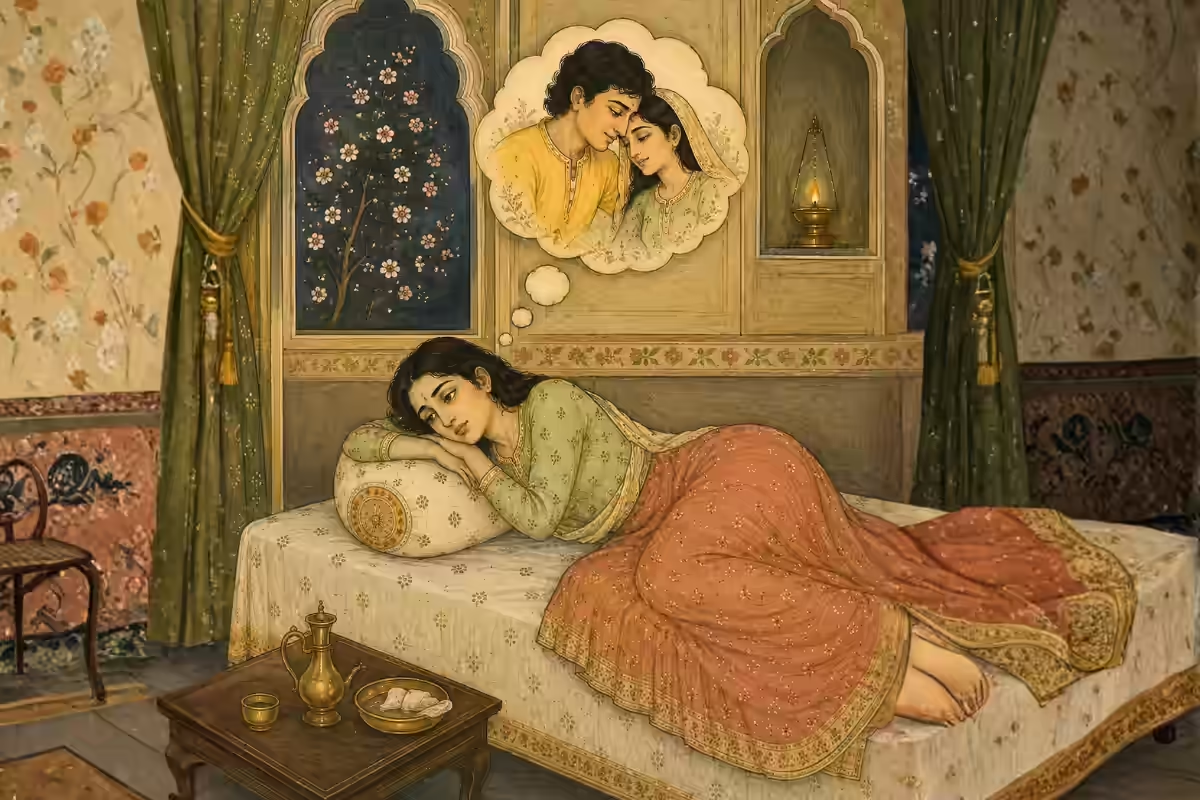
However, most memories are irrelevant because they feed on unsubstantial events and people that have no present value. Therefore, constant memory trips can consume a lot of mental energy.
Sincerely meditating on this petal with the intent to purge the mind of memories, helps break loops. It makes the mind more available for fruitful activities rather than wandering in an unreal, self-created world of fantasy.
7. Ikṣudhanurdhara: The wielder of the sugarcane bow
The sugarcane bow of Shri Kamadeva represents sweetness.
Sugarcane is the base material of sugar. Hence, Kama, (also known as attraction) is closely connected with Madhurya or sweetness. The Madhurashtakam of Sri Vallabhacharya reveals that everything about Lord Sri Krishna is nothing but sweetness. He is therefore all attractive, and that is thoroughly reciprocated by the Gopis in the Madhurya Rasa.
The highest and most purified form of Kama is called Prema Bhakti. However, this divine sweetness is difficult for the ordinary mind to understand.
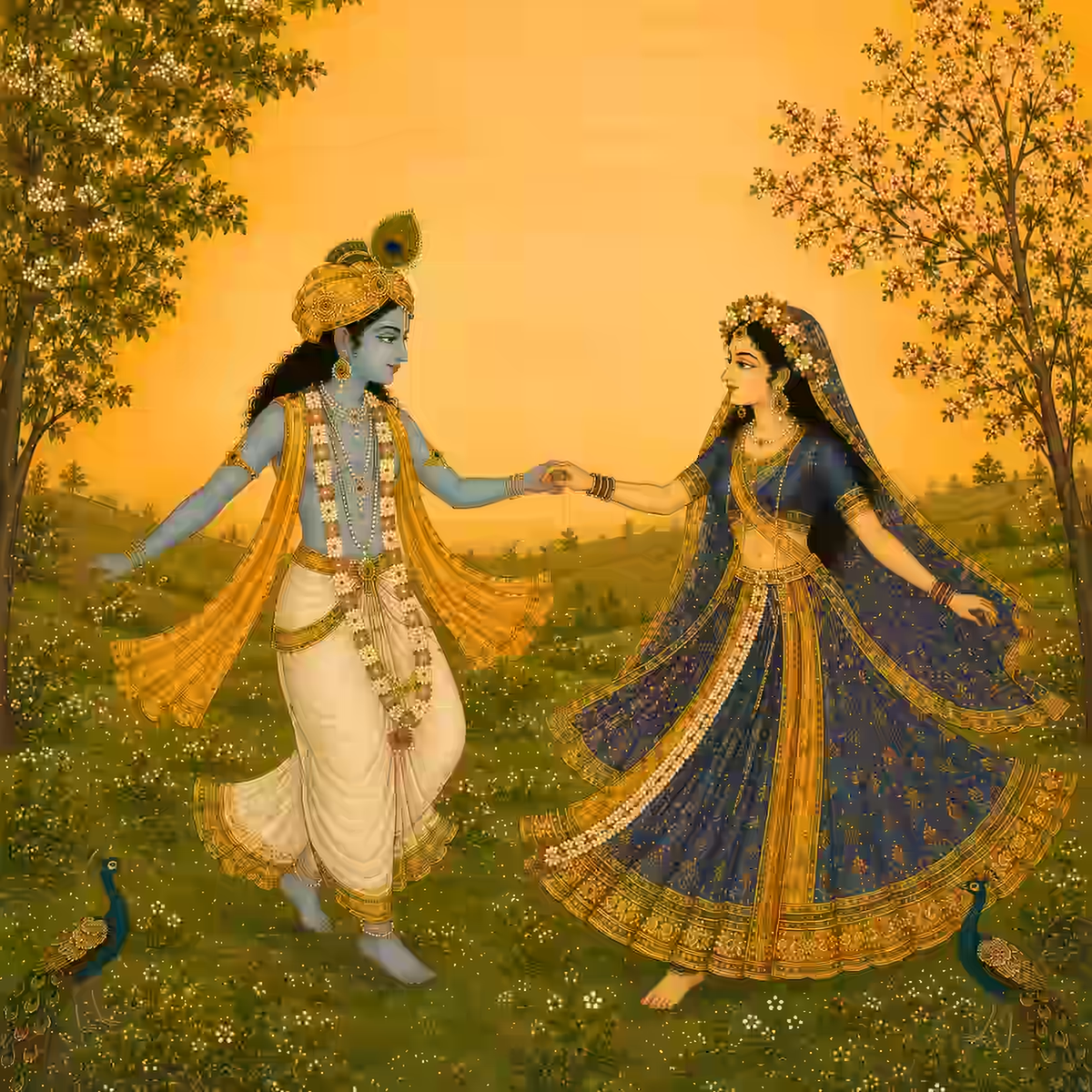
Sweetness is not just gross, to be tasted through the tongue. At a more worldly level, sweetness can also be experienced through speech and mannerisms. When an effort is made to please the beloved it embodies sweetness.
The bow becomes an important symbol here. In the iconography of Kamadeva, the arrow released from the bow causes union. So, in this context, just as a bow supports the arrow, sweetness becomes the foundation through which one enters the heart of a person.
Some people try to act chivalrous to impress or create a positive impression. However, dwelling on this petal brings genuine softness and exchange of emotions in love matters, rather than superficial behavior.
8. Puṣpabāṇa: Armed with Flower Arrows
Pushpa (flower) is delicate and fragrant representing the femine energy. On the other hand, Bana (an arrow) is sharp and unbending, portraying the masuline counterpart. Thus, Pushpabanana represents the union of feminine and masculine as one inseparable whole.
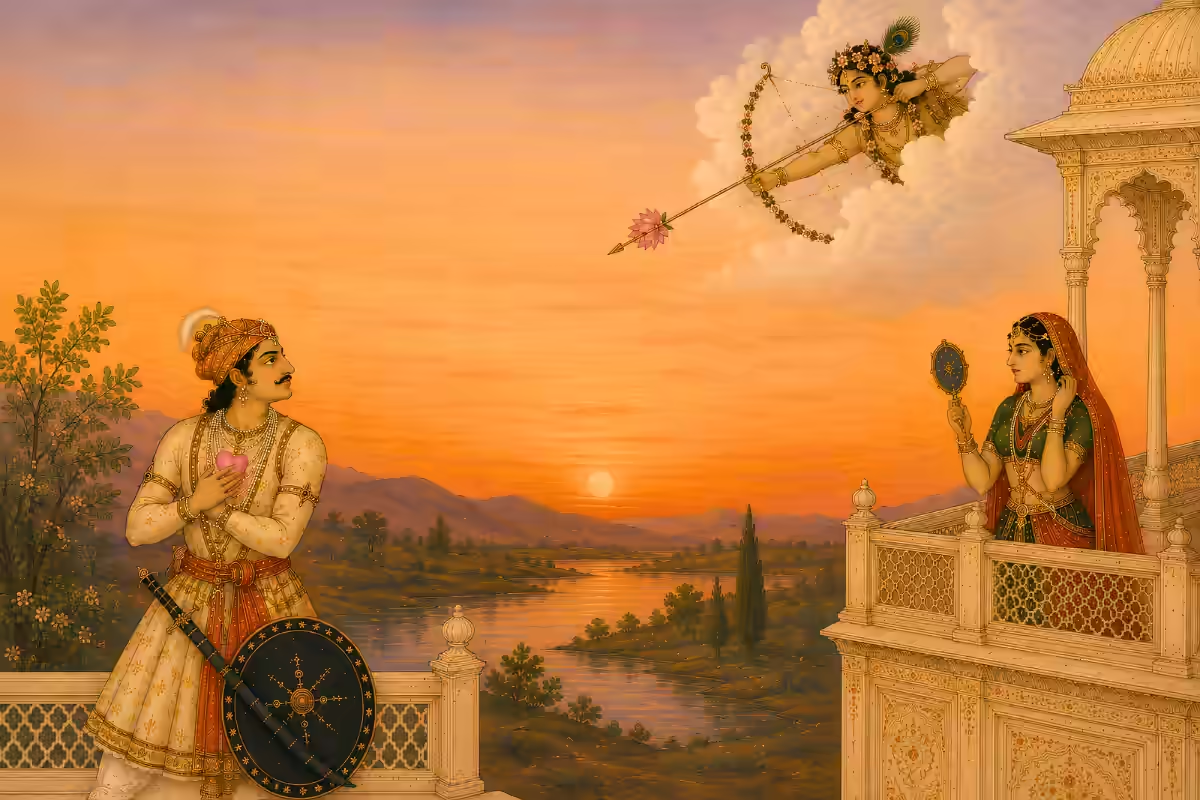
Kamadev aims a flower arrow at the chest, where the heart is present. A warrior can survive the attack of an arrow, but Kamadeva’s flower weapon never misses its mark.
He awakens the tender emotion of love even in the most deserted hearts. An arrow cannot go in multiple directions at once. Likewise as Puṣpabāṇa, Shri Kamadeva represents love that is faithful and everlasting.
Meditating on this petal helps a person remain committed to their partner without deviation. It guides love away from frivolous attraction and misdirected desire.
This petal brings to light that true love is willing to take responsibility and pursue its aim with a sense of sacredness. It is not flippant in nature.
Bhupura: The 4 Gates
The outermost boundary of the Yantra is squarish with 4 gates. It represents the earth element. When meditating on Kleem as Kamadeva, these gates represent the 4 planes of Physical, Mental, Emotional and Spiritual domains.
When we meditate on Kleem as Sri Sri Radha Krishna then these 4 gates transform into the 4 aims of Human life known as the 4 Purusharthas. They are Dharma, Artha, Kama and Moksha.
Why Is a Guru Energized Kamadeva Yantra Important?
The Kamadeva Yantra is extremely powerful for it is a geometrical representation of the Kleem Beeja. Due to this reason, it must be respectfully venerated and not misused. At YantraChants.com the Shri Kamadeva Yantra is specially prepared and energized by Guruji following all the traditional procedures. We do not provide it as a generic Yantra.
The main advantage of receiving a Guru-Energized Shri Kamadeva Yantra is that the seeker does not need initiation into the Kleem mantra.
Shri Kamadeva Yantra
- Helps Remove Past Emotional Heaviness
- Attraction and Charm
- Strengthens Venus and Desire
- Improves Love and Relationship Energy
- Energized with Birth Details During Brahma Muhurtha
- 8x10 inches- Detailed Geometry with Guardian Deity Names
- 5x7 inches- Simple Geometrical Yantra
- Yantra Installation Guide
- Voice Note of Compatible Mantra
Through the Yantra, the power of three important forces come together: Guru Shakti, Kleem Beeja, and the Kama Gayatri Mantra. With simple daily worship for about 2 minutes, the seeker remains connected to its energy in a safe and dharmic way.
How to Worship Kamadeva Yantra at Home?
This is a small process of worshipping the Shri Kamadeva Yantra that is energized by Guruji through the traditional Ramanandi Yantra Sadhana Process.
In this simple process recommended by Guruji Shri Damodar Das ji Maharaj, it is not necessary to perform the traditional Viniyoga, Nyasa and Dhyanam process. The method can be done by anyone who has the Bhojpatra Kamadeva Yantra acquired from YantraChants.com since it is energized specifcally for the individual.
The process benefits people who want to improve relationships and think creatively. For Pure Bhakti, specific yantras like the Shri Krishna Yantra are more conducive.
Setting up the Shri Kamadeva Yantra for Worship
In a clean room with the Kamadeva Yantra setup facing SouthWest/West (in the North-East/East Corner of the Room).
Inviting the Guru Tattva: The witness
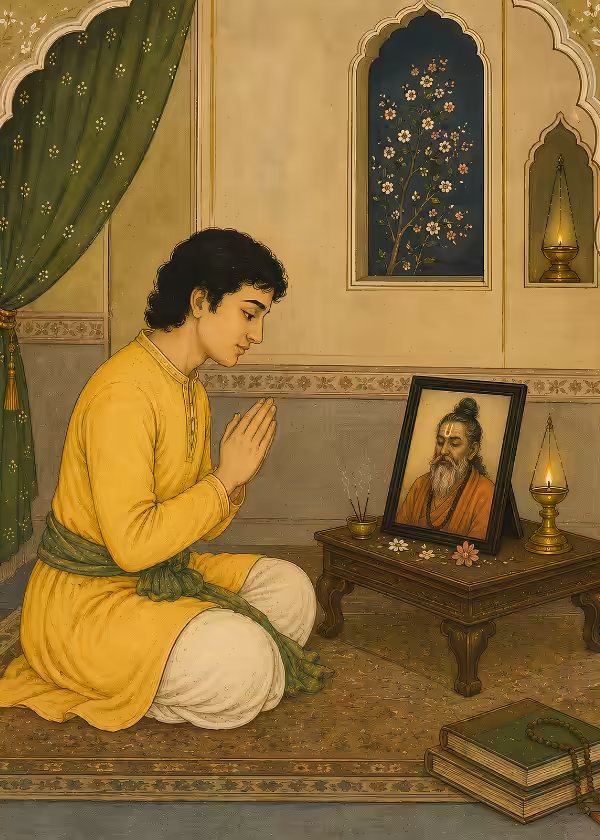
- Install a small photograph of your guru near the Yantra.
- Those who do not have a personal Guru can keep a photograph of Guruji to seek his blessings. This is important for overall welfare.
One may wonder why invoking the Guru Tattva is essential. At present, worldly problems often appear magnified and difficult to handle. The Lord may feel distant and unreachable. Through Yantra worship, we make an effort to bring the presence of the Lord closer into our lives.
But this becomes possible through the support of one who has personally experienced Bhagawan. That being is the Guru.
The Guru becomes the divine channel through whom the blessings of the Lord are received. Without this channel, many seekers may not be able to experience that grace directly.
At YantraChants.com, we have seen this process invite grace. Many seekers using the yantras of Guruji came forward to acquire an image of Guruji for their daily prayer. This has made their practice more effective and inwardly connected.
Honouring the Kamadeva Yantra
- Place the Yantra about 2 to 4 metres away slightly below eye level.
- Sit facing the Yantra in Sukhasana or Padmasana.
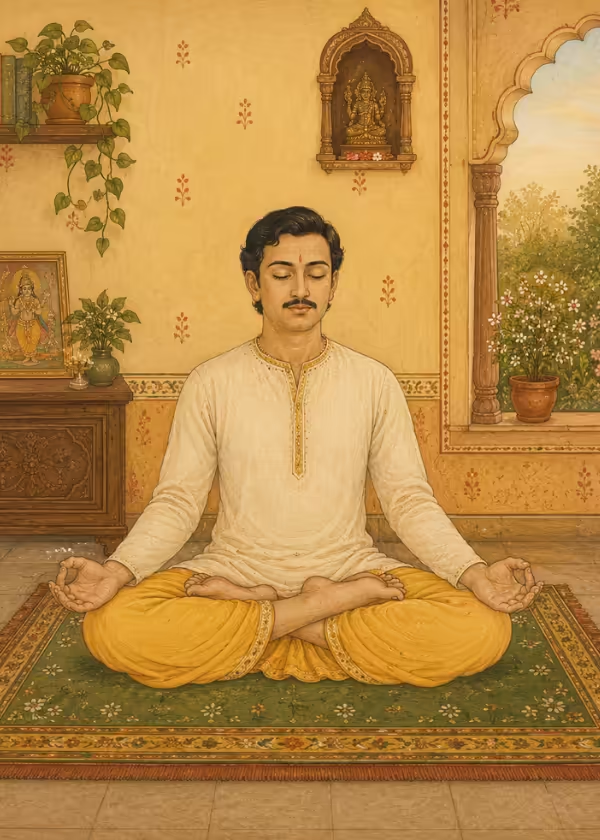
- Light a Ghee lamp. The lamp can either be of brass or mud.
- Offer flowers of any colour, dhoop, and some fruits to the Yantra Devata.
- Then prostrate humbly before the Yantra and express your innermost desire. Ensure that this desire is fully aligned with Dharma.
- Because of the Paramparic energization of the Bhojpatra Yantra, the Shri Kamadeva Yantra retains your intention to bring suitable changes in life.
Mantras to Chant Before Kamadeva Yantra Meditation
The Mantras of Kamadeva can cause restlessness and mental agitation as it is a direct representation of Kama (Desire). Though, it has its benefits in bringing momentum to relationships, it is advisable to chant mantras of Sri Krishna instead as it has the spiritual power to tame the mind of its vices. To resolve problems related to love and relationships, Divine Grace is necessary.
While Kamadeva Yantra Meditation Sadhana does employ a symbolic meditation process, when it comes to chanting, it is always recommended to chant Sri Krishna Mantras. So, the Sadhana process is effective for it has the Kamadeva Yantra that directly addresses grosser concerns along with Sri Krishna Mantras for greater mind control and to attract Divine Grace.
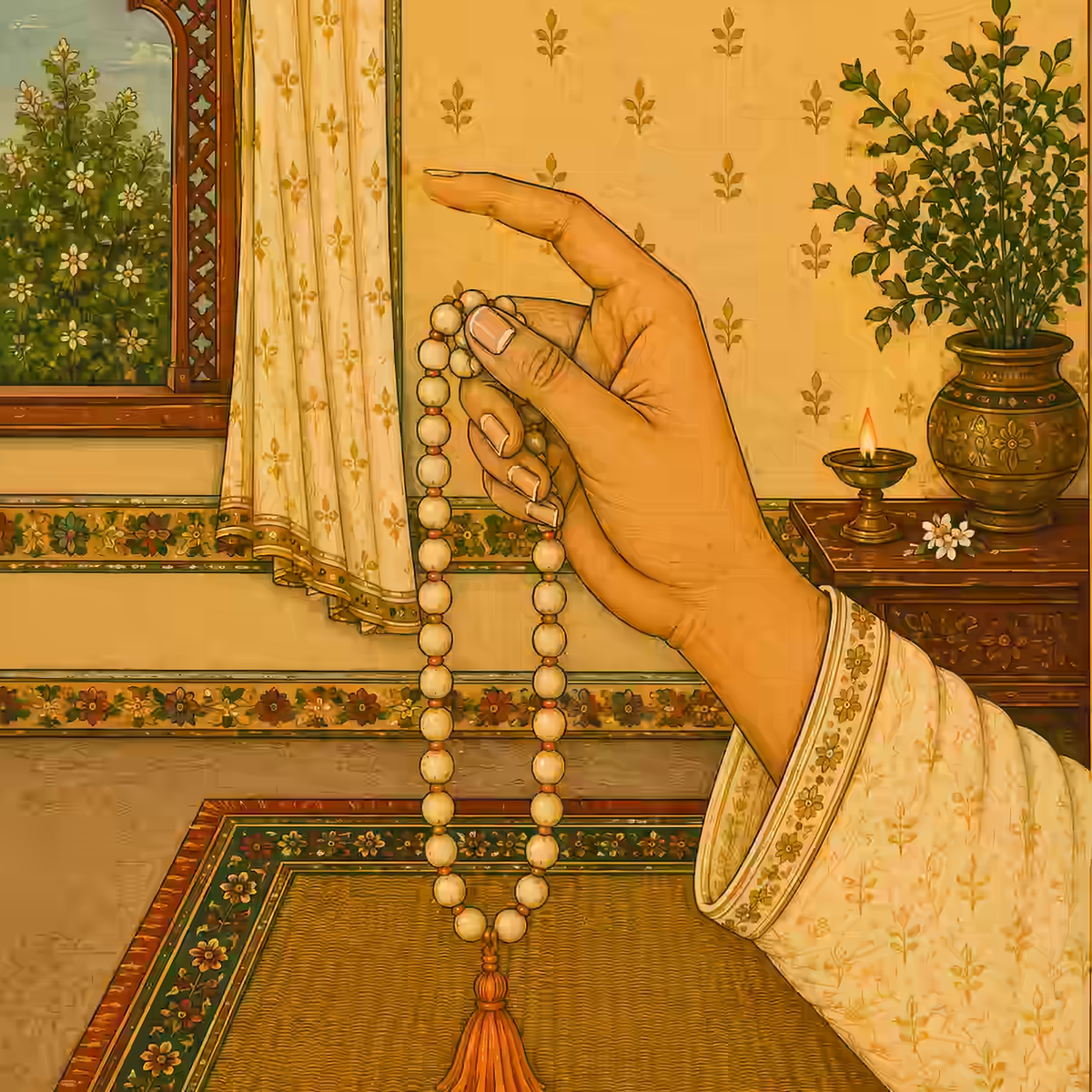
- For uninitiated individuals, chanting on a Neem mala is advisable to prevent repercussions of chanting on Tulsi Mala which is highly sattvik and sensitive to unclean food habits.
- Sadhakas who have received Vaishnava Initiation can use the Tulsi Mala.
- For the sadhana use a dedicated woolen or cotton asana.
- It is important to chant at least 3 rounds of the Hare Krishna Mahamantra for Bhakti and spiritual development.
- For grosser concerns, marital issues and delays kindly chant Shri Krishna Sharanam Mama. It is advisable to invoke the grace of Lord Krishna rather than directly chanting mantras of Shri Kamadeva as it may cause mental agitation if there are hidden motives.
The energized Bhojpatra Sri Kamadeva Yantra is compatible with Shri Krishna Nama Mantras. It is an alternative for resolving relationship concerns.
Chant 3 rounds of the chosen mantra. With closed eyes, visualize the Yantra in your mind.
Simple Daily Meditation on the Kamadeva Yantra
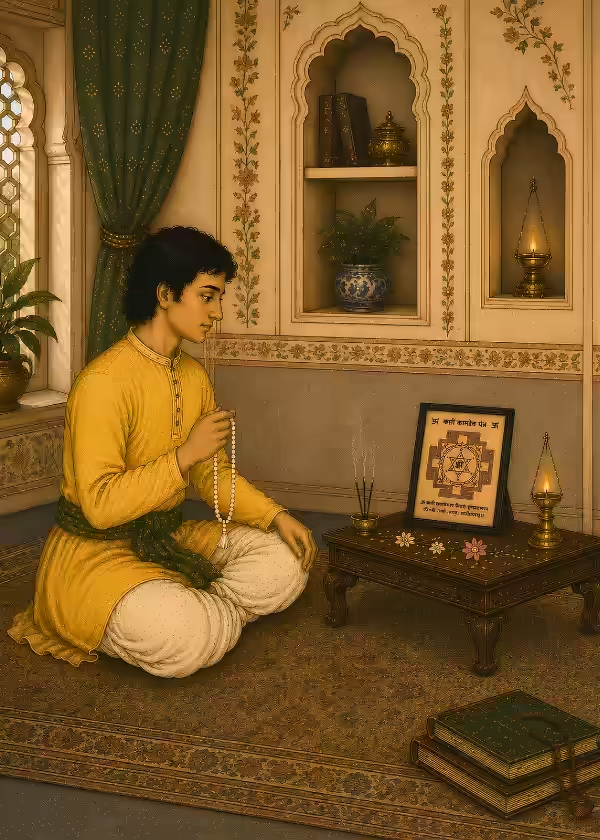
- After completing your rounds, open your eyes and focus on the Yantra.
- First, pay attention to the four outer gates of the square (Bhupura).
- Visualize the grace of Sri Radha Krishna flowing through these four gates of Purusharthas to purify every aspect of life.
Meditating on the Eight Petals of Kamadeva Yantra
- This is one of the most elaborate and powerful forms of meditation practiced by seekers of YantraChants.com.
- Contemplate on the first petal, and then move clockwise.
- Focus on the spiritual and subtle meaning of each Kamadeva name, as discussed above.
For Vaishnava devotees, visualizing the Ashta Sakhis on the eight petals is a powerful Shuddha Sattvik equivalent to the literal Kamadeva Nama meditation.
Do not focus on the results during the practice. This can disturb the sanctity of the meditation. It weakens the connection with the deity. Outcomes manifest through faith and commitment to the practice.
Meditating on the Six Triangles of Kamadeva Yantra
As you move toward the center, you will encounter the six equally angled triangles with the Beeja Aksharas Hreem and Shreem written within them.
- Focus on their symbolism as discussed above.
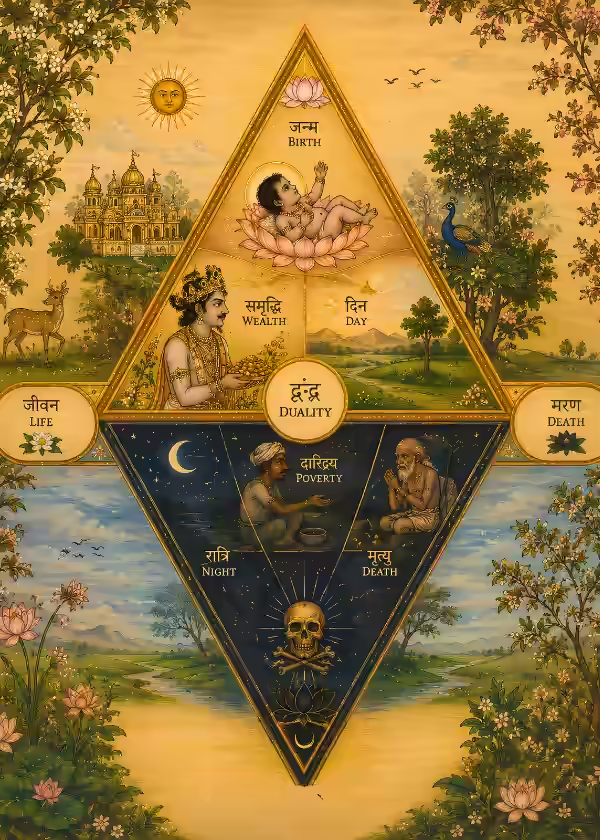
The upward and inverted triangles reflect the opposite forces of life. They represent birth and death, wealth and poverty, day and night, and all other dualities of the world.
- Absorb your mind into the Beejas.
- Slowly feel that your heaviness, anxiety, and inner darkness are being absorbed into these triangles.
- As this happens, feel the space being filled with the attributes of purified kama, as in attraction, grace, beauty, and well-being.
Then proceed toward the center of the Yantra.
Meditate on the Kleem Beeja at the Center
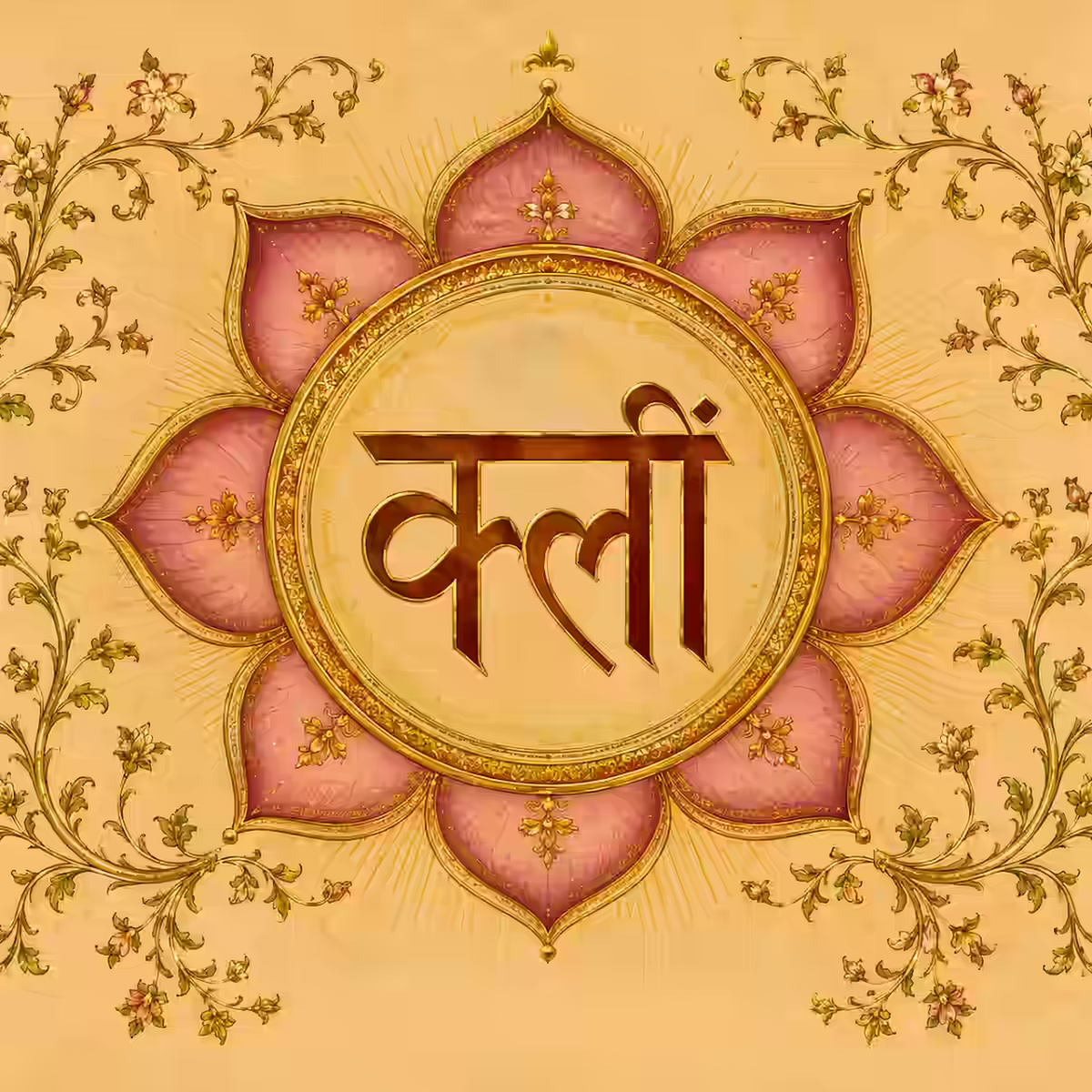
- Finally, rest your eyes at the center of the Yantra.
- You may envision Shri Kamadeva in his charming form that is similar to Shri Krishna.
- Focus on the center for a few seconds. Then slowly absorb the entire Yantra into your heart and close your eyes.
- Now visualize the Yantra filling the center of your heart.
- One form of the Yantra rises slowly toward the Sahasrara Chakra. Another form descends toward the base of the spine.
Grace and Prayers on you.
Final Steps of Kamadeva Yantra Meditation
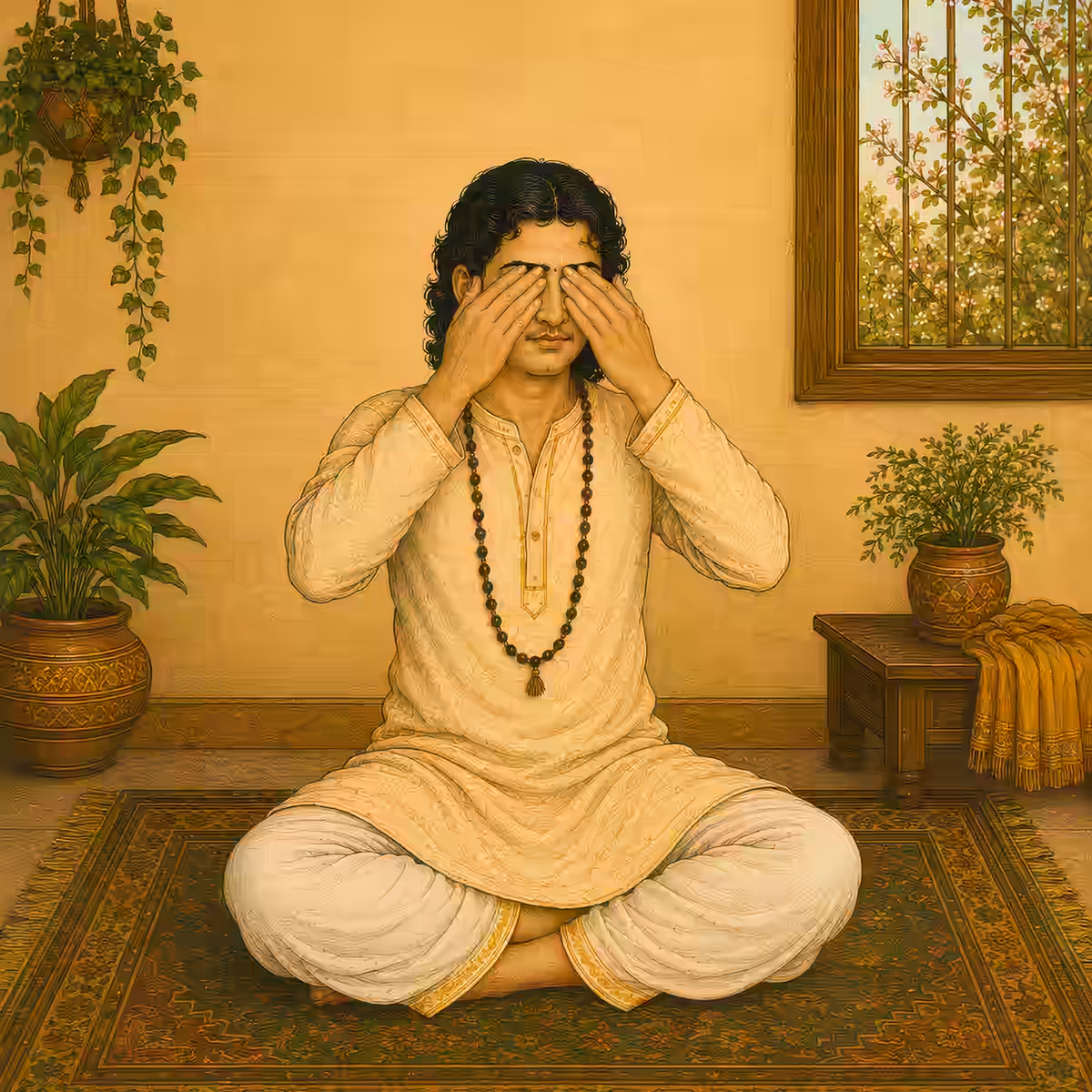
- Rub your palms after a few minutes of this intense visualization. Place them over your eyes first.
- Then place it over the face and body to strengthen your aura.
- Gradually open your eyes and fold your palms.
- Then men should bow down to the Yantra in Sashtanga Dandvat and women in Panchanga Dandvat.
Many seekers who followed this process from YantraChants.com have shared that Kamadeva Yantra meditation helped them handle difficult relationships with greater calmness.
Some also reported a rise in maturity, making it easier to understand their spouse and take decisions that have contributed to both their happiness.

Viraja Devi Dasi

Rohini Devi Dasi