
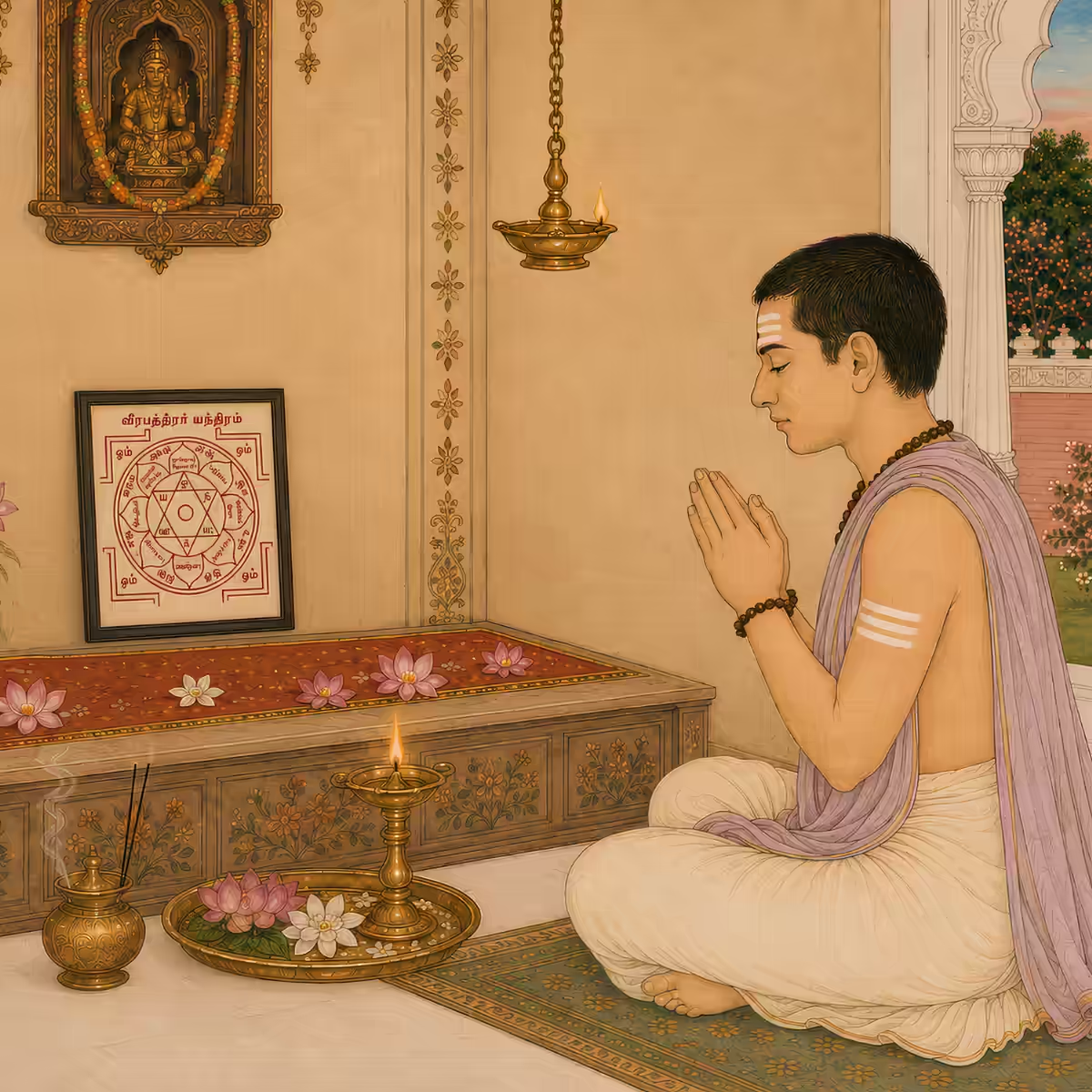
Traditions Of Veerabhadra Worship
Being a ritualistic and Traditional Deity, Bhagwan Veerabhadra is closely connected to Sampradayik Traditions. The Veerabhadra Mantra is mainly promoted within the Lingayat Sampradaya and in certain Shaiva Agamas.
Here’s how different traditions approach Veerabhadra worship.
Veerashaiva/Lingayat Sampradaya
The Veerashaivas (Lingayats) venerate Lord Shiva in His various Rudra forms, including Veerabhadra.
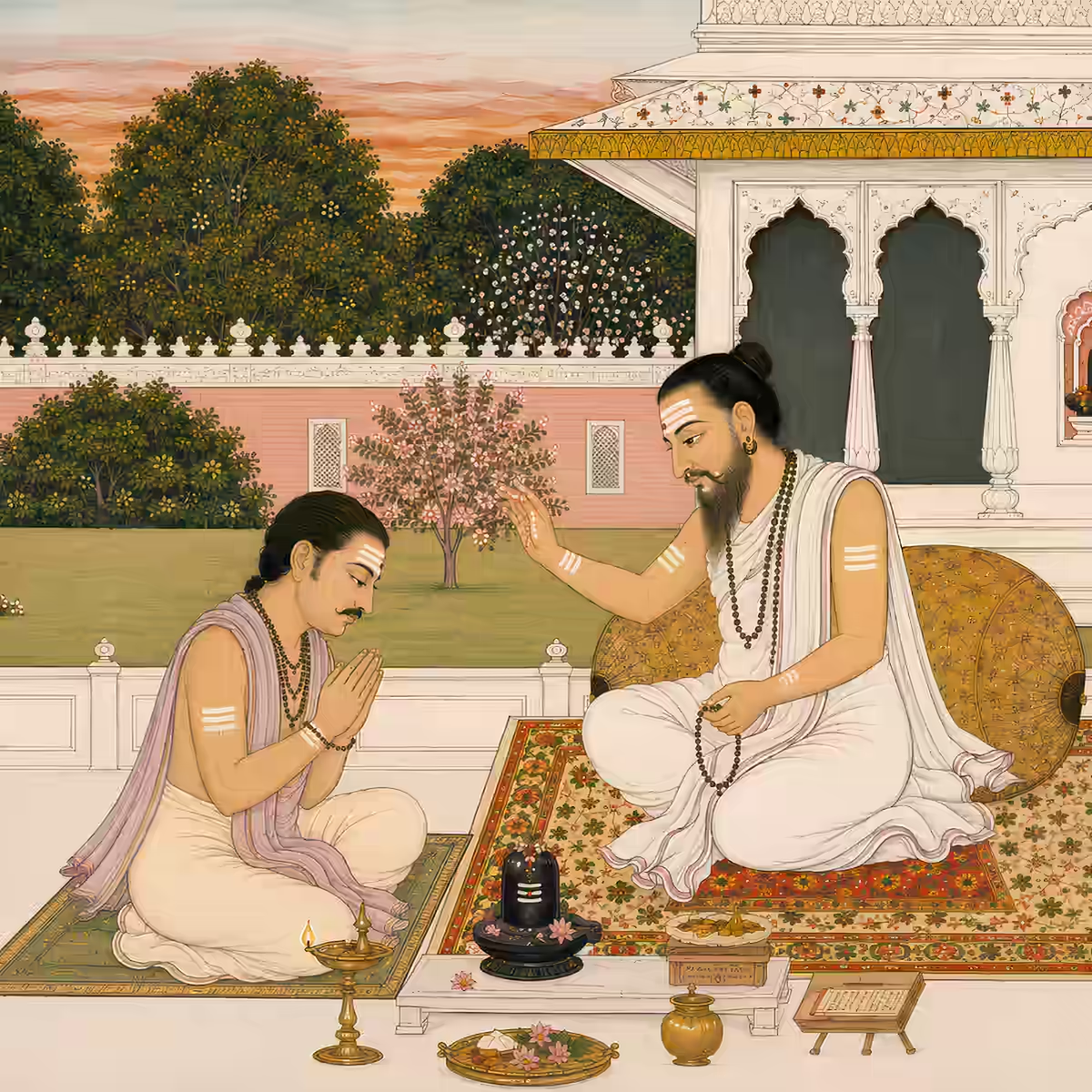
One must be under the care of Gurus and Sadhakas of this Sampradaya before beginning the sadhana or the Veerabhadraya Mantra.
In some Lingayat rituals, Veerabhadra’s name is invoked along with the Shadakshari Mantra (Om Namah Shivaya) for protection.
Shaiva Agama Traditions
The South Indian Shaiva Agamic traditions recognize Veerabhadra as one of the powerful forms of Lord Shiva, especially in the Saiva Siddhanta lineage.
Some Tantric texts provide Veerabhadra Mantras for protection and destruction of negative forces.
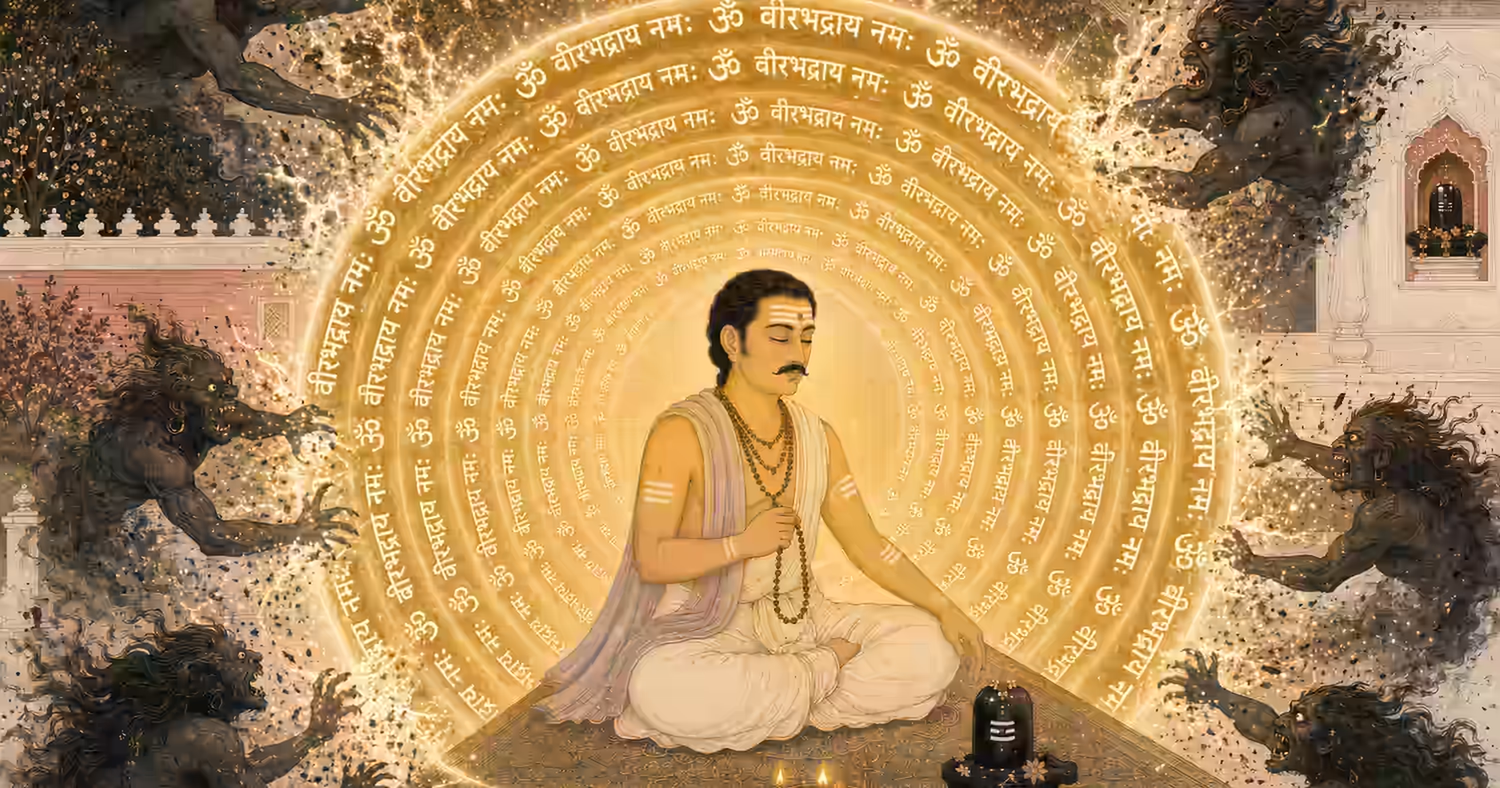
The Shiva Agamas and Upagamas mention special rites for invoking Veerabhadra for warding off powerful negative energies.
Bhairava & Tantric Shaivism
Kapalika and Kashmiri Shaivism emphasizes Ugra (fierce) forms of Lord Shiva. Lord Veerabhadra is considered Lord of Bhuta Siddhi (mastery over Elements) and Shatru Nasana (destruction of enemies).
Some traditions use the His Mantras in Shakti (Devi) Sadhana as well as it falls under Rajasic Sadhana and more particularly in Tamasika Worship.
The Om Veerabhadraya Namah Mantra recitation can invoke fierce energies. One must be more cautious if staying in the family fabric with parents, wife, and children.
Smarta Shaivism (Mainstream Shaiva Worship)
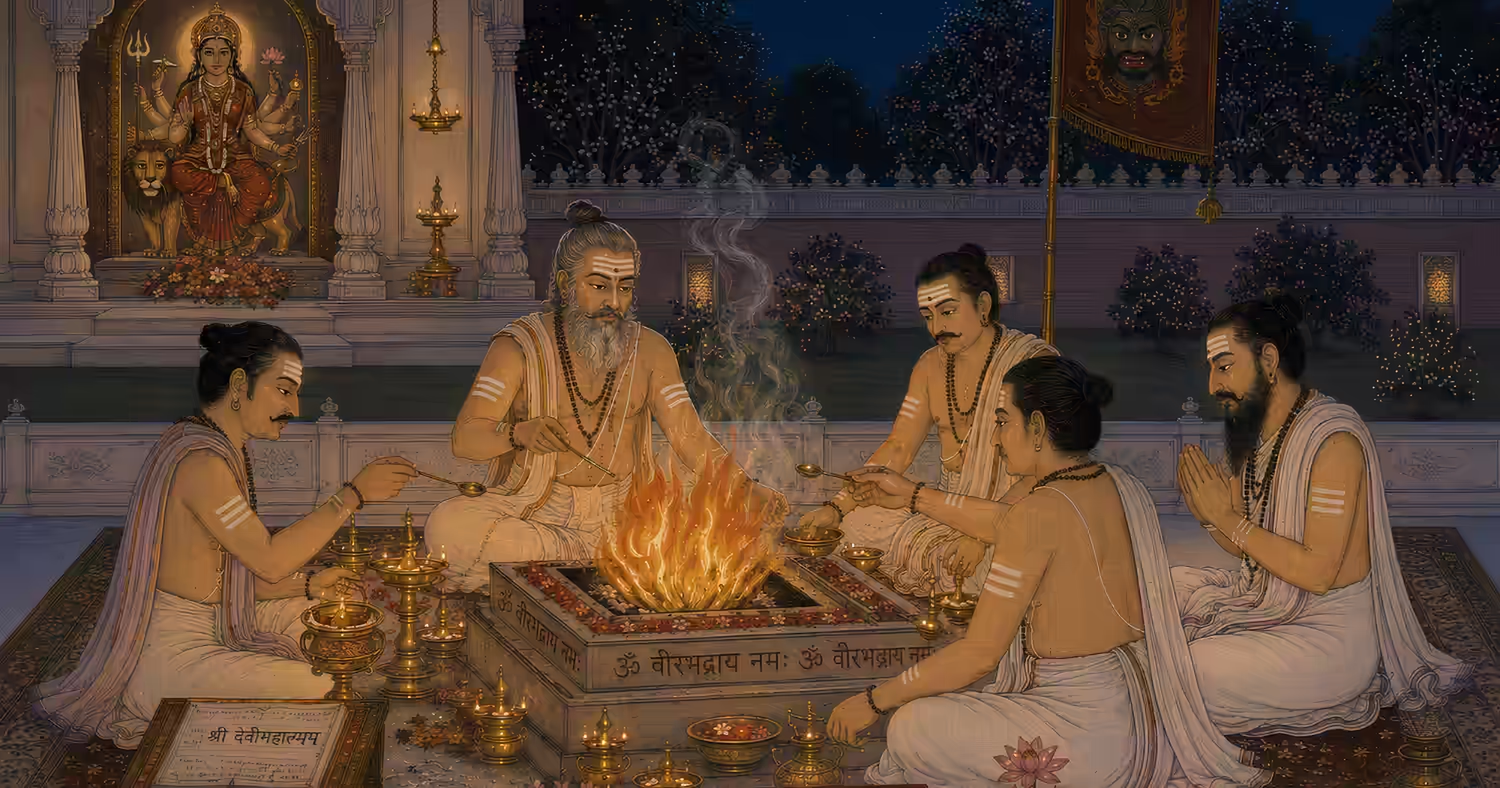
Mainstream Panchayatana Shaiva worship Veerabhadra Swamy as an aspect of Lord Rudra. While the focus remains on Shiva, some Smarta families and Pujaris invoke Veerabhadra in special Yajnas and pujas.
But this event is rare in recent times and not recommended for modern practitioners.
Are Kaal Bhairav and Veerabhadra the same?
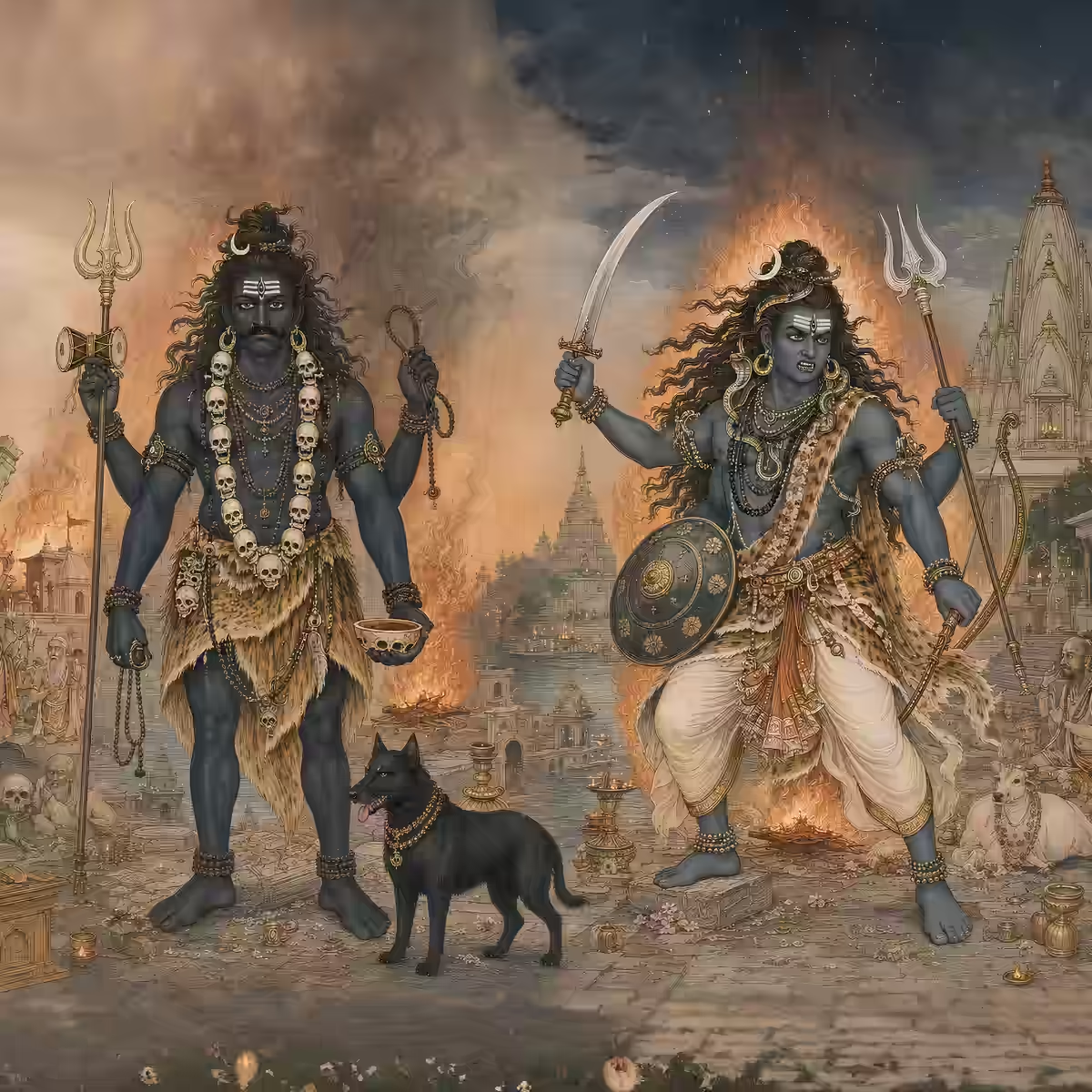
Lord Kaal Bhairava and Veerabhadra are different. Although both are manifestations of Lord Shiva, they have distinct origin stories, potencies, and purposes. These deities are protective and are also regarded as guardian deities.
The potency of the Veerabhadra mantra can be compared to that of the Shri Kalabhairava Mantra. Both deities have their distinct mantras, but require guidance and initiation.
How can we Worship Lord Veerabhadra?
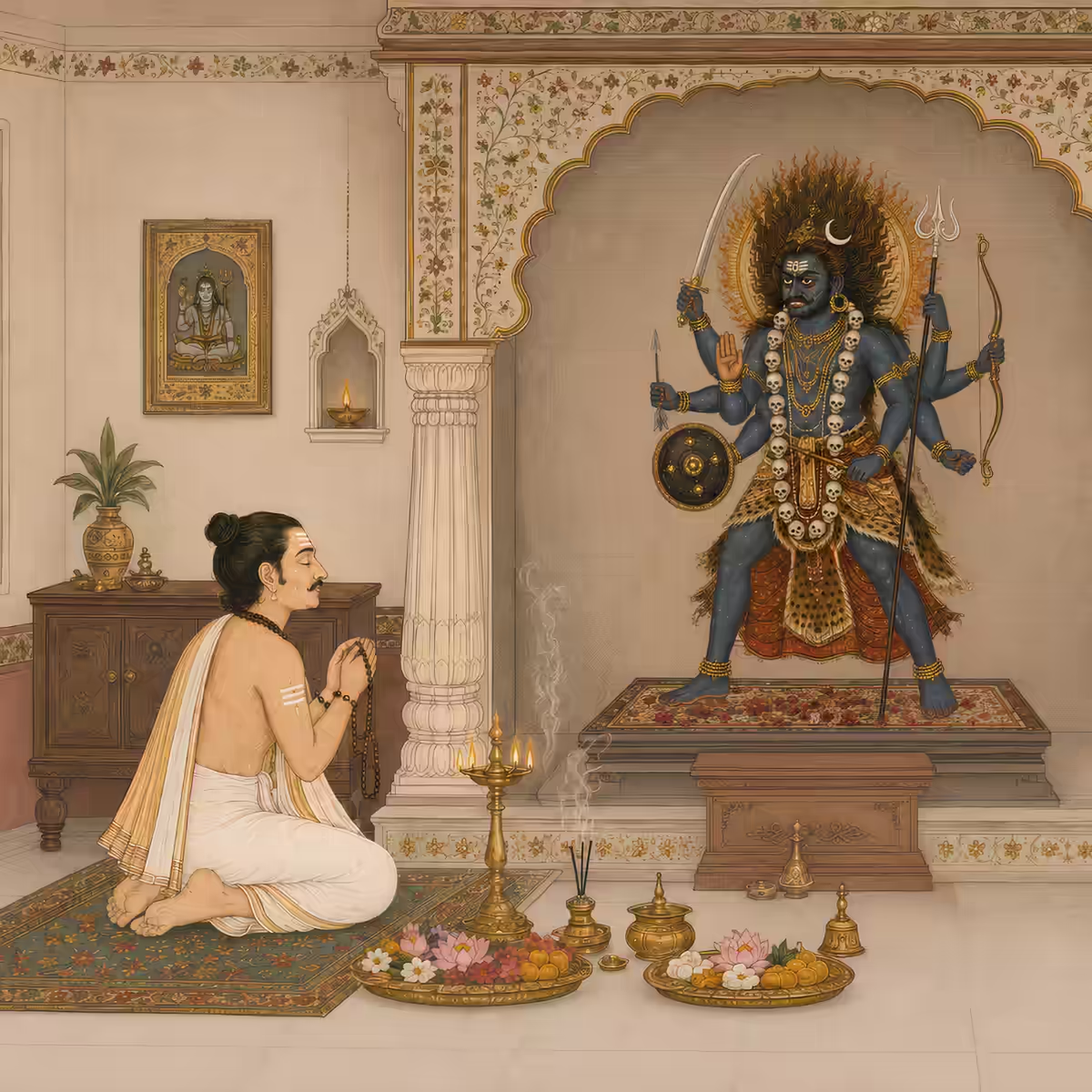
We have discussed the various Sampradyas that are related to Sri Veerabhadra.
The Veerabhadra worship has Sampradayik Traditions that guide a seeker into the authentic mode of worshipping the deity. It requires discipline and guidance.
For modern practitioners and householders who lack such an association, engaging in such intense practices is not recommended.
But, despite warnings and precautions, many people get attracted to Veerabhadra. For such individuals the Veerabhadra Yantra is an equivalent and safe alternative to chanting the Mantra.
The Veerabhadra Yantra is an accessible way to connect with His divine presence. The energised Yantra invokes protection and removes negative energy.
Keeping it in your home and by praying with devotion, one can align with the energy of Lord Veerabhadra. This involves no risks associated with advanced mantra practices.
The Veerabhadra Yantra is not just symbolic but a practical and powerful means to experience Divine Grace and protection.
Details of the Veerabhadra Yantra
At the very centre of the Yantra there is a Bindu.
Many Yantras either have a small dot or a circular outline in the middle. This Bindu symbolizes the seat of the Deity.
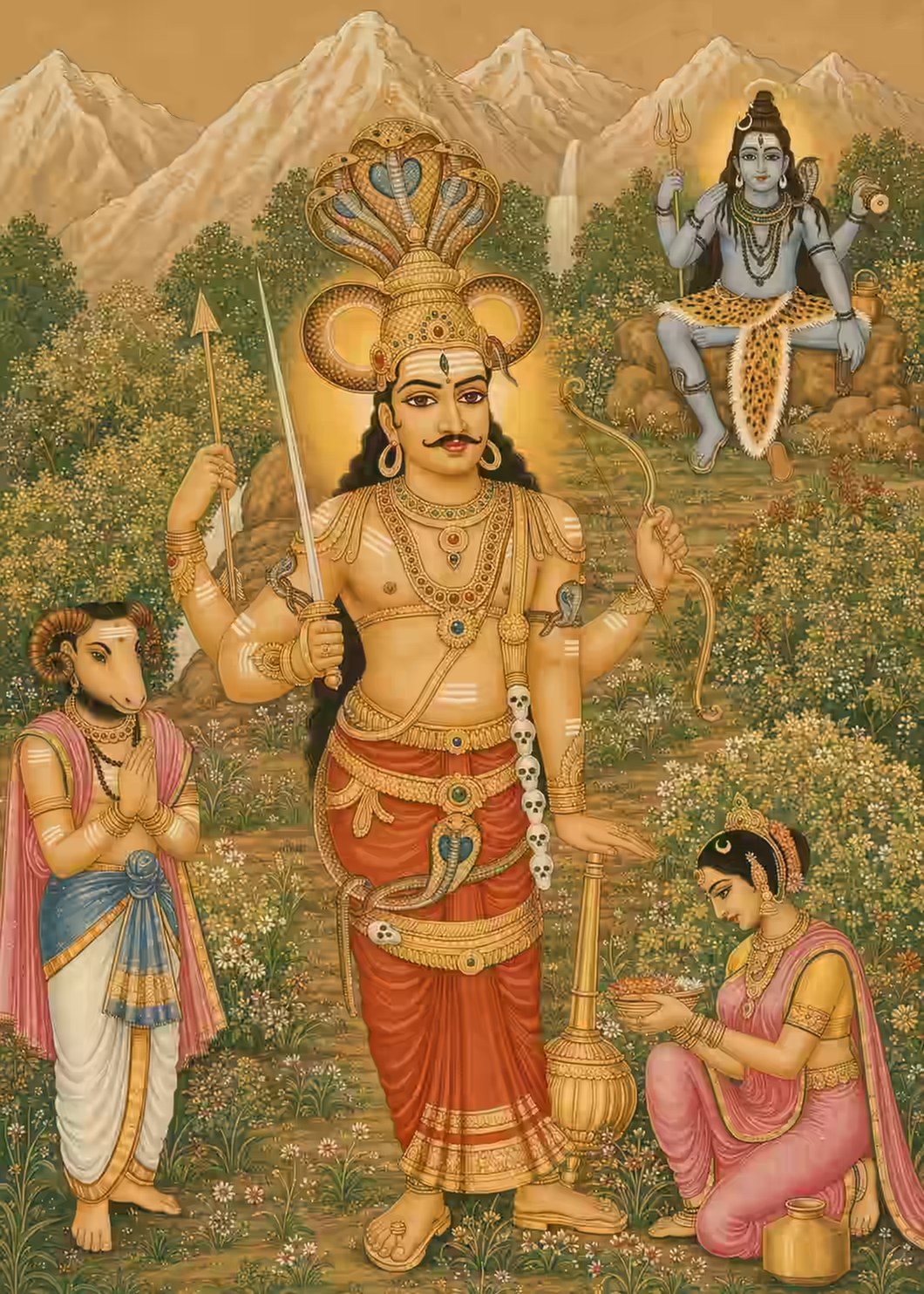
Shri Veerabhadra Yantra
- Protection from Negative Energies
- Courage to Face Difficulties
- Suitable for Home Worship
- Balances Powerful Divine Energies
- Energized with Birth Details During Brahma Muhurtha
- 5x7 inches and 10X10 inches- Simple Geometrical Tamil Yantra
- Yantra Installation Guide
- Voice Note of Compatible Mantra
There are 2 upwards and downward facing triangles in the middle of the Yantra. These triangles represent the masculine(Pursha) and feminine (Prakriti) energies.
They balance out the overall Yantra Shakti. These triangles form the Shatakona (six triangles). The syllables of the Shadakshari Mantra ‘Om Namaha Shivaya’ are written in them. This mantra forms the foundation of the Shiva Tattva. All this geometry is made inside the center of a flower.
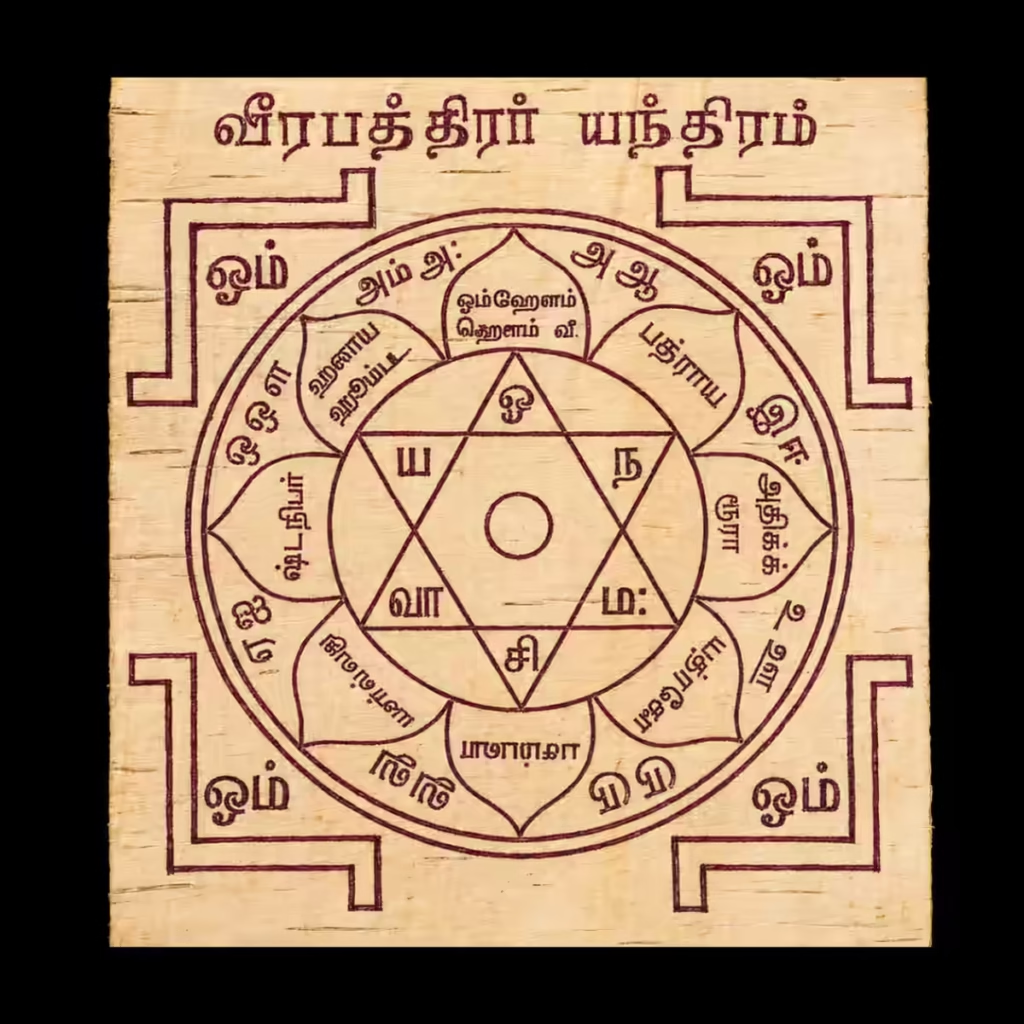
The petals of the yantra consist the mantra:
ॐ वीरभद्राय अतिक्रूराय रुद्रकोपं सम्भवाय सर्वदुष्ट निवर्हणाय हुं फट् स्वाहा
Meaning: Salutations to Lord Veerabhadra, the intensely fierce, born from Lord Rudra’s anger.
One who destroys all evil and harmful forces. May His protective power remove them completely.
When one worships this yantra, they invoke the prayer into their lives.
At the four corners of the Yantra the Divine Pranava mantra- Om is written in Tamil script. It symbolizes spiritual energy radiating in all 4 directions namely- east, south, west, and north. Therefore, the Om serves as a protective shield.
Forms of Veerabhadra and Their Significance
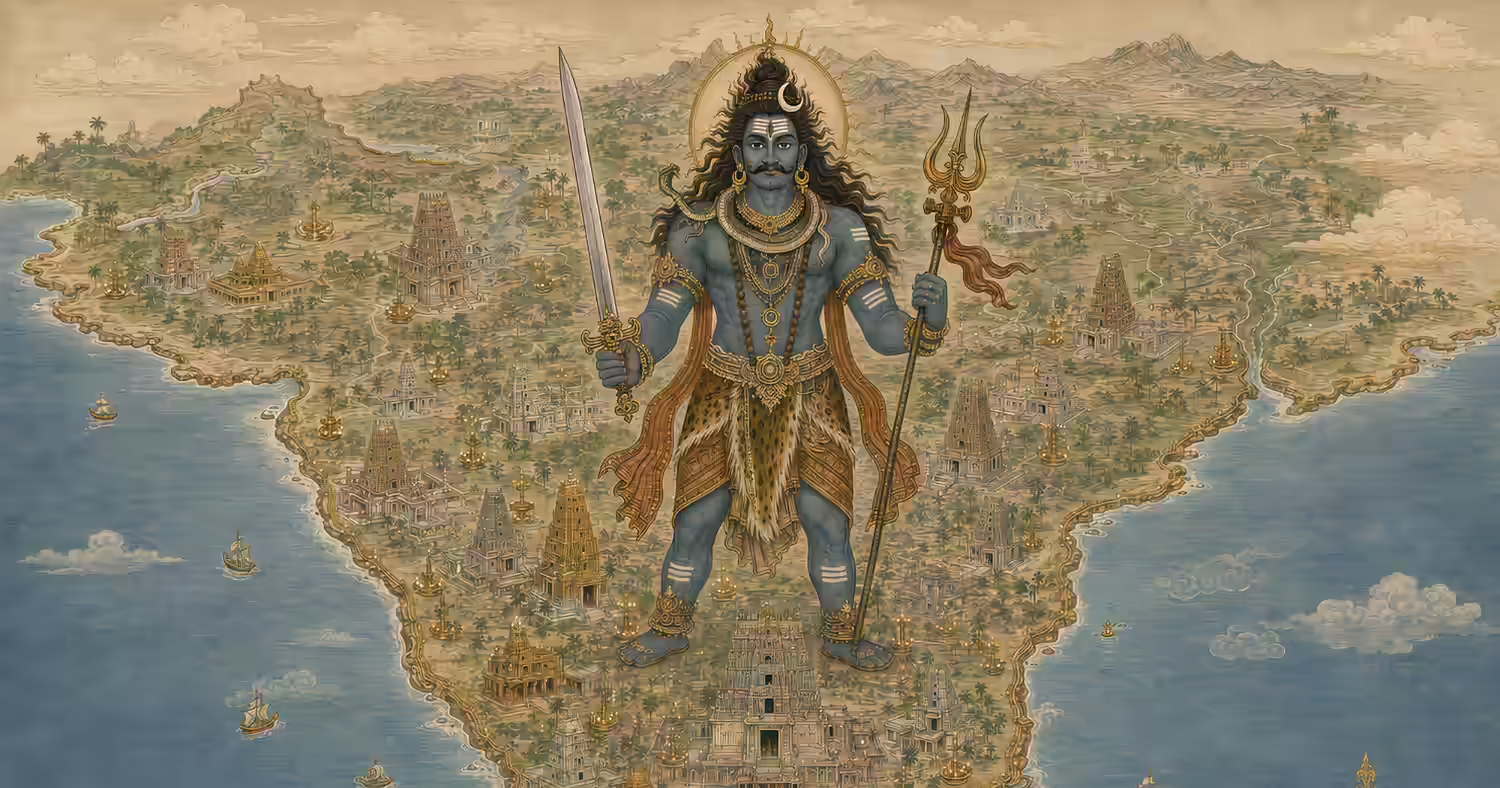
Veerabhadra Swamy is mainly worshiped in Southern India. There He is revered as a Guardian and is known as Veerabhadreshwara.
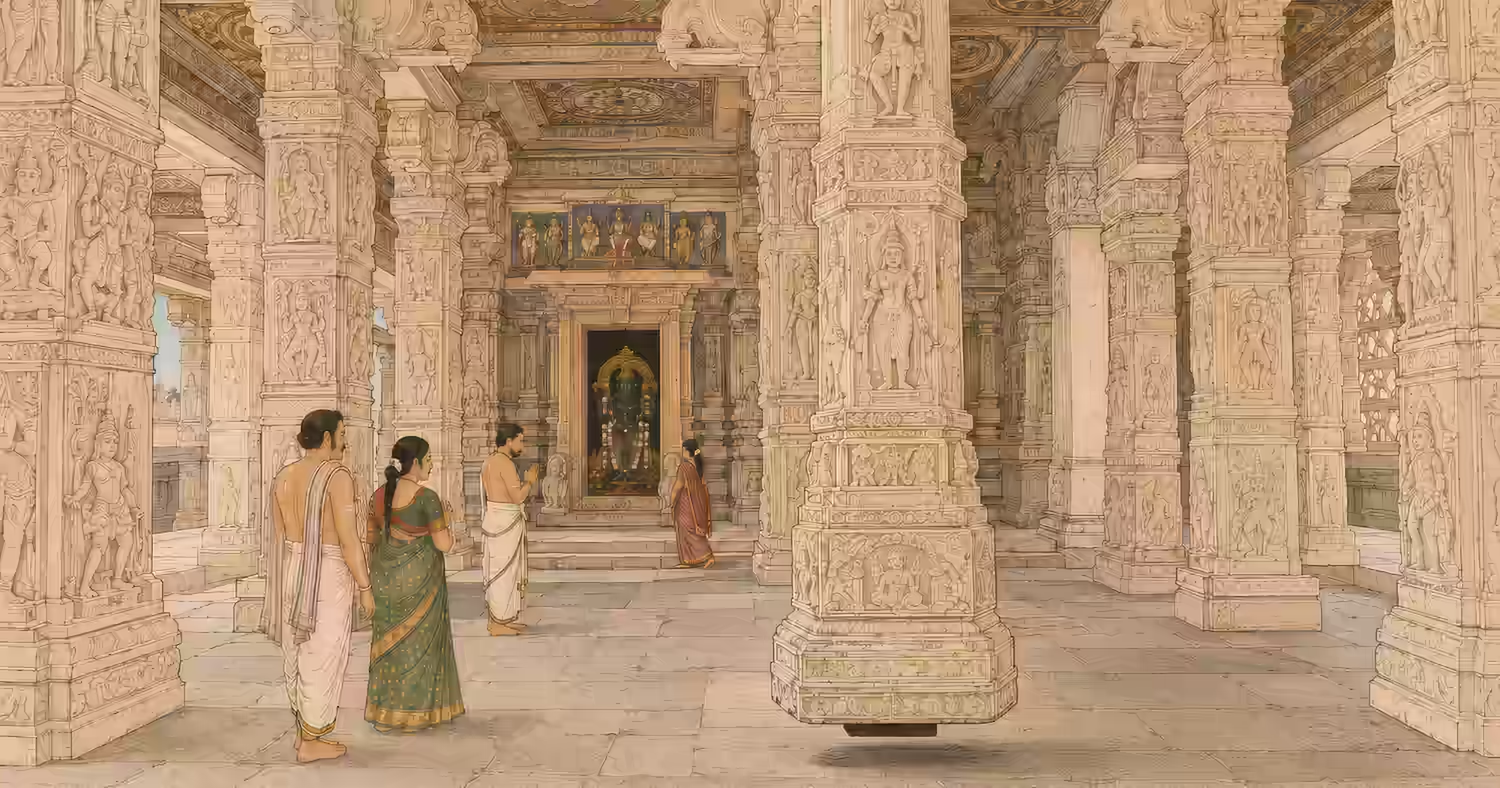
The famous temple dedicated to Him is the Veerabhadra Temple in Lepakshi (Andhra Pradesh).
This temple has grand sculptures and murals. The splendid “Hanging Pillar” here is proof of great Indian architecture.
There is also the Bhadrakali shrine where Lord Veerabhadra is associated with Devi Kali. This takes us back to the story of His Origin.
Lord Veerabhadra came into existence from the wrath of Lord Shiva. But He was not alone. When Bhagwan Shiva struck a lock of His hair on the ground, the lock split into two. One was Veerabhadra, and the other was known as Bhadrakali.
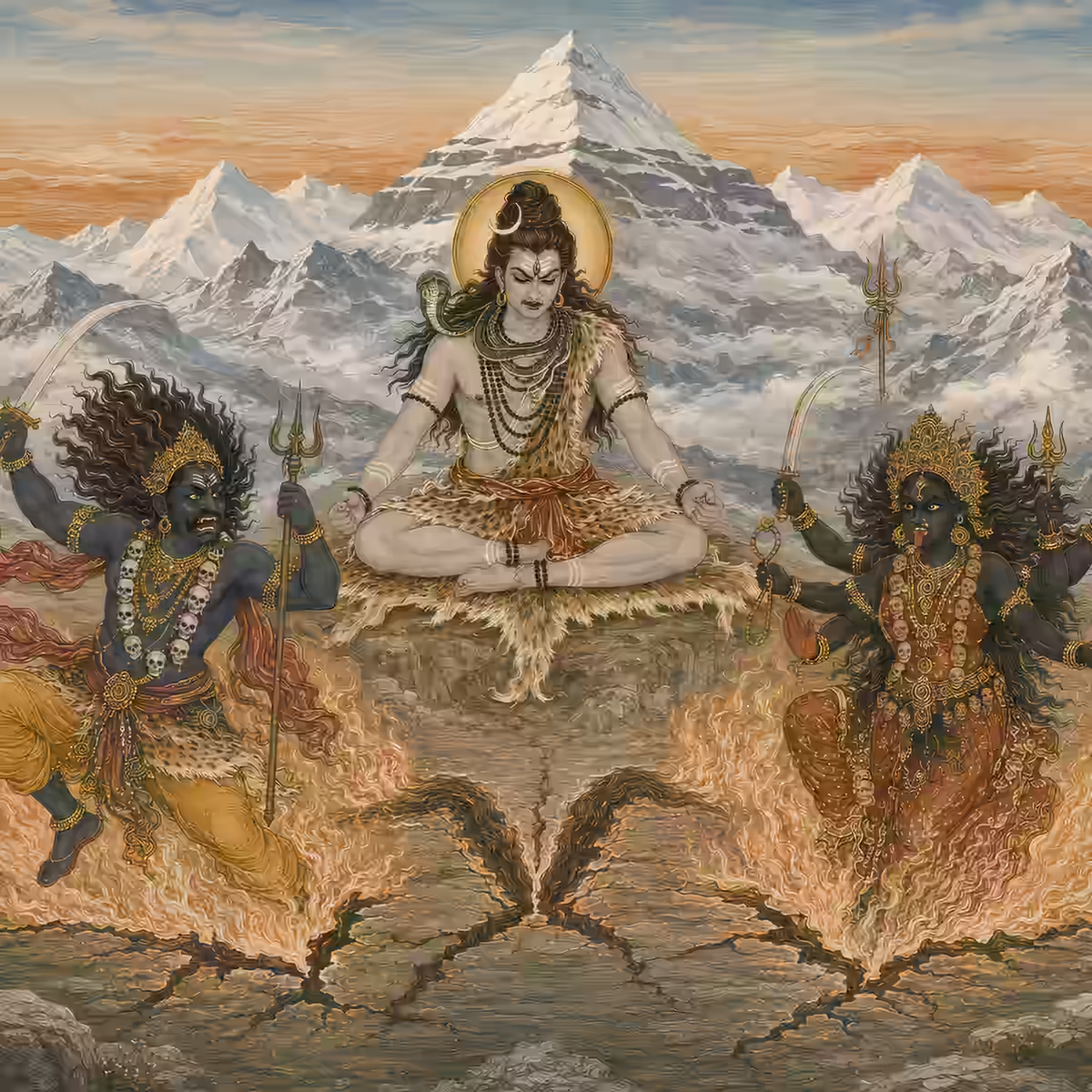
Their worship together symbolizes Lord Shiva’s masculine and feminine wrath.
The Rudra Veerabhadra
This form of the Lord represents intense power and war against injustice. It empowers the chanter to overcome obstacles and fears. Worshipping this form gives one the courage and necessary support to fight against opponents or the wrong-doers.
Daksha-Hanta Veerabhadra
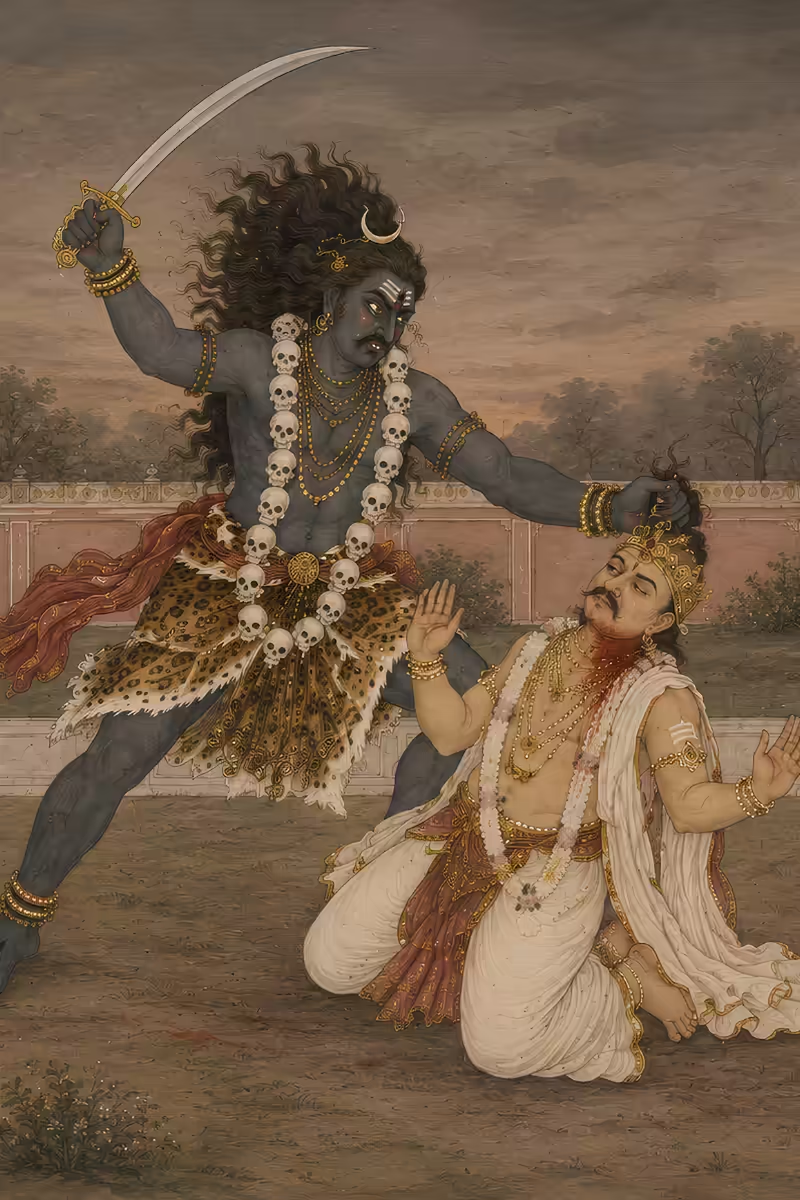
This form of the Deity removes arrogance and pride. He ensures illusions caused by ego are removed, easing the path for Sadhana. Surrendering unto Him, brings immense spiritual progress.
Therefore, Lord Veerabhadra offers protection across one’s material and spiritual journeys.

Vani Devi Dasi
Rohini Devi Dasi