
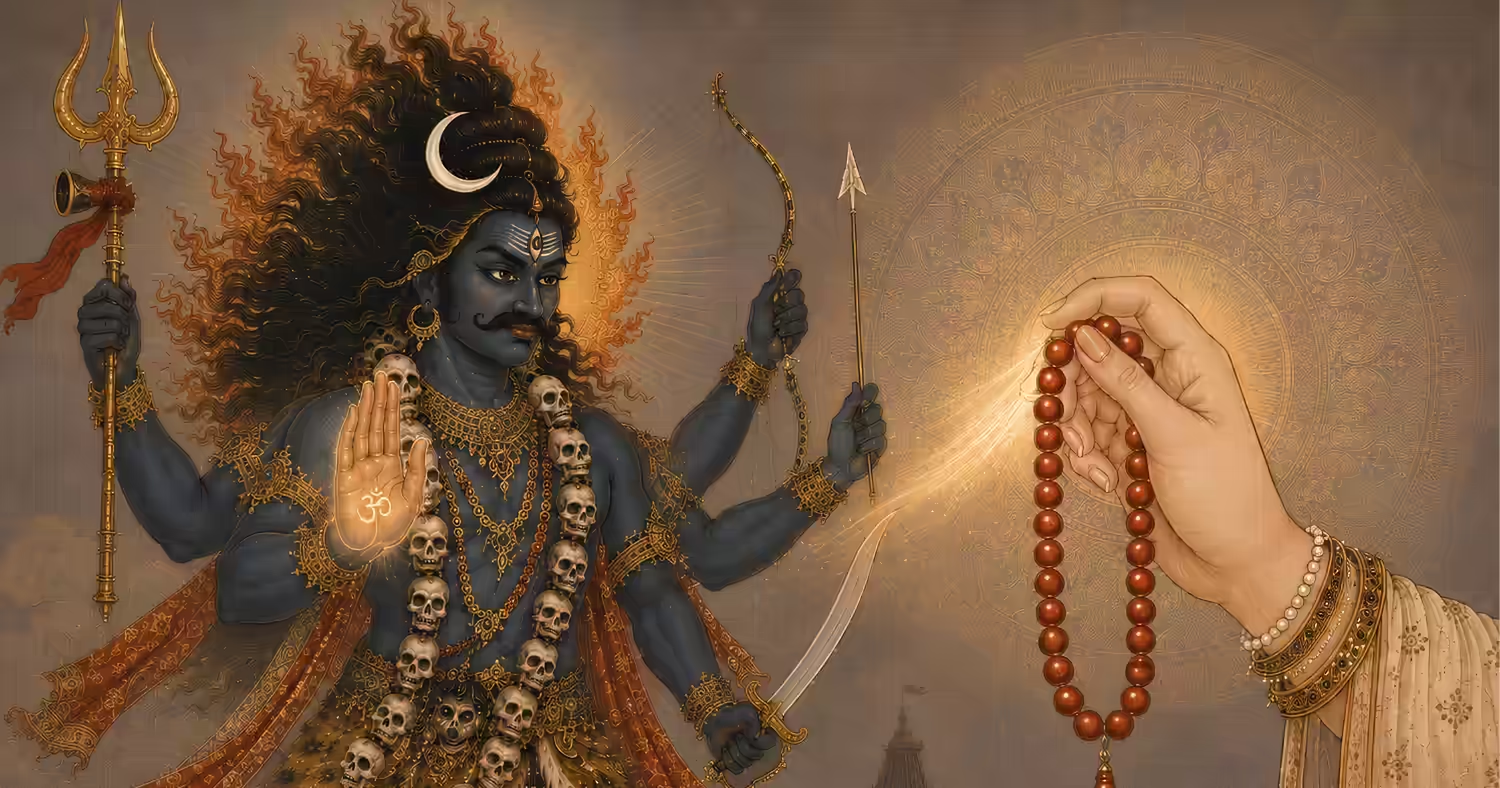
Who is God Veerabhadra?
Sri Veerabhadra is a fearsome (Ugra) and powerful form of Lord Shiva.
He emerged to destroy Daksha’s arrogance and is one of the 64 Rudra forms. He personifies Divine Wrath and Supreme Justice rolled into one.
Veerabhadra Swamy is a special manifestation who appeared in an instant to destroy Prajapati Daksha, who represents the ignorant Jiva. On the other hand, Veerabhadra represents the fierce aspect of the Guru who smashes the Jiva’s dual fangs of ego and self-indulgence.
Origin of Shri Veerabhadra Swamy
This story goes back in time, Prajapati Daksha decided to perform a grand yajna (sacrifice).
Being the progenitor of life, he considered everyone below Him. Overcome by ego and envy he purposefully excluded Lord Shiva.
When His daughter Sati Devi arrived to meet her father, he insulted the divine couple.
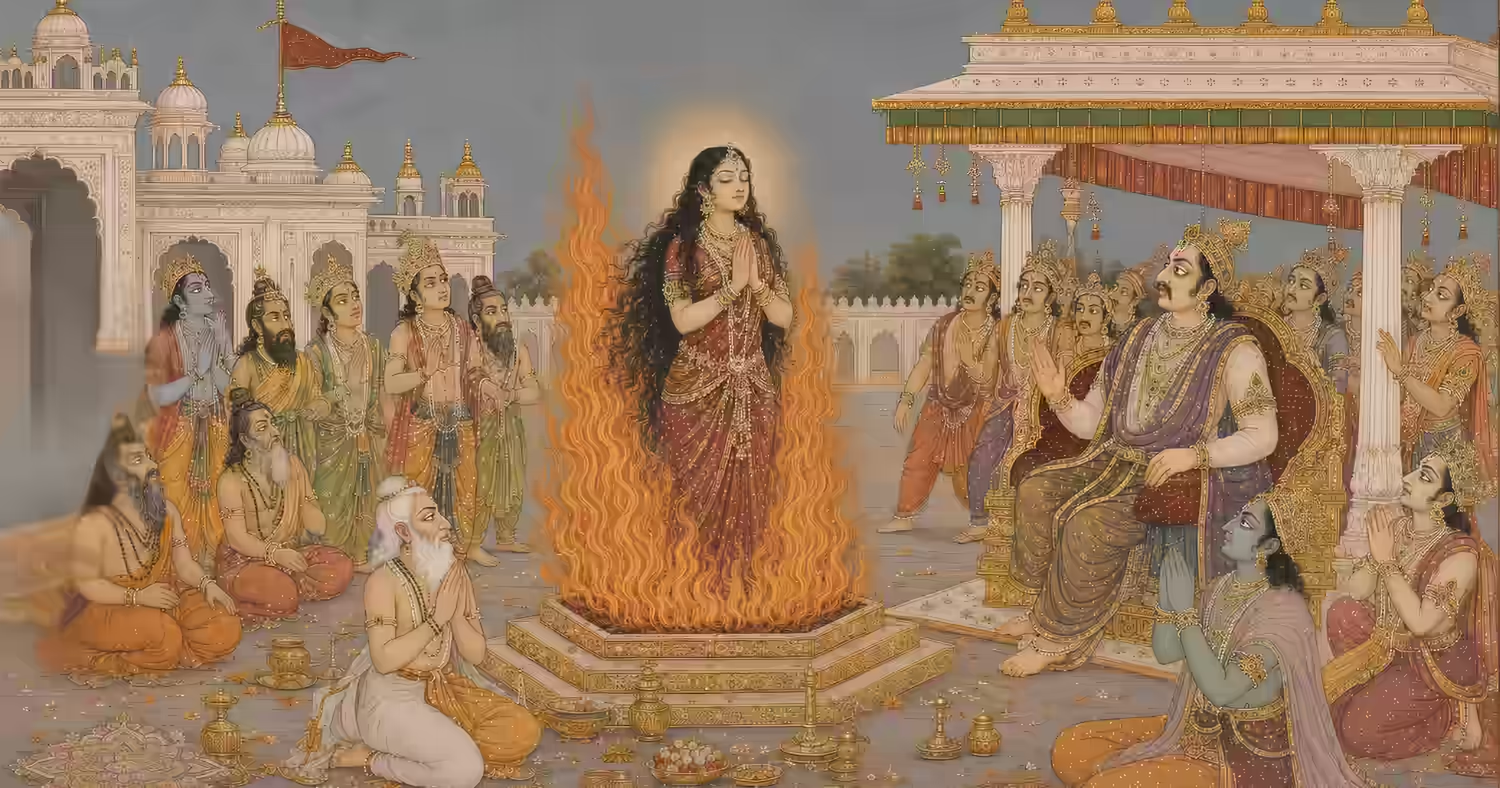
The Goddess was the manifestation of Adi Parashakti, the source of the Dasha Mahavidyas. She could not bear the insult of Her Lord and self-immolated in the sacrificial fire.
Enraged by this, Lord Shiva plucked a lock of His matted hair and struck it on the ground. From that emerged Bhagawan Veerabhadra, the enraged Rudra manifestation.
Protector of Dharma With a Fierce Form
Veerabhadra Swamy has a terrifying form. He led an army of Shivaganas (Shiva’s attendants) and destroyed Daksha’s sacrifice.
Sri Veerabhadra has multiple arms holding multiple weapons. His eyes are red with anger while His hair stands up like flames.
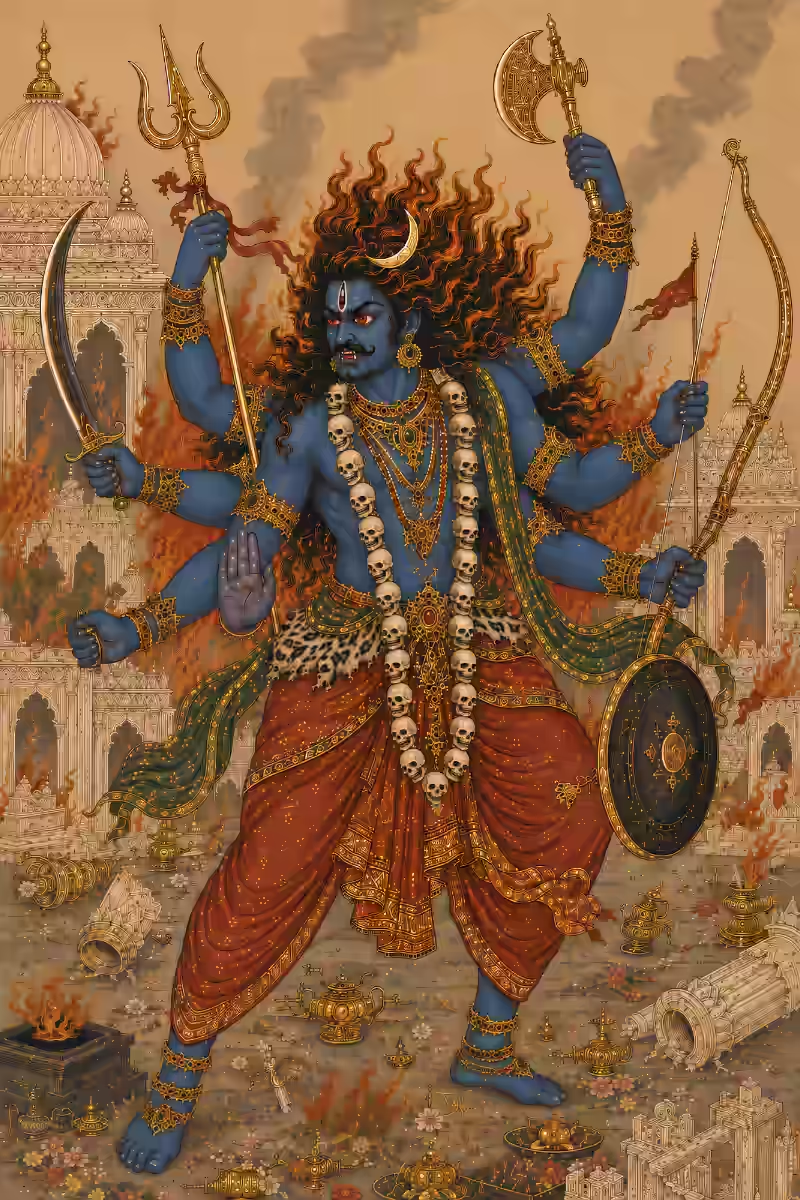
There is a garland of skulls around his neck with a crescent moon on His forehead, similar to Lord Shiva.
Each of His weapons symbolizes various aspects of the Deity.
For example, the Sword represents His role as a destroyer of arrogance. The Trishul symbolizes the destruction of ego. His Damaru (mini drum) denotes cosmic rhythm and order even amidst chaos. The Fire (Agni) He holds represents purification through annihilation.
Benefits of Chanting Veerabhadra Mantra
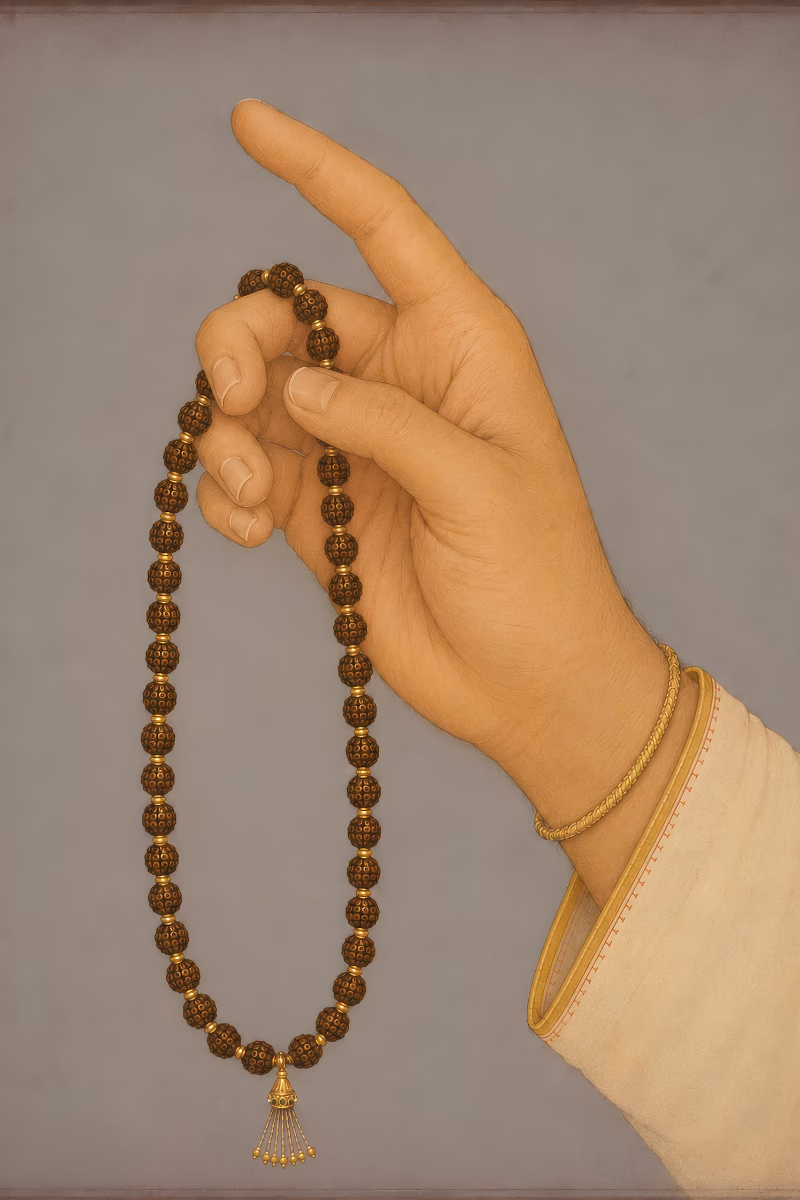
The Divine Form of the deity is also closely related to His mantra. By chanting Veerabhadra mantra, one invokes the potency of His divine weapons. The mantra Om Veerabhadraya Namah invokes courage and removes hesitation in spiritual growth. It has many benefits, some of which we are discussing today.
Mental Benefits of Chanting the Mantra
The Om Veerabhadraya Namah mantra reduces stress and distractions. It invokes the fearless and leadership energy of the deity. It blesses one with sharp intellect to sail through life.
Regular chanting increases perseverance and mental stability.
These benefits of the Veerabhadra Mantra become effective and come to fruition if one chants it on a Moonga Mala (red coral) or a Rudraksha Mala.
Moonga Mala and Rudraksha Mala
Before chanting one should be clear about their intentions towards the mantra and the Deity. Because without good intention even the most effective and powerful mantra can do more harm than good.
Individuals who wish to please the planets, especially for Mangal Dosh, can use the Moonga Mala for their chanting. The Mala caters to all the Rajasic aspects of life.
For example, people with low self-esteem, no ambition, or no goal in life greatly benefit from the use of the Moonga Mala.
The Veerabhadra mantra combined with this Mala uplifts one’s mood and gives inner direction, making one productive and fearless in all walks of life.
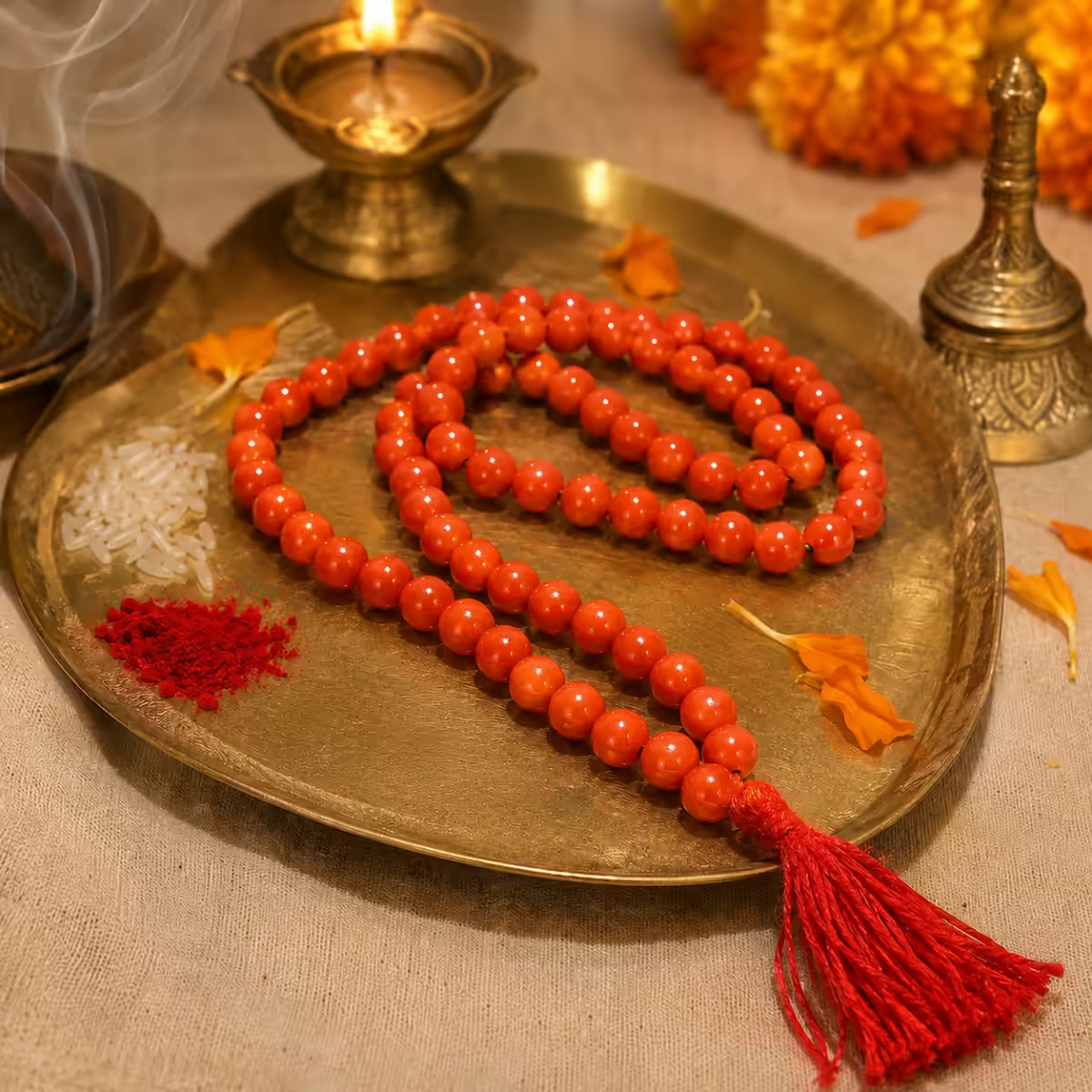
Red Coral (Moonga) Japa Mala
- Builds Courage, Confidence and Willpower
- Provides Spiritual Protection against Negativity
- Helps Resolve Mars-Related Affliction
- Promotes Leadership and Decisiveness
- Energized with Specific Intent and Suitable Mantra by Guruji
- Number of Beads- 108
- Video Clip that Demonstrates Chanting on a Japa Mala
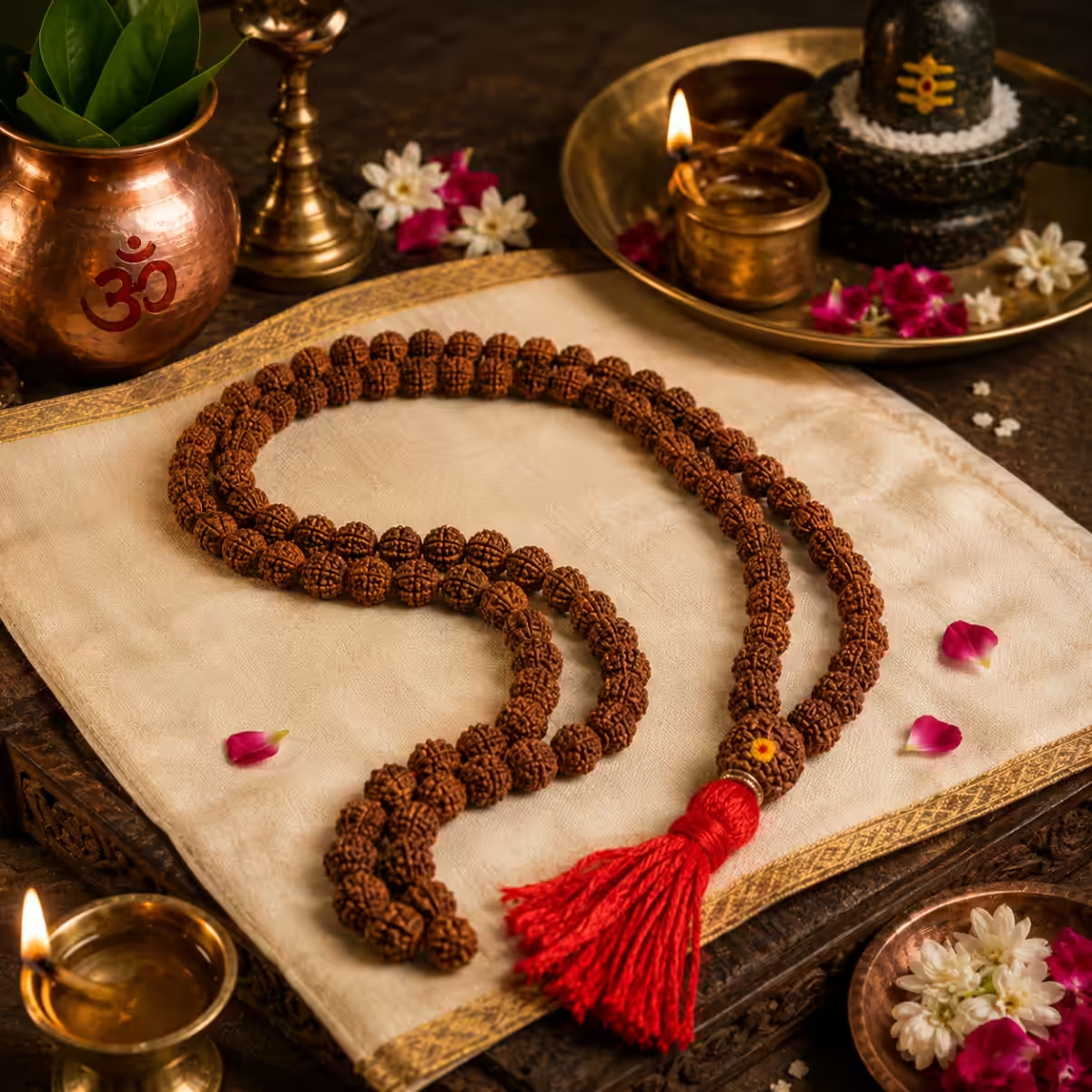
Energized Rudraksha Japa Mala for Sadhana
- Improves Focus During Mantra Japa
- Deepens Spiritual Discipline
- Creates an Aura of Spiritual Protection
- Supports Shiva and Shakti Sadhana
- Energized with Specific Intent and Suitable Mantra by Guruji
- Number of Beads- 108
- Video Clip that Demonstrates Chanting on a Japa Mala
Debt-related issues, attacks of negative energies, and enemies all fade away through the help of this powerful combination.
While the Moonga Mala is more externally focused, Rudraksha Mala with the Veerabhadra Mantra is best for people who want to make inner development.
It supports individuals suffering from mental fatigue and who want to find the true purpose of life.
The Benefits acquired from the use of an Energized Veerabhadra Mantra- Rudraksha Mala become more personal and spiritual. This is also because, Lord Shiva known as Yogeshwara (The Master of Yoga and Meditation), ornaments Himself with the same Rudraksha. At YantraChants.com the Veerabhadra Mantra is chanted along with specific Shiva Mantras, based on the intention of the receiver.
The combination of this Mala with the Veerabhadra Mantra induces a sense of detachment, thirst for knowledge, and spiritual curiosity. Shaiva Sadhakas who have obtained the Rudraksha Mala for Veerabhadra Sadhana purposes came back with great responses.
Health Benefits of Om Veerabhadraya Namah
The intense sound vibrations of the Om Veerabhadraya Namah mantra stabilize stress responses and improve relaxation.
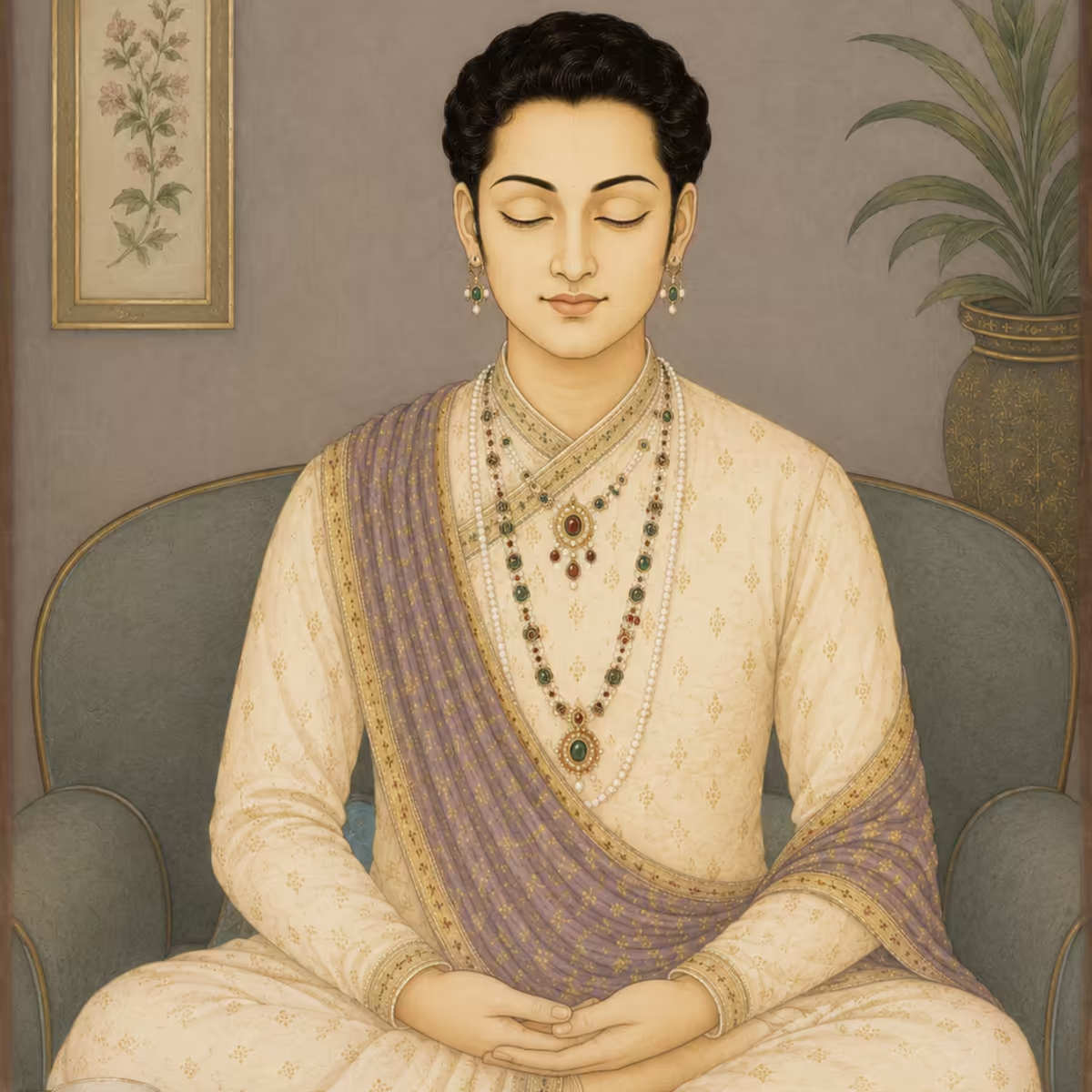
Even though Lord Veerabhadra symbolizes wrath, it is completely different from the anger and frustration we humans face. His wrath is divine and full of potency. If invoked with precaution, it can help balance mood fluctuations. This helps those with anger issues.
Spiritual and Astrological Benefits
The Om Veerabhadraya Namah mantra builds resilience. It provides the strength to face challenges fearlessly.
The mantra burns past karma and makes way for spiritual growth.
It is a kavacha (protective shield) that wards negative and harmful entities. The mantra pacifies planetary afflictions, especially aggressive Mars and restrictive Saturn.
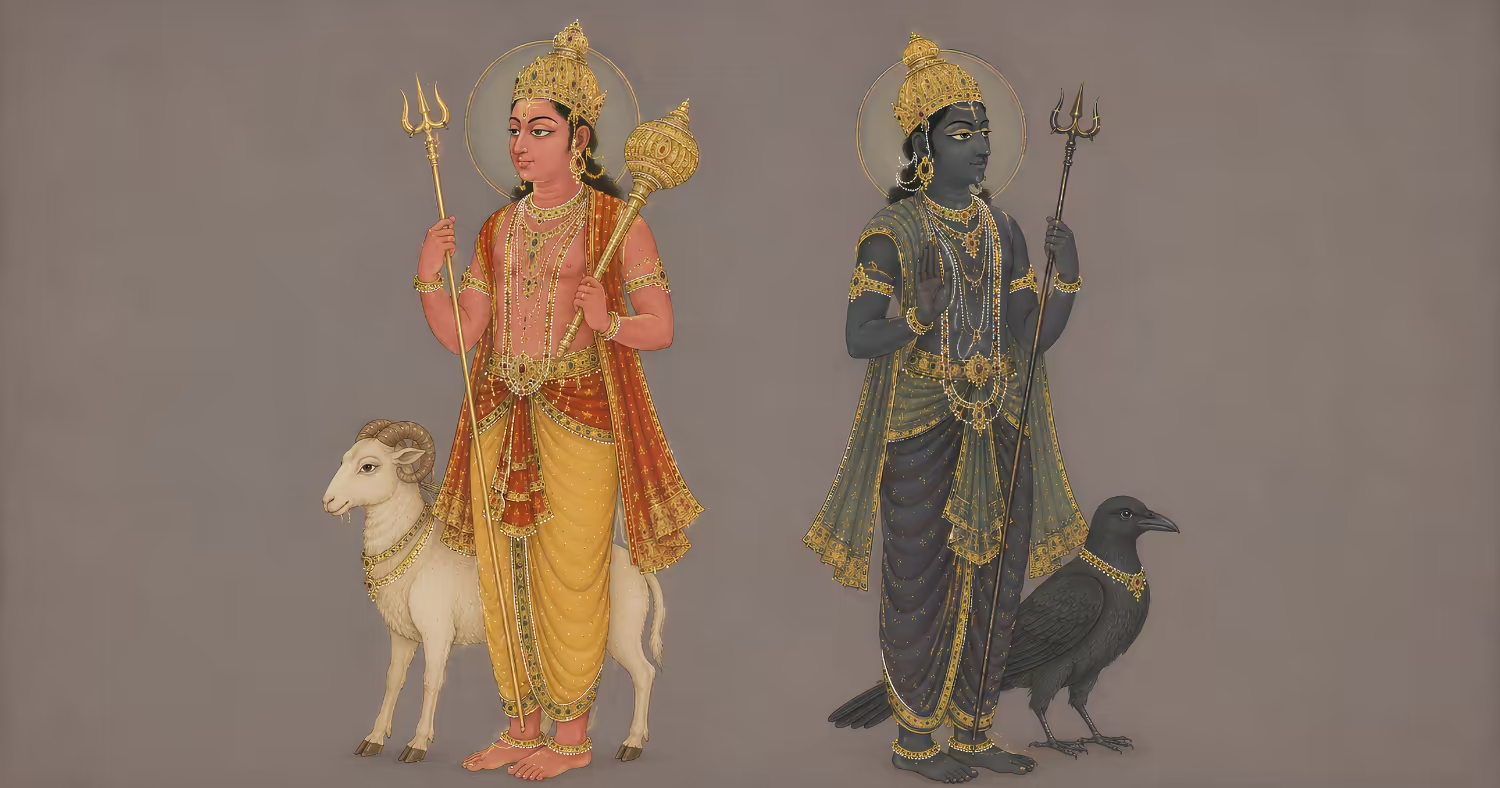
Recitation strengthens the spiritual body. It shields one from the mysterious effects of Grahas like Rahu and Ketu. This is the main reason Tantrikas invoke Veerabhadra to destroy obstacles and safeguard themselves.
Caution on Who Should Chant Om Veerabhadraya Namah
The Veerabhadraya Mantra is rare and should never be chanted without being initiated.
This is because He is an Ugra Devata, and approaching Him through mantras without initiation may cause adverse effects.
Householders chanting Veerabhadra Mantra have reported aggression while handling family life.
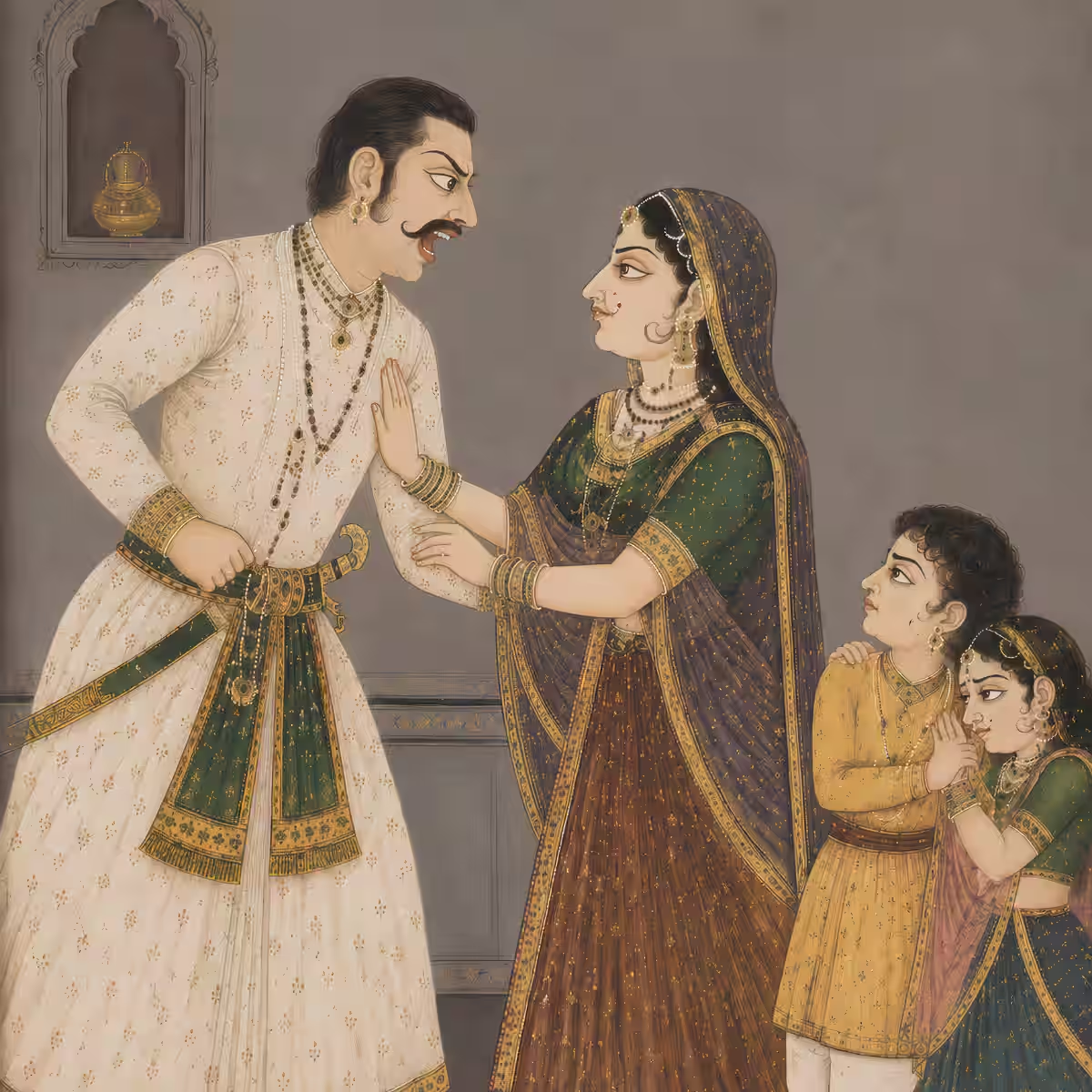
Individuals with psychiatric conditions can experience hallucinations and mental chattering. Initiation is therefore required, as the mantra is channelized to suit the disciple’s current mental, spiritual, and emotional frame.
This mantra invokes fierce power. So, individuals who cannot handle strong vibrations should seek softer mantras and avoid this mantra altogether. While it can repel, it may also temporarily attract dark vibrations.
However, seekers are drawn toward worshiping Him for the transformative benefits. For such devotees, we recommend worshipping an energized Shri Veerabhadra Yantra so that it matches their frequency and its effects are personally experienced.
It is advisable that people take up Satvika Sadhanas pertaining to Bhagawan Shiva.
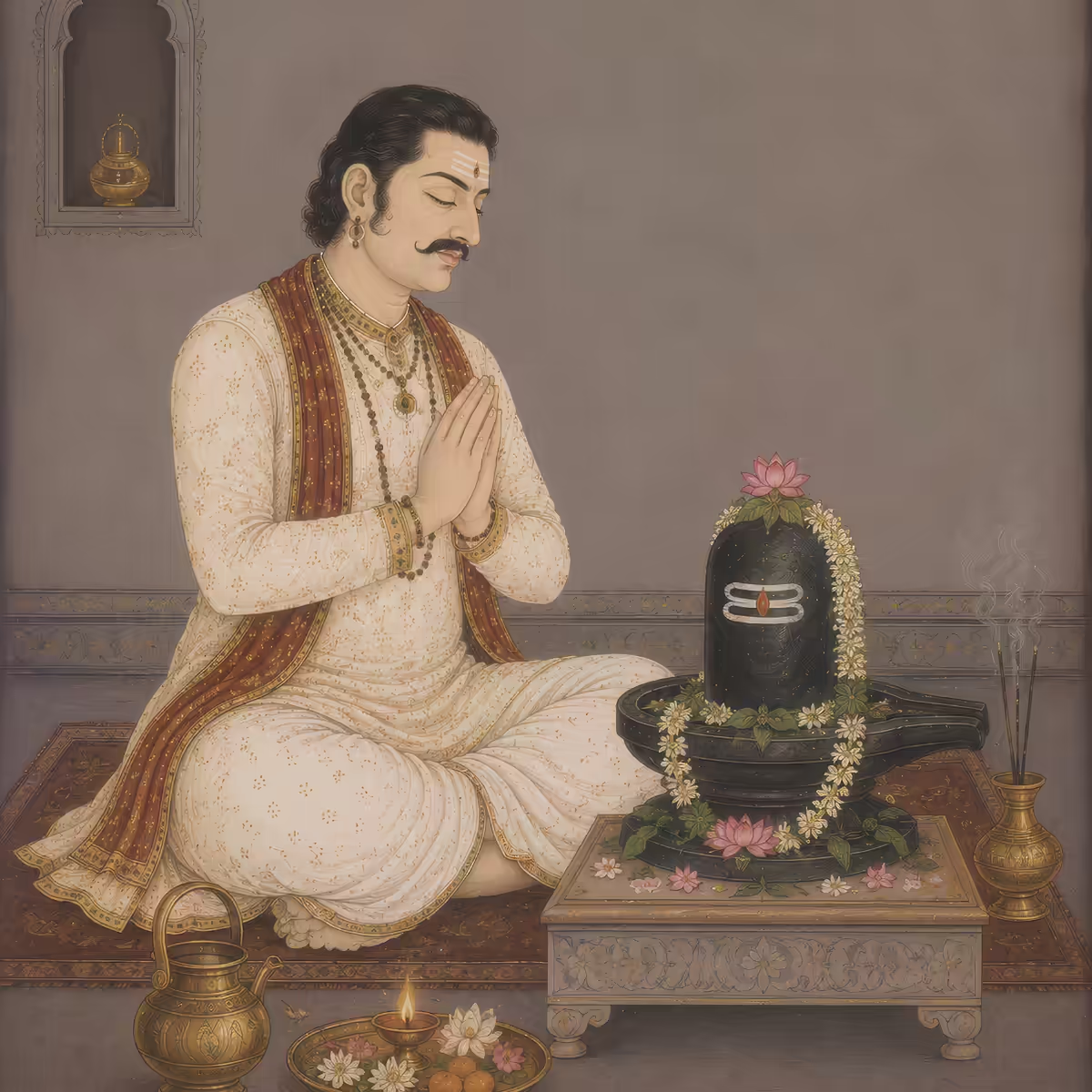
Such an intense manifestation should not be approached casually, but with humility and pure intention.
The key to this is to be under the shelter of a qualified Shaiva Guru. For those who are not initiated, they should offer prayers to Lord Shiva. This is the most safest and beneficial path. When the time is apt, the Guru and the Deity get revealed for the seeker’s next spiritual journey.
Yet, talking about the specific appeal of the mantra, people struggling with failures, injustices, or enemies can gain immensely from this mantra.
This mantra can provide support for those who feel drained by bad influences or experience psychic disturbances.
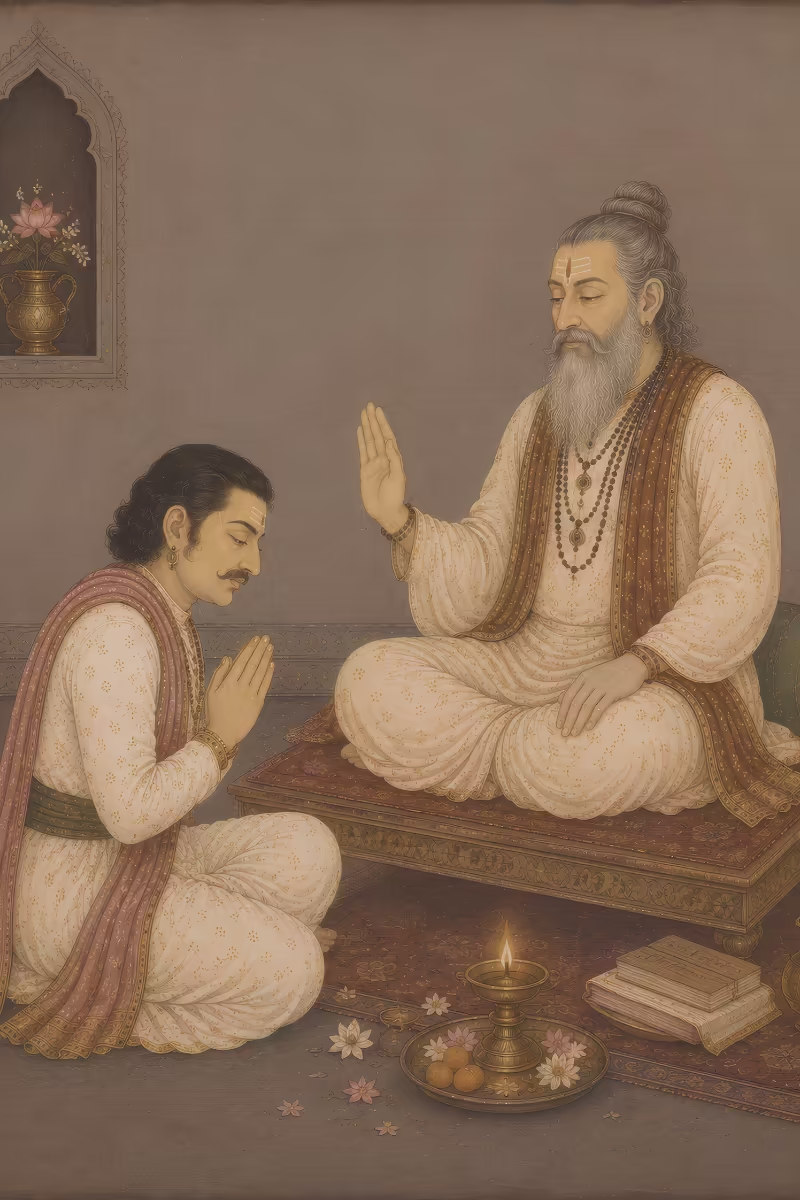
Yet, it may also cause distortions in mental clarity if a powerful Guru is not involved and not providing the disciple with clear guidance.
Since the mantra is to improve oneself, ultimately for dharmic and spiritual upliftment, while still pertaining to the Rajasic and Tantric modes of worship, it is not advisable to use it for mere worldly desires.

Vani Devi Dasi

Rohini Devi Dasi