
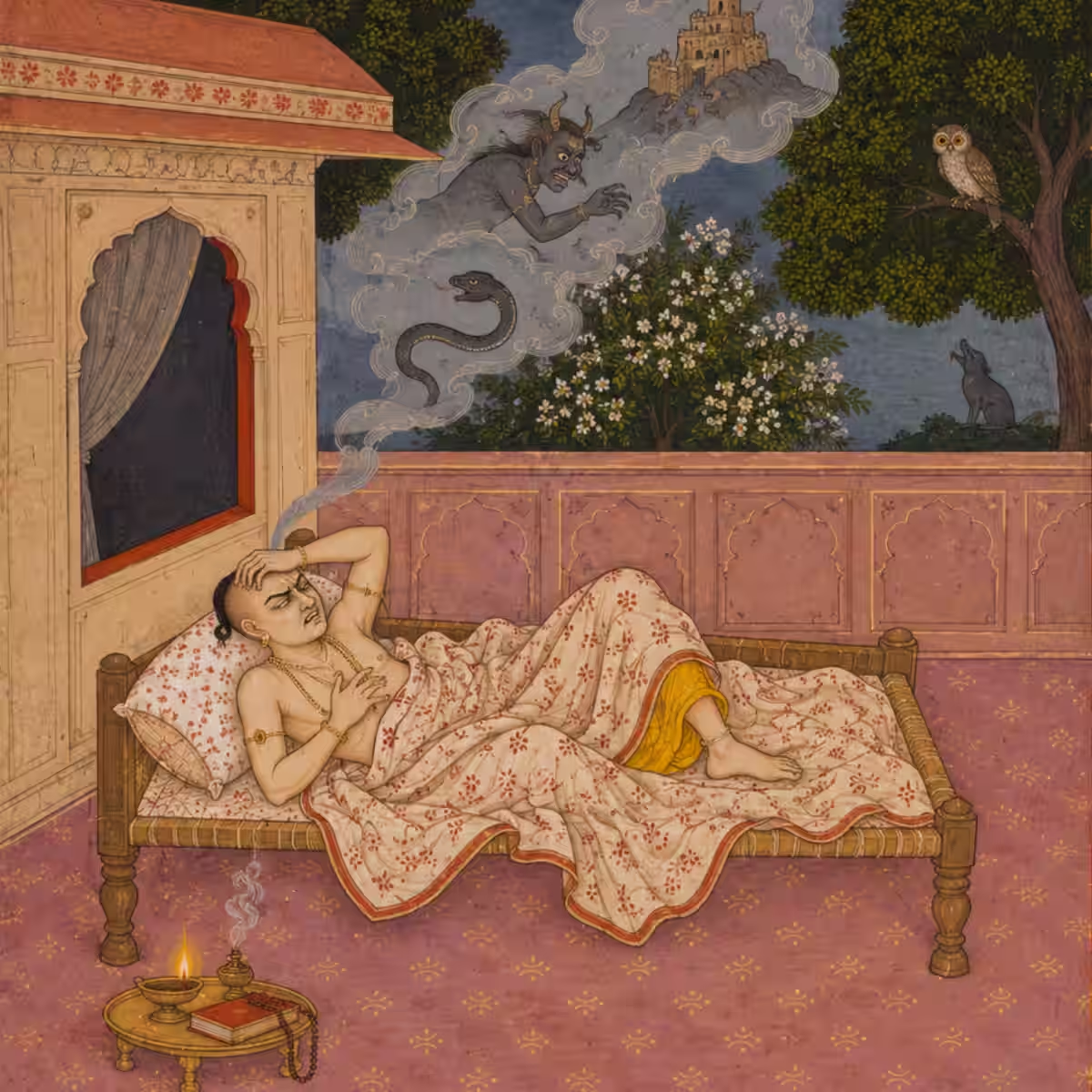
Many of us have sleep complaints. Our mind remains scattered and unfocused. We lose money or money is stuck. Fear grips us all the time. Bad dreams are a regular feature. Delays have become a way of life. Above all we are always unsure of things and remain indecisive.
If this is our life right now, we may have a solution round the corner. We need something that works in the morning and keeps working all day. That is what Sri Hanuman Chalisa and Hanuman Yantra do as a unit. People do Hanuman Chalisa and still may see that results do not come that easily, though they attain some amount of serenity.
When the same Chalisa is chanted before a Hanuman Yantra kept with respect in the home, many find that calm stays longer. It is a practical way to sort out real life problems.
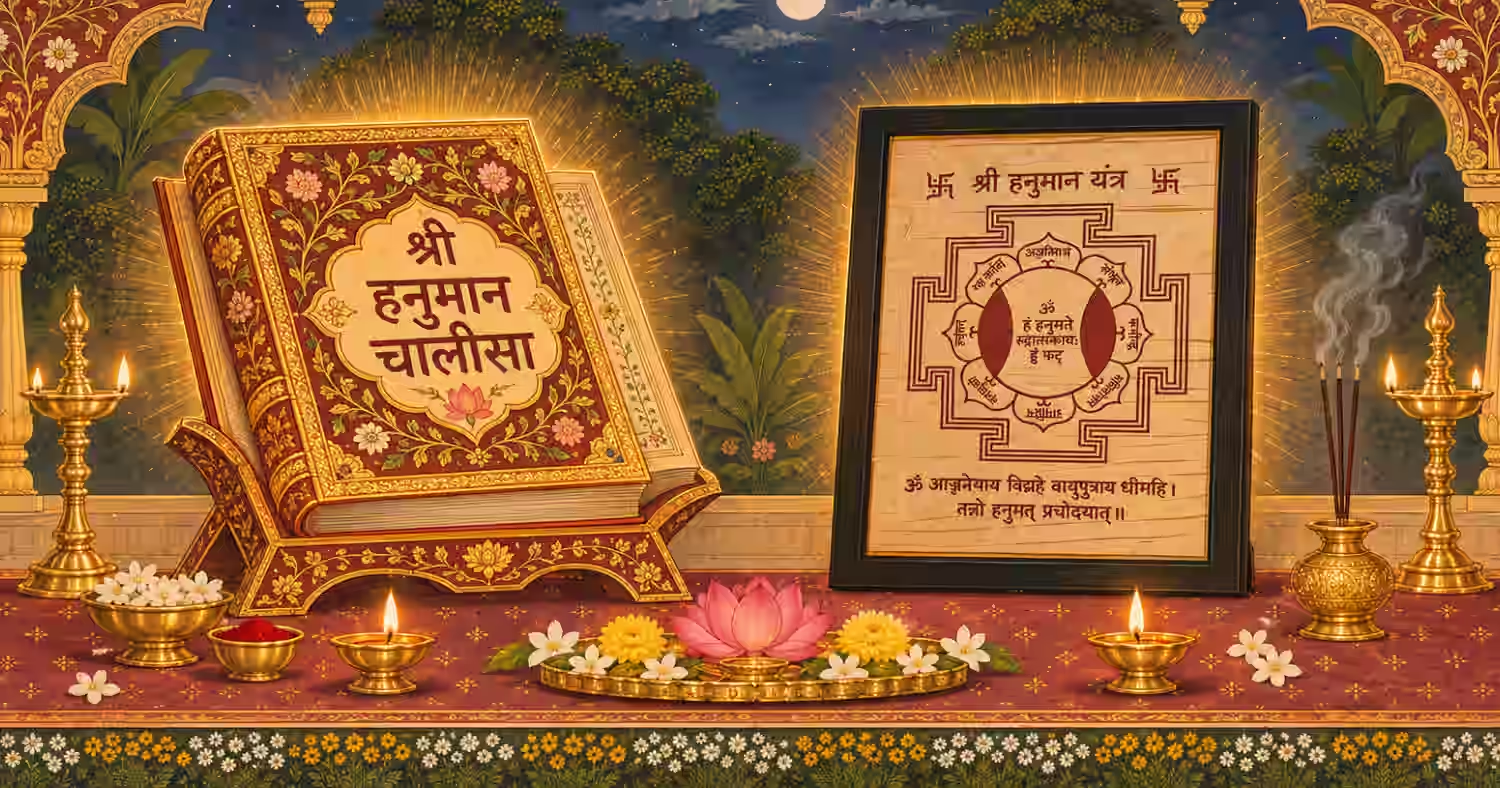
Sri Hanuman Chalisa is a siddha mantra sound that you chant. The Hanuman Yantra is the form you keep before you. Together they protect, clear, strengthen, and steady you.
The Agamas said it long before we felt it. In the Kularnava Tantra, 5.86, Shiva explains why a Yantra works at all:
kamakrodhadidoshottha sarvadukhaniyantranat, yantram ity ahur etasmin devah prinati pujitah
Because it restrains all suffering arising from desire, anger and other faults, it is called Yantra. Just as a mechanical tool controls physical forces, an energized Yantra regulates wandering thoughts and destructive emotions. The deity is pleased when worshipped in it.
That is the whole Chalisa and Yantra connection in one verse. The Chalisa restrains suffering through sound. The Yantra restrains suffering through form. Both do the same work, together, for the same problems.
Sri Hanumanji Maharaj is remembered as the Rudra Avatar, the eleventh form of Lord Shiva who came into the world to serve.
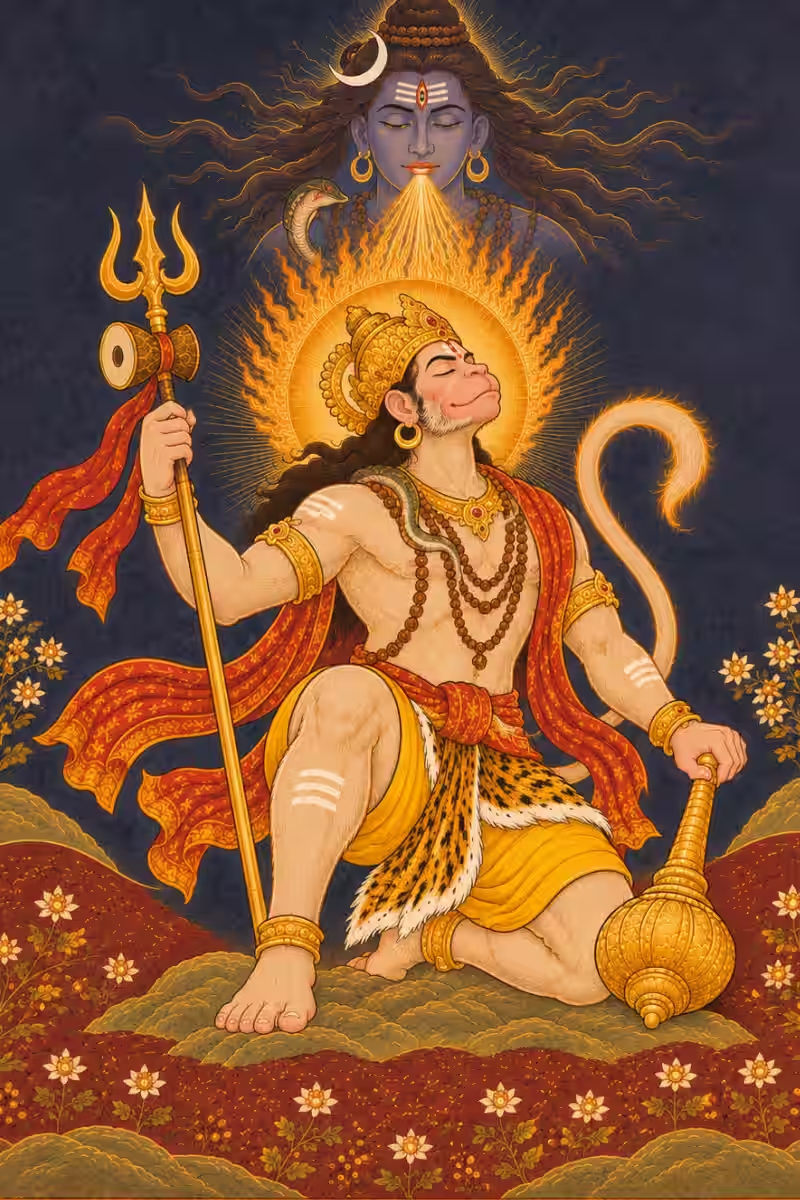
The Guru Who Guides From Within, In Sound and In Form
In a time when life is driven by greed, fear, and self-interest, Sri Hanumanji represents Guru Tattva, the inner guiding force. He is the guide who is available when we are willing to connect through faith and surrender.
The Chalisa is the way most people make that connection. When a deity is invoked through a specific mantra with faith, that presence begins to work in life, clearing confusion and showing direction.
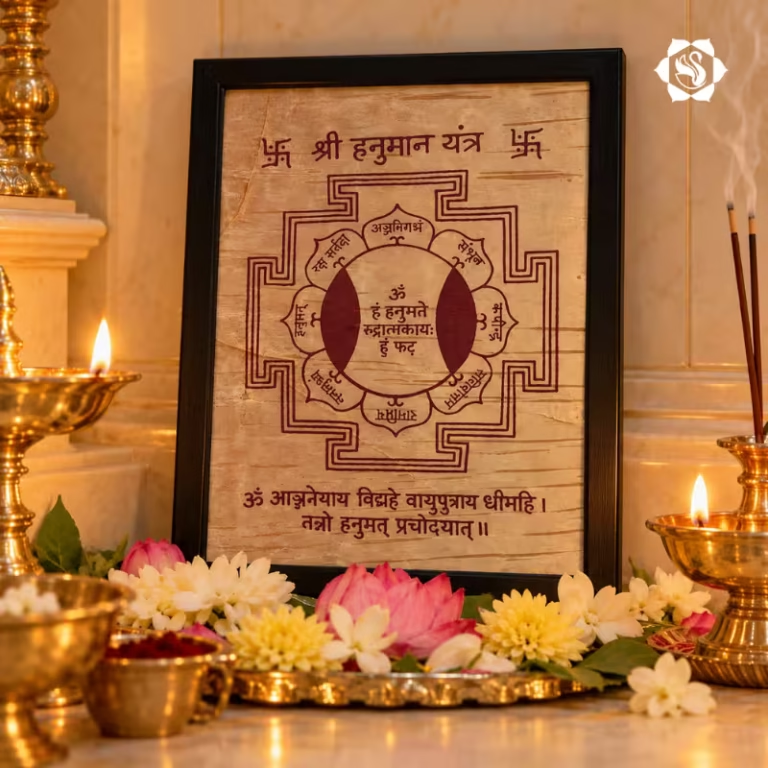 Individually Prepared
GURU SIDDH • ABHAY & VAK SIDDHI
Hanuman Yantra For Fearlessness & Sankat Mochan
An alternative to intense Om Hum Hanumate Namah Beeja Sadhana. This Yantra is as the core essence of Shri Hanuman. Created with the intention to invite the grace of Human ji maharaj in one's life.
5 × 7 inches · Free PDF Vidhi Guide · Individually Prepared
Price includes preparation as described on the product page.
View Yantra & OrderThe Yantra is the way that connection stays present in the room. The Chalisa is the call, the Yantra is the seat where the Guru sits as you call him.
The traditional dhyana shloka says it beautifully:
yatra yatra raghunatha kirtanam, tatra tatra krita mastaka anjalim, bhashpa vari paripurna lochanam, marutim namata rakshasantakam
Wherever the kirtan of Bhagawan Raghunatha is sung, there Sri Hanumanji Maharaj stands with folded hands above his head, eyes filled with tears. We bow to Maruti, the destroyer of demons.
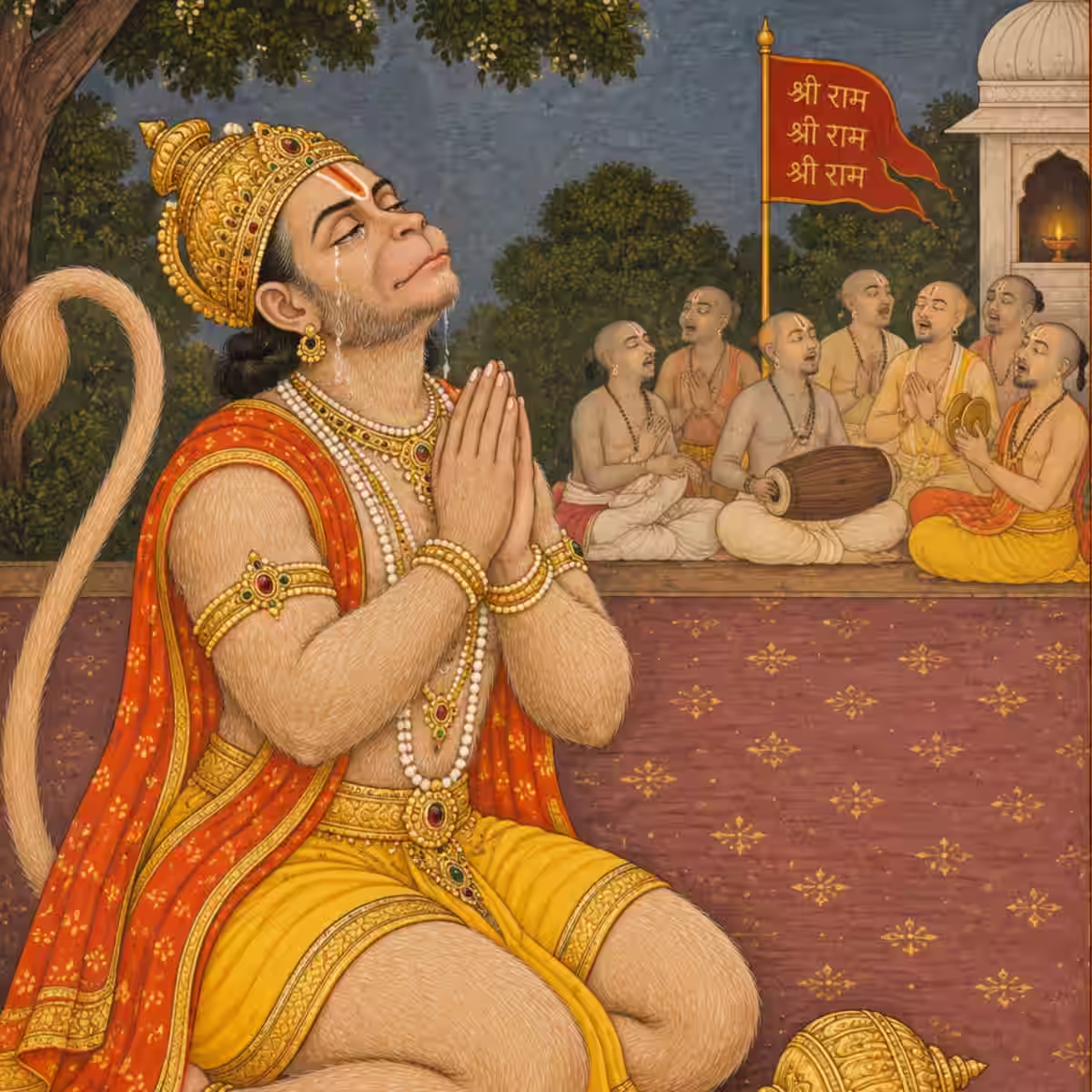
If Hanumanji is present wherever Sri Rama is remembered, then a Yantra placed where the Chalisa is chanted becomes that place of remembrance. It keeps the kirtan alive in the house, even when you are sleeping peacefully.
Tradition recalls how Goswami Tulsidas, the sage who composed the Chalisa, was imprisoned after he refused to present himself before the Mughal emperor.
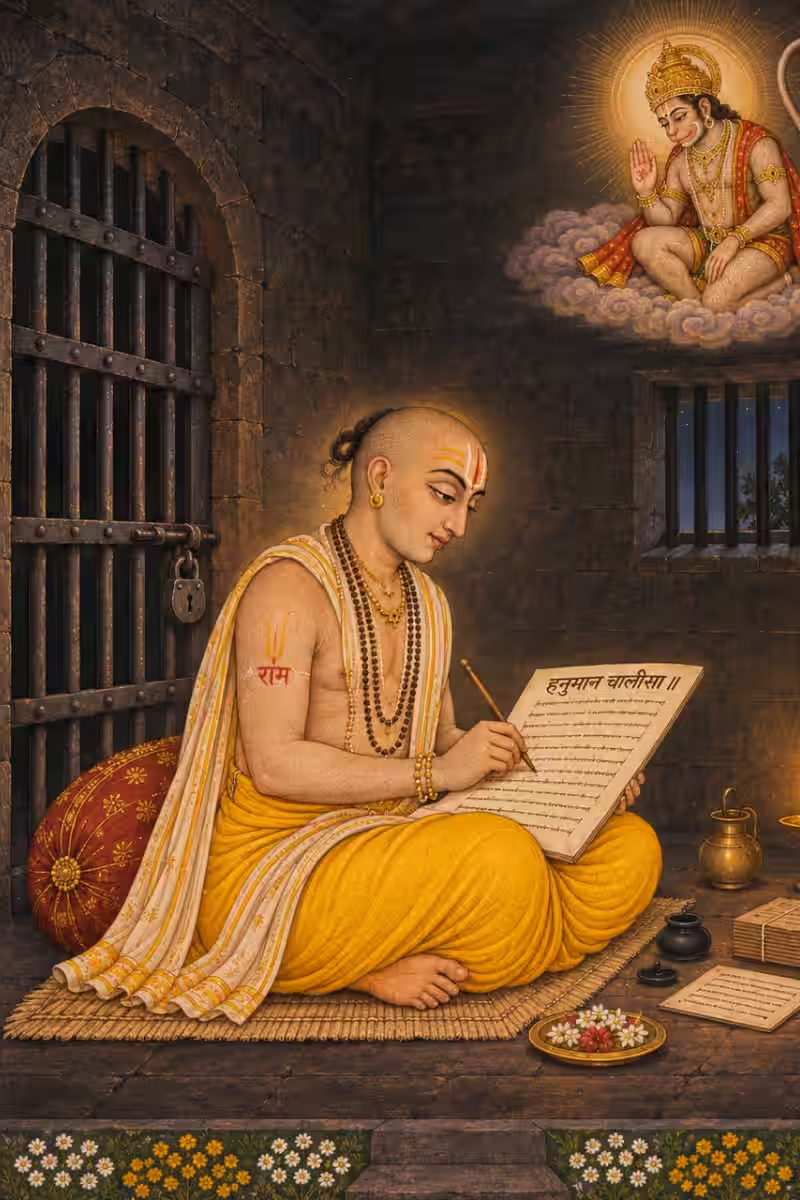
It is said that as he chanted the Chalisa in prison, the city was filled with monkeys and he was released. Whether one reads it as history or as a sacred story, the message is the same. The one who chants with sincerity is never left alone. Sri Hanumanji walks with him.
What Are Hanuman Chalisa and Hanuman Yantra?
Composed by Goswami Tulsidas in Awadhi, the Chalisa has forty chaupais, or verses, plus opening and closing dohas. Each verse is a window into one quality of Hanumanji: his wisdom, his strength, his humility, his speed, his devotion, his power to remove suffering.
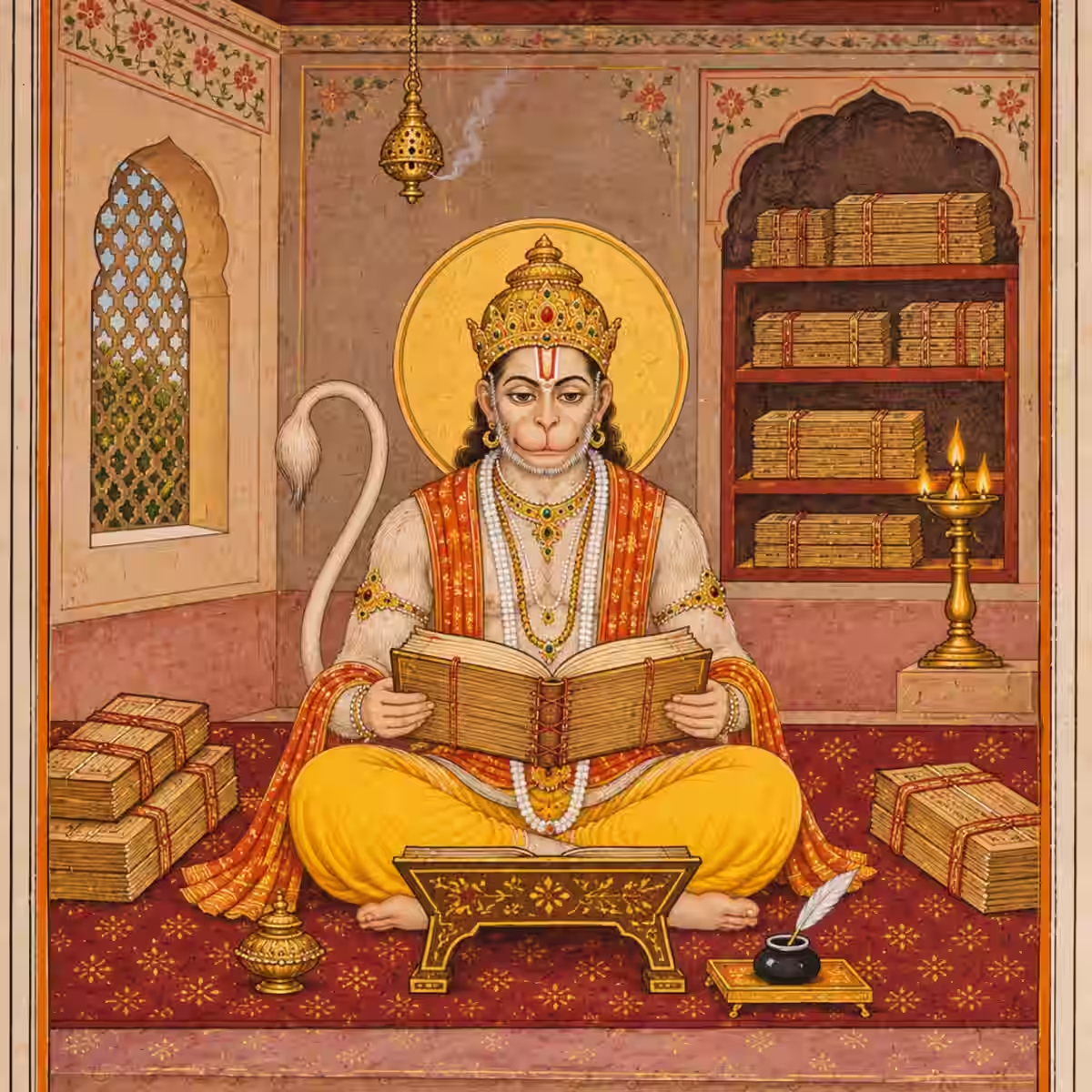
The Chalisa is Bhagawan’s praise and remembrance. When we chant Jai Hanuman gyan gun sagar, Jai Kapis tihun lok ujagar, we are remembering the ocean of wisdom and virtue who is known in all three worlds. When we chant Sankat kate mite sab peera, Jo sumire Hanumat Balbeera, we are remembering the one whose remembrance itself cuts through crisis and pain.
The Yantra is that same remembrance made visible. A yantra is a sacred geometric diagram that holds the energy of a mantra in a visible, worshippable form. Just as the Chalisa holds forty verses, the Yantra holds the same powers in lines, petals, and a central point. The Chalisa teaches the tongue. The Yantra teaches the eyes. Together they teach the heart.
That is why the Chalisa is called a living mantra. It does not ask for elaborate rituals. It asks for regularity, purity, and surrender. The Yantra asks for the same, and it helps you keep it, because you return to it again and again through the day.
7 Benefits That Sort Out Life Problems, With Chalisa and Yantra Together
Bhoot pisach nikat nahi aave, Mahavir jab naam sunave: Protection from Fear, Negativity, and Bad Dreams
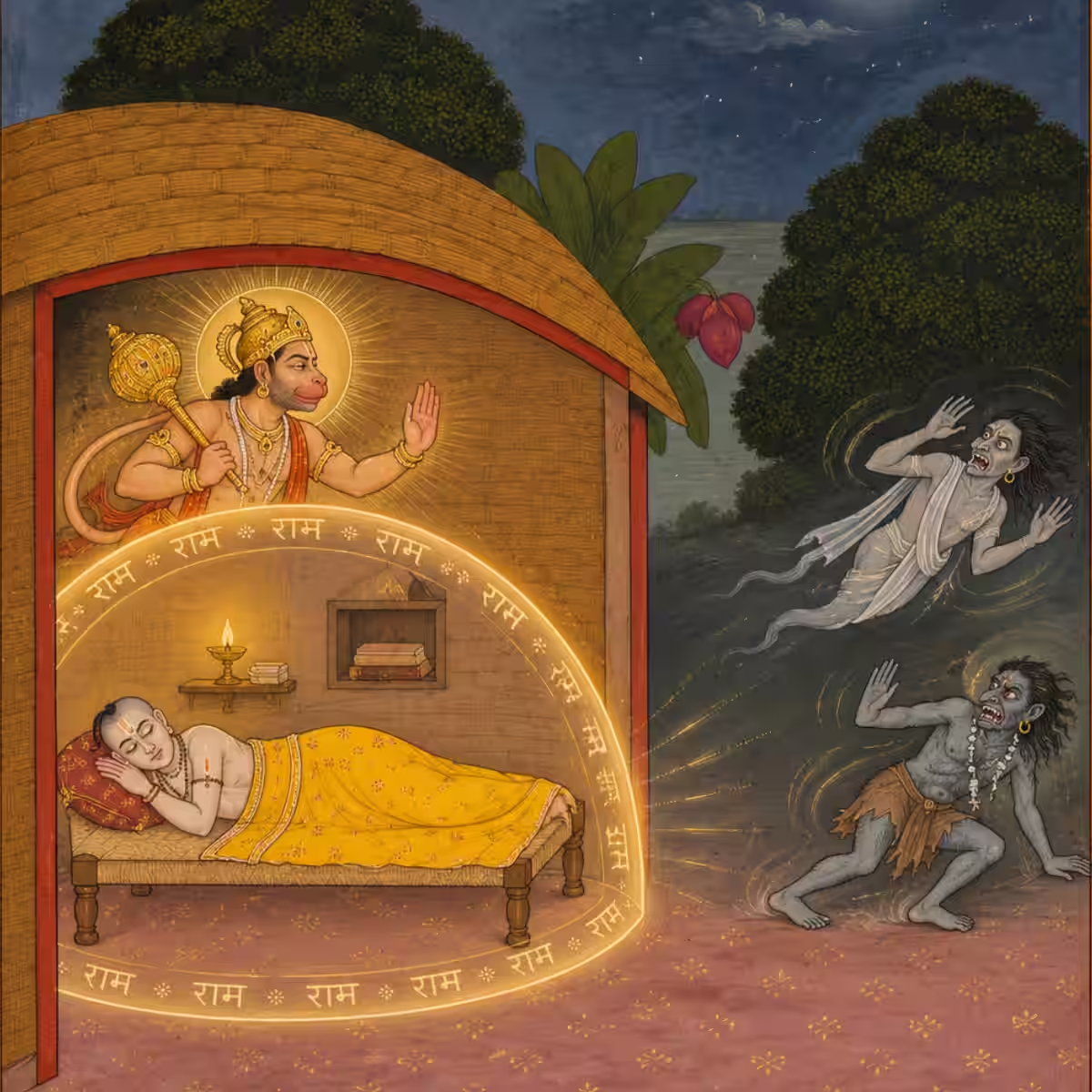
The Chalisa is most loved for its protective power. This verse speaks of how negative forces cannot stay where the name of Mahavir is heard. Devotees find that regular chanting reduces fear, restlessness, disturbed sleep, and the heavy feeling that comes from negative environments. In the Yantra, this same protection is the outer square, the bhupura, the fortress wall that keeps negativity out of the space where you live and sleep. The Chalisa chanted at night and the Yantra kept in the home both carry this nightly protection.
Sankat kate mite sab peera, Jo sumire Hanumat Balbeera: Relief from Delays and Repeated Obstacles
Hanumanji is traditionally regarded as the controller who can pacify the malefic effects of the planets, especially Shani and Mangal.
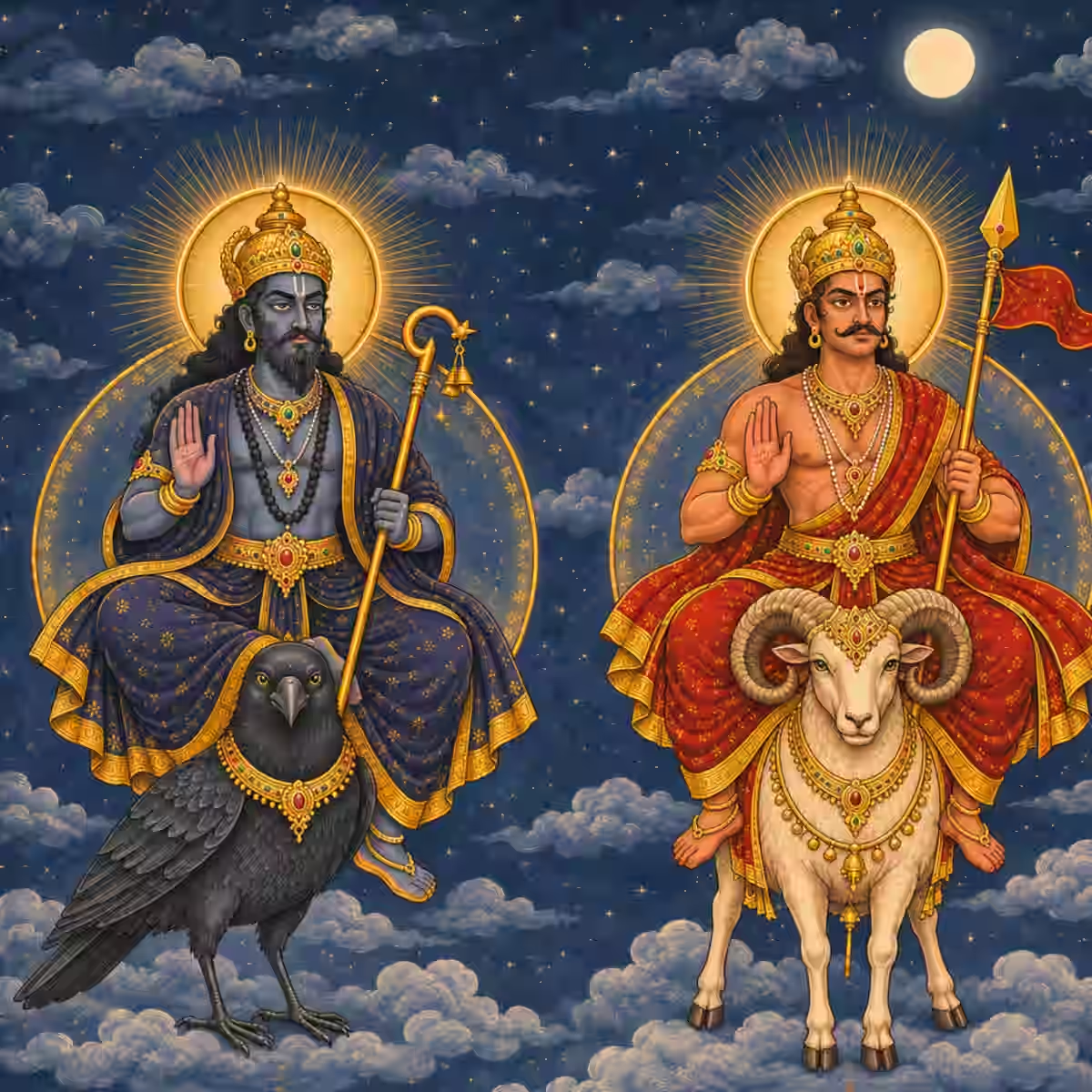
Chanting daily, and chanting 21 times on Tuesdays and Saturdays when possible, is considered one of the strongest remedies for planetary dosha, delays, and repeated obstacles. In the Yantra, this same relief is held in the central bindu, the still centre where Hanumanji’s form or bija mantra is placed, the point of calm around which all planetary movement settles.
Jai Hanuman gyan gun sagar, Jai Kapis tihun lok ujagar: Clear Intelligence and Steady Decisions
As one continues the practice, the mind becomes steadier. With a steady mind comes quicker, clearer decision making. Devotees often describe it as mental fog lifting. The Chalisa gives clarity, the ability to see what is right and act on it without endless worry. In the Yantra, this same clarity is the lotus petals around the centre, each petal a direction of wisdom that helps the mind focus instead of scatter.
Ram doot atulit bal dhama, Anjani putra Pavan sut nama: Strength, Energy, and Discipline
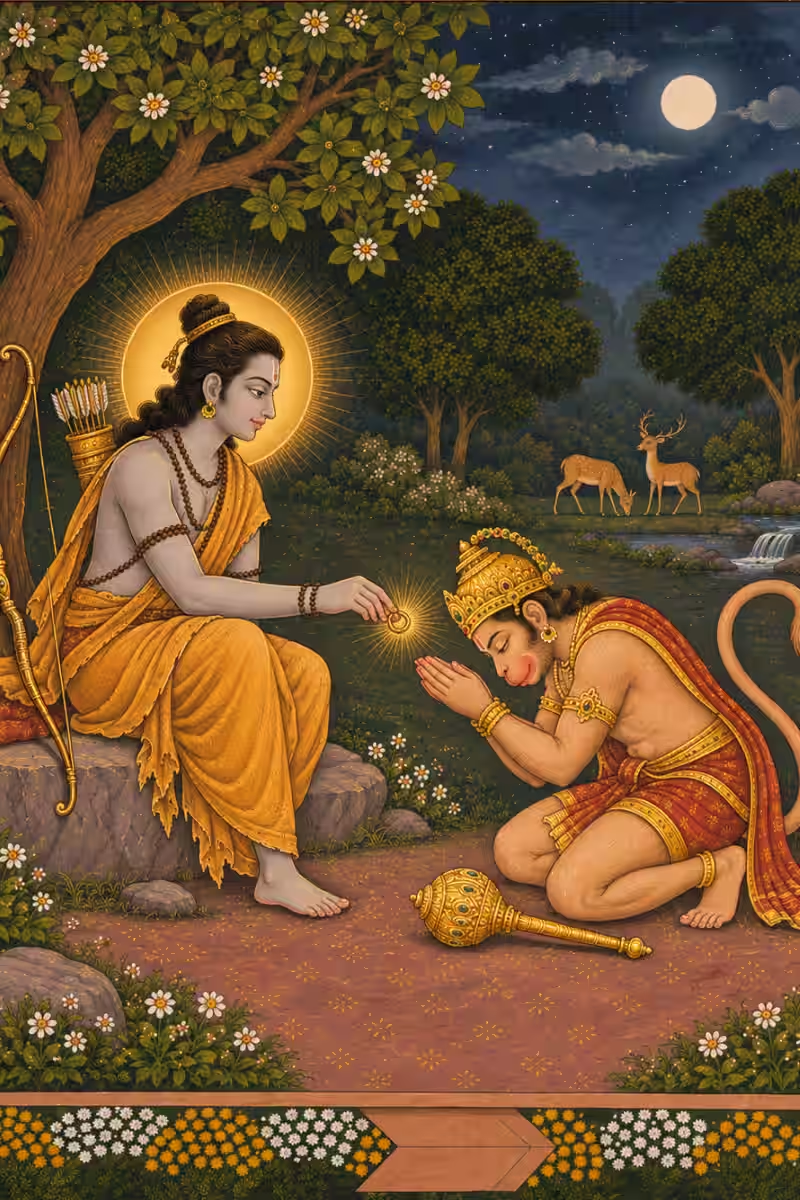
Chanting is linked in tradition with brahmacharya, disciplined vital energy. This pertains to the concept of celibacy, about conserving energy instead of wasting it. The result is described as greater stamina, vigour, and capacity to work with efficiency. The body becomes an instrument for service, just as Sri Hanumanji’s body was. In the Yantra, this same disciplined strength is the strong inner triangle, focused power that serves without domination.
Sankat te Hanuman chhudave, Man kram vachan dhyan jo lave: Freedom from Stuck Work, Money Pressure, and Karma
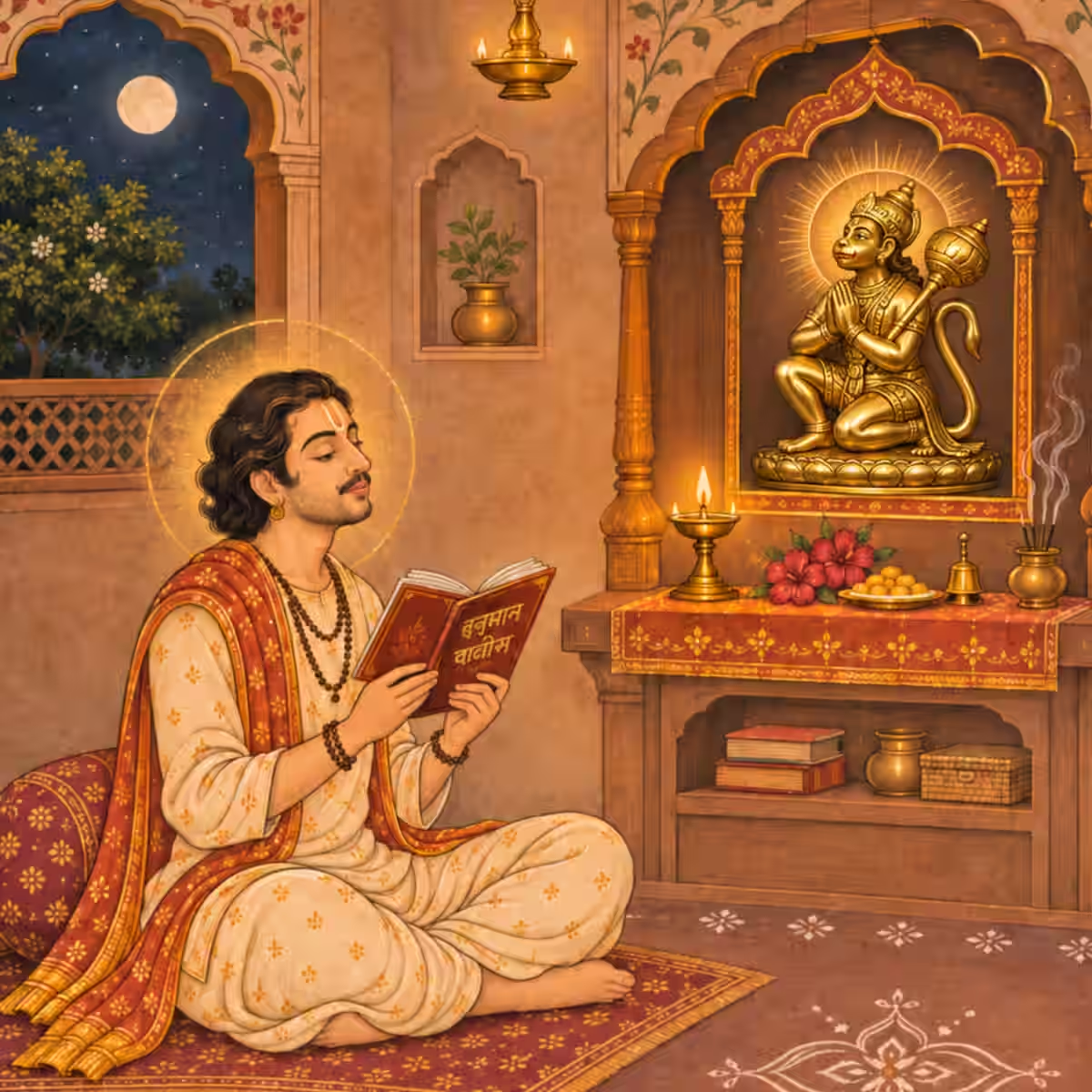
The Chalisa promises that difficulties soften for the one who remembers Hanumanji. Health struggles, financial pressure, and stuck situations do not go away easily, but the devotee gains the strength, timing, and support to move through them.
Over a year of sincere daily chanting, many devotees report that long standing problems begin to resolve. In the Yantra, this same easing is the surrounding circles, the protective field that holds the devotee safe while karma unwinds and obstacles clear.
Ram rasayan tumhare pasa, Sada raho Raghupati ke dasa: Spiritual Strength and Peace
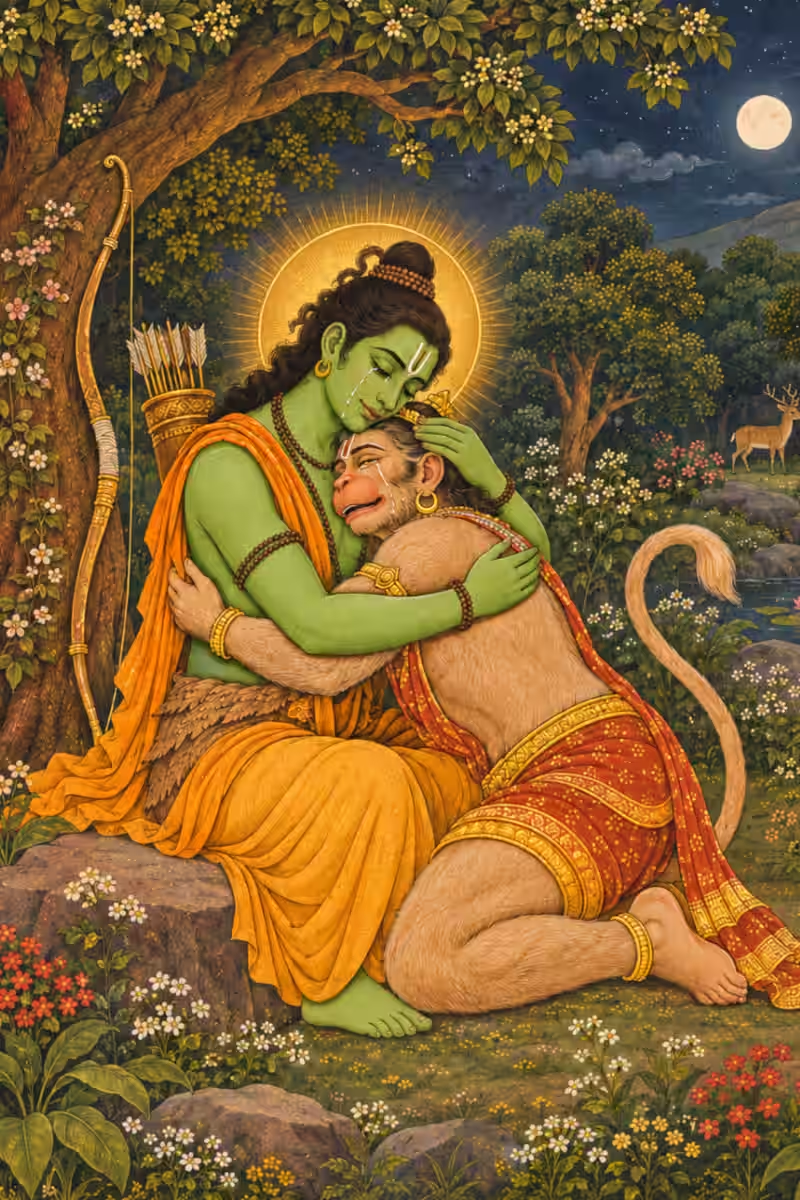
With regular chanting, spiritual strength grows quietly. One becomes less reactive, more patient, and more rooted in faith. Prayer stops being an emergency call and becomes a relationship. Hanumanji as Guru begins to guide choices, protect dharma, and keep the devotee close to Sri Rama. In the Yantra, this same growth is the act of daily darshan, seeing the same form every morning, thus faith is remembered and witnessed.
Tumhare bhajan Ram ko pave, Janam janam ke dukh bisrave: Deep Bhakti That Transforms Life
Above all, the Chalisa deepens love. It takes the devotee from asking for help to wanting to serve, from fear to surrender. That shift is the real fruit. Hanumanji removes problems, he transforms the person who chants, and through that person, he transforms those around him. In the Yantra, this same bhakti becomes a living presence.You live with him, bow to him, and offer to him through the day.
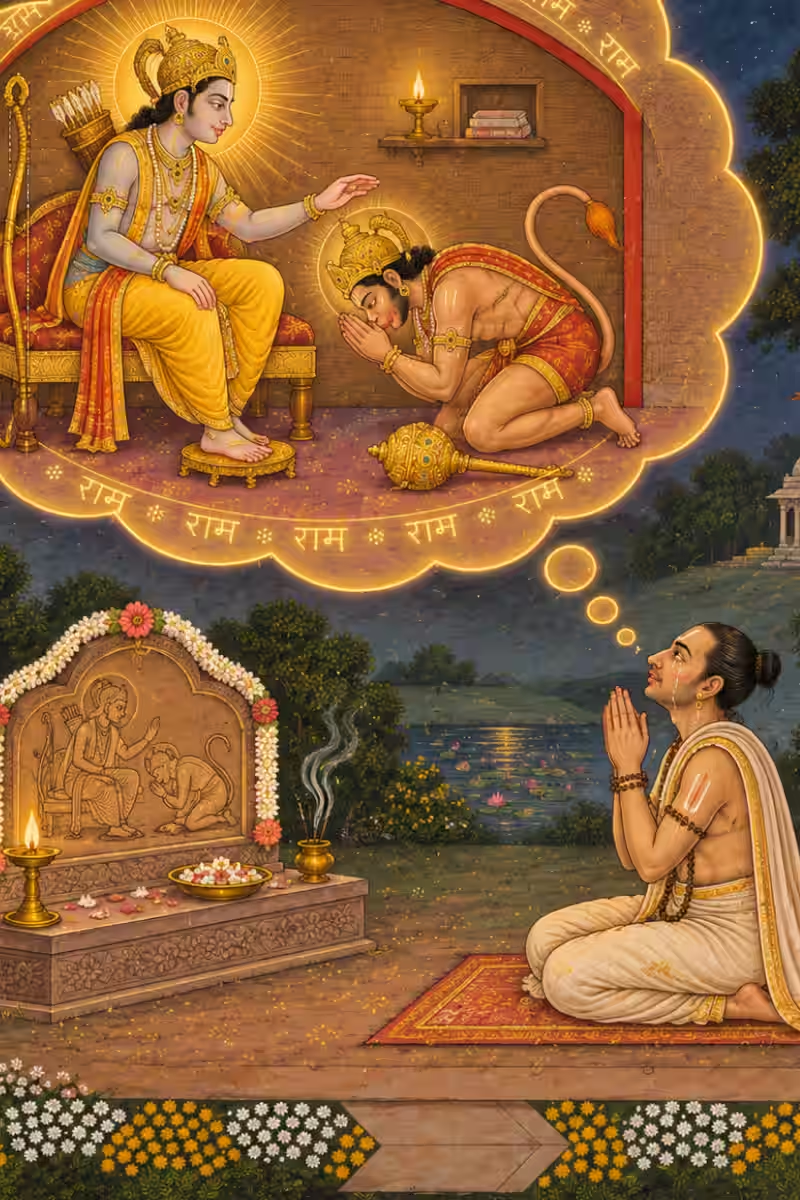
Some basic rules for chanting and for Yantra worship: Keep the body and place clean, sit facing east if possible, and avoid non-vegetarian food, garlic, and onion on days of intensive chanting. Consistency matters more than speed. One Chalisa chanted slowly with attention in front of the Yantra is more powerful than many chanted mechanically without focus.
How Chalisa and Yantra Mirror Each Other
Many devotees ask how to keep the morning feeling through the day. The answer is to use both together.
The most direct proof of this comes from the Yantrodharaka Hanuman Stotram of Sri Vyasaraja. It is literally the hymn of Hanuman, the bearer of the Yantra. Its fourth verse describes him seated in a Yantra:
trimshat koti bija samyuktam dvadasha avarti pratishthitam, padmasana sthitam devam shat kona mandala madhyagam
Established with thirty crore bijas, with twelvefold revolutions, the deity seated in padmasana in the middle of the six cornered mandala.
That is the Yantra. Bijas, mandala, centre. The Chalisa gives you the bijas in sound. The Yantra gives you the mandala in form. And in the very first verse, Vyasaraja bows to the same Hanuman the Chalisa praises:
namami dutam ramasya sukhadam cha suradrumam, shri maruta atma sambhutam vidyut kanchana sannibham
I bow to Rama’s messenger, giver of happiness, wish to fulfill the tree of the gods, born of Maruta, shining like lightning and gold.
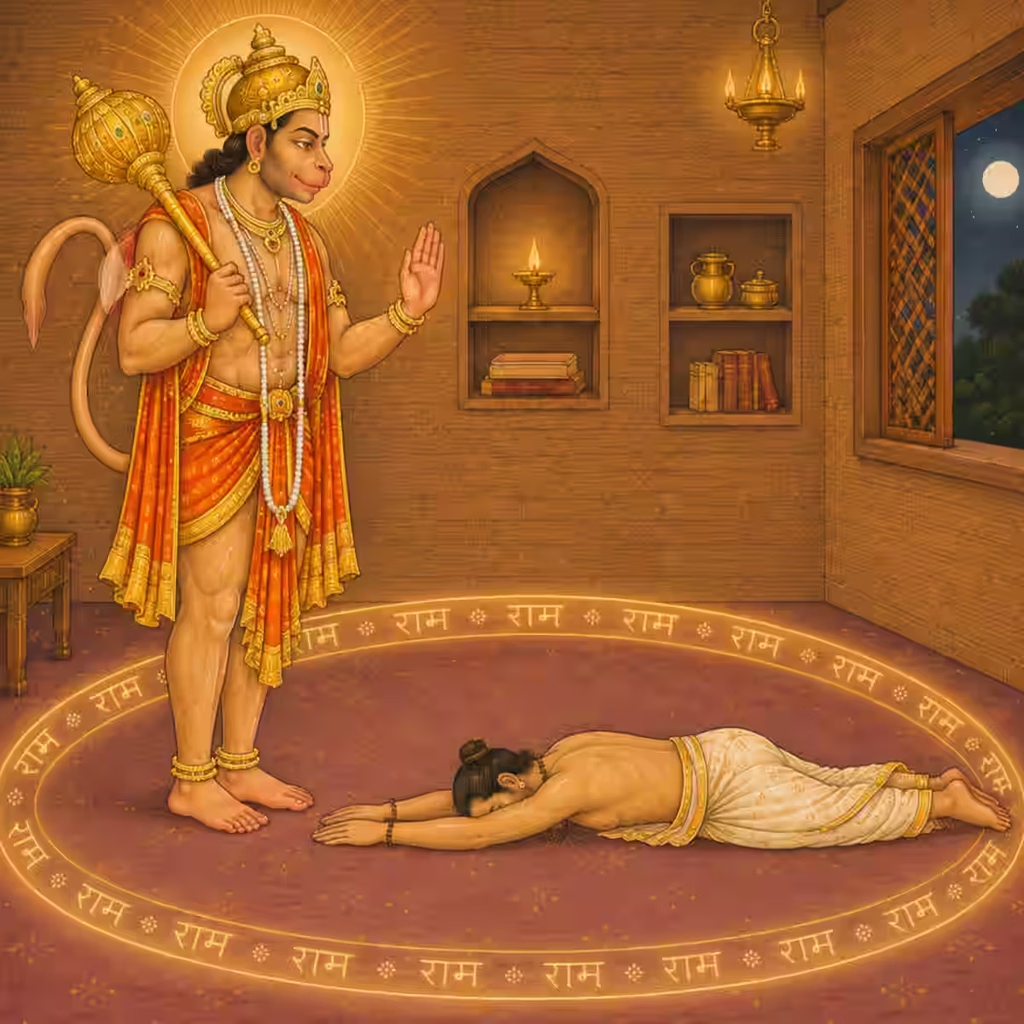
How the Yantra Amplifies the Power of the Chalisa
Many times we are weak. Many times we lack devotion, our life is dispersed. Work pulls one way, the phone pulls another, worries pull a third way. Our energy patterns are scattered, and scattered energy cannot solve a real problem.
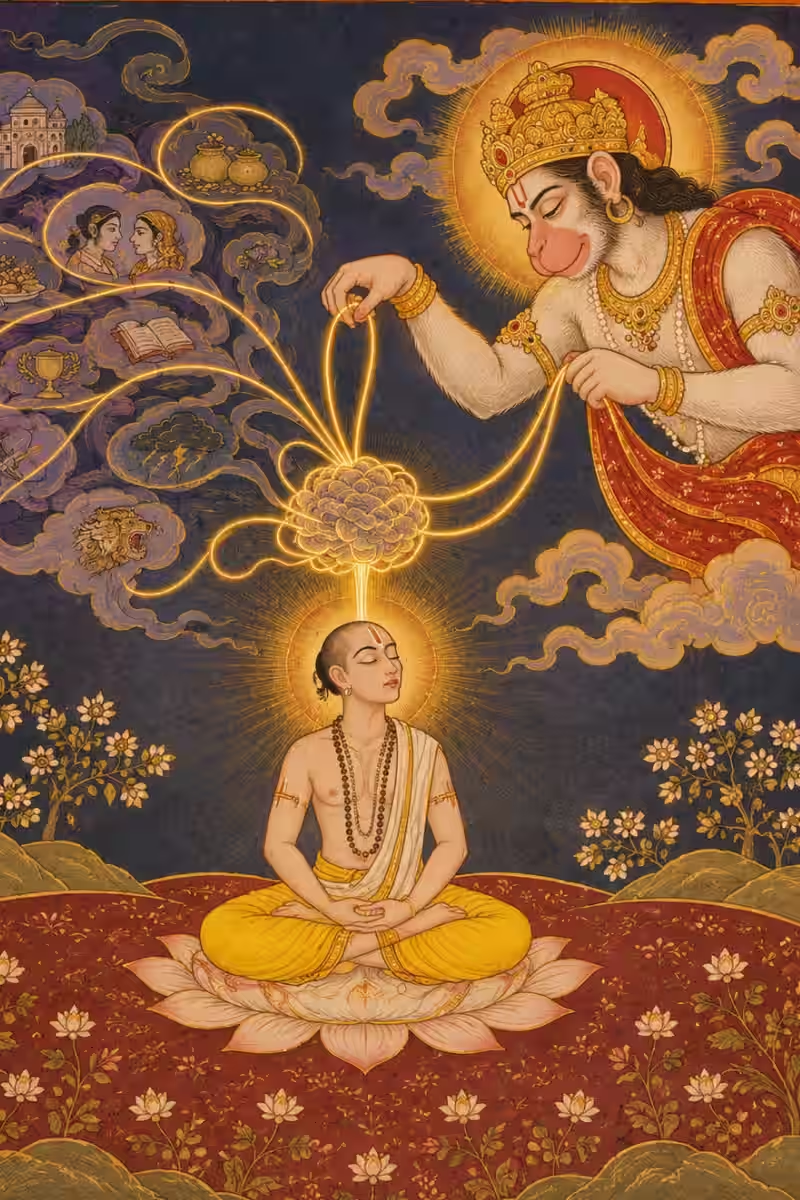
The Chalisa is a means to integrate that energy by invoking Hanumanji Maharaj through sound vibrations. Each verse gathers the mind, steadies the breath, and brings scattered attention back to one point. The Yantra then gives that gathered energy a place to focus. In this togetherness, the Chalisa acts as light waves and the Yantra acts as a lens.
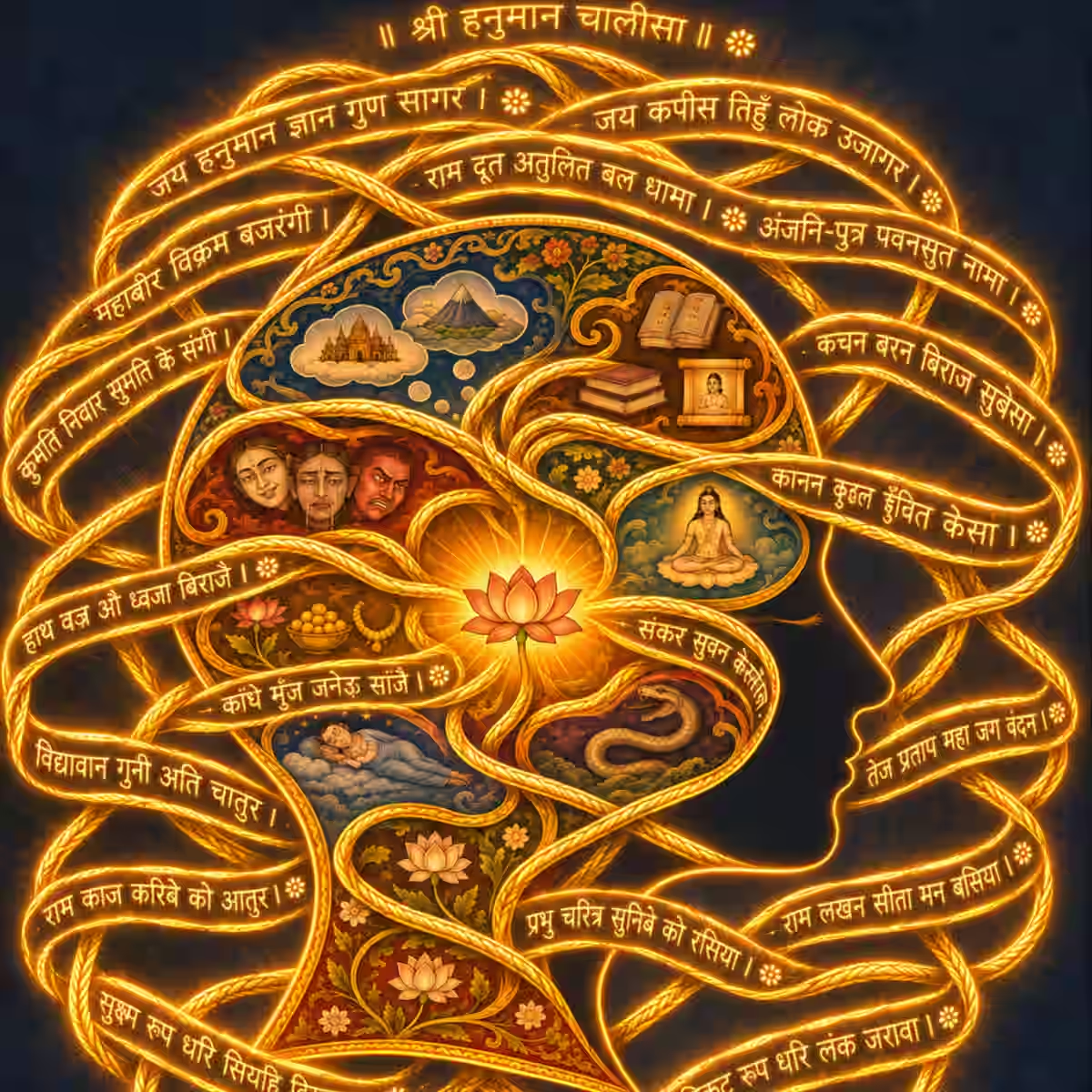
Just as scattered sunlight falling on paper does nothing, but when that same sunlight is focused through a lens it can burn paper, so too when a devotee organizes his energy by focusing on the Hanuman Yantra, which geometrically represents Hanumanji, the power becomes concentrated. Because the Yantra is energized by Guru, it does not remain a mere diagram. It becomes the lens through which the sound energy of the Chalisa is concentrated, amplified, and directed, to realign life circumstances, clear obstacles, and bring protection, clarity, and strength back into daily life.
In this way, worshipping the Yantra is like worshipping the Chalisa in one glance. The eyes see what the tongue has chanted. The mind, which may wander during chanting, finds a point to rest on.
How to Use Chalisa and Yantra Together Every Day
The practice is simple and practical:
1. Keep the Yantra in your puja place. Place it facing east, clean and respected. It should be consecrated according to tradition before regular worship.
2. Chant the Chalisa before the Yantra. Even one Chalisa in front of the Yantra binds sound and form together. The Yantra becomes charged with your own devotion, and your devotion becomes steady because it has a focus.
3. Worship with the same rules. Offer water, flowers, sindoor, and jaggery or laddoo on Tuesdays and Saturdays if you are able. Keep the same purity in food and conduct that you keep for Chalisa sadhana.
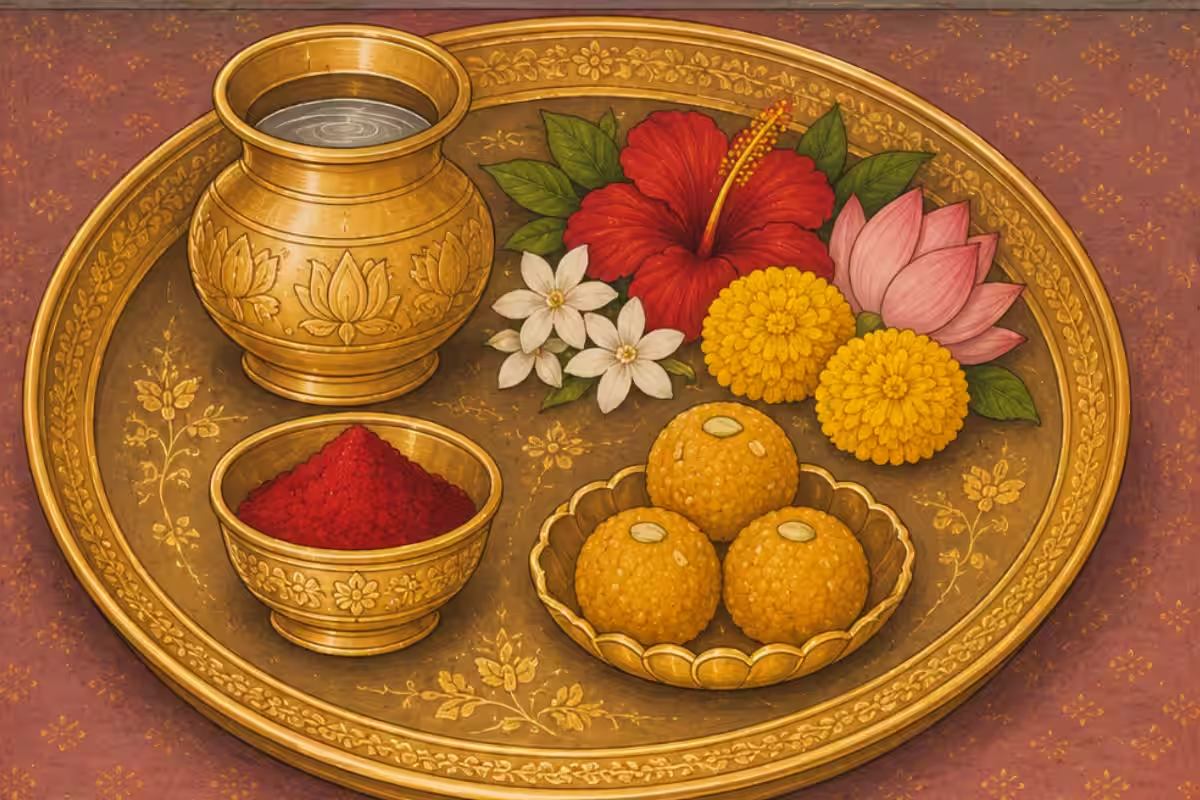
4. Let both stay with you through the day. Bow before you leave, glance at the Yantra when fear rises, remember one verse when work gets hard. This is how a morning practice sorts out a whole day.
The Yantrodharaka Stotram closes with the same promise the Chalisa makes, that sincere practice bears fruit:
trivaram yah pathen nityam stotram bhaktya dvijottama, vanchitam labhate abhishtam shanmasa abhyantare khalu
One who recites this stotra thrice daily with devotion, obtains the desired wish within six months.
The Yantra does not do the sadhana for you. It reminds you to do it. It turns a prayer you say in the morning into a presence you live with all day.
The Greatness That Holds Both
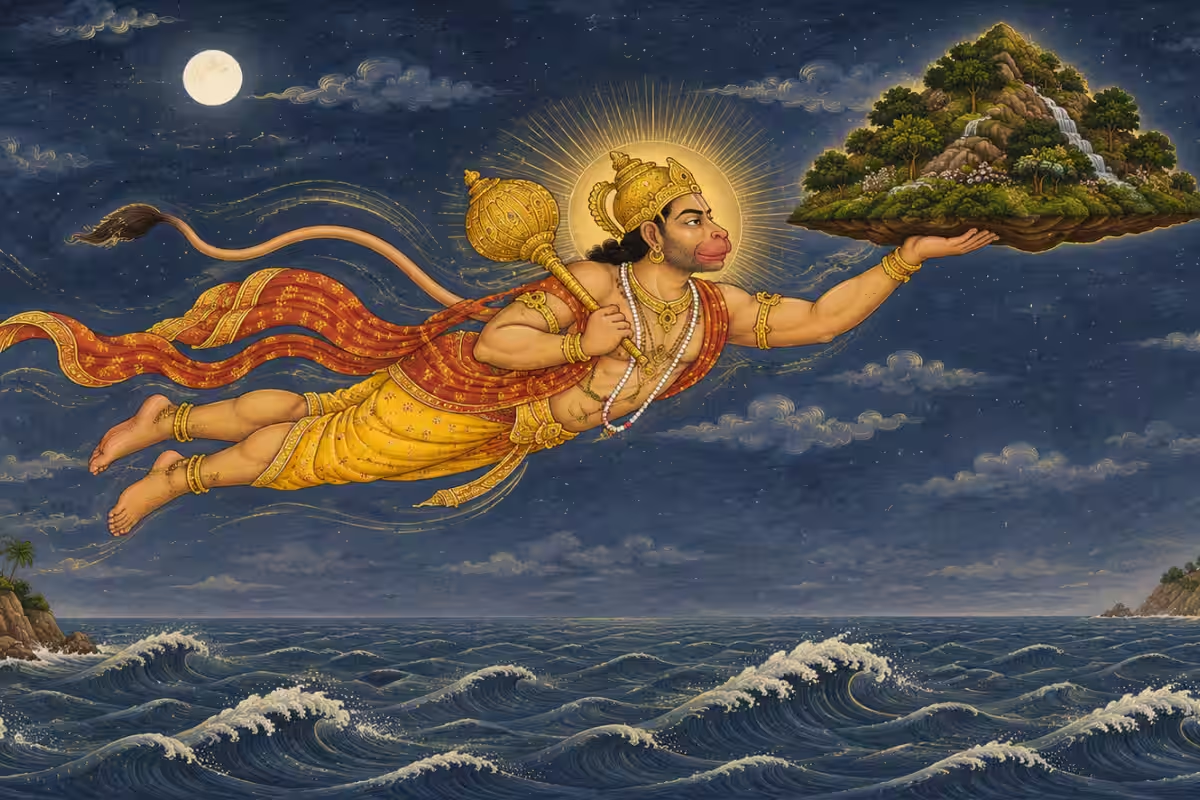
Hanumanji is great not only because he could lift a mountain, leap an ocean, or burn Lanka. He is great because he never kept anything for himself. That is why he is the ideal Guru. He shows us that real power is power offered in service.
The Chalisa teaches us to remember that power. The Yantra teaches us to live with it.
Chant the Chalisa with the Yantra before you. Let both work together in your home, your work, and your mind, as a life of bhakti, courage, and protection.

Viraja Devi Dasi

Rohini Devi Dasi