
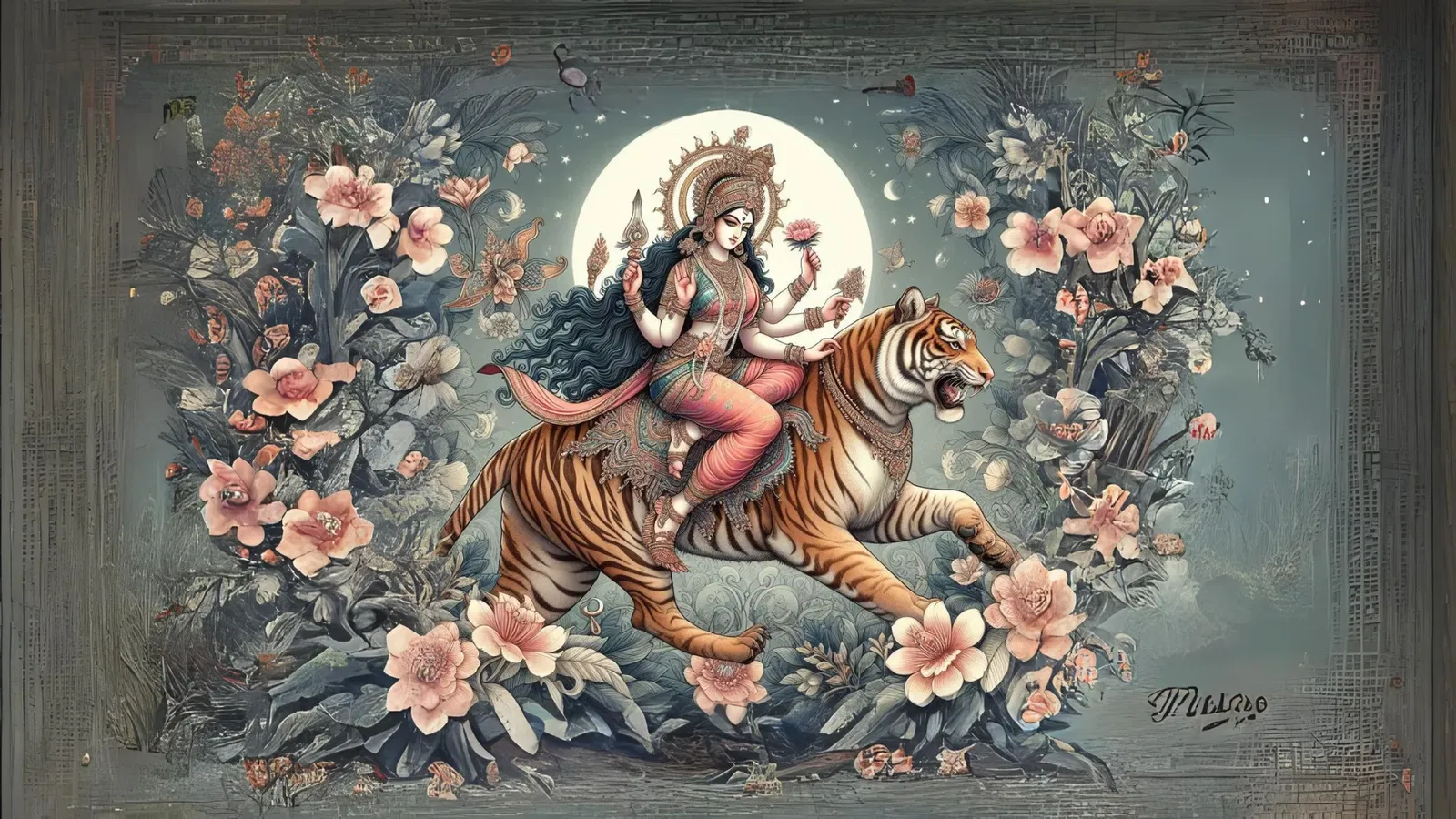
Siddha Kunjika Stotram: Chandi Yantra & Devi’s Power

Devi Shakti

The Missing Key to Devi’s Power

Imagine standing before a massive, golden door that holds the solution to every struggle in your life, whether it’s financial blocks, unseen negativity, or deep emotional knots. You have the map (the Durga Saptashati), you have the desire, but the door simply won’t budge. Why?

Because you are missing the Key.

In the ancient Rudra Yamala Tantra, Lord Shiva whispers a secret to Parvati that changes everything. He reveals that without the Siddha Kunjika Stotram, even the most intense Chandi Path is like “crying in the wilderness”, exhausting and often fruitless. But when you combine this “Secret Song of Perfection” with the sacred geometry of the Chandi Yantra, you don’t just knock on the door; you unlock it.

In the ancient Rudra Yamala Tantra, Lord Shiva whispers a secret of Siddha Kunjika Stotram  to Parvati
In the ancient Rudra Yamala Tantra, Lord Shiva whispers a secret of Siddha Kunjika Stotram to Parvati

In this guide, we bypass the confusion and give you the authentic, lineage-based method to activate Devi’s ultimate shield in your life today, The Devi Kunjika Mantra.

Devi Shakti’s Chandi Path: The DNA of Shakti

Before diving into the depths of Devi Shakti’s grace through the Chandi Path and Siddha Kunjika Stotram, it’s essential to understand the nature of the Kunjika mantra itself. This is not an ordinary composition. The Kunjika mantra is the distilled spiritual DNA of the Durga Saptashati, a divine code that unlocks the latent energies of the fierce yet compassionate form of Devi.

Quote for Social Share: “The Kunjika mantra is the pulse of Chandi herself, a divine code that unlocks the latent energies of the fierce yet compassionate Devi.”

It is considered so potent that chanting it with devotion, even in isolation, can activate transformative changes in one’s subtle body.

The Relationship: Kilaka, Kunjika, and Chandi Path

In this post, we explore a vital spiritual truth: Without chanting Kunjika Stotram, the Chandi Path is not complete.

In the sacred geography of the Durga Saptashati, the Kilaka Stotram acts as the “Pin” or the “Key” that unseals the power of the verses, removing the lock placed by Lord Shiva. The Siddha Kunjika Stotram is the activation energy, it is the force that makes the recitation fruitful. Reciting the Siddha Kunjika Stotram is considered as beneficial as chanting the entire Durga Saptashati, making it the ultimate refuge for the modern seeker who lacks time but possesses devotion.

The Visual Catalyst: Chandi Yantra

When it comes to amplifying the spiritual intensity of the Siddha Kunjika Stotram, no yantra is more potent than the Chandi Yantra. This yantra is not merely a diagram; it is a living, breathing spiritual device that acts as the geometric embodiment of Devi Chandika herself.

Product-A Framed Chandi Yantra-Illustration Only -Made to Order

Just as Siddha Kunjika distills the essence of Durga Saptashati into a single stotram, the Chandi Yantra compresses the cosmic energies of the Divine Mother into a sacred form.

Sacred Architecture of the Yantra

The Chandi Yantra features intersecting triangles, upward-pointing representing Shiva’s consciousness and downward-pointing symbolizing Shakti’s energy. These form a six-pointed star, surrounded by lotus petals and the bhupura (gateways).

ComponentSymbolic RepresentationSpiritual Benefit
Central BinduCore Consciousness of DeviFocus and Oneness
Intersecting TrianglesUnion of Shiva and ShaktiDynamic balance and power
8/16 Lotus PetalsDivine Qualities (Wisdom, Clarity)Cultivation of virtue
Bhupura (Gateways)Protective ThresholdsBoundary from negative energy

Authentic Preparation at YantraChants.com

At YantraChants.com, the Chandi Yantra is not just made; it is invoked. We don’t treat it as a product, but as a Devi Svarupa (Sacred Presence).

Shri Damodar Dasji Maharaj Charging and Activating a Yantra for a Sadhaka

Important Note: “We use only traditional and sattvic materials. For preparing yantras, Bhojpatra is used… The pen is carved from the pomegranate twig. The ink is a sacred mixture of Ashtagandha, sindoor, chandan, and sometimes a drop of Gangajal.”

Every yantra is prepared under the guidance of Guruji Damodar Dasji Maharaj, a self-realized master rooted in a living Guru Parampara. The process includes Prana-Pr/atishtha (energizing), where Guruji breathes life into the diagram through mantra-uttara, making it jīvita, alive and responsive to your devotion.

Buyer’s Guide: Choosing an Authentic Chandi Yantra

YantraChants.com Trust Stack Important Note: A Chandi Yantra is not a decorative wall piece; it is a Yantra-Svarupa (a vibrational body) of the fierce and compassionate Mother. To truly unlock the “lock” of the Siddha Kunjika Stotram, your Yantra must be authentic. Mass-produced, printed posters lack the geometric soul required to hold Sakti.

When choosing, look for a Yantra hand-drawn on Bhojapatra (sacred birch bark) using natural Ashtagandha or Rakta-Chandan ink. At YantraChants.com, our Chandi Yantras are prepared under the direct guidance of Guruji Shri Damodar Das ji Maharaj during high-potency Muhurtas like Ashtami or Navratri. Each piece undergoes 108 X 3 recitations of the Navarna Mantra and Kunjika Path to ensure it acts as a living shield for your home. Choose a tool born of Tapasya, not a factory.

A Powerful Siddha Kunjika-Chandi Yantra Sadhana

Chandi Yantra Preparation
Step 1: Light a Diya — Invoke Devi’s Presence (1 minute)
  • Light a simple ghee or sesame-oil diya in front of Devi’s image or the Chandi Yantra.
  • Sit facing East if possible.
  • Quietly say: “Chamunda, protect my home and heart today.”
Step 2: Chant the Key Lines of Siddha Kunjika (2–3 minutes)
  • Chant the Siddha Kunjika Stotram with steady breath — even once with focus is enough.
  • If short on time, chant the beejas from the heart:
  • Aim Hrim Klim Chamundayai Vicche

These sounds themselves form Devi’s highest shield.

Step 3: Seal Protection for the Family (1 minute)
Chandi Yantra Praying
  • Place your right hand over your heart or over the Yantra.
  • Visualize a bright circle of Devi’s fire around your home, children, and loved ones.
  • Say softly: “Where You stand, nothing dark can enter.”
Ritual StepAction RequiredDuration
Step 1: InvokeLight a ghee/sesame diya facing East 10.1 Minute
Step 2: ChantRecite Siddha Kunjika Stotram or core Beejas 11.2–3 Minutes
Step 3: SealHand over heart; visualize Devi’s fire around family 12.1 Minute

Optional Enhancements (Weekly)

Chant the Siddha Kunjika Stotram on Tuesday or Ashtami for quicker results.
Keep the Yantra clean and energized with a drop of saffron water weekly.
Do this ritual before sleep if nightmares or fears are present.

Safety Note (Soft, Reassuring)

This daily practice is fully safe and blessed for household devotees.
Advanced Tantric applications are only needed if specifically guided by a Guru.

The Kilak Stotram Meaning

॥ अथ कीलकम् ॥

🔹 Viniyoga (Purpose and Attribution):

Devanagari:
ॐ अस्य श्रीकीलकमन्त्रस्य शिव ऋषिः, अनुष्टुप् छन्दः,
श्रीमहासरस्वती देवता,
श्रीजगदम्बाप्रीत्यर्थं सप्तशतीपाठाङ्गत्वेन जपे विनियोगः,
ॐ नमश्चण्डिकायै ॥

Transliteration:
oṁ asya śrīkīlaka-mantrasya śiva ṛṣiḥ, anuṣṭup chandaḥ,
śrīmahāsarasvatī devatā,
śrījagadambā-prītyarthaṁ saptashatī-pāṭhāṅgatvena jape viniyogaḥ,
oṁ namaścaṇḍikāyai ॥

Meaning:
This is the Kilaka Mantra. Its seer is Lord Shiva, its meter is Anushtubh, the presiding deity is Mahasaraswati. It is chanted to please Mother Jagadamba, as a limb of the Durga Saptashati recitation.
Salutations to Goddess Chandika.

Verse 1

Devanagari:
मार्कण्डेय उवाच,
ॐ विशुद्धज्ञानदेहाय त्रिवेदीदिव्यचक्षुषे,
श्रेयःप्राप्तिनिमित्ताय नमः सोमार्धधारिणे ॥१॥

Transliteration:
mārkaṇḍeya uvāca,
oṁ viśuddha-jñāna-dehāya trivedī-divya-cakṣuṣe,
śreyaḥ-prāpti-nimittāya namaḥ somārdha-dhāriṇe ॥1॥

Meaning:
Markandeya said:
Salutations to the One who has a body of pure knowledge,
Who sees the truth of the three Vedas with divine vision,
Who is the source of all auspicious attainments,
Who wears the crescent moon.

Verse 2

Devanagari:
सर्वमेतद्विजानीयान्मन्त्राणामभिकीलकम्,
सोऽपि क्षेममवाप्नोति सततं जाप्यतत्परः ॥२॥

Transliteration:
sarvam etad vijānīyān mantrāṇām abhi-kīlakam,
so’pi kṣemam avāpnoti satataṁ jāpya-tatparaḥ ॥2॥

Meaning:
This should be known as the key to all mantras,
Whoever chants it regularly with devotion, attains protection and well-being.

Verse 3

Devanagari:
सिद्ध्यन्त्युच्चाटनादीनि वस्तूनि सकलान्यपि,
एतेन स्तुवतां देवी स्तोत्रमात्रेण सिद्ध्यति ॥३॥

Transliteration:
siddhyanty uccāṭanādīni vastūni sakalāny api,
etena stuvatāṁ devī stotra-mātreṇa siddhyati ॥3॥

Meaning:
All acts like removal of obstacles and disturbances are accomplished,
For those who chant this, the Goddess grants success through this stotra alone.

Verse 4

Devanagari:
न मन्त्रो नौषधं तत्र न किञ्चिदपि विद्यते,
विना जाप्येन सिद्ध्येत सर्वमुच्चाटनादिकम् ॥४॥

Transliteration:
na mantro nauṣadhaṁ tatra na kiñcid api vidyate,
vinā jāpyena siddhyet sarvam uccāṭanādikam ॥4॥

Meaning:
No other mantra, no medicine, no other remedy is needed,
Chanting alone is enough to accomplish all protection and removal of negativity.

Verse 5

Devanagari:
समग्राण्यपि सिद्ध्यन्ति लोकशङ्कामिमां हरः,
कृत्वा निमन्त्रयामास सर्वमेवमिदं शुभम् ॥५॥

Transliteration:
samagrāṇy api siddhyanti loka-śaṅkām imāṁ haraḥ,
kṛtvā nimantrayām āsa sarvam evam idaṁ śubham ॥5॥

Meaning:
All success is attained, and Lord Shiva removed doubts of the world,
He invited all to partake in this auspicious practice.

Verse 6

Devanagari:
स्तोत्रं वै चण्डिकायास्तु तच्च गुप्तं चकार सः,
समाप्तिर्न च पुण्यस्य तां यथावन्नियन्त्रणाम् ॥६॥

Transliteration:
stotraṁ vai caṇḍikāyās tu tac ca guptaṁ cakāra saḥ,
samāptir na ca puṇyasya tāṁ yathāvan niyantraṇām ॥6॥

Meaning:
The stotra of Chandika Devi was kept secret by Him,
The merit from this stotra is endless, but requires proper restraint and practice.

Verse 7

Devanagari:
सोऽपि क्षेममवाप्नोति सर्वमेवं न संशयः,
कृष्णायां वा चतुर्दश्यामष्टम्यां वा समाहितः ॥७॥

Transliteration:
so’pi kṣemam avāpnoti sarvam evaṁ na saṁśayaḥ,
kṛṣṇāyāṁ vā caturdaśyām aṣṭamyāṁ vā samāhitaḥ ॥7॥

Meaning:
He who performs this practice on Krishna Chaturdashi or Ashtami with full focus,
Certainly gains protection and fulfillment, without any doubt.

Verse 8

Devanagari:
ददाति प्रतिगृह्णाति नान्यथैषा प्रसीदति,
इत्थंरुपेण कीलेन महादेवेन कीलितम् ॥८॥

Transliteration:
dadāti pratigṛhṇāti nānyathaiṣā prasīdate,
itthaṁ rūpeṇa kīlena mahādevena kīlitam ॥8॥

Meaning:
She gives and receives only in this particular form,
Thus She has been sealed with this sacred lock by Mahadeva.

Verse 9

Devanagari:
यो निष्कीलां विधायैनां नित्यं जपति संस्फुटम्,
स सिद्धः स गणः सोऽपि गन्धर्वो जायते नरः ॥९॥

Transliteration:
yo niṣkīlāṁ vidhāyaināṁ nityaṁ japati saṁsphuṭam,
sa siddhaḥ sa gaṇaḥ so’pi gandharvo jāyate naraḥ ॥9॥

Meaning:
Whoever removes the inner “seal” and chants it clearly every day,
Becomes perfected, joins the ranks of divine beings, and shines like a Gandharva.

Verse 10

Devanagari:
न चैवाप्यटतस्तस्य भयं क्वापीह जायते,
नापमृत्युवशं याति मृतो मोक्षमवाप्नुयात् ॥१०॥

Transliteration:
na caivāpy aṭatas tasya bhayaṁ kvāpīha jāyate,
nāpa-mṛtyu-vaśaṁ yāti mṛto mokṣam avāpnuyāt ॥10॥

Meaning:
He shall have no fear while traveling anywhere in this world,
He will not die a premature death, and upon death, he attains liberation.

Verse 11

Devanagari:
ज्ञात्वा प्रारभ्य कुर्वीत न कुर्वाणो विनश्यति,
ततो ज्ञात्वैव सम्पन्नमिदं प्रारभ्यते बुधैः ॥११॥

Transliteration:
jñātvā prārabhya kurvīta na kurvāṇo vinaśyati,
tato jñātvāiva sampannam idaṁ prārabhyate budhaiḥ ॥11॥

Meaning:
This must be practiced only after understanding it clearly,
One who does not do so suffers, hence the wise always begin only after full understanding.

Verse 12

Devanagari:
सौभाग्यादि च यत्किञ्चिद् दृश्यते ललनाजने,
तत्सर्वं तत्प्रसादेन तेन जाप्यमिदं शुभम् ॥१२॥

Transliteration:
saubhāgyādi ca yat kiñcid dṛśyate lalanājane,
tat sarvaṁ tat-prasādena tena jāpyam idaṁ śubham ॥12॥

Meaning:
Whatever grace, charm, or prosperity is seen among women,
All of it arises due to Her blessings, so this sacred chant should be repeated.

Verse 13

Devanagari:
शनैस्तु जप्यमानेऽस्मिन् स्तोत्रे सम्पत्तिरुच्चकैः,
भवत्येव समग्रापि ततः प्रारभ्यमेव तत् ॥१३॥

Transliteration:
śanais tu japyamāne’smin stotre sampattir uccakaiḥ,
bhavaty eva samagrāpi tataḥ prārabhyam eva tat ॥13॥

Meaning:
Even when recited slowly, this stotra leads to great wealth,
It certainly bears full fruit, therefore one must begin it with conviction.

Verse 14

Devanagari:
ऐश्वर्यं यत्प्रसादेन सौभाग्यारोग्यसम्पदः,
शत्रुहानिः परो मोक्षः स्तूयते सा न किं जनैः ॥१४॥

Transliteration:
aiśvaryaṁ yat-prasādena saubhāgyārogya-sampadaḥ,
śatru-hāniḥ paro mokṣaḥ stūyate sā na kiṁ janaiḥ ॥14॥

Meaning:
Through Her grace come riches, health, beauty, and blessings,
She removes enemies and grants final liberation, what soul would not praise Her?

Conclusion

॥ इति देव्याः कीलकस्तोत्रं सम्पूर्णम् ॥
(Thus ends the Kilaka Stotram of Devi.)

Siddha Kunjika Stotram English Meaning

॥ सिद्धकुञ्जिकास्तोत्रम् ॥

Verse 1

Devanagari:
श्रृणु देवि प्रवक्ष्यामि कुंजिकास्तोत्रमुत्तमम्,
येन मन्त्रप्रभावेण चण्डिजाप: शुभो भवेत् ॥

Transliteration:
śṛṇu devi pravakṣyāmi kuñjikā-stotram uttamam,
yena mantra-prabhāveṇa caṇḍi-jāpaḥ śubho bhavet ॥

Meaning:
O Devi, listen as I now reveal the most excellent Kunjika Stotram,
By the power of which, the chanting of the Chandi becomes auspicious and successful.

Verse 2

Devanagari:
न कवचं नार्गलास्तोत्रं कीलकं न रहस्यकम्,
न सूक्तं नापि ध्यानं च न न्यासो न च वार्चनम् ॥

Transliteration:
na kavacaṁ nārgalā-stotraṁ kīlakaṁ na rahasyakam,
na sūktaṁ nāpi dhyānaṁ ca na nyāso na ca vārcanam ॥

Meaning:
Without the armor (Kavacham), without the Argala, Kilaka or the Rahasya verses,
Without even the Suktas, Dhyana, Nyasa or ritual worship,

Verse 3

Devanagari:
कुंजिकापाठमात्रेण दुर्गापाठफलं लभेत् ॥

Transliteration:
kuñjikā-pāṭha-mātreṇa durgā-pāṭha-phalaṁ labhet ॥

Meaning:
Simply by reciting this Kunjika Stotra, one attains the full benefit of reciting the Durga Saptashati.

Verse 4

Devanagari:
अति गुह्यतरं देवि देवानामपि दुर्लभम्,
गोपनीयं प्रयत्नेन स्वयोनिरिव पार्वति ॥

Transliteration:
ati guhya-taraṁ devi devānām api durlabham,
gopanīyaṁ prayatnena svayonir iva pārvati ॥

Meaning:
This is extremely secret, O Devi, even the gods find it rare.
It must be carefully guarded, O Parvati, like one’s own womb.

Verse 5

Devanagari:
मारणं मोहनं वश्यं स्तम्भनोच्चाटनादिकम्,
पाठमात्रेण संसिद्ध्येत् कुंजिकास्तोत्रमुत्तमम् ॥

Transliteration:
māraṇaṁ mohanaṁ vaśyaṁ stambhanoccāṭanādikam,
pāṭha-mātreṇa saṁsiddhyet kuñjikā-stotram uttamam ॥

Meaning:
Acts such as destruction, enchantment, subjugation, immobilization, and banishment,
All these are perfected simply by reciting this supreme Kunjika Stotra.

Verse 6

Devanagari:
नमस्ते रुद्ररूपिण्यै नमस्ते मधुमर्दिनि,
नम: कैटभहारिण्यै नमस्ते महिषार्दिनि ॥

Transliteration:
namaste rudra-rūpiṇyai namaste madhu-mardini,
namaḥ kaiṭabha-hāriṇyai namaste mahiṣārdini ॥

Meaning:
Salutations to You who appears in the form of Rudra,
Salutations to the destroyer of the demon Madhu,
Salutations to the slayer of Kaitabha,
Salutations to the vanquisher of Mahishasura.

Verse 7

Devanagari:
नमस्ते शुम्भहन्त्र्यै च निशुम्भासुरघातिनि,
जाग्रतं हि महादेवि जपं सिद्धं कुरुष्व मे ॥

Transliteration:
namaste śumbha-hantryai ca niśumbhāsura-ghātini,
jāgrataṁ hi mahādevi japaṁ siddhaṁ kuruṣva me ॥

Meaning:
Salutations to You, slayer of Shumbha and destroyer of Nishumbha,
O Great Goddess, may You awaken and make my chanting fruitful.

Verse 8

Devanagari:
ऐंकारी सृष्टिरूपायै ह्रींकारी प्रतिपालिका,
क्लींकारी कामरूपिण्यै बीजरूपे नमोऽस्तु ते ॥

Transliteration:
aiṅkārī sṛṣṭi-rūpāyai hrīṅkārī pratipālikā,
klīṅkārī kāma-rūpiṇyai bīja-rūpe namo’stu te ॥

Meaning:
Salutations to You, whose form is Aiṁ (creation), Hrīṁ (protection),
Klīṁ (desire and attraction), You are the very form of Bīja (seed mantra).

Verse 9

Devanagari:
चामुण्डा चण्डघाती च यैकारी वरदायिनी,
विच्चे चाभयदा नित्यं नमस्ते मन्त्ररूपिणि ॥

Transliteration:
cāmuṇḍā caṇḍa-ghātī ca yaikārī varadāyinī,
vicce cābhayadā nityaṁ namaste mantra-rūpiṇi ॥

Meaning:
You are Chamunda, slayer of Chanda, You are the grantor of boons,
You are the “Ya” sound, the bestower of fearlessness, I bow to You who is the form of mantra.

Verse 10

Devanagari:
धां धीं धूं धूर्जटे: पत्नी वां वीं वूं वागधीश्वरी,
क्रां क्रीं क्रूं कालिका देवि शां शीं शूं मे शुभं कुरु ॥

Transliteration:
dhāṁ dhīṁ dhūṁ dhūrjaṭeḥ patnī vāṁ vīṁ vūṁ vāgadhīśvarī,
krāṁ krīṁ krūṁ kālikā devi śāṁ śīṁ śūṁ me śubhaṁ kuru ॥

Meaning:
You are the one who vibrates as Dhām, Dhīm, Dhūm, consort of Shiva,
You are Vām, Vīm, Vūm, Goddess of divine speech,
You are Krām, Krīm, Krūm, the fierce Goddess Kālikā,
Śām, Śīm, Śūm, grant me auspiciousness, O Devi.

Verse 11

Devanagari:
हुं हुं हुंकाररूपिण्यै जं जं जं जम्भनादिनी,
भ्रां भ्रीं भ्रूं भैरवी भद्रे भवान्यै ते नमो नम: ॥

Transliteration:
huṁ huṁ huṁkāra-rūpiṇyai jaṁ jaṁ jaṁ jambhanādinī,
bhrāṁ bhrīṁ bhrūṁ bhairavī bhadre bhavānyai te namo namaḥ ॥

Meaning:
Salutations to You, who is the form of Hum sound,
To You who paralyzes and neutralizes with Jam,
To the fierce Bhairavi, auspicious Bhadrā, and sacred Bhavānī, I offer my repeated salutations.

Verse 12

Devanagari:
अं कं चं टं तं पं यं शं वीं दुं ऐं वीं हं क्षं,
धिजाग्रं धिजाग्रं त्रोटय त्रोटय दीप्तं कुरु कुरु स्वाहा ॥

Transliteration:
aṁ kaṁ caṁ ṭaṁ taṁ paṁ yaṁ śaṁ vīṁ duṁ aiṁ vīṁ haṁ kṣaṁ,
dhijāgraṁ dhijāgraṁ troṭaya troṭaya dīptaṁ kuru kuru svāhā ॥

Meaning:
These powerful Beeja sounds activate divine forces.
Awaken the mind, burn all obstacles, destroy ignorance, ignite brilliance, svāhā!

Verse 13

Devanagari:
पां पीं पूं पार्वती पूर्णा खां खीं खूं खेचरी तथा,
सां सीं सूं सप्तशती देव्या मन्त्रसिद्धिं कुरुष्व मे ॥

Transliteration:
pāṁ pīṁ pūṁ pārvatī pūrṇā khāṁ khīṁ khūṁ khecarī tathā,
sāṁ sīṁ sūṁ saptashatī devyā mantra-siddhiṁ kuruṣva me ॥

Meaning:
You are Pām, Pīm, Pūm, full form of Pārvati,
Khām, Khīm, Khūm, ruler of the skies,
Sām, Sīm, Sūm, essence of Durga Saptashati,
Grant me success in mantra!

Verse 14

Devanagari:
इदं तु कुंजिकास्तोत्रं मन्त्रजागर्तिहेतवे,
अभक्ते नैव दातव्यं गोपितं रक्ष पार्वति ॥

Transliteration:
idaṁ tu kuñjikā-stotraṁ mantra-jāgarti-hetave,
abhakte naiva dātavyaṁ gopitaṁ rakṣa pārvati ॥

Meaning:
This Kunjika Stotram awakens the mantra’s power.
It must never be given to the faithless. Protect and conceal it, O Parvati.

Verse 15

Devanagari:
यस्तु कुंजिकया देवि हीनां सप्तशतीं पठेत्,
न तस्य जायते सिद्धिररण्ये रोदनं यथा ॥

Transliteration:
yastu kuñjikaiyā devi hīnāṁ saptashatīṁ paṭhet,
na tasya jāyate siddhir araṇye rodanam yathā ॥

Meaning:
O Devi, one who recites the Durga Saptashati without the Kunjika,
Will attain no siddhi, his effort is like crying in a desert.

॥ इति श्रीरुद्रयामले प्रचण्डचण्डिकायाः कृपे कृते कुंजिकास्तोत्रं सम्पूर्णम् ॥

(Thus ends the Siddha Kunjika Stotram from the Rudra Yamala, revealed by the grace of Pracanda Chandika.)

Frequently Asked Questions (FAQs) about Siddha Kunjika Stotram

Q1: What is the Siddha Kunjika Stotram?

A: The Siddha Kunjika Stotram is a sacred hymn (stotra) in the Śākta tradition, often chanted before the recitation of the Chandi Path (Devi Mahatmya / Durga Saptashati). It is considered a powerful “key” stotra that encapsulates the essence of the Devi’s power and is believed to activate or unlock the full fruit of Devi Mahatmya.

Q2: Why chant it before reading the Devi Mahatmya / Chandi Path?

A: According to tradition, reciting the Siddha Kunjika Stotram enhances the potency of the subsequent Chandi recitation. Some believe that without Kunjika, the Chandi Path is incomplete in its spiritual effect.

Q3: Is it equivalent in merit to reciting the full Devi Mahatmya?

A: Many sources state that the Siddha Kunjika Stotram gives the benefits of the full Devi Mahatmya (Durga Saptashati) when chanted with sincerity, thus acting as a “shortcut” when full recitation is not possible.

Q4: Does chanting Siddha Kunjika protect against negative energies?

A. Yes. This Stotram is one of Devi’s strongest shields against negativity. It cleanses the aura, breaks psychic disturbances, and stops unseen influences from entering your home and personal space. Many householders chant it daily during moments of fear, confusion, or nightmares because Devi Chamunda protects instantly and without hesitation.

Q5: Is Siddha Kunjika safe to chant without a Guru?

A. Yes, for household protection and emotional support, it is completely safe when approached with devotion and humility. Advanced tantric rituals or high-intensity practices are the ones that require a Guru’s guidance. Simple chanting with a clean heart is fully protected by Devi Herself.

Q6: When should one chant Siddha Kunjika for protection?

A. When the home feels heavy, sleep is disturbed, jealousy rises from others, or when there is fear of black magic or unseen forces. Chanting before travel, important decisions, or entering unknown places also keeps a strong spiritual perimeter of protection around the devotee.

Q7: Can I chant it without initiation (Guru)?

A: Yes, with caution. Many practitioners chant it 1–3 times daily with proper respect, but longer or more intense sādhanā should ideally be under guidance.

Q8: When is the best time or occasion to chant it?

A: Many recommend chanting during Brahma-muhurta (pre-dawn), or during auspicious moments such as Navratri, Ashtami/Chaturdashi transitions, or during Sandhi-kṣaṇa periods (transitional times).

Q9: What precautions should be taken?

A: Correct pronunciation of the bījās is crucial.
Don’t chant aggress ively without purification.
It is recommended not to share the mantra with unbelievers or those lacking devotion.
Avoid disrespect or mechanical chanting; keep mind, intention, and purity in line.

Q10: What if I chant Devi Mahatmya without Kunjika?

A: The Siddha Kunjika Stotram itself warns that reciting Mahatmya (Saptashati) without the Kunjika is incomplete, “like crying in the wilderness.”

Q11: Should I keep a Chandi Yantra along with chanting Siddha Kunjika?

A. Yes. The Chandi Yantra continuously protects your space while the Stotram protects your mind and heart. Together, they purify the environment, stop psychic attacks, and stabilize spiritual vibrations in the home. This combination is especially supportive during periods of emotional turbulence or negative influence from others.

Q12: Is Siddha Kunjika safe for homes with small children or pregnant women?

A. Yes. This Stotram is a divine shield of Devi that removes fear and protects family members, especially vulnerable ones like children and expectant mothers. There is no restriction for chanting in a clean and respectful home atmosphere. Many mothers use this Stotram for peace, safety, and restful sleep for the child.

A Note from YantraChants.com: Your Sanctuary of Grace

At YantraChants.com, we honor the Siddha Kunjika Stotram and the Chandi Yantra not merely as tools, but as living vessels of the Divine Mother’s grace. We understand that bringing such powerful energy into your home is a decision of the heart, not just a purchase.

We prepare every Chandi Yantra with the quiet reverence it demands, using authentic Bhojpatra, sacred pomegranate twigs, and the essential Prana-Pratishtha (energization) under the guidance of Guruji Damodar Dasji Maharaj. We do this so that when the Yantra reaches you, it is not just a diagram, but a companion in your spiritual journey.

If you feel a pull towards this protective energy, or if you simply have questions about how to begin this sadhana safely, you do not have to walk the path alone. We are here to listen, guide, and help you find the right spiritual anchor for your life.

Feel free to reach out to us directly for a conversation.

Connect with us on WhatsApp: +91 74172 38880

Vani Devi Dasi

Vani Devi Dasi

Author
Spiritual Research Contributor, Meditation Guide, Chanting Rules expert, Tantra Shastra Specialist, Masters in Psychology
Vani Devi Dasi is a spiritually grounded researcher, and contemplative practitioner of the Ramanandi Lineage. Raised in a lineage-rooted environment, she received direct instructions (Shiksha) from Shri Damodar Das Ji Maharaj in the technical and spiritual application of Mantra-śāstra, Bhagavad Gita recitation, alongside formal education completed through NIOS and a Master’s degree in Psychology.Initiated into the Shiva Beeja Mantra by Sri Lallandasji Maharaj of Deoria, her practice reflects depth, With a focus on spiritual safety and Bhakti Bhav. She contributes behind the scenes through sādhana manuals, visual explanations, and practice-oriented spiritual content.
Rohini Devi Dasi

Rohini Devi Dasi

Reviewer
Chief Convenor, Spiritual Counselor, 20+ years Bhakti Upasaka, Mantra Science Expert, Bhojapatra Yantra Science Expert
Rohini Devi Dasi is a Bhakti-rooted writer with over 15 years of experience guiding individuals on the spiritual path. She received initiation into the Ramanandi Sampradaya by her Gurudev, Sri Lallandasji Maharaj of Deoria.
Scroll to Top
0

Subtotal