
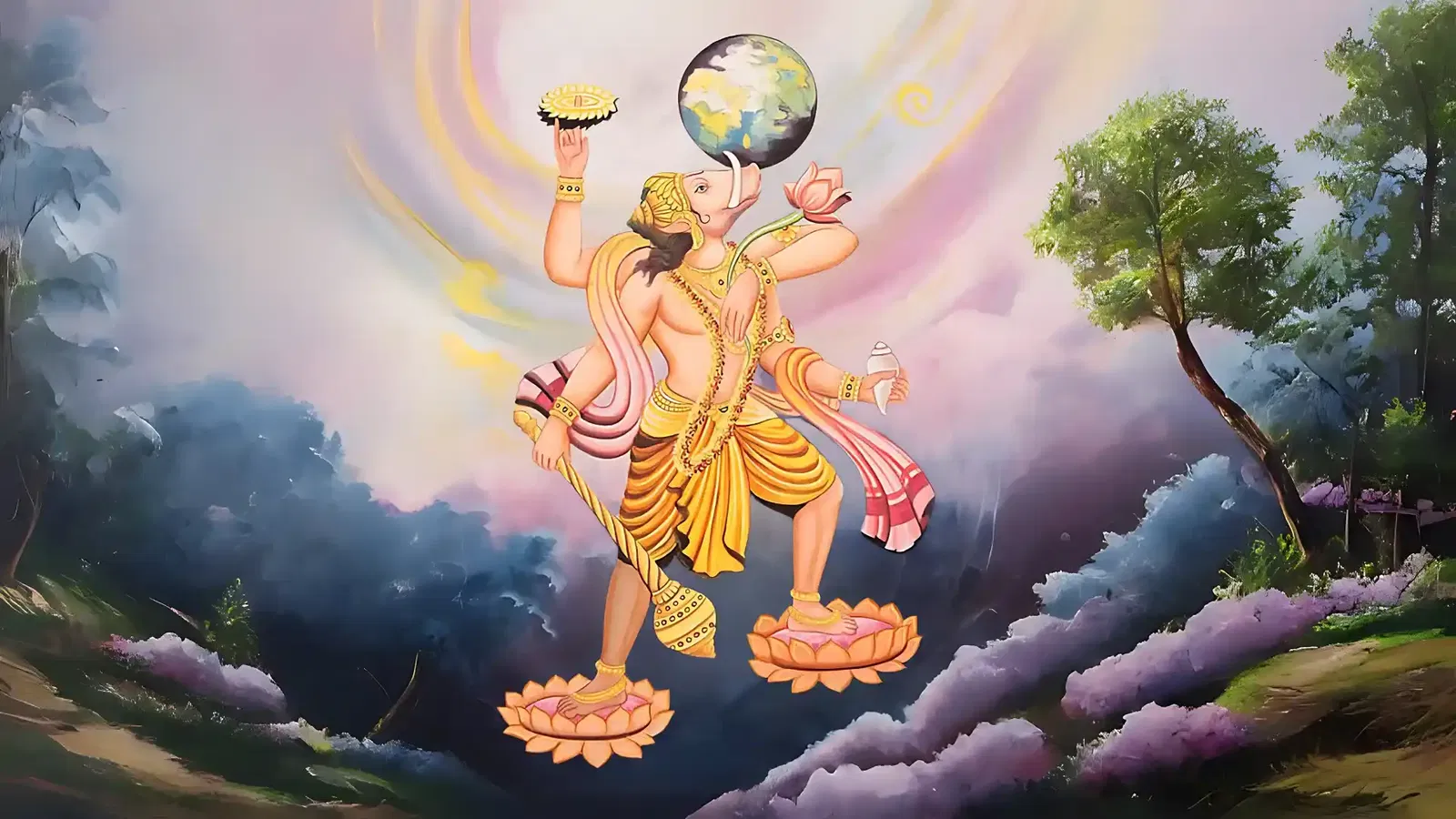
If life feels unstable, money swings, sudden obstacles, toxic people, fear, or that constant sense of “things falling apart”, Varaha Upāsanā is traditionally approached as a stability-kavach.
When the earth shakes, you don’t need more force, you need a Divine Anchor.
In the Varaha story, even the Earth sank into the abyss, and the Divine responded not with noise, but with restoration, ground under dharma.

This guide gives you:
- the safest householder mantra,
- when/why it works,
- how the Varaha Yantra functions as a silent shield, and
- what to buy only if it truly fits your need.
Message VARAHA KIT to get the right Yantra + Mala suggestion.
“Sri Varaha is the vow of the Divine: I will lift you when you sink, not by force, but by restoring dharma under your feet.”
— The Sri Varaha Principle
Quick Answers
- Best beginner mantra: Śrī Varāhāya Dharaṇuddharaṇāya Namaḥ
- Best use-cases: protection, fear removal, stability, property/land disputes, household grounding
- Best support tool: Śrī Varaha Yantra (especially for “repeated instability” patterns)
9 Effects of Sri Varaha Mantra
- Removes obstacles and negativity
- Protection from enemies/accidents (mental and situational)
- Strengthens leadership and courage
- Supports dispute resolution (legal/marital, with discipline)
- Stabilizes wealth-flow and household harmony
- Improves focus and discipline for students
- Builds devotional steadiness (bhakti-rasa)
- Clears “sinking states”: hopelessness, overthinking, instability loops
- Creates a protective field for family (when maintained consistently)

Choose the Right Practice (Mantra vs Yantra vs Mala)
| Your main problem (search intent) | Best starting step | Why it matches intent | Optional support tool (transactional) |
|---|---|---|---|
| Fear, negativity, “I feel unsafe” | Daily mantra (simple) | Consistency builds protection field | Varaha Yantra near puja space |
| Sudden instability (career/finance) | Mantra and discipline rules | Stabilizes mind → better decisions | Varaha Yantra and Tulsi mala |
| Land/property disputes | Yantra presence and mantra | Varaha linked to Bhumi-tattva | Varaha Yantra (primary) |
| Overthinking, weak grounding | Mantra at fixed time/place | Trains rhythm of mind | Rudraksha mala (grounding) |
| Household disharmony | Gentle mantra and sattvic routine | Reduces friction/heat | Chandan mala (cooling) |
| “Occult fear” / bad influences | Mantra and protective routine | Safety-first approach | Yantra (no fear marketing) |
Quick YantraChants.com Advice: If your issue is instability, fear and repeated setbacks, a Guru-energized Śrī Varaha Yantra is traditionally chosen as a silent shield while you do japa.
Loading…
—
—
Original Meaning of the Sri Varaha Mantra
Core mantra reference:
ॐ नमः श्रीवराहाय धरणुद्धरणाय च स्वाहा
Om namaḥ śrīvarāhāya dharaṇuddharaṇāya ca svāhā
Meaning: Salutations to Sri Varaha, who uplifts Dhara (Bhumi/Earth).
Best householder-safe version (recommended):
श्रीवराहाय धरणुद्धरणाय नमः
Śrī Varāhāya Dharaṇuddharaṇāya Namaḥ
“Varaha is not only a destroyer of evil, He is the restorer of ground.”
— Sri Damodar Dasji Maharaj
YantraChants.com Trust Stack Safety Principle
- In many traditions, Bhumi Devi awareness balances the practice (grounding and steadiness).
- Avoid beeja experimentation (Om/Svāhā combinations and intense beejas) without guidance, especially if you’re heat-prone (acidity/irritability/restlessness).
- For most readers: stick to the Namaḥ form, clean pronunciation, steady routine.
Best Times to Chant the Varaha Mantra
- Ideal: early morning (brahma-muhūrta if possible)
- Auspicious: Varaha Jayanti, Ekadashi, Saturday
- Best rule: same time, same place, same seat (this is how “charge” builds)
Short Story of Lord Varaha
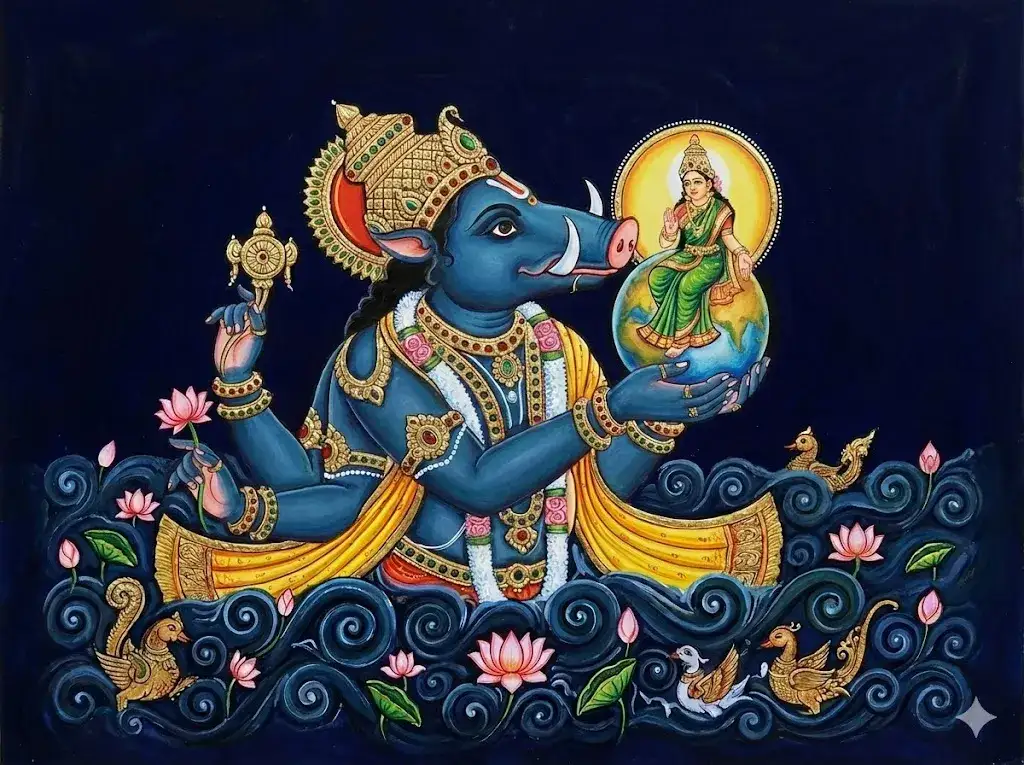
When the Earth sank into the cosmic depths, it wasn’t just a myth, it’s a mirror.
The Earth is your life-structure. The abyss is instability, fear, conflict, setbacks, negativity.
Hiranyaksha symbolizes greed, arrogance, destabilizing forces.
Varaha is the Divine intervention that doesn’t merely fight, it lifts and restores.
When the earth shakes, Varaha lifts you, placing you back onto stable ground.
That is why this upāsanā is often chosen when life feels like it’s “sinking.”
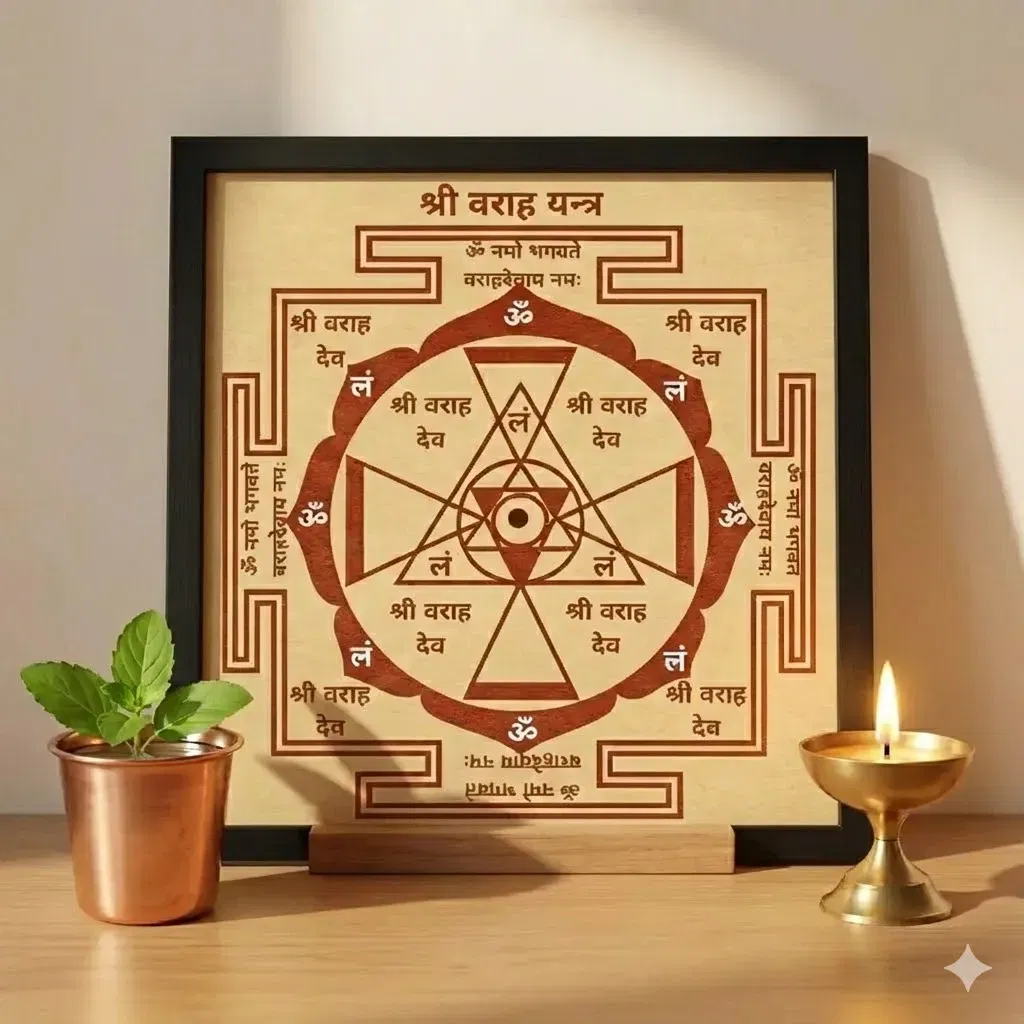
Sri Varaha Yantra
What is it?
The Śrī Varaha Yantra is traditionally treated as the geometric kavach of Varaha’s stabilizing force, kept in the puja space so that your japa becomes anchored, not scattered.
Why Mantra works Best with Varaha Yantra
| Element | Mantra does | Yantra does | Outcome when paired |
|---|---|---|---|
| Your mind | Gives direction and bhakti | Holds attention in one “field” | Less wavering, more steadiness |
| Your life patterns | Clears negativity via discipline | Anchors stability (Bhumi-tattva) | Reduced chaos cycles |
| Your home energy | Brings protective vibration | Maintains it silently | Family shield effect |
YantraChants.com Trust Stack Safety:
If your problem is high-stakes stability (property disputes, repeated setbacks, fear cycles), don’t treat the yantra as décor. The right yantra functions like infrastructure, a stabilizing “battery” for your practice.
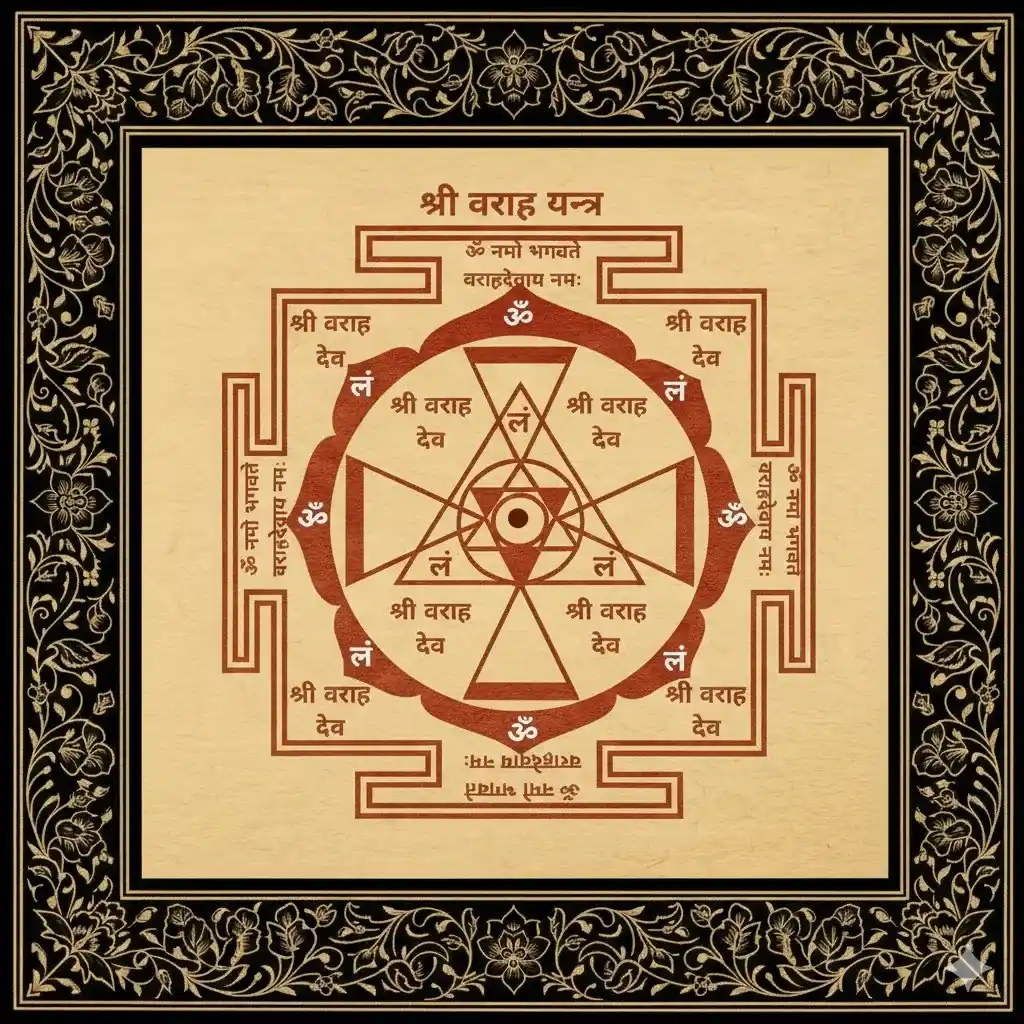
The YantraChants.com “Trust Stack” Yantra
- Medium: Authentic Himalayan Bhojpatra (organic retention)
- Method: Hand-drawn with traditional tooling (not machine-stamped)
- Consecration: Lineage-based Prāṇa-Pratiṣṭhā (awakening is the point)
For many seekers, mantra gives intent, but a properly consecrated yantra gives structure, the difference between trying to hold stability in your mind vs. placing stability into your environment.
How To Chant Varaha Mantra
- Bathe (or at least wash hands/feet/mouth).
- Sit facing East, on a wool āsana.
- Keep Varaha and Bhumi Devi image/vigraha in front.
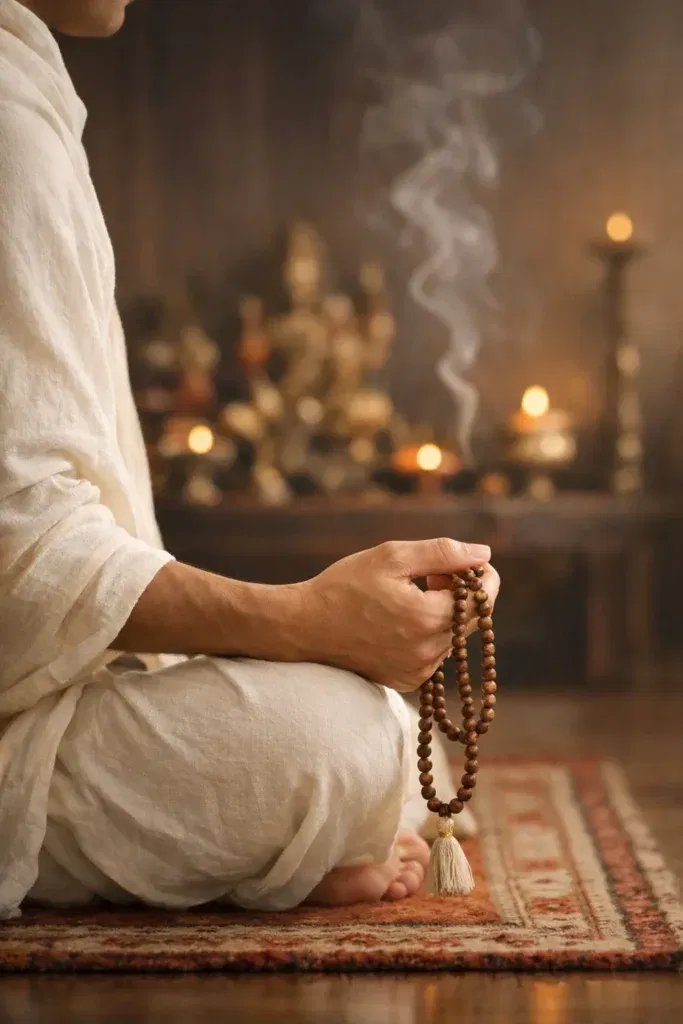
- Chant Śrī Varāhāya Dharaṇuddharaṇāya Namaḥ using a 108 mala.
- Tulsi for sattva/devotion
- Rudraksha for grounding/discipline
- Keep one fixed routine: same time, same seat, same count.
- Maintain sattvic discipline: avoid intoxication; reduce excessive heat foods during the practice window.
“Power is not only in the mantra, it is in the steadiness with which you keep it.”
— The The YantraChants.com Operating Philosophy Edifice (YantraChants.com Vicāra-Tattva-Ādhāra)
“What should I choose?”
Choose based on your need:
- Choose Varaha Yantra if: instability, fear cycles, property/land concerns, repeated setbacks, home protection anchor
- Choose Tulsi Mala if: devotion, purity and steady daily japa rhythm
- Choose Rudraksha Mala if: grounding, discipline and mental strength
- Choose Chandan Mala if: heat-prone, irritable, want cooling devotional mood
- Choose a Meru if: you’re already stable and want deeper consistency
If you’re tired of feeling like life keeps “slipping,” start with one mantra, one routine, and add one supportive tool only if it fits. Stability is not intensity, it’s ground.
Message VARAHA KIT to get the right Yantra + Mala suggestion.
WhatsApp for guidance: +917417238880
How To Perform Sri Varaha Aradhana with Sri Varaha Yantra and Neem Mala Japa (Beginner friendly)
10-Step Method: How to Chant the Varaha Mantra with a Neem Mala (and the Sri Varaha Yantra)
Step 1: Choose Your Fixed Spot — 1 minute
- Pick one quiet place (puja corner is ideal) and keep it consistent daily.
- Sit on a wool/cotton āsana (avoid bare floor if possible).
- Face East (or North if East isn’t possible).
Step 2: Place the Sri Varaha Yantra Correctly — 30 seconds
- Place the Sri Varaha Yantra slightly above your eye line (on a clean cloth/wood plank).
- Keep it clean, dry, and not mixed with casual items.
- If morning light touches it naturally, it’s excellent (no need to force).
Step 3: Simple Purification (Beginner Safe) — 45 seconds
- Wash hands, feet, and face (bath is best, but not compulsory daily).
- Sprinkle a few drops of clean water around the space (optional).
- Sit still and take 7 slow breaths.
Step 4: Offer One Minimal Upachāra — 1 minute
- Light a small diya or candle (even one tea-light is fine).
- Offer tulsi (if available) or a flower (optional).
- Mentally bow to Sri Varaha and Bhumi Devi.
Step 5: Keep the Mantra Beginner-Safe — 20 seconds
- Use the householder-friendly mantra: “Sri Varahaya Dharanuddharanaya Namah”
- Avoid beejas (like “Om” / “Svaha”) if you’re not initiated or guided.
- If you already do “Om” traditionally with guidance, keep it as per your Guru’s instruction.
Step 6: Hold the Neem Mala Properly — 30 seconds
- Hold the mala in the right hand; use the thumb to pull beads, middle finger supports.
- Do not use the index finger (traditional restraint for japa).
- Keep the mala off the floor; rest it gently on your palm.
Step 7: Start Japa in Front of the Yantra — 3–8 minutes
- Look once at the Yantra (darshan), then soften your gaze or close eyes.
- Chant softly (lip movement is enough), keeping rhythm steady.
- Counts (choose one):
- Beginner Busy: 21 times
- Steady Beginner: 1 mala (108 times)
- Very Light Start: 11 times (only for first 3–7 days, then increase)
Step 8: Anchor the “Varaha-Protection Feeling” — 30 seconds
- After japa, pause in silence for 10–20 seconds.
- Feel: “I am being lifted out of instability.”
- Let the mind settle into groundedness (Muladhara steadiness).
Step 9: Offer a Simple Earth Element (Bhumi Alignment) — 45 seconds
- Offer a pinch of rice / grains OR a few drops of water near the Yantra (optional but powerful).
- Mentally acknowledge Bhumi Devi: “May my life become stable, dharmic, and protected.”
- Keep offerings minimal and clean (no mess, no excess).
Step 10: Close with Daily Conduct Seal — 1 minute
- Join palms and say once: “Sri Varaha Deva, protect my dharma and stabilize my life.”
- Keep your Neem mala in a clean pouch/cloth; do not leave it exposed on random surfaces.
- For best results: reduce intoxication, cruelty, and chaos-inducing habits (even gradual reduction helps).
Mindfulness Awareness Plan
Choose your cycle length (7 / 21 / 41 days), pick disciplines, lock them for the full cycle, and journal daily to see exactly where you slip - and what strengthens you.
Frequently Asked Questions on Varaha Yantra and Mantra
Answered on the Basis of Scriptures and the YantraChants.com Vicāra-Tattva-Ādhāra
Q1. What is the core purpose of Śrī Varāha Sādhana?
A. Śrī Varāha Sādhana is primarily an Uddhāra–Sthairyā path—divine upliftment from instability into grounded dharma. It is approached first for protection, steadiness, and inner alignment, and only secondarily for worldly relief that comes as a by-product of restored order.
Q2. Which Varāha Mantra is safest for householders and beginners?
A. The householder-safe simplification is: “Śrī Varāhāya Dharaṇuddharaṇāya Namaḥ” (or “Śrī Varāhāya Dharaṇoddharaṇāya Namaḥ” depending on tradition). It avoids intense bīja/kīlaka-style heat while retaining the devotional essence of Varāha’s protection.
Q3. What does “Dharaṇuddharaṇa” mean in the Varāha Mantra?
A. Dharaṇī refers to Bhūmi/earth (also the sustaining principle), and Uddharaṇa means upliftment/rescue. The phrase points to Varāha’s signature grace: lifting the devotee’s life out of sinking conditions—fear, chaos, moral confusion—into stable ground.
Q4. Should one chant “Om” and “Svāhā” without initiation?
A. Generally, no—especially for sustained daily sādhana—unless under competent guidance. Certain bīja/ending syllables can intensify heat (tapas) and disturb the system if done incorrectly or excessively.
Q5. Can women and children chant the Varāha Mantra?
A. Yes, with a safe, non-bīja form. Women and children may chant the simplified Nāma-mantra form (with “Śrī…Namaḥ”) while avoiding intense bīja-led variants unless properly guided.
Q6. What is the ideal time to chant the Varāha Mantra daily?
A. Brahma-muhūrta (pre-dawn) is ideal for grounding and clarity. If not possible, a steady daily slot—morning or evening—matters more than chasing “perfect” timings.
Conclusion
Varaha Upāsanā is ultimately about one thing: restoring ground under your life, through steadiness, devotion, and right method. If your pattern is repeated instability, don’t jump practices. Pick one mantra, one routine, and (if it truly fits) one supportive tool.
YantraChants.com Varaha Yantra and Tulsi Mala (Stability Shield)
WhatsApp: +917417238880

Rohini Devi Dasi

Damodar Das Ji Maharaj