
What Are the 5 Immediate Insights of Dakshina Murthy Stotram?
These are Maya’s illusory Creations, Brahman realization, Role of Guru, Non-duality analogies, Overcoming ignorance.
When seekers ask about the benefits of Dakshinamurthy Stotram, the deepest answer is experiential: steady recitation refines clarity, loosens the knot of ego, and aligns the intellect with the Guru Tattva so that discrimination (viveka) naturally strengthens. In daily life this shows up as calmer responses to conflict, a gentler view of oneself and others, and a growing capacity to abide as awareness even amidst work and family duties. Over time, the mind stops chasing novelty and begins to value light, quiet, lucid, reliable light.
A Brief Introduction to Dakshinamurthy Stotram
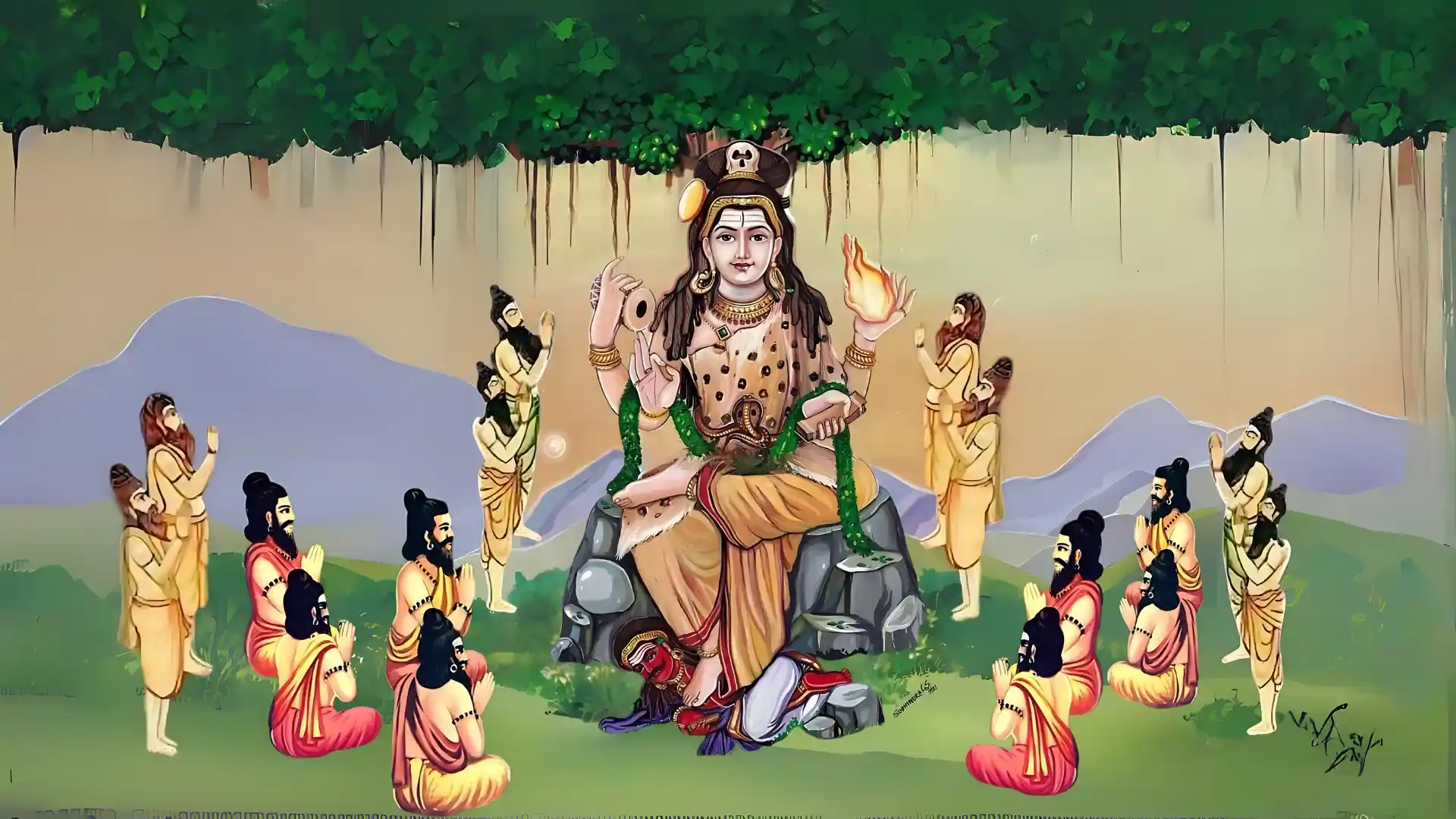
The Dakshinamurthy stotram is one of the most eloquent compositions of the legendary philosopher, Bhagavatapada Adi Shankaracharya. Sri Dakshinamurthy, the epitome of Guru Tattva, is extolled as the Ultimate guiding force.
Readers often wonder about the meaning of Dakshinamurthy Stotram beyond a line-by-line translation. Here, “meaning” is not just lexical; it is the shift that takes place when the student internalizes that knowledge dawns in silence, that the Guru teaches through presence, and that Brahman is recognized not as an object to be acquired but as the very Self that illumines every experience.
This hymn highlights the Gravity of Guru, who is capable of extracting his disciples from the clutches of Maya. Each verse encapsulates the profound teachings of Advaita Vedanta. The oneness between Brahman, Guru and Atman is established as we progress through each stanza.

This work is a treasure, revealing the nuances of Advaita Philosophy which is inexpressible in general terms. The philosophy is not mere theory and is rather understood in its entirety when practically experienced.
Explaining the Dakshina Murthy Stotram meaning to a first-time reader, it helps to emphasize that Shankara is pointing us from “concept” to “recognition.” Words are used to usher the intellect to its brink; then, like a lamp placed near a window at dawn, the verses become unnecessary because the light they pointed to has already filled the room.
To enlighten the general adherents of Sanatana Dharma, some immediate disciples of Sri Adi Shankaracharya and also others have penned dedicated commentaries on the Dakshinamurthy Stotram, some of which go over 1000 pages. The translations and commentaries sharpen our insight and fuel our quest for Self-Realization.
The Fathomless Import of the Dakshinamurthy Stotram
There are multiple ways of interpreting the verses of Dakshinamurthy stotram. The meaning unravelled, relies on our individual spiritual maturity. Let us understand this with an example:
For an infant, his mother means the entire world to him. However, there is more to the world. Due to the limited field of consciousness of the infant, the world gets limited to the mother alone.
For sincere students seeking Dakshinamurthy Stotram with meaning, the most fruitful approach is svādhyāya with reflection: read a verse aloud, sit quietly with the image it evokes, and journal the insight that arises. Revisiting the same verse after a week often reveals deeper layers, proof that the Stotram teaches in spirals, not straight lines.

As maturity sets in, the child realizes the dynamics of the world. He explores different places, interacts with various people thereby expanding his scope of awareness. Though the person gets apprised of many things now, there is yet a lot to be known. The vastness of the unknown cannot be measured. The point is to continue our journey of exploration.
Why should we Regularly Recite the Dakshinamurthy Stotram?
In similar lines, Dakshinamurthy stotram is like the cosmos. It houses both the known and unknown aspects of Supreme Reality. The more we recite and contemplate on the verses, the more the spiritual truths shall reveal themselves. The journey is never ending. The depth of realization is fathomless.
If you prefer Dakshina Murthy Stotram with meaning as a daily sādhana, consider choosing one verse per day, reading a trusted translation, then closing the book and letting the Guru’s silence complete the teaching. This simple rhythm turns recitation into realization, and philosophy into felt guidance.
The Dakshinamurthy Stotram’s philosophical message is ever expanding. A sadhaka dedicated to the path of reason (Jnana) becomes a perfect recipient for the profound spiritual realizations and develops maturity that rips the shroud of ignorance and brings one closer to the ultimate truth.
Deciphering the Shanti Patha of Dakshinamurthy Stotram
Before commencing the Dakshinamurthy Stotram, there is the Shanti Patha:
॥ शान्तिपाठः ॥
ॐ यो ब्रह्माणं विदधाति पूर्वम् वै वेदांश्च प्रहिणोति तस्मै ।
तं ह देवमात्मबुद्धिप्रकाशं मुमुक्षुर्वै शरणमहं प्रपद्ये ॥
ॐ शान्तिः शान्तिः शान्तिः
|| śāntipāṭhaḥ ||
ॐ yo brahmāṇaṃ vidadhāti pūrvam vai vedāṃśca prahiṇoti tasmai |
taṃ ha devamātmabuddhiprakāśaṃ mumukṣurvai śaraṇamahaṃ prapadye ||
ॐ śāntiḥ śāntiḥ śāntiḥ
This means:
“I solemnly seek refuge in that divine personality who, at the time of inception, created Brahma and imparted the Vedas to him—He who illuminates the intellect (Buddhi) with self-awareness. May that Lord be my shelter, as I seek liberation. May Peace pervade”
Many seekers like to keep a handy Dakshinamurthy Stotram meaning in English PDF for morning chanting and evening contemplation. Treat your printable as a living notebook, add your reflections beneath each verse, note how the threefold “Śāntiḥ” touches your day, and watch how the text turns into a map of your inner journey.
The Shanti path has immense significance and is to be recited first. This verse enlightens us of our eternal dependence on the Supreme Lord. It is He alone, who makes us capable of understanding any spiritual or material science.

His Grace facilitates our spiritual growth. Our efforts should be towards surrendering unto Him and the rest (absorption of the spiritual texts) shall follow automatically. Our intellect shall be empowered by Him to know Him, just like how He empowered the primordial being Brahma. Knowledge acquired thus, in a state of surrender, devoid of the Ego, dispels ignorance, inviting peace.
Devotees from Andhra Pradesh and Telangana often learn the Dakshinamurthy mantram Telugu pronunciation from elders and local pandits. Chanting in one’s mother tongue softens the heart; the soundscape of home turns the mind inward, and Guru Tattva feels intimate, immediate, and protective. Let us see the Dakshinamoorthy Stotram in Telugu/Sanskrit and English Meaning.
Dakshinamurthy Mantram in Telugu/Sanskrit with English Meaning
శాంతిపాఠః (Śānti Pāṭha)
Telugu
ఓం యో బ్రహ్మాణం విదధాతి పూర్వం
యో వై వేదాంశ్చ ప్రహిణోతి తస్మై ।
తం హ దేవమాత్మబుద్ధిప్రకాశం
ముముక్షుర్వై శరణమహం ప్రపద్యే ॥
Sanskrit (Devanāgarī)
ॐ यो ब्रह्माणं विदधाति पूर्वं
यो वै वेदान्श्च प्रहिणोति तस्मै ।
तं ह देवं आत्मबुद्धिप्रकाशं
मुमुक्षुर्वै शरणमहं प्रपद्ये ॥
English meaning
Om. I take refuge in that divine Lord who first revealed Brahman and who imparted the Vedas; He who illumines the intellect—may the seeker of liberation surrender to Him.
ధ్యానం (Dhyānam)
1
Telugu
ఓం మౌనవ్యాఖ్యా ప్రకటిత పరబ్రహ్మతత్త్వం యువానం
వర్షిష్ఠాంతే వసదృషిగణైరావృతం బ్రహ్మనిష్ఠైః ।
ఆచార్యేంద్రం కరకలిత చిన్ముద్రమానందమూర్తిం
స్వాత్మారామం ముదితవదనం దక్షిణామూర్తిమీడే ॥
Sanskrit
ॐ मौनव्याख्या प्रकटित परब्रह्मतत्त्वं युवानं
वर्षिष्ठान्ते वसदृषिगणैरावृतं ब्रह्मनिष्ठैः ।
आचार्येन्द्रं करकलित चिन्मुद्रामानन्दमूर्तिṁ
स्वात्मारामं मुदितवदनं दक्षिणामूर्तिमीढे ॥
English meaning
I adore Dakṣiṇāmūrti—the youthful supreme teacher—who silently reveals the truth of Brahman, surrounded by sages firm in Brahman, the blissful form showing the chin-mudrā, rejoicing in the Self, with a serene, cheerful face.
2
Telugu
వటవిటపి సమీపే భూమిభాగే నిషణ్ణం
సకలమునిజనానాం జ్ఞానదాతారమారాత్ ।
త్రిభువనగురుమీశం దక్షిణామూర్తిదేవం
జననమరణదుఃఖచ్ఛేదదక్షం నమామి ॥
Sanskrit
वटविटपि समीपे भूमिभागे निषण्णं
सकलमुनिजनानां ज्ञानदातारमारात् ।
त्रिभुवनगुरुमीशं दक्षिणामूर्तिदेवं
जननमरणदुःखच्छेददक्षं नमामि ॥
English meaning
Salutations to Lord Dakṣiṇāmūrti, the universal Guru seated on the earth beneath the banyan tree, near to sages as the giver of knowledge, who cuts the sorrows of birth and death.
3
Telugu
చిత్రం వటతరోర్మూలే వృద్ధాః శిష్యాః గురుర్యువా ।
గురోస్తు మౌనం వ్యాఖ్యానం శిష్యాస్తుచ్ఛిన్నసంశయాః ॥
Sanskrit
चित्रं वटतरोर्मूले वृद्धाः शिष्याः गुरुर्युवा ।
गुरोस् तु मौनं व्याख्यानं शिष्यास्तु छिन्नसंशयाः ॥
English meaning
A wonder: under the banyan sit aged disciples before a youthful Guru; the Guru teaches through silence—and the disciples’ doubts are cut away.
4
Telugu
నిధయే సర్వవిద్యానాం భిషజే భవరోగిణామ్ ।
గురవే సర్వలోకానాం దక్షిణామూర్తయే నమః ॥
Sanskrit
निधये सर्वविद्यानां भिषजे भव-रोगिणाम् ।
गुरवे सर्वलोकानां दक्षिणामूर्तये नमः ॥
English meaning
Obeisance to Dakṣiṇāmūrti—treasure of all knowledge, the physician for the disease of saṁsāra, the Guru for all worlds.
5
Telugu
ఓం నమః ప్రణవార్థాయ శుద్ధజ్ఞానైకమూర్తయే ।
నిర్మలాయ ప్రశాంతాయ దక్షిణామూర్తయే నమః ॥
Sanskrit
ॐ नमः प्रणवार्थाय शुद्धज्ञानैकमूर्तये ।
निर्मलाय प्रशान्ताय दक्षिणामूर्तये नमः ॥
English meaning
Salutations to Dakṣiṇāmūrti, embodiment of pure knowledge and meaning of praṇava (Om), ever taintless and perfectly tranquil.
6
Telugu
చిద్ఘనాయ మహేశాయ వటమూలనివాసినే ।
సచ్చిదానందరూపాయ దక్షిణామూర్తయే నమః ॥
Sanskrit
चिद्घनाय महेशाय वटमूल-निवासिने ।
सच्चिदानन्दरूपाय दक्षिणामूर्तये नमः ॥
English meaning
Homage to the dense mass of Consciousness, the Great Lord dwelling beneath the banyan—Dakṣiṇāmūrti, whose form is Existence-Consciousness-Bliss.
7
Telugu
ఈశ్వరో గురురాత్మేతి మూర్తిభేదవిభాగినే ।
వ్యోమవద్వ్యాప్తదేహాయ దక్షిణామూర్తయే నమః ॥
Sanskrit
ईश्वरोगुरुरात्मेति मूर्तिभेदविभागिने ।
व्योमवद्व्याप्तदेहाय दक्षिणामूर्तये नमः ॥
English meaning
Salutations to Him who appears as God, Guru, and Self—whose being pervades like space, Dakṣiṇāmūrti.
8
Telugu
అంగుష్ఠతర్జనీ యోగముద్రా వ్యాజేన యోగినామ్ ।
శృత్యర్థం బ్రహ్మజీవైక్యం దర్శయన్ యోగతా శివః ॥
Sanskrit
अंगुष्ठ-तरजनी योगमुद्रा व्याजेन योगिनाम् ।
श्रुत्यार्थं ब्रह्म-जीवैकेयं दर्शयन् योगताऽऽ शिवः ॥
English meaning
By the yoga-mudrā (joining thumb and forefinger), Śiva hints to seekers the purport of the śruti—the identity of jīva and Brahman.
Śāntiḥ: ఓం శాంతిః శాంతిః శాంతిః ॥ / ॐ शान्तिः शान्तिः शान्तिः ॥
స్తోత్రం (Main Stotram)
Verse 1
Telugu
విశ్వం దర్పణదృశ్యమాననగరీ తుల్యం నిజాంతర్గతం
పశ్యన్నాత్మని మాయయా బహిరివోద్భూతం యథా నిద్రయా ।
యః సాక్షాత్ కురుతే ప్రజ్ఞసమయే స్వాత్మానమేవాద్వయం
తస్మై శ్రీగురుమూర్తయే నమ ఇదం శ్రీ దక్షిణామూర్తయే ॥ 1 ॥
Sanskrit
विश्वं दर्पण-दृश्यमान-नगरी तुल्यं निजान्तर्गतं
पश्यन्नात्मनि मायया बहिरिवोद्भूतं यथा निद्रया ।
यः साक्षात्कुरुते प्रभोधसमये स्वात्मानमेवाद्वयं
तस्मै श्रीगुरुमूर्तये नम इदं श्रीदक्षिणामूर्तये ॥ १ ॥
English meaning
The world, like a city seen in a mirror, abides within the Self but appears outside due to māyā, as in dream. To that Guru who makes one realize at awakening the non-dual Self—I bow.
Verse 2
Telugu
బీజస్యాంతర ఇవాంకురో జగదిదం ప్రाङ్ నిర్వికల్పం పునః
మాయాకల్పిత దేశకాలకలనావైచిత్ర్యచిత్రీకృతమ్ ।
మాయావీవ విజృంభయత్యపి మహాయోగీవ యః స్వేచ్ఛయా
తస్మై శ్రీగురుమూర్తయే నమ ఇదం శ్రీ దక్షిణామూర్తయే ॥ 2 ॥
Sanskrit
बीजस्यान्तर इवाङ्कुरो जगदिदं प्राङ्निर्विकल्पं पुनः
मायाकल्पित-देशकाल-कलनावैचित्र्य-चित्रीकृतम् ।
मायावीव विजृम्भयत्यपि महायोगीव यः स्वेच्छया
तस्मै श्रीगुरुमूर्तये नम इदं श्रीदक्षिणामूर्तये ॥ २ ॥
English meaning
As a sprout lies within the seed, the world existed undifferentiated, later appearing variegated by space-time notions projected by māyā. He who, like a magician or great yogī, unfolds it by will—to that Guru I bow.
Verse 3
Telugu
యస్యైవ స్ఫురణం సదాత్మకం అసత్కల్పార్థకం భాసతే
సాక్షాత్ “తత్త్వమసీ”తి వేదవచసా యో బోధయత్యాశ్రితాన్ ।
యస్సాక్షాత్కరణాద్ భవేన న భవానావృత్తిరంభోనిధౌ
తస్మై శ్రీగురుమూర్తయే నమ ఇదం శ్రీ దక్షిణామూర్తయే ॥ 3 ॥
Sanskrit
यस्यैव स्फुरणं सदात्मकमसत्कल्पार्थकं भासते
साक्षात् “तत्त्वमसि”ति वेदवचसा यो बोधयत्याश्रितान् ।
यः साक्षात्करणाद् भवेन न पुनरावृत्तिर्भवाम्भोनिधौ
तस्मै श्रीगुरुमूर्तये नम इदं श्रीदक्षिणामूर्तये ॥ ३ ॥
English meaning
Whose shining is pure Being, making unreal constructs seem real; who teaches seekers “That Thou Art”—by whose realization there’s no return to the ocean of becoming—to that Guru I bow.
Verse 4
Telugu
నానాచ్ఛిద్ర ఘటోదరస్థిత మహాదీపప్రభాభాస్వరं
జ్ఞానం యస్య తు చక్షురాదికరణ ద్వారా బహిః స్పందతే ।
“జానామీతి” తమేవ భాంతమనుభాత్యేతత్సమస్తం జగత్
తస్మై శ్రీగురుమూర్తయే నమ ఇదం శ్రీ దక్షిణామూర్తయే ॥ 4 ॥
Sanskrit
नानाछिद्र-घटोदरस्थित-महादीप-प्रभाभास्वरं
ज्ञानं यस्य तु चक्षुरादिकरण-द्वारा बहिः स्पन्दते ।
जानामीति तमేవ भान्तमनुभात्येतत्समस्तं जगत्
तस्मै श्रीगुरुमूर्तये नम इदं श्रीदक्षिणामूर्तये ॥ ४ ॥
English meaning
Like one lamp shining through many holes of a pot, Consciousness appears through senses as various knowings. Because He shines as “I know,” all this world is lit by His light. To that Guru I bow.
Verse 5
Telugu
దేహం ప్రాణమపీంద్రియాణ్యపి చలాం బుద్ధిం చ శూన్యం విదుః
స్త్రీ బాలాంధ జడోపమాస్తు “అహమితి” భ్రాంతాభృశం వాదినః ।
మాయాశక్తి విలాసకల్పిత మహావ్యామోహసంహారిణే
తస్మై శ్రీగురుమూర్తయే నమ ఇదం శ్రీ దక్షిణామూర్తయే ॥ 5 ॥
Sanskrit
देहं प्राणमपीन्द्रियाण्यपि चलां बुद्धिं च शून्यं विदुः
स्त्रीबालान्धजडोपमास्त्वहमिति भ्रान्ताभृशं वादिनः ।
मायाशक्ति-विलास-कल्पित-महाव्यामोहसंहारिणे
तस्मै श्रीगुरुमूर्तये नम इदं श्रीदक्षिणामूर्तये ॥ ५ ॥
English meaning
Some, childish or deluded, take the body, prāṇa, senses, or mind to be the Self, asserting “I am this.” To the Guru who ends that great delusion born of māyā’s play—I bow.
Verse 6
Telugu
రాహుగ్రస్త దివాకరేందు సదృశో మాయాసమాచ్ఛాదనాత్
సన్మాత్రః కరణోపసంహరణతో యోఽభూత్ సుషుప్తః పుమాన్ ।
ప్రాగస్వాప్సమితి ప్రబోధసమయే యః ప్రత్యభిజ్ఞాయతే
తస్మై శ్రీగురుమూర్తయే నమ ఇదం శ్రీ దక్షిణామూర్తయే ॥ 6 ॥
Sanskrit
राहुग्रस्त-दिवाकर-इन्दु-सदृशो मायासमाच्छादनात्
सन्-मात्रः करणोपसंहरणतो योऽभूत् सुषुप्तः पुमान् ।
प्रागस्वाप्समिति प्रभोधसमये यः प्रत्यभिज्ञायते
तस्मै श्रीगुरुमूर्तये नम इदं श्रीदक्षिणामूर्तये ॥ ६ ॥
English meaning
As sun or moon eclipsed by Rāhu, the Self is veiled by māyā; with senses withdrawn, one remains as pure Being in deep sleep and later recognizes, “I slept before.” To Him who illumines this—I bow.
Verse 7
Telugu
బాల్యాదిష్వపి జాగ్రదాదిషు తథా సర్వాస్వవస్థాస్వపి
వ్యావృత్తా స్వనువర్తమానమహమిత్యంతః స్ఫురంతం సదా ।
స్వాత్మానం ప్రకటీకరోతి భజతాం యో ముద్రయా భద్రయా
తస్మై శ్రీగురుమూర్తయే నమ ఇదం శ్రీ దక్షిణామూర్తయే ॥ 7 ॥
Sanskrit
बाल्यादिष्वपि जाग्रदादिषु तथा सर्वास्ववस्थास्वपि
व्यावृत्ता स्वनुवर्तमानमहमित्यन्तः स्फुरन्तं सदा ।
स्वात्मानं प्रकाशितुं भजतां यो मुद्रया भद्रया
तस्मै श्रीगुरुमूर्तये नम इदं श्रीदक्षिणामूर्तये ॥ ७ ॥
English meaning
Through childhood and waking, dream, deep sleep, the inner “I-sense” shines continuously. He reveals this Self to devotees by the auspicious mudrā—to that Guru I bow.
Verse 8
Telugu
విశ్వం పశ్యతి కార్యకారణతయా స్వస్వామిసంబంధతః
శిష్యాచార్యతయా తథైవ పితృపుత్రాద్యాత్మనా భేదతః ।
స్వప్నే జాగ్రతి వా య ఏష పురుషో మాయాపరిభ్రామితః
తస్మై శ్రీగురుమూర్తయే నమ ఇదం శ్రీ దక్షిణామూర్తయే ॥ 8 ॥
Sanskrit
विश्वं पश्यति कार्य-कारणतया स्व-स्वामि-संबन्धतः
शिष्याचार्यतया तथैव पितृ-पुत्राद्यात्मना भेदतः ।
स्वप्ने जागर्ति वा य एष पुरुषो मायापरिभ्रामितः
तस्मै श्रीगुरुमूर्तये नम इदं श्रीदक्षिणामूर्तये ॥ ८ ॥
English meaning
Man, deluded by māyā, sees the world split as cause-effect, owner-owned, teacher-disciple, father-son—whether in dream or waking. To the Guru who ends this delusion—I bow.
Verse 9
Telugu
భూరంభాంస్యనలోఽనిలోంబర మహర్నాథో హిమాంశుః పుమాన్
ఇత్యాభాతి చరాచరాత్మకమిదం యస్యైవ మూర్త్యష్టకం ।
నాన్యత్కించన విద్యతే విమృశతాం యస్మాత్పరస్మాద్విభో
తస్మై శ్రీగురుమూర్తయే నమ ఇదం శ్రీ దక్షిణామూర్తయే ॥ 9 ॥
Sanskrit
भूरम्भांस्यनलोऽनिलोऽम्बर महर्नाथो हिमांशुः पुमान्
इत्याभाति चराचरात्मकमिदं यस्यैव मूर्त्यष्टकम् ।
नान्यत्किञ्चन विद्यते विमृशतां यस्मात् परस्माद् विभो
तस्मै श्रीगुरुमूर्तये नम इदं श्रीदक्षिणामूर्तये ॥ ९ ॥
English meaning
Earth, water, fire, air, space, sun, moon, and person—this moving and unmoving eight-fold manifestation is His form alone; beyond Him nothing exists for the discriminating. To that all-pervading Guru I bow.
Verse 10
Telugu
సర్వాత్మత్వమिति స్ఫుటీకృతమిదం యస్మాదముష్మిన్ స్తవే
తేనాస్య శ్రవణాత్తదర్థమననాద్ధ్యానాచ్చ సంకీర్తనాత్ ।
సర్వాత్మత్వ మహావిభూతి సహితం స్యాదీశ్వరత్వం స్వతః
సిద్ధ్యేత్ తత్ పునరష్టధా పరిణతం ఐశ్వర్యమవ్యాహతమ్ ॥ 10 ॥
Sanskrit
सर्वात्मत्वमिति स्फुटीकृतमिदं यस्मादमुष्मिन् स्तवे
तेनास्य श्रवणात्तदार्थ-मननाद् ध्यानाच्च संकीर्तनात् ।
सर्वात्मत्व-महाविभूति-सहितं स्यादीश्वरत्वं स्वतः
सिद्ध्येत् तत्पुनरष्टधा परिपुष्टमैश्वर्यमव्याहतम् ॥ १० ॥
English meaning
Since this hymn makes clear the Self as the All, by hearing it, reflecting on its meaning, meditating and chanting it, one’s innate lordliness shines forth with great powers—the eightfold, unobstructed prosperity of mastery.
Colophon
Telugu: ఇటి శ్రీమద్భగవత్పాద శ్రీశంకరాచార్య విరచితం దక్షిణామూర్తి స్తోత్రం సంపూర్ణం ।
Sanskrit: इति श्रीभगवद्पाद-श्रीशङ्कराचार्य-विरचितं दक्षिणामूर्तिस्तोत्रं सम्पूर्णम् ।
Here the above verse, Shanti (Peace) appears thrice. It relates to freedom from the 3-fold miseries of life:
ādidaivika (आदिदैविक): Misery caused by nature that manifests in the form of droughts, cyclones, floods, etc.
ādibhautika (आदिभौतिक): Suffering caused by other living entities, animals, creatures, reptiles, etc.
ādhyātmika (आध्यात्मिक): Misery caused due to the mind, body and senses.
We pray to the Supreme Being to balance these sufferings so that one may unabatedly continue their inward journey. Before we explore the detailed interpretation of the Dakshinamurthy Stotram let us discover what is the Dakshinamoorthy Yantram.
The Powerful Sri Dakshinamoorthy Yantram
What is the Sri Dakshinamoorthy Yantram?
Sri Dakshinamoorthy is Shiva as the silent Guru, dispelling ignorance by stabilizing the seeker in Self-knowledge. The Sri Dakshinamoorthy Yantram is the geometric mirror of that upadeśa: a disciplined arrangement of bindu (point-awareness), intersecting triangles (śiva–śakti balance), circular mandalas (unbroken awareness), and lotus petals (unfolding understanding).
When you chant Sri Dakshinamoorthy mantras before this yantra, your attention is given a precise “seat” to rest on; the geometry collects wandering prāṇa and mind into a single, centered flow. In practice, the yantra functions like a tuning fork: mantra (sound) vibrates the inner field; yantra (form) holds and organizes that vibration.
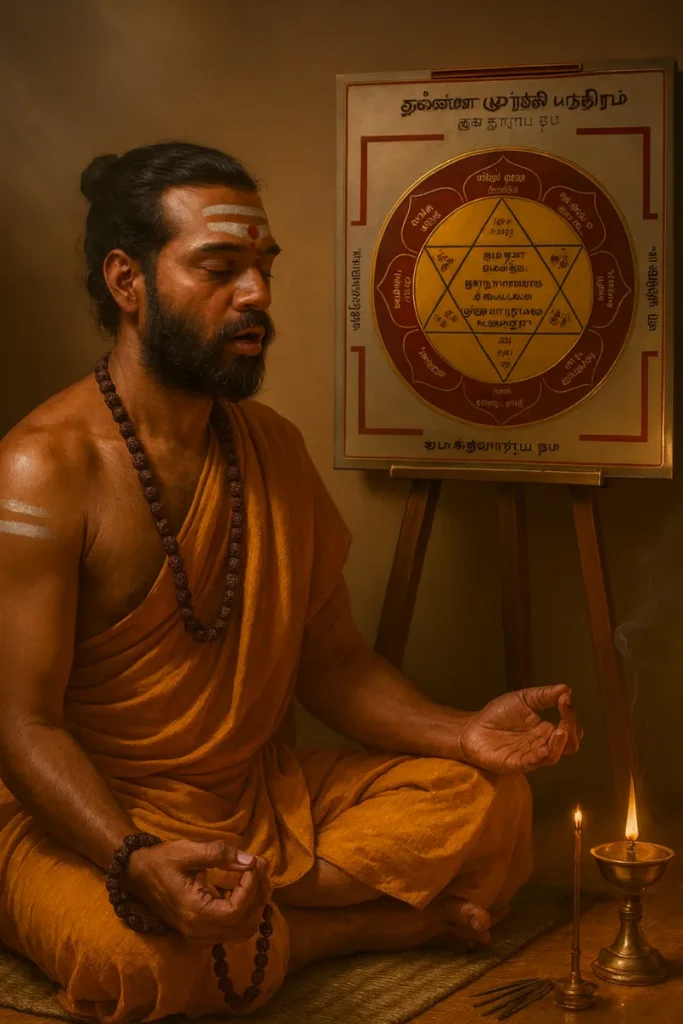
Over days and weeks, this pairing reduces inner noise, clarifies discernment, and makes śravaṇa–manana–nididhyāsana (listening, reflection, deep abidance) natural. Because Dakshinamoorthy is the Guru-tattva, the yantra especially aids students, teachers, sādhakas, and anyone seeking clarity in choices, studies, and sādhanā.
Hand-prepared yantras on sacred media (like Bhojpatra with natural, sattvic substances) carry the imprint of intention and the energization rites they undergo; that “charge” meets your steadiness in japa to create perceptible movement, less reactivity, more insight, a quieter center, and a spontaneous taste for truth. When installed on a clean altar and approached daily with humility, the Sri Dakshinamoorthy Yantram becomes a gentle but firm guide, keeping the mind at the Guru’s feet until understanding dawns.
Benefits of the Sri Dakshinamoorthy Yantram
Regular practice with the Sri Dakshinamoorthy Yantram tends to bring a distinctly “clear and grounded” quality to life. First, it refines buddhi (discriminative intelligence): confusion around decisions, studies, or spiritual method reduces, and priorities fall into place.
Second, it softens manas (the restless, emotive mind): anxiety dips, reactions slow down, and you notice a healthier space between stimulus and response. Third, it nourishes śraddhā (deep trust): the heart becomes more receptive to guidance, both from scripture and from a qualified living Guru, so you waste less energy second-guessing yourself.
For students and knowledge-workers, this shows up as better retention, recall, and expression: what you learn “sticks,” and what you say lands with calm authority. For seekers, it supports japa, svādhyāya, and meditation: attention sits more steadily on mantra; inquiry (vichāra) becomes honest and simple; and the body breathes more freely.
Many also report improved speech ethics, less harshness, more truth with compassion, as Guru-tattva purifies the channel of expression. In family and career, the yantra’s sattva helps de-escalate friction: meetings feel less combative; domestic conversations find a middle ground. Over time, subtle benefits accumulate: the pull toward excess, gossip, or distraction weakens; the taste for solitude, study, and seva strengthens. When the yantra is ritually energized and installed with sankalpa, it also acts as a protective umbrella for one’s learning, shielding against jealousy, tongue-clashes, and self-doubt.
None of this replaces effort, Sri Dakshinamoorthy honors tapas, but the yantra conserves your effort, channeling it where it actually matters. Most of all, it reminds you, silently, daily, that true “knowledge” is not merely content in the mind but the quiet recognition of the Awareness in which mind arises and sets.
Structure of the Sri Dakshinamoorthy Yantram
At the core is bindu, the still point. Radiating from it is a śatkona (interlaced upward and downward triangles) representing the inseparable play of śiva (consciousness) and śakti (power). Around this, one or more trikoṇa rings denote graded refinement of understanding, encircled by a maṇḍala (circle) to seal the current.
The padma (lotus) layer, often eight or more petals, signals the blooming of insight in the seeker’s heart, each petal associated with a refinement (like attentive listening, truthful speech, disciplined living, compassion, steadiness, etc.). The outermost field is the bhūpura, a square with four gates, indicating groundedness and lawful entry into sacred work.
Traditional inscriptions may contain seed syllables and Guru-centric invocations within specific sectors of the triangles or petals, guiding how the mind “walks” the yantra in contemplation. When crafted on living media (like birch bark) with natural pigments, these forms retain micro-textures that subtly engage the eyes and breath, enhancing dhāraṇā (one-pointedness). The whole diagram is proportioned to draw attention from periphery to center and back, training the mind to move from thought-streams to awareness and then to return into life with that awareness intact.
Geometrical Significance of the Sri Dakshinamoorthy Yantram
Geometry here is not decorative; it’s functional prāṇic engineering.
- Bindu trains non-verbal abidance.
- Śatkona balances initiative and receptivity, doing and allowing.
- Circles stabilize attention in gentle, continuous loops (excellent for breath-synchronized mantra).
- Lotus petals operate like “cooling fins,” diffusing excess heat from overthinking and distributing sattva throughout the aura.
- Bhūpura frames discipline, clar boundaries for time, place, and conduct.
When practiced daily, these shapes entrain your subtle body: breath steadies, micro-tension in the brow and jaw loosens, and the chest-throat axis opens, useful for study, teaching, and clean expression. On the chakra map, seekers often feel a calm lift at Ājñā (clarity) with a soft settling at Anāhata (trust), while Viśuddha (truthful speech) gets “de-noised.” This is why the yantra pairs so well with svādhyāya and guru-seva: it keeps your system receptive, clear, and humble.
Mantras to Activate the Sri Dakshinamoorthy Yantram
Use what your Guru approves; keep pronunciation clean and mind steady.
Beeja Mantras :
- “Om Aim Dakṣiṇāmūrtaye Namaḥ” , summons refined knowledge (Aim).
- “Om Hrīm Dakṣiṇāmūrtaye Namaḥ” , invokes luminous presence (Hrīm).
- “Om Śrīm Dakṣiṇāmūrtaye Namaḥ” , invites auspicious grace (Śrīm).
Gayatrī Mantras for Sri Dakshinamoorthy Yantram
“Om Dakṣiṇāmūrtaye Vidmahe Jñāna-Rūpāya Dhīmahi Tanno Guruḥ Prachodayāt.”
- “Om Vṛṣabha-Dhvajāya Vidmahe Rudra-Mūrtaye Dhīmahi Tanno Guruḥ Prachodayāt.”
Japa method (simple): Begin with ācamana and a calm sankalpa. Offer a small diya/dhūpa, then chant 11–108 repetitions of the three beeja mantras (in sequence or as guided), followed by 3–9 rounds of one Gayatrī. Sit for two minutes in silence, eyes soft on the bindu. Conclude with gratitude to the Guru-paramparā. (For the spiritually sensitive or those with prior initiations, take personal guidance; Guru Deeksha strengthens safety and depth.)
How the Sri Dakshinamoorthy Yantram is prepared at yantrachants.com
At YantraChants, yantras are hand-made on Bhojpatra (sacred Himalayan birch) using traditional tools and sattvic substances. The team highlights Bhojpatra’s suitability for holding spiritual vibration; writing is done with a shaped pomegranate twig (anar kalam) to channel subtle charge and achieve fine script and lines. Natural items like akṣata (unbroken rice), haldi (turmeric), chandan (sandalwood), and kumkum are incorporated in energization, each carrying symbolic and energetic roles, purity, cooling peace, auspicious śakti, and sealing of blessings.
Their process emphasizes personalization: yantras are energized considering birth details and a chosen muhūrta, and seekers receive simple pūjā PDF instructions and often mantra voice notes to begin correctly.
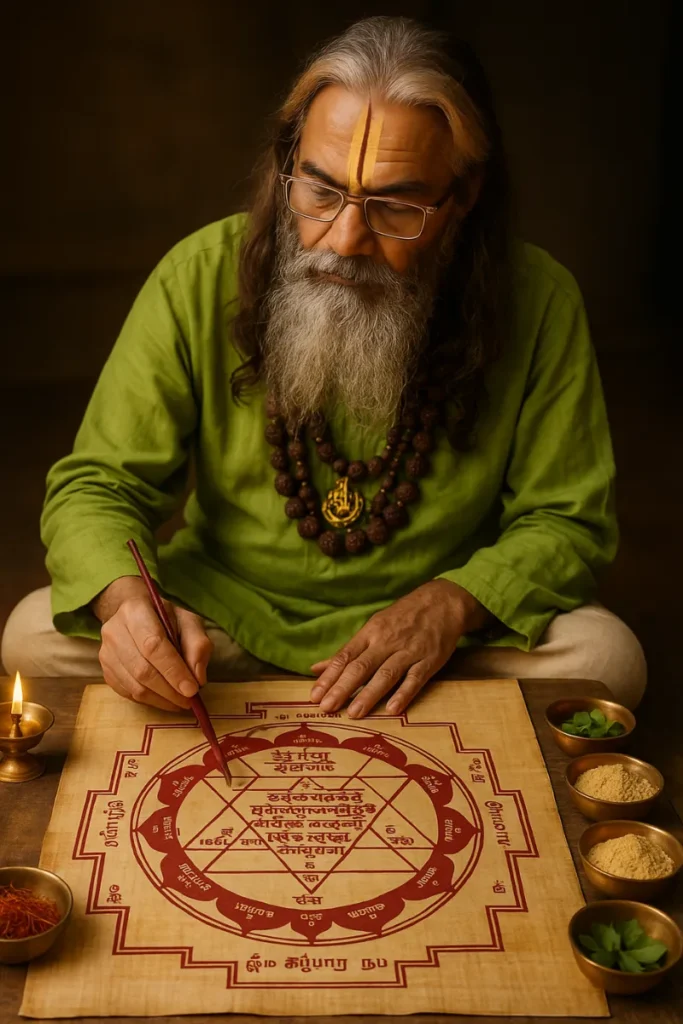
In practical terms, the steps include: selecting a calm muhūrta; preparing the Bhojpatra and inks/powders; drawing the bhūpura, padma, and central geometry with the pomegranate stylus; inscribing seed mantras where appropriate; and performing prāṇa-pratiṣṭhā with japa. The yantra is then framed or kavach-prepared as requested, with guidance for respectful installation and periodic re-energization.
The overarching intention is not mass production but Guru-centric, sattvic craftsmanship, a consecrated tool you can grow with for years. (See site sections describing Bhojpatra, Anar Kalam, Akshat, Haldi, Chandan, Kumkum, and the “Energized… Muhurtha / Voice Notes / Puja PDF” flow.)
Importance of a Self-Realized Guru with respect to Sri Dakshinamoorthy Yantram
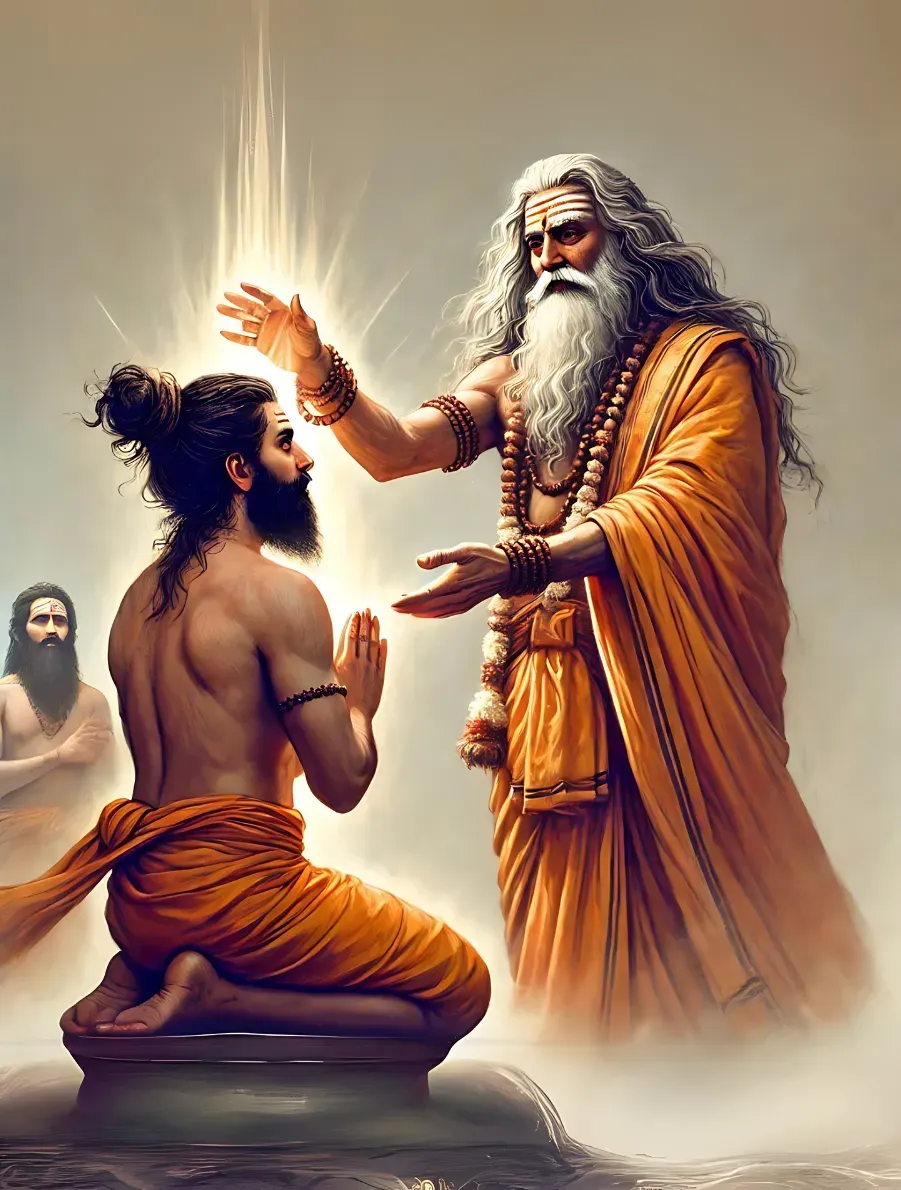
A yantra is a map; a living Guru is the guide. The Sri Dakshinamoorthy Yantram steadies your system, but Guru-dṛṣṭi aligns your compass, preventing excesses, correcting mantra pace, and dissolving subtle ego-traps that geometry alone can’t address. In the presence of a Self-realized teacher, your practice becomes safer and more efficient: incorrect effort is pruned, and insight moves from concept to recognition.
Practically, you’ll notice fewer doubts, quicker course-corrections, and an easier humility. This is the Dakshinamoorthy signature: śānta upadeśa, instruction through silence, presence, and a few exact words. With deeksha, the yantra becomes active in your life the way a seed takes to the right soil, quietly, reliably, and in season.
Rare Observations in Using the Dakshinamoorthy Yantram
Devotees sometimes report: spontaneously pausing before speaking (truth-alignment), natural appetite for svādhyāya, dreams of being taught or seated near a Guru-figure, a cleaner throat-center during mantra, and fewer “compulsive debates.” Auspicious touch-points include Pradoṣa, Guru-Pūrnima, and Mondays aligned with study vows. As a remedy, a short vrata, early supper, honest speech, 27 beeja-japa, and two minutes of silent abidance, done for 11 days often resets scattered study-energy.
Tantrika Significance of Sri Dakshinamoorthy’s Form
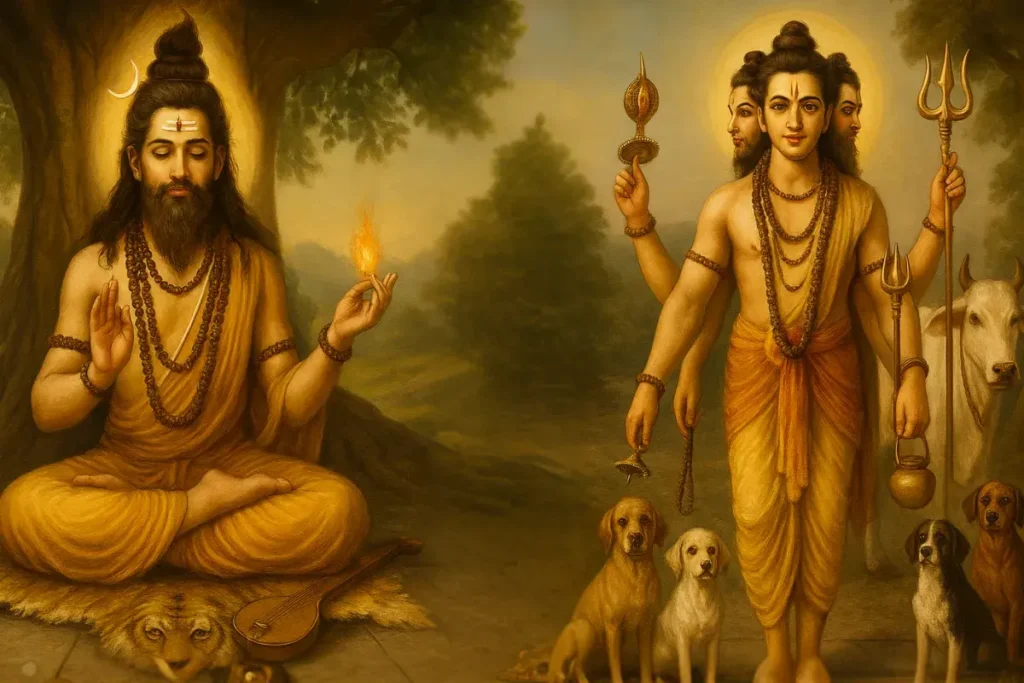
In Tantra, a yantra is an astral instrument: it can calm, focus, protect, or “cut through” obscuration depending on how it is activated. Dakshinamoorthy’s yantra is primarily sattva-projective, it clears fog and anchors awareness so knowledge ripens without aggression. In spirit, Sri Dakshinamoorthy and Guru Dattātreya both embody universal Guru-tattva, beyond sect label, dispensing fearlessness and discrimination. Dakshinamoorthy is the silent axis; Dattātreya is the wandering exemplar, two doors to the same room of insight.
FAQs on Dakshinamoorthy Yantram
Q1. What is the Sri Dakshinamoorthy Yantram and how does it work with the Sri Dakshinamoorthy Mantra?
A. The yantra focuses mind and prāṇa on Guru-tattva. Daily japa in front of it links sound to form so attention stabilizes and insight grows.
Q2. How do I place it at home for best results?
A. Keep it on a clean altar facing East (or North per custom). Sit facing East, light a diya/dhūpa, and keep the surface uncluttered.
Q3. Which day is best to begin, and what is the minimum daily practice?
A. Start on a Monday or Pradoṣa. Do a short pūjā, then 11–108 repetitions of the three beeja mantras with a calm sankalpa; consistency beats volume.
Q4. Do I need Guru Deeksha?
A. Deeksha aligns you to a living paramparā and deepens safety and depth. Sincere daily devotion is still beneficial; seek guidance when you can.
Q5. Who can keep it? Any restrictions?
A. Anyone approaching with śraddhā and sattva. Follow family/paramparā norms; keep it simple and dignified when unsure.
Q6. How long for results?
A. Varies by karma and steadiness. Give 40–90 days of disciplined practice, then review without anxiety.
Q7. Can I keep multiple yantras with it?
A. Yes, if intentions harmonize. Avoid conflicting goals on the same altar; keep visual calm and spacing.
Q8. How to cleanse and re-energize?
A. Gently dust/wipe, offer diya/dhūpa, and do 11/27/108 beeja-japa. Use monthly vrata days or deity tithis for a slightly longer session.
Q9. Office/shop placement or kavach?
A. Place near your desk or cash area respectfully. A pocket-kavach version is fine if kept clean and steady in intent.
Q10. If it fades, cracks, or is disrespected?
A. Retire respectfully (cloth-wrap, bury/immerse per custom) and install a properly prepared yantra.
Q11. Are bilva leaves or rudrāksha required?
A. Auspicious, not mandatory. Devotion and clean conduct are primary.
Q12. How to set sankalpa for Protection, Knowledge, Bhakti, Growth, without anxiety?
A. State it softly at the start, then release it into steady practice; let gratitude and right action carry it.
Custom FAQ Overrides on Sri Dakshinamoorthy Yantram
Q13. Can beginners use this yantra without prior śāstra study?
A. Yes, keep it simple: sit daily, chant calmly, and read a small passage; depth will come.
Q14. Does it help with exam fear and stage fright?
A. Often, by clarifying mind and purifying speech; pair japa with honest study and sleep hygiene.
Q15. What if I miss a day?
A. Resume next day without guilt; the Guru-tattva favors sincerity over perfectionism.
Q16. Can I combine with Sarasvatī or Matangi worship?
A. Yes, knowledge deities harmonize with Guru-tattva; keep altar uncluttered and intentions aligned.
Q17. Is specific incense or oil required?
A. Use mild, sattvic fragrances you tolerate well; over-stimulating scents can distract.
Q18. May I gift this yantra to a student/teacher?
A. Yes; include simple use-notes and request they keep it respectfully.
Q19. How do I know it’s “working”?
A. Look for calmer speech, better listening, steadier study, and kinder honesty, quiet, durable shifts.
Q20. Can children sit with parents during japa?
A. Sure, short, joyful sits build a healthy, reverent association with learning.
Interpreting the Opening Verse of Dakshinamurthy Stotram
विश्वं दर्पणदृश्यमाननगरीतुल्यं निजान्तर्गतं
पश्यन्नात्मनि मायया बहिरिवोद्भूतं यथा निद्रया ।
यः साक्षात्कुरुते प्रबोधसमये स्वात्मानमेवाद्वयं
तस्मै श्रीगुरुमूर्तये नम इदं श्रीदक्षिणामूर्तये ॥ १॥
viśvaṃ darpaṇadṛśyamānanagarītulyaṃ nijāntargataṃ
paśyannātmani māyayā bahirivodbhūtaṃ yathā nidrayā |
yaḥ sākṣātkurute prabodhasamaye svātmānamevādvayaṃ
tasmai śrīgurumūrtaye nama idaṃ śrīdakṣiṇāmūrtaye || 1||
“He who perceives the universe, like a city seen in a mirror, existing within oneself but appearing as though outside due to Maya, just like a dream, at the moment of awakening, directly realizes his own Self as the One, non-dual reality. I bow to Shri Dakshinamurti, the Guru, who reveals the truth—”
The opening lines of the Stotram are enlightening. It marvelously touches upon the state of Brahman Realization, wherein the observer (Atman) learns about the divine omnipresence, which is his true identity. This esoteric truth is explained through an analogy of the ‘reflected city’.
Let us understand the equivalents.
The City = Atman (Consciousness or Self)
The Universe (Reflection of the City) = Warped Reality, Our current experience of the World. Appearing as apart (independent) from the city (Atman) but is actually dependent on it for its existence.
The Mirror = Maya—the medium that creates the appearance of multiplicity and confusion.
Acknowledging Illusion and Going Beyond Maya
This statement: The Universe is like a City seen in a mirror can be broken down into the following concrete truths.
Unreal because the appearance of the city is not literal. The reflection is an imitation of the City. It is laterally inverted, presenting a completely wrong perception of the City. So, our assumed reality can be called Perception. It is not Reality.The Reflection is Unreal as it appears distinct from the City. But, if we were to make the City absent, the reflection would also disappear. But, considering the eternal nature of Atman, the city cannot disappear. It is ever-existent. Does this mean that the reflection (or duality) shall also continue to exist eternally?
The answer is No. The Duality (reflection) is caused due to the interference of the mirror. The extract of Jnana Marga lies in first recognizing the presence of this mirror that is causing this Multiplicity. When we remove the mirror, all that remains is the city. The reflection ceases to exist. The bridge that separated Atman and Brahman collapses, establishing the sadhaka in the One Reality.
The Classic Dream Analogy
In the verse, realizing that duality does not exist is equated to realizing a dream. True Realization dawns when we conclude that we are living in a dream. Our so-called reality is nothing more than a conglomeration of vivid scenes, people, and emotions, similar to our dream state.
Only, Awareness brings to light the fallacy of the dream. The dream has no independent existence. It manifests from within us. Similarly, our assumption of the world springs from within us, like a dream.

In our day-to-day experience, due to the influence of Maya we perceive everything distinct from us and allude it to Reality. However, with spiritual awakening this myth gets shattered. We are living a dream within a dream. What we call wakefulness, now at this point in time is also a dream.
Just like our emotions and opinions in a dream have no relevance in our practical life, our opinions and judgements about anything in this world holds no value in the truest sense. Opinions are in itself an illusion and the object of our opinion (the world, people, emotions, etc) is a bigger illusion.
Does the World have an Independent Existence?
We shall answer this question from an Advaitic Perspective. The opinion that ‘the world is real’ is processed through our mind. The concept of the world is stored in the mind. We are able to acknowledge the world as ‘world’ because it is stored in our memory, our consciousness.
The independent existence of the world cannot be proven in the absence of our consciousness. But, we may argue that: “The world will continue to exist even after we’re gone.” This belief is also stored in our consciousness.
We feel that the world is independent of our existence due to our observation. We have observed that the demise of an individual does not influence the existence of the world. So, we assume that even after our demise, the world shall continue to exist. But, we make this conclusion while we are still alive.
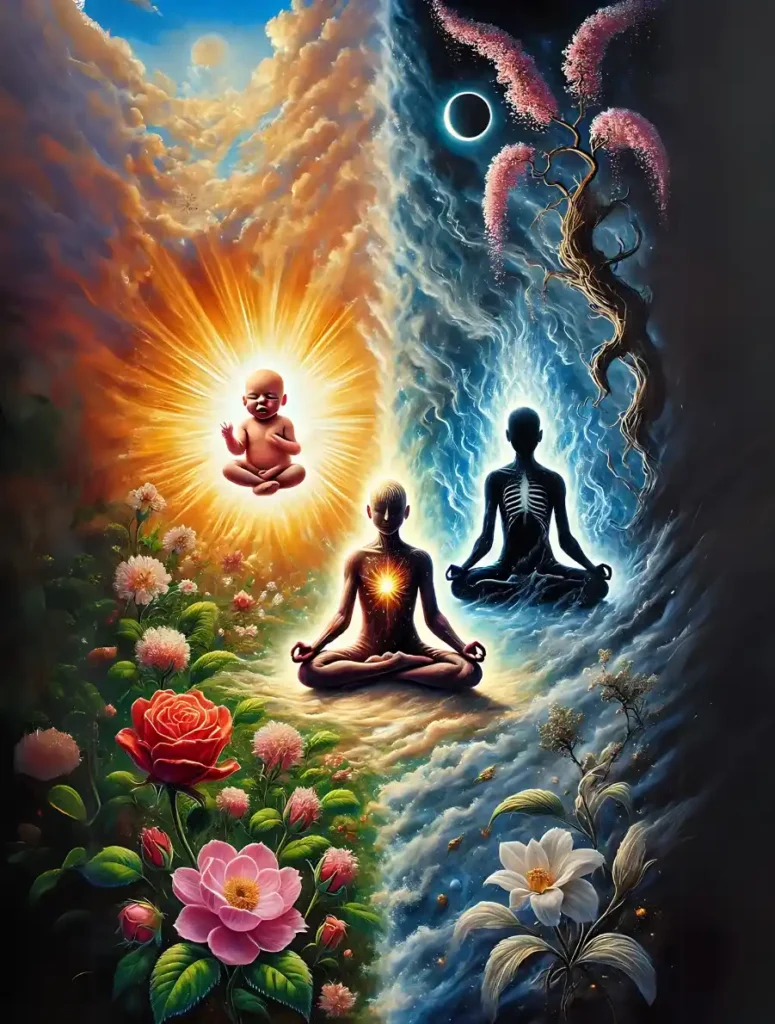
This theory of independent existence of the world has also stemmed from ‘our’ consciousness. The entire play of birth, survival and death are happening in our field of consciousness. This verse highlights that Maya plays, bringing forth the diversity within our field of consciousness.
We realize the existence of an object only when we become conscious of it. Though we may say it exists without our knowledge, or it has an independent existence, it cannot be proven unless it enters our field of consciousness.
In more abstract terms, the object takes birth in our consciousness. That is the reason, knowing about Brahman becomes indispensable. When our consciousness is imbued with Brahman alone, all that remains is Brahman. Only, when the realization of non-duality comes into our field of experience, reality stands exposed.
Why is this Hymn Dedicated to Sri Dakshinamurthy?
Here tasmai śrīgurumūrtaye nama idaṃ śrīdakṣiṇāmūrtaye (तस्मै श्रीगुरुमूर्तये नम इदं श्रीदक्षिणामूर्तये) is the refrain which means I bow to Shri Dakshinamurti, the Guru, who reveals the truth. The first three lines of each verse of the Dakshinamurthy stotram sheds light on Brahman. However, the refrain strongly proclaims that it is the Guru (Sri Dakshinamurthy) who reveals the Truth. Truth is Brahman.
At a glance, Dakshinamurthy meaning is “the south-facing form of Shiva,” the archetypal Guru. But for a sādhaka, it also signifies the orientation of the mind toward inward light, south here pointing to the heart’s cave where knowledge shines without the noise of speech. To invoke Dakshinamurthy is to align with that silent intelligence.
Sri Adi Shankaracharya underscores clearly that Guru is the torchbearer of Truth. Without the Guru, Brahman remains concealed.

We see that the Lord imparted the Vedas to Sri Brahma and assumed the position of a Guru. But, the Supreme Lord lies beyond the reach of a common man. Thus, a Guru is sent by the very Supreme Being to guide sincere sadhakas.
Sri Dakshinamurthy is the repository of all spiritual knowledge and thus, Sri Adi Shankaracharya has represented the Guru Tattva in the form of Dakshinamurthy. He is none other than Lord Shiva in the form of a Perfect Guru, who is available as the personal Guru in flesh and blood on this material plane. A sincere Guru who selflessly imparts spiritual knowledge to his disciples is empowered by Sri Dakshinamurthy to aid his disciples in crossing over the veil of Maya.

Vani Devi Dasi