
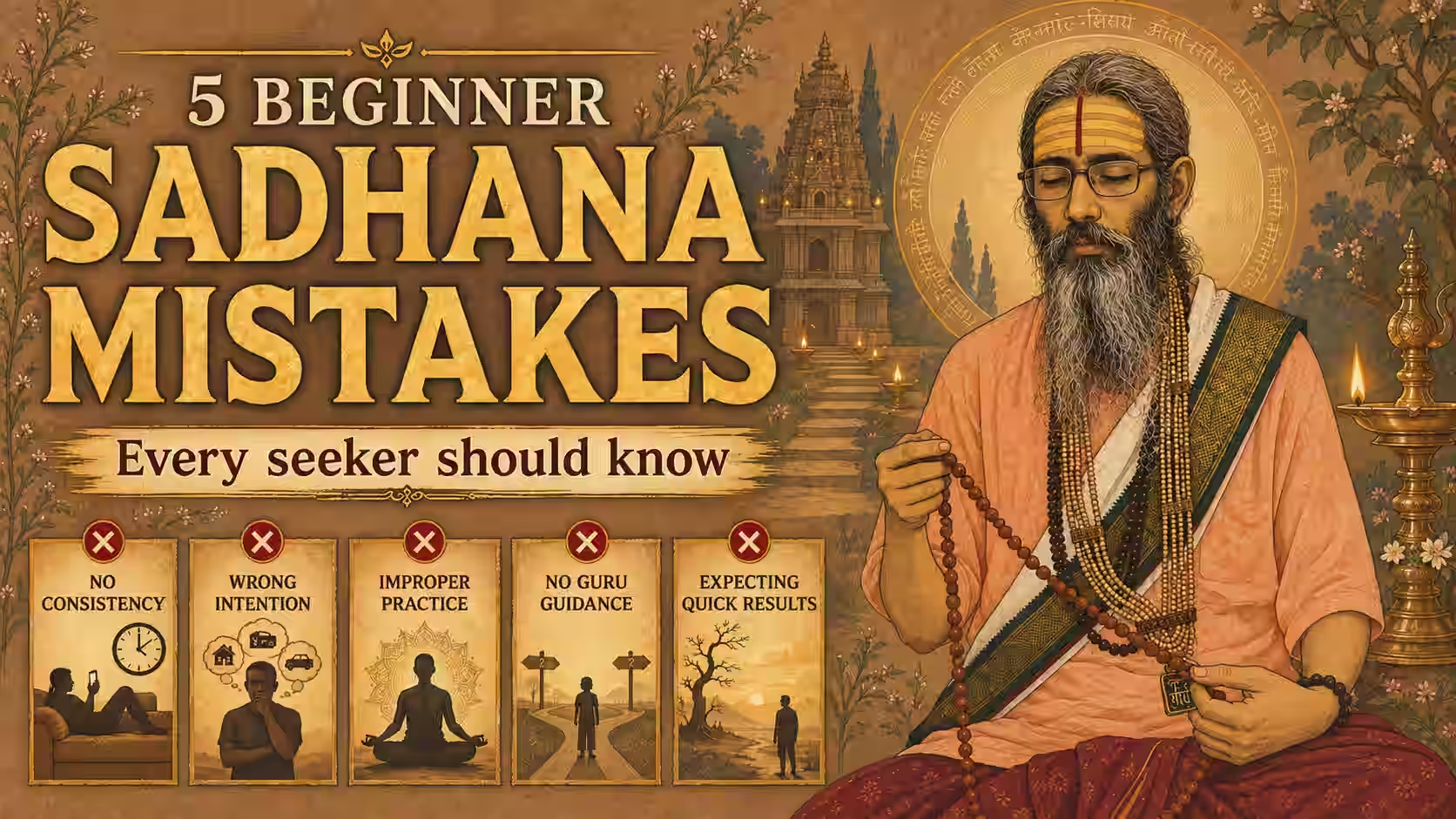
Sadhana is a serious spiritual undertaking. Yet, one of the first mistakes people make is to approach it casually. When we begin Sadhana without understanding its true purpose, certain expectations and misconceptions can deviate us from our practice.
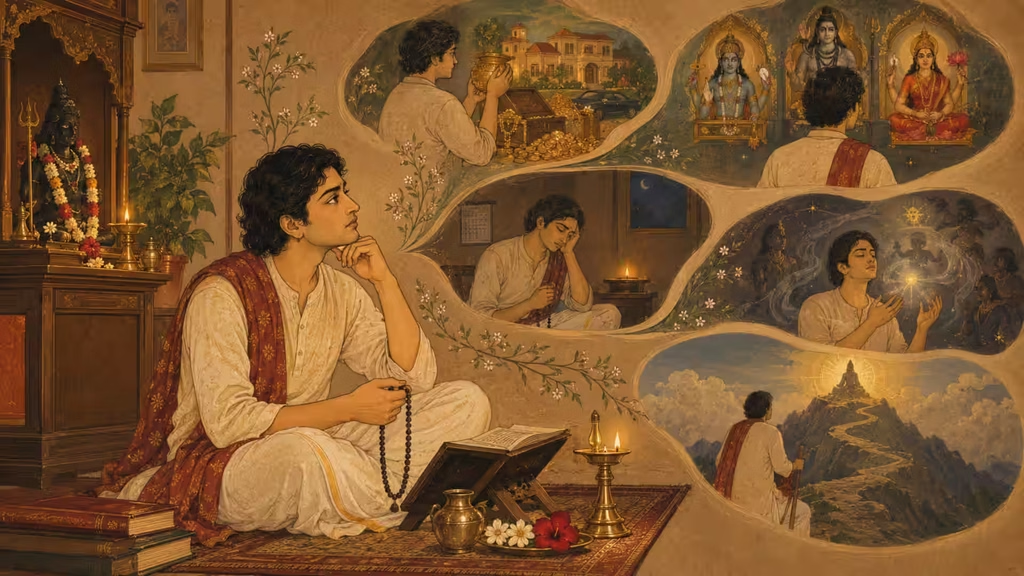
Today, let us look at five common mistakes people make when beginning a Sadhana:
1. Believing That Sadhana Is Meant to Change Our Material Life
Today, spirituality, religion and culture are often misunderstood as the same thing. Although they are connected, at their core, they serve different purposes.
Culture operates mainly at the social level. It brings people together through customs, festivals, traditions and shared ways of living.Religion goes deeper. It shapes our personal identity through a common faith, scripture, and mode of worship. One may also have faith in a particular form of the Divine. Yet, religion often continues to exist within a social and cultural framework.
A religious person may observe fasts, rituals, festivals and sacred occasions not because they understand their underlying spiritual principle but because it strengthens their social identity. These practices have great value, but they can still remain connected with society and material life.
On the other hand, Spirituality takes us inward.It concerns the transformation of the mind, the heart and ultimately our understanding of who we truly are.Sadhana belongs primarily to this inner journey. It is meant to reduce our dependency on the world and ultimately recognize our eternal dependency on Bhagawan alone. It allows us to turn our attention away from people, situations and sense enjoyment.
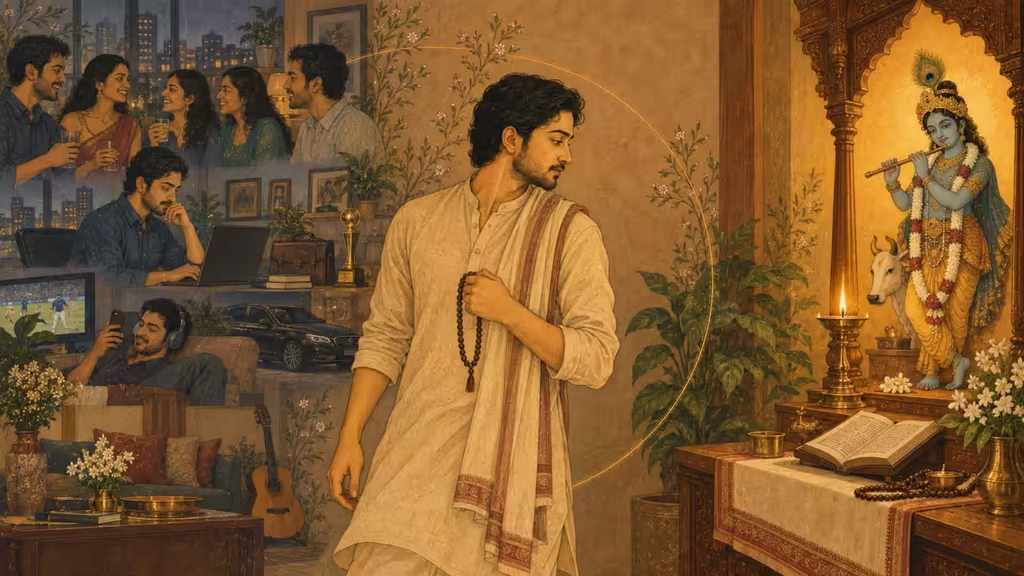
This does not mean that culture, religion and spirituality cannot coexist. They certainly can.But as Sadhana matures, we expect less from life and begin to let go.And gradually, a mood of surrender develops, where the cherished deity of our heart is no longer approached simply to fulfil our desires.
Sadhana is not meant to change our material life, rather it alters our perception. What may seem like a loss to others will turn out beneficial for a sadhaka. For example: A sadhaka may move to a secluded location that involves resigning a high paying job. To the world it may seem a huge loss, but the Sadhaka will view other aspects like- fewer expenses and greater peace.
So, the external situation may not translate as continuing the same job from home or receiving a similar job profile in the town. But, sadhana makes the experience more pleasant as we begin allowing Bhagawan to guide our life.
That is an important shift.
2. Believing That Invoking a Particular Deity Brings Only Specific Results
This is another very common misconception.We sometimes begin to think of different deities as though each one has been assigned a particular department. One deity for wealth, another for protection, so on and so forth.
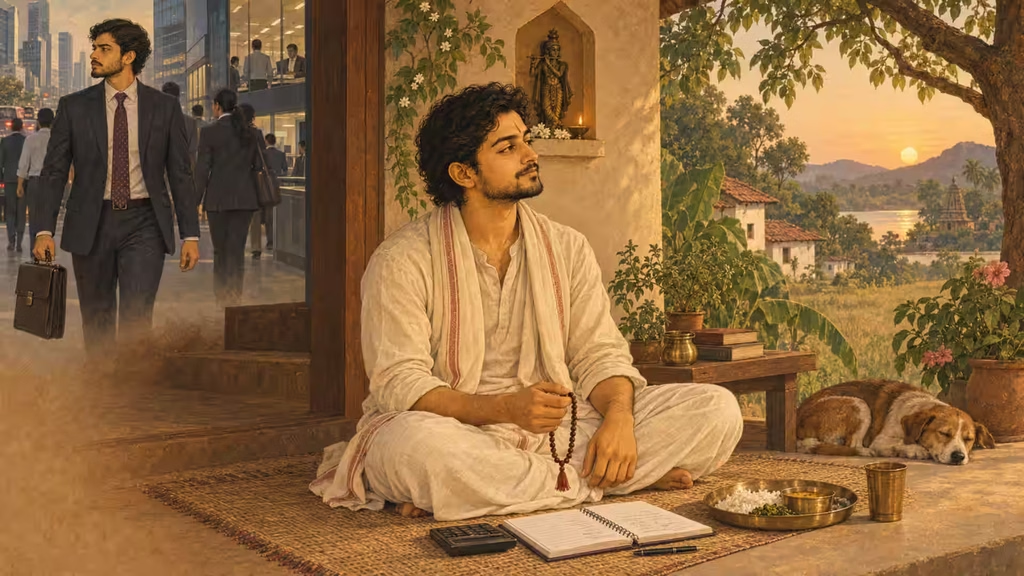
At a cultural or ritual level, such associations certainly exist. But from a spiritual practitioner’s perspective, a deity cannot be confined to merely one quality or benefit. Bhagawan is not limited. Let us take Lord Shiva for example. He represents the highest Vairagya, or detachment. Yet, at the same time, He is also one of the greatest examples of an ideal householder.
To the ordinary mind, renunciation and household life may appear contradictory. But both qualities coexist perfectly in Bhagawan. So worshipping Lord Shiva does not mean that a person must become a renunciate. A renunciate or a householder may both pray to Lord Shiva for their upkeep.
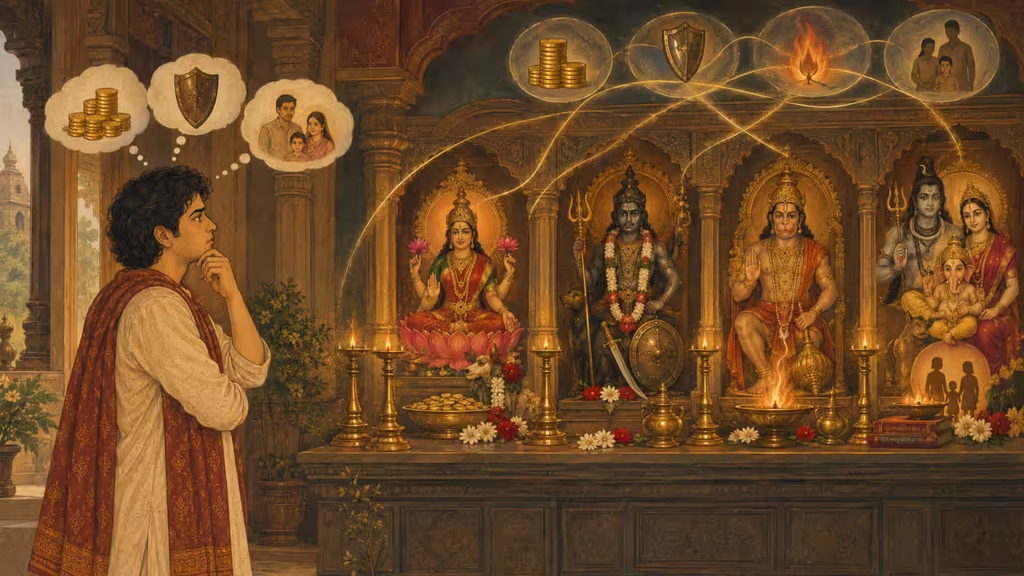
Similarly, Lakshmi Devi is commonly worshipped for wealth and prosperity as Her core identity is Shri- Auspiciousness. But spiritually, Lakshmi Devi is far more than a giver of wealth.
She is Shakti, the Universal Mother. Her powers cannot be restricted to money or prosperity alone. She may be approached for strength, protection, progeny, well-being and countless other needs. Therefore, She has 8 forms collectively known as the Ashta Lakshmi. When devotion towards one’s chosen deity becomes deep and unwavering, one gradually discovers that all Divine qualities are present within that very form.
There is no need to keep changing deities simply because we desire a different result.
For example, one may think:
“For courage, I should worship Devi Durga. For protection, I should worship Devi Varahi and for wealth, I Devi Lakshmi.” There is nothing objectionable in this approach as each deity has a dominant quality and identity. But, if one’s faith, say in Lakshmi Devi is complete, why should the Divine Mother be incapable of protecting Her devotee? The same mother who provides will also protect.
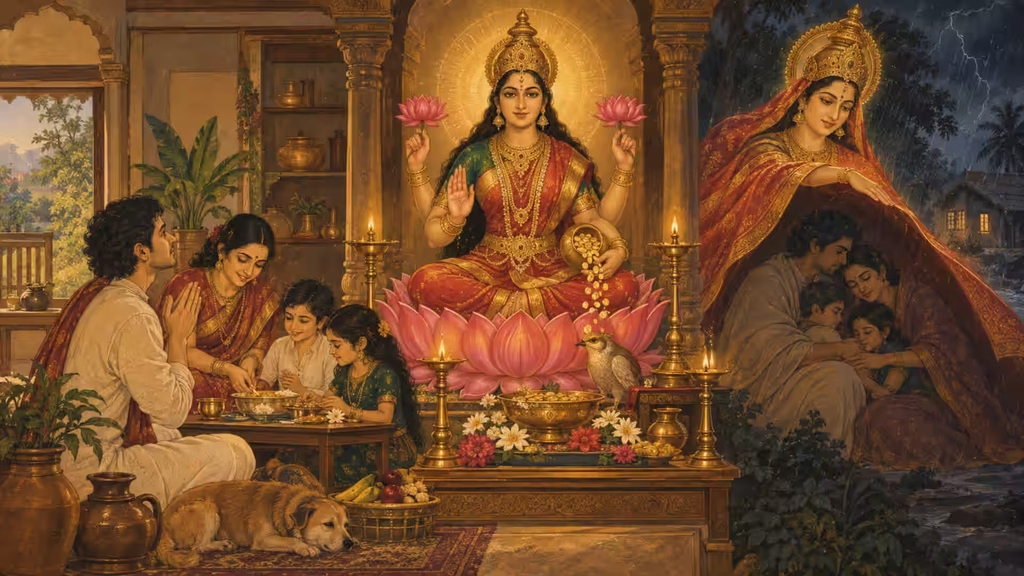
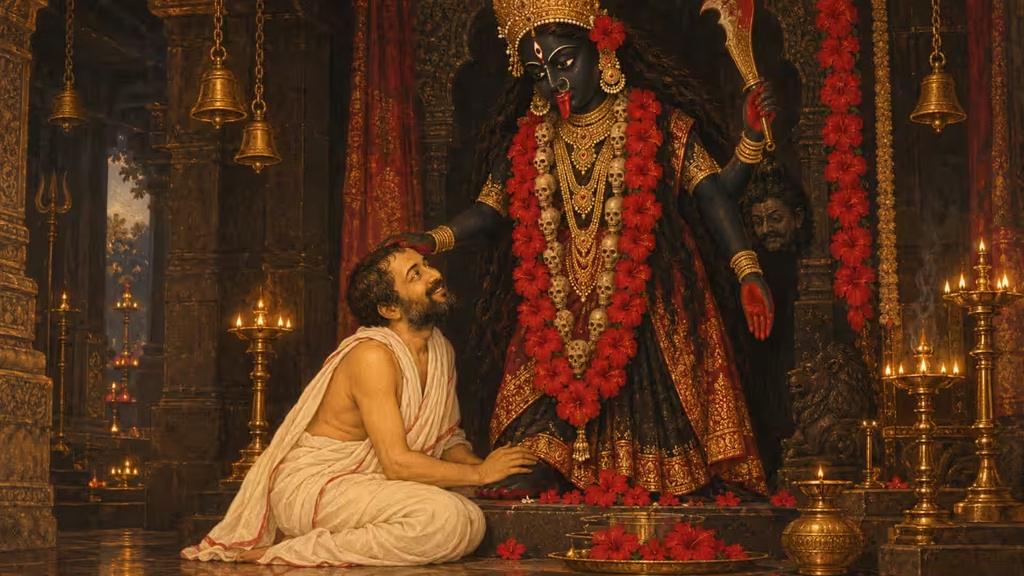
Our doubt arises because our understanding is limited. But, the power of Bhagawan is not limited. A beautiful example is Sri Ramakrishna Paramahamsa. The iconography of Ma Kali can appear fierce and terrifying. She is associated with Tantra, destruction and protection. Yet Sri Ramakrishna’s extraordinary devotion reveals another dimension of the same Divine Mother.
To him, She was tender and infinitely loving.
The same Kali Mahavidya who appears terrifying on the battlefield became the affectionate Divine Mother of Sri Ramakrishna. This is the power of faith. When devotion becomes deep, the deity is no longer experienced as a provider of one particular benefit. The deity becomes our refuge for every aspect of life.
3. Treating Sadhana as a Temporary Practice
Certain Sadhanas are performed for a fixed period- perhaps seven, eleven or twenty-one days. Some Anushthanas are undertaken with a specific Sankalpa for protection, welfare or another particular purpose. Such practices have definite rules, rituals and a prescribed duration.
However, these Sadhanas are directed towards a particular goal. But Sadhana itself should not be understood merely as something we practise for a few days and then abandon. The real spirit of Sadhana is to develop a genuine attraction towards spiritual practice.
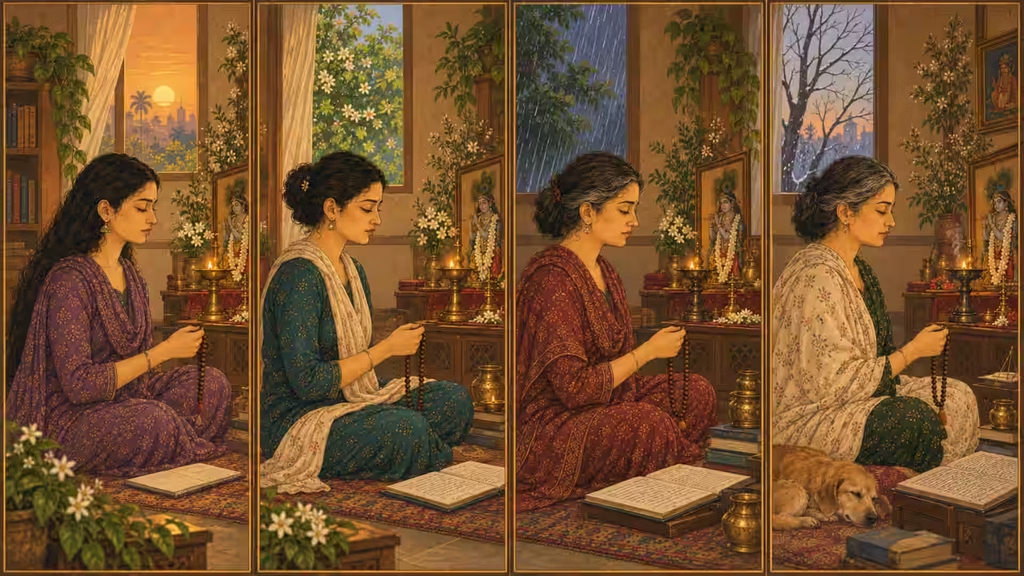
In the beginning, resistance is natural. The mind may say:
“Why do this every day?, “This is becoming difficult.” or “Take a break now and You can always start again later.”This resistance is a part of the process and overcoming it is a crucial milestone. The word Sadhana means discipline and mastery. But what are we trying to master?
The mind.
Or, more accurately, we are trying to stop being mastered by the mind. When we obey every impulse of the mind, we become its servant. Sadhana gradually reverses that relationship. The mind may initially resist discipline because it is accustomed to being obeyed. But we should remember why many of us turned towards spirituality in the first place.
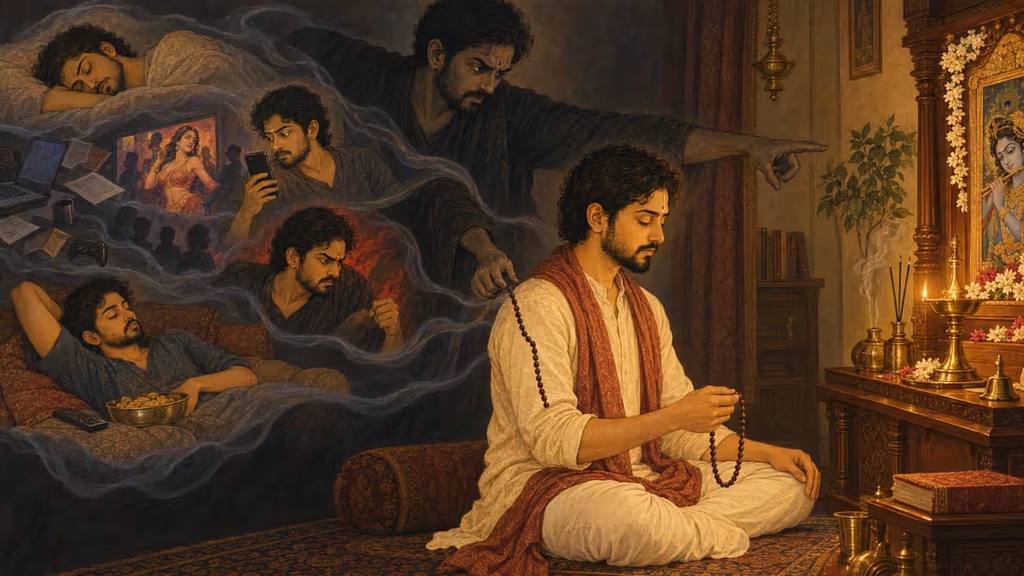
The mind gives us countless plans. It tells us what will make us happy. So, we follow its instructions. But, when those expectations fail, the same mind offers us very little support. Instead, it becomes hopeless and depressed.
That is why deciding beforehand that Sadhana will last only for a limited period can become dangerous. By believing that Sadhana is temporary, we give the mind an opportunity. After the duration concludes, the mind takes us back forcefully into the same patterns from which we were trying to become free.
But when we always remain on the spiritual path, with every sincere effort, the grip of the mind becomes weaker. We move away from the mind to get established in the soul.
4. Believing That Sadhana Brings Siddhis
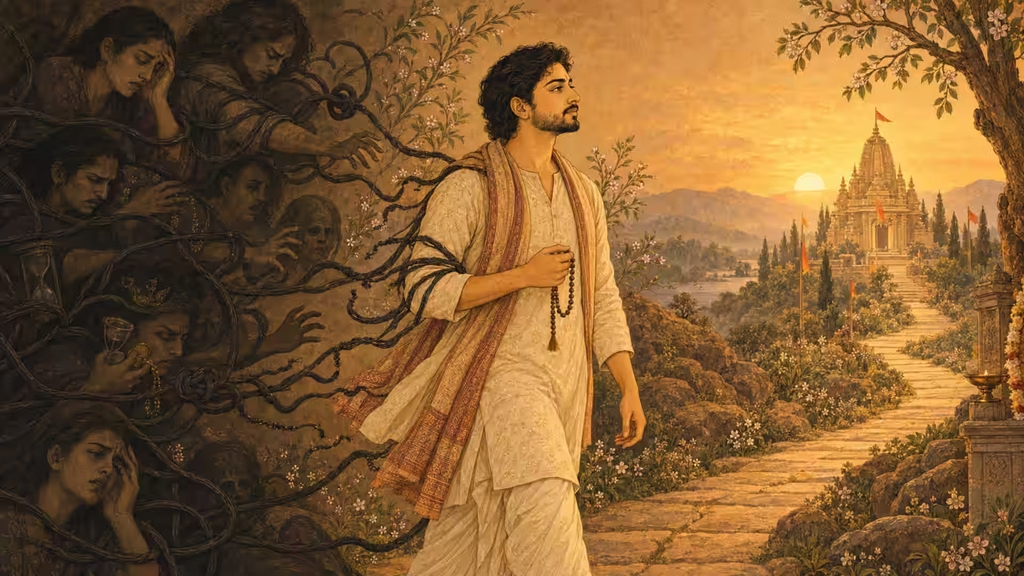
It is said that a person walking the spiritual path must remain vigilant. But, Why? Because even when we begin spiritual life, we are still deeply rooted in material nature. Our mind, body, environment and old tendencies can all become instruments through which Maya (illusion) continues to influence us.
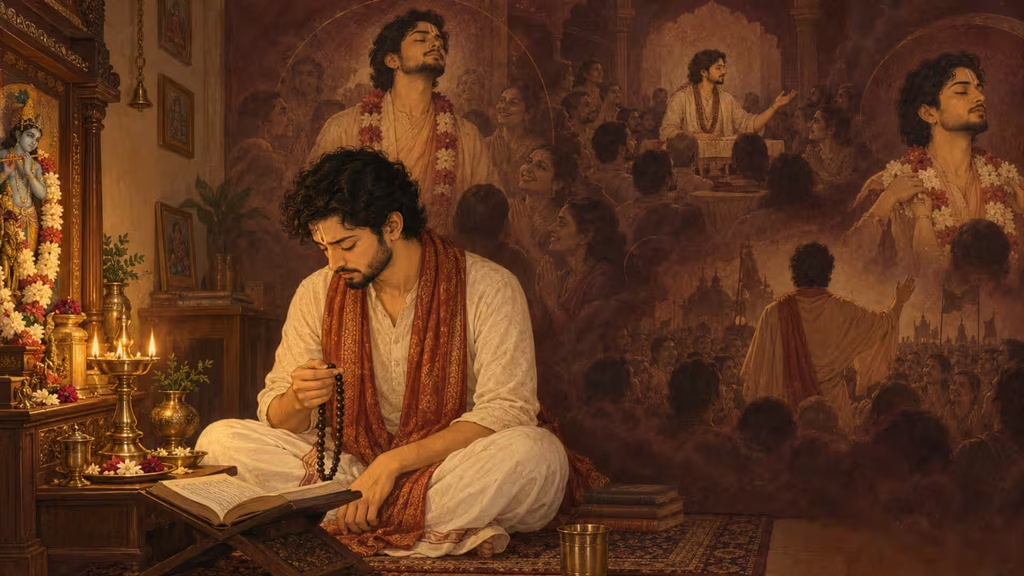
Sometimes our old material identity does not disappear. It may spring up wearing a spiritual garb. Imagine that a person once had a strong desire to become respected or influential. However, as life unfolded, it brought certain realizations and the person sincerely turned towards spirituality. The spiritual impulse may be genuine.
But if the Sadhana is not yet deep or steady enough, the old Vritti, the old tendency to become famous may return. This is where the desire for Siddhis enters the heart of a sadhaka.
What is a Siddhi?
In simple terms, a Siddhi is an extraordinary ability to bend the laws of nature or use it according to one’s will. Siddhis are temporary and may give such a person the unusual ability to influence others or control their perception. But here we encounter an important contradiction.
If Sadhana is meant to gradually free us from illusion, how can Siddhis become an attainment of Sadhana as it takes us closer to material energy? Well, for some people Siddhis arise during the middle stages of their spiritual development. Not everyone experiences them. In certain cases, because of Karma or previous Sadhana merit, such abilities may surface naturally.
Personalized Consultation
- Can ask questions for Personal Guidance
- Understand Nuances for Personal Growth
- Ask Limited Life-Changing Questions
Karmic Reading Consultation
- A Brief on Your Personality
- Your Complete Chakra Profile
- Detailed answers to 5 Questions
- Yantra, Puja and Mala Remedy Recommendations
- Full Name
- Place of Birth
- Date of Birth (DD/MM/YYY)
- Time of Birth (24 HRS)
- 5 Questions that you are seeking Answers for
But more than a spiritual attainment I would call Siddhis a test because the aspirant is presented with a choice:
One must choose between continuing to aspire for Bhagawan or become fascinated by subtler forms of Prakriti. During sincere Sadhana, many hidden emotions, desires and tendencies begin to surface. This is part of inner purification. When we clean a room, the dust that was previously hidden becomes visible.
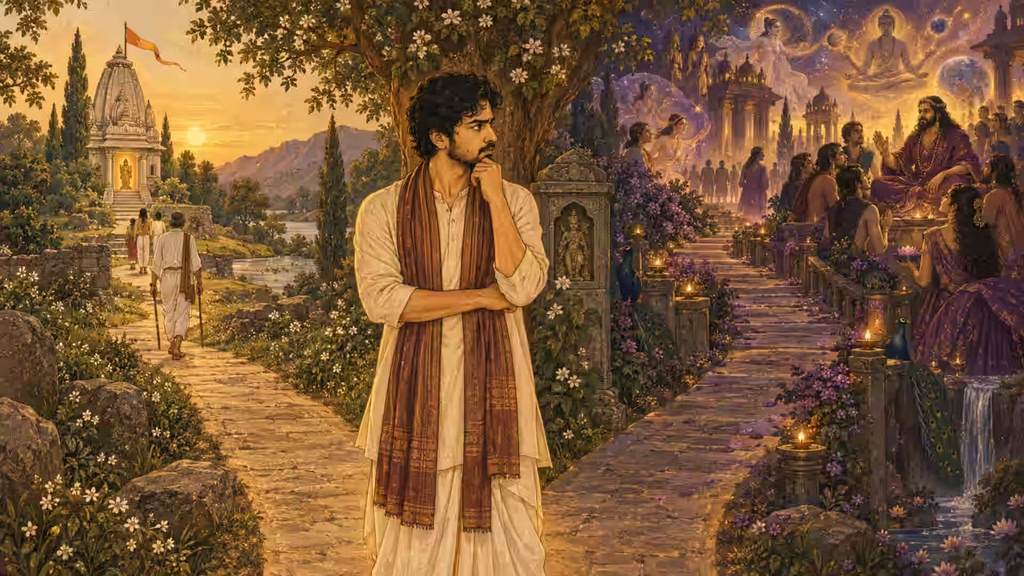
Something similar happens within the mind.
Old desires rise into our awareness so that they may finally be released. At such a stage, remaining non-identified or detached from thoughts and desires becomes extremely important. Siddhi can become one of the subtlest obstacles during this period. The Siddhi itself is not the real problem. The greater danger is identifying with it. The sadhaka begins to think:
“I have this power, or”I can influence others.”
“I know things ordinary people do not know or I am spiritually advanced.”
And suddenly, the ego receives new ground to grow stronger. An old desire for recognition, now speaks the language of spirituality.
Instead of seeking admiration as a successful person, one may seek admiration as a healer, mystic or spiritual leader.
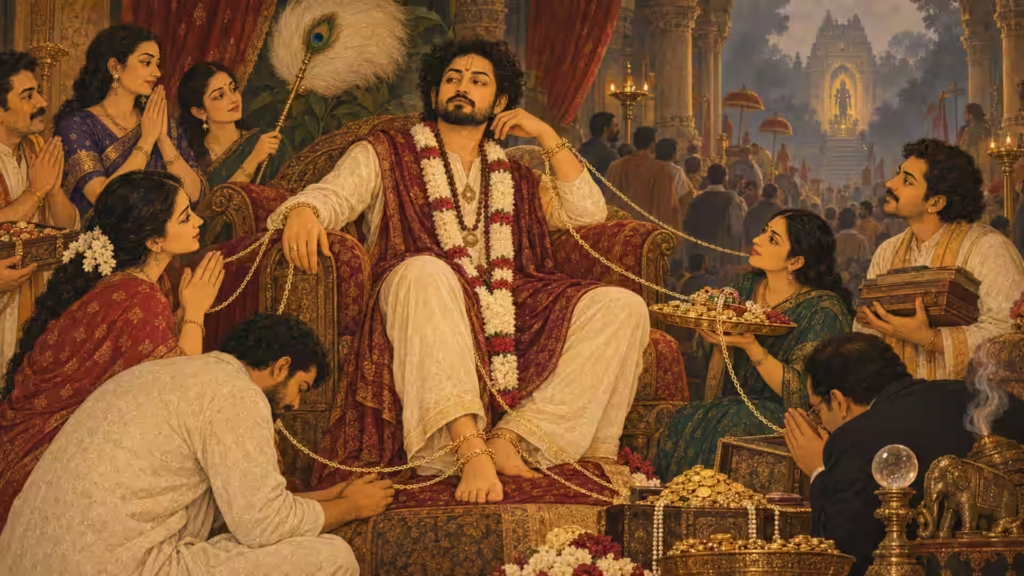
The form of ambition has changed, but the Vritti remains. This is why Siddhis can become dangerous for a serious Sadhaka. It can even become a doorway to downfall. We sometimes see spiritual leaders who begin with genuine realization and considerable Sadhana Bala.
Their presence attracts people, making them unconventionally famous. Certain Siddhis such as Prapti, Prakamya or Vashitva may contribute to this influence. But if the spiritual power begins to be used for fame, material comfort or the fulfilment of worldly desires, their Sadhana Bala gradually depletes.
Then the very person who once inspired others may get trapped by power, money and other vices. Eventually, their misdirected spiritual strength gives way to material entanglement. This is why Siddhis have been described as subtle chains of Maya Devi. They are subtle as they can trap only spiritual people and are chains because they drag one towards material life.
There are many exalted Saints who have many types of Siddhis. Yet, they remain unaffected by it as their mind is desireless. So, Siddhi inherently is not a problem. Identification with it, becoming proud or desiring to display it becomes detrimental.
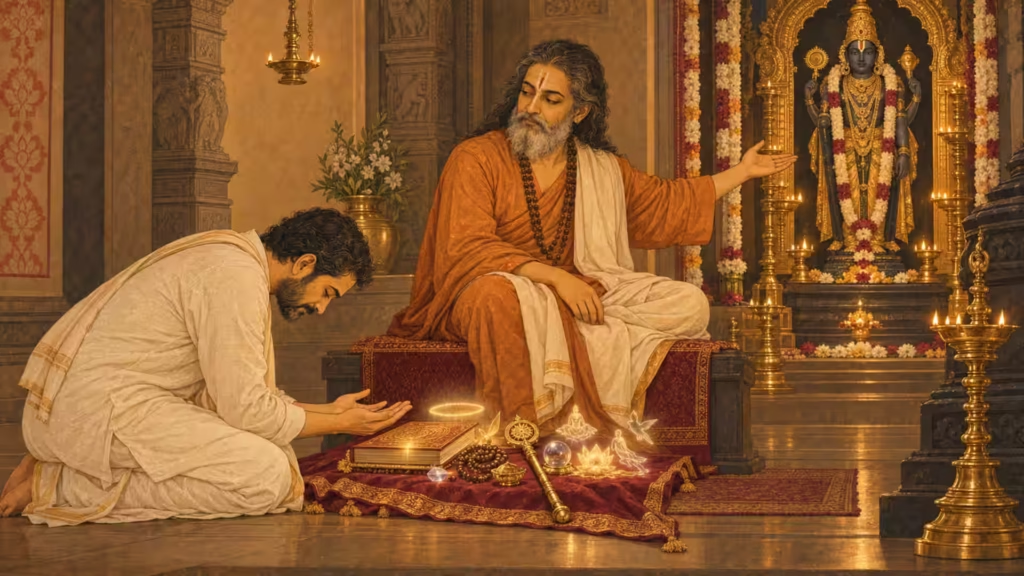
A sincere Sadhaka offers everything, including Siddhis, at the feet of Guru and Bhagawan. This is the best method to remain protected.
5. Believing That Sadhana Guarantees Moksha
This idea may initially surprise sincere spiritual seekers. If someone abandons worldly desires, practises sincerely and dedicates life to spiritual progress, should Sadhana not guarantee Moksha?
In many traditions, Moksha is the highest purpose of human life. Likewise, in devotional streams, this translates as attaining the spiritual abode and rendering eternal Seva to one’s chosen form of Bhagawan. Yet Sadhana itself cannot force such an outcome.
One may wonder Why?
Because the depth and purity of Sadhana differ from person to person. We carry countless impressions, tendencies and inner weaknesses accumulated over innumerable lifetimes.
Because of this, spiritual purification is not something that can easily be measured. A person who may be engaged in household duties may be far more eligible for moksha than a renunciant who has room for worldly desires. No stage of life or external appearance can gauge one’s spiritual maturity.
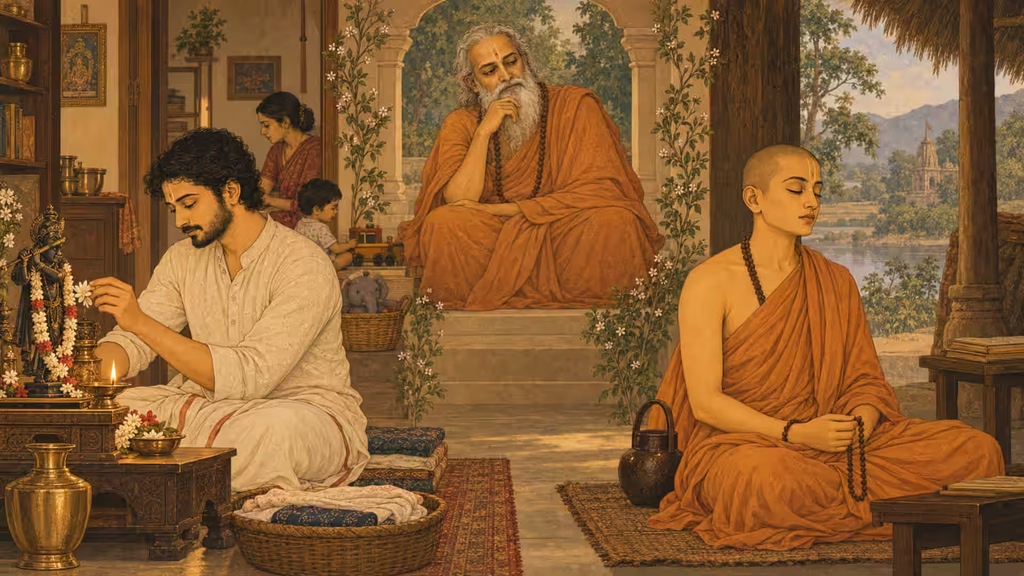
We ourselves may not even know how pure our Sadhana has become. But, the Guru can recognise whether genuine transformation is taking place. When the Guru or Acharya becomes pleased with one’s Seva, attitude and Sadhana, it gives the aspirant reassurance that the path is maturing.
The Guru becomes the visible medium through whom Bhagawan’s acceptance can be experienced. Sadhana takes us towards this threshold. But beyond that threshold lies another domain. That domain is Bhagawat Kripa or Divine Grace.
Someone may then ask:
“If Grace ultimately decides everything, why perform Sadhana at all?”
We must consider Sadhana as a means to express our sincerity. It is our way of saying to Bhagawan:
“I truly seek You.”
“I am willing to discipline myself for You.”
“I will detach myself from the habits, things or people who keep me away from You.”
So, Sadhana expresses commitment. It becomes a way of showing our longing and spiritual greed for Bhagawan. There is a simple way to understand this. Sadhana is like a vehicle carrying us towards a railway station. The vehicle can bring us to the platform. But it cannot command the train to arrive.
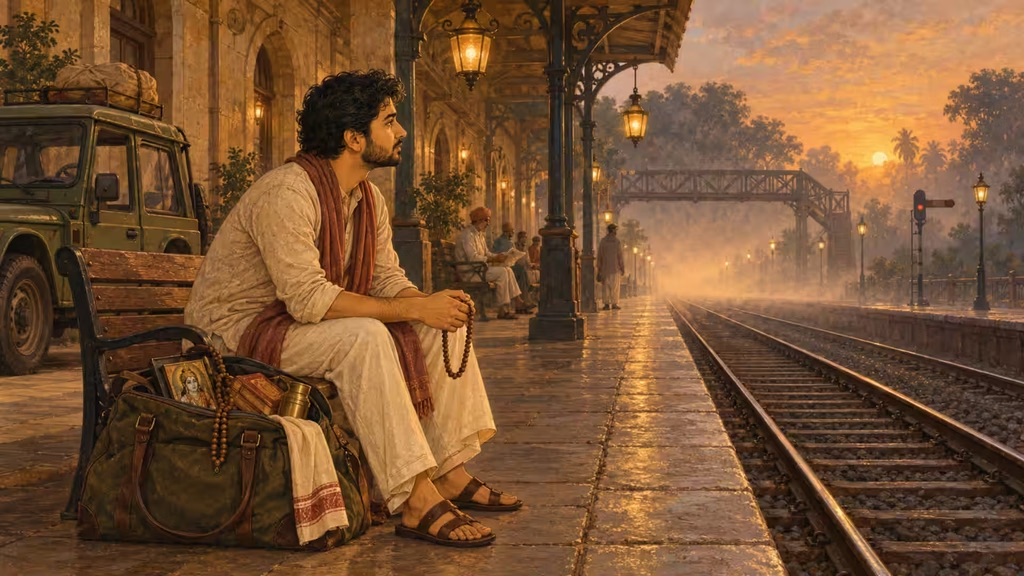
It has no control over the arrival of the train. Likewise, Grace is independent. We cannot force it. But Sadhana has the power to place us in the right spot. It makes us eligible to receive Grace, whenever it descends.
Then what finally opens the door to Moksha?
Our scriptures repeatedly remind us that Bhagawan knows the heart of every being and is an ocean of causeless mercy. Undoubtedly, the yearning of one’s heart is known to Him and that causes Grace to flow. So ultimately, the Grace of Bhagawan, Guru and the devotees opens the door to the spiritual realm.
Our spiritual efforts should never be treated as a transaction like “I performed this much Japa-Tapa and therefore I deserve Moksha.”
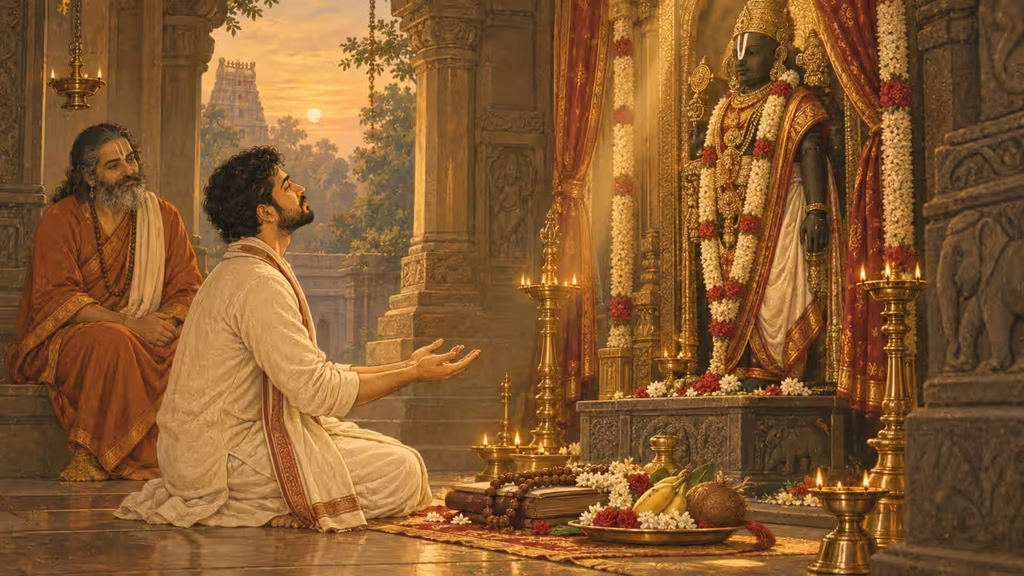
No. We must remember that Sadhana is our offering that we voluntarily take up while Grace is His gift that He bestows according to His Sweet Will. The deepest maturity perhaps comes when we stop demanding even the result of our spiritual practices and simply place ourselves at the feet of Bhagawan.
This becomes especially important when our prayers seem unanswered, because spiritual maturity also requires us to understand our relationship with Bhagawan when the expected result does not come.

Damodar Das Ji Maharaj

Rohini Devi Dasi