
Introduction
Are you feeling stuck in a cycle of fear or mental fog? Most people view the Southern direction as the realm of death and endings, yet the ancient wisdom of Sanatana Dharma reveals a secret: the South is actually the gateway to the highest spiritual awakening. Discover how Sri Dakshinamurthy, the Silent Guru, transforms your deepest anxieties into profound “Jnana” (knowledge) and why his presence is the missing link in your spiritual journey.
Why Sri Dakshinamurthy is the Ultimate Source of Wisdom
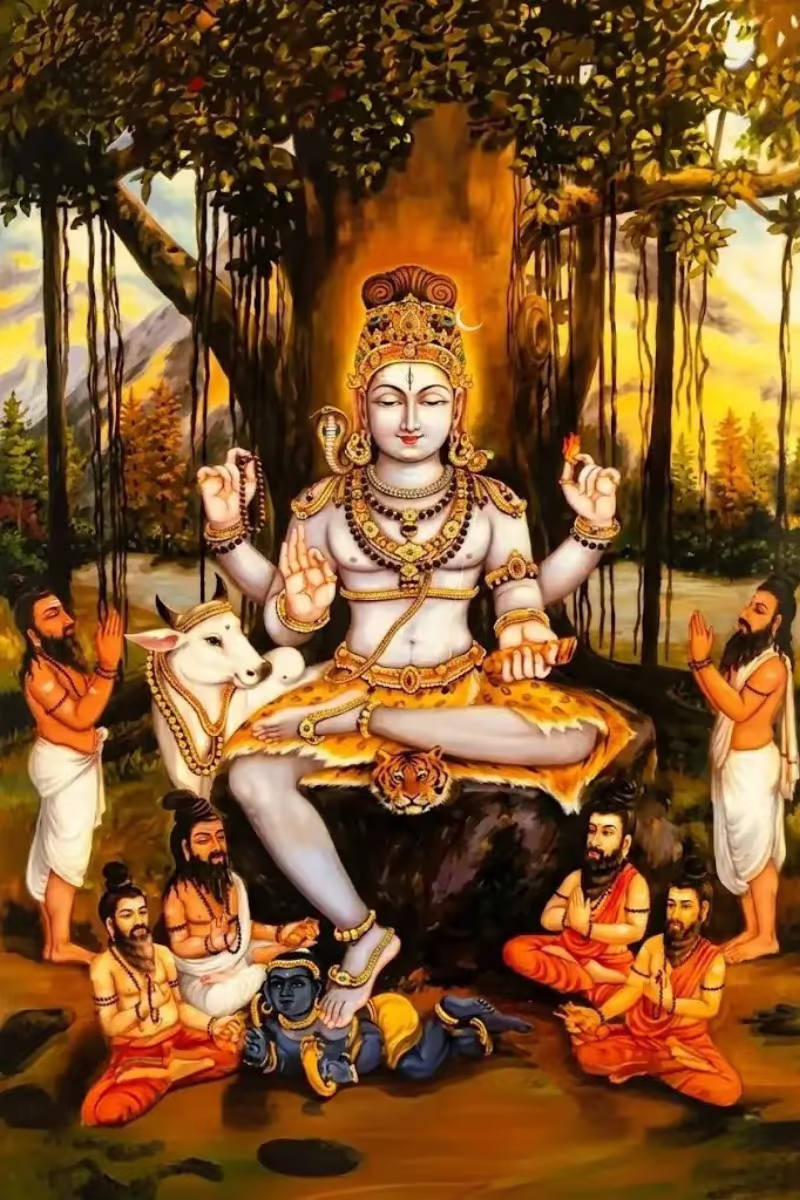
]In these divine depictions, Sri Dakshinamurthy is gracefully adorned with a crescent moon in His matted locks, a powerful reminder that a stable and calm Manas (mind) is the primary requisite for receiving ultimate wisdom. To harmonize your emotional state and prepare your mind for higher learning, we highly recommend exploring the Chandra Yantra For Moon, Mind & Healing. This tool helps seekers understand how to stabilize the mind and remove mental fog.
Message DAKSHINAMOORTHY KIT to get the right Yantra + Mala suggestion.
Sri Dakshinamurthy and the Great Significance of Southern Direction
Sri Dakshinamurthy is the Lord facing the southern direction. Directions play a crucial role in inviting certain vibrations into our lives. For example: The brilliant Surya Devata is the physical manifestation of Brahman. This is the reason Sadhakas should face the east while performing their morning invocations while the west in the evening.
This has been the tradition.
Prayers are a potent means to connect with the Lord and when supported by the suitable direction, one attracts divine vibrations. With the Southern direction, the general faith associates it with death. Yamaloka the abode of Lord Yama is in the universe’s south.
“Sanatana Dharma ratifies afterlife, rebirth and the Karma theory. In this context, the South becomes the direction of regeneration, where the old falls and the fresh rises, where darkness perishes and the light of knowledge awakens.”
-Shri Damodar Dasji Maharaj
Believers perform Shraddha facing the southern direction as Lord Yama plays a crucial role in the fructification of this ritual. The individual performing Shraddha seeks liberation (Moksha) for his ancestors who are at the mercy of Sri Yama in Pitru Loka.
The Science of Directions in Sadhana
| Direction | Governing Deity | Spiritual Influence | Purpose of Alignment |
| East | Surya (Sun) | Vitality & Awakening | Morning Invocation/Energy |
| West | Varuna | Introspection | Evening Reflection |
| North | Kubera/Shiva | Abundance | Material & Mental Wealth |
| South | Dakshinamurthy | Moksha & Jnana | Transformation/End of Fear |
Everything seems negative about the Southern direction. It may seem so if we consider death as a negative phenomenon. Here is where the assertion of Sanatana Dharma comes to our aid.

Choose Your Yantra And Practice
Loading…
—
—
Deciphering the Divine Name of Sri Dakshinamurthy
On one hand, we have South as the abode of Sri Yama while on the other we have Sri Aghora (a magnificent form of Lord Shiva) as the south-facing face of Sri Panchanana (Sadashiva). A-ghora literally means One who is not gore.
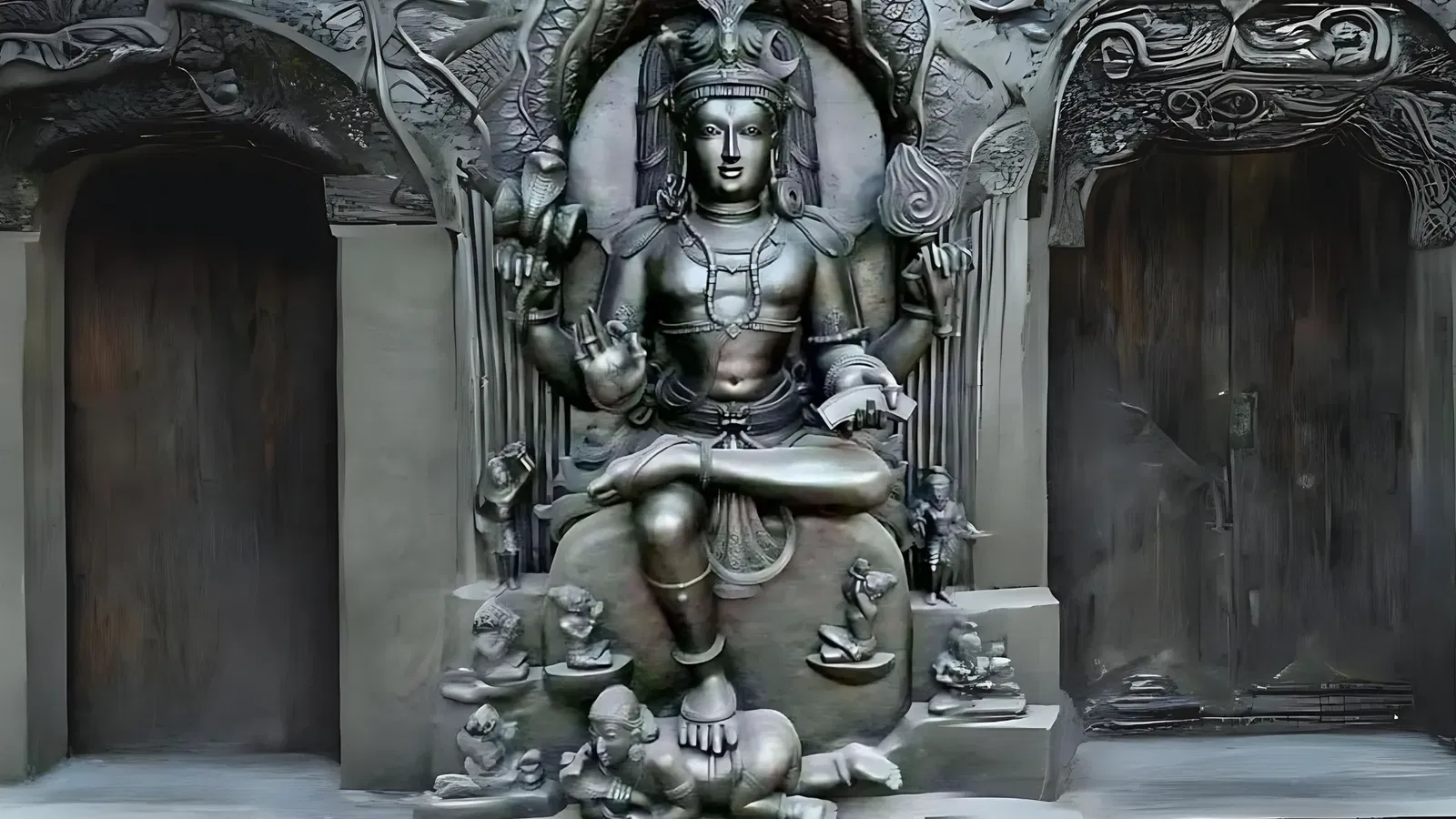
The one who is calm and sublime. Sri Dakshinamurthy is the deity facing the southern direction. Dakshina (South) murthy (Lord), literally means the Deity of the South. His sublime countenance exuberates grace which is the goal of every sadhaka. Elevated Rishis and Jnanis stand before him with folded palms.
The beautiful dynamics of teaching and the transfer of divine wisdom are vast within the Shaivite lineage. A prime example is when Lord Murugan (Kartikeya) famously assumed the role of Swaminatha to teach the meaning of the Pranava (Om) directly to his father, Lord Shiva. Seekers deeply drawn to the cosmic nuances of Shiva’s lineage will find incredible value in uncovering the Murugan Mantra Yantra Secrets & Vidhi.
Journal Your Thoughts
Mindfulness Awareness Plan
Choose your cycle length (7 / 21 / 41 days), pick disciplines, lock them for the full cycle, and journal daily to see exactly where you slip - and what strengthens you.
How to Meditate on Sri Dakshinamurthy for Instant Clarity
- Preparation: Sit in a quiet space facing North (so you face the Lord’s direction, South).
- Posture: Straighten your spine and rest your hands in Jnana Mudra (index finger touching the thumb).
- Internal Focus: Visualize the Lord sitting under a Banyan tree, radiating a cool, silver-white light into your Third Eye.
- Mantra: Chant “Om Namo Bhagavate Dakshinamurtaye” 108 times.
- Silence: Sit for 5 minutes in absolute silence after the chanting, feeling your confusion dissolve.
While Sri Dakshinamurthy acts as the ultimate Shaivite embodiment of wisdom, those exploring varied spiritual paths might connect strongly with Lord Hayagriva, the Vaishnava avatar presiding over knowledge, memory, and speech. Readers interested in expanding their intellectual clarity and uncovering ultimate wisdom will naturally benefit from exploring the Hayagriva Yantra For Memory, Speech & Clarity.
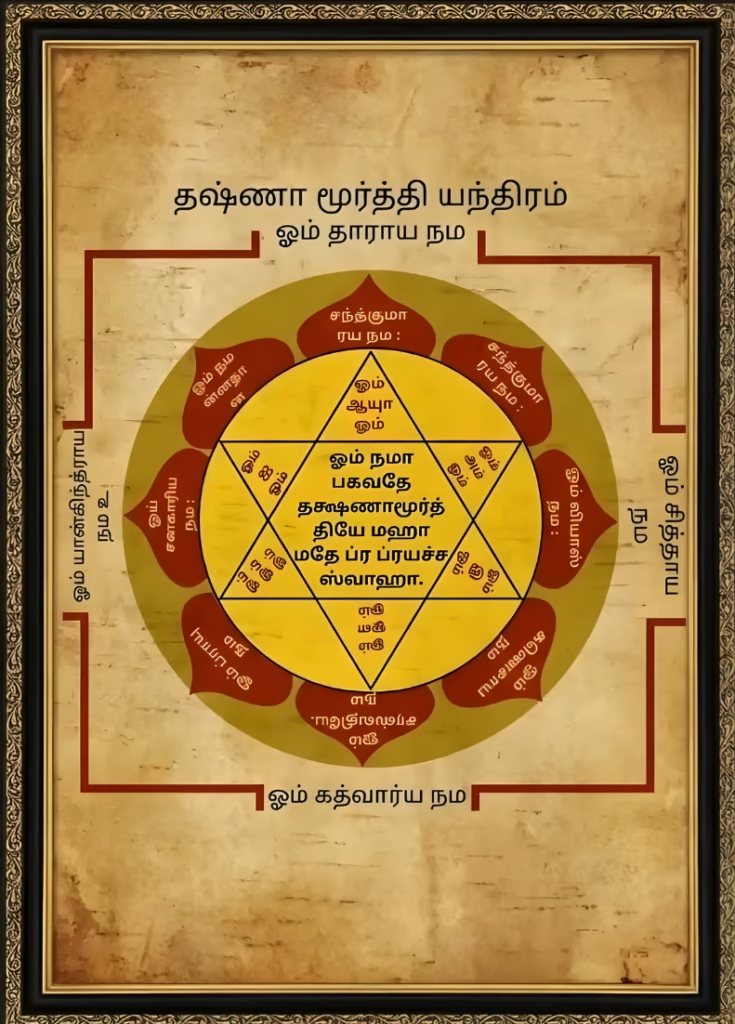
The Dakshinamoorthy Yantram
Buyer’s Guide: Choosing an Authentic Sri Dakshinamoorty Yantra
To help your individuals make an informed choice, here is the text for your Buyer’s Guide section:
Shri Damodar Dasji Maharaj Serving at YantraChants.com
The YantraChants.com Trust Stack Advice:
Choosing a Sri Dakshinamoorty Yantra is an investment in your mental clarity and spiritual growth. To ensure you are receiving a tool that is truly “alive,” consider the following:
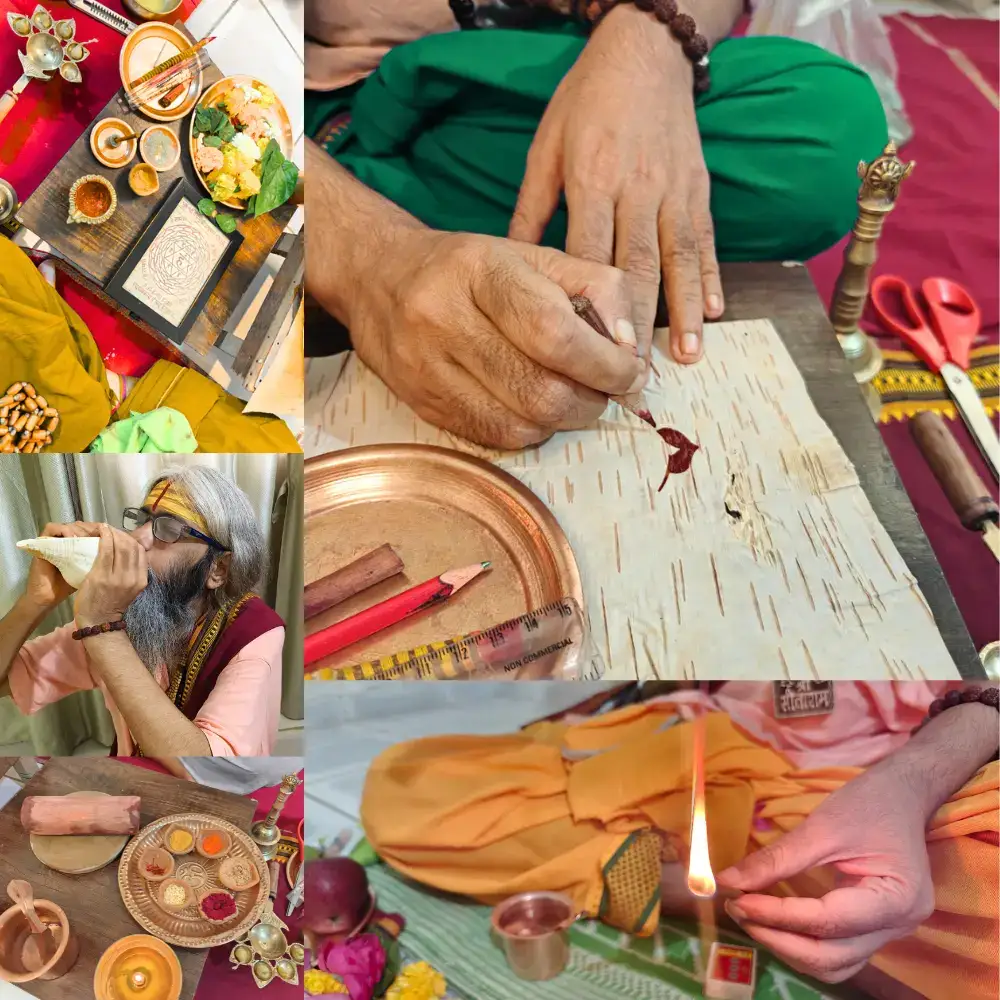
- The Power of Bhojpatra: Traditional scriptures emphasize that Bhojpatra (Birch Bark) is the most potent medium. Unlike mass-produced paper or metal, Bhojpatra is a living substance that absorbs and retains the Prana (life force) during the consecration process.
- Geometric Integrity: The Yantra must be drawn with absolute precision. For Dakshinamoorty, the geometry is designed to pull the mind into a state of “Shunya” (silence), which is only possible if the proportions are Shastric (scripturally accurate).
- The Intent of the Creator: An authentic Yantra should be prepared by a practitioner who understands the Guru Tattva. Look for Yantras that are made-to-order rather than factory-stamped.
- Purpose: If you are a student, a teacher, or a seeker struggling with “mental noise,” the Bhojpatra version provides a stronger vibrational anchor to help you sit in the “Silence of the Guru.”
Why is the Banyan Tree central to this form of Shiva?
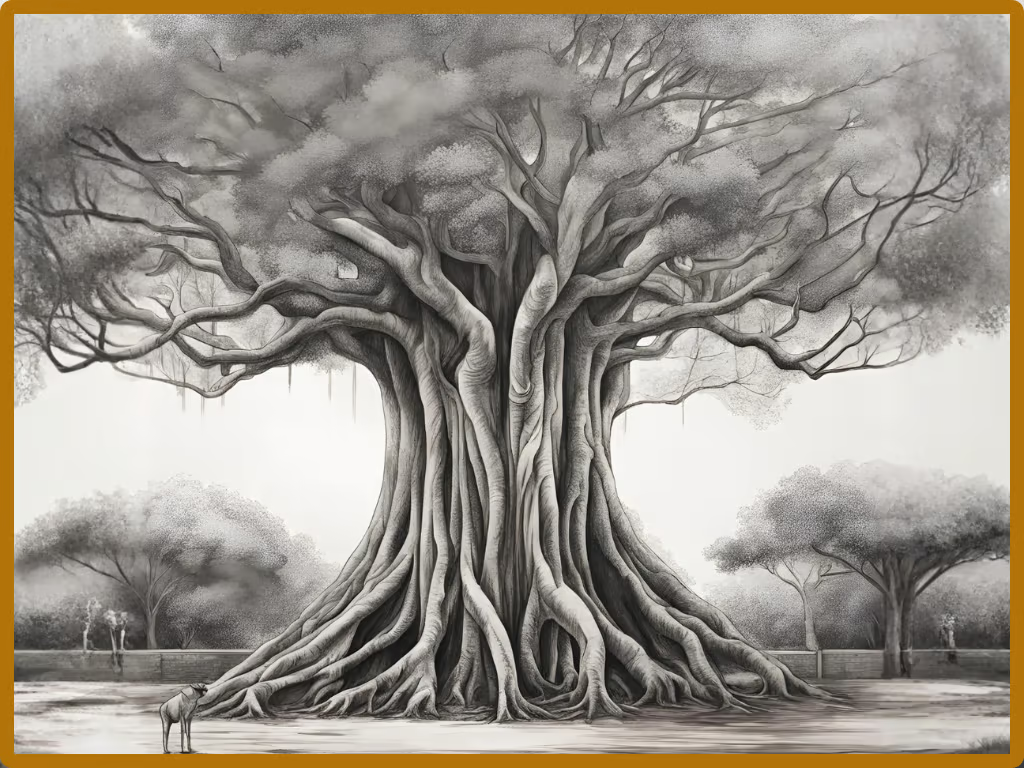
The Banyan tree symbolizes immortality. Its roots represent Sri Brahma (Creation), the bark stores food/water representing Sri Vishnu (Maintenance), and the leaves represent Lord Shiva (Time). Sri Dakshinamurthy sits here to preserve the undiluted wisdom of the Vedas in an era where modern spiritual paths have become poor cultural caricatures.
Symbolism of the Vatavriksha (Banyan Tree)
| Tree Component | Divine Aspect | Representation in Life |
| Roots | Lord Brahma | Emergence and birth of life |
| Bark | Lord Vishnu | Sustenance and food for the soul |
| Leaves | Lord Shiva | The influence of Time and wither |
| Aerial Roots | Guru Grace | Seamless expansion of Wisdom |
Symbolism of Sri Dakshinamurthy and Apasmara
Ignorance is represented by the puny yet vicious demon Apasmara. This demon also finds mention in relation to Sri Nataraja. Sri Dakshinamurthy subdues this demon merely by the toes of his right foot.
“Dementia in the spiritual context relates to forgetfulness of identity. What we claim to be our identity today is a myth… Sri Dakshinamurthy subdues our dementia that estranges us from Paramatma.”
Such is his supremacy. Under the fine tutelage of Sri Dakshinamurthy, the demon of ignorance is subdued by the Lord Himself. This means that an individual must find himself a Guru, empowered by Sri Dakshinamurthy. Only then, the path ahead shall reveal itself.
Subduing Ignorance
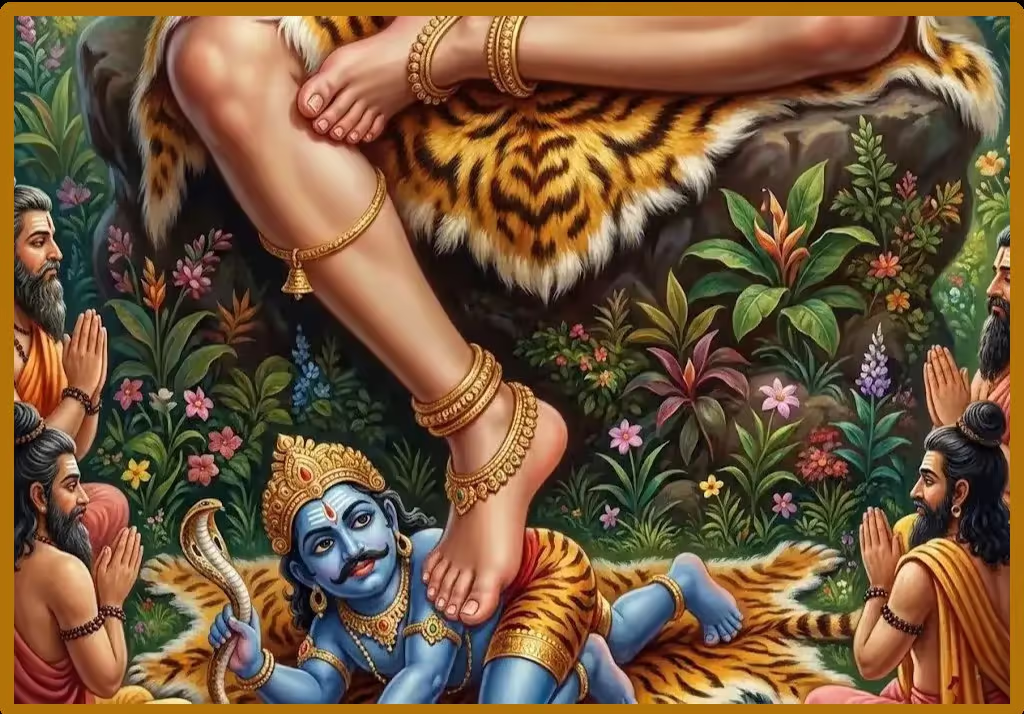
Complementing this conquest of ignorance is Lord Ganesha, the presiding deity of Buddhi (intellect) and Viveka (discrimination). As a son of Shiva, linking to his energy is a natural continuation for seekers focused on gaining acute mental clarity; you can further your practice with the Om Gam Ganapataye Benefits & Siddhi Vinayak Yantra.
Elevate Your Wisdom with YantraChants.com
To internalize the silent teachings of the Ultimate Guru, one needs tools that vibrate with the frequency of Jnana. At YantraChants.com, we provide traditionally prepared Bhojpatra Sri Dakshinamurthy Yantras, along with Siddha Rudraksha, Tulsi, and Sphatika Malas.
Because Sri Dakshinamurthy represents a serene, wisdom-imparting manifestation of Lord Shiva, a comprehensive spiritual path often benefits from grounding tools. Readers seeking deeper Shiva Sadhana and energetic protection should reference the Om Namo Bhagavate Rudraya Yantra Buying Guide & Benefits to integrate another foundational Shiva-related spiritual device into their journey.
For personalized spiritual guidance, WhatsApp us at: +917417238880
Frequently Asked Questions (FAQs) on Sri Dakshinamurthy
Q1. Why is Sri Dakshinamurthy considered the ultimate Guru?
A. Because he teaches through silence, presence, and inner awakening rather than external instructions. His grace empowers all gurus.
Q2. What does the Dakshinamurthy mantra help with?
A. It helps remove confusion, fear, and inner noise, opening the path to Jnana.
Q3. Why does Sri Dakshinamurthy face the southern direction?
A. The south represents transformation, endings, and new beginnings. His presence turns it into a direction of enlightenment.
Q4. Can chanting the Dakshinamurthy stotram improve clarity?
A. Yes, the stotram refines the mind and makes it receptive to subtle truths.
Q5. What is the role of a Guru according to Dakshinamurthy tradition?
A. A Guru reflects the disciple’s true Self and removes ignorance, just as Sri Dakshinamurthy does.
Sri Dakshinamurthy Yantram and A Simple Practice
3-Step Morning Practice (4 minutes total)
Step 1: South-Facing Stillness — 1 minute
- Sit quietly for a minute and remember Sri Dakshinamurthy as the Silent Teacher who faces the Southern direction (the direction of transformation and renewal).
- If you keep Sri Dakshinamurthy Yantram at home, place it near your study space or meditation area so your mind naturally feels “guided from within.”
- Simply contemplate his calm gaze and allow inner noise to settle.
Step 2: Invoke Guru Tattva — 2 minutes
- Fold your palms and remember that all authentic Guru-shakti is empowered through Sri Dakshinamurthy.
- Slowly repeat his name (or your Dakshinamurthy mantra/stotram) with sincerity, letting each repetition create a protective stillness inside.
- Feel clarity rising—not as new information, but as confusion dissolving.
Step 3: Bless Study and Inner Inquiry — 1 minute
- Sit as if you are beneath the symbolic Banyan tree—stable, rooted, and receptive to undiluted wisdom.
- Bring one simple intention into the heart: “May knowledge outshine fear. May ignorance fall away.”
- End by holding a quiet readiness to learn, reflect, and live with steadiness through the day.

Rohini Devi Dasi
Damodar Das Ji Maharaj