
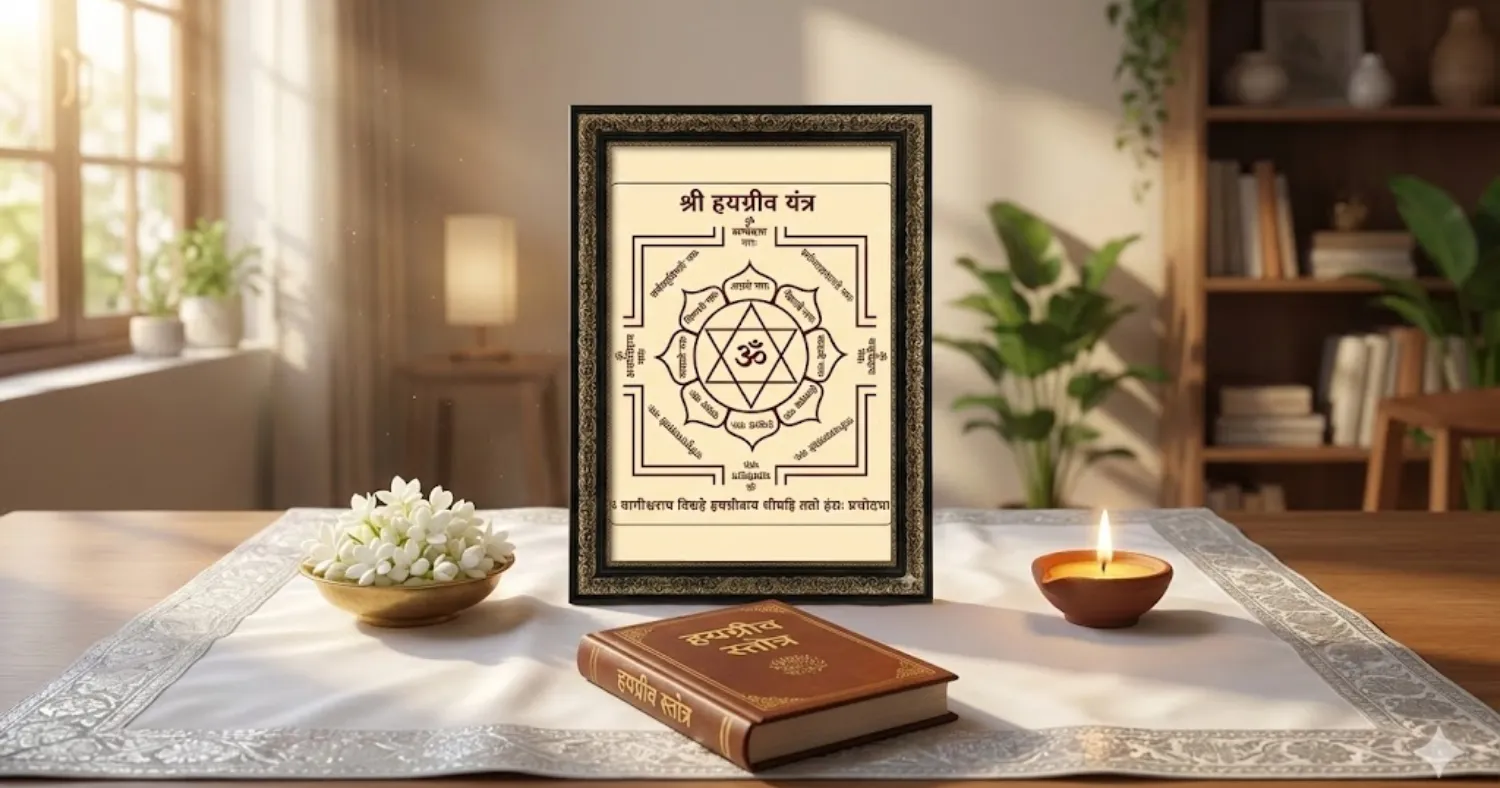
In the age of constant screens, notifications, and information overload, the rarest resource is no longer knowledge.
It is a mind steady enough to hold knowledge.
If you notice that:
- You study but forget quickly
- Your thoughts feel scattered
- Your speech loses clarity under pressure
- You love reading shastra but lack mental steadiness
Then this page is for you.
Sri Hayagriva Bhagawan, the horse-headed form of Lord Vishnu, represents refined intelligence, sacred memory, and clarity of expression.

This guide will show you:
- The safest Hayagriva sloka for daily use
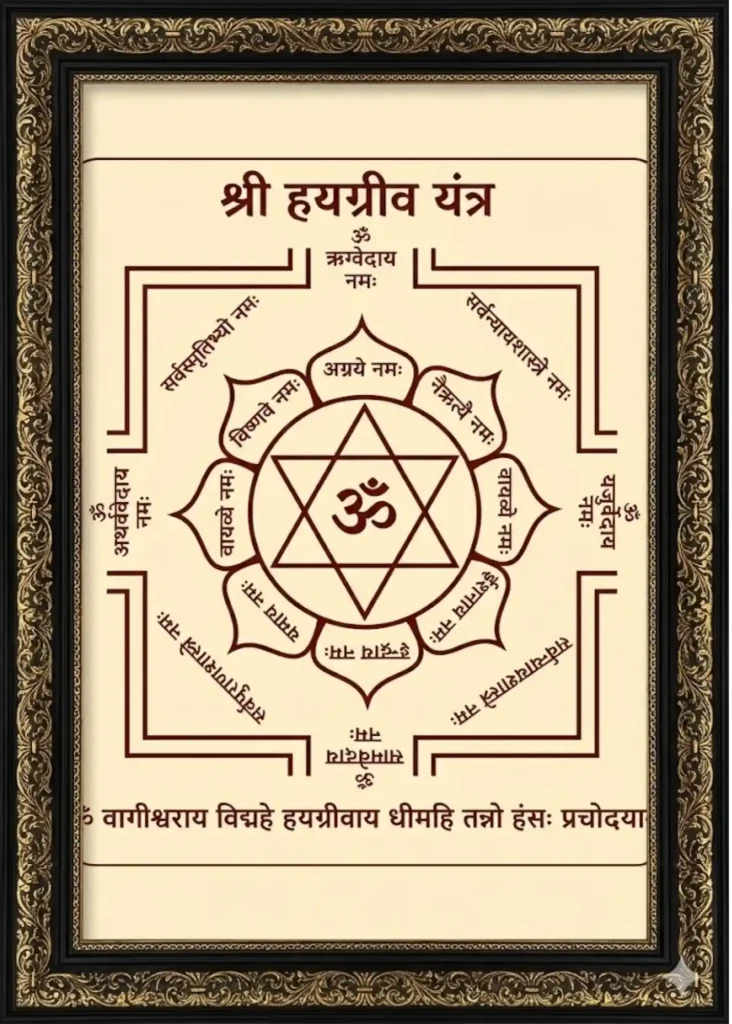
- What the Hayagriva Yantra truly supports (and what it does not)
- How to use it in a simple 6-minute routine
- How to identify an authentic yantra vs decorative posters
Is This Describing Your Situation?
This is for:
- Students preparing for exams
- Professionals who teach, speak, write, or present
- Seekers who want deeper concentration in study
- Anyone experiencing memory instability from digital overload
This is exactly the space where the Sri Hayagriva Yantra on Bhojpatra is traditionally used.
For guidance on Hayagriva Sadhana with the YantraChants.com Hayagriva Yantra: WhatsApp +917417238880
Who is Sri Hayagriva Bhagawan?
Hayagriva is not symbolic mythology. In Vaishnava understanding, He is the embodiment of awakened intelligence.
- Book in hand — repository of Vedic knowledge
- Vyakhya Mudra — teaching and articulation
- Crystal purity — clarity without distortion
Hayagriva represents the state where understanding becomes effortless because the mind is no longer agitated.
Who Benefits Most from Hayagriva Upasana?
| Students | Teachers / Professionals |
|---|---|
| Memory retention | Speech clarity |
| Exam calmness | Confident articulation |
| Focus | Structured thinking |
| Study discipline | Writing / presentation flow |
Hayagriva Mantra vs Hayagriva Yantra
| Mantra | Yantra |
|---|---|
| Sound vibration | Geometric vibration |
| Requires chanting | Requires placement |
| Works on inner rhythm | Works on outer environment |
| Temporary focus | Often supports longer-term steadiness when used consistently |
The two complement each other beautifully.
The Safest Hayagriva Sloka (For Daily Use Most Effective with The Hayagriva Yantra)
ज्ञानानन्द मयं देवं निर्मल स्फटिकाकृतिं
आधारं सर्वविद्यानं हयग्रीवं उपास्महे
jñānānanda-mayaṃ devaṃ nirmala-sphaṭikākṛtim
ādhāraṃ sarva-vidyānāṃ hayagrīvaṃ upāsmahe
This is safe for children, students, and homes.
YantraChants TrustStack (Why This Yantra Is Different and Powerful)
Before learning how to use a Hayagriva Yantra, it is important to know what makes one authentic.
- Hand-drawn on Bhojpatra
- Natural herbal inks (not printer ink)
- Energized with 108+ mala counts by Sri Damodar Das Ji Maharaj
- Prepared under Guru Sankalpa
This is not a decorative print. It is a prepared spiritual instrument.
What the Hayagriva Yantra Actually Supports
- Memory stability
- Reduction in mental restlessness
- Clarity of expression
- A sattvic study environment
What It Does NOT Do (YantraChants.com TrustStack Section)
- Does not replace effort or study
- Does not create instant brilliance
- Not meant for ego-driven success
It supports mental steadiness, nothing dramatic.
How to Use the Hayagriva Yantra (6-Minute Practice-1)
- Sit facing the Yantra
- Take 5 deep breaths
- Gaze softly at the center bindu
- Chant the sloka 11 times
- Sit silently for 1 minute
- Begin your study/work immediately
This is enough.
Daily 3-Minute Hayagriva Alignment (Practice App)
Most people read spiritual pages and forget them.
This small daily routine keeps Bhagawan Hayagriva alive in your life.
Daily 3-Minute Hayagriva Alignment
A beginner-safe routine for steadiness, memory, and clean speech — designed to bring you back daily without pressure.
Morning (1 min)
Look at the Yantra. Silent pranam. Let the mind become quiet and attentive.
Afternoon (1 min)
Touch your mala once. One deep breath. Return to steadiness gently.
Night (1 min)
Gratitude only. No asking. Acknowledge what you learned today — even one small thing.
Need guidance on your study space?
If you’re unsure about placement, mala choice, or how to keep it beginner-safe, message YantraChants on WhatsApp: +917417238880
What to Combine with Sri Hayagriva Practice
| Situation | Best Support | Add-on |
|---|---|---|
| Memory issues | Yantra + Sloka | Sphatika Mala |
| Exam anxiety | Sloka + breath | Sphatika + Meru |
| Speech issues | Yantra + chanting | Tulsi/Sphatika |
| Mental distraction | Fixed timing | Meru |
Ask Shrimati Rohini Devi Dasiji, State your Problems for recommendations
YantraChants.com Authenticity Comparison
| YantraChants.com | Market Yantra |
|---|---|
| Bhojpatra | Printed sheet |
| Natural ink | Printer ink |
| Guru energized | No energization |
| WhatsApp guidance | None |
Frequently Asked Questions (FAQs) on Hayagreeva Yantra
Q1. Who is Sri Hayagriva Bhagawan?
A. Sri Hayagriva Bhagawan is a horse-headed form of Sri Vishnu linked to wisdom, memory, and purified speech, traditionally remembered before study and scripture reading.
Q2. What is the safest Hayagriva mantra for beginners?
A. The Gnanananda Mayam Devam sloka is the safest, most traditional starting point for most households.
Q3. Can students chant Hayagriva mantra daily for exams?
A. Yes. A simple practice of 11 / 27 / 108 repetitions of the safe sloka before study builds steadiness and reduces anxiety.
Q4. Are Hayagriva beeja mantras safe without initiation?
A. No. Beeja mantras like Hlaum / Hsūṁ should be done only under a qualified Guru’s guidance.
Q5. Where should I place the Hayagriva Yantra?
A. In a clean, quiet study corner, library area, or puja space, slightly elevated and treated with respect.
Q6. Which mala is best with Hayagriva sadhana?
A. Sphatika mala for calm clarity; Tulsi mala for bhakti-led practice; Meru for discipline and clean count.
Q7. How soon will results appear?
A. Changes are usually subtle: calmer study sessions, easier recall, cleaner speech under pressure. This is an “inner environment” transformation, not instant magic.
Q8. Can professionals benefit, or is it only for students?
A. Professionals who rely on speech and clarity (teachers, speakers, writers, counselors) can benefit strongly from the steadiness this practice builds.
Buyer Checklist
When buying any Hayagriva Yantra, ensure:
- Not mass printed
- Bhojpatra or pure metal
- Energized properly
- Simple usage guidance provided
What to buy with Hayagriva practice
Best starting combination for most Individuals
- Hayagriva Yantra (Guru-energized) and Sphatika Mala
(Sphatika matches the “Nirmala-Sphatika” purity tone: cooling, steady, and clarity-supporting.)
When Tulsi Mala is better
- If the seeker is primarily bhakti-oriented and wants devotion-led study discipline.
When a Meru is the upgrade
- If the seeker struggles with consistency and wants clean japa structure.
| Your real need | Best daily support | Best placement | Best add-on to buy |
|---|---|---|---|
| Weak memory / retention | Yantra + sloka japa | Study desk (clean, elevated) | Sphatika mala |
| Exam anxiety / fear | Sloka japa + breath rhythm | Study desk + diya | Sphatika mala + Meru |
| Speech blocks / stage fear | Yantra + slow chanting | Where you rehearse | Tulsi or Sphatika mala |
| Scattered mind / overthinking | Short japa + fixed timing | Morning corner | Meru for discipline |
| Love for shastra but no steadiness | Yantra + fixed 11 rounds | Puja/study area | Rudraksha mala |
6-Step Hayagriva Yantra Meditation (6 minutes total)
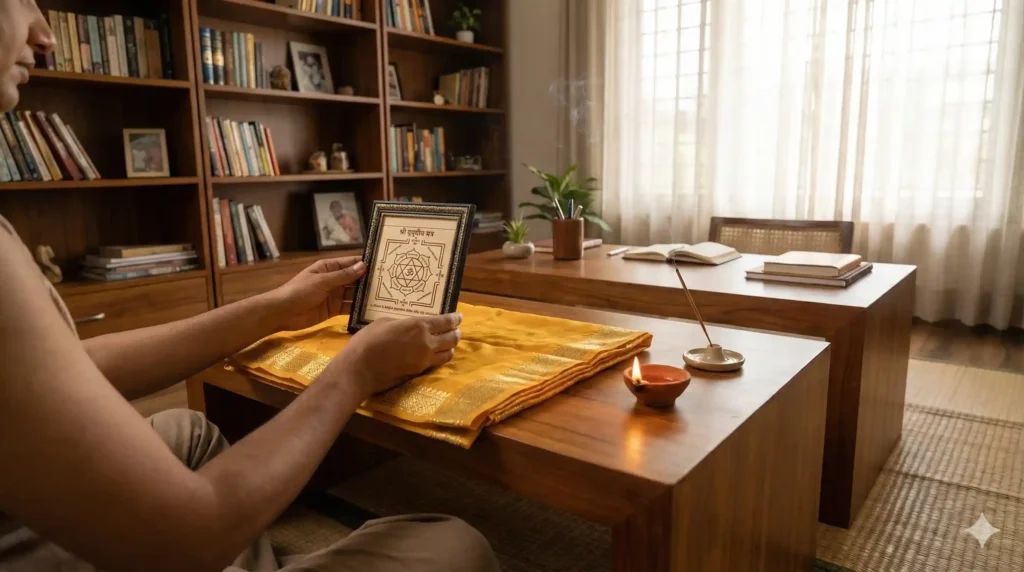
Step 1: Prepare the Space — 30 seconds
- Place the Hayagriva Yantra slightly raised on a clean cloth in your study or puja space.
- Keep a small diya or incense if available (optional, not mandatory).
- Sit facing the Yantra and let the body become still.
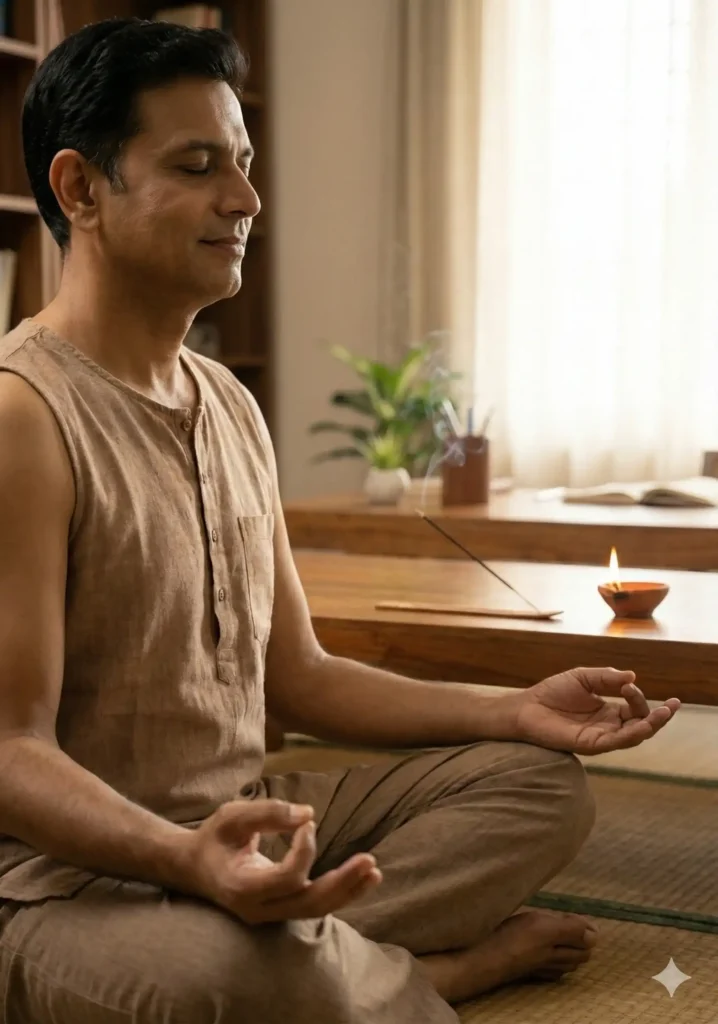
Step 2: Steady the Breath — 45 seconds
- Close the eyes gently.
- Take 5 slow breaths (inhale calmly, exhale a little longer).
- Feel the mind settle from “thinking mode” into “receiving mode.”
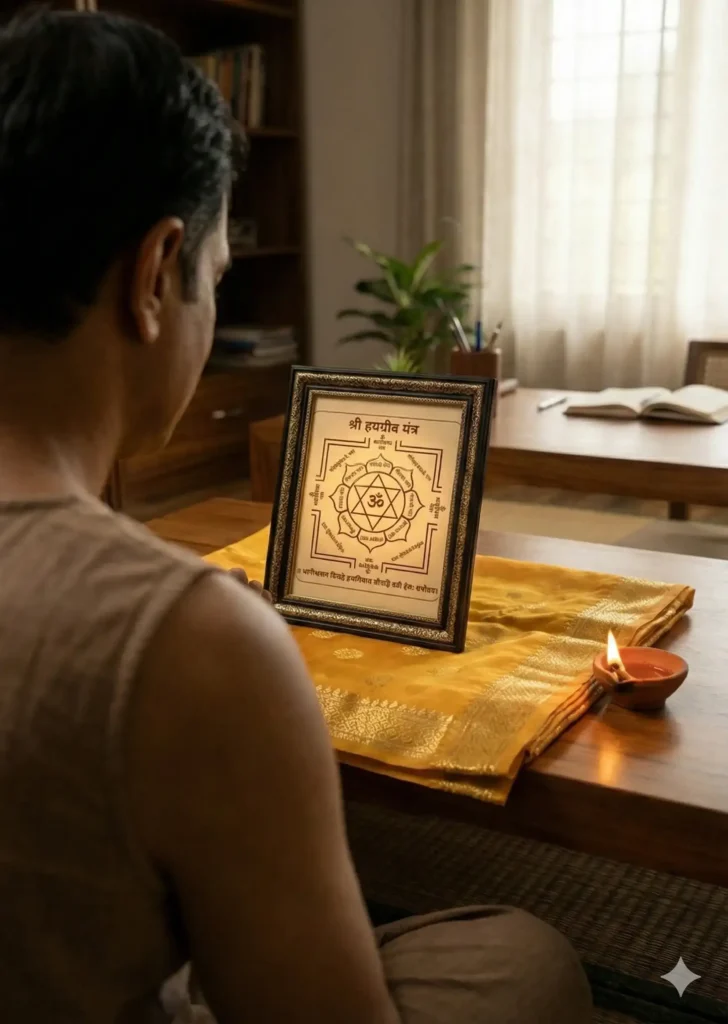
Step 3: Darshan of the Yantra — 45 seconds
- Open the eyes and look softly at the center/bindu of the Yantra.
- Do not stare—just a calm, loving gaze.
- Mentally bow and feel: “I am sitting in the presence of Sri Hayagriva Bhagawan.”
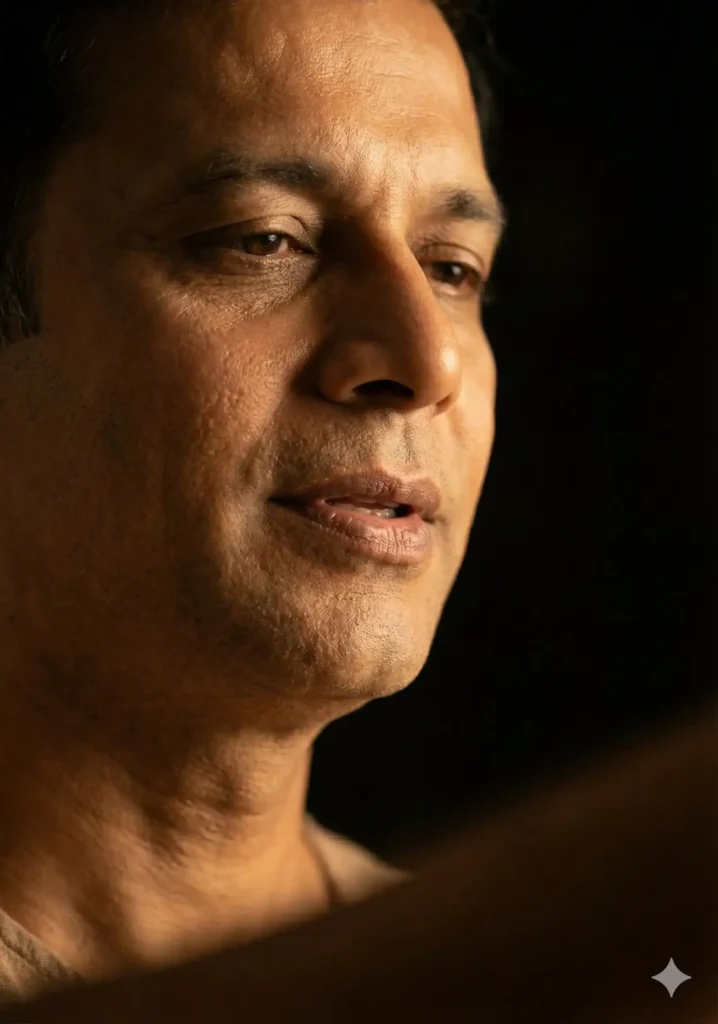
Step 4: Gnanam Mantra Chanting — 2 minutes
- Chant 11 times (or 21 times if you prefer):
- Gnanananda Mayam Devam Nirmala Spatika Kruthim
- Aadharam Sarva Vidyanam Hayagrivam Upasmahe
- Keep the voice soft and steady.
- Let the sound vibrate through the throat (speech) and forehead (clarity).
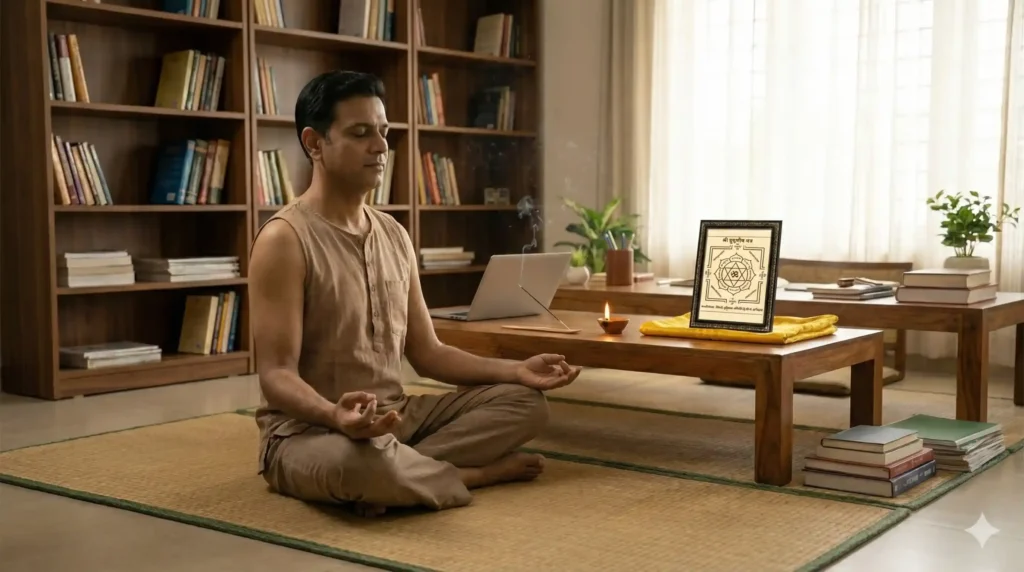
Step 5: Silent Absorption — 1 minute (In H5)
- Stop chanting and sit in silence.
- Feel the Yantra as a “field of calm intelligence.”
- If thoughts rise, return to one gentle feeling: clarity is entering me.
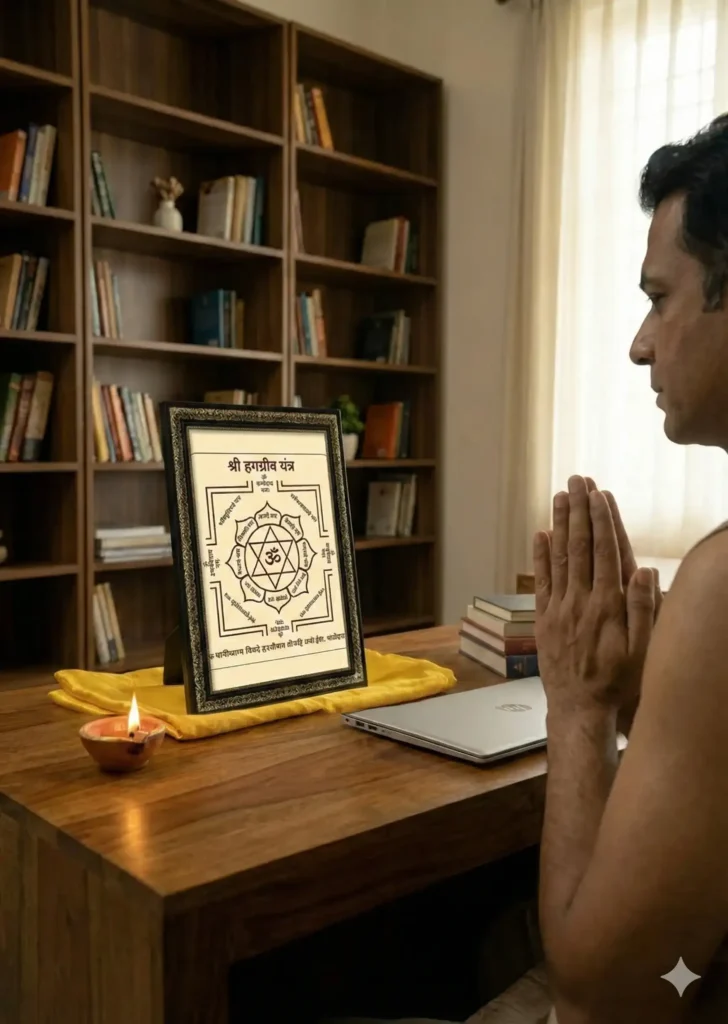
Step 6: Offer Your Learning & Begin — 45 seconds
- Fold hands and offer one closing prayer:
- “Sri Hayagriva Bhagawan, bless my mind with clarity, memory, and pure speech.”
- Touch your books/laptop lightly (or simply look at them).
- Start your study/work immediately, without delay, to seal the practice.
Concluding the Steps:
“May I remember what is worth remembering. May my words carry truth.”
YantraChants.com : A Legacy of the Ramanandi Bhakti and Tantra Tradition
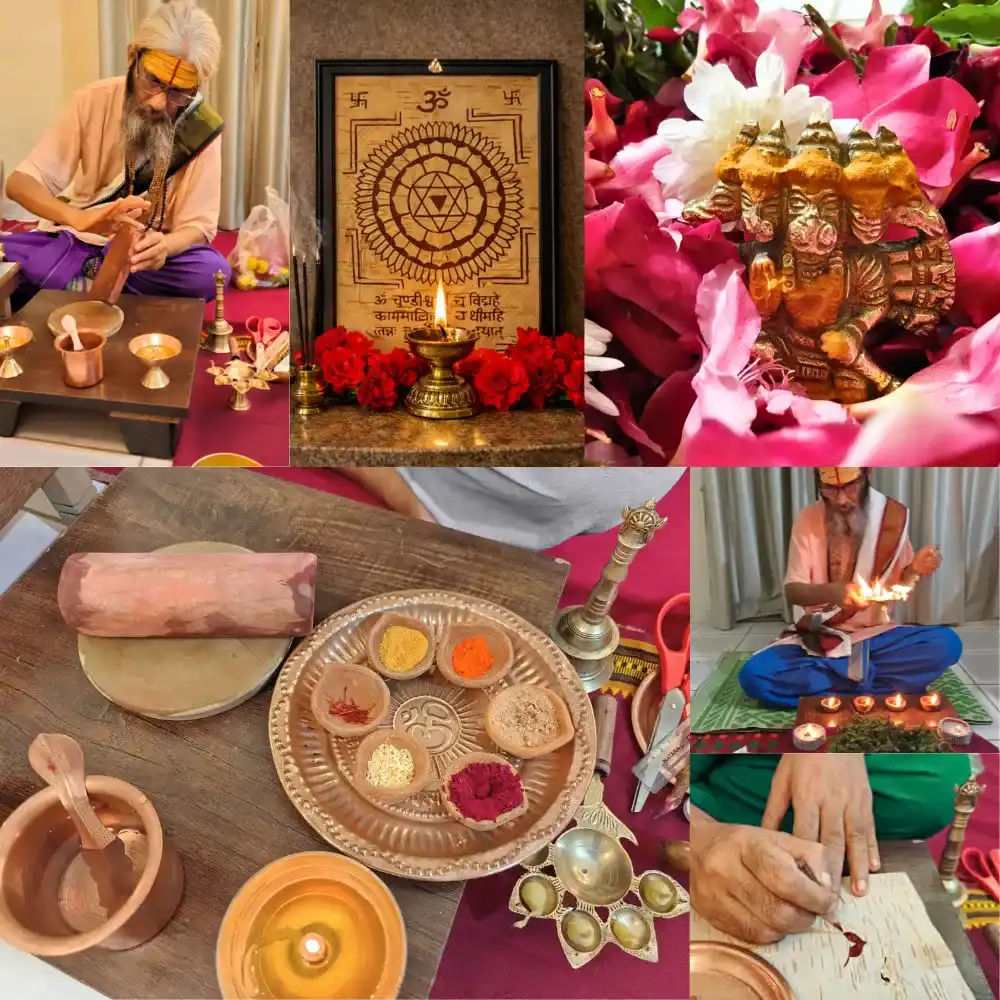
YantraChants.com Authenticity Standard
| Parameter | YantraChants.com | Typical market product |
|---|---|---|
| Material | Bhojapatra / pure metals | Laminated paper / mixed alloy |
| Ink | Natural (Ashtagandha / sandal/ Tulsi(Basil)/ Kesar/ Hanuman Sindoor and Energized Herbs) | Chemical printer ink |
| Energization | Guru-led mantra discipline | Often none |
| Guidance | WhatsApp support | No post-purchase support |
Conclusion
Begin with the sloka. When ready, anchor your space with an authentic Hayagriva Yantra.
True knowledge is not accumulation, it is remembering what is sacred and applying it with clarity. Begin with the beginner-safe sloka, build steadiness, and when you feel ready, anchor your space with an authentic Hayagriva Yantra supported by the right mala.
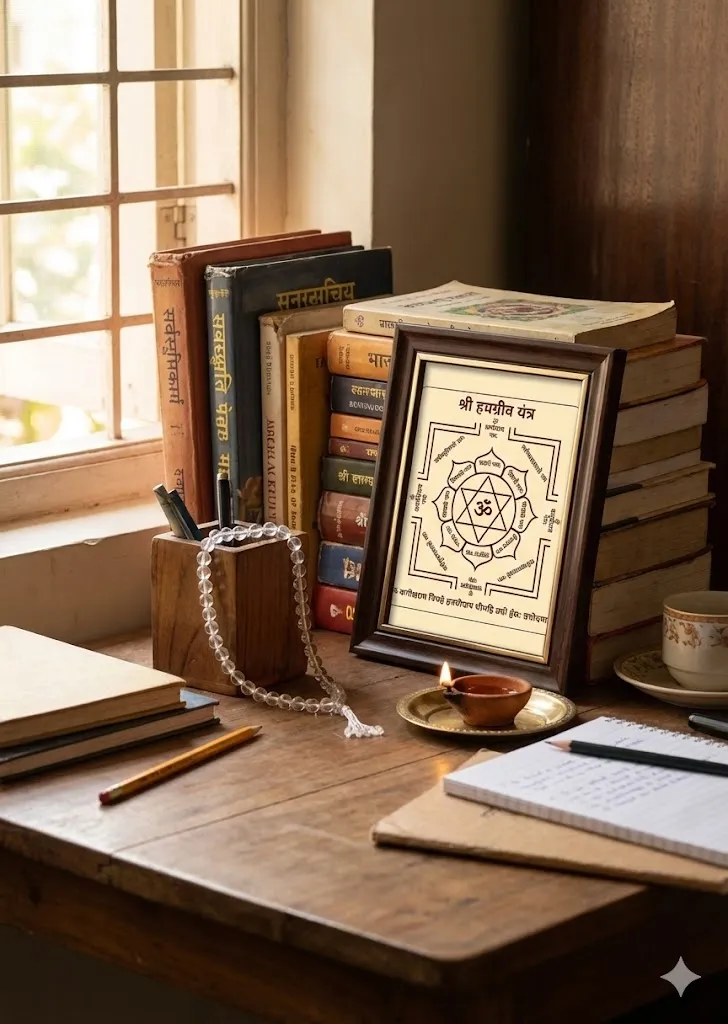
For guidance on choosing the right Hayagriva Yantra, Sphatika/Tulsi/Rudraksha/Chandan/Lotus beads mala, or a Japa Meru aligned to your learning and sadhana needs, message us on WhatsApp: +917417238880
“A Hayagriva practice is an inner environment upgrade — calm, clarity, steadiness, not a shortcut.”

Viraja Devi Dasi

Rohini Devi Dasi