
Awakening Curiosity & Questioning the Obvious
Before You Buy Any Yantra, Know This: The One Difference That Decides Whether It Works or Not
It is easy to chase results when one orders a Yantra: financial success, health recovery, protection, career growth. But those are secondary. The true litmus test of a living Yantra is the inner shift, the subtle transformation in your being. If the Yantra is simply a decorative talisman, you may see no deep change. But when a Yantra begins to work, you will feel its pulse in your heart, your peace, and your devotion.
Here are real symptoms (grace-signs) that a Yantra is alive and pouring its energy into your life, not just as a “product,” but as a divine presence. These are the signs of assimilation, not transaction:
Symptoms That a Yantra Works for you
An ever-growing calm, even amid external stress
You begin to find that, even when external pressures rise, your inner mind does not tighten. Anxiety diminishes. Sleep becomes restful. The restless monkey-mind quiets. As one article notes, when a Yantra’s energy is active, “you might notice improved sleep, reduced anxiety, and a general improvement in mood and vitality.”
Faith deepens; you see the Yantra as a Devata rather than an object
Your attitude shifts: no longer “I got a thing that gives me benefit” but “I have a divine companion.” You begin to sense that the Yantra hides within it a presence, a deity, a consciousness, a guardian. This is the shift from commodity to companion.

Repeated remembrance and longing for the deity
Even in mundane moments, while walking, cooking, commuting, your mind drifts toward the Yantra, the Devata, the mantra. You “remember” the Yantra deity, send silent salutations. The devotional mood swells naturally, without coercion.
Desire to regularly perform its prescribed Pooja / ritual
Where earlier you may have ignored the instructions or halfheartedly followed them, now you feel eager to offer incense, flowers, mantra recitation, water, lamps, as though it is a beloved guest demanding your care. The ritual ceases to feel like a burden and becomes an act of joy.
Sensitivity to energy, subtle vibrations, inner signals
You become more alert to subtle shifts, warmth, tingling, lightness, a hush in the mind, intuitive prompts. You begin to sense the shakti field that the Yantra emanates. Over time, you may even “feel” the Yantra before your eyes reach it, an intuitive recognition.
Inner peace becoming more important than external goals
You may have prayed for “this outcome,” but you realize: whether that happens or not is secondary. What matters more is that you grow in peace, equanimity, reverence, devotion. Even if your material prayer remains delayed, your soul is being nourished.

Harmonious change in behavior
Values, priorities Small shifts occur: you become more humble, more forgiving, less tense, more generous. You naturally align more with dharmic impulses. You may sense the Yantra working through you, guiding your choices, softening your heart.
Graceful timing, unexpected synchronisms
Doors begin to open unexpectedly, right people appear, “coincidences” that feel like nudges. You sense the Yantra’s grace guiding your life’s path, not forcing it.
| Sign of Activation | Psychological Experience |
| Inner Calm | Anxiety drops; sleep becomes noticeably more restful. |
| Natural Devotion | You see the Yantra as a living deity, not a metal plate. |
| Spontaneous Japa | Your mind drifts toward the mantra during mundane tasks. |
| Synchronicity | Doors open and timing aligns without forceful effort. |
| Behavioral Shift | You become naturally more humble, patient, and disciplined. |
Interpreting Your Inner Responses: Faith, Thoughts & Actions
Once you receive a Yantra, your mind becomes a mirror. Your faith system begins shaping your experience. If you still treat it as a “product,” you may watch it with suspicion or cold expectation. But if you shift to seeing it as Devata, your thoughts will soften, and your internal dialogue will affirm reverence: “I trust this presence. I surrender my doubts.”
You may experience doubts or impatience, that’s normal, but the difference is whether you let these doubts dominate or gently hold them aside in trust. A living Yantra encourages you to open your heart, not harden it.
Your actions then follow: you respect its space, clean it, place it with care, chant mantras, avoid negative influences in its vicinity. Over time, your behavior becomes more disciplined. You see that the Yantra’s energy is mirrored in your own inner harmony.
The difference lies in relationship. A product is a transaction; a divine instrument such as an “Energized and Activated” demands devotion, surrender, and co-operation.
Scriptural & Traditional References

- The Devi Bhagavatam states: “Archabhave Tatah Yantram”, a Yantra symbolizes divine power (i.e., it stands in for a deity)
- Many Agamas, Puranas, and traditional texts teach that a Yantra is more than geometry: when energized, it becomes a locus of Prāṇa, a living field.
- Tradition warns against regarding Yantras as commodities; a true Devata (activated) Yantra arises only through mantra, ritual, and the grace of a realized Guru. (Implicit in Tantric lineages)
Concluding Affirmation for a True Yantra Sadhaka
Do not chase mere effects. Instead, watch for the subtle transformation in your Antahkarana (Mind, Intellect and False Ego), experienced through the feeling of lightness of heart and release of stress and trauma.. Because when a Yantra truly works, you do not measure it by worldly gains, you sense it by the peace, devotion, lightness of heart, graceful alignment of your life. And that difference, between ownership and worship, is often the one difference that determines whether the Yantra works or remains inert.
Let this be your inner benchmark: every day, does your heart seem lighter? Does your longing for the Devata deepen? Do you feel more at home in your own being, regardless of external outcomes? If yes, that is the sign of a Yantra awakened.
Why a Yantra Is Not a Product: The Hidden Difference Between a Commercial Item and a Living Deity
A Yantra transcends the category of product because it is not a consumable utility, it is a conduit of higher energy. It bridges the seen and the unseen, converting static material into spiritual potential. Treating it like a mere commodity strips it of its sacred purpose.
The Yantra is Not a Consumable, But a Divine Conduit
A factory-made product operates within cause–effect, wear–tear, supply–demand mechanics. A Yantra, properly energized, works on the plane of vibration, prāṇa, and consciousness. It is a living matrix through which Shakti descends into matter, not an object to be used and worn out. In many tantric and Paurāṇika traditions, yantras are said to become the residence (āśrama) of a divine being once energized through mantra, tantra, and ritual, this is the principle of prāṇa-pratiṣṭhā.
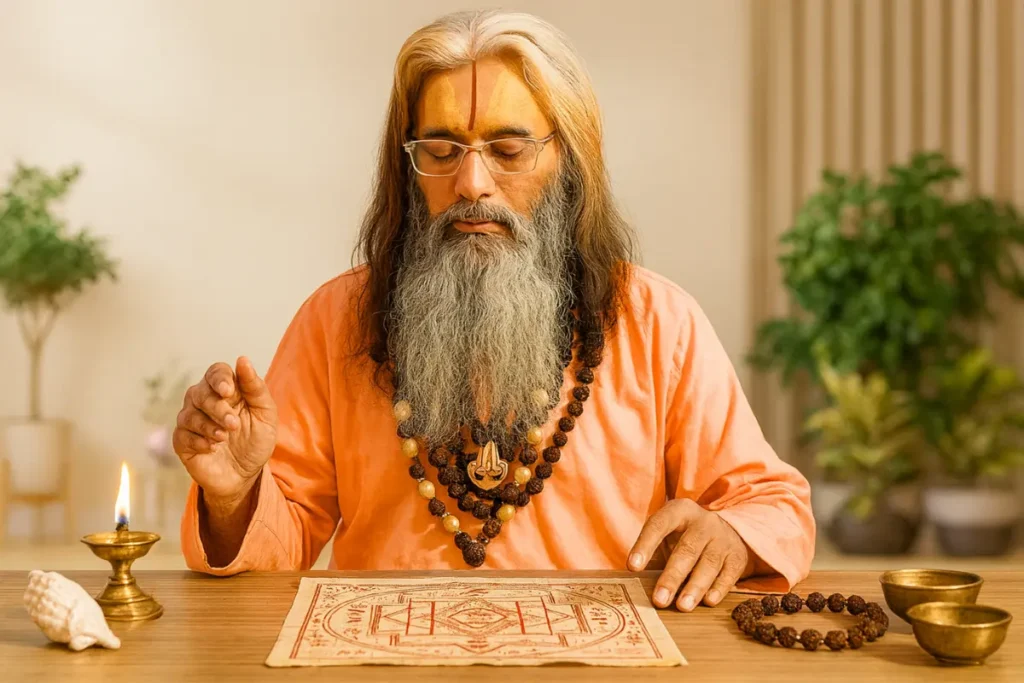
If a Yantra were merely a product, one could replicate it in bulk, shop for bargains, or treat it as a disposable tool. But in sacred lineages, the energized Yantra is offered only through grace, readiness, and transmission.
Money Is Not “Price”, It Is Energy Exchange
In spiritual economy, money ceases to remain mere currency when offered in the context of sacred instruments. It becomes an energy token or dakṣiṇā, not to purchase an object, but to invoke permission, alignment, and consent for Grace to descend.
This is why many guru traditions insist that giving (dakṣiṇā) is essential, without it, the circuit of energy does not complete. As in many Tantric treatises, dāna, dakṣiṇā, śraddhā, surrender are integral to opening spiritual doors.
In some textual commentaries on initiation or dakṣiṇā, it’s stated that without the offering and surrender, the flow of grace (prasāda) cannot begin. Traditions in Tantric literature strongly emphasizes that ritual offerings, surrender, and consent are prerequisites to receiving siddhi or transmission. For example, the Feuerstein, Tantra: Path of Ecstasy notes that Sri Guru’s Grace must be invited and that initiation depends on the disciple’s readiness through acts of surrender.
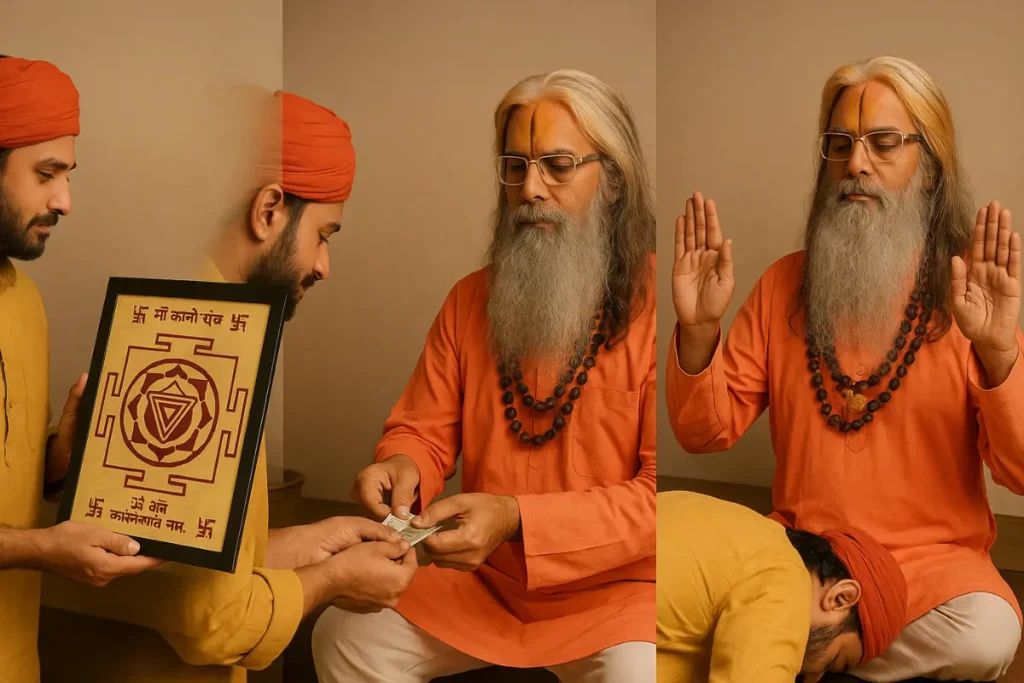
Thus, the “price” paid is not payment in the worldly sense but activation of a spiritual contract, your intention, your readiness, your energy become part of the consecration.
The “Enlivened Energized Yantra: is A Living Deity, Not a Market Product
A commercial product responds to utility; an energized Yantra responds to resonance. When Sri Guru consecrates a Yantra, it is not the Guru’s fabrication that gives power, it is the revelation, invocation, and alignment of a divine presence that already exists in subtle realms. The Guru acts as a bridge.
When energized, the Yantra ceases to be inert. It becomes a living entity, a silent companion, protector, inner guide. It speaks, not in words, but in shifts of thought, subtle prompts, alignment of circumstance, and deepening devotion.
Authentic lineages often assert that Yantras do not land in the laps of the unwilling. They come only when a disciple is ready, because the Deity, the lineage, and cosmic timing must all consent. The Śiva Purāṇa (Vidyeśvara Saṁhitā and other sections) includes passages saying that divine instruments attend only those who are destined, ordained, or receptive.
Hence, when a Guru-energized Yantra is offered to you, it is not a commercial transaction but a divine summons, a matter of deep Grace, an arrangement brought about by the Great Mother, because Transformation is due.
Grace, Not Chance
The reception of that sacred object is not an accident, nor a mere commodity. It is Grace materializing. The energy exchange you make is less about asking for benefit and more about opening your soul to descent. You are not buying, you are consenting. The awakened Yantra now holds you, not the other way around.
Can a Machine Make a Miracle? The Subtle Trap of Commercial Yantras
Two Meanings of “Yantra”: Device vs. Deity-Body
In Sanskrit, the word yantra legitimately carries two very different meanings. In everyday usage it can mean a device or mechanism, an apparatus designed to multiply force, standardize output, and reduce effort. In the sacred register of Tantra, Yantra (capitalized here to mark its sanctity) means a spiritual instrument, a geometric body through which a deity’s śakti is invoked, anchored, and allowed to act in a seeker’s life. Both meanings are philological sound, but their contexts are worlds apart.
Etymologically, yantra comes from the verbal root yam (to restrain, guide, channel) plus the instrumental suffix -tra (“that which protects or instruments a function”). A lathe, lever, or pulley is a yantra because it channels mechanical force. A consecrated Yantra is a Yantra because it channels subtle force, the living presence of a Devatā, into a stable pattern within the sādhaka’s mind, energy, and circumstances.
Machine Utility vs. Yantra Transformation: Output vs. Inner Reorganization
A machine in the material sense is built for efficiency and effectiveness. It repeats tasks, scales throughput, improves margins, and lives inside metrics: units per hour, defect rate, cost per part, mean time between failures. Its value is measured by how predictably it delivers a predefined output. When we buy a machine, we purchase utility.
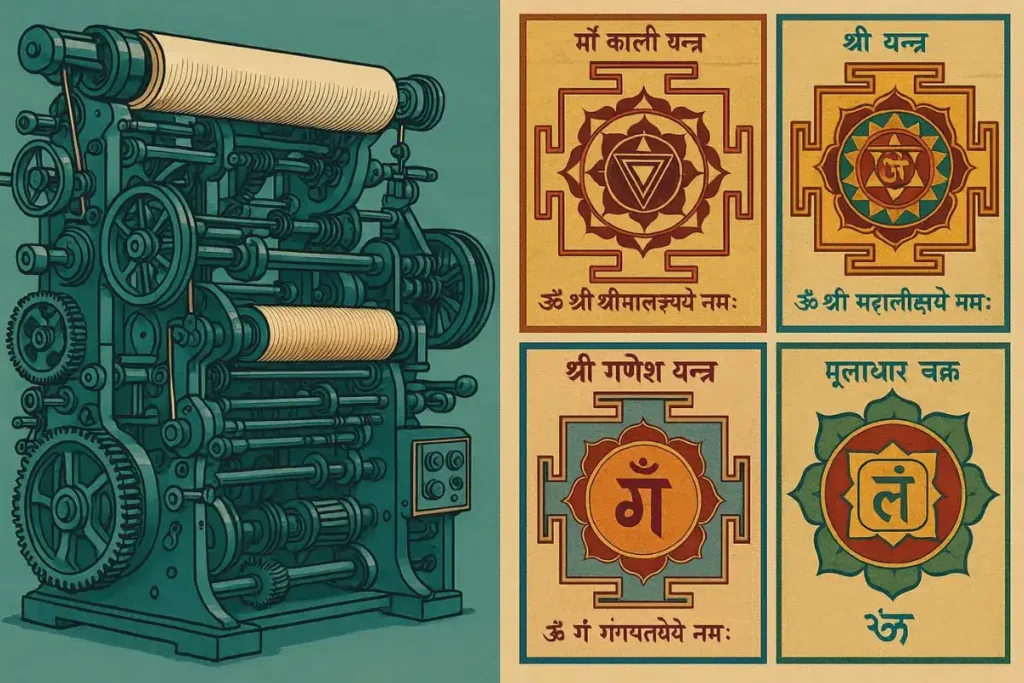
A Tantric Yantra, by contrast, begins where material utility ends. Yes, it can increase a seeker’s efficiency and effectiveness by calming scattered attention, sharpening focus, and aligning action to intention. But that is only the outermost benefit. The deeper function of a consecrated Yantra is trans-formative: it converts friction into flow, stagnation into movement, and confusion into clarity.
Properly invoked, it opens opportunities, softens hostile momentum, improves the subtle and causal layers of one’s being, and creates favorable conditions in which both material and spiritual progress become more natural. It amplifies one’s auric field, steadies mood, increases devotion, and, most importantly, acts as a tool for Grace to enter and reorganize a life from the inside out.
This is why the spiritual Yantra cannot be equated with the material machine. The machine’s promise is sameness: press the button, get the output. The consecrated Yantra’s promise is relationship: maintain remembrance, follow instruction, and allow the Deity’s current to reshape you. A machine improves what you do; a Yantra improves who you are, so that what you do arises from a clearer, kinder, more courageous self.
The Commercial Yantra Trap: Precision Without Presence, Product Without Prāṇa
Here lies the subtle trap of the commercial yantra. It borrows the sacred name but operates with the logic of a market machine: bulk manufacture, low input costs, high margins, rapid turnover, and glossy packaging. The makers often neither practice the sādhana they advertise nor understand the Devatā the geometry embodies. They know the printer, not the prāṇa; the metal gauge, not the mantra. The result is a plausible commodity, precise lines, shiny plates, even “Vastu-friendly” labels, yet no presence. It is a diagram, not a doorway.
Why does this happen? Because a living Yantra is not produced; it is consecrated. It is received through paramparā (authentic lineage), not merely purchased from a catalogue. The rite of prāṇa-pratiṣṭhā, the Guru’s deliberate invocation and stabilization of presence, is not a ceremonial flourish. It is the central event: the instant the geometry is inhabited. Without a living, higher-conscious agent, a Guru established in realization, to invoke, anchor, and hand over that current, the plate remains empty architecture. Beautiful, yes; spiritually operative, rarely.
Precision Prepares, Presence Activates: Why Consecration Matters More Than Craft
The machine mindset whispers that more precision means more power. In spirituality, precision prepares; it does not activate. The most exquisitely engraved copper, if never invoked, resembles a perfectly tuned instrument with no musician. Conversely, a hand-drawn Bhojpatra Yantra, rough at the edges but breathed into by a realized Guru, often acts with startling potency. What travels from Guru to disciple is not ink or alloy; it is the intentional current, the Guru’s śakti-saṅkramaṇa (शक्ति-सङ्क्रमण) carried by mantra, mudrā, and disciplined sankalpa. The geometry gives that current a home; the consecration gives it a voice.
This is also why a consecrated Yantra does something machines never attempt: it reshapes the operator. Over days and weeks, sincere devotees notice a quiet rearrangement of inner weather, less anxiety, steadier will, cleaner choices, timely help. Attention gathers, self-sabotage weakens, and the heart warms toward worship. The Yantra does not simply help you get things done; it helps you become someone who can carry higher outcomes without collapsing into fear, agitation, or pride. That shift in being is not manufactured; it is bestowed.
So, can a machine make a miracle? No, because a miracle, in this context, is not an output; it is an in-breaking of presence. Treating a non-invoked plate as a push-button solution is a setup for disappointment. We may measure “results” by shipping speed, discount price, and unboxing sheen, and forget the only question that matters: Was the presence installed? Was there a Guru-saṅkalpa behind this Yantra? Were we received into instructions, rhythm, and relationship, or just sold an object?
A simple diagnostic protects the seeker:
- Provenance: Is there a recognizable lineage (paramparā) accountable for the transmission?
- Process: Was prāṇa-pratiṣṭhā actually performed, or merely advertised in marketing copy?
- Participation: Were you invited into practice (mantra, offerings, conduct), or simply handed a plate?
Machines manufacture commodities; Gurus midwife presences. Choose accordingly. If what you want is a gadget, buy a gadget. If what you long for is Grace, receive a Yantra as a sacrament, not a product. In that reverent stance, the lines cease to be lines, the metal ceases to be metal, and what remains is a meeting, between your aspiration and a living, luminous power that answers.
Why Buying a Yantra Online Store Is Not the Same as Receiving One from a Living Lineage
A Guru paramparā is an authentic chain of transmission, teacher to disciple, where realized masters safeguard method, mantra, and meaning. In such a lineage, a living Master is not a seller or curator; they are a bridge. Through intention, mantra, and rite (prāṇa-pratiṣṭhā), the Master invites presence into sacred geometry, then entrusts it to a prepared seeker. What passes is not merchandise but current.
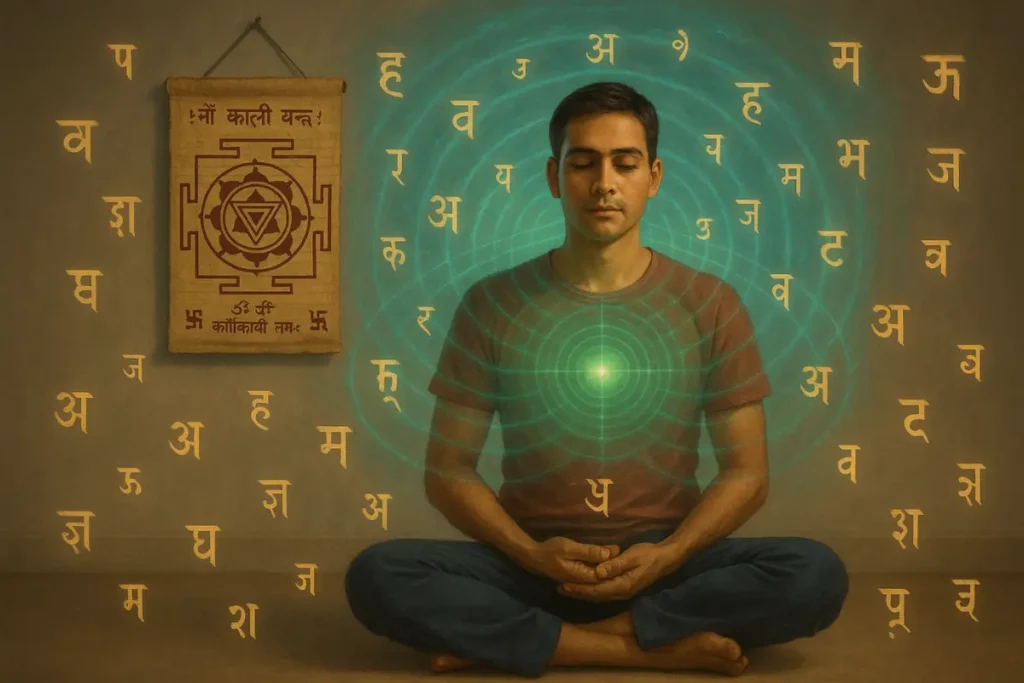
Buying a yantra online is typically a retail event: object selection, payment, shipping, unboxing. It satisfies the mind’s need for speed and novelty. Receiving a Yantra from lineage is a relational sacrament: inquiry, readiness, instruction, vow, and continued practice. The difference is not aesthetic; it is ontological. A plate remains a diagram until presence is installed. Lineage exists to ensure that installation is real, repeatable, and ethically held.
In paramparā, the offering you make is dakṣiṇā, not price. It activates a covenant: “I will care for this presence; guide me.” The Master, accountable to their teachers and to the deity, sets placement, mantra count, purity disciplines, and after-care. You are received into instructions, not merely handed an object. Over time, you notice the classic signs: remembrance of the deity, eagerness for worship, quieter nerves, clearer choices, timely openings, a subtler joy that does not depend on outer outcomes.
Commercial pipelines optimize for scale; lineages optimize for suitability. A living Master will sometimes refuse to give a Yantra if the timing, motive, or environment is misaligned. This refusal is compassion, not exclusivity. It protects both seeker and sanctity. By contrast, a cart page cannot discern readiness; it ships to whoever clicks “buy.” And crucially, lineage transmits ethos: humility, patience, and service that help the energy stay.
Finally, lineage confers accountability. If turbulence arises, you have counsel. If progress plateaus, you receive adjustments. If grace intensifies, you are taught how to carry it. The online storefront ends at delivery; the lineage begins there. That is why the same geometry can be two different realities: a market product or a living presence. What you choose determines whether you own a plate, or are owned by a blessing.
Commercial Yantras vs Guru-Energized Yantras: One Is Decoration, the Other Is Destiny
Commerce belongs to the material marketplace. Its metric is margin, speed, and scale; its motive is transaction. By itself, commerce has no spiritual value because it does not transmit presence, only objects. A “commercial yantra” therefore mimics sanctity without carrying it. It can be neat, shiny, symmetrical, and empty. The absence of genuine intent means the plate remains a diagram, not a doorway.
A Guru-energized Yantra is the opposite reality. In authentic paramparā, the geometry is paired with a living current through prāṇa-pratiṣṭhā and the Master’s saṅkalpa. The seeker does not merely purchase; they are received. Their birth date, present obstacles, and sincere goals are weighed, not for prediction alone but for right prescription: which Yantra, what mantra count, how to place, when to worship, what codes of purity to observe, and which tendencies to soften. The process is subtle and non-invasive: the lineage allows a gentle, non-coercive connection between the buyer’s intent and the paramparā, letting its strength work through the Yantra while honoring free will.
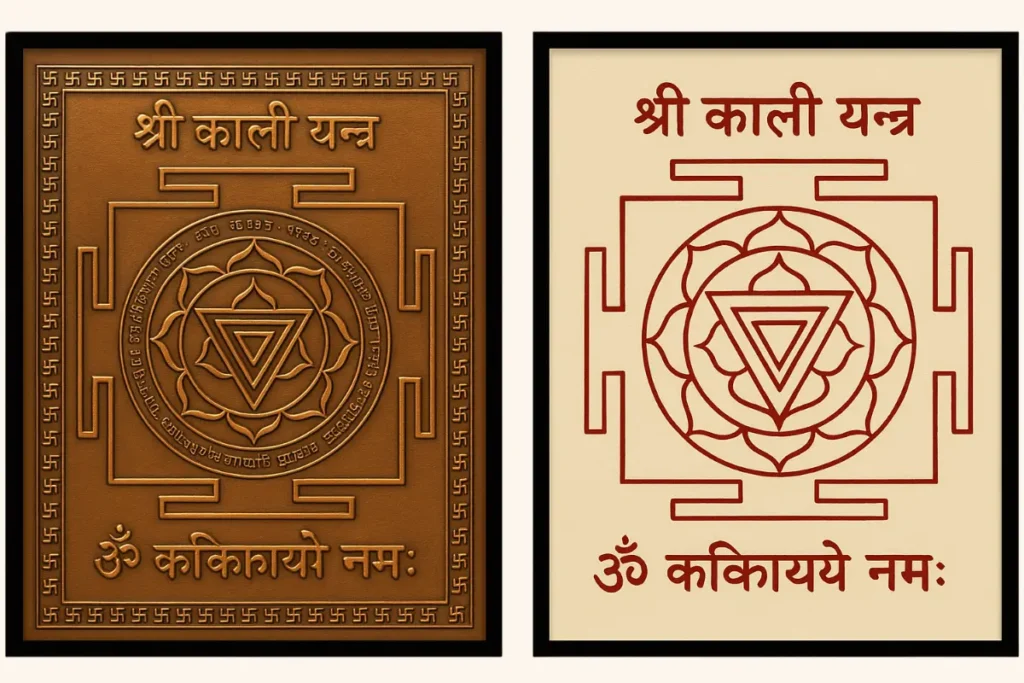
Results emerge as relationship stabilizes. First, the nervous system calms; thoughts scatter less. Then priorities reorganize; better choices become easier. Opportunities align without strain. What looks like “luck” is often guidance, lineage strength manifesting through the consecrated form. Even when the devotee cannot name why they are ready, Nature has timed the meeting: the Yantra arrives like a letter embossed with destiny, and the reader within begins to read.
A market yantra, by contrast, invites admiration but not transformation. It may decorate an altar while the heart remains unchanged. Comparing the two is like comparing glass to diamond. Both glint under light, yet only one conducts flame with intensity and clarity. The Guru-energized Yantra is that diamond: hard-won, pressure-forged, cut by discipline, and luminous with presence. The commercial plate is merely glass, useful perhaps as reminder, but bereft of the fire that cuts karma.
| Feature | Commercial / Market Yantra | Guru-Energized (YantraChants) |
| Creation | Mass-produced by machines/printers. | Hand-drawn on sacred Bhojpatra. |
| Presence | Empty architecture; a geometric diagram. | Prāṇa-Pratiṣṭhā (Installed Presence). |
| Activation | No specific intent or lineage power. | Conjoined to Guru-Saṅkalpa & Mantra. |
| Relationship | A one-time retail transaction. | A relational sacrament & lifelong guidance. |
| Outcome | Decoration / Aesthetic appeal. | Inner transformation & Destiny alignment. |
Bhojpatra Yantras make this distinction vivid. Written by hand, aligned to mantra, and sealed by a realized Guru’s intent, they behave like encoded missives. Each akṣara is a seed of instruction; each bindu a landing pad for grace. Because the medium is organic, it drinks the saṅkalpa and carries it into the subtle and causal sheaths of the recipient. In difficult passages of life, such a Yantra can feel like a small, steady sun: warming willpower, brightening discernment, and burning off residues that cloud judgment and hope.
Therefore: one is decoration; the other is destiny. If you want symmetry on a wall, glass will do. If you want a companion in becoming, receive the diamond of a Guru-energized Yantra, chosen with care, given with responsibility, and tended with devotion. In that covenant, what you hold is not an article; it is an appointment with the future you were born to meet.
From Commodity to Consciousness: The Forgotten Role of the Guru in Yantra Activation
A Yantra is not a trinket to be priced, packed, and posted; it is a vessel of geometric consciousness. Its lines, angles, petals, and bindu are not merely design, they are coordinates through which a specific current of awareness can be invoked and stabilized. But geometry alone is a silent instrument. Activation, the moment when presence inhabits form, requires a Guru, a living master whose realized consciousness can awaken the latent charge in the pattern and direct it toward the seeker’s good.
Why is the Guru indispensable? Because transmission is not information; it is participation. A Guru does not “add power” like a technician boosting voltage; the Guru reveals what the Yantra is already capable of carrying, then conjoins it to the sādhaka’s life through mantra, sankalpa (sacred intention), and prāṇa-pratiṣṭhā. In that rite, the Yantra becomes a bridge: on one side, the devotee’s aspiration; on the other, the deity’s living intelligence; and standing between them, the Guru as consecrator and custodian of the current.

In our time, many people are unaware of this role. Spiritual illiteracy and fake marketing have flooded the field with glossy plates, celebrity endorsements, countdown timers, and “limited stock” banners. The very instruments meant to be gateways are repackaged as gadgets, evaluated by discounts and unboxing feels. Such commodification obscures the truth: without right invocation and guidance, a plate is a picture, not a presence.
Here the Guru’s function is not only mystical; it is pastoral. A true master hand-holds: educating the seeker on why, when, and how to worship; prescribing the right Yantra for the right temperament and timing; and setting sane guardrails around purity, placement, and practice. The Guru’s ethic is seva, service, not sale. Pricing becomes an energy exchange, not a profit center. A respected Guru, standing beyond gain and loss, uses the Yantra as a genuine tool to engage with many shades of consciousness in the community, lifting them toward clarity.
This vision aligns with Sri Ādi Śaṅkara’s Advaita: one consciousness appearing as many. The Guru recognizes the same Self in the devotee and in the deity, and deploys the Yantra to help the devotee stabilize in that light. Commerce fragments; Advaita integrates. Where the marketplace peddles similarity of appearance, “this looks like the real thing”, the Guru insists on identity of essence: “Let this become the real thing in you.”
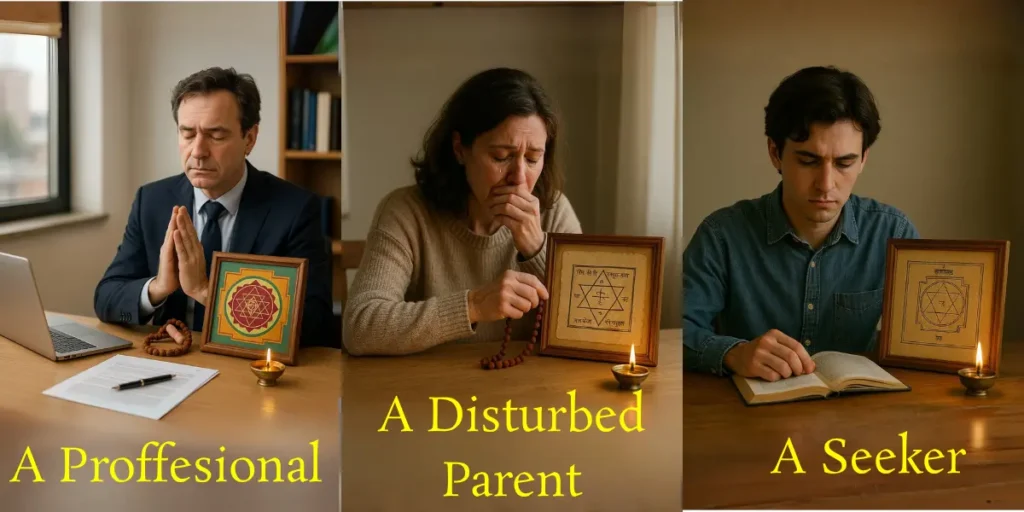
Consider three viable situations:
- The anxious executive. A high-performing manager buys a market yantra for career luck. It decorates his desk but leaves his nights restless. Under a Guru’s guidance, he receives a consecrated Yantra, a simple japa count, and a weekly offering rhythm. Within weeks, he reports steadier sleep, kinder negotiations, and fewer impulsive emails. The outer wins follow the inner regulation.
- The grieving parent. A mother drowning in sorrow purchases multiple plates online, hoping one will “work.” Nothing sticks. A lineage teacher instead gives her a hand-drawn Bhojpatra Yantra with a sankalpa for emotional healing, asks for a lamp at dawn, and one mantra bead per tear. The practice alchemizes grief into prayer; her home feels warmer; relationships soften.
- The conflicted seeker. A student oscillates between extreme practices and burnout. The Guru prescribes a protective Yantra, minimal rules, and a monthly check-in. The field around the student stabilizes; risky company falls away; focused study resumes. No drama, just right rhythm.
Though the two plates may look indistinguishable, their ontologies diverge. The commercial item is matter arranged to resemble meaning. The Guru-energized Yantra is meaning arranging matter. One is a static diagram; the other is a highly amplified battery of consciousness. One flatters the altar; the other feeds the soul.
To treat Yantras as commodities is to mistake symbol for sacrament. To receive a Yantra through a living lineage is to accept companionship from the very light that Bhagavatpādaḥ Sri Ādi Śaṅkara extolled, the light in which giver, receiver, Guru, deity, and devotee are one awareness. In that clarity, the Guru’s Yantra does not sell you promise; it shares presence, and presence is what transforms.
Bhojpatra Yantras at YantraChants.com: Sādhaka-Made, Lineage-Energized
At YantraChants, we don’t “sell” Bhojpatra Yantras, we serve them. Our team are sādhakas first and artisans second, working within a living sampradāya where consecration, mantra, and guidance flow from Guru to disciple. Bhojpatra, the Himalayan birch bark revered for purity and for holding subtle vibration, becomes a receptive body for Deity presence when inscribed with mantra and sacred geometry under the right saṅkalpa. Our public guidance explains Bhojpatra’s ability to retain charge and catalyze transformation; this is the basis of our craft.
Devata Yantras (Deity-Centric Instruments)
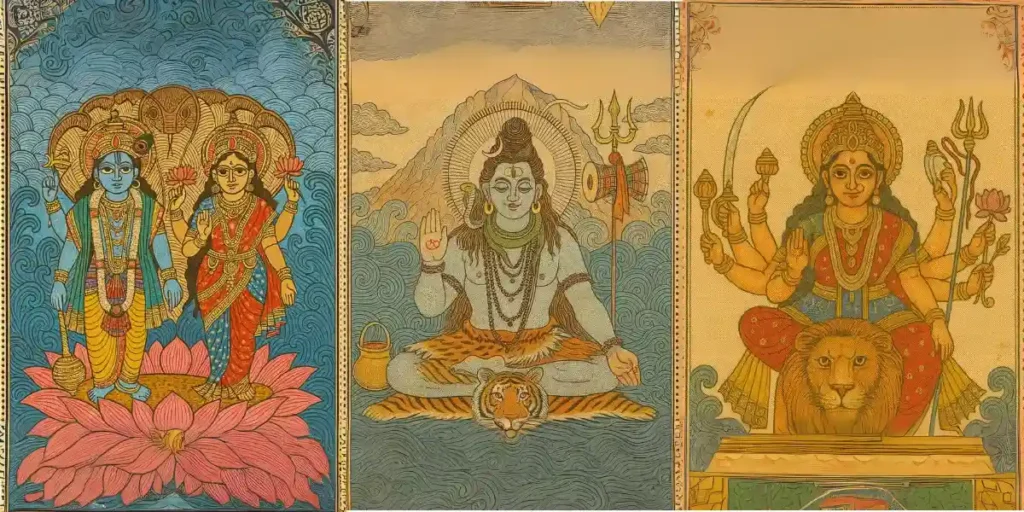
Devata Yantras at YantraChants (yantrachants.com) are hand-drawn or hand-activated on Bhojpatra and then enlivened through prāṇa-pratiṣṭhā under the Guru’s intent. Core streams include Sri Mahāmṛtyuñjaya (Śiva) for healing and fearlessness, Durgā/Bagalāmukhī for protection and stambhana, Sri Lakṣmī-Nārāyaṇa for prosperity aligned to dharma, and Sri Gaṇeśa/Skanda for obstacle-clearing and courageous progress. While seekers may begin with material goals, the deeper fruits are inner quiet, devotional remembrance, and timely openings, what we often describe as grace aligning circumstance. Our “how-to” articles encourage simple daily worship so these fruits stabilize in the home.
| Category | Primary Logic | Ideal For |
| Devata Yantras | Deity-Centric (Shiva, Durga, Lakshmi) | Deep protection, healing, and Dharma. |
| Number Yantras | Sacred Arithmetic / Magic Squares | Focus, debt resolution, and study. |
| Combination Sets | Blended Devata + Numeric logics | Complex life situations & composite goals. |
Number Yantras (Saṅkhyā-Encoded Fields)
Number Yantras work by sacred arithmetic, digit patterns and magic-square logic that focus attention, steady the nervous system, and stabilize intent. When written on Bhojpatra with bīja mantras, they become potent focusing devices for students, entrepreneurs, healers, and householders who need steady will and clean decision-making. In our sampradāya these grids are configured to a seeker’s aim, education lift, debt resolution, or ethical wealth creation, and then sealed with lineage mantra, making them more than numerological curiosities; they become practice-ready instruments the family can actually maintain.
General Purpose: Driven Yantras & Combination Sets
Some journeys call for composite support. Our general-purpose and combination Yantras blend Devata and Number logics, for example, a Mahāmṛtyuñjaya on Bhojpatra paired with a focus-stability grid for recovery and resilience, or a Śrī-Lakṣmī Yantra coupled with a clean-prosperity numeric so gains arrive with ethical clarity. Recommendations follow a brief consult that reviews birth data, current challenges, and the household’s worship capacity. Every consecration is accompanied by simple instructions: placement, lamp offering, japa count, and gentle do’s-and-don’ts that keep the field steady.
How Bhojpatra Yantras at YantraChants (yantrachants.com) Grow a Sincere Seeker
Because Bhojpatra “drinks” saṅkalpa and holds it close to the subtle body, seekers often report swift inner changes: quieter anxiety, cleaner priorities, warmer devotion, and kinder speech. Over weeks, the outer life follows, fewer frictions, better timing, improved negotiations, and clearer protection boundaries. Not every request is about a windfall; much of the Grace is becoming the person who can hold abundance without agitation.
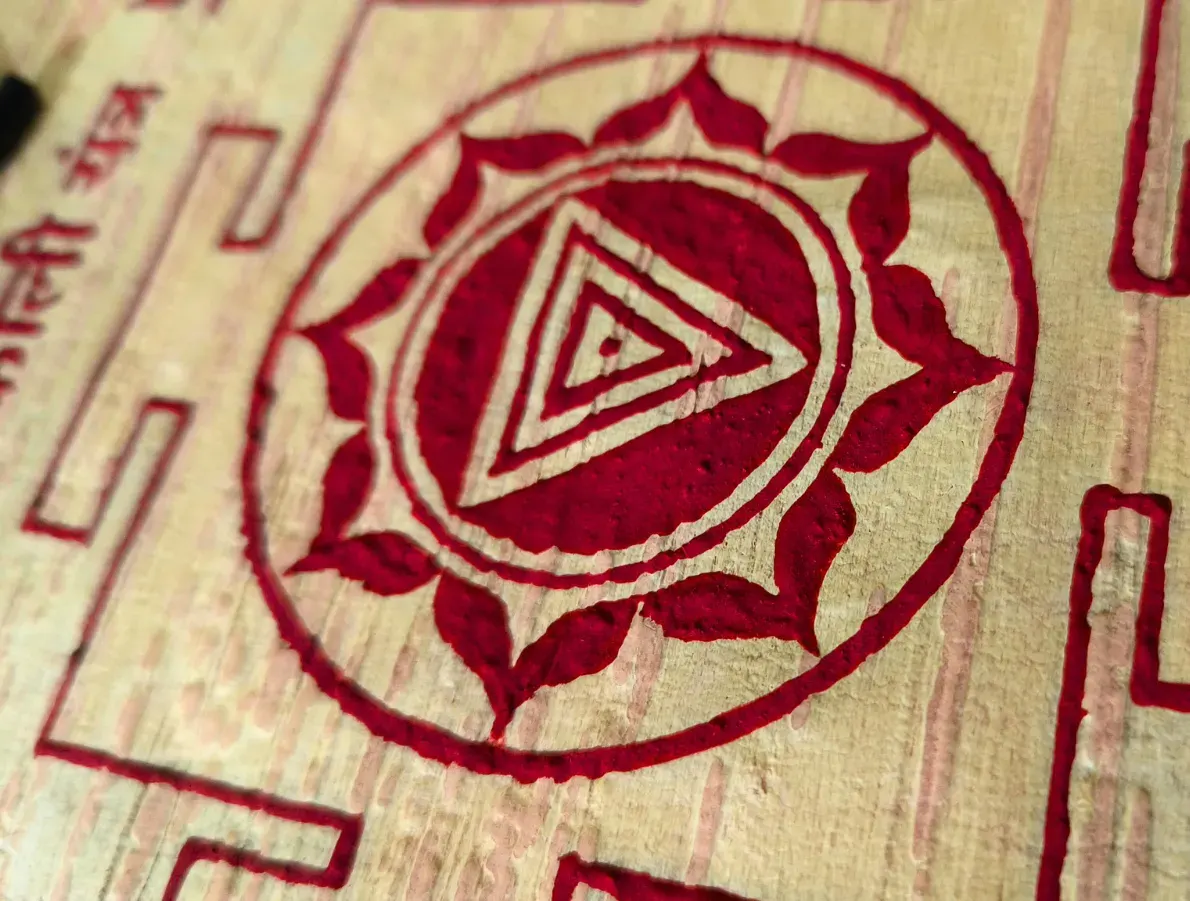
For solution-seekers under pressure, a hand-energized Bhojpatra Yantra behaves like a small, steady sun, warming willpower, brightening discernment, and protecting the gains of sincere effort. Our “About” page openly states the Guru-centric method behind this work: the Devatā is invoked to dwell in the geometry by the living master, and the sādhaka is taught how to serve that presence daily.
FAQs (Frequently Asked Questions About Yantras)
Q1. What is a Yantra, really, art, object, or living presence?
A consecrated Yantra is a vessel of geometric consciousness. Once activated through Guru-saṅkalpa and mantra, it functions as a living presence that reorganizes thought, mood, and circumstance, not mere décor.
Q2. How do I know if my Yantra is “working”?
Look for inner shifts first: calmer nerves, steadier sleep, natural remembrance of the Devatā, eagerness to do simple pūjā, kinder choices, and graceful timings in life events. These are assimilation signs, not placebo.
Q3. Are material results (money, job, health) the main proof?
They can follow, but the truest proof is growing peace, devotion, and clarity. In lineage work, inner alignment precedes and sustains outer results.
Q4. Why isn’t a Yantra just another product I can buy online?
A product delivers utility; a consecrated Yantra transmits presence. Without prāṇa-pratiṣṭhā and guidance, a plate remains a diagram, not a doorway.
Q5. What is prāṇa-pratiṣṭhā?
It’s the rite by which a realized Guru invites and stabilizes divine presence in a form (mūrti or Yantra). This “installation” turns geometry into a living field of Śakti.
Q6. Why is a living Guru or paramparā so important?
Transmission is relational, not mechanical. The Guru assesses readiness, selects the right Yantra, performs consecration, and gives ongoing instruction so the field stays steady.
Q7. What does “dakṣiṇā” mean, isn’t that just a price?
No. Dakṣiṇā is energy offered into lineage to complete the spiritual circuit. It’s consent and commitment, not commerce.
Q8. Can a machine-made Yantra work?
Only if it has been properly invoked and handed over by a realized being. Precision engraving helps, but activation and guidance are decisive.
Q9. What is a Bhojpatra Yantra and why use birch bark?
Bhojpatra (Himalayan birch bark) is a traditional organic medium that “drinks” saṅkalpa and holds mantra charge close to the subtle body, ideal for hand-inscribed, Guru-energized Yantras.
Q10. What are Devatā Yantras?
They are deity-centric instruments (e.g., Mahāmṛtyuñjaya, Lakṣmī-Nārāyaṇa, Bagalāmukhī) consecrated to invite that Devatā’s intelligence into the seeker’s life for protection, healing, or prosperity aligned with dharma.
Q11. What are Number Yantras?
Digit grids/magic squares configured with mantra to stabilize focus, willpower, and decision-making. On Bhojpatra and under lineage saṅkalpa, they become practical, maintainable aids for householders.
Q12. Can I combine Yantras?
Yes, lineage often prescribes combinations (e.g., Mahāmṛtyuñjaya + focus grid) tailored to your goal and capacity. Suitability, not quantity, governs.
Q13. How are recommendations personalized?
Birth data, current obstacles, goals, and daily bandwidth are considered. You receive specific placement, lamp/japa counts, and gentle do’s-and-don’ts.
Q14. How long before I notice changes?
Many feel inner ease within days or weeks; outward alignments follow personal karma and practice steadiness. Think “relationship” over “instant output.”
Q15. What daily practice should I do?
Keep it simple and consistent: clean space, lamp/flower/water, brief mantra japa, and a respectful mindset. Regularity > intensity.
Q16. Where should I place a Yantra?
A clean, quiet, elevated space facing an auspicious direction (often east or north). Avoid clutter, negativity, and casual handling.
Q17. Can different faiths use Yantras?
Yes, Yantras operate at the level of subtle mechanics and devotion, not sectarian identity. Respect, sincerity, and instructions matter most.
Q18. What if I feel nothing at first?
Stay steady. Sensitivity grows with remembrance and practice. Share concerns with your guide; small adjustments often unlock flow.
Q19.Are there side effects or risks?
With proper guidance, Yantras harmonize rather than agitate. Over-collection, fear-based use, or neglecting instructions can dull benefits; the remedy is simplification and counsel.
Q20. How do I cleanse or re-energize a Yantra?
Gentle wiping, fresh flowers, lamp, water offering, and mantra as taught. On special days, request lineage re-energization if needed.
Q21. What’s wrong with “commercial yantras”?
They mimic form without installed presence, often prioritized for margin and scale. Shiny plates aren’t a substitute for consecration and stewardship.
Q22. Can a consecrated Yantra be gifted?
Prefer receiving through consult, but gifting is possible if the recipient is willing to maintain basic practice. Include instructions and intention, not just the object.
Q23. What if my life is chaotic, will a Yantra still help?
Yes, properly chosen Yantras stabilize inner weather, which lowers chaos. They support better choices and kinder timing amid turbulence.
Q24. How do Bhojpatra Yantras aid “solution seekers”?
By carrying Guru-saṅkalpa directly into the subtle/causal layers: they brighten discernment, strengthen will, soften hostile momentum, and create conditions where solutions stick.
Q25. How do I avoid overwhelm when starting?
Begin with one lineage-recommended Yantra, a short daily rhythm, and monthly check-ins. Depth, not variety, builds durable grace.
A Concluding Word about Yantras at yantrachants.com
YantraChants exists to transmit, not trend. We publish practical guidance, train householders gently, and recommend only what a family can maintain, so devotion remains joyful and sustainable. Where the market offers plates, we offer presence. And presence, welcomed through Bhojpatra and tended with practice, becomes the quiet companion that changes the storyline from within.

Viraja Devi Dasi

Damodar Das Ji Maharaj