
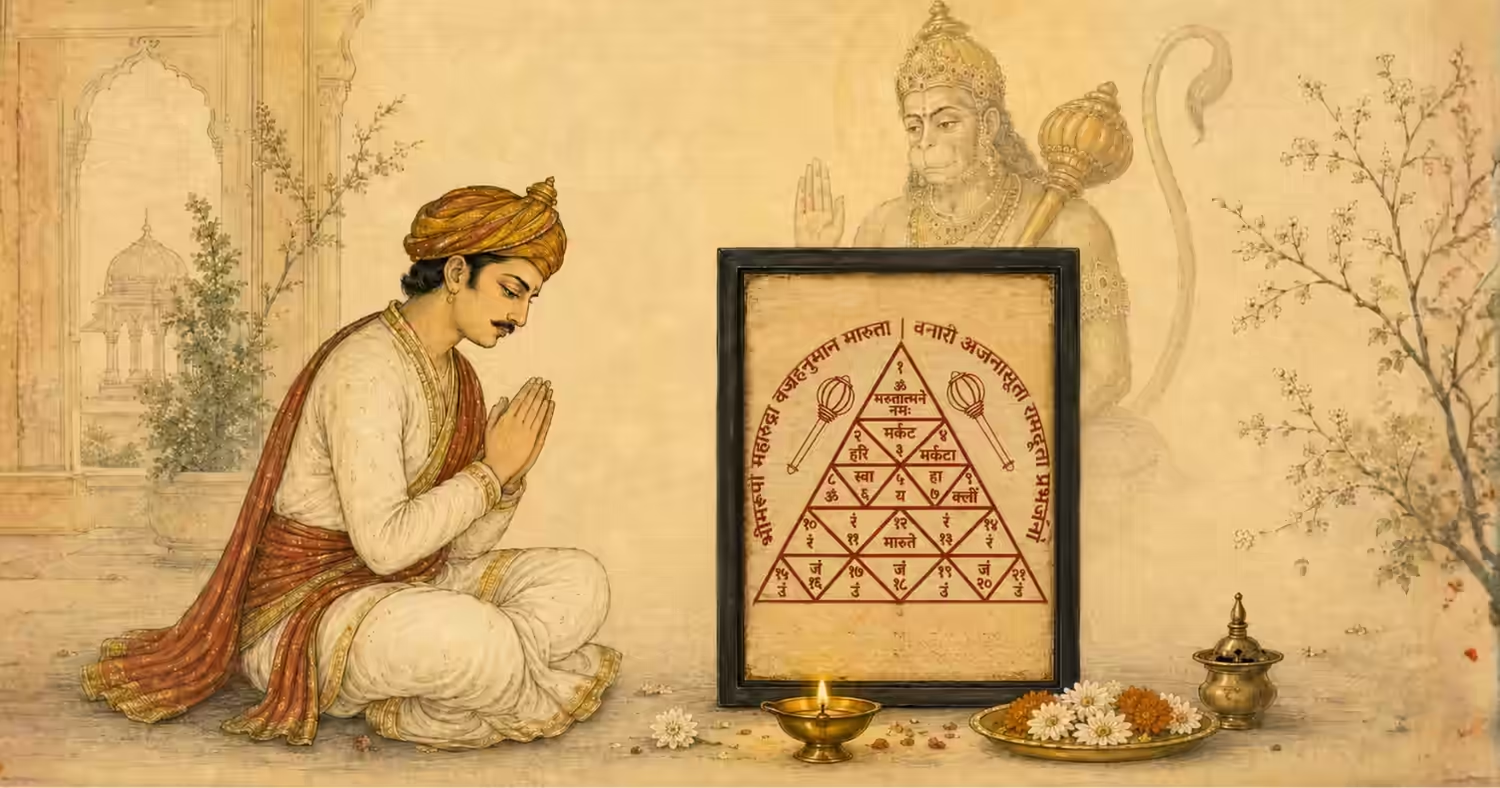
Sri Maruti Yantra: What Makes It Special
There are many types of Hanuman Yantras, each having its core purpose and hallmark. The Maruti Yantra blends the Vedic and Tantrik representations of Sri Hanumanji Maharaj. Therefore, while its mode of worship is Sattvik, this yantra also combat dark obstacles like evil eye and negative vibrations. This is one of its many benefits.
Shri Maruti Yantra is a number based Yantra with 21 inner triangles encased within a huge triangular wall, making it a total of 22 triangles. Before we get into the details of the structure, let us explore why it is worshiped.
Seekers comparing Hanuman Yantras may also study Panchamukhi Hanuman benefits for protection, courage, obstacle removal, karmic support, and safe Hanuman worship.
Top 4 Benefits of the Energized Shri Maruti Yantra
We provide the Sri Maruti Yantra on the Bhojpatra medium because it retains spiritual power and has pure Himalayan origin. Since yantras are Tantrik symbols, its power is activated through the medium of the guru during the energization process.
Through Bhagawat and Guru Shakti, the Shri Maruti Yantra brings an ocean of strength for the receiver, when worshipped with reverence in line with the instructions. Following are some benefits of worshipping an energized Bhojpatra Maruti Yantra.
1. Accidents and Vehicle Damage Prevention
Accidents are not random. They are gross manifestations of a turbulent mind.
It is not always that only unconscious people (those listening to music, talking over the phone, drunk while driving, etc) encounter accidents.
Sometimes people who appear sober may also encounter accidents because of a preoccupied mind. Our thoughts remind us of events that either excite or agitate our mind. This causes lapse in concentration and increases the risk of accident.
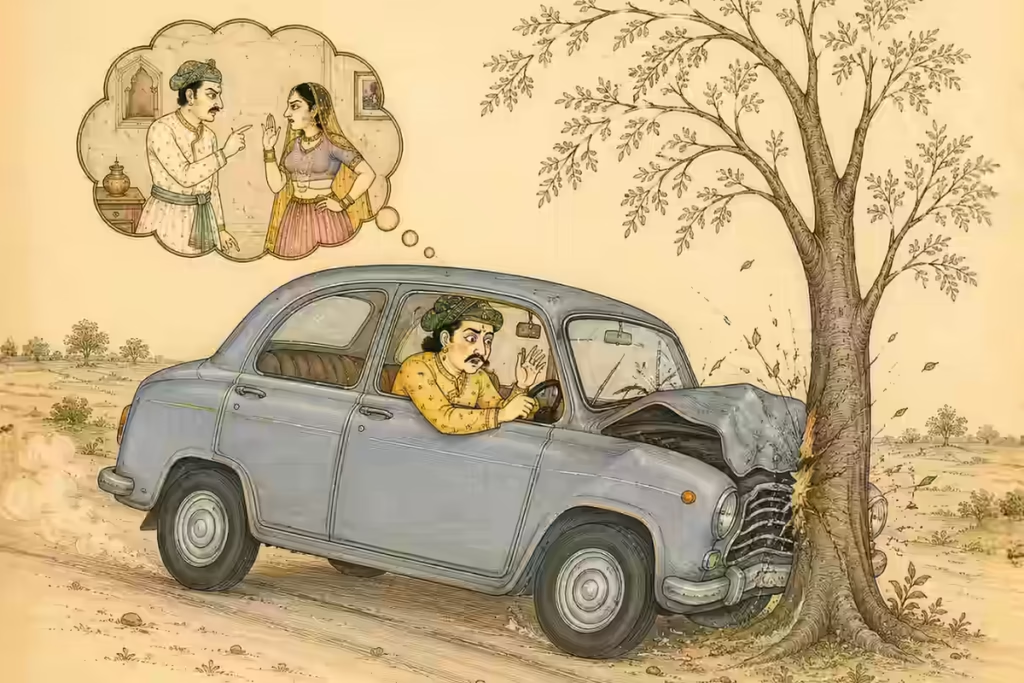
Beyond this, a 3rd category of people are subjected to accidents. They are very much aware and cautious while driving. Yet, tragedies may occur due to Karmic consequences that are unavoidable and feel pre-destined.
Worshipping the Maruti Yantra is useful for the 2nd and 3rd category individuals. People in the first category must first apply their free will and change their habits by consciously avoiding phone calls, musical absorption etc while driving.
The Maruti Yantra works on subtle levels and helps clear harmful vibrations that can lead to sudden mishaps.
A Mahabharata account wonderfully explains how Arjuna’s chariot survives the deadly weapons shot by Karna.
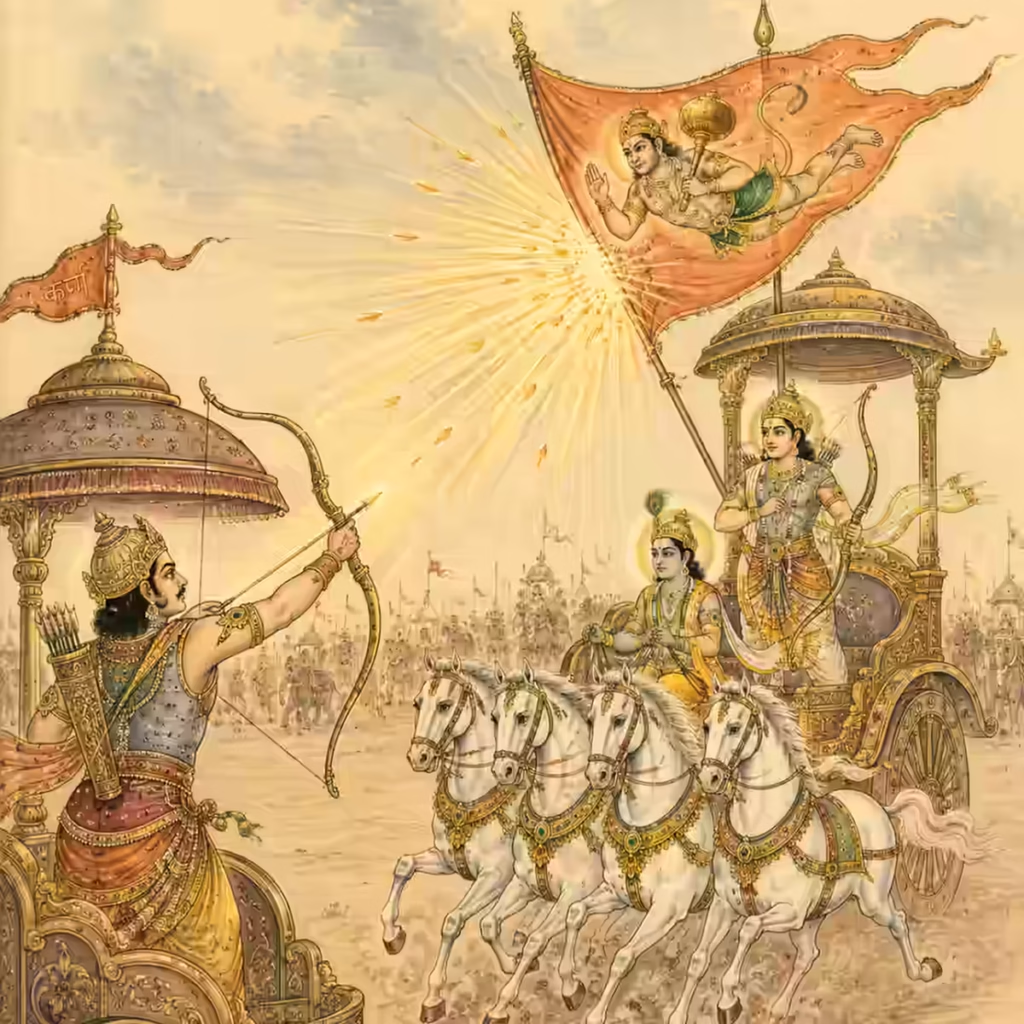
Under ordinary circumstances, the chariot would have long-since exploded putting Arjuna’s life at great risk, but Hanuman ji’s auspicious presence on its banner (dhvaja) prevented the chariot from collapsing, protecting Arjuna during the entire war.
Thus, worshipping an energized Maruti Yantra saves the devotee and their family from untold dangers. This protective aspect of Sri Hanumanji Maharaj is also similar to the Benefits of the Bajarang Baan, although it must be recited after guidance and with great care. It is mostly discouraged as its mood is intense and not meant for daily recitation.
2. Relief During Shani Mahadasha and Antardashas
Hanumanji Maharaj rules over Saturn (Shani). Hence, worshipping the Maruti Yantra has proven beneficial across all areas of life that feel blocked/delayed during the Saturn period. It can be in the work front, relationships, education or financial situation.
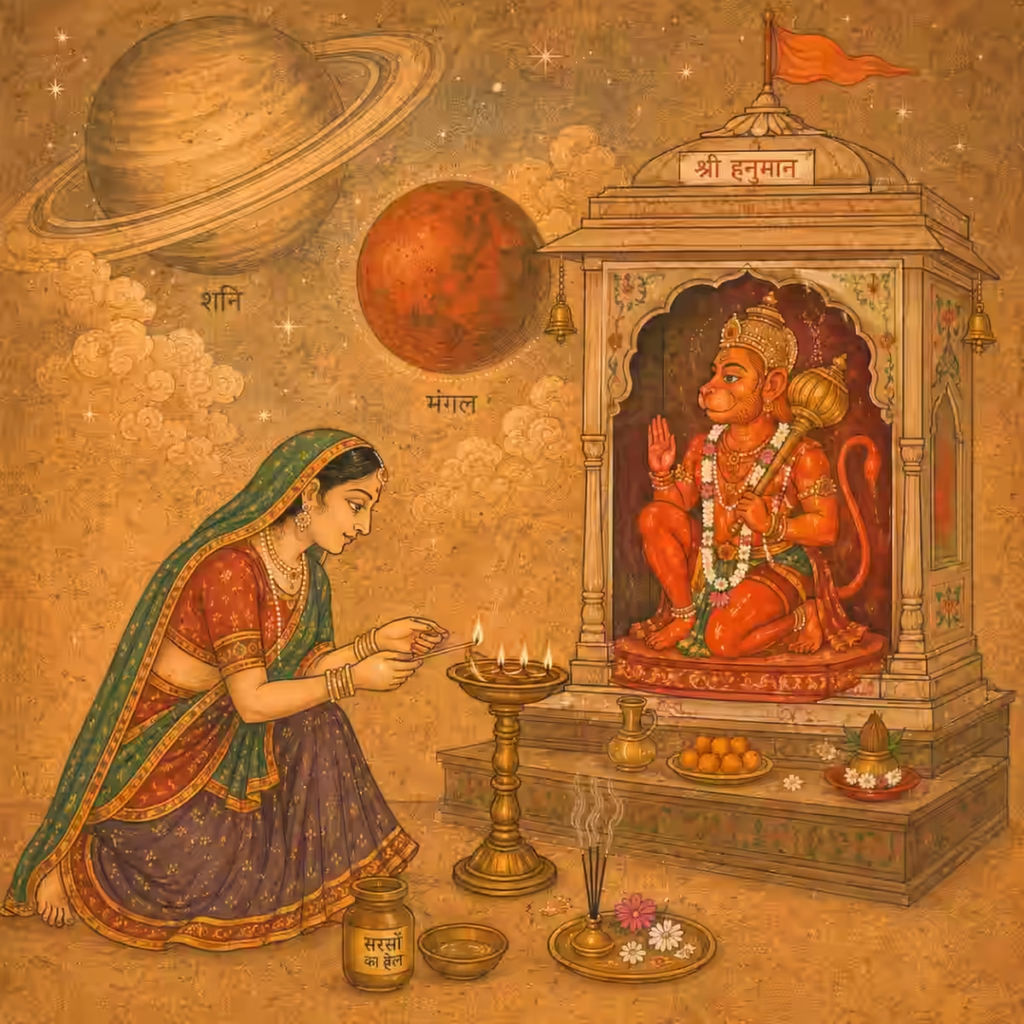
In general, all Hanuman Yantras bring Saturn Relief, but the Maruti Yantra particularly suits those who feel scattered or disconnected from the areas of life they value most.
For example: The Maruti Yantra is preferred over other Hanuman Yantras if a person feels stuck, faces an identity shift in his career or is on the verge of marital separation yet is unable to decide his next course of action due to Shani’s influence.
Here, the Maruti Yantra helps with momentum and speed in an otherwise slow and delay prone Saturn phase.
We have had numerous people joining Karmic Consultations, interestingly revealing that Saturn-related issues often manifest at different intensities.
3. Longevity: Regulates the Prana Vayus
Maruti means the son of Marut (Vayu Deity). Therefore, this Yantra embodies this specific aspect of Hanuman ji Maharaj that has a major focus on Prana energy, good health and vitality.
4. Replaces Negative Thought Patterns and Enhances Sleep Quality
Negative thoughts increase primarily because of emotional build up or suppression. The Apana Vayu primarily rests in the pelvic and lower regions of the body. It performs the downward and releasing functions like elimination of unwanted wastes and thoughts.
When the Apana Vayu is weak it pulls a person into a chronic depressive state. It prolongs emotions like fear, insecurity, anger, which can deplete the quality of life.
The Maruti Yantra is an energetic representation of the Pancha Vayus. Regular worship over a protracted period balances the Vayu Currents and helps release undesirable thoughts with ease. It also improves the quality of sleep by relaxing the mind of its heaviness.
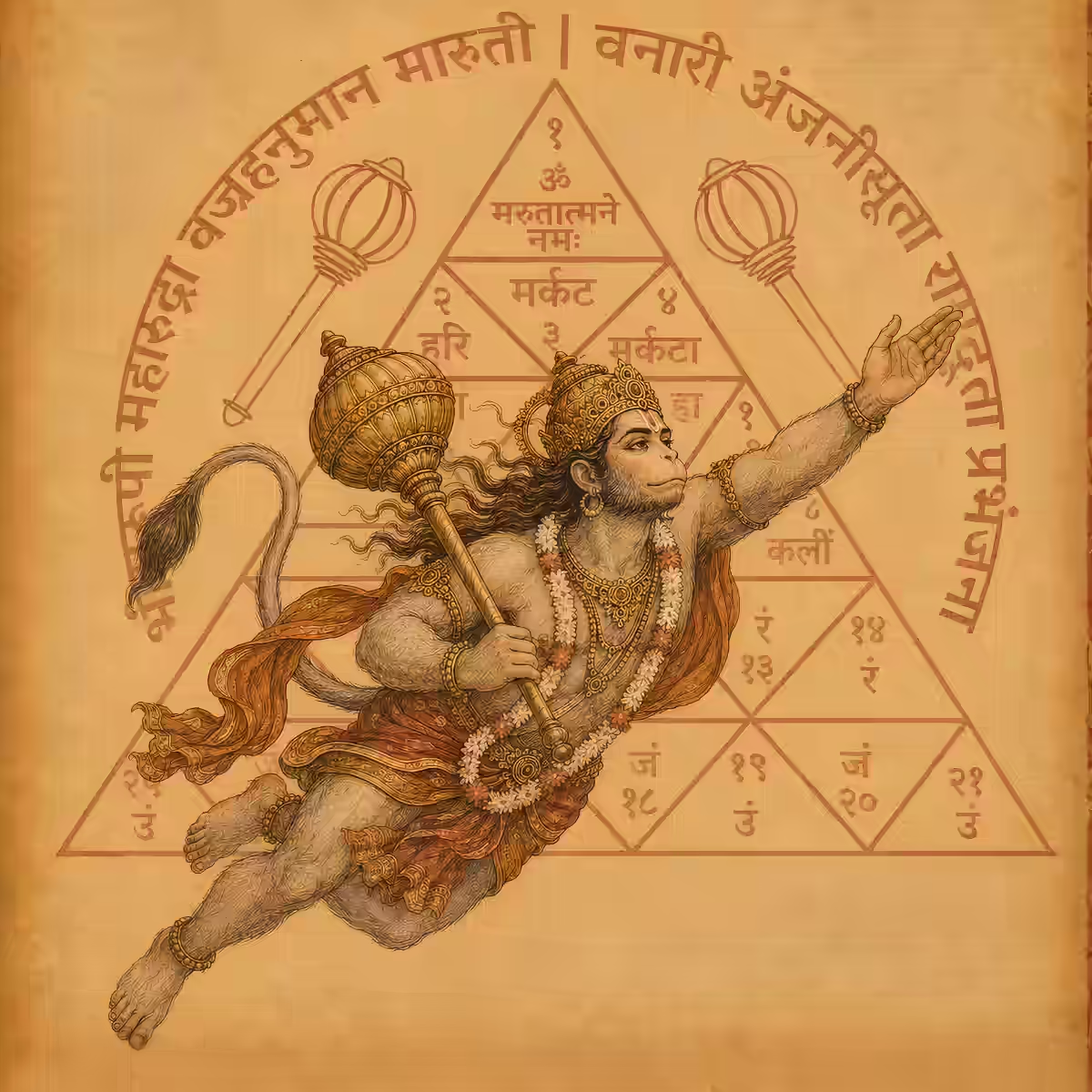
Shri Maruti Yantra
- Accidents and Vehicle Damage Prevention
- Relief During Shani Mahadasha and Antardashas
- Longevity: Regulates the Prana Vayus
- Replaces Negative Thought Patterns
- Enhances Sleep Quality
- Energized with Birth Details During Brahma Muhurtha
- Size- 5x7 inches
- Detailed PDF that guides through the Installation Process, Worship and Mantra
How Does the Sri Maruti Yantra Work Spiritually?
Our Gurudev treats the Maruti Yantra as the direct incarnation of Sri Hanumanji Maharaj. All Hanumanji Yantras are particularly sacred within the YantraChants.com community. Since Sri Hanumanji Maharaj is our Sampradaya Devata and Swami of the science of Yantra making, the Maruti Yantra is a powerful spiritual device within our spiritual family.
Guruji explains the Inner Mechanics of Sri Maruti Yantra
I have presented this segment based on a deep conversation with Guruji on the Shri Maruti Yantra. He expressed that this knowledge came down to him while performing Sadhana under the direct tutelage of his revered gurudeva Sri Sri Lallan Das Ji Maharaj.
Symbolism of the Triangle
The Maruti Yantra has an overall triangular form both inside and outside (as the larger triangular boundary). The triangle here represents the 3 states of Waking, Dreaming and Deep Sleep. From these 3 states of consciousness, one gets access to the 3 domains as discussed below.
The Waking state makes us aware of the material plane or Bhuloka (Earth). It connects us with our present assumed reality. Next is the dream state. Here we tap into subtle realms like heaven and hell (Swarga and Naraka).
Here the pleasure and suffering endured are subtle. The Deep Sleep state is when the mind is turned off. The subconscious thought patterns do not generate images or dreams, rather there is a profound state of thoughtlessness. This state connects us with our core, opening the dimension of the spiritual abode like Saket Dham and Goloka Dham.
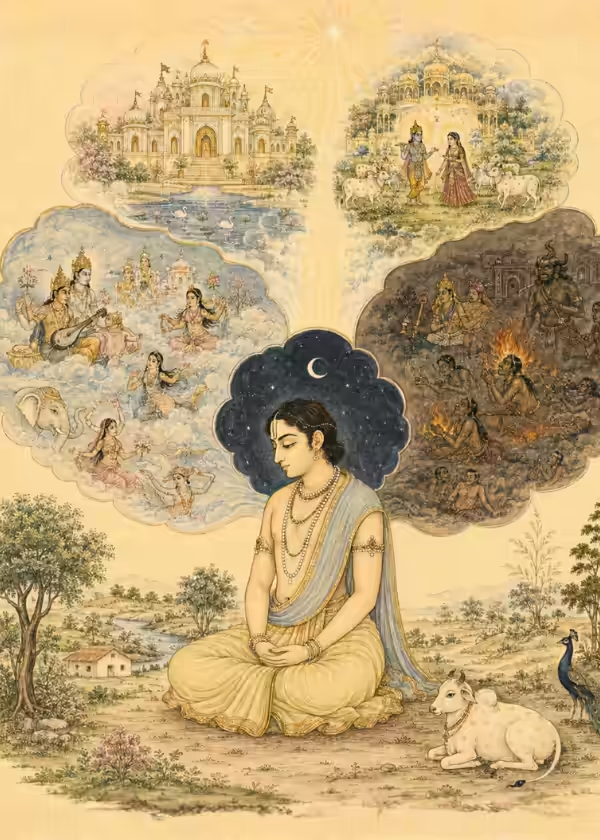
In that sense, the Maruti Yantra serves as a portal to the spiritual world if you approach it in that mood. Yantras manifest your innermost mood. When a soul departs to the higher realms, it is accompanied by Sri Hanuman ji Maharaj. The Great Lord opens the gateways to the spiritual domain of Saket for His dear devotee.
So, how do we make ourselves favourable to Lord Hanuman?
By following the 5Ss namely Swadhyaya, Sadhana, Satsanga, Seva and Sharanagati. Celibacy should also be strictly followed if we seek an entry to the Spiritual World.
Here, the Sri Maruti Yantra supports our journey by creating a conducive environment that can guide and motivate us in the spiritual path which is otherwise so full of pitfalls.
Revealing the Hidden Dynamics: The Numbers and Beejas
First Layer: Regulating the Nadis
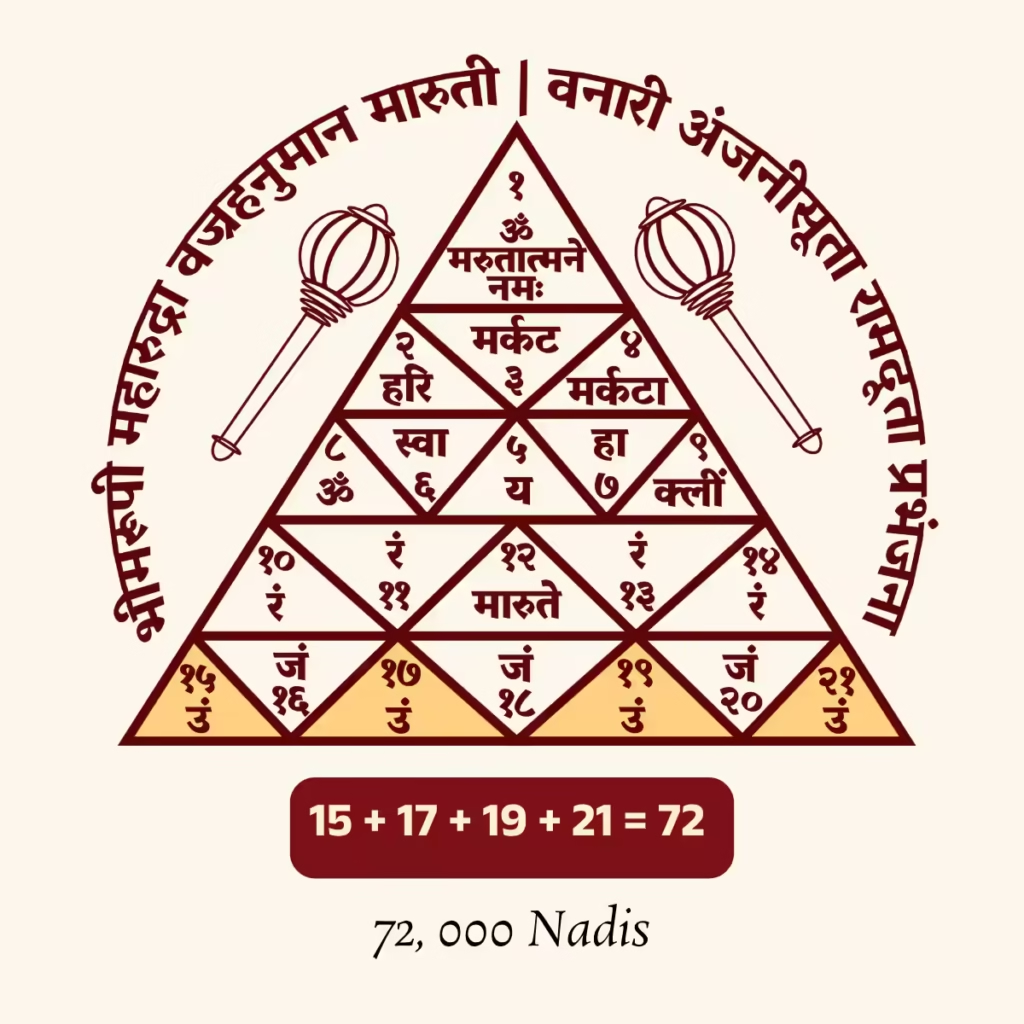
The Base of the Yantra has four upright triangles. On adding up the numbers inscribed on them, we get 72. Here the number 72 symbolizes the 72000 human Nadis. In yoga, Nadis are the subtle channels that carry Prana or the energy currents in the body.
When they are balanced and optimally functional they become the channels to carry cosmic consciousness. In other words, the body becomes a miniature reflection of the universe, that is in perfect harmony with Nature and the Will of Bhagawan.
Also upon adding the numbers 7 and 2 we get 9.
9 is the number of wholeness corresponding to the 9th day or Navami Tithi, the birthday of Sri Rama, the Lord of Hanumanji Maharaj.
The Beeja उं or “um” represents the Brahma Tattva, which is the source of the Universe. Therefore, the base of the triangle reminds us of Sri Ram, who is the supreme manifestation of the Brahman.
Second Layer: Marmas – The 108 Sensitive Energy Centers
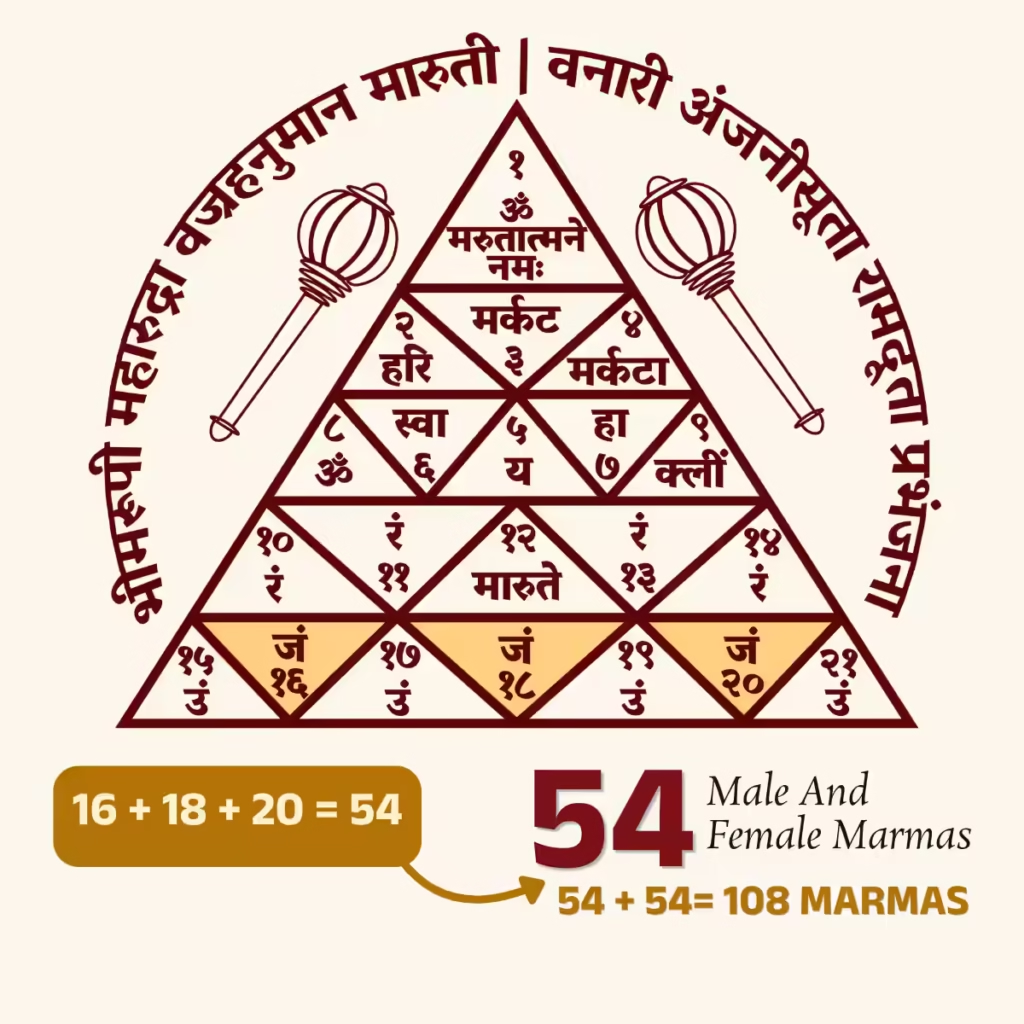
The next layer of inverted triangles have numbers that add up to 54. These represent the 54 male + 54 female marmas which are sensitive energy zones in the human system. When the body is subjected to emotional stress, trauma and negative thought patterns, the energy currents flowing through the Nadis get obstructed.
Sometimes, these emotions can be very long lasting and eventually get trapped within the Marma energy centers. If left unattended they can rise to the surface causing psychosomatic symptoms like chronic pain, dizziness, upset stomach, fluctuations in body temperature, etc.
While appropriate medical treatment should continue to cure the gross symptoms, Shri Maruti Yantra gives restorative energy to the body.
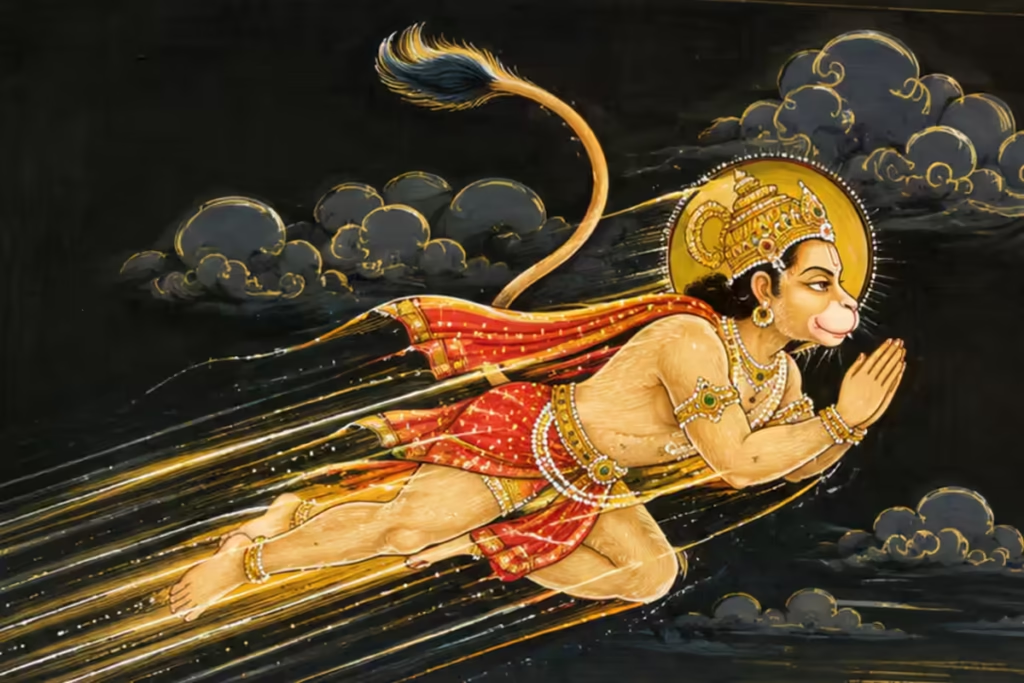
This is because the yantra embodies Sri Maruti (Hanuman ji Maharaj), the special form of lord Hanuman who regulates the Prana and Vyana Vayu circulation. He rules over all the physical and subtle energy centers in the body that contribute to both mental and physical health.
For advanced seekers, the Maruti Yantra serves as a direct means for spiritual evolution that transcends bodily limitations. Therefore Marmas, Nadis, Chakras, Yantra, Mantra and Tantra, etc fall under His Divine supervision.
The inverted triangles are also filled with the Beeja जं or “jam” that represents Shiva tattva focussing on fearlessness and deathlessness. In conclusion, this portion of the Yantra focuses on renewal of strength and healing.
Third Layer: Union of Jeeva and Bhagawan
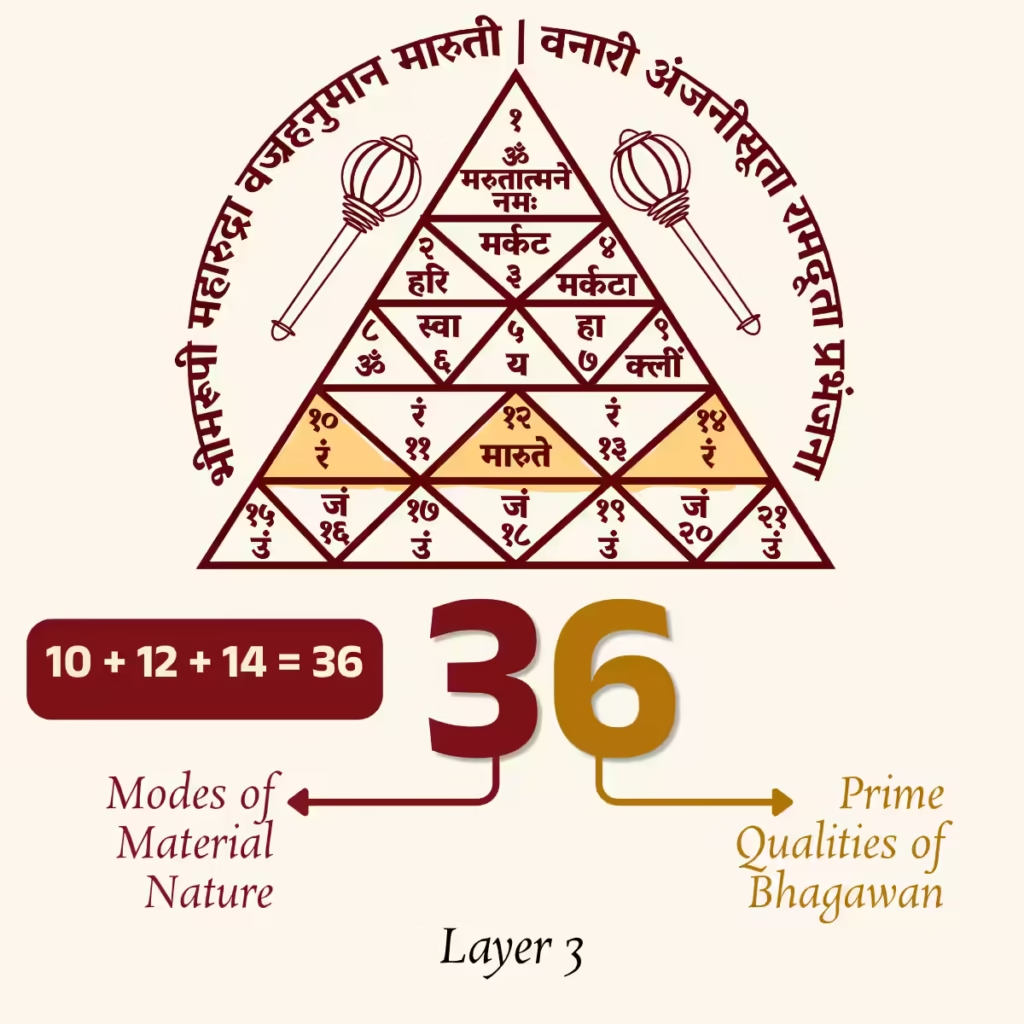
The third layer has upright triangles, the numbers on which add up to 36.
Here the number 36 symbolizes the union of Jeeva with Parabrahman.
3 denotes the Jeeva or living entity who is subjected to the 3 modes of material nature while 6 denotes Bhagawan, the Master of 6 Divine Qualities.
The 3 Modes of material nature (Prakriti) are-
- Sattva- Goodness characterized by piety and dharma
- Rajas- Passion characterized by possession and expansion
- Tamas. Ignorance characterized by darkness and sloth.
On the other hand, Bhagawan is untouched by these 3 modes of nature. He possess Shadgunas or 6 Divine Qualities namely-
- Aishwarya: Refers to Supreme Control over Creation. This means that the Lord runs the Universe without any dependence on it, out of His own independent will.
In contrast, the Universe and Jeevatmas are eternally dependent on Him. The Supreme Lord on account of His Aishwarya Guna is untouched by the three modes of material nature, eternally established in His transcendental nature. This attribute establishes the Lord as the supreme sovereign and independent ruler of all.
- Veerya or Bala: This is the Lord’s heroic power to accomplish whatever He wills. It corresponds to the Lord’s infinite ability to Create, Maintain and Destroy Universes. Through this potency, the Lord defeated Rakshas, established Dharma and protected His devotees during his earthly incarnations.
- Yasha: This is unparalleled fame. This quality of the Lord is self explanatory. We are discussing about Bhagawan because of His Yasha Guna. It is due to his unparalleled glory, do devotees meditate on His pastimes, form, prowess and qualities.
The Lord’s greatness and renown is further enhanced by devotees who compose beautiful verses or works in His praise. Similarly, the Yasha Guna can be understood as the all pervading nature of Brahman. We regard a person to be famous if he is widely spoken about. Likewise, the presence of Brahman in every atom of creation emphasizes the quality of fame (Yasha)
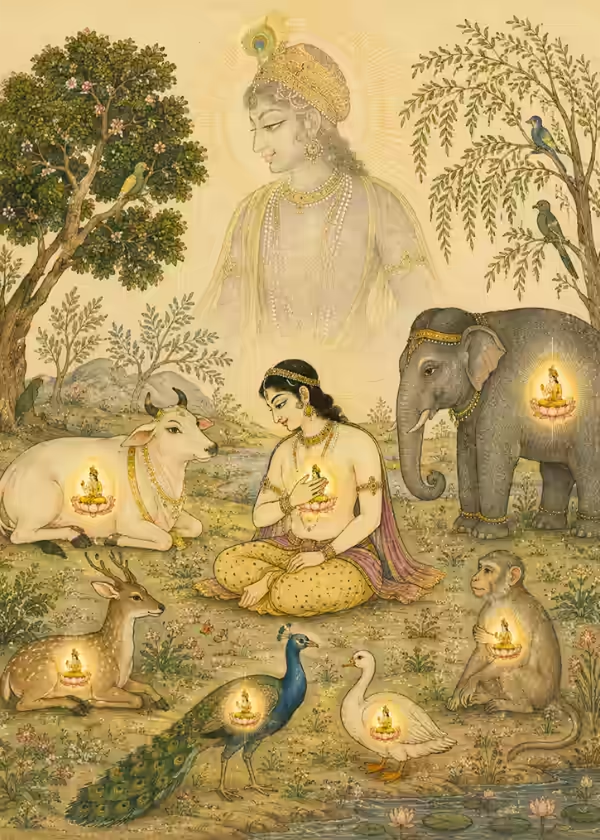
- Jnana: This means the Lord is the source of infinite wisdom having complete knowledge of the past, present and future. Jnana is the quality of Omniscience. Not only does Bhagawan know how the macrocosmic universe functions, but also what the microcosmic individual experiences, thinks, and desires at every moment. This Guna reinstates the Sanskrit name Antaryami or the knower of all hearts.
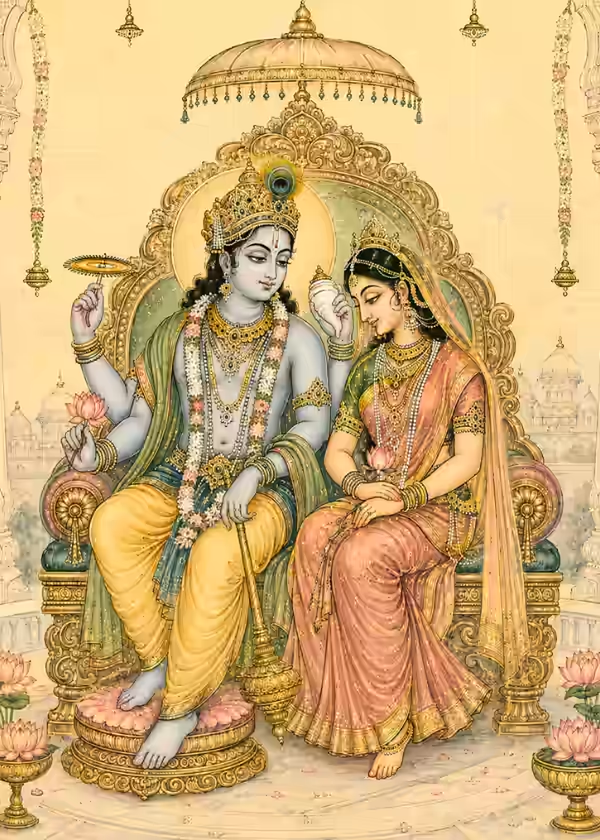
- Shri: Master of supreme opulences, unparalleled beauty and excellences. Shri can be interpreted in multiple ways, both in gross and subtle forms. In the Shri Vaishnava Sampradaya, Shri refers to Devi Lakshmi. Since Sriman Narayana is her Divine consort, He and His expansions alone are generally associated with this attribute.
However, on studying the vast expanse of Sanatana Dharma, ‘Shri’ extends to other Shakti Manifestations that represent totality like Devi Durga, Ma Tripurasundari, Devi Radha, etc. Moreover, Shri is not limited to wealth but also the qualities associated with it, like awe, reverence and power.
So, although Lord Shiva lives like a mendicant in an abode bereft of palatial grandeur, Shri is His intrinsic potency.
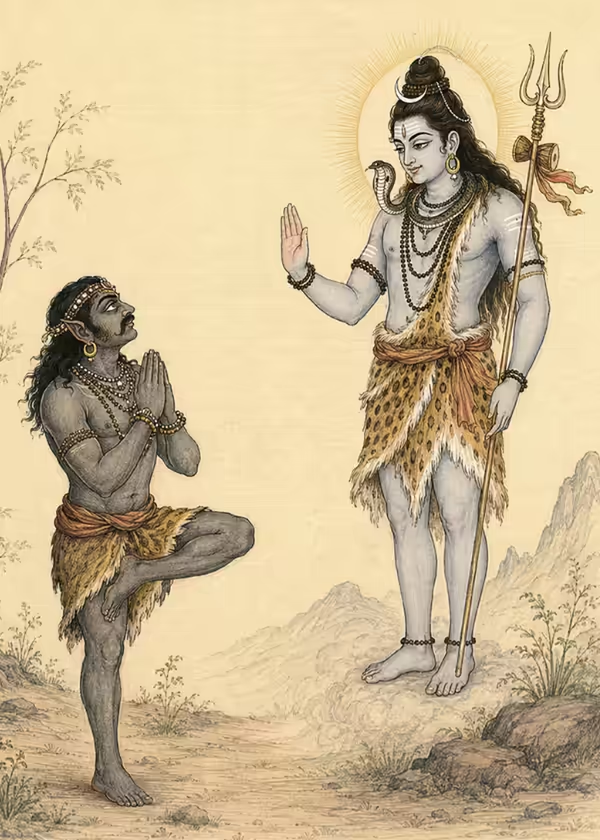
Even as a Vairagi, Lord Shiva is Bhagawan. His form is perfectly spiritual, complete and attractive- all of which are hallmarks of the Shri Guna.
Even abodes like Swananda Dham (of Lord Ganesha), Kailasha (of Lord Shiva) and Goloka (of Sri Krishna) have the Shri aspect. But unlike Vaikuntha and Dwarka, Shri does not manifest here as grand luxury or jewelled studded architectures. In these abodes, the expression leans more Nature’s grandeur and the breathtaking scenery.
- Vairagya: Bhagawan possesses Vairagya in its purest form, untouched by any sense of ownership. On account of Aiswarya, He is the Master of the entire creation. But, Vairagya defines His internal mood. The Lord possesses everything but owns nothing. This can be most beautifully understood by the nature of Lord Shiva who bestows riches and boons on His devotees but Himself remains engrossed in meditation.
He makes the cremation ground His dwelling place. Likewise, Lord Vishnu also personifies Vairagya. Although He is surrounded by the extravagance of Vaikuntha, He is truly found in the heart of a pure devotee, irrespective of their social standing. As Shri Rama, He made no difference between the forest and palace.
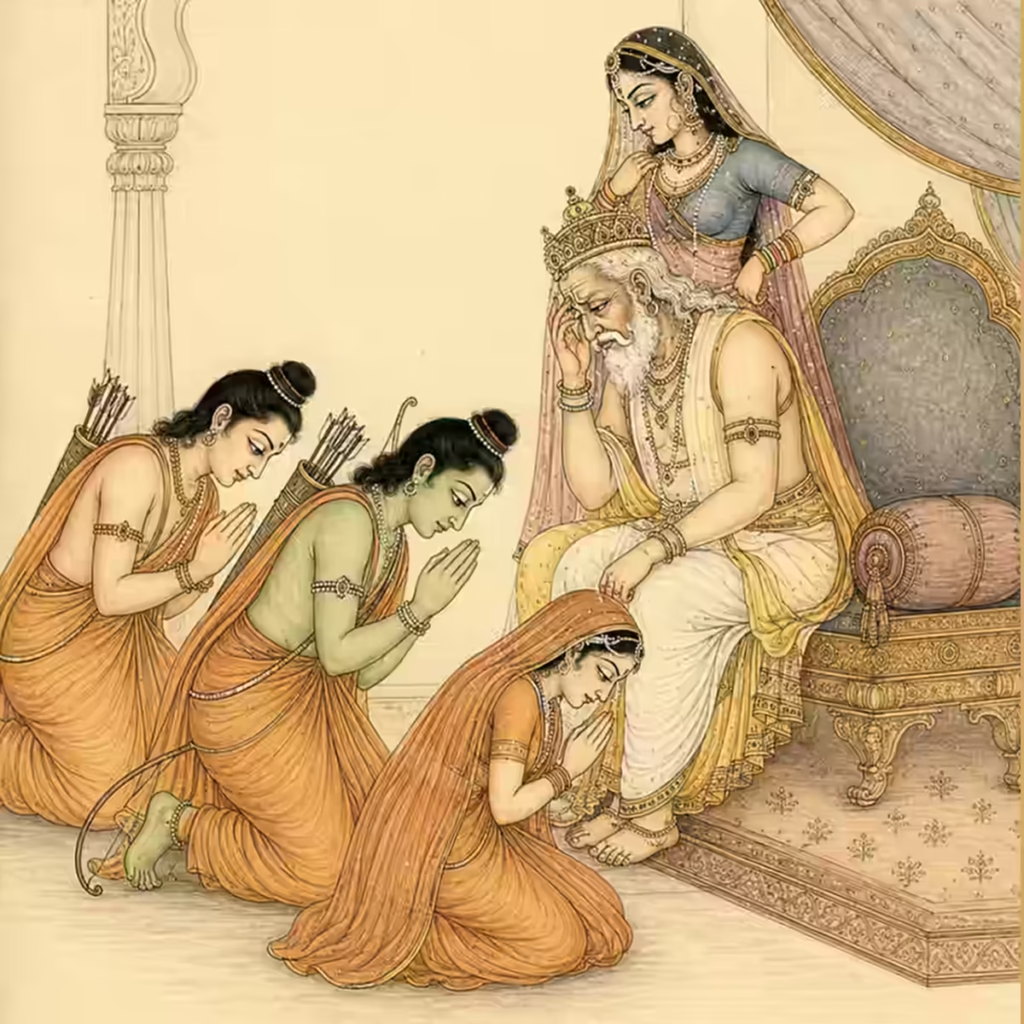
As Shri Krishna He moved from Vraja to Mathura and then to Dwarka, while spending most of His time amidst His Dear Pandava devotees.
Therefore, being completely unattached to the material world, the Lord is moved not by wealth or status, but by pure devotion alone. Though eternally independent, He willingly allows Himself to be bound by the love of His devotees.
Therefore, the number 36 in the Maruti Yantra serves as a bridge from the 3 gunas to the 6 attributes of Bhagawan, allowing a soul to graduate to higher qualities. The Jeeva or living entitiy is essentially the servitor while Bhagawan is the master. Lord Hanuman ji is the exceptional combination of both the servitor and the worshippable deity.
The nature of the transformation process is highlighted by the मारुते and the beejakshara रं.
मारुते (Marute) represents the wind deities (Maruts) and रं “ram”, the fire deity (Agni). This forms a combination of wind’s intensity and fire’s ferocity. This layer of the Yantra layer gives immense intensity to the geometry. It suggests that life changes are observable and transformative.
Fourth Layer: The 24 Achit Tattvas
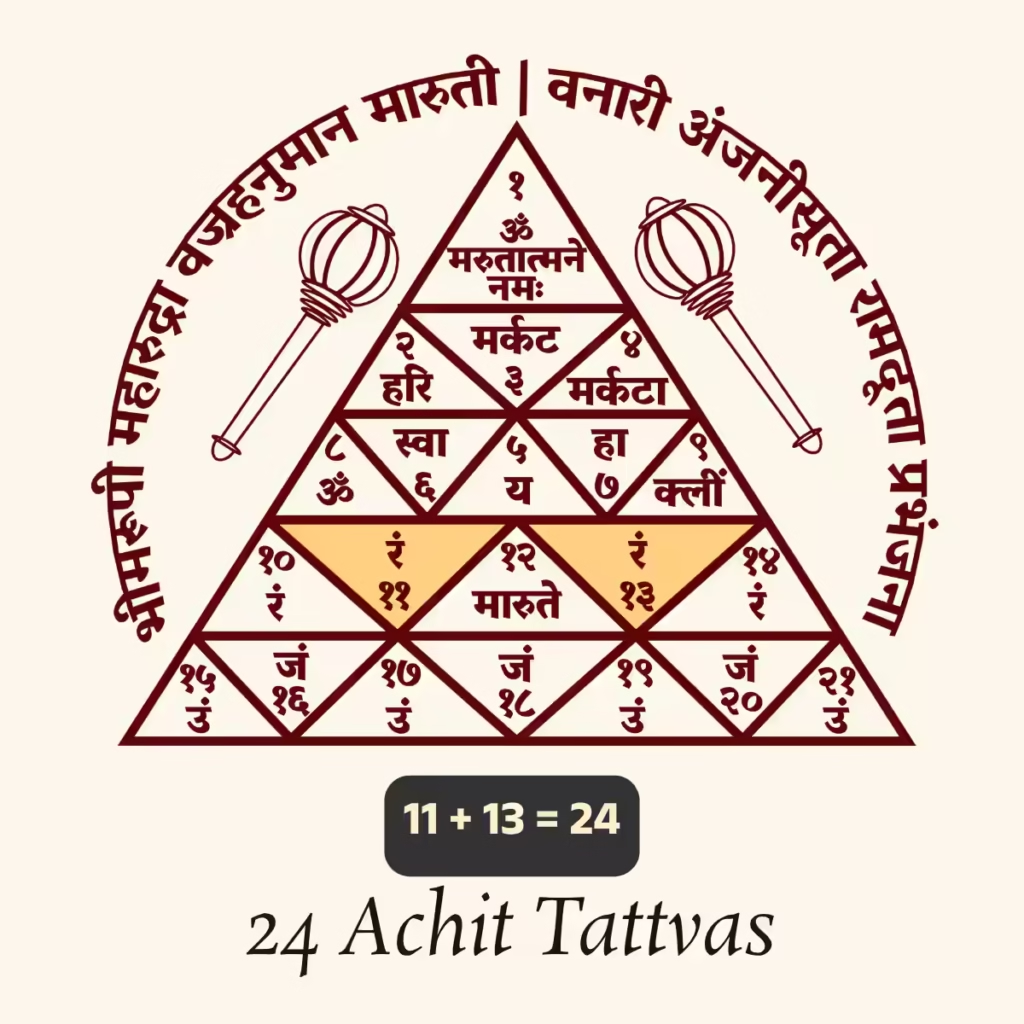
The above two inverted triangles carry the number 11+13 that total up to 24. They are the 24 tattvas or primal elements. These elements are classified into the 5 Jnana Indriyas, 5 Karma Indriyas, 5 Sense Objects, 5 Maha Bhutas, Chitta, Ahankara, Manas and Buddhi. They carry the Agni Beeja रं “ram”.
Fifth Layer: The Upper Trapezium – The Core Mantra
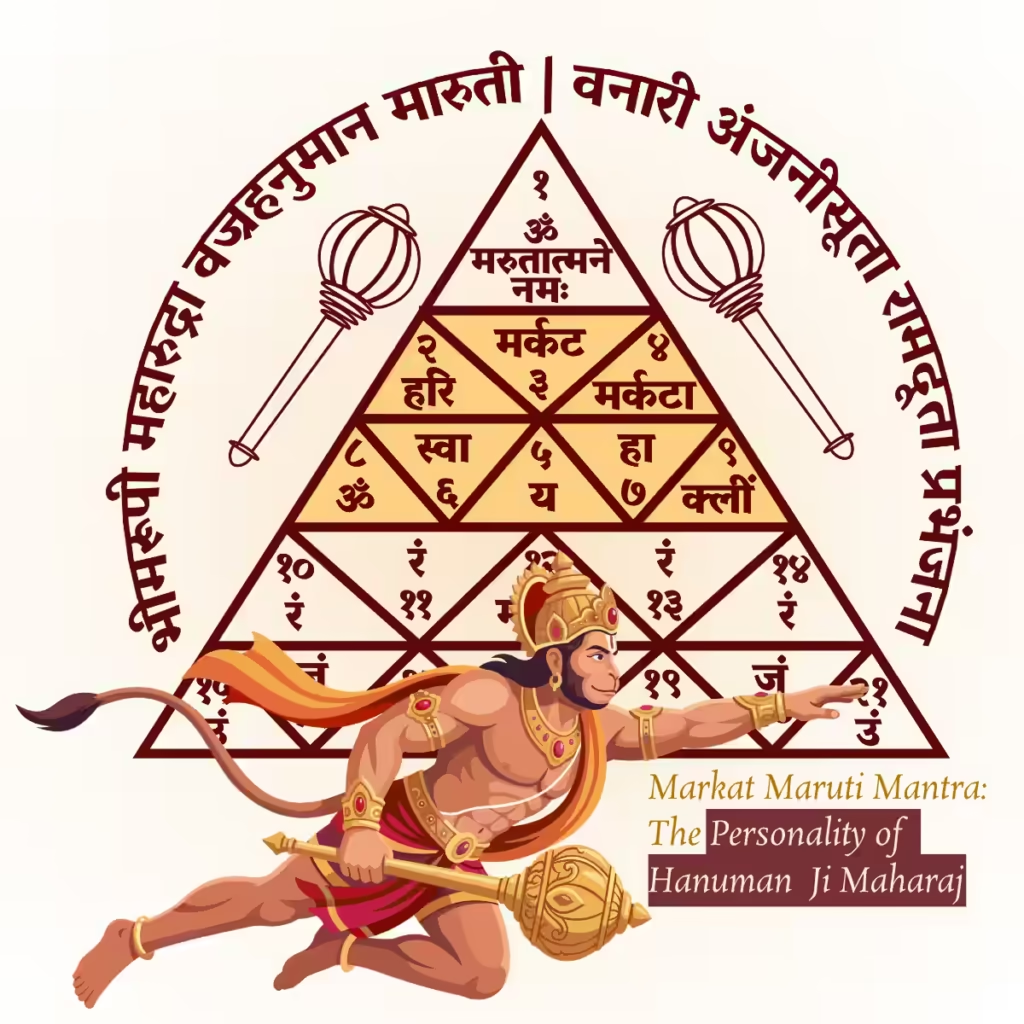
The next layer should be studied as the trapezium. It contains a slight variation of the Markata Maruti Mantra- ॐ नमो हरि मर्कट मर्कटाय स्वाहा
Instead of Namo, the Kleem Beeja is incorporated in the Maruti Yantra.
This trapezium represents the total personality of Hanuman ji Maharaj. The words Markat and Hari mean Vanara, introducing the physical form of the Lord to us. On the other hand, Kleem represents the infinite attractive potential of the Great Lord.
Meditating on this trapezium and especially the Kleem Beeja gives rise to devotion in the heart of the devotee. Thus, the mind gets effortlessly attracted to Sri Hanuman ji and His Divine pastimes.
Finally, the crown triangle located at the peak is the dwelling abode of Shri Hanumanji Maharaj. It carries the words (ॐ मरुतात्मने नम:), summarizing the complete intent of the Sri Maruti Yantra.
Simple Meditation with Sri Maruti Yantra
Now we shall discuss an easy meditation process for anyone who has received the Sri Maruti Yantra.
Installing the Maruti Yantra
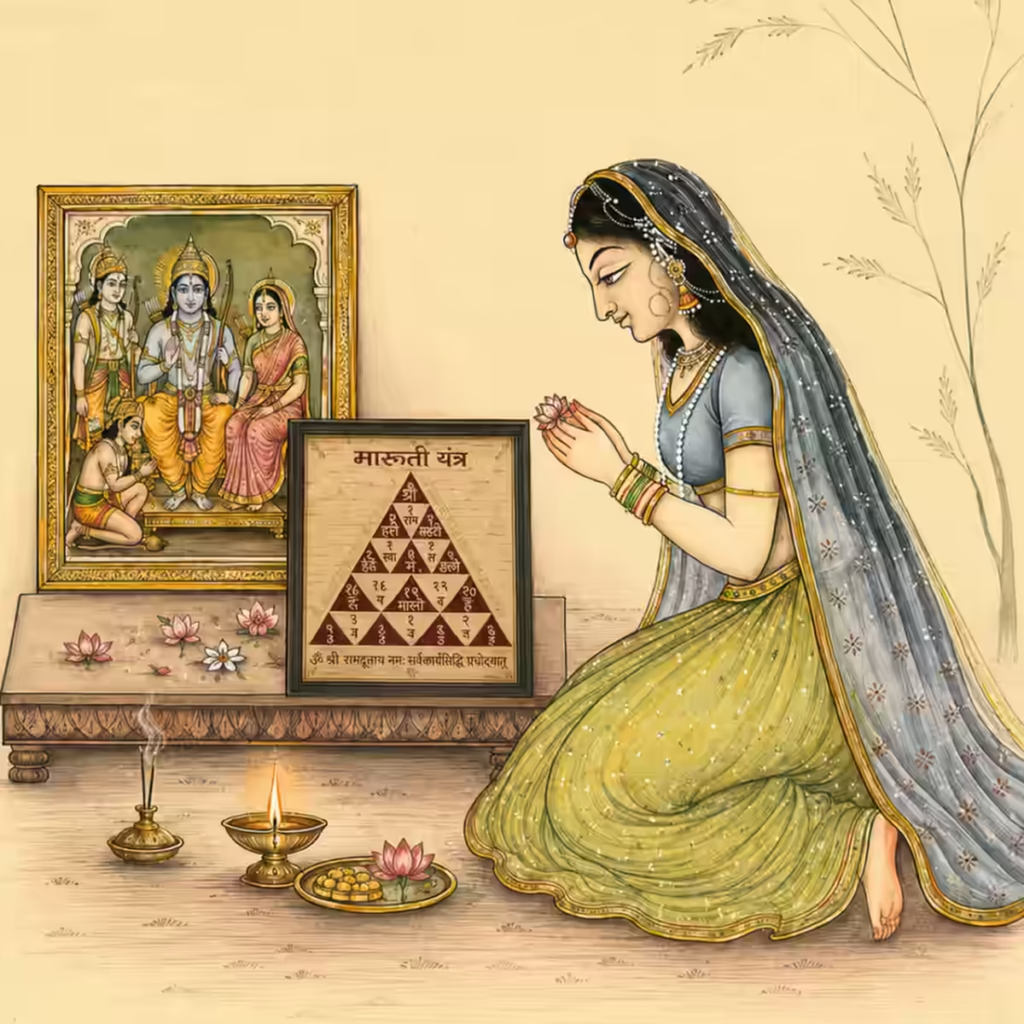
Keep the Maruti Yantra in the North east direction or East direction. Ideally have a photograph of the Sri Rama Darbar by the left hand side of the Sri Maruti Yantra. Lord Hanuman worship proves beneficial when His Ishta devata Sri Rama is also invoked.
Remember Sri Guru as you take your seat. Express your gratitude for receiving the Yantra and the blessings of Bhagawan.
Place the Shri Maruti Yantra at your eye level. At least once a week, make an offering of some orange sindoor and Chameli (Jasmine) flowers to the Maruti Yantra. Tuesday or Saturdays are most preferred for this special puja.
Light a mud lamp everyday. Use Jasmine oil to dip the wick. This creates a powerful ambience for the Maruti Yantra meditation, ideally done between 6:00 PM to 9:00 PM.
Chanting with the Shri Maruti Yantra
You can sit comfortably in Sukhasana and use a neem mala to chant the ‘Sri Ram Jai Ram Jai Jai Ram’ mantra. Alternatively a Chandan Mala can also be used.
Chant a minimum of 1 to 3 rounds based on your time and comfort. Close your eyes and focus on Rama Nama as you chant. You can chant the Rama Nama loudly for better focus.
After the japa move your gaze slowly from the base of the pyramid right to the top. Chant the Sri Hanumate Namah mantra as you go from the base of the triangle to the peak.
As you chant try to recollect the symbolism of each part of the Yantra (described above). Such meditation invokes the total potency of the yantra.
Continue moving from bottom to top and top to bottom to complete one Yantra Meditation cycle. For a perfect meditating balance, meditate on the Yantra for not more than 10 minutes. Set a pleasing timer that has a soft tone so that you are peacefully withdrawn from the process.

Vani Devi Dasi

Rohini Devi Dasi