
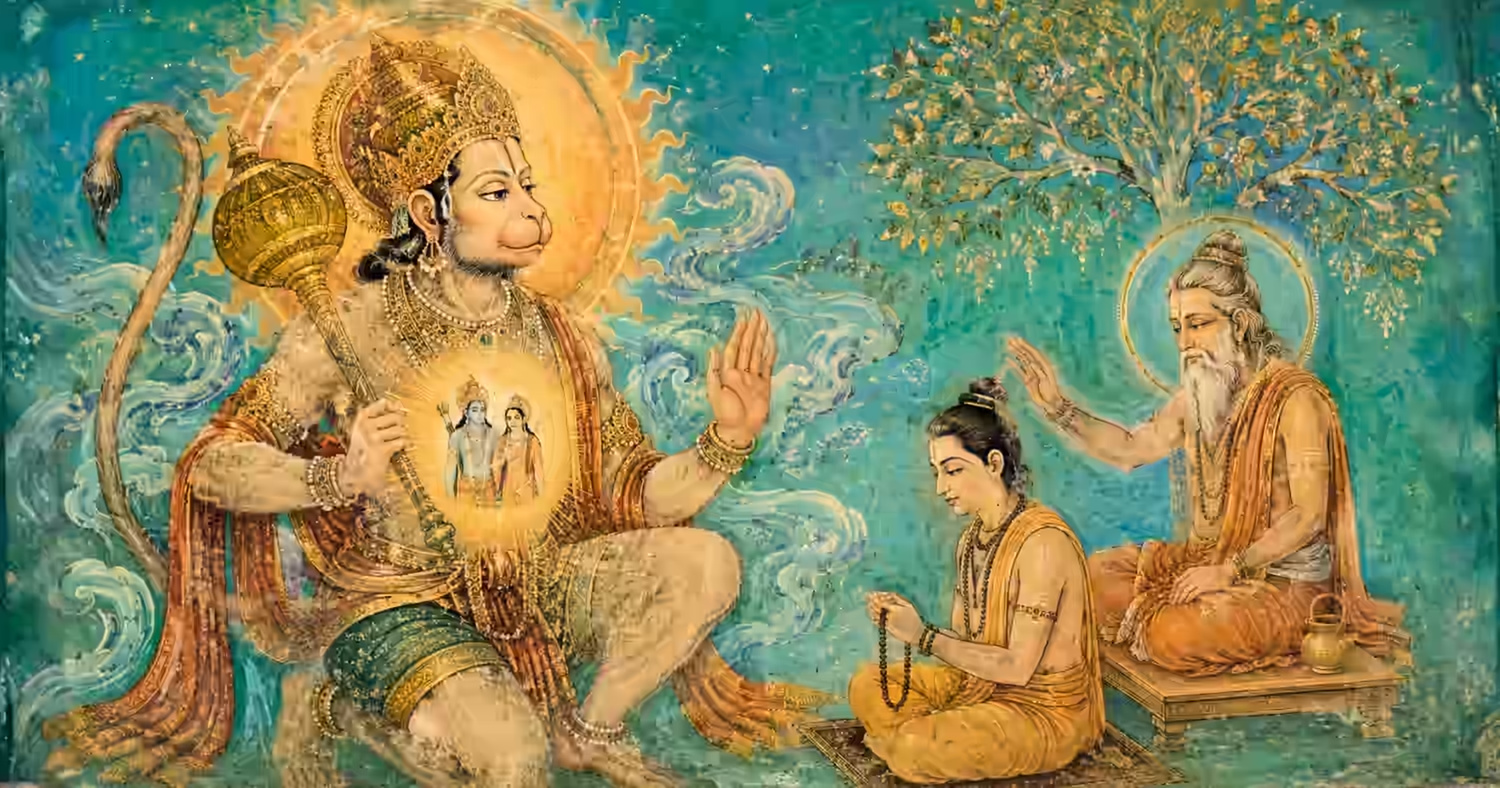
The Om Ham Hanumate Namah Mantra is the most special Ashtakshara Mantra of Sri Hanumanji Maharaj. It is worthwhile to note that this Mantra can only be chanted by initiated Sadhakas under proper guidance, after receiving Diksha.
Guruji describes this mantra as a Kalpavriksha that attracts the grace of both the Lords- Shri Hanuman ji Maharaj and the Lord of His Heart Sri Rama. However, the alternate mantra “Shree Hanumate Namah” can be chanted by anyone and has similar effects when done under guru guidance.
Significance of the Om Hum Hanumate Namaha Mantra
This mantra is regarded as a Tantrika Mantra. The mantras of Hanuman ji have a close affinity with the wind element (Vayu Tattva) as He is Pawan putra.
Alongside, it also carries the intrinsic fiery energy of Lord Hanuman since He is also the 11th Rudravatara. The presence of Om and Hum imbue this specific mantra with the Akash Tattva. From a holistic viewpoint, the Om Hum Hanumate Namah mantra is closely interlinked with the five elements of nature, making it a highly transformative mantra.
While Hanuman Sadhana During Difficult Times provides relief, it is important to follow the most aligned and safe practice.
What Makes Om Ham Hanumate Namah So Powerful?
Om: Accessing the Infinite Brahman
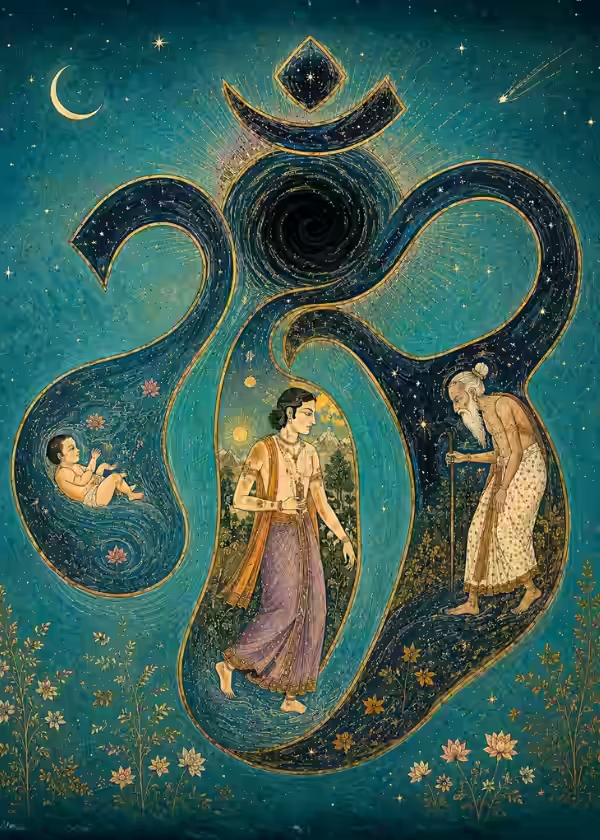
The formation of the Mantra is precise, commencing with Om. Om is called the universal sound as it has the universe inside it.
It represents the ‘existence’ aspect including the 3 tenses of time (the past, present, future). Even the unknown and unmanifest has its origin in Om. This has been explained insightfully in the Mandukya Upanishad. So, in the mantra Om instills awe in the devotee, giving rise to a reverential mood towards the Mantra Devata. It highlights the massiveness of the deity and the innate dependence of the devotee.
While Om is prepended to all mantras, the beejakshara following it constitutes the soul of the Mantra. Om highlights the formless aspect of the Supreme while its subsequent beeja reveals the form of Brahman we intend to connect with. In this case the beeja is ‘Hum’, dedicated exclusively to Sri Hanumanji Maharaj.
Hum: The Core Beeja of Shri Hanuman ji Maharaj
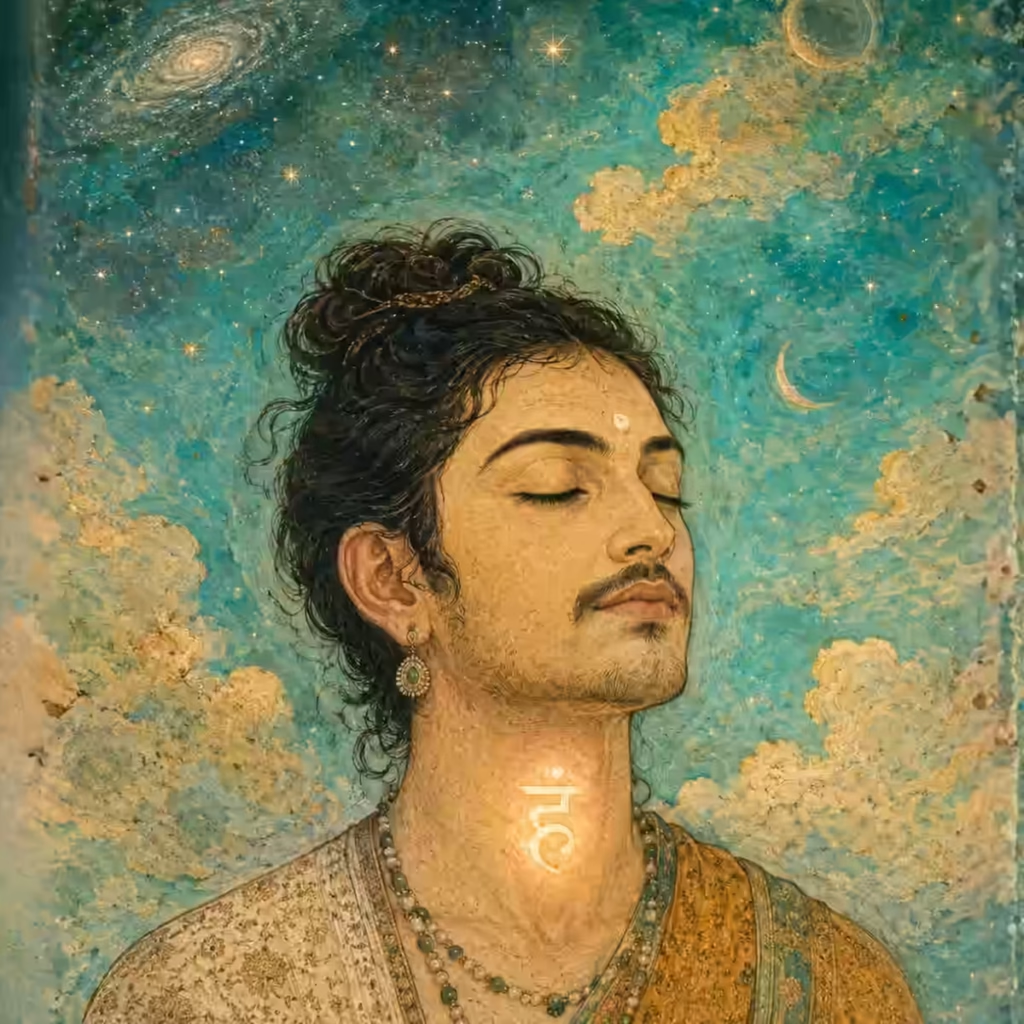
Hum is also known as the Akash Beeja. When this beeja is chanted under guru guidance it works on the most subtle layers of consciousness.
Among the 5 Tattvas, the Akasha Tattva is the subtlest and closest to Brahman, yet distinct from Brahman. This is the underlying Tattva upon which other elements of nature build grosser sense objects.
When ‘Hum’ is chanted over a protracted period of time, it exposes the Akash Tattva, bringing us closer to God Realization. It draws us towards Hanuman ji Maharaj, by cutting the mind’s ties with fear, illusions, desires, distractions and psychological compulsions. In Yogic traditions, this beejakshara is chanted for awakening Kundalini Shakti.
This is perhaps the most potent part of the mantra and requires guidance. Because chanting it loudly or repeatedly without discretion can also cause mental instability and psychological imbalances. The Pranic forces are set into motion through the sankalpa of Guru when this Beeja constantly chanted.
Hanumate Namah: Bowing Down in Humility
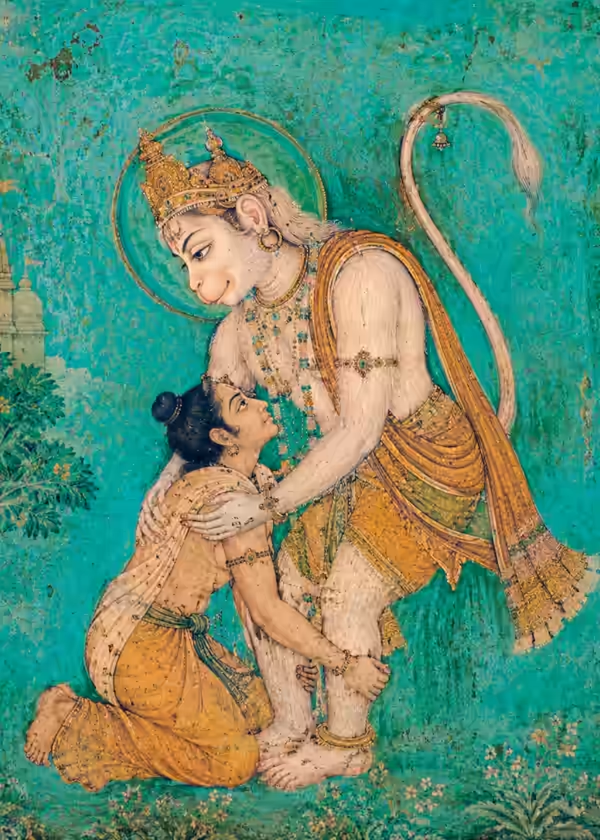
The Hanumate part of the mantra directly addresses the deity of the Mantra- Lord Hanuman.
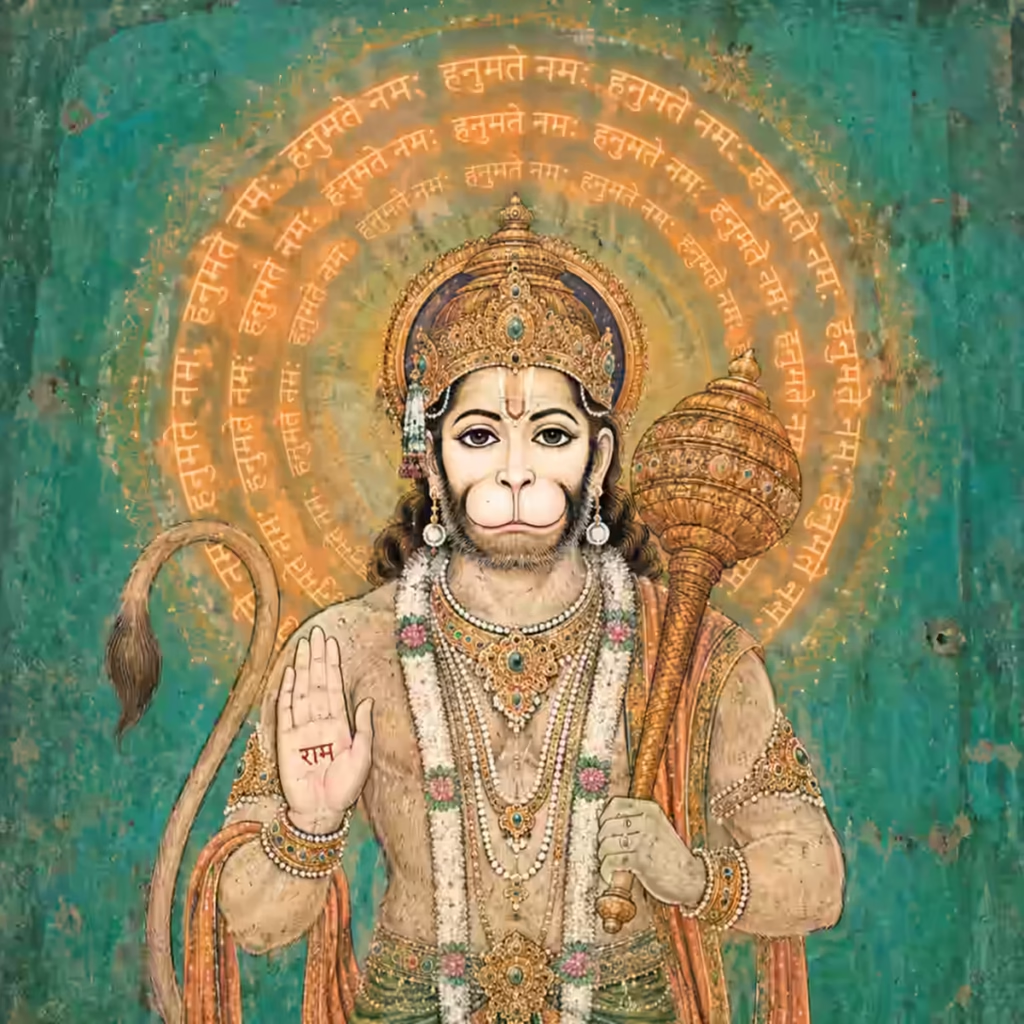
Prior to this- Om invoked the deity at a cosmic level while Hum at a sonic/ vibrational level. But, by chanting Hanumate we invoke the form (Swarupa) of the Lord. It is meant to connect with the Lord personally. In this nama, the form and attributes are encoded. This gets revealed further through the repetition of the Shree Hanumate Namah Mantra for uninitiated Sadhakas.
Concluding the mantra with Namaha establishes Sharanagati. It ignites the mood of service and surrender. The reverential aspect is invoked by “Namah”, which means I bow to, drawing humility into the Mantric system. This helps in diffusing the ego of the sadhaka and accepting the sovereignty of Lord Hanuman in our lives.
Here the internal bond is established wherein the sadhaka is a servitor (Dasa) and Sri Hanuman ji Maharaj is the Supreme Master (Bhagawan).
Why is Initiation Required to Chant this Mantra?
As discussed earlier, this mantra contains the Beejas Om and Hum.
Chanting Om requires initiation as it is an unfathomable storehouse. It is beyond the ken of mundane understanding, as the mind itself is an infinitesimal portion of Om. When we chant Om without undergoing the traditional diksha process, a person is prone to make errors due to which the energy of the Mantra can affect the normal rhythm of the mind and body. We may wonder how this happens?
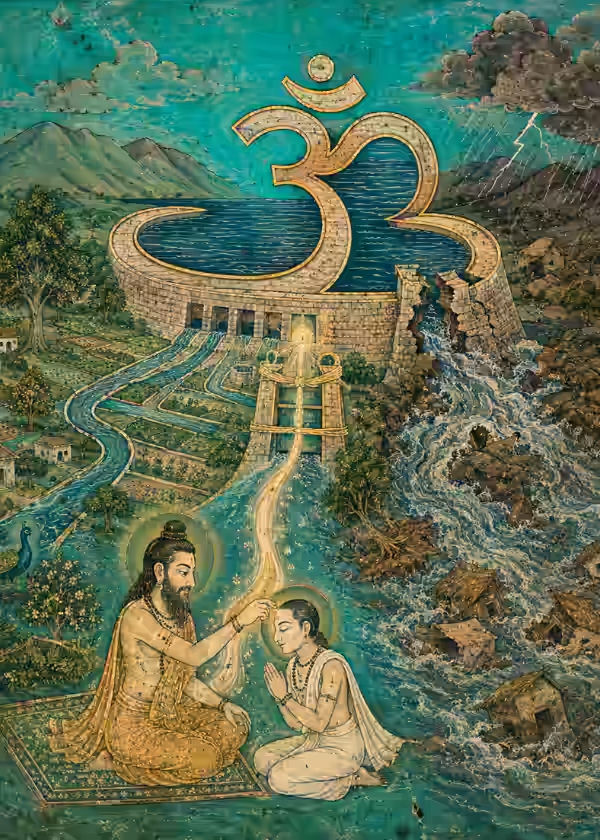
We can understand its seriousness by the dam example guruji often explains. He says Om is like a dam. A dam has tremendous potential energy. When its water is channeled and made to flow in controlled conditions it proves beneficial in irrigation and improves the quality of life. But, when its pressure rises beyond control, the dam breaks causing a catastrophe. It wipes off all signs of life and habitation near it. So, Om is like that.
Diksha is necessary as it provides us with that safe and controlled environment. The Guru Shakti transmitted during initiation, channels the expansive potential of the mantra to suit the disciple’s current state and absorption capability. A sadhaka is advised on what should be done and avoided. The rules and restrictions serve as safety jackets.
However, when a person transgresses these and takes up the chanting of Om and other beejas without these prerequisites, it can rupture the mind and physical body just like how a dam causes more harm than benefit when damaged. It can increase restlessness and amplify existing health issues.
The same applies for ‘Hum’ beeja as well.

‘Hum’ is directly connected with the Vishuddha Chakra. Chanting without initiation can result in Vishuddha Chakra imbalance. A person may gradually lose the ability to effectively express oneself or speak in undesirable ways that can create more conflict. Therefore, beejakshara should be chanted only after initiation and strictly under the guidance of a guru.
Safe Hanuman Mantra for Non Initiated Sadhakas
The alternate mantra Shri Hanumate Namah is safe to chant by everyone. Yet, guidance is essential to progress further and reap its benefits.
While Om is used in both Sattvik and Tantrik contexts, Shri invokes the Mantra Devata only in the Sattvik mode of worship. It has a balancing effect that is conducive for working people, householders, women and children.
Although simpler in structure, Shri Hanumate Namah should not be viewed as inferior. It is a preparatory mantra that is indispensable for anyone performing Hanuman Sadhana. Because, without practicing it, one cannot graduate to chanting Beeja mantras.
In our experience with sadhakas, many have undergone deep transformation within a short period simply by following the prescribed process while chanting this powerful nama mantra. Faith and commitment towards the Sadhana brings a perfect balance in life.
Another devotional option for sincere seekers is Hanuman Sahasranamam practice, which explains benefits, chanting process, and how the stotram supports courage, health, and spiritual direction.
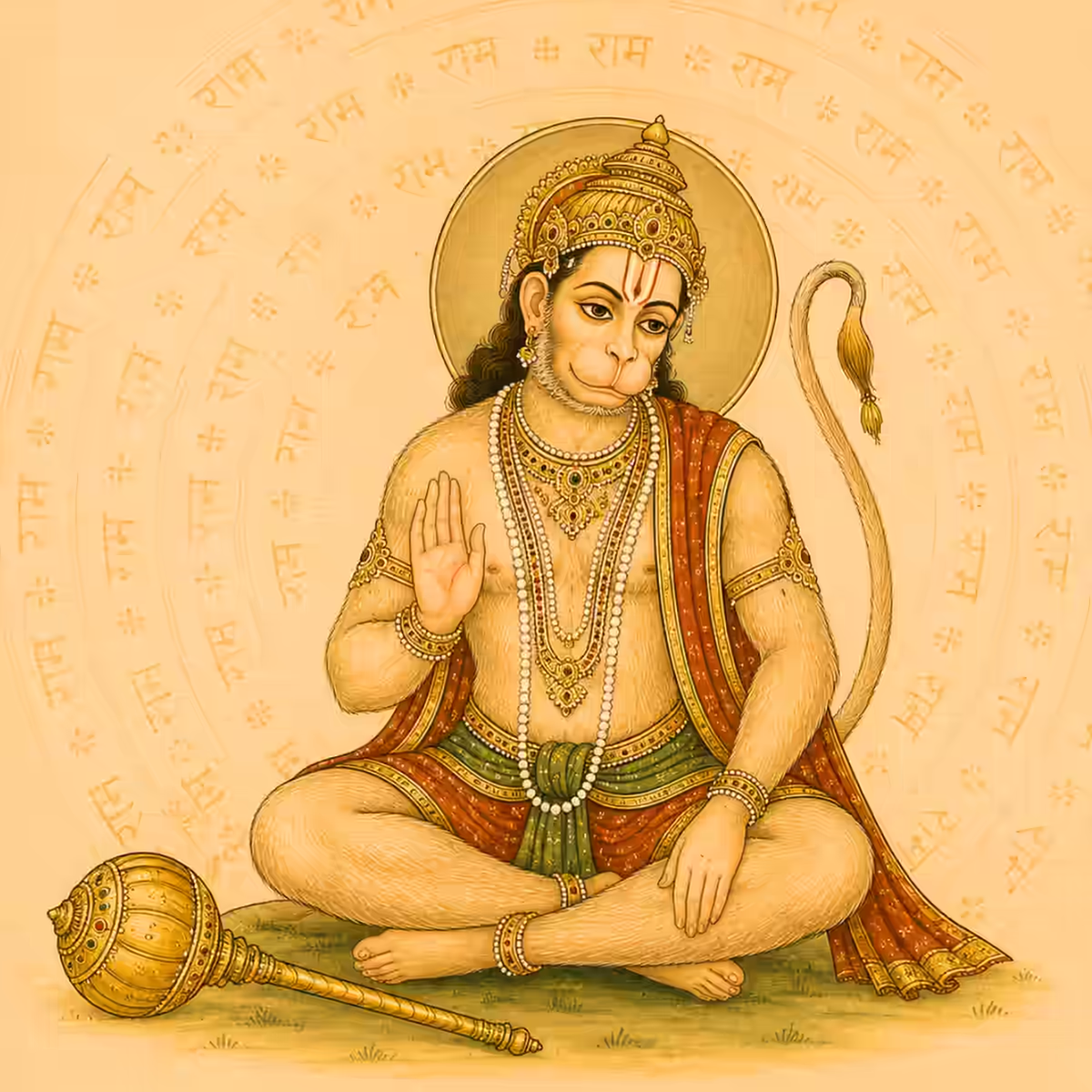
Shri Hanuman Mantra Sadhana Guide
- No Initiation Requirement
- Safe and Beginner Friendly
- Food Restrictions- Optional
- Suitable for Householders, Students and Working Professionals
- Flexible Sadhana Duration
- Step by Step Daily Mantra Sadhana process
- Inner Contemplation- Authentic Manas Puja of Shri Hanuman ji Maharaj
- Voice Note of Guruji reciting the Hanuman Nama Mantra
- Video Clip for Japa Mala Chanting Process
Benefits of Chanting the Mantra
These benefits apply to both the Beeja Mantra version and the Nama Mantra when chanted under guidance.
1. Protection from Unseen Danger: A Devotee Shares his Experience
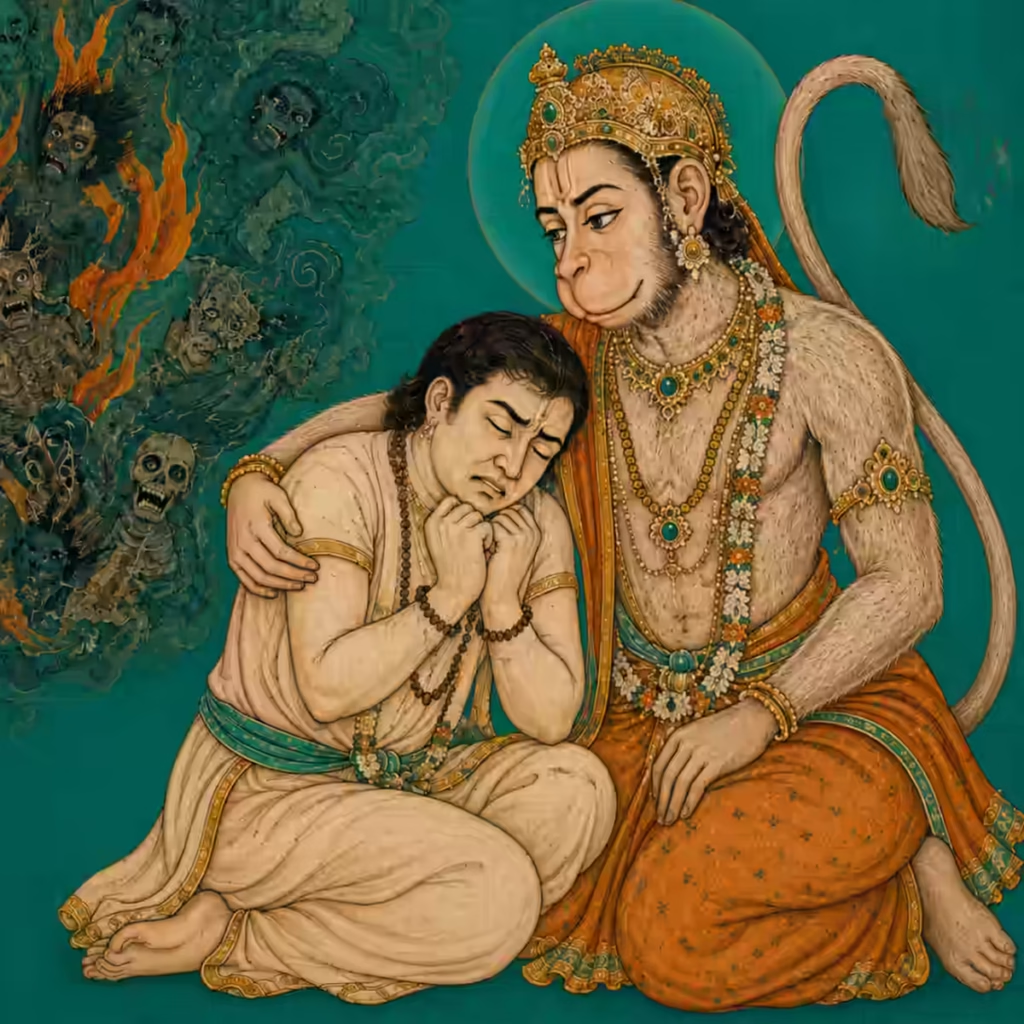
A close devotee associated with us discussed how the Shree Hanumate Mantra Sadhana protected him from a danger that would have risked his life. He had acquired the Sadhana Process from YantraChants.com for his personal welfare and professional growth. To maintain anonymity, the devotee’s real name has not been disclosed, and a pseudonym ‘Ramdas’ has been used instead.
Ramdas ji was about to leave for his hometown the evening when he received a call from his team regarding a software bug that required his immediate attention. He was rather annoyed at his juniors’ negligence for not debugging the software properly. Ramdas ji was serving at a reputed tech company and the project was for a valuable client. As part of his professional responsibility he had to cancel his trip and work towards fixing the error.
Even after returning home, he felt angry and irritated. For a moment he thought of just retiring for the day and skipping the Sadhana. During one of our conversations, we told Ramdas ji that obstacles may prevent him from performing Sadhana. But, using free will is essential. Following the advice he stuck to the discipline and did the day’s spiritual practice.
The bus he was supposed to board had met with an accident that morning. On hearing this news, Ramdas ji suddenly became numb. He felt that Hanuman ji Maharaj had disguised himself in the form of his juniors and intentionally prevented him from boarding the bus.
He connected over a call with Rohini Devi Dasi ji to discuss this event. He was overwhelmed while expressing his deepest feelings for Hanuman ji. Rohini ji explained that the mantras of Hanuman ji bring deep transformations in many aspects of life through one event.
Firstly Ramdas ji was able to witness how Hanuman ji Maharaj protects His devotees. But at a deeper level, he understood that the ways of the Lord go beyond our limited understanding. Hanumanji’s Grace can also come through inconvenient means. We can feel that life is taking an unpleasant route. We are faced by situations that necessitate letting go of our desired plans. It can momentarily trigger our vices (anger), causing us to react in undesirable ways. This happens because we feel helpless or cornered.
In those situations, the devotee may even think of stopping spiritual practice. But, when we stick to our spiritual commitment despite all obstacles, we are able to see Bhagwan’s larger plan. We may misunderstand Him at times. But on seeing His silent and unannounced favours, the devotee is filled with gratitude and sheer love for his cherished deity.
2. Improvement in Speech and Decisions
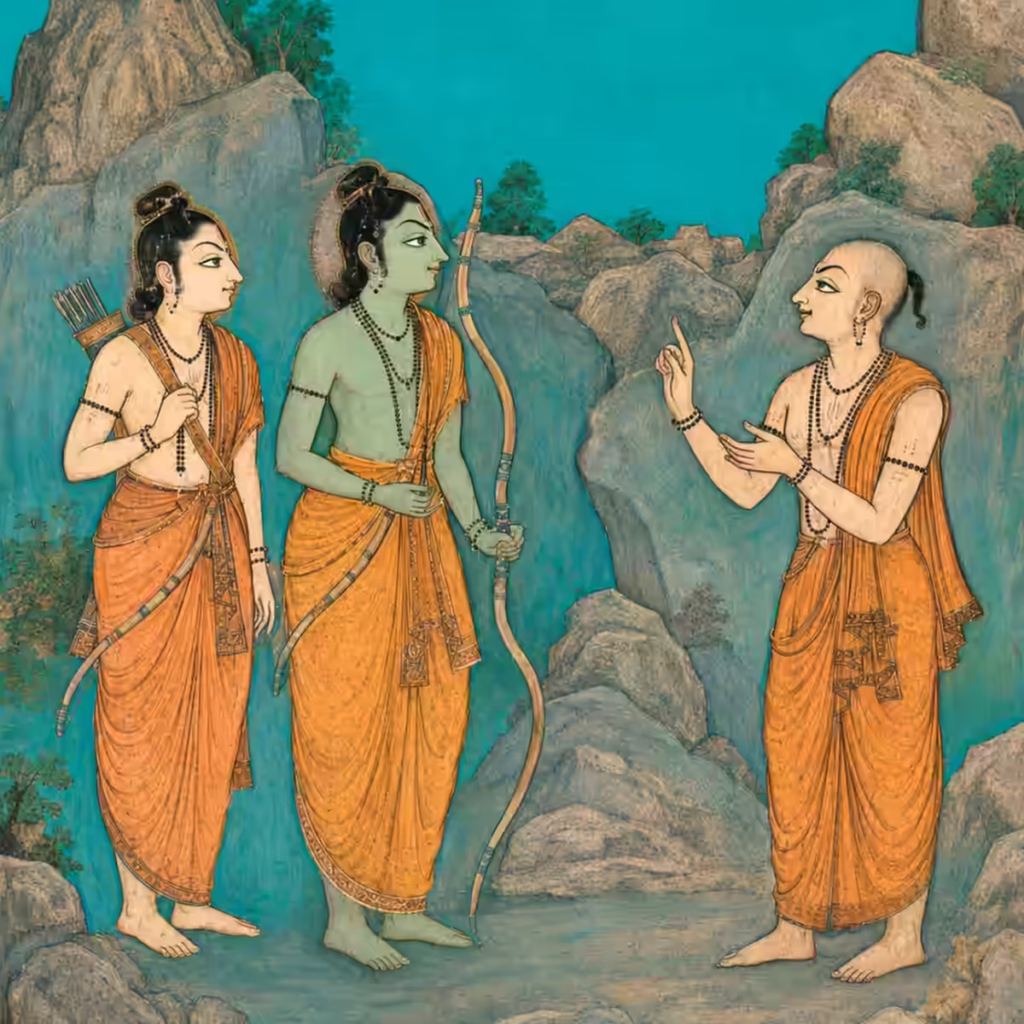
Throughout Ramayanam and Ramcharitmanas, Hanuman ji Maharaj displays His Vakachaturyam (eloquence of speech). While He was in Kishkindha, Vanar Raj Sugreeva sent Him as a messenger to identify Sri Rama and Lakshmana.
He disguised himself as a learned Brahmin and through his mastery over the Sanskrit language won over the heart of Sri Rama. Sri Rama was in all praise of His devotee. He declared that Sri Hanuman ji Maharaj had full mastery over the Vedas for his choice of words were apt and bore philosophical depth.
In praise of Lord Hanuman, He further tells Sri Lakshmana-
अविस्तरमसंदिग्धमविलम्बितमव्यथम् ।
उरःस्थं कण्ठगं वाक्यं वर्तते मध्यमस्वरम् ॥Translation: “His speech is neither too lengthy nor ambiguous. It is neither delayed nor hurried. They arise from the chest and throat. All his words are expressed in a balanced tone.”
Kishkindha Kanda 3.31
This verse displays His academic oratory skills that were par excellence. But, Hanuman ji Maharaj does not have a templated oratory style. His speech serves multiple purposes for different times, places and circumstances.
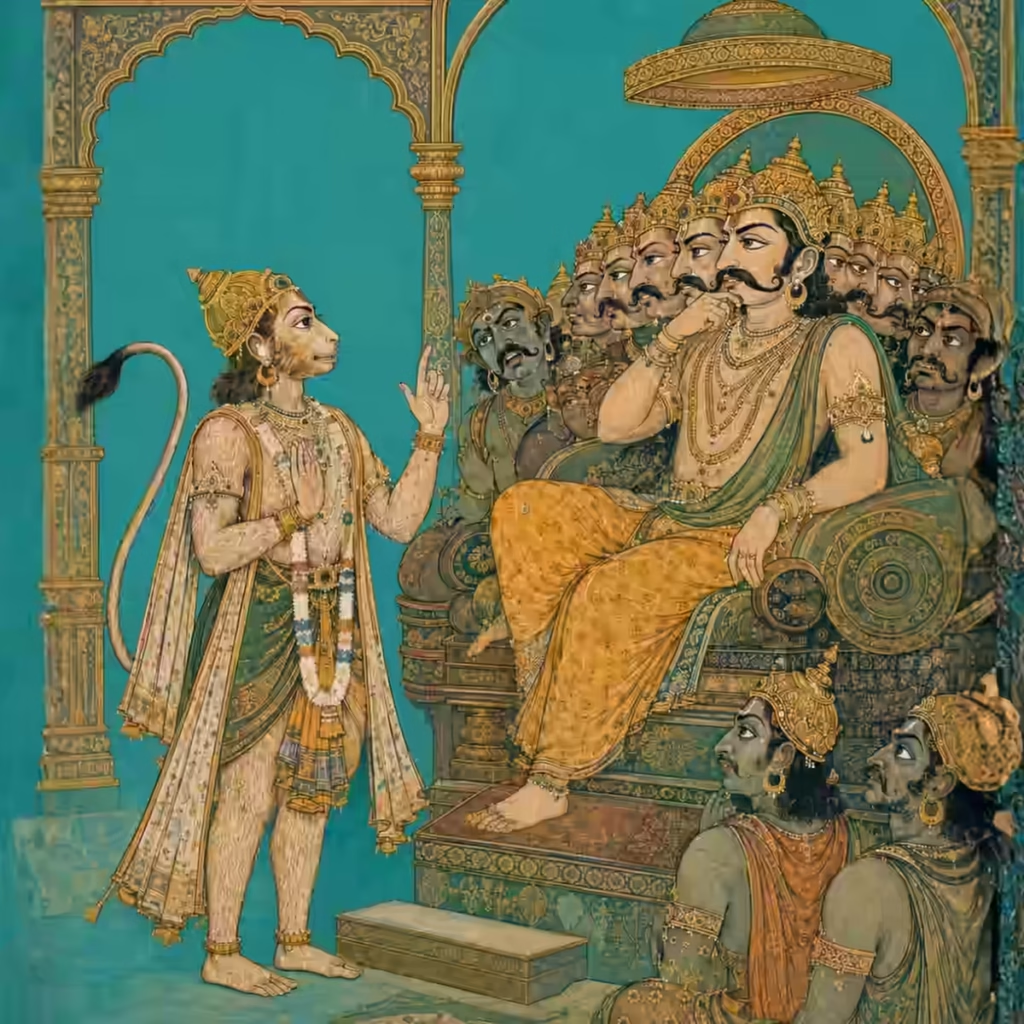
While he served as the ambassador of Shri Rama in the court of Ravana, he displayed his diplomatic skills. His words had a hypnotic impact on Ravana. Hanuman ji Maharaj began by praising Ravana to get His attention and then gradually turned it into a warning. He was respectful but not subservient to Ravana.
He spoke as Ravana’s well wisher and at the same time prophesied his destruction if he refused to return Devi Sita. In this lila, Hanuman ji reveals what true diplomacy is.
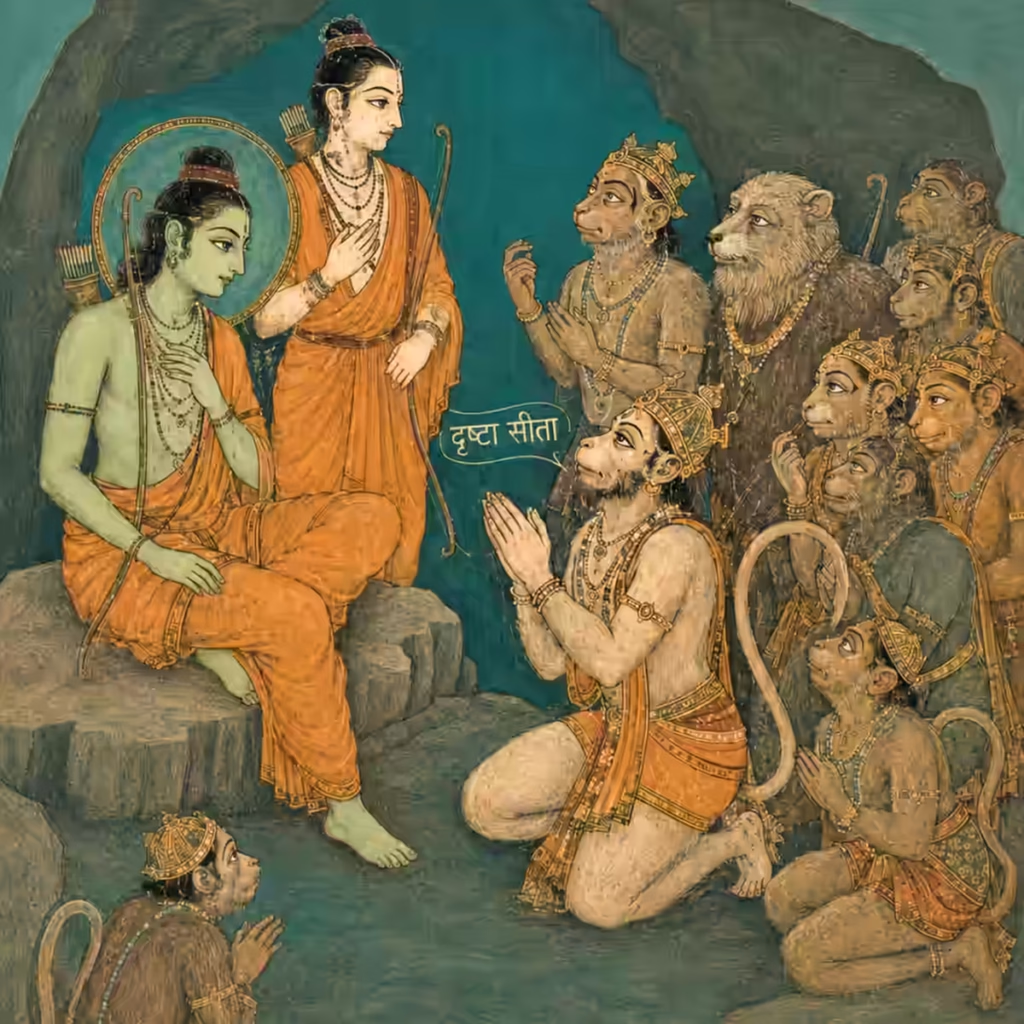
Yet, on another occasion when Sri Hanumanji Maharaj brought Devi Sita’s message to Lord Rama, He first exclaimed- ‘दृष्टा सीता’ meaning I have seen Devi Sita’. His very first concern was to relieve Lord Rama’s anguish. So, he prioritized the emotions of Lord Rama over completing the formalities. In this episode, He displays extraordinary emotional intelligence by keeping the strategic and political considerations for later part of the conversation.
When a person sincerely chants the mantra to improve their speech and confidence, the qualities of Lord Hanuman grace the devotee. The ‘Hum’ syllable works particularly on the Vishuddha Chakra. It enhances intuition, discernment and decision making skills.
Speech becomes controlled and not impulsive or abrupt. Working professionals observe that they develop diplomatic speech with the grace of Sri Hanuman ji Maharaj. This allows them to put forth their ideas in the most hostile environments without getting dissuaded. A natural ability to convince people through simple words emerges.
3. Anger Management and Greater Mind Control
Many sadhakas have reported that continuous chanting of the Mantra helps them dissociate with their thought patterns and detach from a particular situation more effortlessly.
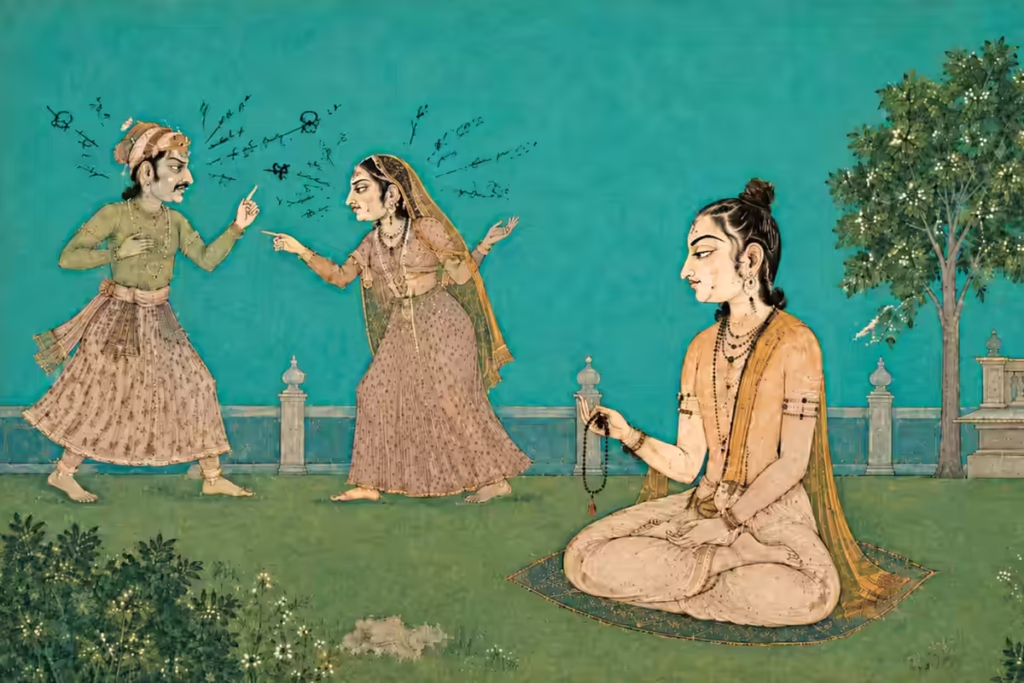
Consider this example- Suppose two people are arguing with one-another. The argument turns sour because both individuals are hurling words from anger and hatred. Such spiteful exchanges cannot be measured or appropriate because the mind is under the grip of excessive negative emotions.
But, due to the dominance of the Akash Tattva (void) in the Mantra, the devotee’s mind undergoes a deep cleansing process. It enables one to dissociate from the mind more effortlessly. Negativity and Anger evaporate in such a purified mind. Due to material circumstances, if an emotion arises out of impulse, it fails to translate into action.
Moreover, Om and Hum instill a sense of inclusivity. One begins to realize that there is no fruitful purpose of engaging in further arguments.
4. Inner Courage
The Manipura Chakra is the center for Courage. However, the Hanuman mantra Sadhana additionally bestows courage of another type, by activating the Anahata Chakra, the Heart Center.
The courage of Manipura Chakra bears the fire element and is expressed through decisions that have an impact in the real world. For example, confronting a difficult peer at work or establishing clear boundaries in a toxic environment is an attribute of the Manipura Chakra.
Such acts of courage are intended to change a long-standing pattern that is disturbing one’s mental peace. By taking a stand, we expect the peer to become cordial or at least maintain a decorum that lets one work in peace. Bravery shown in a battle or saving someone’s life are also examples of the Manipura Chakra courage.
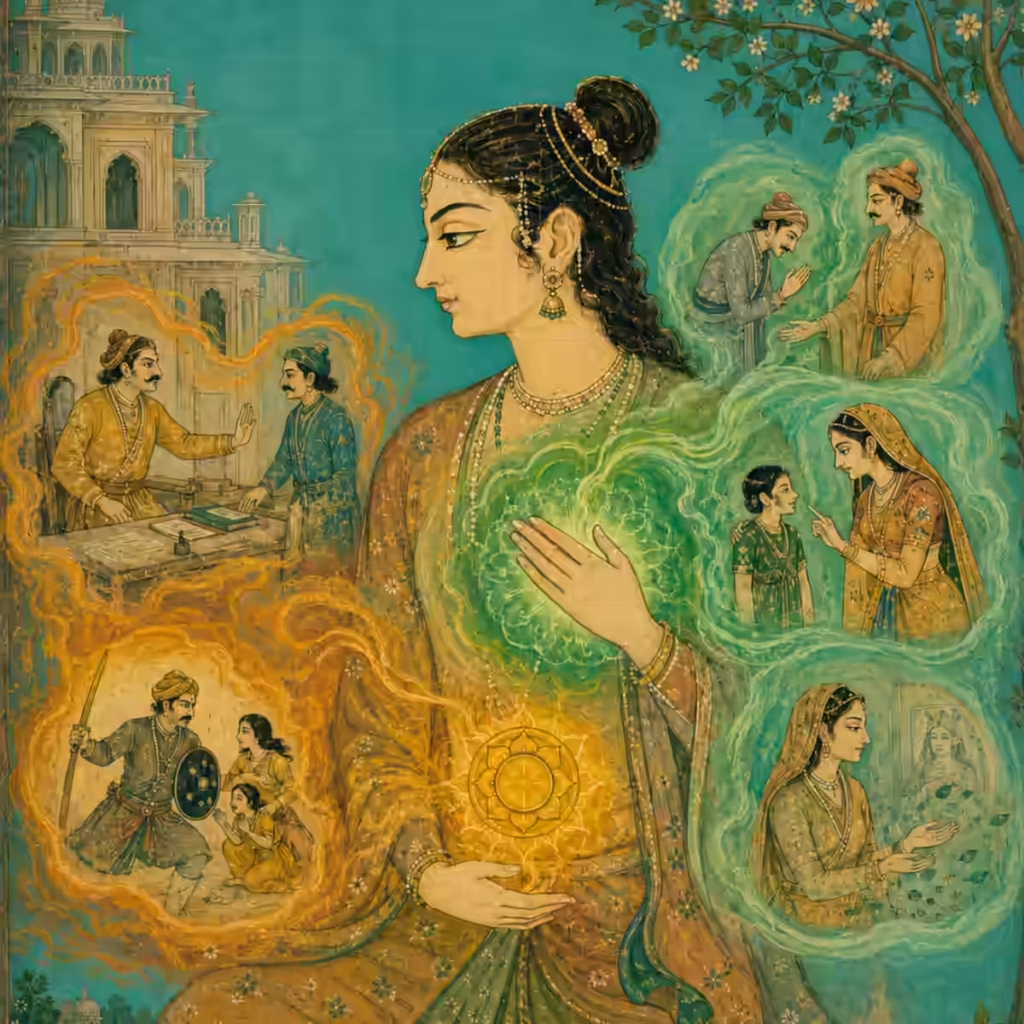
However, the courage of the Anahata Chakra works differently, mainly associated with the Vayu Tattva. More than outer impact, the goal here is to purge inner impurities. Such Courage works more on the mind before translating into action
For example- Genuinely apologizing to someone you hurt without fearing the other’s reaction.
Or the corrective nature of a mother toward her disobedient children. Here the mother guides her children despite their defiance because she is bound by duty. She does not compromise on her Dharma or let the children go astray, due to the strings of motherly attachment
Another great example is letting go of past memories. This too is courage, because one willingly enters the depths of the mind and confronts what was previously suppressed. It does not mean that one becomes weaker. Rather, one chooses to remain truthful to oneself irrespective of other’s opinions. These acts of courage may come across as unusual to others. But, they have a deep significance to the person practicing the Mantra Sadhana.
In other words, the Manipura courage overcomes external resistance while courage from the Anahata Chakra helps overcome inner resistance, facilitating inner growth and upliftment.
5. Enhances Bhakti
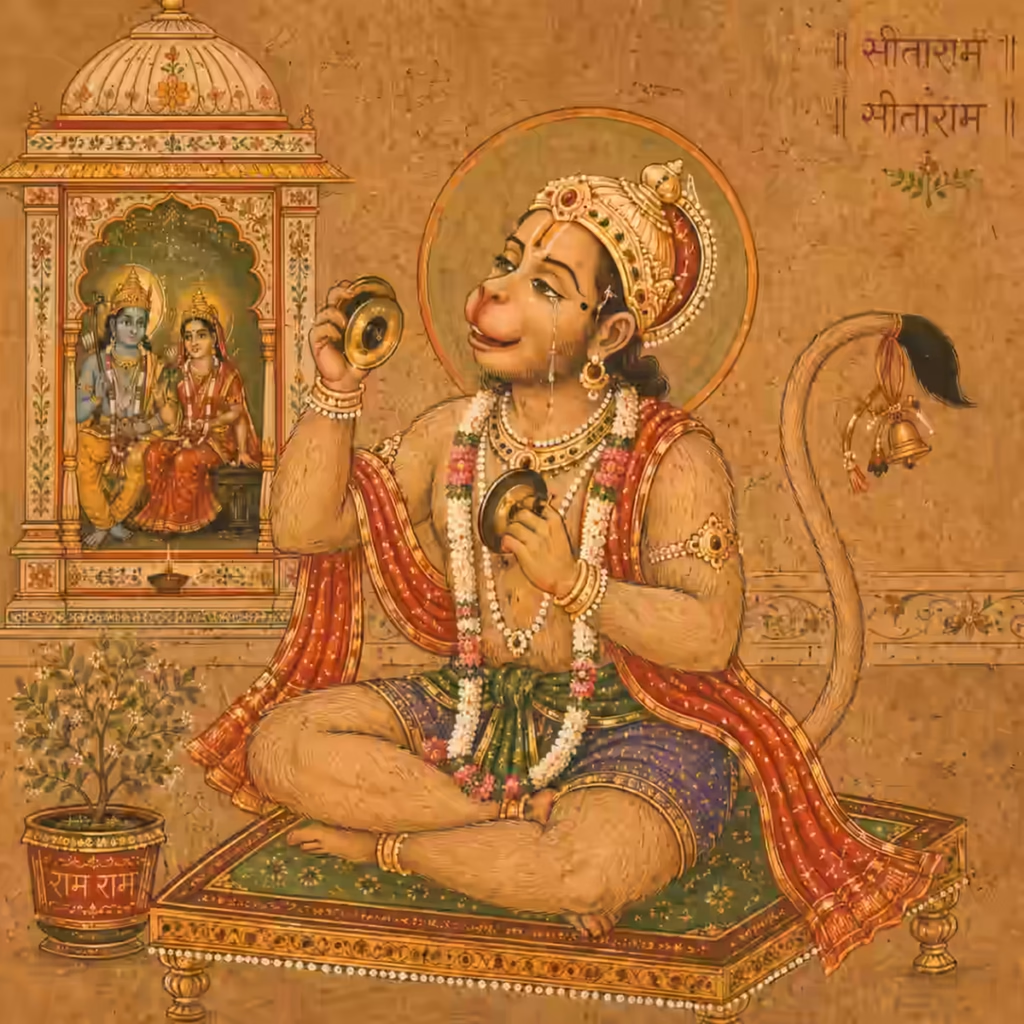
The word Hanumate is the soul of this Mantra and Sri Hanuman ji’s soul is Sri Sri Siya Ram. Therefore, it is beyond doubt that this mantra bestows pure Bhakti.
Hanuman ji burnt the city of Lanka and attracted the exalted devotee Vibheeshana to the lotus feet of Raghunath. Likewise when we chant the Om Hum Hanumate Namaha Mantra, we are taken to the Lotus feet of Bhagawan after burning the palaces of illusion constructed by the mind over millions of lifetimes. This is Sriman Hanuman ji Maharaj’s causeless Mercy.
Correct Pronunciation of the Om Hum Hanumate Namah Mantra
Following is a small clip of the Om Hum Hanumate Namaha Mantra in the voice of Guruji Shri Damodar Dasji Maharaj. Kindly note that this audio clip cannot be considered as the initiation process. This is provided to learn the correct pronunciation, not to practice by oneself without guidance.

Viraja Devi Dasi
Damodar Das Ji Maharaj