
A lot of sincere seekers don’t actually want “occult power.” They want fearlessness, inner fire or courage, and protection from unseen heaviness that affects the mind and energy. From the outside, this can look like a desire for power. However, it is important to acknowledge it as seeking shelter.
Sri Bhairavi Devi is the Mahavidya who does this by destroying confusion at the root. Here we share the real knowledge behind Bhairavi Devi, along with a safe, home-compatible way to relate to her, while making it crystal-clear why intense Bhairavi sadhana in Tantrik Vidhi must be practiced only under a Guru.
Quick Answers Table
| Questions | Short answer | What you can do next |
| Who is Sri Bhairavi Devi? | She is a fierce Mahavidya Shakti who dissolves fear by dissolving ego-ignorance. | Read the “Nature” section first. |
| Can I worship Bhairavi at home? | Reverence is possible but intense Tantrik worship/ invocation is not advised without guidance. | Follow the safe “8-minute practice” below. |
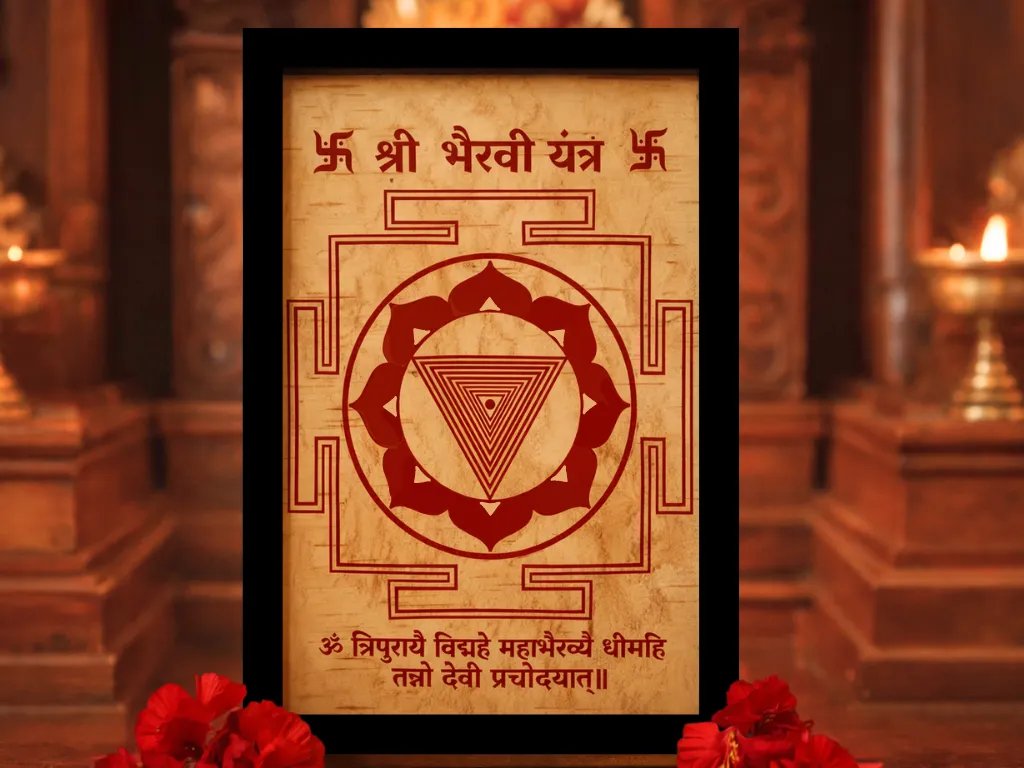
| What does Bhairavi Yantra do? | It is a devotional focus that helps the mind stay steady in Devi Bhairavi’s remembrance. With consistent japa, it supports inner tapas (discipline and clarity). | Choose a Bhojpatra Energized- Shri Bhairavi Yantra |
| Is Pancha Makara necessary? | It belongs to specific Tantric streams. Many follow symbolic/internal interpretations. | Don’t imitate or try anything extreme without Guru Guidance. |
Who is Sri Bhairavi Devi?
Sri Bhairavi Devi also known as Sri Tripura Bhairavi is the fifth Mahavidya.
Sri Bhairavi Devi is terrifying only to ignorance and deeply compassionate to a sincere seeker. She removes the inner patterns (fear, confusion, compulsion) that disturb clarity. Her energy can feel intense if one approaches casually, but becomes protective and stabilizing when approached with reverence and discipline.
Thus, she annihilates the 6 vices (lust, anger, greed, pride, attachment, and envy) which block one’s spiritual progress. Her energy can be overwhelming for those who do not have a strong spiritual foundation/goal.
She is loving to the noble, and terrible to deceit. Because she forces ‘truth’.
She may grant quick relief, but her deeper gift is maturity. Devi makes a seeker capable of holding what they ask for.
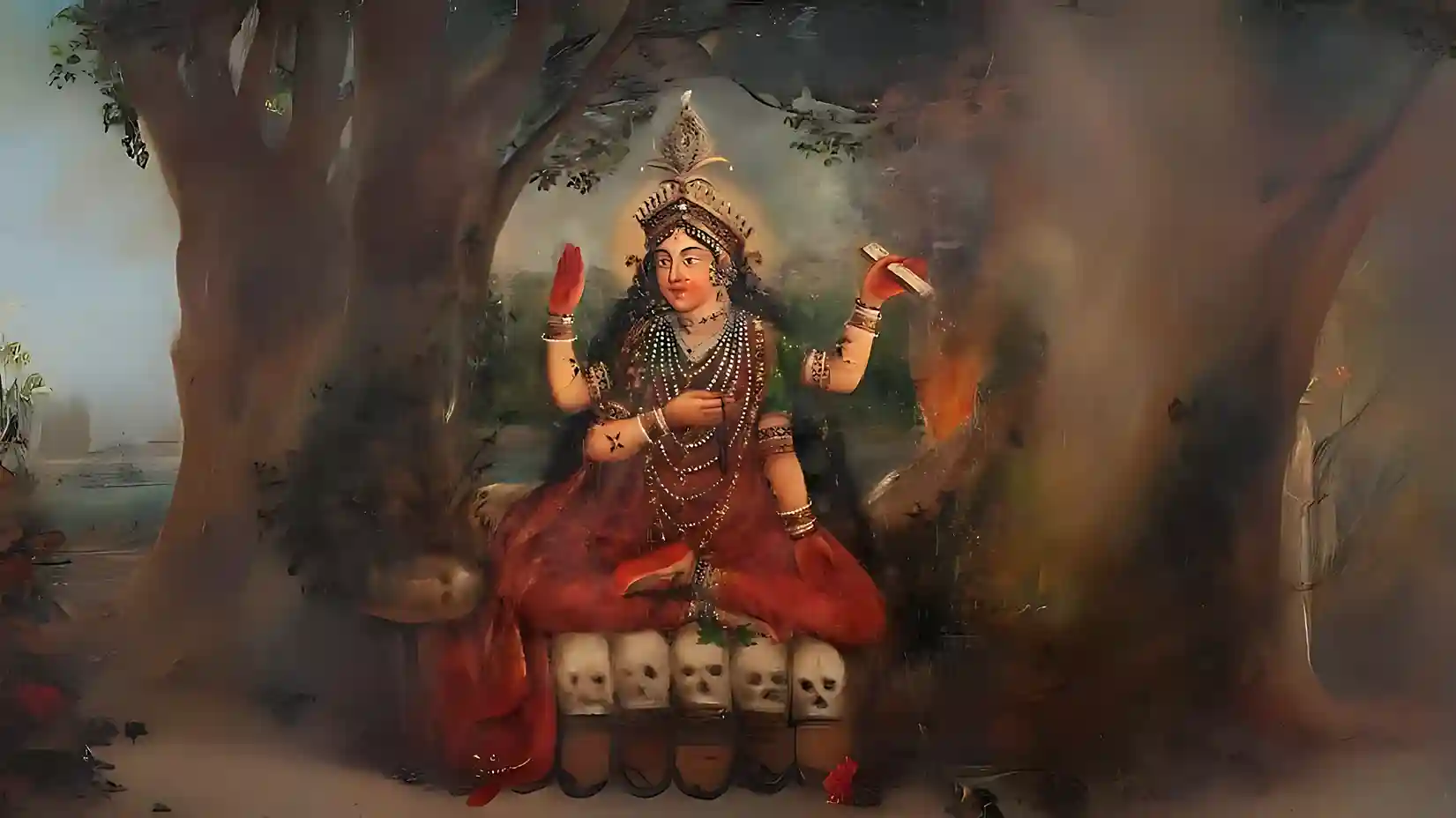
- Dwelling & symbolism: Sri Bhairavi Devi is often shown in a cremation-ground setting. The cremation-ground imagery points to the “uncomfortable zones” of the mind (like fear, attachment, and insecurity).
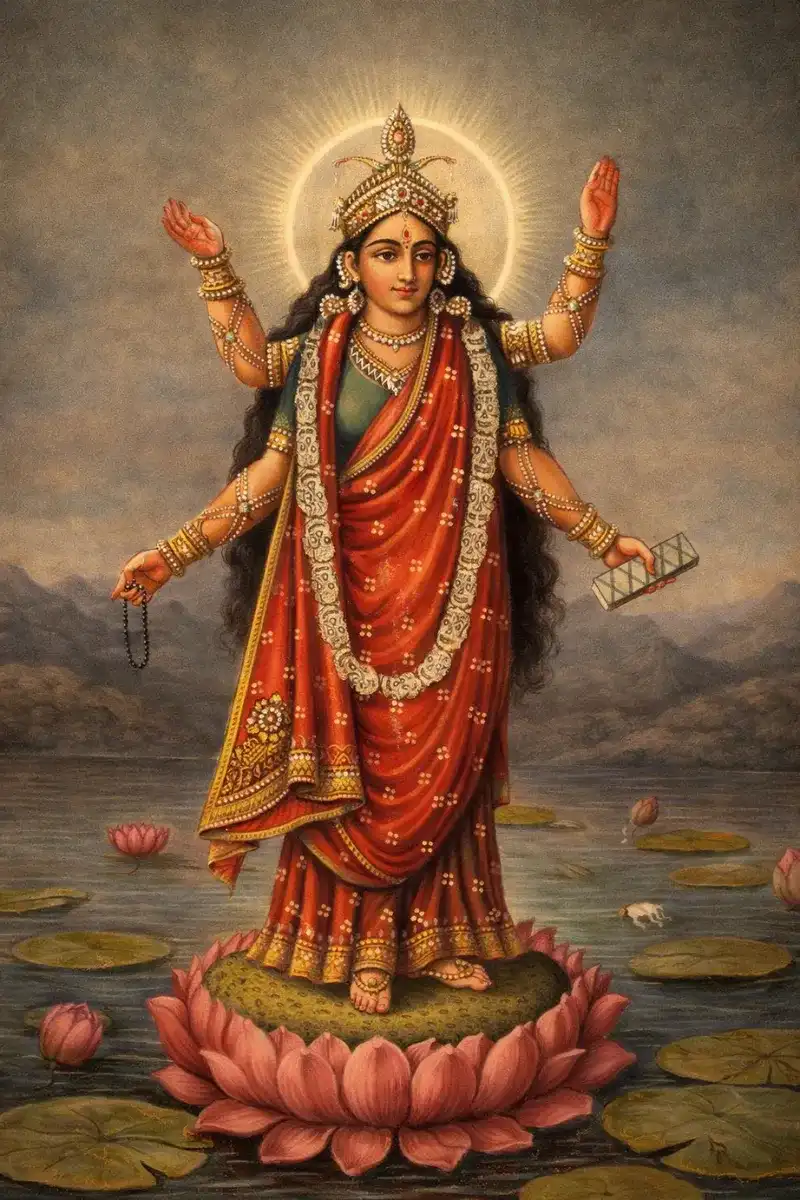
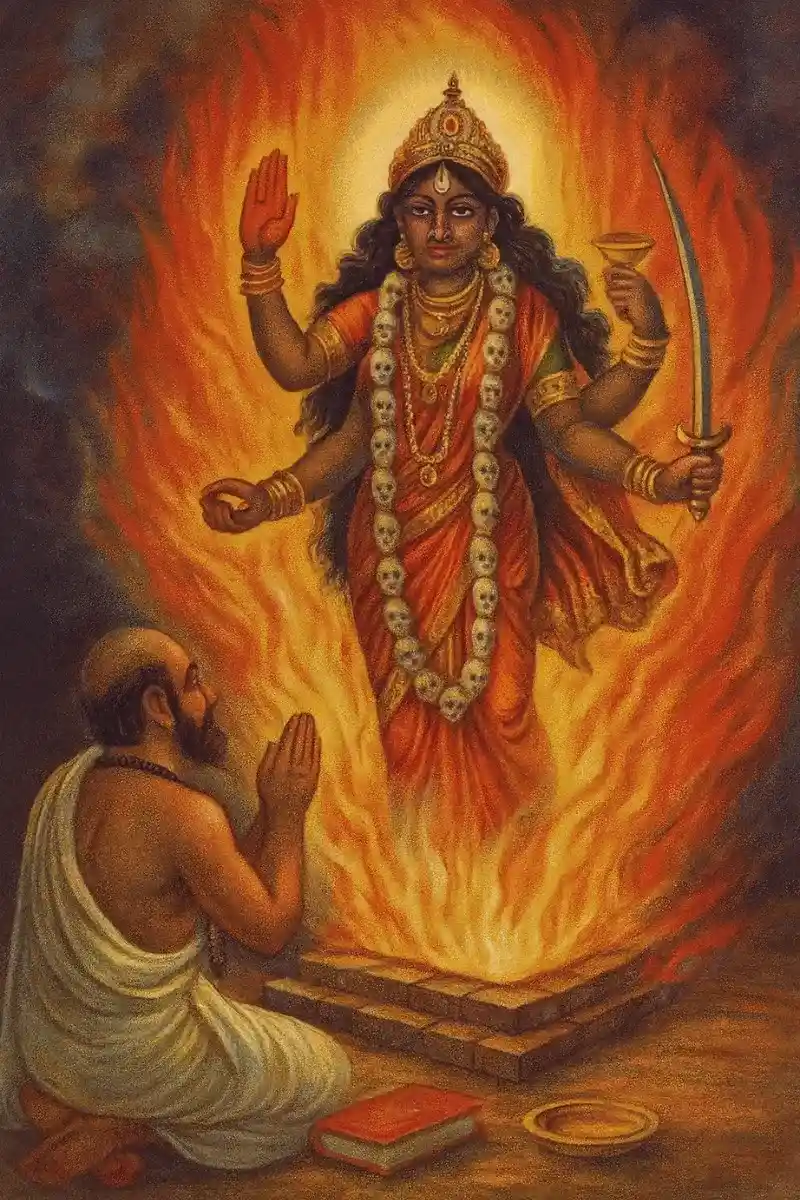
- Appearance: She has a versatile forms throughout various scriptures/ sources. They include benign as well as furious representations. In some descriptions She wears red garments symbolizing pure Śakti (divine power). Some descriptions show Her holding a skull-bowl, while others portray Her adorned with a garland of skulls. In one hand She may hold a rosary of beads, and in another, a sacred manuscript representing the Tantra Shastra or secretive knowledge. She is also described to wield weapons, Khadga (Sword) and a crescent moon adorns Her head. Devi Tripura Bhairavi is also glorified as Devi Mahakali, Devi Sati and Devi Pratyangira. In essence, She embodies Grace while the ego, illusions, and identification with the body and self perish.
महाकाली महामाया महाविद्या महेश्वरी ।
महारात्रि महामाया महामन्त्रस्वरूपिणी ॥१५॥(In the Tripura Bhairavi Ashtottarashatanamavali She is described as Devi Mahakali, Mahamaya or the Goddess of Great Illusory Potency, Mahavidya- She is the fifth among the Dashamahavidyas- or Wisdom Tantrik Goddesses, Maharatri or the Great Night/ Darkness, and the very embodiment of Mantra).
- Gestures of assurance: One hand is often in Abhaya mudra (denoting Fearlessness), and another in Varada mudra (bestowing support/boons), like a mother who both protects and provides. She grants refuge when the seeker becomes truthful and disciplined. Everything aligns for the ultimate welfare of the devotee (Shubhakari).
- Weapons & what they indicate: Several depictions show her holding weapons like sword, trident, or thunderbolt. These symbolize protection from adverse situations. It also means cutting through confusion, and restoring inner order.
- Expression and Laughter: She can be shown in an ecstatic or ferocious mood (Ugra), sometimes with fangs), reflecting that her energy can feel overwhelming to ignorance, but protective and supportive to sincere devotion. In Her benevolent form She is the bestower of prosperity. In her ferocious form She is described to dance eternally while roaring in laughter (Attahas or Ugrahas). Her laughter is said to embody wrath and anger in its most concentrated form.
What seekers really mean by “Bhairavi powers”
Many people search for “powers,” but what they usually want is relief from:
- irrational fear or anxiety loops
- recurring negative dreams or a sense of heaviness
- “I know what is right, but I can’t act” paralysis
- toxic bonds and compulsive patterns
- hidden opposition, envy, or unseen negativity
Important trust note: “This page avoids treating Bhairavi as a wish-machine.”
Sri Bhairavi Devi’s real gift is conversion: Fear → Clarity | Compulsion → Discipline | Ignorance → Insight
Can I worship Sri Bhairavi Devi at home?
If you are not formally guided:
- do not imitate cremation-ground rituals, extreme rites, or “high-voltage” practices
- do not chase signs, visions, or “testing energy”
- instead adopt reverence + purification + truthfulness as a discipline
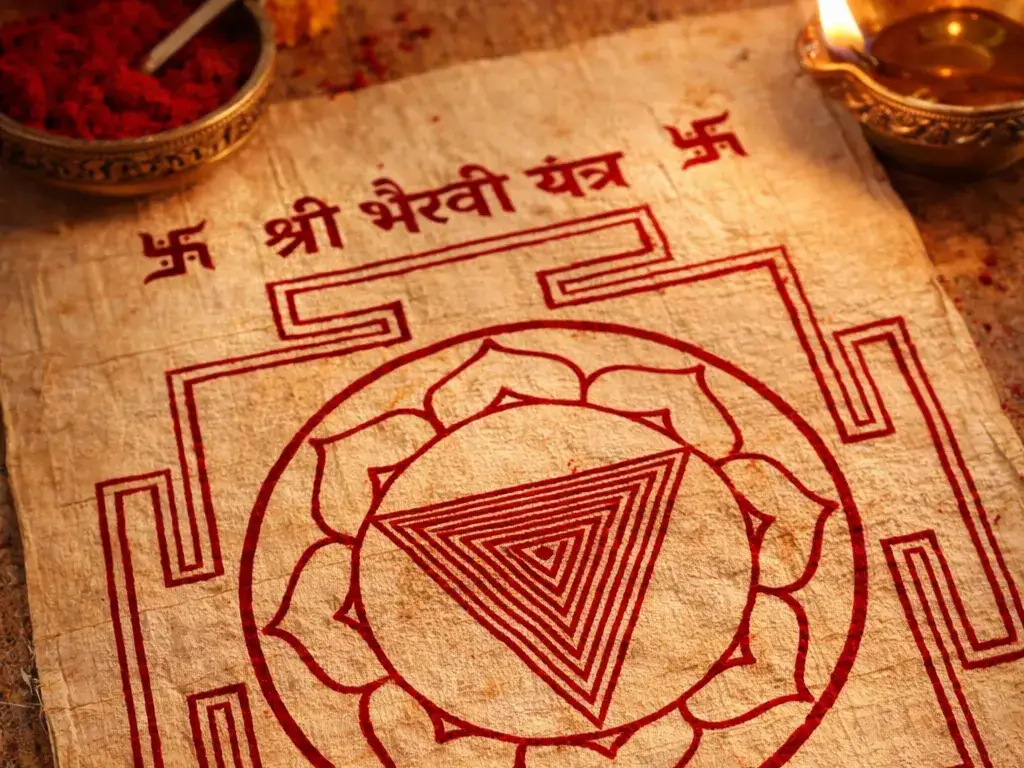
Bhairavi Yantra Meaning
The Bhairavi Yantra is a geometric representation of the Goddess. While the form of the Goddess is awe-inspiring and not always conducive for worship in households, as it demands a great amount purity, observance of rules, and rituals, an Energized Sri An energized Sri Bhairavi Yantra is a more home-compatible way to maintain focus by people in any stage of life. The traditional consecration prepares the Yantra to be approached with reverence and seriousness by the seeker.
- A Yantra is not decoration; it is a visual anchor to support devotion.
- This Yantra supports self-reflection during spiritual practice, which gradually reduces inner knots (granthis) through discipline.
- It is traditionally strongest under guidance.
Bhairavi Yantra Benefits (Phalashruti)
| Benefit | What changes inside | Who it’s for |
| Fear-burning clarity | anxiety reduces into calm alertness. It enables better decisions, less people-pleasing | Fearful but aware of their inner fears. |
| Mood Regulation | anger/grief become usable strength. Actions become more grounded | Intense seekers |
| Protection & cut-through | less “psychic stickiness” and fewer repetitive toxic cycles | Sensitive households |
| Voice & dignity | clearer boundaries and speech. It reduces manipulation and sharpens intuition. | Especially helpful for women |
| Tapas | steadier spiritual discipline. Also, improves discipline at work. | Long-term practitioners |
Sri Tripura Bhairavi Ashtottarashatanam Stotra:
क्रोधिनी क्रोधनिला क्रोधरूपिणी च ।
त्रिपुरा त्रिपुराधारा त्रिनेत्रा भीमरूपिणी ॥६॥
She is the force behind anger and its control, the Tripura Devi, three-eyed, and fierce in form.
Benefits are best seen as inner training results, not instant “miracles.”
Bhairavi Yantra Structure in Simple Words
- Bindu (center point): still awareness, houses the complete Energy of the Goddess
- 9 Inverted triangles: Also known as the Navyoni represents Shakti’s womb (creation and dissolution)
- Lotus petals: The mind’s purification field and the seat of Ashtasiddhis
- Circle Boundaries: Flow of will–knowledge–action
- Bhupura (square gates): Physical-Mental and Subtle Planes of Consciousness
Geometry Psychology (Why Yantras work)
The full potential or form and vibration of a deity remains unexplored without the Yantra. When we use the Sri Bhairavi Yantra as a tool for meditation, it retains our power of attention. When we regularly recite the hymns of Devi Bhairavi or Chant Her Mantra, the vibration accumulates within the Yantra. The geometry helps the mind stay steady, so prana stops scattering into fear and anxiety. Consistent small practice with a yantra is often more powerful than dramatic rituals.
The YantraChants.com “Living Yantra” Trust Stack
4 Pillars of Authenticity
- The Medium: Bhojpatra (ritual-grade)
Organic, traditional, and suitable for sacred inscription work. - The Drawing: Hand-drawn discipline
Not printed. Hand-drawn yantras carry the seriousness of intent + precision. - The Materials: Traditional inks / methods (as used in your process)
Natural materials support a devotional approach rather than “mass output.” - The Activation: Mantra-based consecration intention
A yantra becomes meaningful when it is approached as prasada, not as a mere object.
Safety note: We do not present a yantra as a mechanical device. The right expectation is: discipline + reverence + consistency.
Mass-Printed vs Bhojpatra (Guru-guided approach)
| Parameter | Mass-printed yantra | Bhojpatra hand-drawn (YantraChants) |
| Material | paper/metal print | Bhojpatra (ritual-grade) |
| Geometry | visually similar | drawn with intent (Sankalpa) + precision |
| Energization | usually none | mantra-based consecration intention |
| Best for | décor / curiosity | disciplined seekers |
How To Perform Home-Safe Bhairavi Alignment (8 minutes)
Step 1 (1 minute): Light a simple ghee diya
- After a morning bath, sit in front of the Yantra of Devi Bhairavi in the mood of reverence.
- Do not try to test the Goddess or have any kind of fear.
Step 2 (1 minute): Darshan
- Look at the Yantra, especially the center (Bindu).
- Avoid looking at the center for long if your brow feels uncomfortable or heavy.
- You can observe other parts of the Yantra to keep your focus on the practice.
Step 3 (2 minutes): Nama-mantra
- Chant: “Bhairavyai Namah” 11 times minimum or increase gradually to 27 and then to multiples of 108 (only and only if the mind is stable, undisturbed and is not overwhelmed by the nama japa).
- It is recommended to increase only under Guru Guidance.
- You may use a Rudraksha Mala to count once you reach 108.
Step 4 (1 minute): One-line intention
- Before the Yantra, state your intention respectfully in the language you are most comfortable with, expressing what you truly feel inside.
- This is called Prarthana (heartfelt prayer).
- This sincerity creates the connection.
Step 5 (1–2 minutes): Silence
- Sit quietly in a mood of humility and prayer.
- Do not chase visions.
- This step is like putting on the protective vibration of your spiritual practice each morning before stepping into the day.
Caution: YantraChants.com TrustStack Section
If you feel heaviness, agitation, or insomnia:
- stop for the day
- return to simple devotional practices.
- seek guidance before increasing the number of nama japas or exploring other practices.
What it does NOT do (YantraChants.com TrustStack Section)
- It does not replace medical or mental-health support.
- It does not guarantee instant siddhis.
- Can never bring dominance over others.
- It does not justify extreme ritual imitation (Tantrik Kriyas) without readiness and guidance.
- It does not work well with intoxication, ego-games, or careless lifestyle.
Frequently Asked Questions (FAQs) on Sri Bhairavi Yantra Worship at Home
Q1. What is Bhairavi meaning in Sanskrit?
A. Bhairavi is derived from the Sanskrit root word bhīru which means fearsome. This corresponds to Her appearance. Likewise, She is called so because Sri Bhairavi is Her consort. The name points to spiritual intensity and the removal of fear and ignorance. It does not imply extreme practices for household devotees.
Q2. Is Sri Bhairavi Devi only a Goddess of destruction?
A. Not in the literal sense. Her “destruction” is primarily the destruction of confusion, fear, and attachment, so clarity and fearlessness can rise.
Q3. Can beginners keep Bhairavi Yantra at home?
A. Beginners can keep it with respect and a simple nama-mantra practice. Intense Tantric methods are traditionally done under guidance.
Q4. What are the benefits of Bhairavi Yantra in daily life?
A. Most people report a steadier mind, stronger boundaries, reduced fear patterns, and a more protected, serious atmosphere for practice.
Q5. Are Pancha Makaras compulsory for Bhairavi Worship?
A. They belong to specific Tantric streams. Many practitioners follow symbolic interpretations rather than literal forms. Do not imitate extremes.
Q6. Which mala matches Bhairavi Yantra best?
A. An energized Rudraksha is a strong stabilizer. However, if the practice becomes intense, chanting on Neem Mala is recommended for neutralization of energy. The best choice depends on your mental state and practice intensity.
Conclusion
Sri Bhairavi Devi is not a “fear Goddess.” She is the fearless intelligence that makes your inner life truthful and strong. If you are inspired to invoke Her Protective Grace in a grounded way, begin with reverence, a small daily discipline, and a sacred anchor made with devotion and precision.
For a Bhojpatra Bhairavi Yantra and matching malas prepared in a devotion-first way, message on WhatsApp: +917417238880

Vani Devi Dasi
Damodar Das Ji Maharaj