
Introduction
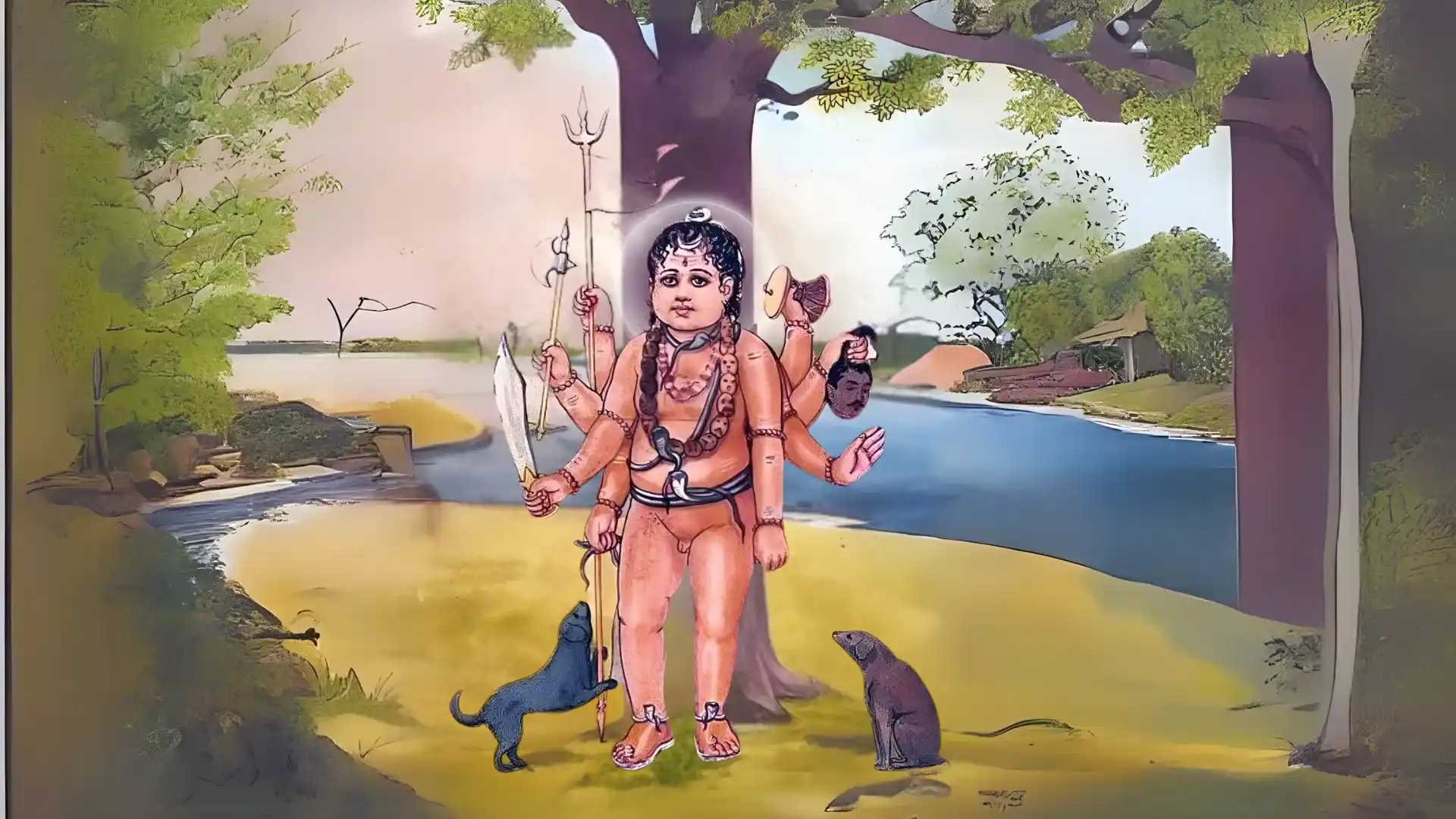
Many seekers, driven by curiosity, look for a bhairav sadhana experience as a way to test their spiritual strength. However, it is important to understand that this experience is not something casual or merely mystical, it can be deeply transformative and also terrifying when attempted without the right Guru. Genuine experiences of Bhairava are beyond the ordinary mind, and those who step into this field recklessly may find themselves shaken, rather than uplifted. This guide illuminates the profound realities of Kaal Bhairava and Batuk Bhairava, the strict rules passed down by authentic lineages, and how sacred tools like the Batuk Bhairava Yantra can anchor your spiritual journey safely.
The Emergence of Sri Bhairava from Lord Shiva
To understand Bhairava, one must first understand His origin. According to the Maha Shiva Purana, Kaal Bhairava appeared as a direct result of the wrath of Lord Shiva. When Lord Brahma became blinded by the pride of being the cosmic creator and claimed supremacy, Lord Shiva became red with rage. He chipped off his toe nail (or a lock of matted hair, in some versions) and hurled it to the ground, causing Sri Kaala Bhairava to appear.
Kaal Bhairava charged with ferocity and chopped off one of Brahma’s five heads, instantly shattering Brahma’s ego and making him realize the irreplaceable supremacy of Lord Shiva. This intrinsic nature of Bhairava, the inability to tolerate vices, ego, and transgressions of Dharma, defines His fierce Tantric energy.
Following this, the sin of decapitating a Brahmana stuck to Lord Bhairava in the form of Brahma’s skull (Kapala). To expunge this, Shiva instructed Him to follow the vows of a wandering mendicant (Kapalavrata). This led to the magnificent, detached form of Sri Bhikshatana, and later, the intensely ferocious Kankala Bhairava, before He was finally expunged of sins in the sacred city of Varanasi and anointed as its Kotwal (Maintainer of Law and Order).
Message BATUKA BHAIRAVA KIT to get the right Yantra + Mala suggestion.
The Essence of Sri Bhairava and Yoginis
The forms of Lord Bhairava have both material and spiritual connotations. Deciphering the true essence of Sri Bhairava primarily relies on the individual sadhaka’s inclination to either of the extremities. But, the ultimate goal of every deity of Sanatana Dharma is indeed Moksha. There are 8 forms of Lord Bhairava namely: Asitāṅga, Ruru, Chaṇḍa, Krodha, Unmatta, Kapala, Bhīṣaṇa, and Saṃhāra. The Ashta Bhairavas (8 Bhairavas) guard the eight cardinal directions and each has 8 secondary Bhairavas under their Lordship.
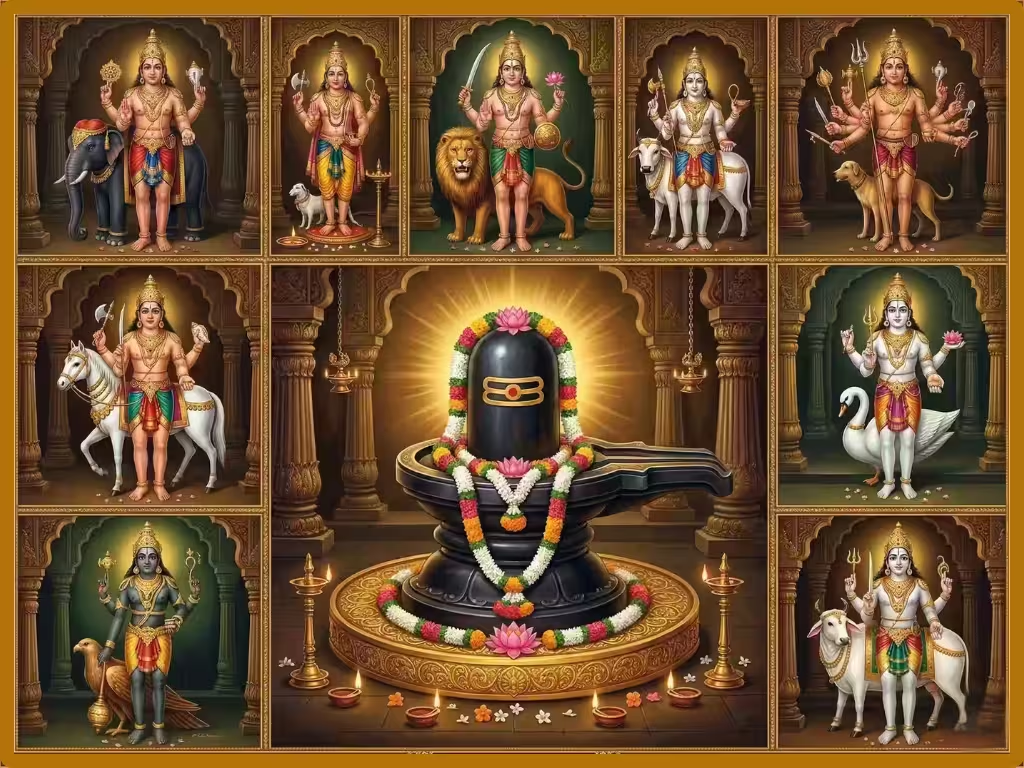
That sums up to a total of 64 Bhairavas. Their female counterparts are known as Yoginis. There are 64 Yoginis who emerged from the Ashtamatrikas to subdue Shumbh-Nishumbh and other demons in warfare. The divine couple symbolizes the unification of masculine and feminine power, rooted in Tantric mysticism. Those who recklessly engage in Bhairava sadhana often find themselves overwhelmed by subtle energies they are unprepared for.
Beyond male manifestations, fierce Tantric energy at its most intense and transformative occult level touches the realm of the Mahavidyas. To understand how material desire is sublimated into fierce spiritual ascendance and the mind is made fearless, you can delve into the profound Bhairavi Yantra (Bhairavi Yantra Benefits: Fierce Devi, Fearless Mind).
“The core purpose of invoking Sri Bhairava is not to acquire worldly benefits, but to systematically destroy our false identity.”
-Shri Damodar Dasji Maharaj
Decoding the Name and Nature
Bhairava is a Sankrit term and can be interpreted in multiple ways:
- Bhi (भि): To fear or to terrify.
- Ra (र): Denotes liberation or fire (symbolizing destruction).
- Va (व): Means to flow or expand.
In His name, ‘Ra’ symbolizes destruction or liberation from the Ego while Va symbolizes pervasion of joy that dawns upon subduing the Ego and overcoming fear. The term Bhairava (भैरव) is also derived from the root verb: (भृ) or (धातु) in Sanskrit, meaning to sustain, support, nourish, or carry. Sri Bhairava is thus venerated as a deity who always supports and assists His sincere devotees, through all walks of life. He guides one through their material and spiritual goals, ensuring overall harmony.
The Realities and Risks of Tantric Paths
It is important to note that personally I do not recommend anyone to perform Bhairava Sadhana.
“Bhairava Sadhana has to be done under the strict vigilance of a perfected Tantrika Guru, who is selfless and does not desire disciples and is only interested in serving the deity and guides his disciples as a duty towards his Ishta Devata, Bhairava.”
-Shri Damodar Dasji Maharaj
One must never attempt bhairav sadhana without thoroughly understanding the bhairav sadhana rules passed down by authentic lineages.
If one does not embrace spiritual transformation, Kaal Bhairava Sadhana can prove detrimental. Many have reported hearing reverberating footsteps, growls like those of dogs and absurd voices. These paranormal and psychologically distorted experiences can prolong if not guided by a siddha guru.
When attachments become too binding and the soul feels trapped in toxic sensory loops, a more fierce intervention may be necessary to sever these unhealthy ties. For those needing radical spiritual liberation and strong energetic defense, explore the Kali Yantram (Authentic Kali Yantra: 5 Benefits for Divine Protection).
When we perform Sadhana for material gains, our primary focus is on the result. This approach itself is flawed and violates the rules of Tantra. If a sadhaka slips into appeasing such deities to gain their powers for selfish purposes, they shall have to serve them in their realm even as long as the day of Brahman that is approximately 4.32 billion human years. Adopting Sattvik Sadhana (most preferably) to invoke Sattvik forms of the Lord not only shapes your inner spiritual self but also safeguards you from the consequences of an inadequately performed Tantrik ritual.
The Three Dispositions (Bhavas) in Tantra Sadhana
Tantra recognizes three temperaments of Sadhakas: Pashu Bhava (the bound individuals), Vira Bhava (the bold and courageous individuals) and Divya Bhava (Spiritual, Divine and Transformative individuals).
Comparison of Sadhaka Dispositions in Tantra
| Disposition | Characteristics | Suitability for Ferocious Sadhana |
| Pashu Bhava | Bound to materialism, instinctual, bound by conventional morality, fear of the unknown. | Least encouraged; most gurus forbid bhairav sadhana for Pashu-bhava sadhakas. |
| Vira Bhava | Elevated sense of doership, lacking fear of all kinds, disregard for societal norms. | Highly suitable; they qualify for Bhairava Sadhana. |
| Divya Bhava | Evolved consciousness identifying the universe as indistinguishable from Shiva-Shakti, transcends pairs of opposites. | Exempted from Tamasik practices; they follow the Tantrik practices in a Sattvik way. |
Which Yantra Sadhana / Practice Suits You?
Loading…
—
—
Who is Batuk Bhairava?
Batuka means dwarf in Sanskrit. He is the child-like form of Shiva and the fifth among the Ashta Bhairavas. Batuka Bhairava can be worshiped in Sattvik, Rajasik and Tamasik ways as described in the Sharada Tilaka Tantra (Chapter 20). In many traditions, householders are often guided toward batuk bhairav sadhana, as it is considered gentler compared to the ferocious forms of Bhairava. Worshiping Batuk Bhairava in a sattvik manner with fruits, flowers, and clean intention is said to bring protection, stability, and harmony in daily life.
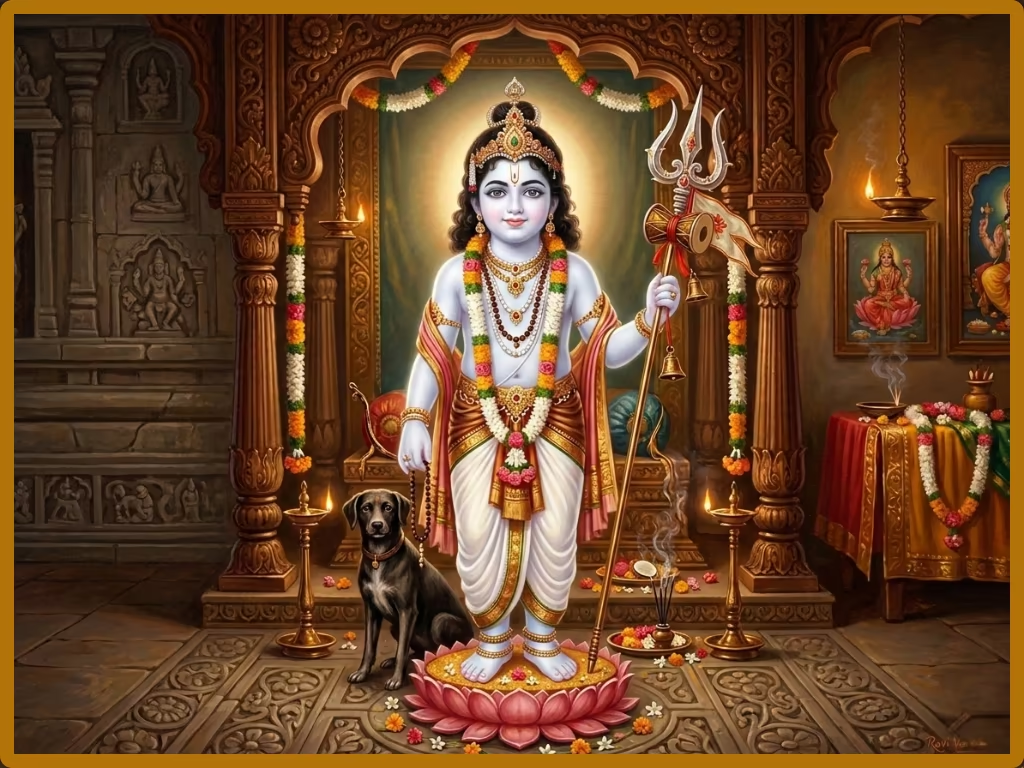
“Sri Batuk Bhairava embodies the rare tantric paradox of childlike innocence merged with immense cosmic strength.”
-Shri Damodar Dasji Maharaj
Harmonizing the Fierce: Vedic Shiva vs. Tantric Bhairava
How does a householder safely interact with such a formidable force? The answer lies in sacred geometry.
Table 2: Transforming Tantric Energy through the Batuk Bhairav Yantra
| Attribute | Lord Shiva (Vedic Energy) | Ashta Bhairavas (Tantric Energy) | How the Batuk Bhairav Yantra Transforms It |
| Core Nature | Sattvik, peaceful, the upholder of universal Dharma and Moksha. | Tamasik/Rajasik, fierce, wrathful destroyers of illusion and time. | Filters and Balances: Acts as a bridge, stepping down the raw, terrifying voltage of Bhairava into a manageable, highly protective shield. |
| Method of Worship | Traditional Vedic rituals, gradual meditation, peaceful devotion. | Vamachara (Left-hand path), unorthodox rituals facing fears and death. | Safe Anchoring: Allows householders to bypass Vamachara entirely, focusing instead on Sattvik geometrical concentration and safe Beeja Mantra chanting. |
| Ego Management | Gradual dissolution of the ego through lifetimes of Tapas. | Sudden, forceful, and terrifying destruction of false identity. | Structured Discipline: Instills deep punctuality and order, grounding the ego step-by-step rather than violently shattering it. |
The Batuk Bhairava Yantra: Activating the Energy
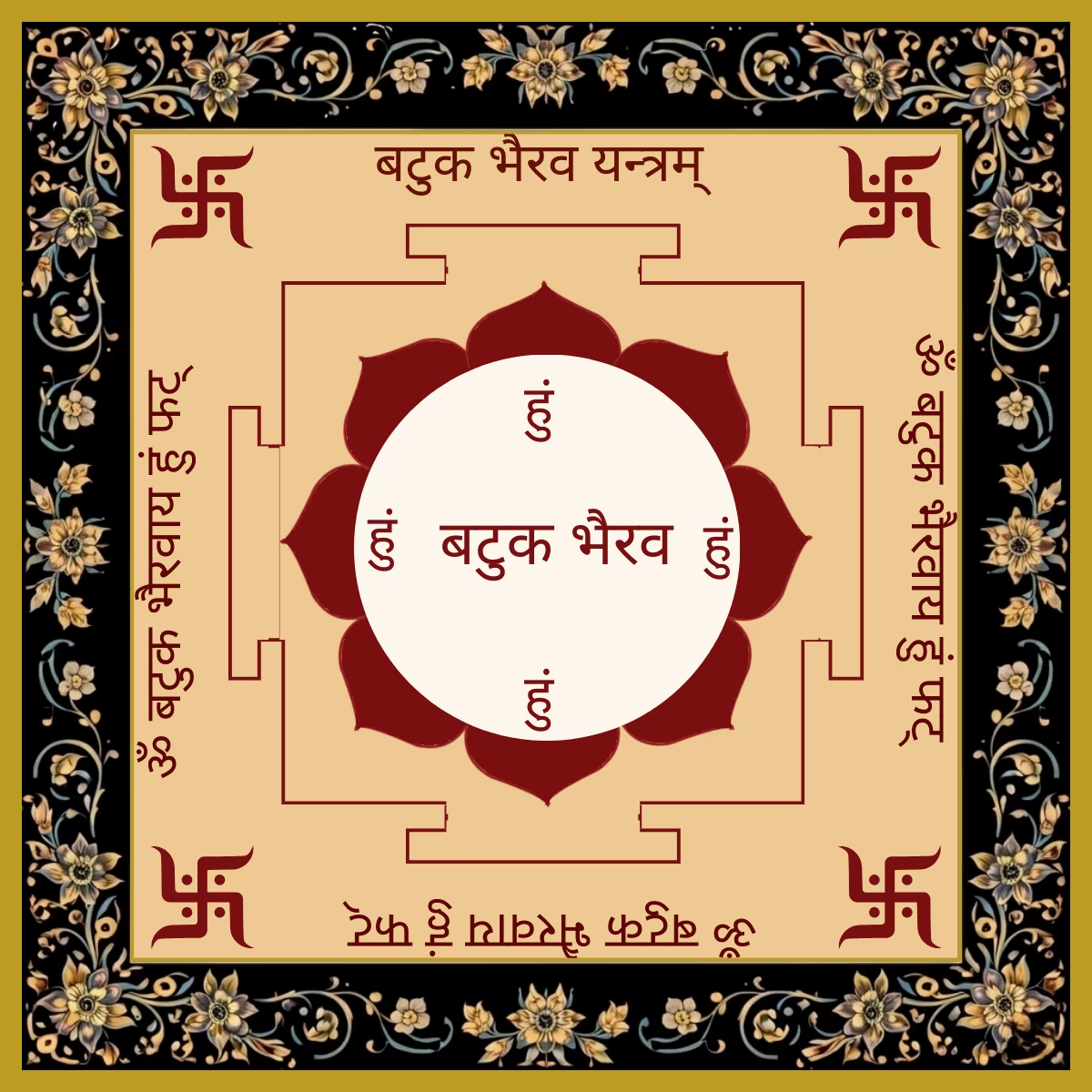
Unlike mere visual symbolism, the Batuk Bhairava Yantra works as a high-capacity spiritual transmitter. The central bija “हूं (Hūṁ)” represents the fiery, protective vibration of Bhairava’s presence. When a devotee chants the mantra in front of this yantra, the sacred geometry (the lotus petals, the bindu, and the square bhūpura enclosure) resonates with the sound waves.
While the beeja mantra focuses specifically on protective energy, those seeking to understand the broader mechanics of spiritual attraction and magnetic resonance often explore the Kamaraja Beeja. To learn more about this, read our comprehensive guide on the Kleem Mantra (Kleem Mantra: Meaning, Benefits & Attraction Secrets), which further explains how to responsibly harness the energy of divine attraction.
This structure physically holds and stabilizes the energy, ensuring the immense power of Bhairava does not scatter or overwhelm the practitioner. Instead, it magnifies within the aura, transforming raw Tantric energy into positive, defensive Tantrik forces that shield against negativity, fears, and karmic obstacles.
The intricate mathematics of the Yantra share a profound lineage with the ultimate geometric manifestation of the Divine Mother, the Sri Yantra. If you are drawn to the protective and transformative power of these supreme geometries, we highly recommend exploring the Khadgamala Stotram (Khadgamala Stotram: Meaning & Sri Chakra Protection) to deepen your understanding of tantric matrixes.
10 Transformative Benefits of the Batuk Bhairava Yantra
- Creates an Astral Shield: Worshipping this yantra brings a shield of protection against unseen forces, psychic disturbances, and ill will.
- Purifies the Environment: Its vibrations cleanse the environment, making homes, shops, and offices energetically lighter and free from hidden negativity.
- Instills Deep Discipline: Spiritually, the yantra strengthens discipline in sādhana, inspiring punctuality, order, and focus.
- Fosters Material Stability: On a material level, the yantra is said to attract stability in career, authority in leadership, and fearlessness in decision-making.
- Safeguards Ventures: Entrepreneurs, professionals, and leaders place this yantra to ensure that their ventures are free from betrayal, delay, or loss.
- Harmonizes Karma: The vibrations guide one to make choices aligned with dharma, reducing karmic debts.
- Dissolves Inner Turmoil: On a deeper plane, the yantra also assists in dissolving internal fears. Emotional turbulence and relationship disappointments are often compounded when the mind itself is unsettled. For deeper emotional healing and to calm the restless mind alongside your practice, you might consider the benefits of lunar energy outlined in our post on the Chandra Yantram (Moon Mind Healing: Chandra Yantra Guide).
- Eradicates Anxiety: Many report reduced anxiety, stronger intuition, and a sense of unseen guardianship in moments of uncertainty.
- Cultivates Inner Stillness: It is a companion not only for external protection but also for cultivating inner stillness and courage. While the Yantra helps build self-worth and harmonious boundaries, sometimes deep-rooted fears in relationships require a surge of divine courage. To fortify your heart and protect your energetic space, learn about the Hanuman Bhakti Yantram (Hanuman Bhakti Yantra: Living Protection on Bhoj Patra).
- Balances Chakras: Energetically, this yantra resonates with the Ajna Chakra (third eye) and Muladhara Chakra (root) simultaneously, grounding the devotee while opening inner vision.
Mindfulness Awareness Plan
Choose your cycle length (7 / 21 / 41 days), pick disciplines, lock them for the full cycle, and journal daily to see exactly where you slip - and what strengthens you.
YantraChants Trust Stack Safety Guardrail: True Upakaranas (spiritual tools) must never be treated as casual decorations. To ensure maximum energy absorption and protection, our Trust Stack mandates that authentic Yantras must strictly be hand-drawn on authentic Himalayan Bhojpatra (Himalayan Birch Bark).
We absolutely prohibit the use of mass-produced materials like metal or copper, as Bhojpatra acts as a high-capacity organic “battery” to permanently hold the Prana of the consecration. Furthermore, the Yantra must be hand-drawn using a pomegranate (Anar) twig stylus and natural inks like Ashtagandha; even a 1mm error in the Shastric geometric proportions can “short-circuit” the energy flow.
Placement Note: To honor this energy, the Yantra should be placed on an East-facing or North-East facing wall, or a dedicated altar, intended strictly for focused sadhana, protection, or healing.
Adherence to the Vidhi and Authentic Activation
Further, there are guidelines elucidated by the Great Lord which finally concludes with:
“anyatha krodharajena vinaso bhavita tava | अन्यथ क्रोधरजेन विनसो भवित तव”
– meaning: Otherwise, the wrathful king (Krodha Bhairava) will bring about your destruction.
-The Shiva Maha Purana
Here, Unamatta Bhairava emphasizes the uncompromising adherence to the vidhi (guidance along with unmistakable ritualistic approach) provided by Him according to the Tantrik Scriptures.
YantraChants Trust Stack Activation Warning: A Yantra is not considered functional until it has undergone Prana-Pratishtha. Relying on un-energized, un-consecrated items yields no spiritual anchor. Within our framework, true activation involves Lineage-Based Rituals, performed under strict guidance by Sri Damodar Dasji Maharaj. The energy is awakened through dedicated Japa, specifically 108×3+ repetitions of appropriate Beeja Mantras. Householders must rely on these Guru-energized Upakaranas to safely interface with such profound energies, avoiding the extreme risks of unguided Tantrika rituals.
Frequently Asked Questions (FAQs) on the Sri Batuk Bhairava Yantra
Q1. What is the Sri Batuk Bhairava Yantra?
A. The Sri Batuk Bhairava Yantra is a sacred geometric form of Lord Batuk Bhairava, the youthful and approachable manifestation of Bhairava. It serves as a spiritual support for protection, discipline, courage, and focused worship, especially for those who seek a gentler connection to Bhairava tattva.
Q2. How does the Batuk Bhairava Yantra work?
A. The yantra works as a subtle spiritual transmitter. Its bindu, petals, mantras, and outer enclosure help hold and stabilize the vibrations generated through prayer and mantra-japa, allowing the practitioner to direct devotion and attention toward Lord Batuk Bhairava in an ordered and protected way.
Q3. Who is Batuk Bhairava?
A. Batuk Bhairava is the child-like form of Lord Shiva in His Bhairava aspect. Though youthful in appearance, He carries the protective, disciplined, and fear-destroying force of Bhairava in a form that is considered more accessible, especially for householders when worshiped in a sattvik manner.
Q4. Is Batuk Bhairava different from Kaal Bhairava?
A. Batuk Bhairava is a specific form within the wider Bhairava tradition. Kaal Bhairava is among the most demanding and fierce manifestations connected to the destruction of ego, fear, and delusion, whereas Batuk Bhairava is generally regarded as more approachable for devotional worship when practiced within proper limits.
Q5. Why is Batuk Bhairava considered suitable for many householders?
A. Batuk Bhairava is often recommended in a sattvik devotional form because He combines protection with accessibility. Worship offered with fruits, flowers, cleanliness, and sincerity is said to bring harmony, stability, and guardianship without requiring intense ferocious rites.
Q6. What are the main benefits of the Sri Batuk Bhairava Yantra?
A. The yantra is revered for protection from negativity, strengthening inner courage, improving discipline, stabilizing one’s environment, and helping remove subtle obstacles. It is also associated with clarity in decision-making, steadiness in work, and a sense of divine guardianship in daily life.
How to Chant Batuk Bhairava Mantra with a Rudraksha Mala in front of Batuk Bhairava Yantra (10-Step Method)
Step 1: Prepare the Space — 1 minute
- Place the Batuk Bhairava Yantra on a clean, dedicated altar facing East (or North if customary).
- Sit on an āsana (mat/cloth) facing East during your practice.
- Light a diya (lamp) and incense, ensuring the surface remains tidy and uncluttered.
Step 2: Face the Yantra and Set Your Posture — 1 minute
- Sit facing the Yantra with a straight spine (comfortable, not forced).
- Keep your water bottle/phone away to maintain an aura of discipline and focus.
- Let the eyes rest on the Yantra’s bindu (center point) for a few breaths, merging your awareness with the cosmic presence of Bhairava.
Step 3: Wash the Hands, Touch the Heart — 30 seconds
- Wash hands (or wipe) and approach the practice with shraddhā (respect) and satva (cleanliness).
- Inwardly set a soft sankalpa (intention) softly at the start, releasing it into the practice without anxiety. Cultivating the grace of the divine begins the moment you wake up. Integrating simple morning practices can significantly amplify the effects of your Yantram. Discover how to start your day with divine abundance by reading about the Karagre Mantram (Karagre Vasate Laxmi Mantra: Meaning & 7 Benefits).
Step 4: Hold the Rudraksha Mala Correctly — 1 minute
- Hold the Rudraksha mala in your right hand, as it is highly auspicious for Śiva-centric practice.
- Let it rest lightly—do not pull or stretch it.
- Keep the mala at heart level or slightly below, and avoid letting it touch the floor.
Step 5: Do a Gentle Sattvik Opening (Safe) — 2 minutes
- Worship this youthful, child-like form of Shiva in a sattvik manner with pure, clean intention.
- If available, you may mentally or physically offer fresh fruits and flowers.
- Let the mind become calm; this form of Batuk Bhairava responds quickly to devotion offered with purity of heart.
Step 6: Offer to the Bindu — 30 seconds
- Look softly at the Bindu (center point) of the Batuk Bhairava Yantra, which is encircled by the bija mantra “हूं”.
- Offer your fears and karmic obstacles inwardly to the yantra, allowing it to act as an astral shield and spiritual transmitter.
Step 7: Begin Batuk Bhairava Mantra — 10 to 20 minutes
- Start chanting the Batuk Bhairava beeja mantra steadily and clearly: “ॐ ह्रीं बटुकाय आपदुद्धारणाय कुरु कुरु बटुकाय ह्रीं ॐ”.
- Keep the eyes returning to the Yantra’s geometry, which resonates with the sound waves to stabilize your attention.
- If you cannot chant aloud, chant softly or mentally, but stay fully present and focused.
Step 8: Use the Rudraksha Mala as a Stability Anchor — during chanting
- Move one bead per chant of the Batuk Bhairava Beeja Mantra.
- Perform 11 to 108 repetitions of the mantra, depending on your daily sankalpa.
- Once you reach the meru bead, reverse the direction of the mala, but do not count over the Meru bead.
- Do not use the index finger.
Step 9: Closing Gratitude and Protection Seal — 1 to 2 minutes
- Sit quietly facing the Yantra.
- Speak one simple line of gratitude, trusting the yantra to create a shield of protection against unseen forces.
- Feel the practice “stay” in the space, cleansing the environment and making it energetically lighter.
Step 10: Respectful Completion — 1 minute
- Do namaskāram to the Yantra with humility and dignity.
- Touch the mala to the forehead once as a sign of reverence.
- Carry a calm vow into the day, letting steadiness, gratitude, and right action carry your intention.
YantraChants.com Trust Stack Guardrails for This Practice
To ensure your 10-step Batuk Bhairava Sadhana is both effective and spiritually safe, the tools and methods used in this specific process must adhere strictly to the Trust Stack framework:
- The Sacred Medium & Precision (Step 1): The Batuk Bhairava Yantra placed on your altar must be hand-drawn on authentic Himalayan Bhojpatra using traditional natural inks (like Ashtagandha) and a pomegranate twig stylus. It must be crafted with exact Shastric geometric proportions, as even a 1mm error can “short-circuit” the energy flow you are trying to cultivate during your chanting.
- Lineage-Based Activation (Step 7 & 8): Before you begin your daily Japa with the Rudraksha mala, both the Yantra and the mala must have undergone Prana-Pratishtha (consecration). This requires prior activation through 108×3+ repetitions of the specific Beeja Mantras under the guidance of an authentic lineage, such as the Ramanandi Sampradaya.
- Dedicated Intention (Step 5 & 6): The Yantra and mala are strictly for focused purposes, such as protection, inner awakening, and dissolving the ego, rather than casual display. Approaching your daily practice with this dedicated intention ensures the “Living Yantra” creates a tangible shift in your room’s energy within 24–48 hours.
- Strict Placement (Step 1): To honor the energy dynamics of the Trust Stack, the altar space where you place the Yantra and perform your 10-step process must be oriented on an East-facing or North-East facing wall.
The Batuk Bhairava Gayatri Mantra
To deepen the spiritual connection and harmonize the yantra with the practitioner’s subtle body, the Batuk Bhairava Gayatri Mantra is often chanted:
“ॐ बालभैरवाय विद्महे महाकालाय धीमहि तन्नो भैरवः प्रचोदयात्॥”
oṃ bālabhairavāya vidmahe mahākālāya dhīmahi tanno bhairavaḥ pracodayāt ||
It is paramount to note that this mantra should only be accepted and practiced by the sādhaka upon receiving it from an authorized Guru of a Tantrika Parampara. Without authentic Guru deeksha, the practice remains a symbolic focus; however, with a realized Guru’s blessing and initiation, it becomes a fully awakened force that offers genuine protection and profound inner transformation.
Secure Your Spiritual Path with YantraChants.com
Sri Bhairava sadhana is not a shortcut to material desires. For those seeking true safety, guidance, and spiritual elevation, grounding your practice with genuine tools is paramount. The Batuk Bhairava Yantra is not just for protection, it is a reminder of discipline, courage, and divine guardianship that can transform your daily life.
Whether you require a highly energized Batuk Bhairava Yantra carefully hand-drawn on authentic Bhojpatra, a pure Sphatika Mala for your Japa, or a profound Sri Meru, aligning with traditionally consecrated items ensures you walk the path of light safely. Connect with us to find the perfect Guru-energized Upakarana tailored for your journey.
Reach out directly on WhatsApp at +917417238880.

Vani Devi Dasi

Rohini Devi Dasi