

Introduction: The Seed vs. The Spiritual Device
In Sanatana Dharma, Rudraksha holds both religious and Ayurvedic importance. Rudraksha is a dried seed-bead from the ripe fruit of Elaeocarpus ganitrus, a tree native from the Himalaya to northern Myanmar. However, a bead plucked straight from the tree is merely a botanical specimen. For it to transform into a living Upakarana (spiritual tool) capable of shifting energy, it must undergo rigorous consecration.
The 3 Mukhi Rudraksha

Based on the number of mukhis or faces, Rukdrakshas differ in their purposes depending on their associated deity. This article explores the precious spiritual insights and benefits of the 3-Mukhi Rudraksha, bridging the gap between ancient Jnana and your daily Sadhana, transforming scattered energy into focused spiritual intent.
Agni: The Principle Deity of 3-Mukhi Rudraksha
The three-faced Rudraksha is revered as the embodiment of Agni, the Vedic deity of fire. In Vedic cosmology, Agni is referred to as the mouth of the Virat Purush.
In the Rig Veda, Agni is the very first deity invoked because fire is the bridge between the visible and the invisible worlds.
“The Three-faced Rudraksha represents the three types of fires. The fire god Agni becomes pleased with him who wears this”
-Sri Damodar Dasji Maharaj
What are the three types of Sacred fire?
In Vedic symbolism, fire manifests in three principal forms. Understanding these helps a seeker balance their material duties with their spiritual Swadhyaya (scriptural study).

Every shape and direction holds profound significance, grounded in strict Shastric rules to ensure the flawless flow of spiritual energy: Āhavanīya (The Square): The eastern fire, receiving primary oblations to carry our prayers straight to the celestial realm. Gārhapatya (The Circle): The continuous, domestic fire of the householder, representing the womb of creation and sustenance. Dakṣiṇāgni (The Semi-Circle): The southern fire, dedicated to honoring our ancestors (Pitṛs) and bringing spiritual completion.
| Sacred Fire | Sanskrit Origin | Spiritual Symbolism |
| Garhapatya Agni | “gṛhapati” (lord of the house) | Represents the foundation of domestic life and the inner fire of life that sustains the individual. |
| Ahavaniya Agni | “āhavana” (invocation) | Used for sacrificial offerings to the Devas. It symbolizes the human soul offering itself to higher reality as a continuous yajña. |
| Dakshinagni | “Dakṣiṇa” (south) | Placed toward the southern direction and is connected with ancestors and rites for the departed (Pitṛs). Represents the transition between life and death. |
Thus a balanced life requires carrying out responsibility towards family and society, being devoted to God while also honoring one’s ancestral roots.
The three natural clefts (mukhis) on the Rudraksha bead represent profound spiritual truths.
Flow of Karma and Time
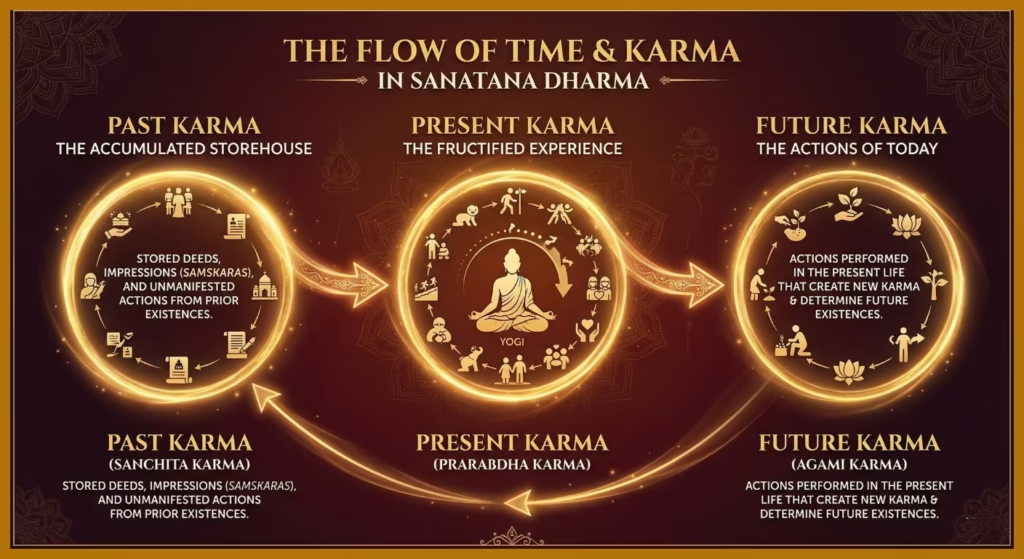
In the journey of the Jiva (soul), every thought, word, and action leaves an eternal imprint. To successfully wade through the ocean of material existence, a sincere seeker must first understand the profound, unbroken mechanics of Karma as revealed in Sanatana Dharma.
Our actions exist in three distinct, flowing phases: Sanchita Karma (The Vast Storehouse): The accumulated sum of all past actions, impressions (Samskaras), and deeds gathered across countless prior existences. Prarabdha Karma (The Fructified Present): The specific portion of that vast storehouse that has ripened and is actively manifesting in your current lifetime. This is the destiny and the unique set of circumstances you are experiencing right now.Agami Karma (The Seeds of the Future): The new actions, choices, and karmas you are creating today, which will inevitably shape your future existences.
While Prarabdha Karma dictates the situations and challenges we face today, how we respond is entirely in our hands. Through dedicated Sadhana (daily spiritual practice), focused Swadhyaya (study of the self and scriptures), and unyielding Sharanagati (absolute surrender) to the Supreme and the Guru Parampara, we can burn the binding seeds of future karma and navigate our present life with divine grace.
1. The Three Gunas All human experience arises through the three fundamental qualities of nature: Sattva, Rajas and Tamas. The three-mukhi bead harmonizes these forces, helping the wearer gradually move toward sattvic living.
2. The Three Dimensions of Karma Human suffering arises through three layers of karma. The 3-mukhi Rudraksha is revered for its ability to address these layers, not by magic , but on a deep psychological and spiritual level. Understanding the profound, interconnected matrix of these karmic truths is akin to mapping the divine cosmos; for those drawn to the protective and encompassing geometry of the Divine Mother, studying Her supreme matrix is invaluable (Khadgamala Stotram: Meaning & Sri Chakra Protection).
| Karma Dimension | Definition | Spiritual Impact of the 3-Mukhi Bead |
| Sanchita Karma | Accumulated karmas from many past lives. | Kindles the fire of awareness to help digest and resolve deep-seated subconscious impressions. |
| Prarabdha Karma | Karmas currently unfolding in this life. | Provides the inner strength and acceptance needed to face current life challenges without creating new negative loops. |
| Agami Karma | Karmas being created now for the future. | Purifies intent and action, preventing the accumulation of future karmic burdens. |
3. The Trinity of Creation The faces interpret the Trimurti, representing the complete and eternal cycle of existence itself.
4. The Three Dimensions of Time Representing Past, Present and Future, the bead symbolizes liberation from the psychological weight of the past, bringing clarity to the present.
Top 8 Benefits of the 3-Mukhi Rudraksha
Before diving into the specific benefits, understanding the energetic profile of this Upakarana helps clarify how it functions within the body and cosmos.
| Energetic Aspect | Association | Core Life Benefit |
| Ruling Deity | Agni (Fire God) | Burns impurities, purifies intent, digests knowledge. |
| Ruling Planet | Mars (Mangal) | Reduces frustration, restores lost motivation and drive. |
| Ruling Chakra | Manipura (Solar Plexus) | Rebuilds self-confidence, willpower, and personal leadership. |
| Core Element | Fire (Tejas) | Enhances metabolism, vitality, and clears mental fog. |
1. Removes the Burden of Past Karma
The 3-mukhi Rudraksha often speaks strongly to people who are not outwardly weak, but inwardly stuck.
A person may look functional, educated, employed, and socially normal, yet still live under the silent weight of old regret, repeated mistakes, hidden anger, trauma, inferiority, or an inability to begin again.
These impressions gradually form subconscious knots in the psyche, called saṁskāras in yoga. These impressions accumulate and express themselves as irrational fears and resistance to growth.
“In that sense, the bead is less about ‘adding power’ and more about removing the inner soot that blocks power.”
-Shrimati Rohini Devi Dasi
This bead supports those who are tired of being chained to an old version of themselves. In yogic philosophy, inner transformation requires tapas, the inner heat generated through austerity. This bead therefore represents three essential spiritual principles. Spiritual wisdom teaches that transformation becomes possible when one allows awareness to act like fire.
Agni simply reduces everything to ash ; similarly, the bead reduces the psychological weight of past experiences, transforming them into fuel for inner awakening. When past karmas feel too dense and you require fierce divine protection to sever old, toxic attachments, the primordial energy of the Dark Mother offers profound liberation (Authentic Kali Yantra: 5 Benefits for Divine Protection). The Rudraksha is not about becoming aggressive but more about becoming inwardly clean and pure in intent and actions.
2. Reduces Stress and Anxiety
For many seekers, the rudraksha helps calm overthinking, agitation, and feelings of self-criticism. If your mind requires deeper soothing and emotional balance alongside this fiery bead, the gentle lunar energy of the Moon can provide immense relief (Moon Mind Healing: Chandra Yantra Guide).
3. Supports Spiritual Growth
Fire is the carrier of offerings to the divine through yajnas, making this bead helpful for those engaged in mantra japa, scriptural study and meditation. It is believed to strengthen focus and discipline in spiritual practice.
4. Balances the Manipura (Solar Plexus) Chakra: Builds Confidence, Willpower and Leadership
People who wear this Rudraksha often seek help with low confidence, and fear of failure. Because of the fire element, it strengthens the inner fire that pushes a person forward in life and awakens personal willpower. For those who need an extra surge of divine courage to face these fears and protect their energetic space, invoking the supreme devotion and strength of Hanuman is highly effective (Hanuman Bhakti Yantra: Living Protection on Bhoj Patra).
Balance The Manipuraka

Within the subtle anatomy of the Jiva, the navel center houses the Manipura Chakra, the radiant “city of jewels.” Represented by a glowing yellow ten-petaled lotus and an inverted red triangle, it is the absolute epicenter of the Agni (Fire) element.
This internal fire is the engine of our spiritual transformation. It is the vital force that fuels our daily Tapas, Japa, and unwavering Sadhana. Just as an authentic Upakarana requires the pure, organic medium of Himalayan Bhojpatra to permanently hold the Prana of a lineage-based consecration, our physical vessel requires a balanced and blazing Manipura Chakra to digest material karmas and sustain the influx of divine energy.
When this inner Agni is awakened and directed through pure intent, Satsanga, and profound Sharanagati (surrender) to the Guru Parampara, it burns away lethargy, doubt, and material entanglement. It grants the sincere seeker the vitality to perform selfless Seva and the spiritual stamina to wade through the ocean of material existence with clarity and grace.
To further harness this blazing internal Tapas and cultivate a truly fearless mind, seekers can align with the fierce and transformative power of the Mahavidyas (Bhairavi Yantra Benefits: Fierce Devi, Fearless Mind).
“Knowledge without the fire of assimilation remains mere information. The 3-Mukhi Rudraksha kindles the inner Agni required to transform Swadhyaya into living, breathing wisdom.”
-Shri Damodar Dasji Maharaj
Which Rudraksha Suits You?
Loading…
—
—
Anatomy of an Authentic Rudraksha: The YantraChants.com Trust Stack Framework

Vicāra-Tattva-Ādhāra
Pure Intent, Sharanagati & 5S Sadhana
Ācāra-Sevā-Vyavasthā
Ethical, Lineage-Bound Seva
The Trust Stack
Authentic Bhoj Patra, Shastric Geometry & Prāṇa-Pratiṣṭhā
To experience these profound benefits, obtaining a commercially mass-produced bead is insufficient. At YantraChants, we adhere strictly to the Trust Stack Framework to ensure you receive a “Living Upakarana.”
- Genuine Sourcing: Sourced only from time-tested vendors, ensuring the physical genuineness of the Himalayan seed.
- The Activation Pillar (Prana-Pratishtha): The bead is not active until it undergoes strict, lineage-based rituals. Under the guidance of the Ramanandi Sampradaya (specifically by Shri Damodar Dasji Maharaj), the energy is awakened through dedicated Japa (108×3+ repetitions of specific Beeja Mantras).
- Purity of Intent: The key to the efficacy of these tools relies entirely on the Guru Energization Methodology and the purity of intent of the Guru Parampara.
Sri Damodar Dasji Maharaj Energizing Malas at YantraChants.com
“A seed from the earth carries potential, but it is the unbroken lineage, the precise Japa, and the purity of the Guru’s intent that breathes Prana into the Upakarana.”
-Shrimati Rohini Devi Dasi
Frequently Asked Questions (FAQs) on the 3-Mukhi Rudraksha
Q1. What is a 3-Mukhi Rudraksha?
A. The 3-Mukhi Rudraksha is a sacred three-faced bead traditionally associated with Agni Deva, the deity of fire. It is revered as a spiritual support for purification, inner renewal, courage, and the gradual release of inner heaviness such as guilt, shame, regret, and emotional stagnation.
Q2. Which deity is connected with the 3-Mukhi Rudraksha?
A. The principal deity associated with the 3-Mukhi Rudraksha is Agni Deva. In Vedic understanding, Agni is the purifier, the carrier of offerings, and the bridge between the visible and invisible realms.
Q3. Why is Agni Deva important in the understanding of the 3-Mukhi Rudraksha?
A. Agni represents the sacred power that burns impurities and transforms one state into another. In the same symbolic way, the 3-Mukhi Rudraksha is understood to help a person digest old impressions, burn psychological residue, and move forward with more clarity and strength.
Q4. What do the three faces of the 3-Mukhi Rudraksha represent?
A. The three faces are often understood through several sacred triads. They may represent the three gunas—Sattva, Rajas, and Tamas; the three dimensions of karma—Sanchita, Prarabdha, and Agami; the three dimensions of time—past, present, and future; and the cycle of transformation through divine fire.
Q5. What are the three sacred fires connected to this Rudraksha?
A. The 3-Mukhi Rudraksha is often linked symbolically with the three sacred fires: Garhapatya, Dakshinagni, and Ahavaniya. These represent continuity, ritual transformation, and offering to the Divine.
Q6. What is the spiritual meaning of wearing a 3-Mukhi Rudraksha?
A. Spiritually, it is often worn by those seeking inner purification, a fresh beginning, greater self-confidence, emotional release, and the strength to move beyond burdens carried from the past.
How to Meditate with a 3-Mukhi Rudraksha to Ignite Inner Agni (10-Step Method)
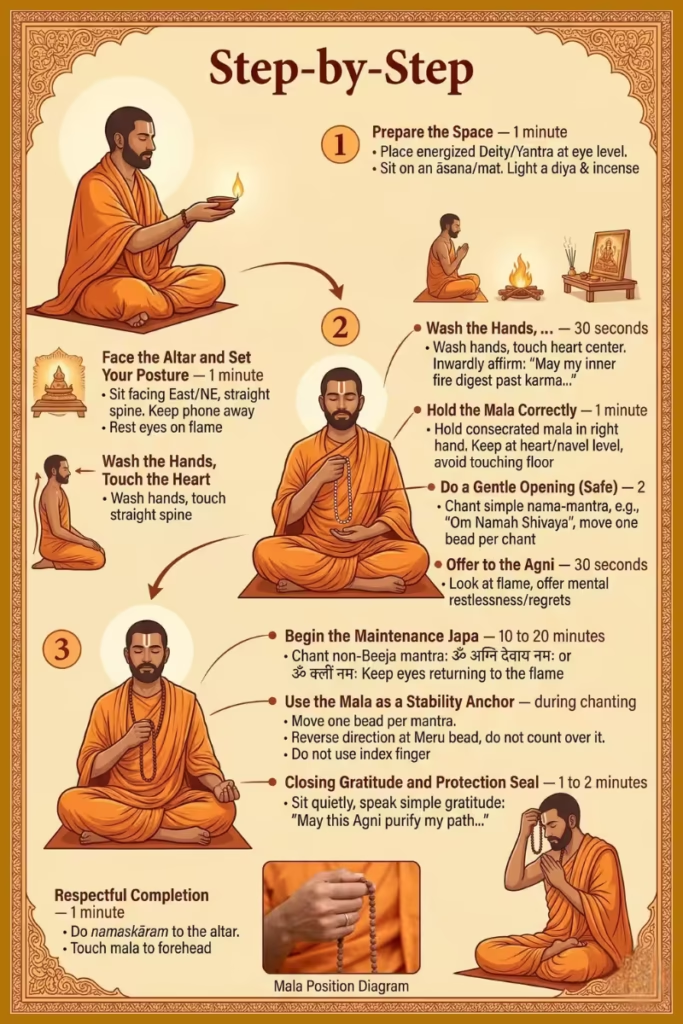
Step 1: Prepare the Space — 1 minute
- Place your energized Authentic Himalayan Bhoj Patra Yantra or your altar deity at eye level.
- Sit on an āsana (mat/cloth) so the body and mind “enter worship mode.” Grounding your daily Sadhana with a sacred morning routine invites divine abundance from the moment you wake up; integrating this practice sets a perfect foundation (Karagre Vasate Laxmi Mantra: Meaning & 7 Benefits).
- Light a diya (ghee/sesame oil lamp) and, if available, a gentle incense.
Step 2: Face the Altar and Set Your Posture — 1 minute
- Sit facing the East or North-East with a straight spine (comfortable, not forced).
- Keep your phone away, this is your “inner containment” time.
- Let the eyes rest on the flame for a few breaths, without rushing.
Step 3: Wash the Hands, Touch the Heart — 30 seconds
- Wash hands (or wipe) and lightly touch the center of the chest (Manipura/Heart area).
- Inwardly affirm: “May my inner fire digest my past karma and ignite my devotion.”
Step 4: Hold the Mala Correctly — 1 minute
- Hold your consecrated Sphatika or Rudraksha mala in your right hand.
- Let it rest lightly, do not pull or stretch it.
- Keep the mala at heart/navel level or slightly below, and avoid letting it touch the floor.
Step 5: Do a Gentle Opening (Safe) — 2 minutes
- With the mala, chant a simple nama-mantra that is safe and devotional.
- Move one bead per chant: “Om Namah Shivaya”
- Let the sound become calm and intimate—this “warms” the space.
Step 6: Offer to the Agni — 30 seconds
- Look softly at the flame of your diya.
- Offer your mind’s restlessness, past regrets, and life’s burdens inwardly: “Agni Deva, reduce this to ash.”
Step 7: Begin the Maintenance Japa — 10 to 20 minutes
- The mantra associated with it is: ॐ अग्नि देवाय नमः (Om Agni Devaya Namah) or ॐ क्लीं नमः (Om Kleem Namah). To understand the deeper magnetism and safe application of this powerful seed sound, you can explore our comprehensive guide (Kleem Mantra: Meaning, Benefits & Attraction Secrets).
- (YantraChants.com Trust Stack Note: These are non-Beeja maintenance mantras provided to keep the device activated over long periods, and do not constitute a formal Guru-disciple initiation).
- Keep the eyes returning to the flame whenever the mind wanders.
Step 8: Use the Mala as a Stability Anchor — during chanting
- Move one bead for every completed mantra.
- Once you reach the Meru bead, reverse the direction of the mala, but do not count over the Meru bead.
- Do not use the index finger.
Step 9: Closing Gratitude and Protection Seal — 1 to 2 minutes
- Sit quietly.
- Speak one simple line: “May this Agni purify my path and settle into my home.”
- Feel the practice “stay” in the space.
Step 10: Respectful Completion — 1 minute
- Do namaskāram to the altar (with humility, not urgency).
- Touch the mala to the forehead once as a sign of reverence.
- Carry a calm vow into the day.
Journal Your Practice
Mindfulness Awareness Plan
Choose your cycle length (7 / 21 / 41 days), pick disciplines, lock them for the full cycle, and journal daily to see exactly where you slip - and what strengthens you.
Conclusion: Entering the YantraChants Ecosystem for Authentic Upakaranas
True spiritual progress relies on authentic tools and a pure heart aligned with Satsanga, Sadhana, and Swadhyaya. At YantraChants.com, we operate under the rigorous Ācāra-Sevā-Vyavasthā framework. Providing you with these Guru-energized devices, whether it is a beautifully hand-drawn Authentic Himalayan Bhoj Patra Yantra, a sacred Meru, or specialized Malas like Tulsi, Sphatika, Red Chandan, or a genuinely consecrated 3-Mukhi Rudraksha, is not a business endeavor; it is an act of deep Seva.
When you invite these highly potent tools into your life, you are participating in a larger, sacred ecosystem. The proceeds support the upkeep of Sevaks, Dham Seva at Vrindavana, and assistance for the needy and elderly Guru Vargas.
To acquire a truly energized spiritual device aligned with the Trust Stack and support this Seva, connect with our dedicated team directly on WhatsApp: +917417238880. Let us help you find the exact Upakarana you need for your spiritual journey.

Rohini Devi Dasi