
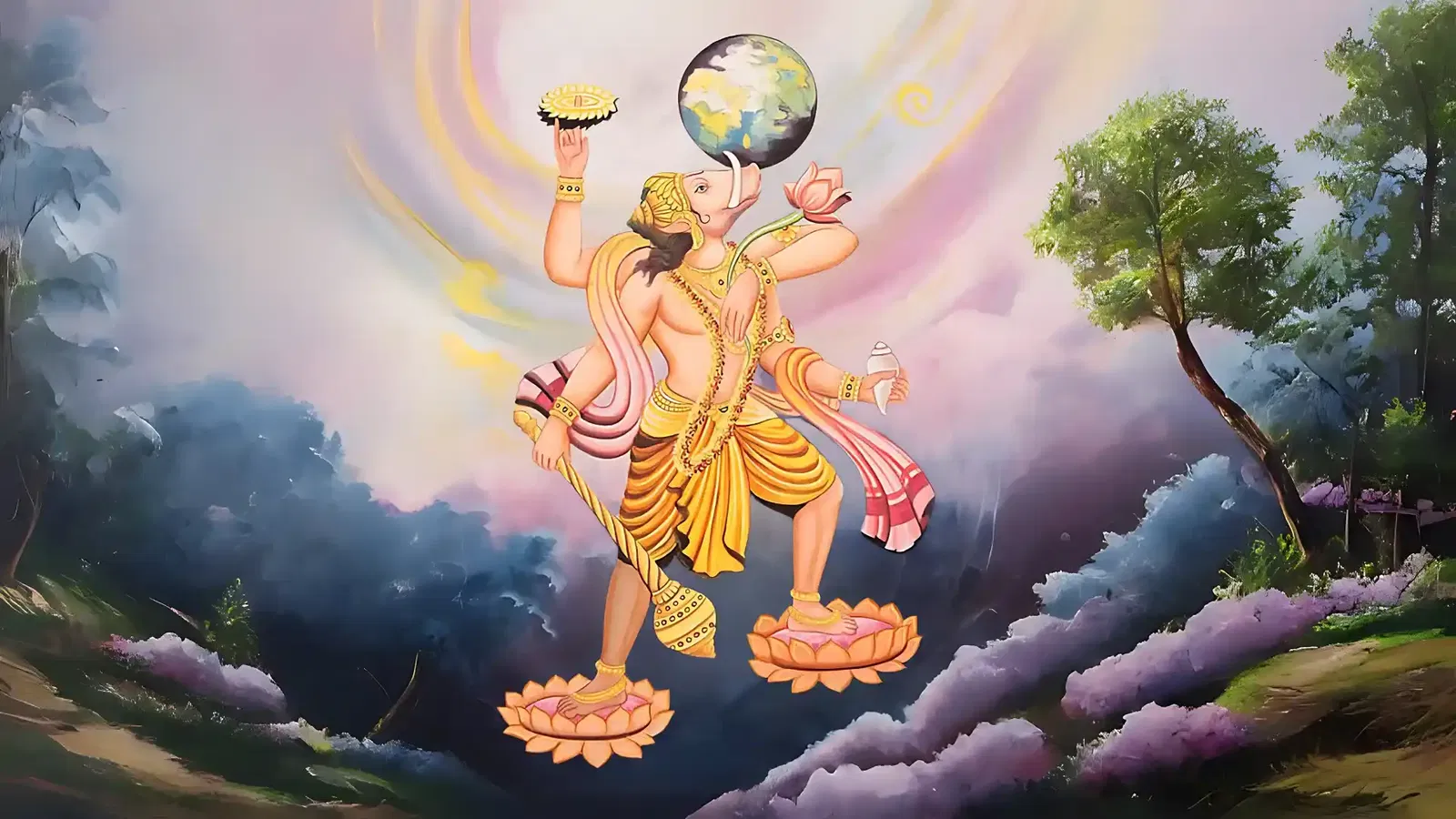
If life feels unstable, money swings, sudden obstacles, toxic people, fear, or that constant sense of “things falling apart”, Varaha Upāsanā is traditionally approached as a stability-kavach.
When the earth shakes, you don’t need more force, you need a Divine Anchor.
In the Varaha story, even the Earth sank into the abyss, and the Divine responded not with noise, but with restoration, ground under dharma.
This guide gives you:
- the safest householder mantra,
- when/why it works,
- how the Varaha Yantra functions as a silent shield, and
- what to buy only if it truly fits your need.
“Sri Varaha is the vow of the Divine: I will lift you when you sink, not by force, but by restoring dharma under your feet.”
— The Sri Varaha Principle
Quick Answers
- Best beginner mantra: Śrī Varāhāya Dharaṇuddharaṇāya Namaḥ
- Best use-cases: protection, fear removal, stability, property/land disputes, household grounding
- Best support tool: Śrī Varaha Yantra (especially for “repeated instability” patterns)
9 Effects of Sri Varaha Mantra
- Removes obstacles + negativity
- Protection from enemies/accidents (mental + situational)
- Strengthens leadership + courage
- Supports dispute resolution (legal/marital, with discipline)
- Stabilizes wealth-flow and household harmony
- Improves focus + discipline for students
- Builds devotional steadiness (bhakti-rasa)
- Clears “sinking states”: hopelessness, overthinking, instability loops
- Creates a protective field for family (when maintained consistently)
Choose the Right Practice (Mantra vs Yantra vs Mala)
| Your main problem (search intent) | Best starting step | Why it matches intent | Optional support tool (transactional) |
|---|---|---|---|
| Fear, negativity, “I feel unsafe” | Daily mantra (simple) | Consistency builds protection field | Varaha Yantra near puja space |
| Sudden instability (career/finance) | Mantra + discipline rules | Stabilizes mind → better decisions | Varaha Yantra + Tulsi mala |
| Land/property disputes | Yantra presence + mantra | Varaha linked to Bhumi-tattva | Varaha Yantra (primary) |
| Overthinking, weak grounding | Mantra at fixed time/place | Trains rhythm of mind | Rudraksha mala (grounding) |
| Household disharmony | Gentle mantra + sattvic routine | Reduces friction/heat | Chandan mala (cooling) |
| “Occult fear” / bad influences | Mantra + protective routine | Safety-first approach | Yantra (no fear marketing) |
Quick YantraChants.com Advice: If your issue is instability, fear and repeated setbacks, a Guru-energized Śrī Varaha Yantra is traditionally chosen as a silent shield while you do japa.
Original Meaning of the Sri Varaha Mantra
Core mantra reference:
ॐ नमः श्रीवराहाय धरणुद्धरणाय च स्वाहा
Om namaḥ śrīvarāhāya dharaṇuddharaṇāya ca svāhā
Meaning: Salutations to Sri Varaha, who uplifts Dhara (Bhumi/Earth).
Best householder-safe version (recommended):
श्रीवराहाय धरणुद्धरणाय नमः
Śrī Varāhāya Dharaṇuddharaṇāya Namaḥ
“Varaha is not only a destroyer of evil, He is the restorer of ground.”
— Sri Damodar Dasji Maharaj
YantraChants.com Trust Stack Safety Principle
- In many traditions, Bhumi Devi awareness balances the practice (grounding + steadiness).
- Avoid beeja experimentation (Om/Svāhā combinations and intense beejas) without guidance, especially if you’re heat-prone (acidity/irritability/restlessness).
- For most readers: stick to the Namaḥ form, clean pronunciation, steady routine.
Best Times to Chantthe Varaha Mantra
- Ideal: early morning (brahma-muhūrta if possible)
- Auspicious: Varaha Jayanti, Ekadashi, Saturday
- Best rule: same time, same place, same seat (this is how “charge” builds)
Short Story of Lord Varaha
When the Earth sank into the cosmic depths, it wasn’t just a myth, it’s a mirror.
The Earth is your life-structure. The abyss is instability, fear, conflict, setbacks, negativity.
Hiranyaksha symbolizes greed, arrogance, destabilizing forces.
Varaha is the Divine intervention that doesn’t merely fight, it lifts and restores.
When the earth shakes, Varaha lifts you, placing you back onto stable ground.
That is why this upāsanā is often chosen when life feels like it’s “sinking.”
Sri Varaha Yantra
What is it?
The Śrī Varaha Yantra is traditionally treated as the geometric kavach of Varaha’s stabilizing force, kept in the puja space so that your japa becomes anchored, not scattered.
Why Mantra works Best with Varaha Yantra
| Element | Mantra does | Yantra does | Outcome when paired |
|---|---|---|---|
| Your mind | Gives direction + bhakti | Holds attention in one “field” | Less wavering, more steadiness |
| Your life patterns | Clears negativity via discipline | Anchors stability (Bhumi-tattva) | Reduced chaos cycles |
| Your home energy | Brings protective vibration | Maintains it silently | Family shield effect |
YantraChants.com Trust Stack Safety:
If your problem is high-stakes stability (property disputes, repeated setbacks, fear cycles), don’t treat the yantra as décor. The right yantra functions like infrastructure, a stabilizing “battery” for your practice.
The YantraChants.com “Trust Stack” Yantra
- Medium: Authentic Himalayan Bhojpatra (organic retention)
- Method: Hand-drawn with traditional tooling (not machine-stamped)
- Consecration: Lineage-based Prāṇa-Pratiṣṭhā (awakening is the point)
For many seekers, mantra gives intent, but a properly consecrated yantra gives structure, the difference between trying to hold stability in your mind vs. placing stability into your environment.
How To Chant Varaha Mantra
- Bathe (or at least wash hands/feet/mouth).
- Sit facing East, on a wool āsana.
- Keep Varaha + Bhumi Devi image/idol in front.
- Chant Śrī Varāhāya Dharaṇuddharaṇāya Namaḥ using a 108 mala.
- Tulsi for sattva/devotion
- Rudraksha for grounding/discipline
- Keep one fixed routine: same time, same seat, same count.
- Maintain sattvic discipline: avoid intoxication; reduce excessive heat foods during the practice window.
“Power is not only in the mantra, it is in the steadiness with which you keep it.”
— The YantraChants.com Vicāra-Tattva-Ādhāra
“What should I choose?”
Choose based on your need:
- Choose Varaha Yantra if: instability, fear cycles, property/land concerns, repeated setbacks, home protection anchor
- Choose Tulsi Mala if: devotion + purity + steady daily japa rhythm
- Choose Rudraksha Mala if: grounding + discipline + mental strength
- Choose Chandan Mala if: heat-prone, irritable, want cooling devotional mood
- Choose a Meru if: you’re already stable and want deeper consistency
If you’re tired of feeling like life keeps “slipping,” start with one mantra, one routine, and add one supportive tool only if it fits. Stability is not intensity, it’s ground.
WhatsApp for guidance: +917417238880
FAQs
Can beginners chant Varaha mantra?
Yes, use the Namaḥ version and keep it consistent.
Is “Om” mandatory?
Not for most householders. The simplified chant is sufficient and safer.
Can women and children chant?
Yes, Namaḥ versions are generally considered safe; avoid intense beeja experimentation without guidance.
How many days should I do it?
Start with 11 days or 21 days with one fixed count daily.
Varaha mantra vs Varahi mantra, what’s the difference?
Varaha is Vishnu avatāra (stability/rescue). Varahi practices can be more intense and aren’t “beginner default.”
Does the Yantra replace chanting?
No. Yantra is the anchor; mantra is the activation through you.
Where to place Varaha Yantra?
Clean puja area, respectful height, away from clutter; treat it as a sacred field.
Conclusion
Varaha Upāsanā is ultimately about one thing: restoring ground under your life, through steadiness, devotion, and right method. If your pattern is repeated instability, don’t jump practices. Pick one mantra, one routine, and (if it truly fits) one supportive tool.
YantraChants.com Varaha Yantra + Tulsi Mala (Stability Shield)
WhatsApp: +917417238880