
Introduction to the Sacred Tradition of Mālās
In the long continuity of Sanātana Dharma, a mālā is never merely an object. It is a rhythmic instrument of consciousness, a companion to one’s breath, and a bridge between the wandering mind and the still, eternal Self.
Every civilization has created tools to anchor attention, yet the mālā, simple, humble, rhythmic, remains unmatched in its capacity to synchronise breath, heartbeat, awareness and mantra. When the bead travels beneath the fingers, the mind receives a tactile reminder: return here… return now… return to the mantra.
The sages understood that the mind moves with the breath. When breath is irregular, mind is scattered; when breath is steady, mind becomes luminous. Thus japa, done with a mālā, is not merely counting, it is pegging the breath, shaping its cadence, and teaching the mind to settle into its natural, unforced rhythm.
A mālā therefore holds a subtle tattva:
- It gives the fingers movement, reducing restlessness.
- It regulates breath subconsciously, settling prāṇa into one channel.
- It governs the pace of the mantra, preventing the mind from racing.
- It creates continuity, turning scattered attention into one-pointed awareness.
When the breath, the mantra, and the tactile movement of beads merge, the practitioner slips effortlessly from effort into presence. This is why mālās have remained central across Śaiva, Vaiṣṇava, Śākta, Smārta, and Tantric lineages.
The Significance of 108, Rhythm, Cosmos, and Human Consciousness
The number 108 is not random; it is a cosmic reminder. The ancient ṛṣis observed sacred correspondences:
- The diameter of the Sun is roughly 108 times the diameter of the Earth–Moon distance alignment often cited in yogic numerology.
- There are 108 nāḍis meeting at the heart chakra.
- There are 108 traditional Upaniṣads.
- Traditional Tantric cosmology outlines 108 energy intersections in the subtle body.
Whether we take astronomical ratios or yogic metaphysics, the message is the same:
108 represents wholeness, a full revolution of consciousness.

When one travels through all 108 beads with stable breath and mantra, they complete a subtle circuit of the inner solar system, body, prāṇa, mind, memory, ego, and awareness, before returning to the meru bead, the axis of the whole universe.
Thus, using a mālā is not merely repetition; it is realignment. It brings the mind back to the body, the body back to the breath, and the breath back to the Self.
What Is a Mālā in Sanātana Dharma?
The Nature of the Sacred Mala (roughly Rosary)
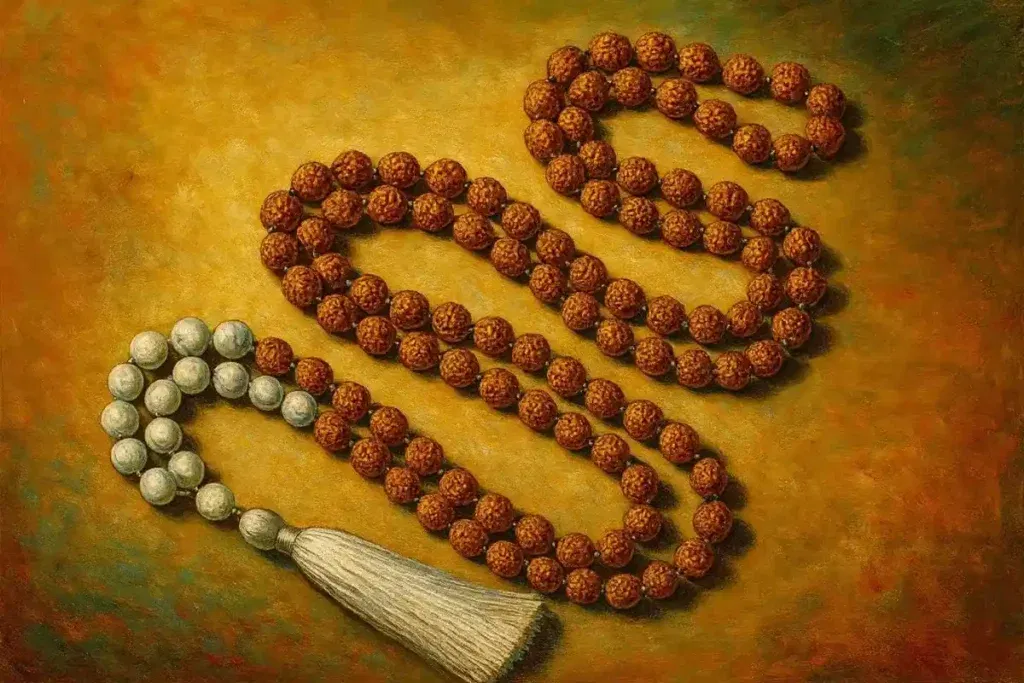
A mālā in Sanātana Dharma is far more than a string of beads, it is a quiet architecture of transformation, a garland through which consciousness is gradually refined.
Rooted in both Vedic discipline and Tantric subtlety, the mālā serves as a counting tool for mantra repetition, a tactile anchor for the restless mind, a container that holds and regulates subtle prāṇa, and a symbol that reflects the seriousness of one’s sādhana.
It becomes a bridge to the Guru’s saṅkalpa, a companion in silence, and a mirror that reveals the practitioner’s inner discipline with unwavering honesty.
The Function of Rhythm and Touch
To hold a mālā is to acknowledge that the mind requires rhythm; to use it consistently is to accept that the path toward the Divine is not a sudden flight but a steady journey taken bead by bead. Each repetition is a step inward, each touch a reminder to return to presence. The physicality of the beads stabilises the subtlety of thought, giving the wandering mind a place to rest, align, and deepen.
The Tattva of Each Material
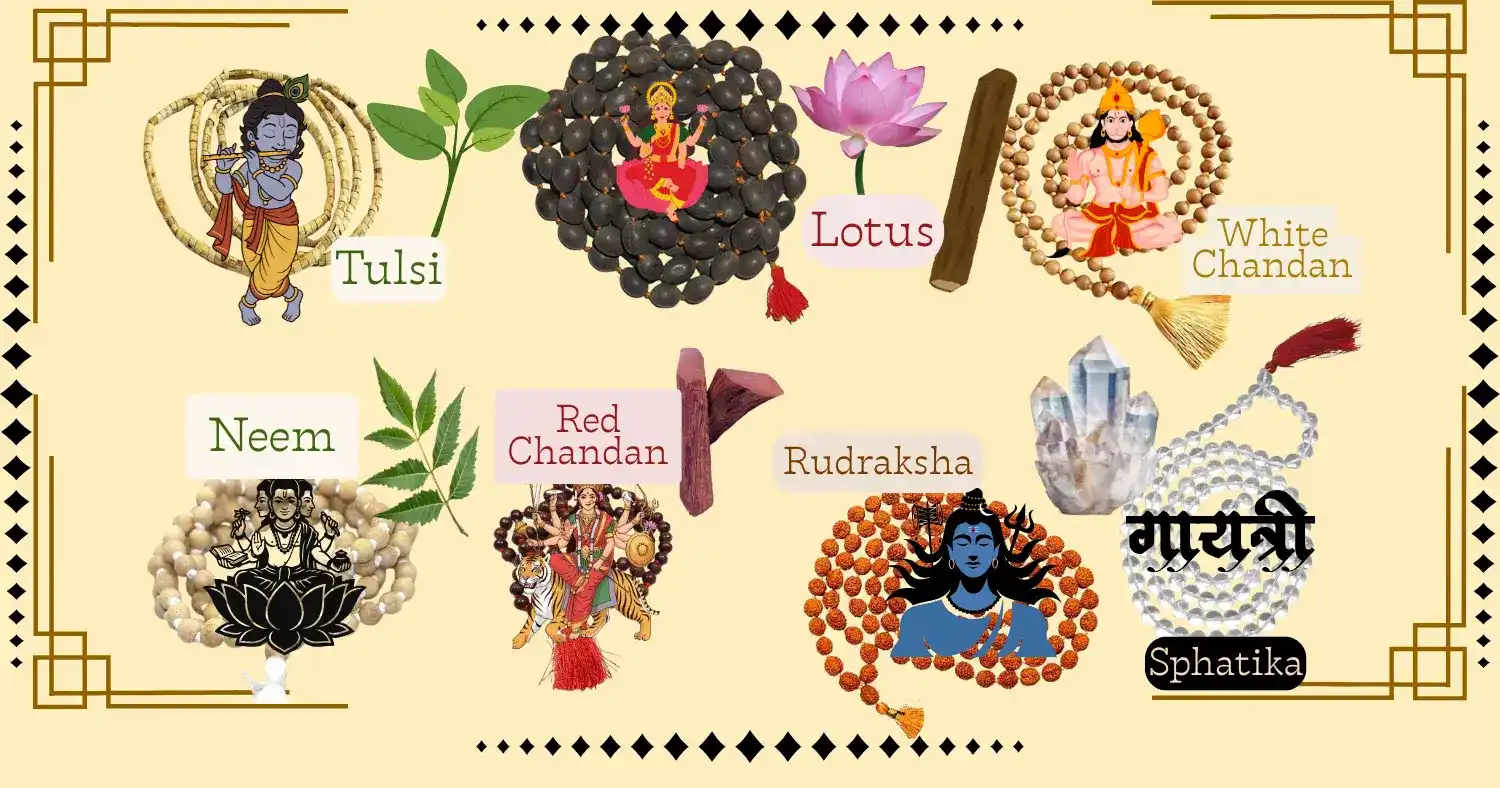
Every mālā material, whether Neem, Rudrākṣa, Tulsi, Chandan, Sphatika, or Lotus seed, carries its own tattva, a vibration shaped by centuries of use and sanctity. These materials hold distinct moods: devotion, clarity, grounding, tapas, cooling, or prosperity.
As the practitioner chants, the mālā absorbs their bhāva, their longing, resistance, sincerity, confusion, and breakthroughs, making the beads progressively attuned to the inner journey being undertaken.
The Living Companion of the Inner Path
Over months and years, the mālā becomes something more than an object; it becomes a subtle companion to the practitioner’s inner body. Traditional lineages express this with a single, profound insight: “Your mālā becomes your subtle body’s companion.” It does not evaluate the seeker’s state; it simply receives it, steadies it, and guides it toward deeper stillness and truth.
Difference Between Pūjā Mālās & Japa-Dīkṣā Mālās
In authentic practice, there is a clear, sacred distinction between a pūjā-mālā and a japa-mālā.
Pūjā Mālās: The Garland of Reverence
A pūjā-mālā is not meant for chanting. It is meant for offering, bowing, and honouring.
Its purpose is devotional, not functional.
A pūjā-mālā represents:
- the aura of the Guru,
- the presence of the deity,
- the prāṇa-śakti of a tradition,
- the surrender of the seeker,
- the humility of offering oneself.
When one bows before a pūjā-mālā, especially one representing the Guru-tattva, they symbolically bow before Truth itself, acknowledging the lineage, the wisdom, and the grace that sustains them.
Such a mālā is kept on an altar, never worn, never used mechanically, and never taken into worldly environments. It is a symbolic body of light, a presence that watches over the home and heart.
Japa-Dīkṣā Mālās: The Garland of Practice
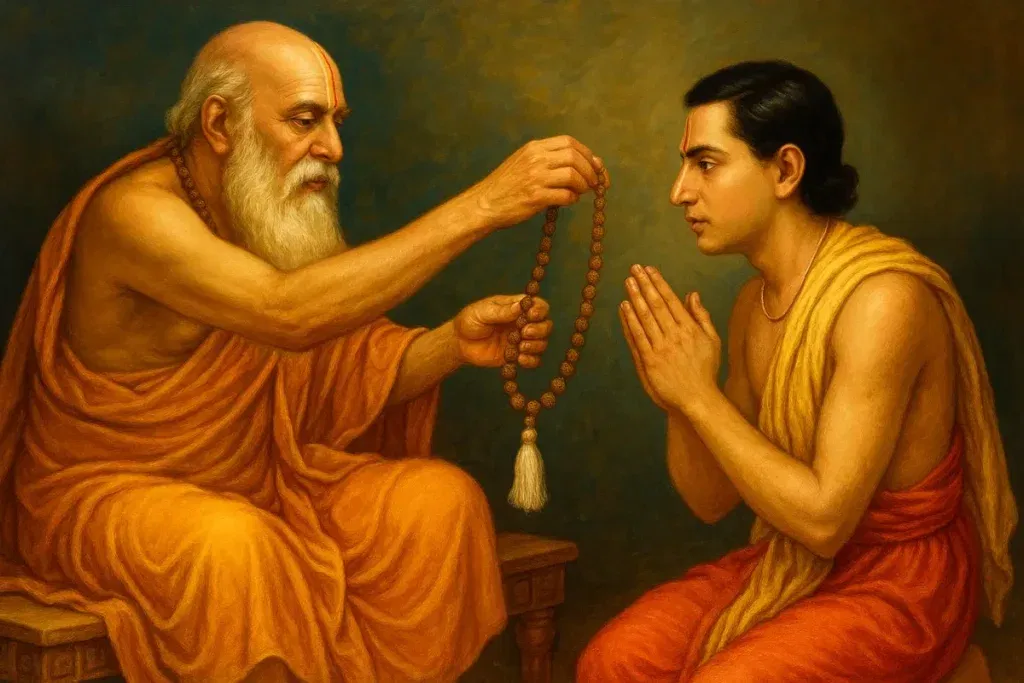
The Silent Contract Between Guru and Disciple
A japa-dīkṣā mālā, especially when placed into the hands of a disciple by a Guru, functions as a quiet and profound contract. It signifies the Guru’s intention and the seeker’s willingness to be shaped by discipline.
When used sincerely, the act of chanting on such a mālā becomes a process of synchronisation, breath aligning with mantra, mind aligning with rhythm, intent aligning with the Guru’s saṅkalpa, and the practitioner’s inner nature aligning with the deeper call of the soul. To accept and use a Guru-given mālā is to say, without words:
“I am ready to walk the path you have walked. Help me still the noise so that I may hear the Divine.”
How the Mālā Becomes a Conduit of Transmission
Once consecrated, the mālā acts as a subtle channel of the Guru’s prāṇa, gently tuning the practitioner’s inner rhythm to a steadier cadence. It supports the disciplining of attention, the softening of emotional turbulence, and the cultivation of a contemplative inner environment.
Over months and years, the relationship deepens: the mala absorbs the practitioner’s sincerity, the mantra settles into their breath, and the energy of the lineage begins to take root within their consciousness.
The Transformative Power of Repetition
Through long practice, the seeker gradually shifts from imitation to embodiment. Breath becomes quieter, thought becomes more refined, and the heart learns to rest in steadiness rather than wandering in agitation. This is the living meaning of the ancient dictum: “Japa transforms temperament.” Bead by bead, breath by breath, thought by thought, the scattered personality is gathered into a centred, devotional, inwardly anchored life, shaped not by force but by the steady rhythm of sincere repetition.
How to Choose a Mālā Based on Deity, Mindset & Sādhanā
| Material | Core Resonance | Primary Deity | Best For |
| Neem | Cooling & Cleansing | Durgā / Hanumān | Removing restlessness & agitation. |
| Rudrākṣa | Tapas & Power | Śiva / Rudra | Karmic purification & transformation. |
| Red Chandan | Courage & Resolve | Gaṇeśa / Śakti | Building discipline & willpower. |
| White Chandan | Peace & Sattva | Viṣṇu / Sarasvatī | Mental cooling & devotional softness. |
| Tulsi | Bhakti & Purity | Krishna / Viṣṇu | Deep surrender & heart-centered japa. |
| Lotus Seed | Abundance & Śrī | Lakṣmī Devi | Emotional openness & prosperity. |
| Sphatika | Clarity & Light | Gāyatrī / Sarasvatī | Intellectual refinement & amplification. |
Choosing a Structure for Inner Practice
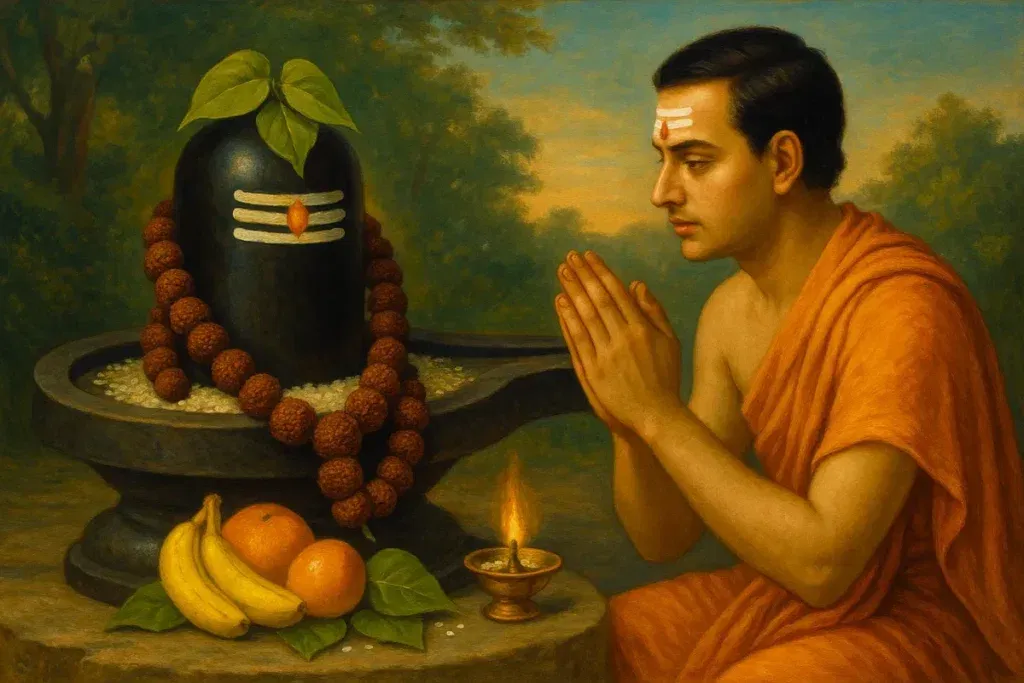
Selecting a mālā is not merely an aesthetic decision; it is the act of choosing a structure for one’s inner life. The right mālā simultaneously aligns the practitioner with their natural deity-inclination, stabilizes their mental tendencies, and supports a form of sādhanā they can sustain over years. While many people overanalyze this choice, traditional practice shows that the process is far more intuitive and grounded in the subtle movements of the heart.
The Role of Natural Deity-Inclination
Most seekers are unaware of their iṣṭa-devatā in conscious terms. This is not a deficiency but a natural condition, recognition of one’s deity often arises from impressions carried across births. A spontaneous comfort or pull toward Śiva, Krishna, or Devi usually reveals the direction more reliably than intellectual preference.
When such attraction is present, the mālā material associated with that deity becomes the natural choice: Rudrākṣa for Śiva, Tulsi for Krishna or Lord Viṣṇu, Lotus or Chandan for Lakṣmī, and Sphatika for Sarasvatī, Gāyatrī, or luminous Devi-upāsanā.
When Inclination Is Unclear
If no particular deity feels naturally compelling, the correct approach is to lean on the wisdom of Guru-tattva rather than personal speculation. Even a pūjā-mālā received from a Guru, though not used for japa, carries a subtle direction. Bowing to it daily begins aligning the inner field, gradually clarifying which devatā or mantra feels natural.
A Guru-energized japa-mālā deepens this even further, guiding the practitioner as the mind becomes quieter and more receptive. The encoded saṅkalpa in such a mālā gently supports the emergence of the correct deity and mantra structure, preventing confusion or incorrect self-selection.
Traditional Associations and Their Logic
Long-standing associations exist because they reflect consistent energetic outcomes observed across generations.
- Rudrākṣa aligns with Śaiva, Śākta, and Tantric streams, strengthening prāṇa and sharpening awareness.
- Tulsi supports Vaiṣṇava devotion, softening the heart and nurturing emotional refinement.
- White Chandan stabilizes sattva and supports peaceful sādhanā.
- Red Chandan strengthens disciplined resolve and inner warmth.
- Sphatika promotes clarity and is universally used for Sarasvatī, Gāyatrī Devi, and many Devi mantras.
These guidelines were not invented but discovered through the lived experience of countless practitioners.
Aligning Mālā to Mindset
Mindset also influences selection. A restless or emotionally charged mind benefits from White Chandan, Tulsi, or Sphatika due to their calming resonance. Those needing discipline or energetic strength may gravitate toward Rudrākṣa or Red Chandan.
Practitioners seeking emotional refinement and devotional softness often find Lotus seeds or Tulsi most harmonious. And those requiring clarity, protection, or boundary-strengthening frequently respond well to Rudrākṣa or Sphatika. The aim is not to suppress the mind but to provide it with an anchor around which it can settle and deepen gradually.
When Guidance Is Needed
If uncertainty persists, seeking guidance from a Guru or an experienced practitioner of mantra-sādhanā and mālā-tattva remains the safest and most effective route. Their assessment is grounded in temperament, life-stage, psychological disposition, and the practical realities of the seeker’s life, not in abstract theory or superficial preference.
In this way, the choice of a mālā becomes an informed and intuitive step into a more structured and meaningful spiritual rhythm.
Planetary Healing Through Japa & Mālā Selection
| Afflicted Planet (Graha) | Recommended Mālā | Subtle Healing Action |
| Sun (Sūrya) | Red Chandan / 12-Mukhi | Strengthens dignity and healthy vitality. |
| Moon (Candra) | White Chandan / Tulsi | Calms emotional turbulence and anxiety. |
| Mars (Maṅgala) | Neem / Red Chandan | Regulates reactive anger and impulsiveness. |
| Jupiter (Guru) | 5-Mukhi Rudrākṣa | Expands wisdom and stable memory. |
| Venus (Śukra) | Lotus Seed / Sphatika | Heals relationships and creative blocks. |
| Saturn (Śani) | 7-Mukhi / Rudrākṣa | Stabilizes karmic lessons and patience. |
| Rahu / Ketu | Rudrākṣa / Neem | Clears confusion and ungrounded fears. |
Understanding Planetary Tendencies and Inner Balance
From the dharmic and jyotiṣa standpoint, planetary afflictions are not punishments but descriptions of tendencies, habitual patterns of response that shape one’s emotional and psychological landscape. Saturn-related challenges often manifest as heaviness, delay, or fear; Moon disturbances express themselves through emotional volatility;
Mars imbalances can surface as impatience, anger, or inner heat. These influences do not fix a person’s destiny, they merely reflect the pattern through which experiences are processed.
Japa becomes a transformative counterbalance because its rhythmic repetition stabilises both breath and prāṇa. As breath finds steadiness, the mind stops reacting impulsively to planetary triggers, allowing the practitioner to navigate karmic conditions with clarity rather than distress.
How Different Mālā Materials Support Planetary Tendencies
Each mālā material interacts with prāṇa in a specific way, making the selection of the right bead a subtle but powerful tool in harmonising planetary tendencies. Rudrākṣa reduces fear, agitation, and impulsiveness, offering relief from Saturn, Mars, and Rahu disturbances.
Tulsi softens emotional turbulence and supports relational harmony, aligning naturally with Moon and Venus imbalances. White Chandan cools mental overstimulation, while Red Chandan strengthens discipline and grounded effort when restlessness or heat is excessive.
Sphatika clears confusion and heightens mental purity, making it valuable during periods marked by indecision or anxiety. Neem reduces excessive intensity or emotional detachment, and Lotus seeds cultivate softness, creativity, emotional openness, and receptivity, qualities that ease Venus-related or heart-centred blockages. Each material becomes a subtle corrective, not by overpowering planetary forces but by regulating the practitioner’s internal response to them.
The Stabilising Power of Guru-Energized Mālās
A Guru-energized mālā provides the most profound support, not because it changes external planetary configurations, but because it strengthens the inner axis that responds to them. The Guru’s saṅkalpa embedded within the mālā reorients the practitioner’s mental and emotional posture.
Stressful transits feel lighter, fear-driven reactions diminish, and choices become more deliberate. Instead of drowning in the turbulence of a challenging period, the practitioner begins to stand at its centre with steadiness. The planets continue their rightful function, but their subjective intensity reduces dramatically because the mind has become anchored and clear.
The True Meaning of Planetary Healing
Planetary healing through mālā and japa is not an escape from karma. It is a conscious alignment with it. When breath is even, the mind becomes capable of witnessing experience rather than collapsing under it. When mantra becomes steady, circumstances soften because the practitioner no longer reacts blindly.
This is the essence of dharmic planetary healing: one does not avoid fate, but one learns to meet it with poise, intelligence, and perspective. The karmic cycles unfold as they must, yet the practitioner experiences them as growth rather than suffering, because the inner climate has been transformed through disciplined japa and the quiet companionship of the right mālā.
Why Traditional Materials Matter
The Lineage-Tested Logic Behind Sacred Beads
Traditional mālā materials have endured not because of sentiment or symbolism, but because Indian spiritual systems observed their effects with precision across centuries. Each substance carries a distinct tattva, a predictable influence on prāṇa and the mind, and occupies a stable place within the paramparās that relied on it. Since a mālā is touched daily, handled repeatedly, and breathed upon with each cycle of mantra, the material itself subtly shapes how the mind settles.
This is why Rudrākṣa grounds and strengthens, Tulsi softens and devotionalizes, Sphatika clears mental fog, Chandan cools agitation, Lotus seeds nurture emotional openness, and Neem steadies the practitioner during phases of intensity. These effects are not poetic imagination, they are functional observations validated by countless practitioners over generations.
Deity Associations as Functional Realities
The association of specific materials with particular deities also arises from practice rather than abstraction. Rudrākṣa emerged naturally in Śaiva and Tantric traditions because its prāṇa-stabilising quality aligns with Śiva’s inward, austere energy.
Tulsi became foundational in Vaiṣṇava practice because its gentle devotional resonance suits Krishna-bhakti. White Chandan has long been used where serenity and sattva are cultivated.
Lotus and Lakṣmī remain inseparable due to the lotus’s emblematic connection with purity and abundance. Sphatika found its place in Sarasvatī and Devi traditions because it refines cognition and enhances mantra clarity. These associations are functional: they consistently produce specific shifts in the practitioner’s internal state, which is why they were preserved.
The Primacy of Guru-Tattva
Even with traditional guidelines, the Guru-tattva remains the final authority. When a Guru assigns a mālā, the energetic alignment created through their saṅkalpa overrides all theoretical considerations. A Guru perceives temperamental patterns, emotional tendencies, karmic pressures, and sādhanā-capacity more clearly than the seeker can see themselves.
Because of this, a Guru-energized mālā not only matches the practitioner but gently reshapes them. It prevents the confusion and misalignment that come with self-selection and ensures that the practitioner is held within an energy structure capable of supporting long-term growth.
The Distinct Roles of Pūjā-Mālā and Japa-Mālā
Traditional practice also distinguishes between the mālā for reverence and the mālā for chanting. A pūjā-mālā is meant for bowing, offering, and cultivating humility; it tunes the heart toward devotion.
A japa-mālā, on the other hand, is chosen based on breath-pattern, mental tendencies, and the needs of one’s inner work. When both are used in harmony, revering the pūjā-mālā and chanting with the japa-mālā, the practitioner gains a stable outer ritual and a steady inner rhythm, strengthening the foundation of sādhanā.
A Framework That Prevents Confusion
Traditional materials matter because they provide predictable energetic outcomes, harmonize breath and mind during practice, and link the seeker to methods refined by lineage rather than invented on impulse. They create structure, prevent unnecessary experimentation, and allow the practitioner to enter a deeper spiritual current without confusion.
Through this continuity of material, mantra, and method, the seeker becomes integrated into an ancient and reliable framework for inner development, one that has supported countless practitioners toward steadiness, clarity, and transformation.
Neem Beads Mālā (Azadirachta indica)
Historical & Scriptural Context of Neem Mālās
Neem has been regarded in dharmic tradition as a purifying and protective tree. Its use appears in regional forms of Mother-goddess worship, such as Śītalā and Mariamman traditions, where Neem leaves and beads are associated with health, purification, and immunity. Although the Purāṇas do not prescribe Neem as a primary japa-mālā material the way they specify Rudrākṣa or Tulsi, its long-standing use in folk and tantric traditions makes it an accepted support for sādhana that involves cleansing, stabilising heat, and reducing internal restlessness.
Energetic & Ayurvedic Qualities
Neem is cooling, antimicrobial, grounding, and stabilising. In ayurvedic understanding, it reduces excess pitta and clears subtle congestion.
When used as a mālā, the same stability translates into practice: breath slows down, anger reduces, and the mind becomes less reactive. It is often used when the practitioner needs a material that supports restraint and steadiness.
Devatās Associated With Neem
Neem has long been associated with the worship of Śrī Durgā and the Nava-Durgā forms because of its inherent protective and cleansing qualities. In many śakti-oriented traditions, practitioners have used Neem to maintain internal clarity, steadiness, and subtle energetic hygiene during periods of intensified sādhana. Its role is not derived from a single canonical verse but from an accumulated lineage understanding that Neem supports disciplines requiring strength, courage, and protective containment.
Neem is also used in practices connected to Śrī Hanumānji Mahārāj, especially in contexts where sattva, resilience, and disciplined purity are required. Devotees turn to Neem when the objective is to stabilise the mind, refine prāṇa, and strengthen one’s capacity to stand firmly in dharma without being shaken by inner turbulence.
The association here is functional rather than strictly textual, Neem carries the grounding, non-agitating quality necessary for practices aligned with fortitude, service, and unwavering inner strength.
Energetically, Neem supports grounding at the level of the mūlādhāra (root) chakra. It reduces internal volatility, excessive imagination, and hallucinatory tendencies that may distort perception or decision-making. By quieting these fluctuations and anchoring awareness,
Neem allows the practitioner to operate from a space of clarity and discernment rather than confusion or impulsive reactivity.
Chanting on Neem beads gradually addresses innate weaknesses by stabilising attention, reducing scattered mental patterns, and strengthening the subtle capacity to endure discomfort without losing direction. Over time, this leads to better judgement, emotional steadiness, and a more reliable inner posture for japa, meditation, and daily conduct.
Planetary Afflictions Helped by Neem Japa
Neem is used in japa when the practitioner is affected by tendencies associated with Mars and Ketu.
Mars-related tendencies often manifest as irritability, sudden anger, impulsive reactions, and an overall increase in internal “heat.”
Ketu-related tendencies show up as instability, inner restlessness, unexplained fears, and difficulty maintaining continuity of effort.
Neem steadies these patterns by subtly calming breath rhythm, reducing agitation, and supporting a grounded state necessary for clear perception.
How Mars Is Connected With Lord Kartikeya
In traditional understanding, Mars (Kuja/Maṅgala) is aligned with discipline, courage, and action , qualities embodied by Lord Kartikeya (Skanda). Kartikeya is considered the commander of the divine forces, and his energy expresses structured strength rather than uncontrolled aggression.
In several regions, Kartikeya shrines or sub-shrines are found close to Neem trees, as Neem is regarded as a purifier that stabilizes fire-dominant energies. The proximity of Neem to Kartikeya temples reflects the practice-based recognition that Neem’s cooling and grounding qualities help balance the intense, fiery attributes of Mars.
Mars in Astrology & Why It Needs Pacification
Astrologically, Mars governs drive, determination, physical vitality, assertion, and the ability to confront challenges. When balanced, Mars gives discipline, clarity in action, and strong moral courage. When imbalanced, it produces excessive heat, anger, confrontation, impulsive decisions, overreaction, and physical restlessness.
Chanting mantras meant to stabilize Mars, when done on Guru-energized Neem mālās or Guru-energized puja Neem mālās, helps channel Mars’ energy into constructive discipline rather than reactive expression. The mantra-japa is absorbed through a medium (Neem) that itself pacifies heat, reduces internal agitation, and encourages a more ordered deployment of Mars’ strength.
How Grounding the Mūlādhāra Chakra Relates to Ketu
Ketu represents detachment, ungrounded intuition, past-life residue, and psychic irregularity. When harmonized, it gives deep insight and spiritual clarity. When disturbed, it produces instability, irrational fear, confusion, and decision-making errors.
The mūlādhāra chakra is the foundation of physical and psychological stability. Grounding this chakra through Neem japa reduces Ketu-induced turbulence.
Practicing Ganesha mantra-japa, using a Guru-energized Neem mālā, supports this grounding, as Lord Gaṇesha governs the mūlādhāra and stabilizes Ketu. As the base of consciousness becomes steadier, the mind stops jumping into fear-based conclusions, imaginative distortions, or indecisive states.
How Breathing Stabilizes Through Neem Mālā Japa
The tactile and energetic nature of Neem beads creates a natural moderation of breath rhythm during japa. This is especially pronounced with Guru-energized mālās, as the energy imprint carries a layer of steadiness from the initiating Guru-saṅkalpa.
Steady japa on Neem beads produces:
- Slower inhalations and exhalations, reducing Mars-driven reactivity.
- Balanced prāṇa flow, preventing the erratic surges associated with Ketu.
- Reduced internal heat, improving emotional composure.
- Improved continuity of mantra, which stabilizes wandering attention.
This recalibration of breath directly influences the mind. As breathing becomes even and non-agitated, emotional swings reduce, clarity increases, and the practitioner becomes more capable of responding rather than reacting.
Over time, this develops as a baseline ability to make clear decisions, maintain steadiness, and function without succumbing to inner disturbance.
When to Use Neem for Daily Japa
Neem is suitable when a practitioner is beginning a discipline and struggles with agitation or emotional turbulence. It is also useful during periods of stress or when the goal is regulating impulse and reactivity. Many use it when they require a simple, non-stimulating, grounding japa support.
Ideal Mantras to Chant on Neem
Most protective or stabilising mantras are compatible with Neem. This includes Hanumān mantras, Durgā mantras, or simple japa such as “Om Namah Shivaya” or “Om Dum Durgāyai Namah.” The aim is not deity-specificity but breath regulation.
Ritual Care & Cleansing for Neem Mālās
Neem should always be kept dry, away from moisture, and handled with clean hands to preserve its natural integrity. Because Neem is an organic, porous material, it absorbs sweat, humidity, and environmental odours very quickly.
Excess moisture can soften the beads, lead to fungal growth, or gradually weaken the thread that holds the mālā together. For this reason, it is best stored in a clean cloth pouch and kept separate from items that carry fragrance, oil, or perspiration.
Practitioners who wear their Neem mālā during extended periods of japa or meditation should avoid prolonged contact with sweat, especially during physical activity, as this can diminish the energetic quality of the beads and reduce their longevity.
If a Neem mālā ever feels slightly damp or musty, it can be refreshed by placing it in indirect sunlight for a short period. Indirect light allows the beads to dry naturally without becoming overly brittle. This simple airing maintains the structural health of the mālā while clearing subtle energetic residue accumulated during intensive practice.
A Neem mālā may also be gently charged to strengthen its sattvic field. One traditional method is to expose it to the soft morning sunlight between 7:00 AM and 9:00 AM, the window in which the rays of Sūrya Deva are considered nourishing and non-harsh.
During this process, the practitioner holds both palms slightly above the mālā and chants the name of Sūrya Deva twelve times. The combination of morning light, controlled intention, and the vibration of the mantra enhances the Guru-tattva within the mālā, reinforcing its ability to stabilise mind, breath, and prāṇa during daily japa sessions.
Guru-Energized Neem Mālā for Nama-Japa Initiation
A Neem mālā energized by a Guru is particularly effective for beginners and students because it reduces agitation and brings mental structure. Guru-saṅkalpa stabilises the prāṇa far more efficiently than the material alone.
Neem responds well to this because of its natural cooling and purifying tendencies. This makes it suitable for emotional purification and for those who need a non-aggressive start to disciplined japa.
Rudrākṣa Beads Mālā (Śrī Rudrākṣa)
Origin & Scriptural Authority
The sanctity of Rudrākṣa is rooted in multiple authoritative sources that consistently affirm its association with Śrī Rudra, Mahādeva Śiva Himself.
Śiva Purāṇa
The Śiva Purāṇa offers the most widely cited origin account: Rudrākṣa is said to have manifested from the tears of Lord Śiva. When Śiva completed a long period of deep meditation for the welfare of the cosmos, tears of compassion fell upon the earth, and from these emerged the Rudrākṣa tree.
Because the bead originates from Śiva’s glance of compassion (anugraha), it is regarded as a direct embodiment of His protective and transformative energy.
The Purāṇa also provides detailed instructions regarding the wearing, counting, and worship of various mukhi (faces) and their corresponding benefits.
Devī Bhāgavatam
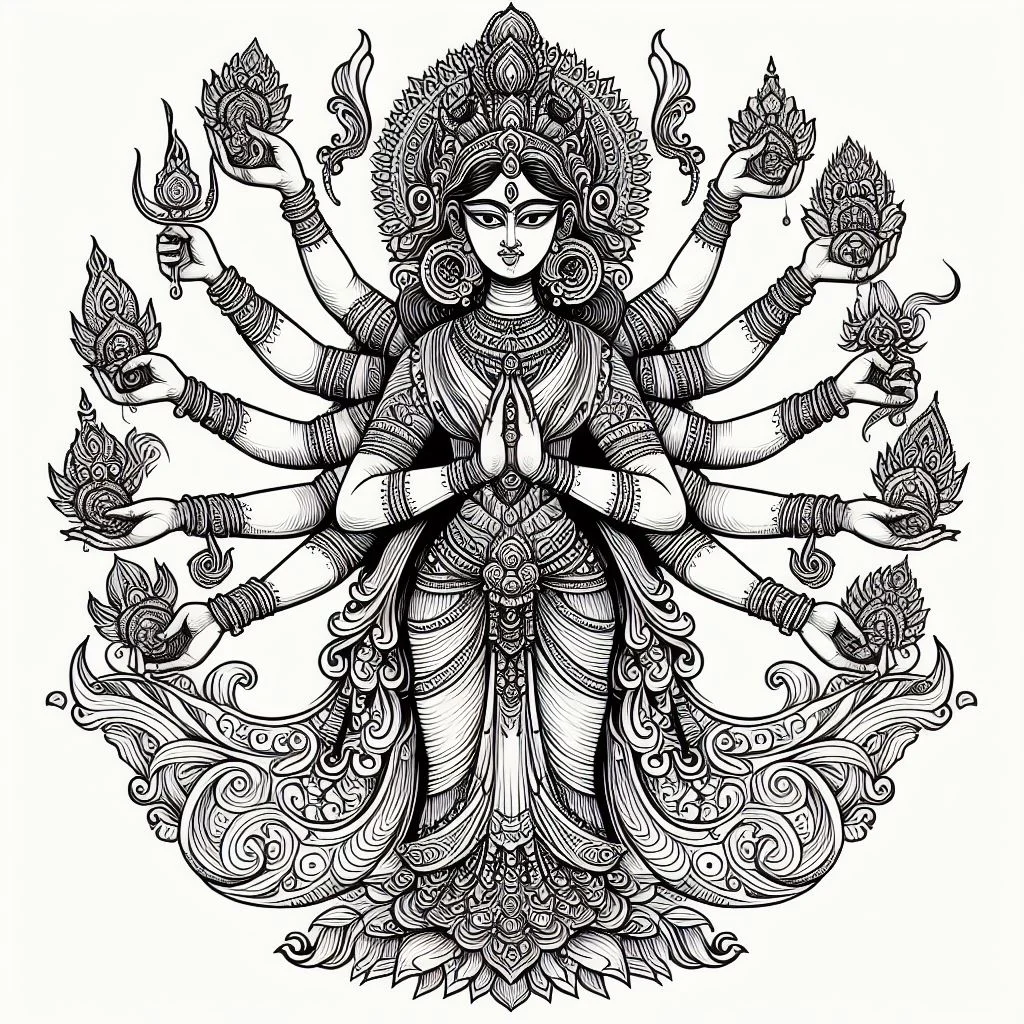
The Devī Bhāgavatam (primarily the 11th Skandha) expands the theological foundation by emphasising the inherent purity of Rudrākṣa and its ability to cleanse karmic residue, stabilise the mind, and fortify one’s spiritual discipline.
It outlines the classifications of different mukhis, their ruling divinities, and the subtle effects each produces. This text also confirms that Rudrākṣa, when used for japa, amplifies mantra potency due to its innate sattvic and agni-balancing nature.
Upaniṣadic References
Certain Upaniṣadic traditions, such as the Jābāla Upaniṣad and its related Śaiva texts, reference the use of Rudrākṣa by renunciates and householders alike. These passages emphasise the bead’s role in maintaining prāṇic balance, supporting concentration, and protecting the practitioner from disturbances during meditation.
The Upaniṣadic treatment of Rudrākṣa positions it not merely as an accessory but as a spiritual instrument that aligns one’s mind-field (manomaya-kośa) with the steadfastness required for Brahmavidyā-oriented disciplines.
Doctrinal Standing
Across these canonical sources, Rudrākṣa is consistently presented as:
- A sacred organic medium carrying Śiva-tattva
- A stabiliser of mind and emotion
- A purifier of subtle channels (nāḍīs)
- A support for mantra continuity and tapas
The seed is not symbolic, it is treated as biologically and energetically effective, endowed with measurable influence on prāṇa, breath rhythm, and mental steadiness.
Types of Rudrākṣa Used in Mālās (1–14-Mukhi Overview)
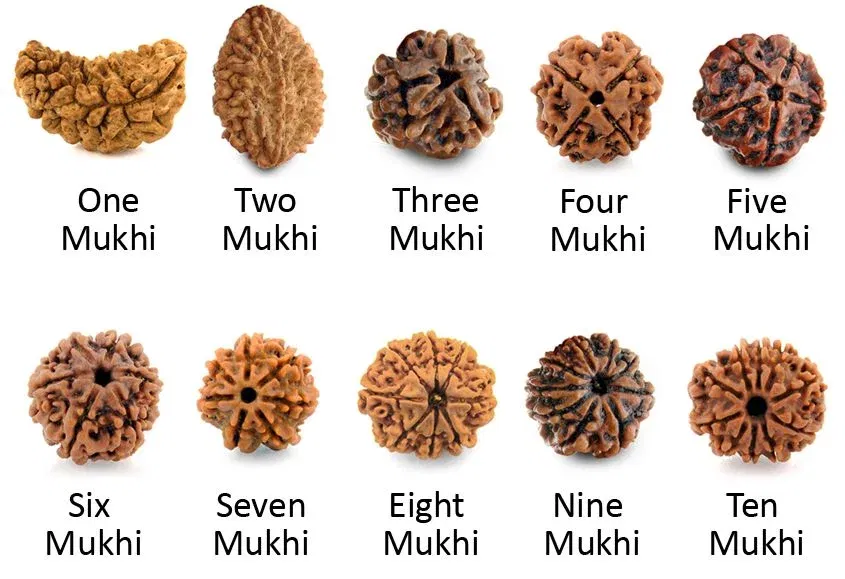
Rudrākṣa beads are categorised by their mukhi (faces or natural segments). Each mukhi reflects a distinct energetic profile governed by a specific devatā and corresponding planetary influence. While mālās generally use standard 5-mukhi beads for uniformity, higher mukhis are sometimes worn singly or added as meru/guru beads.
Below is an expanded, practitioner-focused overview:
| Mukhi Count | Ruling Deity | Primary Life Effect |
| 2-Mukhi | Ardhanārīśvara | Harmony in dualities/relationships. |
| 4-Mukhi | Brahmā | Success in learning and memory. |
| 6-Mukhi | Kārttikeya | Discipline and emotional restraint. |
| 8-Mukhi | Gaṇeśa | Removal of obstacles; root stability. |
| 11-Mukhi | Ekādaśa Rudra | Deeper breath awareness and courage. |
| 14-Mukhi | Hanumān | Instinctive wisdom and protection. |
1-Mukhi Rudrākṣa
- Presiding Deity: Śiva (Paramārtha form)
- Primary Effect: Absolute focus, clarity, singularity of purpose
- Notes: Rare; traditionally not used in standard mālās due to its high potency and specific sādhana requirements.
2-Mukhi Rudrākṣa
- Presiding Deity: Ardhanārīśvara
- Effect: Harmonises dualities, stabilises relationships, balances internal polarities
- Use: Often worn as a pendant rather than in mālās.
3-Mukhi Rudrākṣa
- Presiding Deity: Agni
- Effect: Burns karmic residue, reduces guilt-driven agitation, strengthens resolve
- Use in Mālās: Sometimes interspersed for heating/energizing effect, though used selectively.
4-Mukhi Rudrākṣa
- Presiding Deity: Brahmā
- Effect: Enhances memory, articulation, structured thinking
- Use: Suitable for mantra-learning students and knowledge-seekers.
5-Mukhi Rudrākṣa (most commonly used for japa-mālās)
- Presiding Deity: Kālaagni Rudra
- Effect: Regulates prāṇa, reduces stress, supports long-duration japa
- Reason for Use in Mālās: Consistent size, moderate potency, and high sattva make it ideal for rhythmic mantra repetition.
6-Mukhi Rudrākṣa
- Presiding Deity: Kārttikeya (Skanda)
- Effect: Discipline, restraint, reduction of Mars-related excesses
- Use: Often recommended for students and practitioners needing emotional steadiness.
7-Mukhi Rudrākṣa
- Presiding Deity: Sri Lakṣmī Devi
- Effect: Stability in finances, removal of chronic obstacles
- Use: Typically worn for householders rather than strict japa use.
8-Mukhi Rudrākṣa
- Presiding Deity: Gaṇeśa
- Effect: Removes impediments, supports mūlādhāra stability
- Use: Occasionally added as a single bead near the guru bead.
9-Mukhi Rudrākṣa
- Presiding Deity: Durgā (Navadurgā)
- Effect: Strength, protection, inner resilience
- Use: For practitioners facing long-term challenges or instability.
10-Mukhi Rudrākṣa
- Presiding Deity: Viṣṇu
- Effect: Guards against subtle disturbances, protects during travel and transitions
- Use: Traditionally a protective talisman.
11-Mukhi Rudrākṣa
- Presiding Deity: Rudra (Ekādaśa form)
- Effect: Courage, introspection, deeper breath awareness
- Use: Suitable for advanced meditators or prāṇāyāma practitioners.
12-Mukhi Rudrākṣa
- Presiding Deity: Sūrya
- Effect: Confidence, leadership, vitality
- Use: Sometimes paired with solar mantras or sūrya-upāsanā.
13-Mukhi Rudrākṣa
- Presiding Deity: Kāmadeva
- Effect: Charm, influence, refinement in interpersonal engagement
- Use: Very specific; generally used under guidance.
14-Mukhi Rudrākṣa
- Presiding Deity: Hanumān (as per many traditions), or Rudra in fierce protective form
- Effect: Heightened alertness, instinctive wisdom, rapid decision-making
- Use: A powerful bead worn individually; not included in japa-mālās.
General Energetic Qualities of Rudrākṣa
Scriptures consistently describe Rudrākṣa as a sattvic, prāṇa-stabilising, and karma-clearing organic medium that directly carries the vibration of Śiva-tattva. Across the Śiva Purāṇa,
Devī Bhāgavatam, and Jābāla Upaniṣad, the seed is presented not as symbolic but as intrinsically potent, with the ability to regulate mind, breath, and subtle energy pathways.
Key energetic characteristics affirmed in these texts and traditional lineages include:
- Stabilisation of Manas (mind): Rudrākṣa calms oscillatory mental patterns and supports dhāraṇā (one-pointed attention).
- Regulation of Prāṇa: The bead’s contact with skin and its natural electromagnetic properties are traditionally said to harmonise prāṇa-vāyu, aiding steady japa and meditation.
- Reduction of Tamas and Unprocessed Karmic Impressions: Many passages emphasize Rudrākṣa’s ability to reduce heaviness, lethargy, and confusion associated with tamas.
- Inner Protection: Rudrākṣa creates a subtle energetic field that guards against psychic and emotional disturbances, especially during periods of intense sādhana or travel.
- Support for Spiritual Progress: The seed’s association with tapas and inner fire (antarmukhatā) strengthens commitment to daily discipline.
Scripturally, Rudrākṣa is treated as a direct aid to both nivṛtti-mārga (inner withdrawal) and pravṛtti-mārga (engaged dharma), making it universally suitable for householders, meditators, and mantra practitioners.
Devatās Associated With Rudrākṣa
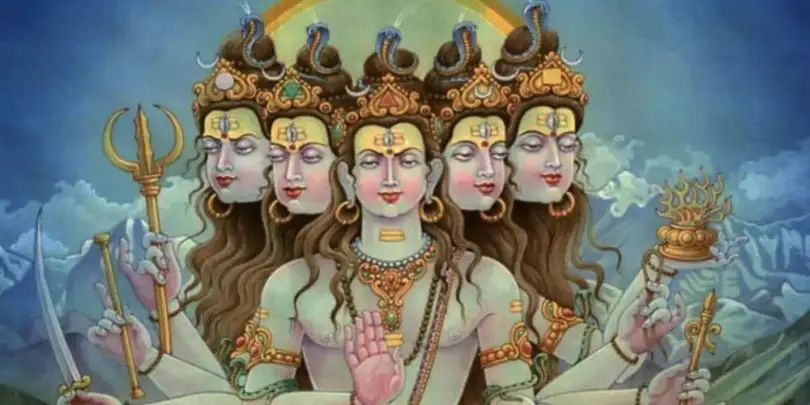
1. Mahādeva / Rudra
Rudrākṣa is inseparable from Rudra in the textual tradition. The Śiva Purāṇa repeatedly states that Rudrākṣa is “Rudrasya dṛṣṭi-patana-jātam”, born of Rudra’s compassionate glance and tears. Wearing Rudrākṣa is equated with being under the immediate protection of Śiva, and the bead is considered a fragment of His own consciousness (śiva-bhāva).
2. Mahāmṛtyuñjaya
The Mahāmṛtyuñjaya mantra is directly linked to Rudrākṣa in several Śaiva sources. Because the mantra is oriented toward rejuvenation, liberation from fear, and protection from untimely harm, Rudrākṣa is recommended as its primary japa-medium.
The bead stabilizes the mind, supports long-duration japa, and helps internalize the mantra’s healing vibration.
3. Bhairava & Dattātreya
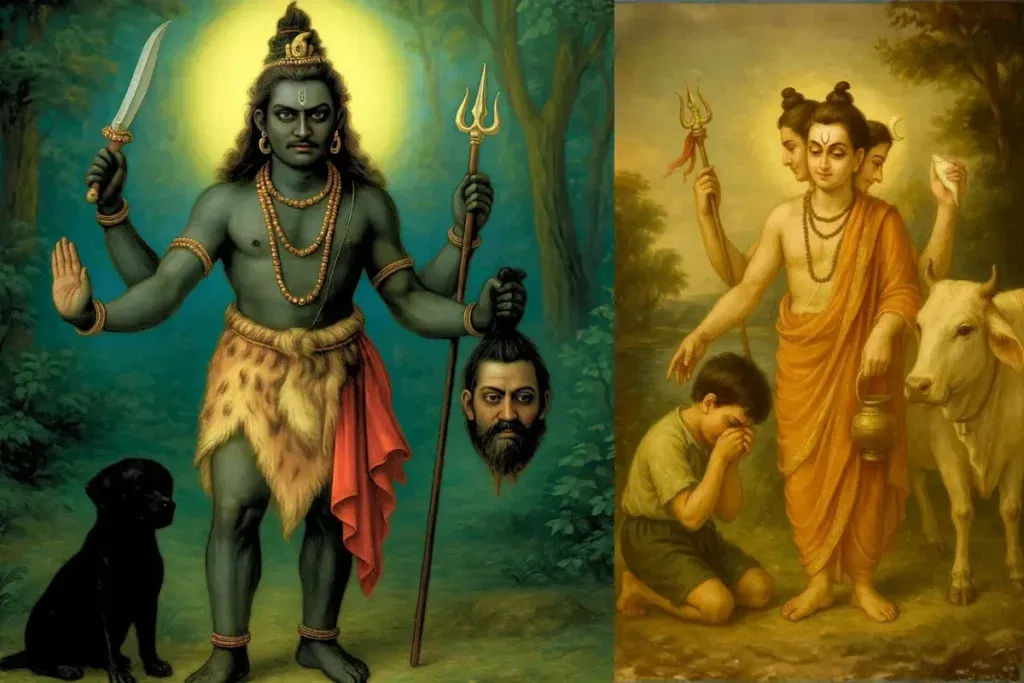
Certain mukhis, particularly 11-mukhi and 14-mukhi, are linked in tantra-śāstra and folk-Śaiva traditions with Bhairava, the fierce protector form of Śiva. These beads are used for courage, clarity, and stability during difficult karmic cycles.
Traditions connected to Dattātreya also prescribe Rudrākṣa for inner grounding, satsanga, and discrimination between real and unreal (viveka).
Across these associations, the devatā-connection is functional, not merely symbolic. Rudrākṣa aligns the practitioner with Śiva’s attributes: steadiness, disidentification, clarity, courage, and non-reactive awareness.
Planetary Afflictions Helped by Rudrākṣa Japa
Rudrākṣa is widely used in remedial astrology (pariśodhana / śānti / upāya) because each mukhi has a devatā and planetary correspondence. The underlying logic is not astrological appeasement alone, but subtle realignment of prāṇa and manas.
Common associations include:
- Sun: 1-mukhi and 12-mukhi (clarity, dignity, vitality)
- Moon: 2-mukhi and 4-mukhi (emotional steadiness, softness, reducing reactivity)
- Mars: 3-mukhi and 6-mukhi (discipline, controlled energy, reduction of anger and heat)
- Jupiter: 5-mukhi (wisdom, sattva, stable memory; widely used for general japa)
- Saturn: 7-mukhi and 14-mukhi (obstacle removal, steadiness, patience)
- Rahu: 8-mukhi (clarity, protection from confusion and illusion)
- Ketu: 9-mukhi and 11-mukhi (fear reduction, intuition without instability)
These assignments are consistent with classical Jyotiṣa practice and are employed both for daily stabilization and specific planetary affliction periods (daśā/antara-daśā, sadesati, eclipses, nodal transits).
Which Rudrākṣa for Which Spiritual Goal
Below is a simple, practitioner-ready mapping:
- For Concentration & Meditation Depth:
5-mukhi, 11-mukhi - For Courage, Strength & Challenge Management:
3-mukhi, 6-mukhi, 14-mukhi - For Emotional Stability & Harmony:
2-mukhi, 4-mukhi - For Obstacle Removal & Mūlādhāra Stability:
8-mukhi, 9-mukhi - For Wisdom, Learning & Scriptural Study:
4-mukhi, 5-mukhi - For Leadership, Clarity & Confidence:
1-mukhi, 12-mukhi - For Tapas, Protection & Non-reactive Awareness:
11-mukhi, 14-mukhi - For General All-Purpose Japa:
5-mukhi Rudrākṣa mālā (universally recommended in every text)
These are not “astrological fixes” but spiritual-function mappings grounded in mukhi-devatā correspondences.
Best Mantras for Rudrākṣa Japa
Universal Śaiva Mantras: Resonating with Rudrākṣa’s Core Vibration
Rudrākṣa carries the austere, inward-focused, and prāṇa-stabilizing presence of Lord Śiva. Because of this, the most natural mantras for Rudrākṣa japa are the universal Śaiva mantras that align directly with Śiva-tattva:
- “Om Namah Śivāya”
- “Om Śivaya Namaḥ”
- The Pañcākṣarī Mantra (when chanted under proper guidance or initiation)
These mantras harmonise with Rudrākṣa’s grounding and clarifying effect, helping the practitioner cultivate steadiness, detachment, and an inward-turning mind.
Mahāmṛtyuñjaya Mantra: Healing, Fearlessness, and Deep Stabilisation
The Mahāmṛtyuñjaya Mantra, one of the most powerful Vedic mantras, is traditionally recommended when using Rudrākṣa for japa. Its vibration supports healing, longevity, fearlessness, and the strengthening of inner life-force. Rudrākṣa’s natural prāṇa-regulating quality deepens the mantra’s impact, making it especially potent for those seeking protection, recovery, or emotional fortitude.
Guru-Paramparā Mantras: Anchored Through Energized Rudrākṣa
When a Rudrākṣa mālā has been energized by a Guru, lineage mantras (upadeśa-mantras) receive an added depth of steadiness. The Guru’s saṅkalpa reinforces the mantra each time it is repeated, providing continuity even when the practitioner’s mind fluctuates. Rudrākṣa becomes a stable medium through which paramparā energy is transmitted bead by bead.
Mukhi-Specific Mantras: Optional Enhancements for Advanced Practitioners
Although not mandatory for general practice, certain traditions prescribe mukhi-specific mantras aligned with the devatā governing each facet of the Rudrākṣa bead. For example, some lineages use “Om Hreem Hoom Namah” for five-mukhi Rudrākṣa. These mantras can enhance subtle resonance for experienced sādhakas, but they are always supplementary, never a replacement for foundational Śaiva mantras.
In essence, the strength of Rudrākṣa lies in its affinity with Śiva’s stillness, depth, and power. The best mantras for Rudrākṣa japa reflect this same orientation toward clarity, protection, and inner awakening.
Rules for Wearing & Worshipping Rudrākṣa
The śāstric guidelines are designed to preserve purity and maintain the sattvic field around the bead:
- Wear with Cleanliness:
Bathe and keep hands clean before touching the mālā. - Do Not Wear During Impure Activities:
Remove before sleeping, sexual activity, alcohol, or non-vegetarian food (classical rule; varies by lineage). - Keep Dedicated for Sādhana:
Do not mix a japa-mālā with decorative jewellery or casual use. - Respect the Guru Bead:
Do not cross over it while chanting; rotate the mālā. - Oil Application:
A light application of natural oils (neem, almond, or sandalwood oil [the best]) is recommended occasionally to prevent drying. - Avoid Water Exposure:
Prolonged wetting can crack the bead or weaken its fibre. - Storage:
Keep in a clean, dry place, preferably wrapped in cotton or silk. - Charging / Energizing:
Expose to early morning sunlight or perform abhiṣeka and mantra-japa as per one’s tradition. Guru-energized mālās receive this activation through the teacher’s saṅkalpa. - Do Not Share:
Rudrākṣa absorbs subtle vibrations; it is traditionally considered a personal sādhana instrument.
Red Chandan (Rakta Chandan) Mālā
Scripturally Ratified Foundations
In classical literature, “Rakta Chandan” or red sandalwood is referenced in multiple layers of Indic tradition, Purāṇic, tantric, āgamic, and regional commentarial texts. While white sandalwood (Śveta Chandana) is more frequently cited in pan-Indian rituals, red sandalwood appears in texts specifically concerned with tapas, protective rites, and energising saṅkalpas.
The Agni Purāṇa, several Śakta Tantras, and South-Indian āgamic paddhatis mention the use of Rakta Chandan for homa, mūrti-abhiṣeka, and mantra-upacāra where invigorating, heat-oriented devatās are invoked.
Traditional practitioners also maintain that Rakta Chandan mālās are suitable for rajas-oriented japa, where a seeker requires courage, vitality, and determination without invoking excessive tamas.
Within venerable ascetic lineages, using a red sandalwood mālā is seen as an acceptable alternative for those who cannot use Rudrākṣa or Tulsi, yet still need a tapas-infused counting medium blessed by classical precedent.
Scriptural & Traditional Usage
Traditional sādhana manuals describe red sandalwood in contexts involving:
- Upacāras for Gaṇeśa, Skanda, and Narasiṁha, where Rakta Chandan paste is applied to the mūrti to signify strength, vitality, and the removal of obstructive forces.
- Śakti-paddhatis, especially in South-Indian Śākta traditions, where red sandalwood appears in offerings (naivedya-alankāra), mantra-nyāsa rituals, and in certain yantra-archana protocols.
- Agni-related rites, due to its inherent symbolism of warmth and activation, making it suitable in japa where the practitioner seeks sharpened willpower (icchā-śakti) and disciplined effort (prayatna).
The mālā form inherits this ritual lineage: japa performed on red sandalwood is considered appropriate for strengthening resolve, counteracting lethargy, and stabilising emotional intensity.
Energetic Qualities
Rakta Chandan is traditionally understood to carry a rajas-positive quality, meaning it awakens purposeful energy without pushing the practitioner toward restlessness. Its properties are conveyed in both material and symbolic layers:
- Tapas-strengthening, helps the mind sustain effort for longer periods without mental collapse.
- Warmth and inner ignition, culturally associated with activating “tejas,” the subtle brightness linked to conviction and alertness.
- Courage and assertiveness, red sandalwood is used in rites where a practitioner must overcome fear, indecision, or emotional suppression.
- Stability during transformative practices, the warmth of Rakta Chandan is believed to steady inner fire without tipping the psyche toward excessive heat.
Practitioners select it when seeking a balanced increase in inner strength, especially during periods requiring action, responsibility, and disciplined self-direction.
Devatās Associated With Red Chandan
Classical and regional traditions associate Rakta Chandan with devatās whose iconography or functional domains reflect strength, protection, or energising qualities:
- Gaṇeśa, red sandal paste is widely used in Gaṇeśa worship; a Rakta Chandan mālā is deemed suitable for Gaṇeśa mantra japa where the focus is overcoming obstacles with firmness rather than devotional softness.
- Divine Mother (Śakti), especially in forms such as Durgā, Lalitā, and the Nava-Durgā, where red indicates energy, protection, and decisive action.
- Nṛsiṁha, many Nṛsiṁha-tantra sādhanas prescribe red sandal in offerings and japa contexts due to its heat-stabilising properties, supporting the transformative intensity of Narasiṁha mantras.
- Skanda (Subrahmaṇya/Murugan), in southern traditions, red sandalwood is used in Skanda worship to invoke courage, clarity in duty, and martial decisiveness.
These associations make Rakta Chandan a devatā-specific mālā type, more functional than ornamental, used with deliberate intent.
Planetary Afflictions Helped by Red Chandan Japa
Balancing the Fire of Sun and Mars
In jyotiṣa-informed ritual practice, Red Chandan is selected for conditions shaped by the fiery grahas, Sun (Sūrya) and Mars (Maṅgala). These planets govern vitality, assertiveness, discipline, courage, and the inner fire (tejas) that animates action.
When their influence becomes excessive or distorted, the fire becomes harsh rather than luminous; when their influence is weak, the fire becomes dull rather than purposeful. Rakta Chandan, with its warm yet steadying vibration, is traditionally used to bring these forces back into functional, dignified alignment.
Moderating Excessive Sun: Mars Expression
Excessive Sun creates sharpness in personality, ego rigidity, harsh speech, stubbornness, and a tendency to dominate. Excessive Mars heightens reactive anger, impulsiveness, aggression, and difficulty maintaining calm in conflict.
In such states, the practitioner’s prāṇa becomes jagged and overheated, leading to restlessness and over-stimulation. Red Chandan, through its tempered warmth, helps reduce this uncontrolled flare of tejas, softening harshness without dulling strength.
Strengthening Deficient Sun: Mars Patterns
Just as excessive fire harms balance, insufficient fire weakens confidence and resolve. Deficient Sun–Mars conditions often appear as low motivation, lack of discipline, timidity, fear of healthy confrontation, emotional passivity, or an inability to sustain purposeful action.
Red Chandan is traditionally prescribed here as well, not to inflame intensity but to kindle dignified courage, an inner heat that supports steadiness rather than volatility. Its energy encourages structured effort, clarity in decision-making, and the confident expression of one’s duties.
The Function of Red Chandan as a Regulator of Tejas
A Red Chandan mālā does not simply reduce heat; it refines it. Its role is to channel Sun and Mars energies into constructive pathways, focused effort, ethical courage, disciplined work, and emotional steadiness. When used with mantras that purify rather than aggravate tejas,
Red Chandan helps the practitioner harness their fire with maturity. In this way, the mālā becomes a subtle ally in transforming raw intensity into purposeful strength, turning the disruptive fire of the grahas into a steady illumination that supports right action and inner balance.
Ideal Mantras for Red Chandan Japa
Red Chandan is best used with mantras that work directly on tejas, will, courage, protection, and obstacle-clearing. The aim is not to inflame ego, but to give the seeker steady, dharmic strength.
For most sādhakas, the following categories of mantra are natural on a Rakta Chandan mālā:
- Gaṇeśa mantras where the emphasis is on removing inner resistance, laziness, and fear of responsibility.
Example:- Short forms like “Om Gaṁ Gaṇapataye Namaḥ” for those needing disciplined beginnings, courage to act, and clarity in decisions.
- Śakti mantras oriented toward protection, resolve, and dharmic success rather than mere worldly victory.
Example:- Durgā- and Nava-Durgā-based mantras when the practitioner is working through intimidation, chronic anxiety, or emotional weakness, seeking inner firmness.
- Nṛsiṁha mantras where the practitioner needs strong psychic protection and courage in the face of fear or oppression.
Example:- Core Nṛsiṁha protection mantras, used under appropriate guidance, for those going through intense inner or outer conflict.
- Skanda/Subrahmaṇya mantras for clarity of duty, disciplined action, and martial steadiness, especially for those who must take difficult but righteous decisions.
- Sūrya and Maṅgala mantras for refining Sun and Mars, not merely increasing their power.
Example:- Sūrya mantras for integrity, responsibility, and right use of authority.
- Maṅgala mantras for disciplined drive, controlled assertiveness, and courage without violence.
Red Chandan is chosen when a practitioner’s central question is:
“How do I move from hesitation, confusion, or suppressed anger into clear, dharmic, disciplined action?”
Where there is chronic indecision, fear of confrontation, or scattered will, a Rakta Chandan mālā with the right mantra can become a consistent support for re-orienting life around courage and responsibility.
When to Use Red Chandan vs White Chandan
Understanding the Two Currents of Sandalwood
Both Red Chandan and White Chandan hold honoured places in Hindu ritual, yet they express two very different inner movements of sādhana. One strengthens and activates; the other cools and refines. Choosing between them is not about preference but about recognising which quality the practitioner needs at a particular stage of inner work.
Red Chandan (Rakta Chandan): When Inner Fire Must Be Directed
Red Chandan is traditionally chosen when a seeker requires activation, courage, initiative, or the disciplined structuring of life. Its warmth supports those who struggle with suppressed anger, lack of motivation, chronic procrastination, or restless aggression that needs controlled refinement.
Because of its affinity with Sun–Mars tejas, it aligns well with devatās who embody protection, strength, or warrior-like clarity, such as Gaṇeśa in His obstacle-clearing form, Devi Durgā, Nṛsiṁha, Skanda, and certain Śakti traditions. It is equally relevant during phases of life that demand firm decision-making, leadership, and responsibility, where japa itself becomes a source of inner firmness and directed resolve.
White Chandan (Śveta Chandan): When the Mind Needs Cooling and Softening
White Chandan is selected when the seeker requires gentle settling, emotional cooling, and sattvic refinement. It supports inner quietude, devotional sweetness, and a softening of the heart toward bhakti-rasa.
This makes it ideal for those experiencing mental overheating, anxiety, overthinking, burnout, or emotional exhaustion, conditions that call for rest rather than activation. White Chandan harmonises naturally with worship of Sri Vishnu, Krishna, Rāma, or Śiva in His benign, peaceful forms, as well as with general nāma-japa aimed at cultivating serenity and clarity rather than outward drive.
| Aspect | Red Chandan (Rakta) | White Chandan (Śveta) |
| Energetic Guna | Disciplined Rajas | Pure Sattva |
| Internal Action | Activation and Initiative | Cooling and Harmonizing |
| Best Mood | “I need to act with courage.” | “I need to settle my mind.” |
| Nervous System | Invigorating | Soothing |
A Simple Practical Guideline
If sādhana requires strength, courage, and decisive movement, Red Chandan aligns with that inner task.
If sādhana requires cooling, harmonising, and devotional absorption, White Chandan is the more suitable companion. Both materials are legitimate and deeply respected; the choice rests in matching the inherent guna-profile of the mālā with the seeker’s present psychological and spiritual direction.
| Dimension | Neem Mālā | Rudrākṣa Mālā | Red Chandan (Rakta Chandan) Mālā |
|---|---|---|---|
| Nature of Energy | Cooling, cleansing, sattvic. Helps dissolve emotional heaviness and irritation. | Deep, transformative, powerful tapas-quality; strong purification and karmic accountability. | Disciplined rajas, structured effort, courage, warmth, sustained initiative. |
| Traditional Alignment | Durgā, Nava-Durgā, Hanumān-oriented; calming and stabilising. | Śiva Purāṇa, Devī Bhāgavatam, Upaniṣadic authority; universally accepted across Śaiva lineages. | Agni Purāṇa, Śakta paddhatis; used for rites involving Gaṇeśa, Śakti, Nṛsiṁha, Skanda. |
| Scope of Use | Emotional purification, removing restlessness, grounding. | Highly universal, protection, meditation, transformation, devotion. | Courage-building, responsibility, activating willpower; Sun/Mars refinement. |
| Best For | Seekers needing calmness, balance, emotional healing. | Seekers ready for deeper sādhana, tapas, karmic work. | Action-oriented seekers needing confidence, structured energy, and disciplined rajas. |
| Psychological Effect | Settles mind, reduces anxiety, clears emotional disturbances. | Invokes seriousness, truthfulness, vow-keeping, inner accountability. | Warm focus, confidence, organised drive; transforms scattered rajas into purposeful action. |
| Devatā Connection | Durgā, Hanumān, sattvic protective energies. | Rudra, Mahādeva, Mahāmṛtyuñjaya, Bhairava, Dattātreya. | Gaṇeśa, Śakti, Skanda, Nṛsiṁha. |
| Planetary Benefits | Helps Mars/Ketu emotional turbulence and instability. | Stabilises Saturn-based karmic lessons, refines Sun/Mars intensity. | Used for balancing Sun/Mars, anger, fear, aggression, weak will, low initiative. |
| Mantra Fit | Peace, protection, grounding: Durgā, Hanumān, sattvic nāma-japa. | Śiva mantras, Mahāmṛtyuñjaya, Rudra mantras. | Gaṇeśa, Śakti, Nṛsiṁha, Skanda, Sun/Mars remedial mantras. |
| Use-Case Summary | Purification + grounding. | Transformation + protection. | Courage + disciplined action. |
For a householder or professional who is just beginning to take inner life seriously while simultaneously managing worldly responsibilities, a Red Chandan mālā used with the right mantras can be a very practical, grounded support. For the same seeker, when life naturally moves toward deeper tapas, renunciation of unhelpful tendencies, and more intense japa, transitioning to or adding Rudrākṣa under guidance can be the next, more powerful step.
When to Choose Red Chandan for Japa vs Pūjā
Red Chandan may be used both for personal mantra-japa and pūjā-based upacāra, but the traditional reasoning differs.
For Japa (Personal Sādhana)
A practitioner chooses a Rakta Chandan mālā for japa when the inner requirement is activation, courage, or steadiness of will. Japa on red sandalwood is traditionally recommended when:
- one needs disciplined rajas, sustained effort, focus, and purposeful action;
- emotional patterns such as fear, hesitation, or suppressed anger need regulated expression rather than suppression;
- the sādhaka is working with Sun or Mars–related weaknesses or excesses (as interpreted in classical jyotiṣa);
- the devatā invoked belongs to a protective or energising domain (Gaṇeśa, Devī, Nṛsiṁha, Skanda);
- one requires the internal warmth and stability needed to maintain consistent practice during demanding life phases.
In simple terms: choose Red Chandan for japa when your inner task requires strength, activation, clarity, and responsibility.
For Pūjā (Ritual Upacāras)
In pūjā, Rakta Chandan is used not primarily as a counting medium but as a substance of worship (dravyam). It may be:
- applied as chandana-lepa on mūrti-s with energetic or protective significance;
- used in naivedya-alankāra and select tantric upacāras where red tone symbolises energy, tejas, and protection;
- employed in yantra-archana, especially for Devī, Nṛsiṁha, and Skanda where red sandal paste is ritually significant;
- used as an offering substance in agni-related rituals, as its “warm” nature aligns with fire rites (Agni Purāṇa references).
Thus, for pūjā, Red Chandan is chosen to honour devatās associated with strength, tejas, or protection, and to support rituals requiring energising or heat-stabilising substances.
Recommended Mantras for Red Chandan Mālā
Aligning Mantra With the Refinement of Tejas
A Red Chandan mālā supports the transformation of inner fire into dharmic strength, not aggression. The mantras traditionally paired with it help refine courage, discipline, and clarity, ensuring that rajas becomes purposeful rather than chaotic. The following categories of mantras harmonise naturally with the energetic signature of Rakta Chandan.
Gaṇeśa Mantras: Removing Inner Resistance
Red Chandan offers structured activation, making it ideal for Gaṇeśa japa when the practitioner needs to overcome lethargy, fear of responsibility, or internal obstacles.
- Om Gaṁ Gaṇapataye Namaḥ
- Om Vighnarājāya Namaḥ
These mantras help clear hesitation and stabilise resolve, supporting decisive and grounded movement.
Devī / Śakti Mantras: Courage, Protection, and Purified Rajas
For sādhakas invoking disciplined tejas within Śakti-oriented practices, Red Chandan enhances both steadiness and protection.
- Mantras to Śrī Durgā or the Nava-Durgā
- Select Śakti bījamantras like Dum̐ (only under proper initiation)
These mantras strengthen inner courage, support emotional resilience, and help refine rather than inflame rajas.
Nṛsiṁha Mantras: Transforming Fear Into Strength
Rakta Chandan is frequently chosen for Nṛsiṁha japa when fear, insecurity, or oppressive conditions must be met with inner power.
- Ugram̐ Vīram̐ Mahāviṣṇum̐… (traditional Nṛsiṁha protection mantra)
- Other lineage-specific Nṛsiṁha mantras
These mantras awaken protective clarity and fearless presence without veering into aggression.
Skanda / Subrahmaṇya Mantras: Duty, Discipline, and Right Action
For practitioners seeking clear direction, disciplined action, or the ability to overcome indecision, Skanda mantras marry well with Red Chandan’s activating nature.
- Om Saravanabhava
- Om Subrahmaṇyāya Namaḥ
These strengthen duty-awareness and structured effort, encouraging a more confident engagement with life’s responsibilities.
Sūrya and Maṅgala Mantras: Refining Sun–Mars Energy
When the aim is to purify and stabilize Sun or Mars tendencies, not amplify them, Red Chandan becomes an appropriate support.
- Sūrya Gāyatrī, for integrity, direction, and inner radiance
- Maṅgala mantras, for disciplined drive and courageous steadiness
These practices help anchor the practitioner in balanced tejas, transforming scattered intensity into purposeful strength.
Through these mantras, Red Chandan guides the practitioner toward a mature, refined expression of inner fire, strength that is rooted in clarity, responsibility, and dharma.
Care Instructions
Maintaining the Integrity of Red Chandan
Red Chandan, with its warm and disciplined energy, requires a thoughtful approach to physical and spiritual care so that its natural qualities remain intact over long-term use. It is best kept dry, as moisture can alter its texture or subtly affect its colour.
The mālā should be stored separately from items carrying strong scents or oils to prevent absorption, and chemical polishing must be avoided; its natural, uncoated surface is part of its purity. Prolonged exposure to direct sunlight can gradually fade its tone, so storing it in a shaded, clean place is ideal. Periodically wiping it with a soft, dry cloth is sufficient for physical maintenance, fragrant or chemical cleansers should never be used.
Preserving Its Subtle Energy
Because Red Chandan is aligned with courage, discipline, and the refining of inner fire, purity of handling is essential. Once a mālā is used for japa, it is best kept reserved for that purpose alone, held with intention, and handled mindfully.
It should not be passed from hand to hand or touched casually, as doing so disrupts the continuity of prāṇic resonance developed through practice. When maintained with clarity and respect, the mālā remains a stable companion for channeling Sun–Mars energies into a constructive, balanced, and dharmic expression.
Scriptural / Traditional Glimpse on Chandan
Sandalwood (Chandana) has a long and deeply rooted presence in Hindu ritual culture. Classical manuals refer to both white and red sandalwood as śuddhi-dravya, substances that purify and sanctify the ritual environment.
A summarised view from Purāṇic and smṛti-based ritual references:
“Sandalwood is considered sacred in India. It is offered to gods and goddesses during worship and used in sacred ceremonies to purify places.”, Hindu Scriptures
Its primary uses include:
- Chandan-lepa applied to mūrti-s as a mark of respect, coolness, and sanctification;
- Tilaka or tripuṇḍra on the devotee’s forehead as a sign of purity and alignment;
- Purificatory function in temple rituals, homa, and household pūjā;
- Foundational basis for mālā-use: the sanctity of chandan as a pure substance naturally extends to its use in japa for seekers whose practice benefits from its energetic signature.
Thus, a Red Chandan mālā inherits not only energetic qualities but also ritual authority from its ancient usage.
Guru-Energized Red Chandan Mālā (Japa-Dīkṣā Use Only)
The Role of Consecration in Red Chandan Practice
In certain disciplined lineages, a Red Chandan mālā may be consecrated or energized by a Guru before it is handed to a disciple. Through such consecration, the mālā is no longer merely a ritual accessory; it becomes a bearer of dīkṣā-saṅkalpa, a vessel of intention, protection, and direction.
The Guru’s blessing infuses it with a steadiness that guides the practitioner’s inner fire toward disciplined transformation rather than reactive heat. Because Red Chandan already resonates with structured tejas, a Guru’s touch elevates it into a refined medium capable of shaping courage, clarity, and resilience in the seeker.
Who Receives This Form of Mālā
A Guru-energized Rakta Chandan mālā is traditionally offered only to those whose sādhana requires strong but controlled activation. It is often given to Nṛsiṁha upāsakas who seek fearlessness and steadfastness during phases of inner upheaval, or to Devī practitioners whose path involves cultivating disciplined courage within Śakti-oriented practices.
Gaṇeśa sādhakas may also receive it when the need is to cut through obstacles, lethargy, or emotional weakness with clear, decisive movement. For those entering a new chapter of disciplined japa, especially where scattered rajas must be transformed into focused effort, the Red Chandan mālā provides a structured, energizing support.
The Discipline of Use
This kind of mālā is reserved exclusively for mantra-japa and never worn casually. It is handled with intention, kept in a clean and dedicated space, and regarded as an extension of the Guru’s saṅkalpa.
Each bead becomes a reminder of the commitment made during initiation, and each cycle of japa draws the practitioner deeper into alignment with the disciplined fire that Red Chandan embodies. When maintained with respect and used with sincerity, the mālā becomes a reliable companion for refining inner strength and cultivating the courage required for sustained spiritual growth.
White Chandan (Śveta Chandan) Mālā
The White Chandan mālā is traditionally associated with cooling purity, sattvic refinement, and clarity of mind. Its presence in Hindu ritual culture is ancient, grounded in Purāṇic references, temple traditions, and daily pūjā practices across India. While red sandalwood is linked to tejas and tapas, white sandalwood represents śānti (peace), clarity, purity, and devotional softness.
In many traditions, it is chosen when a seeker’s sādhana focuses on quieting the mind, harmonising emotions, or deepening bhakti-based remembrance.
Cooling & Sattvic Purity Qualities
Śveta Chandan is naturally cooling, not only in its physical quality but in the guna-profile assigned to it in classical ritual psychology (pūjā-bhāva).
Its recognised qualities include:
- Cooling the mental field (manas) and reducing agitation, restlessness, and overstimulation.
- Sattvic refinement, supporting clarity, truthfulness, and devotional alignment.
- Soothing emotional turbulence, making it suitable for those experiencing stress, anxiety, emotional volatility, or burnout.
- Supporting meditative stillness, especially for japa which aims at subtle awareness rather than active willpower.
- Creating harmony in the inner environment, much like the chandan-paste used on mūrti-s to invoke calmness and blessing.
In yogic-energetic terms, White Chandan helps reduce excessive rajas, makes the mind receptive, and strengthens pure remembrance (smaraṇa).
Scriptural Associations & Ritual Use
The Sacred Place of White Chandan in Classical Worship
White Chandan occupies a distinguished and pervasive role across Hindu ritual literature and temple practice. The Padma Purāṇa, Skanda Purāṇa, and numerous temple āgamas describe chandana-lepa, the anointing of sandal paste, as one of the highest forms of archana offered to Viṣṇu, Krishna, Rāma, and other sattvic devatās. Its cooling, soothing, and purifying nature is regarded as a direct gesture of honour toward the deity’s compassion, serenity, and grace.
In Smārta traditions, Chandan is revered as a śuddhi-dravya, a substance capable of sanctifying the devotee, the ritual space, and the implements used in worship, ensuring that the inner and outer atmosphere remains sattvic and receptive.
Chandan in Temple and Household Rituals
White Chandan forms an integral part of pañcopacāra and daśopacāra pūjā, where it signifies purity, auspiciousness, and the devotee’s intent to cool the restlessness of the mind before approaching the divine.
It is applied to mūrti-s not only to adorn but also to soothe, symbolically calming the heat of worldly turbulence and inviting an atmosphere of quiet devotion. In many ancient and contemporary Vaiṣṇava temples, white sandal paste serves as the primary tilaka offered to the deity, reinforcing its association with serenity, sattva, and heartfelt bhakti.
Why the White Chandan Mālā Holds Ritual Sanctity
A White Chandan mālā inherits its sacredness from this deep and unbroken ritual tradition. It is not merely a string of beads designed for counting; it carries the bhāva of cooling purity that temple-pūjā systems have guarded for centuries.
Every bead echoes the same intention invoked when sandal paste is offered in worship, purify the mind, cool the emotions, and prepare the heart for gentle, steady remembrance of the Divine. In this way, the mālā becomes an extension of temple lineage, bringing into personal japa the same sattvic grace that permeates classical worship.
Devatās Associated With White Chandan
Sri Viṣṇu, Krishna, Rāma
White Chandan in Vaiṣṇava Devotion
White Chandan has long been one of the most classical and revered offerings to Lord Viṣṇu and His incarnations. Its very fragrance and coolness express compassion, peace, sattva, and the quiet auspicious presence that characterises these deities.
For devotees engaged in the remembrance of Bhagavān Krishna or Lord Rāma, a White Chandan mālā supports bhakti-japa by gently softening the mind and steadying the heart.
Its sattvic vibration allows the practitioner to remain inwardly calm, receptive, and anchored in loving remembrance, without agitation or emotional turbulence.
Sri Sarasvatī
The Mālā of Purity, Learning, and Refinement
White Chandan has an equally honoured place in worship dedicated to Sri Sarasvatī, the embodiment of knowledge, pure speech, and refined intellect. Because of its cooling and sattva-strengthening nature, it creates a clean cognitive atmosphere, supporting clarity of thought and steadiness of articulation.
For those engaged in chanting Sri Sarasvatī mantras, whether for study, creativity, or mastery of śāstra, a White Chandan mālā helps maintain an undisturbed inner field where attention can rest lightly and insight can arise without friction.
Sri Hanumānjī Mahārāj
Honouring the Sattvic, Devotional Hanumān
Although Sri Hanumānjī is widely revered for qualities such as strength, protection, and fearless action, attributes often associated with Rudrākṣa or Red Chandan, there is another deeply devotional dimension to Him that aligns beautifully with White Chandan.
He is the very embodiment of purity of mind, unwavering devotion, complete egolessness, calm awareness in the presence of Rāma, and unshakeable mental steadiness untouched by distraction. In this satvic, inwardly luminous form, Sri Hanumānjī stands as a perfect recipient of White Chandan devotion.
A White Chandan mālā becomes a fitting medium for invoking His purity, cultivating His mental stillness, and aligning with His single-pointed devotion to dharma. It supports practices aimed at controlling the mind, refining speech, healing emotional turbulence, stabilising prāṇa, and deepening humility.
For this reason, it is fully appropriate for Hanumān Cālīsā japa, Bala Hanumān japa, “Shri Hanumate Namaḥ,” or any sādhana where the seeker desires purity, steadiness, clarity, humility, and protection without aggression.
Sri Hanumānjī is not only the embodiment of strength, He is the purest expression of sattva. White Chandan honours this sacred dimension perfectly.
Planetary Afflictions Helped by White Chandan
Moon (Candra): Healing the Mind and Emotional Field
In jyotiṣa-based remedial practice, White Chandan is one of the most effective supports for Moon-related disturbances because it carries a naturally cooling, sattvic vibration that settles the manas, the mind-field governed by Candra.
When the Moon is afflicted, individuals may experience emotional turbulence, anxiety, fearfulness, chronic restlessness, overthinking, or a general lack of inner peace. The gentle purity of Śveta Chandan restores equilibrium by quietening agitation and strengthening emotional resilience.
Its cooling energy imitates the stabilising effect of moonlight itself, helping sensitive mental constitutions regain clarity, softness, and calm.
Venus (Śukra): Restoring Harmony, Softness, and Creative Flow
White Chandan also harmonises Venus-related imbalances, which tend to manifest as relational disharmony, over-sensitivity, emotional exhaustion, or a loss of inspiration in life. Disturbances in aesthetics, creativity, and the experience of beauty are particularly connected to Śukra.
Because Venus is strengthened through refinement, pleasantness, elevated emotion, and sattva, the purity of White Chandan becomes a natural remedial support. Its fragrance and cool touch soften emotional contraction, subtly rekindling attraction, artistic sensitivity, and gentle interpersonal harmony.
Hanumān and Moon: Mind Regulation
While Sri Hanumānjī Mahārāj is not a planetary graha, He occupies a central role in remedies related to mental steadiness and emotional control, domains traditionally governed by the Moon. Hanumān is invoked to remove fear, steady the mind, strengthen memory, and overcome internal disturbance.
When White Chandan is used in japa directed toward Him, whether in Hanumān Cālīsā, Bala Hanumān japa, or “Shri Hanumate Namaḥ”, its cooling sattva aligns perfectly with His grace.
The combination supports deep mental regulation, calming the lunar fluctuations that create instability, and guiding the practitioner toward clarity, courage, and serene devotion.
Expanded Devotional Role: White Chandan for Invoking Sri Hanumān’s “Pure Mind and Energy
This deserves a dedicated emphasis because your prompt asked for it specifically.
Hanumānji’s greatness rests not only in physical strength but in the absolute clarity and purity of his mind, allowing him to:
- hold Rāma’s name uninterrupted,
- perform service without ego,
- see truth as it is, without distortion,
- act without fear, confusion, or hesitation.
White Chandan, in this devotional orientation, supports:
- complete removal of mental impurities,
- strengthening of memory, study, and mantra retention,
- clarity in decision-making,
- emotional purification,
- steadiness and single-pointedness of mind.
This is the Hanumān-bhāva that White Chandan activates: stilling rajas, purifying tamas, refining sattva.
When to Use White Chandan Mālās
White Chandan is chosen when the core movement of sādhana is inward, gentle, and sattvic. Unlike Red Chandan (which activates disciplined rajas) or Rudrākṣa (which intensifies tapas), a Śveta Chandan mālā supports cooling, stabilising, harmonising practices where the aim is to:
- quiet the mind,
- restore inner balance,
- refine emotions,
- soften the heart,
- prepare the mind for steady nāma-japa or meditative absorption.
More specifically, practitioners choose White Chandan when:
1. The mind is overheated or restless
Excessive rajas, anxiety, agitation, over-analysis, rapid thought loops, is traditionally soothed by the cooling guṇa of white sandalwood.
2. One seeks clarity in bhakti or study
Śveta Chandan assists in holding long-term remembrance (smaraṇa), concentration during reading, and purity of motivation in devotional practice.
3. Emotional healing or inner harmony is required
Its gentle, cooling quality is helpful during emotional exhaustion, grief, relational stress, fatigue, or sensory overwhelm.
4. The sādhana emphasis is on purity and sattva
Practices involving Viṣṇu, Krishna, Rāma, Sri Sarasvatī, or the sattvic dimension of Sri Hanumān benefit from the refinement White Chandan brings to the practitioner’s mind and prāṇa.
5. One wants a non-intense yet sacred mālā for daily japa
It is ideal for school-goers, professionals, and householders who seek serenity without invoking transformative heat or karmic confrontation.
Inner Meaning:
White Chandan represents śānti (peace), saumya-bhāva (gentleness), and sattvic purity.
A White Chandan mālā is not used to change life forcefully; it is used to cleanse, align, harmonise, and prepare the heart and mind for deeper receptivity.
Ideal Mantras for White Chandan Mālā
Mantras for Sri Viṣṇu, Krishna, and Rāma: Cultivating Devotion and Inner Purity
White Chandan naturally supports mantras that soften the heart and steady the mind. For devotees of Sri Viṣṇu, Krishna, or Rāma, the focus is often on devotion, purification, and gentle remembrance.
- Om Namo Nārāyaṇāya
- Śrī Rām Jaya Rām Jaya Jaya Rām
- Hare Krishna Hare Krishna, Krishna Krishna Hare Hare…
These mantras flourish under calm, unhurried repetition, the very quality that Śveta Chandan encourages. Its cooling nature helps sustain long, peaceful japa sessions where the emotional field becomes balanced and receptive.
Mantras for Sri Sarasvatī: Refining Speech, Thought, and Learning
For students, thinkers, writers, and meditators, White Chandan aligns beautifully with the sattvic clarity required for Sarasvatī-upāsanā.
- Om Aim̐ Sarasvatyai Namaḥ
- “Aim̐” (Sarasvatī bījamantra)
These mantras sharpen memory, improve articulation, calm intellectual restlessness, and create the inner stillness necessary for learning and contemplation. The softness of White Chandan supports the gentle brilliance of Sarasvatī’s śakti.
Hanumān Mantras: Invoking the Sattvic, Steady Mind of Hanumānjī
Though many associate Hanumān with fiery strength, His deeper essence is spotless purity (nirmala-citta), unwavering focus, humility, and calm devotion to Rāma. In this sattvic dimension, White Chandan becomes fully appropriate.
- Śrī Hanumate Namaḥ
- Sri Rāmadūta Hanumān mantras
- Slow, contemplative recitation of Hanumān Cālīsā
When the intention is to steady the mind, purify emotions, and cultivate fearless clarity without aggression, White Chandan aligns seamlessly with Hanumānjī’s luminous purity.
Peace (Śānti) Mantras: Restoring Balance and Mental Ease
White Chandan resonates deeply with mantras meant to settle agitation and restore equilibrium.
- Om Śāntiḥ Śāntiḥ Śāntiḥ
- Om Namah Śivāya (in a soft, contemplative tone)
These mantras cool inner turbulence, calm the breath, and create a serene inner atmosphere. They are particularly helpful during periods of anxiety, emotional fatigue, or mental overstimulation.
White Chandan mantras share a consistent theme: they work through cooling, soothing, clarifying, and harmonising the practitioner’s inner world. The mālā strengthens devotion, steadies the mind, and supports a gentle but transformative approach to japa.
Spiritual Outcomes: Peace, Stability, Devotion
Peace (Śānti): Cooling the Inner Landscape
A White Chandan mālā naturally leads the practitioner toward peace because its cooling guṇa settles excessive mental activity. When the mind’s heat reduces, thoughts stop colliding with one another and begin to flow more softly. This allows space for quiet reflection, for emotional release without turbulence, and for a gentler self-awareness to emerge. The practitioner does not force calmness; the vibration of Śveta Chandan makes calmness feel natural.
Stability (Sthiratā): Grounding Mind, Prāṇa, and Emotion
Stability arises when mind, breath, and emotion begin to move in the same direction. With White Chandan japa, this alignment becomes easier. The practitioner experiences more consistent concentration, clearer decision-making, and reduced anxious fluctuations. Even during stress, the inner climate remains steady rather than reactive. This sthiratā becomes the psychological foundation upon which deeper spiritual progress rests, because a mind that stands firm can finally begin to see clearly.
Devotion (Bhakti): Softening the Heart
The sattvic fragrance and gentle purity of White Chandan soften the emotional field, creating a heart that bends naturally toward devotion. Gratitude rises without effort, humility deepens, and the remembrance of the Divine becomes more constant. The practitioner finds sincerity in worship easier to access because the mālā subtly encourages tenderness, reverence, and a devotional mood. This inner bhakti is considered one of the most precious outcomes of White Chandan sādhanā.
Purity (Śuddhi): Refining Intention, Speech, and Thought
Chandan has always been a purifying substance in temple and household rituals, and the same quality accompanies its use in japa. Over time, the practitioner experiences greater purity of intention, a cleaner tone in speech, and more refined patterns of thought. The mind becomes less entangled in coarse emotions and begins to prefer clarity and gentleness. This śuddhi is not imposed from outside; it grows quietly from within.
Mental Clarity and Learning: Strengthening the Sattvic Mind
When White Chandan japa is combined with mantras to Sri Sarasvatī or Sri Hanumānjī Mahārāj, its effects on learning and memory deepen further. The mind becomes more capable of retaining knowledge, distractions reduce, focus becomes sharper, and recall improves. For students, professionals, or seekers of scriptural study, this combination of cooling purity and sattvic support becomes a powerful aid, allowing learning to occur in a calm and receptive mental field.
Scriptural / Traditional Glimpse on Chandan’s Sacredness
The Ritual Identity of Chandan as a Sacred Substance
Classical ritual manuals, across Purāṇic, āgamic, and smṛti traditions, present chandan not as an optional offering but as a foundational element of worship. Sandal paste (chandana-lepa) is applied to mūrti-s for purification, cooling, and the evocation of auspiciousness. In temples of Viṣṇu, Krishna, and Rāma, white sandal is used daily as an expression of serenity, compassion, and divine grace. Chandan forms part of both pañcopacāra and daśopacāra pūjā, where it represents purity, clarity, and sattvic refinement. As tilaka, it marks the devotee with the intention to remain inwardly pure and mentally composed in the presence of the Divine.
This veneration naturally carries into the use of chandan in mālās. A White Chandan mālā signifies not only a counting instrument but also a deliberate orientation toward peaceful, sattvic japa. Its ritual sanctity is not incidental or symbolic, it is deeply rooted in the structure of Hindu worship. Chandan has always stood for purity, cooling presence, and gentle illumination; when used for japa, it guides the practitioner into the same qualities with each bead they touch.
Guru-Energized White Chandan Mālā for High-Sattva Japa
The Power of a Saṅkalpa-Infused Mālā
When a White Chandan mālā is energized by a Guru, its nature shifts from being a sattvic japa-tool to becoming a vessel of conscious transmission. The mālā begins to hold the Guru’s intention, acting as a conduit for high-sattva mantra-yoga and offering a stable framework for inner purification and clarity. Through consecration, each bead becomes a point of alignment, linking the practitioner’s breath and mantra with the Guru’s vision and the lineage’s momentum.
Such a consecrated mālā is given only to practitioners whose path emphasizes peaceful devotion, steady nāma-japa, emotional regulation, humility, and refined awareness. It is particularly suited for devotees of Viṣṇu, Krishna, and Rāma; seekers invoking Sri Sarasvatī for clarity of speech and mind; those performing Hanumān japa to regulate the mind and stabilise prāṇa; individuals recovering from emotional fatigue; and anyone whose spiritual movement requires a deeply sattvic, non-aggressive pathway.
Inner Meaning and Subtle Function
A Guru-energized White Chandan mālā symbolises several layers of inner transformation. It signifies the cooling of past turbulence, the stabilising of current thought patterns, and the purification of future intentions. Most importantly, it anchors the practitioner to the Guru’s understanding of their highest potential, ensuring that every cycle of japa gradually aligns them with that vision.
It is never worn casually; it is used with reverence and protected as a sacred bridge between the practitioner, the mantra, and the subtle grace through which true sattva emerges.
Comparison Table: White Chandan vs Red Chandan vs Rudrākṣa
| Dimension | White Chandan (Śveta Chandan) | Red Chandan (Rakta Chandan) | Rudrākṣa |
|---|---|---|---|
| Core Energy Quality | Cooling, sattvic, soothing; calms the mind and emotions. | Disciplined rajas; warms, activates, strengthens courage and initiative. | Tapas-oriented, deeply transformative; purifies karma and inner patterns. |
| Primary Spiritual Function | Peace, clarity, devotion; ideal for harmonising and stabilising inner life. | Courage, structured effort, responsibility; ideal for purposeful action. | Protection, purification, tapas; ideal for deep spiritual transformation and karmic cleansing. |
| Psychological Effect | Reduces anxiety, restlessness, overthinking; increases steadiness and softness of heart. | Builds confidence, willpower, decisiveness; reduces fear and lethargy. | Promotes inner accountability, seriousness, truthfulness; confronts deep-seated patterns. |
| Best Use-Case | When seeking mental peace, bhakti, emotional healing, or quiet japa. | When seeking activation, courage, clear action, or refinement of Sun/Mars. | When undertaking deeper sādhana, tapas, protection, or karmic realignment. |
| Traditional Devatā Alignment | Viṣṇu, Krishna, Rāma, Sri Sarasvatī, Sattvic Hanumān (pure-mind aspect). | Gaṇeśa, Śakti, Nṛsiṁha, Skanda; energising and protective devatās. | Rudra, Mahādeva, Mahāmṛtyuñjaya, Bhairava, Dattātreya. |
| Planetary Association (Jyotiṣa) | Moon & Venus, emotional healing, peace, harmony. | Sun & Mars, courage, discipline, heat-regulation, direction. | Saturn, Sun, Mars, karmic purification, stability, protection. |
| Ideal Mantra Categories | Sri Vishnu/Krishna/Rāma japa; Sri Sarasvatī mantras; peaceful/sattvic Hanumān recitation. | Gaṇeśa bīja, Śakti mantras, Nṛsiṁha protection mantras, Skanda japa, Sun/Mars refinement mantras. | Śiva mantras, Mahāmṛtyuñjaya japa, Rudra-mantras, high-tapas sādhanas. |
| Emotional Effect | Softens, calms, harmonises. | Strengthens, inoculates against fear, improves initiative. | Deep cleansing, grounding, stabilising. |
| Suitable Practitioner Type | Seekers needing peace, devotion, clarity, or mental stability. | Seekers needing activation, confidence, courage, focus, or refined assertiveness. | Seekers ready for intense purification, deeper commitment, and karmic transformation. |
| Scriptural Roots | Widely used in Vaiṣṇava and Smārta rituals; chandan-lepa central to mūrti worship. | Referenced in Agni Purāṇa, Śakta paddhatis; used in energising rites. | Detailed in Śiva Purāṇa, Devī Bhāgavatam, Upaniṣads; highest scriptural authority. |
| Inner Outcome | Calm devotion, stable mind, refined sattva. | Courageous clarity, disciplined rajas, constructive energy. | Deep transformation, purified consciousness, spiritual strength. |
Tulsi (Tulasī Devi) Mālā
A Tulsi (Tulasī Devi) mālā occupies a uniquely honoured place in Hindu spiritual culture, especially within the Vaiṣṇava traditions. Unlike other mālās chosen for energetic, planetary, or tapas-based reasons, Tulsi is revered primarily for bhakti, devotion to Bhagavān.
The Skanda Purāṇa, Garuḍa Purāṇa, the Vaiṣṇava Āgamas, and the extensive Gauḍīya-Vaiṣṇava literature unanimously endorse Tulsi as sacred, purifying, and personally dear to Shri Hari.
Tulsi is not merely a sacred plant; she is regarded as Haripriyā, “the beloved of Hari,” a manifestation of Sri Lakṣmī Devi Herself in earthly form.
Scriptural Significance
Skanda Purāṇa: Tulsi as the Heart of Vaiṣṇava Bhakti
The Skanda Purāṇa offers some of the most detailed scriptural affirmations of Tulsi’s sanctity. It proclaims her as auspicious in every respect, declaring that worship offered to Tulsi reaches Lord Viṣṇu directly. Acts such as serving, watering, or honouring Tulsi are described as leading the devotee toward Vaikuṇṭha, revealing the depth of her spiritual potency. The text repeatedly states that those who wear Tulsi carry the protection and presence of Lord Hari on their very body. In this Purāṇic vision, Tulsi-sevā is not symbolic devotion, it is treated as genuine service to Viṣṇu Himself.
Garuḍa Purāṇa: Purification, Protection, Dharma
The Garuḍa Purāṇa reinforces Tulsi’s sacred identity by teaching that wearing her or using her in worship purifies sin, shields the devotee from negative influences, and aligns the practitioner with dharma. A line often preserved in Hari-bhakti-vilāsa summaries captures the devotional essence: “Śrī Hari is always with you (deha sadā Hariḥ)” when Tulsi is worn. This statement expresses a theological truth held across Vaiṣṇava communities, that Tulsi naturally carries the presence of Hari within her form.
Vaiṣṇava Āgamas: Ritual Centrality of Tulsi
In temple liturgies and household worship, Vaiṣṇava Āgamas place Tulsi at the centre of devotional practice. Her leaves are indispensable offerings to Viṣṇu, Krishna, and Rāma. Tulsi wood is used specifically for crafting japa-mālās intended for Vaiṣṇava mantras, and chanting the Divine Names is traditionally considered more potent when done through Tulsi beads. In these traditions, Tulsi is not merely a plant, she is an adhikāra, a qualification for entering deeper levels of bhakti.
Through these scriptural, ritual, and devotional sources, Tulsi stands revealed as inseparable from Vaikuṇṭha-bhakti, an embodiment of purity, protection, and unbroken connection with Bhagavān.
Energetic & Bhakti-Centric Qualities of Tulsi
The Unique Nature of Tulsi’s Devotional Śakti
Tulsi stands apart from Rudrākṣa, Chandan, or other sacred materials because her essential quality is pure devotion (śuddha-bhakti) rather than intensity, activation, or cooling. She belongs to the emotional and relational dimension of sādhana, carrying a sweetness that refines the heart rather than stimulating or tranquilising it.
A Tulsi mālā gradually purifies the inner field (citta-śuddhi), softens egoic tendencies, and awakens devotion through the constant remembrance of Bhagavān, making the practitioner inwardly receptive to Sri Hari’s grace. This devotional imprint creates a protective atmosphere, stabilising the mind in sattva and strengthening the emotional refinement needed for meaningful bhakti. For those who seek devotional steadiness rather than forceful transformation, Tulsi becomes a natural companion.
How Tulsi Supports the Inner Psychology of Bhakti
In the psychology of Vaiṣṇava practice, Tulsi nourishes humility (amanitvam), sincerity (ārjavam), and steadiness in nāma-japa, qualities that turn chanting from a mechanical act into a living relationship with the Divine. Her presence encourages graceful behaviour, softening the practitioner’s speech, responses, and intentions, while aligning them with Lord Krishna’s loving presence. As these qualities mature, the mālā becomes a bridge between the seeker’s heart and Bhagavān, reminding the devotee to approach every bead, every breath, and every moment with tenderness, truthfulness, and devotion.
Devatās Associated
1. Tulasī Devi as Sri Lakṣmī Devi: Earthly Manifestation
Scriptures revere Tulasī Devi as an earthly embodiment of Sri Lakṣmī Devi, the eternal consort of Viṣṇu. In this form, she carries the qualities of auspiciousness, purity, and the nourishment of bhakti. Her presence sustains devotion in the seeker, softening the heart and awakening humility. Because she is Lakṣmī in a living, accessible form, anything touched by Tulsi becomes sanctified, and any sādhana done with her support attains a natural alignment with divine grace.
2. Krishna: The Beloved of Tulsi
Tulsi is inseparable from the worship of Lord Krishna. Scriptural and devotional traditions emphasise that Krishna accepts offerings accompanied by Tulsi as supremely dear. Even a single Tulsi leaf offered with pure devotion is said to hold more value than elaborate offerings devoid of bhakti. This intimate connection is not only ritual, it reflects a deep spiritual truth: Tulsi embodies the essence of devotion that Krishna responds to immediately and fully.
3. Viṣṇu: The Divine Protector and Sustainer
Tulsi is central in worship to Lord Viṣṇu across temples and households throughout India. She is placed at His feet, offered in His pūjā, and used in every form of Vaiṣṇava ritual. Because Tulsi is Lakṣmī’s manifestation, she becomes the most appropriate medium through which Viṣṇu is honoured. This association strengthens the devotee’s connection to Viṣṇu’s qualities of protection, sustenance, and righteousness.
4. Vithoba, Rāma, Nārāyaṇa, and All Forms of Viṣṇu
Tulsi’s sanctity extends to all manifestations of Viṣṇu, Vithoba, Rāma, Nārāyaṇa, and countless other Vaiṣṇava forms. Her presence in worship creates a devotional environment charged with purity and tenderness. For this reason, Tulsi mālās are universally accepted across Vaiṣṇava sampradāyas as the ideal medium for nāma-japa.
Inner Meaning
Tulsi does not work through force, intensity, or austerity. Her path is one of love, humility, remembrance, and gentle surrender. To use a Tulsi mālā is to align oneself with devotion rather than power, with grace rather than effort alone. Through her presence, the seeker remembers the Divine intimately, softly, and with a heart oriented toward pure bhakti.
Planetary Afflictions Helped by Tulsi Japa
Venus (Śukra) Imbalances: Healing Relationships and Emotional Harmony
Although Tulsi is foremost a mālā of devotion, her deep association with Sri Lakṣmī Devi gives her a natural relevance in healing Venus-related disturbances. When Śukra is imbalanced, individuals may experience relational disharmony, emotional dissatisfaction, a lack of warmth or joy in partnership, or even a diminished sense of beauty and aesthetic connection to life. Because Tulsi is Lakṣmī’s earthly form, her japa subtly restores softness, harmony, and emotional balance. The heart becomes more receptive, communication becomes gentler, and the inner climate shifts from irritation or coldness to warmth and understanding.
Moon (Candra) Issues: Calming Emotional Turbulence
Tulsi japa is also supportive in addressing Moon-related imbalances, which manifest through emotional instability, attachment-based anxiety, grief, heartache, or fear rooted in old emotional wounds. Tulsi nourishes the heart with sattva, bringing a cooling purity that soothes restlessness and emotional agitation. As the practitioner chants, the emotional field becomes steadier, softer, and more aligned with peace. Her presence helps integrate emotions rather than suppress them, allowing healing to unfold naturally.
Devotional Weakness: Strengthening Faith and Surrender
Beyond planetary influences, Tulsi is revered as a strengthening force for devotion itself. Traditional teachers note that she deepens faith, steadies surrender, and increases trust in the Divine, qualities whose absence often lies behind many emotional and psychological disturbances. Tulsi japa thus serves a dual function: calming the emotional patterns linked to planetary afflictions while simultaneously nurturing the devotional core within the seeker. Through her grace, the practitioner becomes emotionally balanced, inwardly purified, and more settled in love and remembrance.
Ideal Applications of Tulsi Japa
When and Why Tulsi Is Chosen
Tulsi japa finds its most natural expression in practices centred on devotion, softness, and heart-based remembrance. It is exceptionally suited for nāma-japa dedicated to Krishna or Viṣṇu, where the aim is not intensity or austerity but loving connection. Morning or evening chanting with Tulsi brings a gentle stillness to the mind and clears emotional turbulence through the sweetness of remembrance. As the practitioner repeats the Divine Names, Tulsi subtly cultivates humility, surrender, and trust, qualities that allow bhakti-rasa to mature naturally rather than through effort.
Tulsi is also supportive for those seeking emotional refinement and harmony in relationships, as her sattvic nature softens patterns of agitation, rigidity, or hurt. Through regular japa, emotional bonds become steadier and the heart becomes more receptive to both divine love and human affection.
What Tulsi is not typically used for is tapas-oriented, protective, or highly action-driven japa, domains more aligned with Rudrākṣa, Red Chandan, or Neem. Tulsi is chosen when the practitioner’s inner movement must become gentle, pure, and open, when the heart itself is the primary field of sādhana.
Mantras for Tulsi Mālā
Hare Krishna Mahāmantra: The Natural Heart of Tulsi Japa
The Hare Krishna Mahāmantra is the most organic and widely embraced mantra for Tulsi japa across Vaiṣṇava traditions.
Hare Krishna Hare Krishna,
Krishna Krishna Hare Hare
Hare Rāma Hare Rāma,
Rāma Rāma Hare Hare
This mantra resonates perfectly with Tulsi’s essence, pure devotion, loving remembrance, and surrender. Chanting it on a Tulsi mālā deepens bhakti and allows the heart to melt into the Divine Names.
“Om Namo Bhagavate Vāsudevāya”: Universal Mantra for All Viṣṇu Forms
This universal and deeply purifying mantra aligns effortlessly with Tulsi’s sattvic nature. When chanted on Tulsi, it strengthens absorption, devotion, and inner clarity. The mālā amplifies the mantra’s ability to purify intention and stabilize the emotional field.
Other Vaiṣṇava Mantras
Tulsi is fully compatible with a wide range of Vaiṣṇava mantras, including:
- Śrī Rām Jaya Rām Jaya Jaya Rām
- Om Namo Nārāyaṇāya
- Govinda-Nāma, Gopāla-Nāma, Rādhe-Krishna Nāma
These mantras gain a tender devotional resonance when practiced through Tulsi, as the mālā enhances the softening and uplifting qualities inherent in them.
Japa for Vithoba and Varkari Traditions
Tulsi also aligns beautifully with Vithoba/Vittal-bhakti, particularly in the deeply devotional Varkari movement. Its gentle, sattvic vibration enhances the emotional intensity of their chanting, bringing depth and sweetness rather than heat or austerity. Tulsi mālā strengthens bhakti-rasa, making every repetition feel intimate, pure, and heart-centered.
Rules for Handling Tulsi Mālās
Tulsi must be treated with respect as she is considered a Devi:
- Do not wear during sleep
- Do not wear during bathing
- Avoid wearing in impure states (as per Vaiṣṇava disciplines)
- Keep in a clean place, preferably wrapped in a cloth used only for the mālā
- Do not place on the ground
- Avoid letting others touch your Tulsi mālā
- Do not use Tulsi mālā for non-Vaiṣṇava mantras
- Do not break, snap, or mishandle the beads
- Do not wear Tulsi with shoes on in certain lineages
- Always handle with devotion, not casually
These practices protect the sanctity of Tulasī Devi Devī.
Scriptural Glimpse on Tulasī Devi
Two foundational references reflect the scriptural weight of Tulsi:
1. Skanda Purāṇa (via Nectar of Devotion)
“Tulasī Devi is auspicious in all respects. Simply by seeing, touching, remembering, praying to or bowing before this tree, there is always auspiciousness.”
This conveys that Tulsi’s very presence purifies the devotee.
The Skanda Purāṇa further promises Vaikuṇṭha residence for those who serve Tulsi with sincerity.
2. Garuḍa Purāṇa / Hari-bhakti-vilāsa Summary
“Śrī Hari is always with you (deha sadā Hariḥ)”
when one wears Tulsi.
This is one of the strongest scriptural affirmations of Tulsi’s sanctity.
Before we probe further let us look into Frequently Asked Questions about Chanting and Puja Malas on the Internet.
Frequently Asked Questions (FAQs) on Chanting and Puja Malas
Q1. What truly defines a sacred mālā for a serious sādhaka?
A. A sacred mālā is defined by the steadiness it invites into the practitioner’s inner life, becoming a quiet instrument that collects intention, stabilises attention, and absorbs the fragrance of disciplined repetition until it no longer remains an external object but a subtle extension of one’s own sincerity and remembrance.
Q2. Why does traditional sādhana emphasise using a dedicated mālā instead of counting on one’s fingers?
A. A dedicated mālā provides a fixed rhythm that the fingers cannot, offering a physical circuit through which the mind learns constancy; over time, the mala becomes charged with the practitioner’s vow in a way that mere finger-counting can never anchor, making japa measurable, grounded, and inwardly supported.
Q3. Why should one avoid mixing multiple mantras on the same mālā?
A. Mixing several mantras on one mālā disrupts the continuity of the energetic imprint created by repetition, weakening the clarity of saṅkalpa and causing the inner field of the beads to become confused, whereas a single-mantra mālā builds resonance and depth with each round of disciplined japa.
Q4. How does a mālā slowly acquire the practitioner’s inner vibration?
A. Through repeated touch, breath, and rhythmic mantra, the mālā becomes saturated with the subtle atmosphere of the practitioner’s intention, absorbing both the aspiration and the discipline behind the practice until its very presence begins to remind the seeker of the vow they are trying to honor.
Q5. What is the significance of keeping the mālā hidden or protected rather than displayed openly?
A. A mālā is protected not out of superstition but because it carries the intimacy of one’s inner struggle and devotion, and exposing it carelessly to others dilutes its sanctity; keeping it covered preserves the quiet personal field in which japa matures without unnecessary outward interference.
Q6. Why is Rudrākṣa traditionally regarded as powerful for karmic purification?
A. Rudrākṣa carries the energetic signature of Lord Śiva’s transformative force, making it naturally aligned with dissolving heaviness, sharpening awareness, and compelling a practitioner to confront their tendencies honestly, which is why its presence strengthens sincerity and exposes patterns that obstruct inner clarity.
Q7. Why does Tulsi resonate so strongly with those practicing Sri Krishna or Lord Viṣṇu mantras?
A. Tulsi embodies the mood of pure devotion, holding a softness that draws the heart into remembrance of the Divine with affection rather than force, making it deeply compatible with mantras centred on surrender, humility, and loving awareness of Sri Krishna or Lord Viṣṇu.
Q8. Why is Lotus Seed (Kamal Gattā) favoured for Sri Lakṣmī Devi-śakti practices?
A. Lotus seeds hold the symbolism of rising unstained from difficulty and unfolding prosperity from within, embodying the gentle radiance of Devi Sri Lakṣmī Devi’s blessings, making them ideal for practices that refine emotional constriction and open the heart toward receptive, dharmic abundance.
Q9. What inner quality does Red Chandan encourage in a seeker?
A. Red Chandan strengthens disciplined rajas, awakening steady courage and organised action without agitation, supporting practitioners who must convert hesitation into purposeful movement while learning to hold their energy in a calm, constructive channel.
Q10. Why is White Chandan recommended for peace-oriented sādhana?
A. White Chandan carries a naturally cooling, sattvic tendency that settles emotional turbulence, making it ideal for mantras that cultivate mental clarity, devotional softness, and a peaceful, reflective inner state.
Q11. What makes Sphatika suitable for clarity-based mantras like Gāyatrī?
A. Sphatika mirrors the luminous intent of clarity-oriented mantras by remaining energetically transparent and cool, helping the practitioner maintain focus without agitation and amplifying subtle insight without stirring emotional heat.
Q12. Why do certain malas feel overwhelming for some practitioners?
A. A mālā may feel overwhelming when the practitioner’s inner state is not yet aligned with the energy it carries, such as attempting a tapas-heavy Rudrākṣa practice without sufficient grounding, which can bring unprocessed tendencies to the surface faster than the mind can integrate them.
Q13. How does one know which mālā material is appropriate for their current stage of sādhana?
A. The appropriate mālā is recognised by observing which material harmonises with the practitioner’s present emotional needs, devotional inclinations, and capacity for discipline, choosing the bead that supports, not disturbs, the natural direction of their inner movement.
Q14. Why must a mālā used for japa not be worn casually as jewellery?
A. A japa-mālā is an instrument of remembrance and must not be treated like adornment because wearing it casually exposes it to frivolous environments and contradicts the seriousness with which the practitioner engages their inner discipline.
Q15. Why is a Guru-energized mālā considered more potent than an unenergized one?
A. A Guru-energized mālā carries the deliberate direction of one who has walked the path and understands the seeker’s tendencies, allowing their saṅkalpa to stabilise the practice and prevent the japa from being shaped solely by the practitioner’s fluctuating moods and habits.
Q16. How does a Guru’s saṅkalpa subtly influence the outcome of japa?
A. Guru-saṅkalpa aligns the mantra, the mālā, and the seeker’s mind into one coherent direction, ensuring that the fruits of japa ripen along a dharmic path instead of becoming entangled with personal ambition or emotional volatility.
Q17. Why should an energized mālā not be used interchangeably for pūjā?
A. An energized mālā holds a private thread of transmission between Guru and disciple, and using it for pūjā diffuses its inner purpose by exposing it to ritual settings that do not carry the same intimacy or intention as japa.
Q18. How does one maintain the sanctity of a mālā over years of practice?
A. Sanctity is preserved by consistent japa, respectful handling, and keeping the mālā within a field of purity, physically, mentally, and relationally, so the beads remain aligned with the practitioner’s deepest intention rather than with casual use.
Q19. Why does a mālā become more effective when used daily rather than occasionally?
A. Daily use deepens the mālā’s imprint, allowing the beads to hold an accumulated field of resolve that occasional practice cannot build, turning the mala into a reliable signal for the mind to return immediately to focus.
Q20. Why do some practitioners feel inner calm simply by holding their mālā?
A. Holding a well-used mālā reconnects the practitioner with the memory of past japa, awakening the same quiet concentration the beads have absorbed through long familiarity.
Q21. How does the physical rhythm of moving beads support attention?
A. The subtle tactile feedback of each bead acts as an anchor for wandering attention, gently pulling the mind back toward the mantra and preventing it from dissolving into distraction.
Q22. Why is it beneficial to keep the mālā close to the heart or in a clean pouch?
A. Keeping the mālā near the heart preserves its energetic warmth and personal intimacy, while protecting it enhances the clarity of the space in which its subtle imprint matures.
Q23. Why does a mālā sometimes feel “heavy” after intense japa sessions?
A. The heaviness reflects the emotional or karmic residue that the mala temporarily holds during transformative practice, a sign that authentic inner work occurred and needs integration.
Q24. How does a mālā help anchor difficult emotions during japa?
A. The beads provide a steady tactile rhythm that grounds emotion, preventing turbulence from overwhelming the mind while gradually transforming it through sustained repetition.
Q25. Why do practitioners often protect their mālā from the touch of others?
A. A mālā becomes deeply personal; allowing others to handle it can introduce foreign emotional residue and dilute the intimate field the practitioner has cultivated with devotion.
Q26. Why should a mālā be treated with the same seriousness as a sacred text?
A. Both a sacred text and a mālā are instruments that direct the seeker toward inner truth, and the respect shown to them reflects the maturity with which the practitioner approaches sādhana.
Q27. Why must the index finger traditionally not touch the beads?
A. The index finger symbolises egoic assertiveness, and avoiding its contact serves as a symbolic reminder that japa is an act of surrender, not self-centered effort.
Q28. Why is it advised not to chant with a mālā during states of anger or agitation?
A. Chanting in a disturbed state imprints turbulence onto the beads, conflicting with the mala’s purpose of refining the mind toward clarity and steadiness.
Q29. Why do certain malas encourage introspection while others encourage action?
A. Different materials carry distinct energetic tendencies, some cooling and reflective, others warming and directive, so each mala naturally nudges the practitioner toward the psychological mood it represents.
Q30. Why does long-term use of a single, dedicated mala deepen japa far more than switching malas frequently?
A. A long-term mala accumulates a coherent field of intention, whereas switching malas disperses the continuity and weakens the mind’s association between the beads and the state of remembrance.
Q31. What is the inner significance of completing one full mala (108 repetitions)?
A. Completing 108 beads brings the mind through a full cycle of engagement, strain, breakthrough, and settling, creating a complete arc of inward movement that partial rounds cannot fully establish.
Q32. Why does a mālā help strengthen personal discipline?
A. Touching bead after bead establishes a behavioural rhythm, training the mind to return to sincerity even when inspiration fades, thereby reinforcing inner discipline.
Q33. Why is japa traditionally done without announcing counts publicly?
A. Japa is an inward act, and publicising counts subtly binds the mind to performance and comparison, which diminishes the humility needed for genuine transformation.
Q34. Why does a mālā eventually become irreplaceable to a practitioner?
A. Over time, the beads hold the practitioner’s struggles, breakthroughs, tears, and prayers, becoming woven into their spiritual biography and thus carrying irreplaceable meaning.
Q35. Why does changing a mala’s material sometimes change the quality of one’s meditation?
A. Different materials modulate the inner atmosphere of practice, so switching malas changes the energetic texture in which the mind settles during meditation.
Q36. Why does Rudrākṣa often intensify svādhyāya (self-observation)?
A. Rudrākṣa resonates with Śiva’s uncompromising clarity, often revealing inner patterns more starkly, encouraging honest witnessing and deeper purification.
Q37. Why does Tulsi increase devotional softness?
A. Tulsi embodies a remembrance soaked in love, so its presence naturally softens the heart and draws the practitioner into an intimate relationship with the Divine.
Q38. Why is Lotus Seed effective for dissolving financial and emotional scarcity?
A. Lotus Seed carries the fragrance of dignified abundance, gradually dissolving fear-based contraction and opening the practitioner to receive both grace and opportunity.
Q39. Why does Sphatika often benefit the intellectually inclined sādhaka?
A. Sphatika refines mental clarity and harmonises thought, making it ideal for those whose inner movement is through understanding, insight, and contemplation.
Q40. Why must mālās be kept clean physically and mentally?
A. Just as a vessel must not be contaminated to hold sacred offerings, the mala must remain clean so that the subtle atmosphere it carries remains transparent and undisturbed.
Q41. Why is it important not to chant japa mechanically?
A. Mechanical repetition leaves no imprint on consciousness; the mala supports sincerity, but the seeker must supply presence and involvement for japa to transform them.
Q42. Why does a mala respond differently to morning and evening practice?
A. Morning japa aligns the mala with freshness and clarity, while evening japa draws on the day’s accumulated impressions, giving the beads two complementary atmospheres of practice.
Q43. Why do malas used in prayer gradually become easier to hold?
A. Regular contact makes the mala an extension of one’s nervous system, allowing the fingers to instinctively find their way bead to bead with minimal friction.
Q44. Why is a mālā said to “remember” one’s vows?
A. The mala carries the echo of intentions made during japa, and simply touching it can reawaken the inner posture with which those vows were formed.
Q45. Why do changes in lifestyle affect the way a mala feels during japa?
A. Lifestyle shapes inner atmosphere, and the mala reflects this; when conduct becomes purer, the mala feels lighter, and when conduct becomes careless, the mala reflects that heaviness.
Q46. Why does chanting on a mala develop emotional resilience?
A. Japa gradually strengthens the inner witness, and the mala stabilises this witnessing through repetition, making the practitioner less reactive to emotional fluctuations.
Q47. Why do malas help regulate breathing patterns?
A. The steady finger movement enforces rhythm, which unconsciously encourages the breath to settle into a calmer cycle, deepening concentration.
Q48. Why do practitioners often feel a pull toward a specific mālā material?
A. The material that resonates often mirrors the practitioner’s immediate inner need, courage, clarity, devotion, grounding, and the pull reflects that intuitive recognition.
Q49. Why is it advised not to let a mala fall to the floor?
A. Allowing the mala to fall symbolically equates to letting the practice fall from awareness; lifting it carefully reaffirms humility and reverence toward the discipline.
Q50. Why do some malas feel “warm” during certain mantras and “cool” during others?
A. Different mantras awaken different energetic currents, and the mala’s material interacts with those currents, creating perceptible shifts in temperature and sensation.
Q51. Why is it said that a mala chooses the practitioner?
A. When the practitioner is honest about their inner condition, one mala out of many feels unmistakably right, as if resonating with the state they are meant to grow into.
Q52. Why should a practitioner replace a mala only when absolutely necessary?
A. A mala gathers years of inner work, and replacing it unnecessarily breaks an accumulated continuity that cannot be recreated instantly with a new set of beads.
Q53. What is the final purpose of a mālā in spiritual life?
A. The final purpose of a mālā is to become a bridge between the seeker and the mantra until the mind becomes steady enough to carry the repetition without external support, at which point the mala remains not as a tool, but as a silent witness to the journey of inner maturation.
Guru-Energized Tulsi Mālā for Vaiṣṇava-Mantra Dīkṣā
The Nature of a Guru-Energized Tulsi Mālā
A Guru-energized Tulsi mālā is never treated as a simple devotional article; it becomes a living conduit of saṅkalpa, a quiet binding to the nāma, and a subtle bridge between the devotee and Bhagavān. When placed in a seeker’s hands by a qualified Guru or ācārya, the mālā carries the intentional current of the lineage, the weight of the mantra it is meant to hold, and the quiet assurance that the practitioner is no longer walking the path of remembrance alone.
Tulsi, being inseparable from Sri Krishna and Lord Viṣṇu, becomes the most natural vessel for this transmission, allowing the heart to orient fully toward bhakti without dispersing its energy.
When It Is Given
Such a mālā is traditionally bestowed during moments of spiritual commitment, Vaiṣṇava mantra-dīkṣā, Harināma initiation, personal vows of sādhana, or deeper training in Krishna-bhakti.
In each of these settings, the Tulsi beads act as the physical circuit through which the śabda of the mantra flows, creating continuity from one round of japa to the next.
The giving of this mālā marks the beginning of a more anchored form of devotion, where the practitioner’s remembrance is guided and protected by the Guru’s saṅkalpa.
Who It Is Best Suited For
A Guru-energized Tulsi mālā is especially suited for Krishna-bhaktas, devotees of Lord Viṣṇu or Sri Rāma, Varkari and Vithoba upāsakas, and any seeker whose inner movement is toward pure devotion, humility, and constant remembrance.
For such practitioners, the mala becomes a companion of the heart, handled with reverence, stored carefully, and used with single-pointed dedication. Through daily japa, the beads gradually absorb the fragrance of the devotee’s longing, transforming into a quiet witness to their unfolding relationship with the Divine.
Lotus Seed (Kamal Gattā) Mālā
The Sacred Position of the Lotus in Spiritual Parlance
The lotus occupies one of the most exalted places in Hindu scriptural vision, appearing repeatedly as the emblem of purity, transcendence, self-generated prosperity, and spiritual beauty that remains untouched by the impurities around it.
A mālā crafted from its seeds, Kamal Gattā, carries the subtle energy of this symbol directly into mantra-practice, making it especially resonant in disciplines devoted to Sri Lakṣmī Devi. Unlike Rudrākṣa or Red Chandan, which belong to the realm of heat and transformative tapas, or White Chandan and Tulsi, which evoke sattva and devotion, the Kamal Gattā mālā expresses the quality of śrī: quiet abundance, nourishing expansion, emotional openness, and heart-centred clarity.
Symbolism and Scriptural Meaning: The Lotus as Sri Sri Lakṣmī Devi’s Emblem
Sri Lakṣmī Devi is described throughout the Vedic, Purāṇic, and Tantric corpus as inseparable from the lotus, receiving names such as Kamalavāsinī, She who dwells upon the lotus, Kamalā, Padmā, Kamalalaye, and Padmāsanā. The lotus signifies a purity that remains unblemished by the world, just as the flower rises unstained from the mud in which it grows.
A Kamal Gattā mālā therefore becomes a symbolic extension of Sri Lakṣmī Devi’s presence, embodying the qualities of grace, dignity, and the serene fullness that She bestows on those who approach Her with sincerity.
Lotus as a Symbol of Inner Prosperity
Beyond its outer beauty, the lotus represents a profound inner process: the capacity to blossom regardless of external hardship, to emerge from difficulty without absorbing it, and to maintain a heart that is soft, open, and resilient.
These are the foundations of authentic prosperity, where abundance arises not from accumulation but from worthiness, trust, and inner balance.
A Kamal Gattā mālā supports this process by encouraging emotional expansiveness, quiet confidence, and a gentle refinement that allows one to receive blessings without grasping or fear.
Lotus in Classical Literature
Sacred literature repeatedly turns to lotus imagery to describe moments of cosmic and spiritual significance.
Sri Lakṣmī Devi’s manifestation from the cosmic lotus at creation, the depiction of Lord Viṣṇu’s lotus-like eyes, the anāhata-chakra portrayed as a blossoming lotus, and the unfolding of higher consciousness symbolised by petals opening, all reflect a scriptural tradition in which the lotus expresses divine emergence and awakened awareness.
A mālā made from its seeds is thus deeply aligned with these ancient motifs, allowing the practitioner to hold in their hands a symbol that scripture consistently associates with purity, awakening, and the gentle expansion of the heart.
Energetic Qualities of the Kamal Gattā Mālā
Prosperity as Śrī-Tattva
The Kamal Gattā mālā reflects the expansive quality of Sri Lakṣmī Devi’s śakti, where prosperity is understood not as a narrow financial outcome but as a state of inward ease that gradually transforms one’s relationship with life.
Prosperity in this sense includes clarity in livelihood, access to opportunities aligned with one’s dharma, the soft removal of scarcity-based thinking, and a subtle harmonising of circumstances that allows the practitioner to move through the world with less friction and more grace.
Through steady japa, the lotus-seed becomes a reminder that abundance begins in the heart’s openness, not in external accumulation.
Heart-Openness and Emotional Warmth
The lotus unfolds with the first light of dawn, and a similar unfolding takes place within the practitioner who engages sincerely with Kamal Gattā japa.
This sādhana encourages trust, emotional warmth, and an inner receptivity that allows relationships, aspirations, and grace itself to enter without resistance.
The heart gradually shifts from guardedness to openness, replacing contraction with confidence and allowing devotion and gratitude to arise naturally.
Resilience Without Hardness
The lotus grows through the mud yet remains untouched by it, symbolising a form of strength that is neither aggressive nor brittle.
This quality is mirrored in the practitioner’s inner life: the ability to remain steady amidst workplace pressure, financial uncertainty, competitive environments, or emotional turbulence, without losing gentleness or clarity.
Kamal Gattā sādhana builds resilience that does not harden the heart but fortifies it with grounded softness.
Self-Worth and Inner Radiance
True prosperity cannot blossom in a heart that carries feelings of unworthiness, and the lotus-seed supports the restoration of dignity, self-respect, and belief in one’s own path.
Through repeated japa, the practitioner is reminded of their inherent worth, the divinity that dwells within, and the quiet radiance that emerges when one stands in alignment with Sri Lakṣmī Devi’s śakti.
The mālā becomes both a support and a mirror, strengthening the sense that one deserves to grow, to flourish, and to receive what life offers in fullness rather than fear.
Devatās Associated with the Kamal Gattā Mālā
Sri Lakṣmī Devi as the Central Deity
The Kamal Gattā mālā is most intimately connected with Sri Lakṣmī Devi, whose identity is woven into the very symbolism of the lotus. It is traditionally used for Śrī Sūkta recitation, Sri Lakṣmī Devi Gayatrī japa, Dhana-Sri Lakṣmī Devi and Vidyā-Sri Lakṣmī Devi upāsanā, and for the Friday disciplines dedicated to nourishment, prosperity, and gentle expansion.
Because the lotus is Her natural abode and emblem, the seeds themselves carry a resonance that aligns the practitioner with Her qualities, grace, abundance, purity, and dignified upliftment. In this way, the mālā supports a sādhana that invites prosperity not through force, but through an inner softening that allows Sri Lakṣmī Devi’s presence to take root.
Other Devatās within Sri Lakṣmī Devi-Related Traditions
While Sri Lakṣmī Devi remains the principal deity associated with Kamal Gattā, the lotus-seed mālā is also respectfully accepted in practices linked with Padmāvati, Kubera in certain lineage-based traditions, Rajā-Sri Lakṣmī Devi tantric forms, and even within Vithobā-related bhakti where lotus imagery is invoked to express purity and devotional ascent.
These associations arise because the lotus is a recurring scriptural symbol of divine emergence, awakened consciousness, and untainted prosperity. Yet despite these extended connections, the central current of the Kamal Gattā mālā remains firmly rooted in the śakti of Sri Lakṣmī Devi, whose presence defines the heart of this sādhana.
Planetary Afflictions Supported by Lotus Japa
Venus-Related Imbalances (Śukra Doṣa)
In the traditional jyotiṣa understanding of remedial practice, Kamal Gattā japa is aligned with the harmonising influence of Venus, the graha that governs beauty, wealth, relational harmony, aesthetic refinement, and the capacity to receive life with grace.
When Venus is weakened or troubled, individuals may face financial stagnation, diminished self-worth, creative blockages, difficulties in relationships, or an inability to express warmth and affection.
Because Sri Lakṣmī Devi presides over śrī, abundance, harmony, and refinement, the lotus-seed mālā becomes a natural medium through which these qualities can be restored. The symbolic purity and upliftment of the lotus gently counteracts the dullness, insecurity, and disharmony that arise from Venus afflictions, supporting the practitioner in regaining inner balance and dignified prosperity.
Emotional Constriction and Heart-Based Difficulties
Beyond Venus-specific concerns, Lotus japa is especially potent for emotional constriction, those inner states marked by tightness, fear of receiving, distrust, scarcity-consciousness, or the quiet closing of the heart. Such constriction may arise from planetary disturbances or simply from the accumulated impressions of life, but in either case the lotus offers a spiritual antidote.
The lotus blossoms by opening, not withdrawing; it rises from mud yet remains untouched, and its petals unfold through softness rather than force. Similarly, Kamal Gattā sādhana encourages emotional openness, trust, receptivity, and the gradual dissolving of contraction.
It cultivates an inner spaciousness through which grace, prosperity, and relational harmony can flow more freely, making it an ideal support for those whose challenges manifest in the subtle terrain of the heart.
Best Mantras for the Lotus Mālā
Core Sri Lakṣmī Devi Mantras for Kamal Gattā
The Kamal Gattā mālā naturally aligns with mantras that awaken śrī, grace, abundance, harmony, and inner openness. Among these, Śrī Sūkta recitation stands foremost, carrying the full scriptural authority of Vedic praise dedicated to Sri Lakṣmī Devi.
Its verses invoke auspiciousness, nourishment, prosperity, and the removal of poverty both in the outer life and in the subtle layers of the heart. Alongside it, the Sri Lakṣmī Devi Gayatrī mantra, Om Mahālakṣmyai Cha Vidmahe, Viṣṇu-Patnyai Cha Dhīmahi, Tanno Sri Lakṣmī Devi Prachodayāt, supports a seeker’s spiritual upliftment while gently improving material well-being, making it ideal for those seeking holistic prosperity.
Many practitioners also use the bījamantra “Om Śrīṁ Mahālakṣmyai Namaḥ” for steady expansion, grounding, and inner radiance. In certain lineages or under appropriate guidance, tantric invocations like “Om Hreṁ Śrīṁ Sri Lakṣmī Devibhyo Namaḥ” are employed to access deeper aspects of Sri Lakṣmī Devi’s śakti.
And in some remedial contexts where wealth blockages or stagnation require correction, Kubera-Sri Lakṣmī Devi mantras are chanted on the Kamal Gattā to harmonise the flow of resources and opportunities.
When These Mantras Are Most Effective
These mantras are especially potent when recited consistently, with the heart steady and receptive. The lotus-seed mālā supports this by encouraging emotional softness and openness, allowing the vibrations of abundance to settle without restlessness or grasping.
Whether the practitioner aims to remove scarcity-consciousness, refine their livelihood, or simply deepen their relationship with Sri Lakṣmī Devi, these mantras, combined with the symbolic purity of the lotus, create a harmonious field in which prosperity can arise with dignity and balance.
When to Use Lotus for Japa vs Pūjā
Use Kamal Gattā for Japa When:
- You seek prosperity aligned with dharma.
- You face financial blockages or chronic scarcity mindset.
- You need heart-expansion, removal of emotional stagnation.
- You want to strengthen self-worth, confidence, and receptivity.
- Performing Śrī Sūkta or Sri Lakṣmī Devi-upāsanā daily.
- Practising Friday Sri Lakṣmī Devi sādhana or Diwali Dhana-Sri Lakṣmī Devi japa.
This is the most classical use.
Use Lotus for Pūjā When:
- Offering lotus seeds or symbolic lotus elements to Sri Lakṣmī Devi.
- Doing Śrī-Chakra Pūjā, where lotus symbolism is foundational.
- Performing Sri Lakṣmī Devi archana on Fridays or Pūrṇimā.
- As part of temple offerings in Sri Lakṣmī Devi temples.
Japa and pūjā uses complement one another; the mālā inherits lotus-śakti.
Scriptural/Tradition Glimpse on Kamal Gattā Mālā
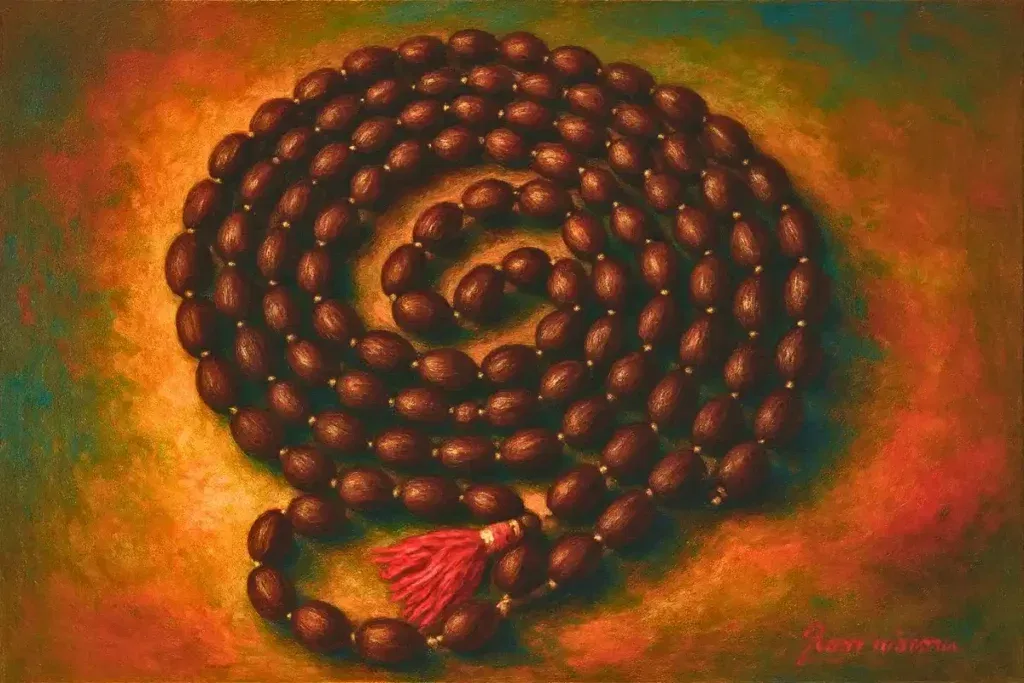
Traditional Sri Lakṣmī Devi-sādhana manuals unanimously affirm:
“For the sadhana and mantra chanting of Lakshmi a special rosary made of seeds of lotus, called Kamalgatta Mala, is used.”
And:
“The seeds of the Lotus hold the divine vibrations of Goddess Lakshmi and bless the wearer with abundance, riches and prosperity.”
These summaries reflect a long lineage of practice:
- Kamal Gattā is not a modern accessory;
- It is a classically prescribed medium in Sri Lakṣmī Devi-upāsanā;
- It carries scriptural backing from the symbolism of lotus in Śrī Sūkta and Devī Purāṇas.
Using a Kamal Gattā mālā directly connects the practitioner to the śakti of Sri Lakṣmī Devi, both symbolically and energetically.
Guru-Energized Lotus Mālā for Sri Lakṣmī Devi-Mantra Dīkṣā
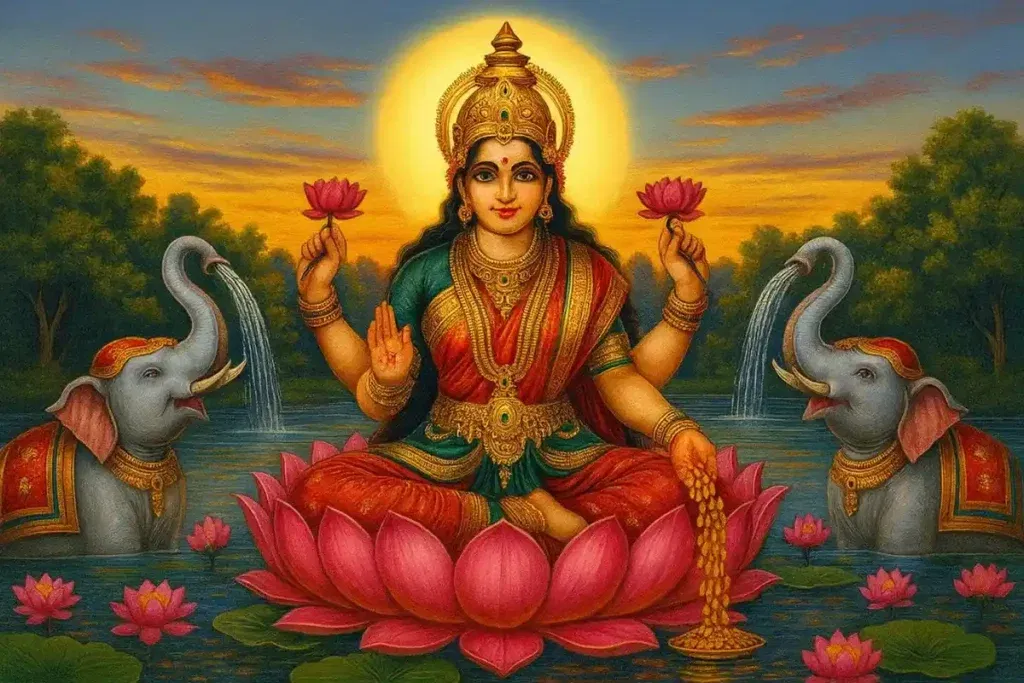
When the Lotus Mālā Becomes a Vessel of Transmission
When a Kamal Gattā mālā is consecrated by a Guru, it moves from being a symbol of Sri Lakṣmī Devi’s grace to becoming a śaktipātra, a vessel that carries Her presence through the Guru’s saṅkalpa.
The consecration infuses the beads with a directional intention, prosperity rooted in dharma, emotional openness, and a dignified receptivity that matures the seeker from within. In this state, the mala no longer functions merely as an aid to counting mantra but as a finely attuned channel through which the blessings of Śrī can flow steadily into the practitioner’s inner life.
Who Benefits Most from This Form of Initiation
A Guru-energized Lotus mālā is especially suited for those undertaking prosperity sādhana responsibly, where abundance is sought not from greed but as a natural, dharmic unfolding of one’s path. It supports individuals working through deep karmic or ancestral wealth blockages, those healing emotional constriction that limits their capacity to receive, and those who wish to strengthen the bhāva of gratitude, openness, and inner fullness.
Practitioners engaged in structured Sri Lakṣmī Devi-upāsanā, such as Śrī Sūkta recitation, Sri Lakṣmī Devi Gayatrī japa, or bīja-mantras, find that an energized Kamal Gattā deepens steadiness, refines intention, and harmonises the field in which the sādhana takes place.
The Inner Meaning of a Guru-Initiated Lotus Mālā
The essence of a Guru-initiated Lotus mālā lies in its ability to align the practitioner with abundance that arises from dharma and inner clarity rather than craving or insecurity. It softens karmic hardness, gently shifts the practitioner from scarcity-consciousness to grace, and opens the heart to receive without fear or tension.
At its core, the mala nurtures gratitude, an essential foundation for all forms of Sri Lakṣmī Devi worship. Such a mālā is held with utmost respect, reserved exclusively for Sri Lakṣmī Devi-mantras, and never used casually, for it carries both the Guru’s intention and the softness of Sri Lakṣmī Devi’s unfolding presence.
| Dimension | Lotus (Kamal Gattā) Mālā | Tulsi (Tulasī Devi) Mālā | Rudrākṣa Mālā |
|---|---|---|---|
| Core Energy Quality | Soft prosperity energy, heart-expansion, emotional openness, receptivity. | Pure devotion, humility, bhakti, sattvic refinement. | Tapas, protection, deep purification, karmic cleansing. |
| Primary Spiritual Function | Abundance aligned with dharma; opening the heart to receive grace. | Strengthening bhakti, emotional purity, remembrance of Bhagavān. | Transformative sādhana, inner detoxification, removal of karmic blocks. |
| Symbolic Meaning | Lotus = spiritual blossoming, Sri Lakṣmī Devi’s abode, rising above difficulties. | Tulsi = earthly Sri Lakṣmī Devi, Haripriyā; inseparable from Viṣṇu’s worship. | Rudrākṣa = tears of Śiva, symbol of tapas and inner destruction of impurities. |
| Devatā Alignment | Sri Lakṣmī Devi (Śrī Sūkta, Sri Lakṣmī Devi-upāsanā traditions). | Krishna, Viṣṇu, Rāma, Vithobā; Tulsi is Sri Lakṣmī Devi Herself. | Śiva, Rudra, Mahāmṛtyuñjaya, Bhairava. |
| Energetic Orientation | Gentle activation; supports prosperity, self-worth, and emotional resilience. | Cooling, sattvic, devotional; purifies intention and heart. | Strong activation; invokes courage, discipline, and karmic accountability. |
| Psychological Effect | Opens the heart, dissolves scarcity mindset, builds receptivity. | Softens the mind, reduces ego, deepens devotion, stabilises emotions. | Promotes seriousness, discipline, inner strength, focus. |
| Planetary Associations (Traditional Jyotiṣa) | Venus (wealth/relationships), emotional constriction. | Venus (relationships), Moon (mind, emotional purification). | Saturn (karma), Sun & Mars (discipline, courage), multi-graha purification. |
| Ideal Mantras | Śrī Sūkta, Sri Lakṣmī Devi Gayatrī, “Om Śrīṁ Mahālakṣmyai Namaḥ”. | Hare Krishna Mahāmantra, “Om Namo Bhagavate Vāsudevāya”, Rāma nāma. | “Om Namah Śivāya”, Mahāmṛtyuñjaya mantra, Rudra-mantras. |
| Best Use-Case | Prosperity sādhana, dissolving emotional blockages, building inner abundance. | Daily bhakti-japa, emotional purification, devotional steadiness. | Tapas-based sādhana, karmic cleansing, protection, deep transformation. |
| Suitable Seeker Profile | One seeking prosperity with purity, emotional healing, and inner openness. | One seeking devotion, humility, purity, and peaceful mind. | One ready for intense inner work, purification, and spiritual seriousness. |
| Scriptural Roots | Sri Lakṣmī Devi imagery across Vedas, Śrī Sūkta, Tantras; lotus as her emblem. | Skanda Purāṇa, Garuḍa Purāṇa, Vaiṣṇava Āgamas; Tulsi as Sri Lakṣmī Devi. | Śiva Purāṇa, Devī Bhāgavatam, Upaniṣads; Rudrākṣa as Śiva’s blessing. |
| Inner Outcome | Grace, abundance, self-worth, uplifted heart. | Steadfast devotion, purity, serenity. | Transformation, resilience, spiritual strength. |
Sphatika (Crystal) Mālā
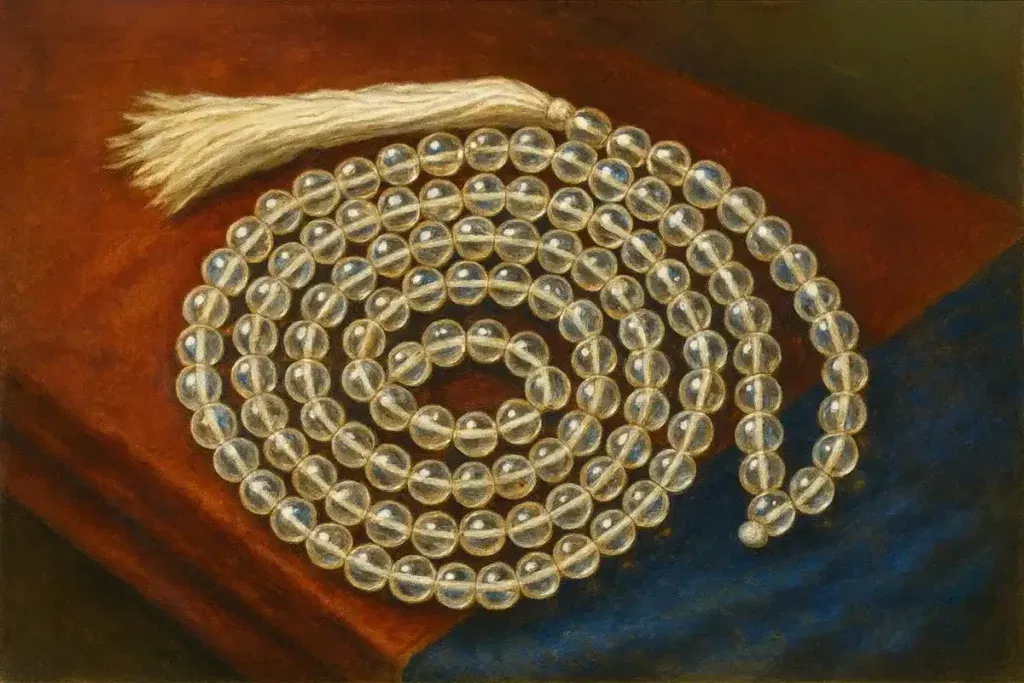
The Unique Nature of Sphatika in Mantra-Yoga
Among the classical mālās used in mantra-yoga, Sphatika, clear quartz crystal, holds a special place because of its pure sattvic nature, its neutral energetic profile, and its capacity to both amplify mantra and cool the mind. Crystal is considered a śuddha-rasa substance: clear, receptive, and untouched by the energetic biases that shape other materials.
This makes it ideal for seekers who require clarity, quietness, and precision in practice. Unlike Rudrākṣa, which carries transformative heat, or Tulsi and Lotus, which express devotional textures, Sphatika remains a luminous neutral medium, equally suitable across devatās and mantra-traditions where purity of mind and illumination are central.
Scriptural & Tantric References to Sphatika
Presence in Tantric Manuals
Sphatika appears widely in mantra-tantras, especially Śrīvidyā and Śākta upāsanā systems, where it is described as a cooling, sattvic bead that supports mantra precision and mirrors the practitioner’s icchā-śakti.
Because it does not impose an energetic mood of its own, crystal helps the mind become transparent, steady, and receptive to subtle shifts during japa. It is therefore used in disciplines that require refined awareness and exactness of attention.
Usage in Smārta and Śaiva Traditions
In Smārta and Śaiva lineages, Sphatika is traditionally used for Śiva japa, especially “Om Namah Shivaya,” and is equally accepted for Gāyatrī, Sarasvatī, and Lakṣmī mantras. It is thought of as a satvika-japa-druvya, a pure, non-aggressive medium that supports calm and focused repetition.
Because it cools and settles the mind, many practitioners choose crystal when emotional or mental turbulence interferes with their practice.
Alignment with Vedic Qualities
Even though the Vedas do not mention crystal rosaries explicitly, the qualities of śuddhi (purity), prakāśa (illumination), and śānti (inner coolness) align deeply with Sphatika’s use across lived spiritual practice. Its longstanding presence in temples, families, and various mantra lineages affirms its value, even without a single Purāṇic origin story anchoring it.
Energetic Qualities: Clarity, Amplification, Cooling
Key Qualities (Pointers)
- Clarity: reduces confusion, sharpens perception, refines attention
- Amplification: intensifies mantra vibration and intention
- Cooling: calms emotional heat, stabilises prāṇa
- Purity (Śuddha-Sattva): maintains inner cleanliness and receptivity
Clarity
Crystal’s transparency reflects the quality it promotes within the practitioner: a mind that perceives clearly and responds with steadiness. Japa with Sphatika often reveals subtle emotional patterns, reduces mental noise, and supports the accuracy required for illumination-based mantras.
Amplification
Sphatika behaves like a luminous internal lens; whatever mantra is repeated through it becomes more sharply defined and resonant. For this reason, it is widely favored in Gāyatrī, Śrīvidyā, Sarasvatī, and Lakṣmī bīja-mantras, where subtlety, precision, and inward brightness are essential.
Cooling
Crystal carries a naturally cooling energy that softens agitation and regulates prāṇa. It is particularly supportive for practitioners facing anxiety, overstimulation, emotional intensity, or mental restlessness. Rather than suppressing heat, it gently diffuses it, allowing the mind to rest more easily in mantra.
Purity (Śuddha-Sattva)
Associated with a refined form of sattva, Sphatika helps maintain an inner cleanliness that allows mantra to echo within a pure field. This purity encourages honesty with oneself and supports a state where insight, contemplation, and subtle spiritual perception become more accessible.
Devatās Associated with Sphatika
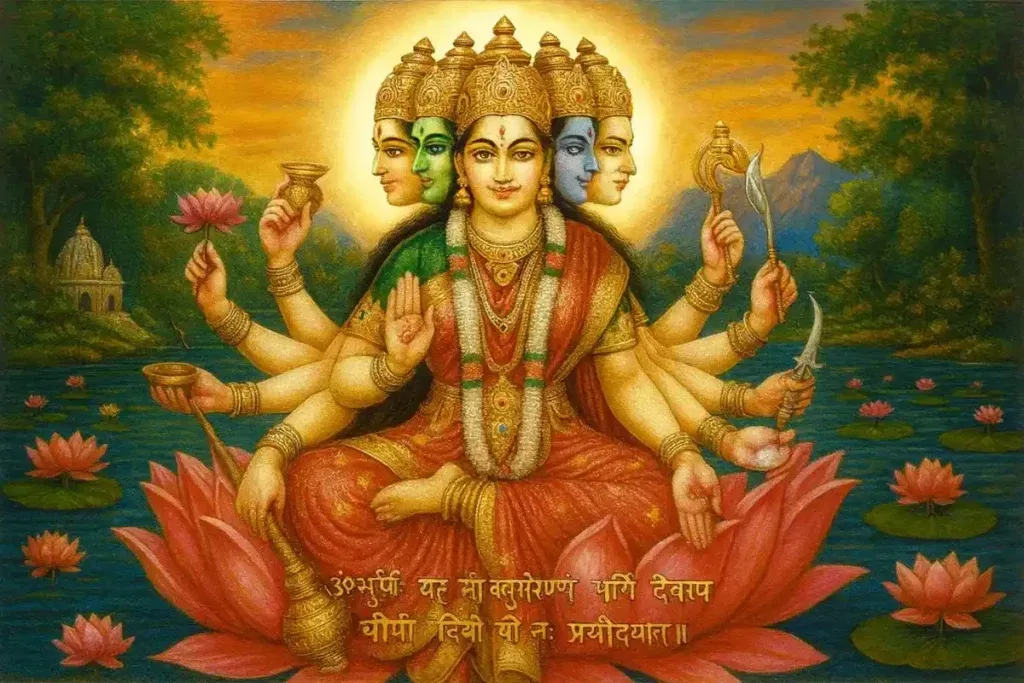
The Universality of Crystal and Its Subtle Alignments
Although Sphatika is one of the most universal materials in mantra-yoga, capable of serving almost any devatā with purity and neutrality, it naturally harmonises with certain divine forms whose śakti expresses clarity, illumination, refinement, and inner coolness.
Its transparent nature mirrors the luminous qualities present in many Devis and in the contemplative forms of Śiva, making it a favored medium across diverse paramparās.
Devi in Her Many Radiant Forms
Sphatika resonates deeply with Devi-oriented japa, especially where the emphasis is on illumination or inner refinement. It supports the worship of Sri Lakṣmī Devi, Sarasvatī, Śāradā, Gāyatrī, and, in certain traditions, Śrīvidyā Devis where crystal is permitted. The clarity of the bead reflects the clarity of Her śakti, quiet, luminous, steadying, and allows the practitioner to align their mind with subtle feminine radiance without stirring excess heat or turbulence.
Sri Lakṣmī Devi
Sphatika is often used in Sri Lakṣmī Devi upāsanā where the seeker aims to refine their relationship with prosperity. Its cool neutrality helps dissolve scarcity mindsets, soften emotional contraction around receiving, and cultivate a dignified openness to śrī. For those who practice Lakṣmī Gayatrī or bīja-mantras in pursuit of clarity of livelihood and graceful abundance, crystal provides a stable and sattvic medium.
Sarasvatī
Because Sphatika sharpens perception and steadies attention, it is ideal for japa directed toward Sarasvatī. It supports study, refinement of speech, memory, and the deepening of mastery in mantra-śāstra. For seekers engaged in learning, contemplation, or any discipline requiring clear cognition, the crystal mālā becomes a natural companion that enhances mental purity.
Śiva
Sphatika is also well-suited for japa to Śiva, particularly because it is sattvic, cooling, and inwardly stilling. Practitioners often choose crystal for “Om Namah Shivaya” or for Mahāmṛtyuñjaya japa when the fiery intensity of Rudrākṣa feels overwhelming or too stimulating. Its cool clarity mirrors the quiet luminosity of Śiva’s presence, supporting a gentle but steady inward-turning of awareness.
Gāyatrī Devi
One of the most natural and time-tested pairings is Sphatika with Gāyatrī Devi. Because the mantra of Gāyatrī is concerned with illumination, mental purity, and the awakening of inner light, crystal’s clarity and neutrality make it an ideal medium. The luminous quality of Sphatika aligns beautifully with the mantra’s intention, allowing the practitioner to experience sharper resonance, quieter attention, and a more expansive field of insight.
Gāyatrī Devi Mantra’s Relationship With Sphatika Mālā
This deserves a dedicated explanation, as it is one of the most important spiritual pairings.
Why Gāyatrī Japa Requires Clarity
Gāyatrī japa works directly upon the mind, intellect, and the inner field of illumination, which makes clarity a non-negotiable requirement for its proper unfolding. The mantra refines dhī-śakti, the divine capacity for discernment and insight, meaning it functions best when the practitioner’s inner environment is clean, steady, and receptive rather than agitated or overheated.
Because Gāyatrī touches subtle prāṇa and awakens inner light, emotional turbulence, restlessness, or excess tejas can obstruct its flow. A clear, sattvic mental state allows the mantra to penetrate deeply, illuminate understanding, and harmonize the prāṇic field. This is why traditions often pair Gāyatrī with cooling, clarifying supports like Sphatika or White Chandan, ensuring that the mantra’s brilliance arises from stillness rather than force.
Why Sphatika Matches Gāyatrī’s Vibration
- Both are cooling
Gāyatrī japa elevates awareness without emotional turbulence.
Crystal keeps the mind cool, preventing overheating during intense repetitions. - Both belong to the realm of light
The Gāyatrī mantra is a prayer to the divine light (savitur varenyam).
Sphatika is symbolically aligned with prakāśa, transparency, illumination. - Gāyatrī needs amplification without distortion
Crystal amplifies pure intention, not raw force.
This supports mantra-siddhi. - Gāyatrī is a sattvic mantra; Sphatika is sattva’s purest medium
Rudrākṣa may create too much tapas for some practitioners.
Sphatika creates clarity without strain.
Result of Pairing Sphatika with Gāyatrī
Pairing Sphatika with Gāyatrī creates a refined inner field in which the mantra can operate with far greater precision. The crystal’s natural clarity translates into clearer chanting, reducing the mental fog that often disrupts subtle japa.
Because Sphatika cools and steadies prāṇa, practitioners report fewer distractions and a smoother, more absorbed meditative flow. As the mind becomes transparent, the luminous nature of Gāyatrī awakens more strongly, leading to enhanced intuitive insight and a stable rhythm of repetition that feels natural rather than forced.
This harmonious interaction between clarity-oriented crystal and light-oriented mantra is why Sphatika remains one of the most recommended mala materials for Gāyatrī japa across many traditions.
Planetary Afflictions Helped by Sphatika Japa
Jyotiṣa-Oriented Planetary Benefits of Sphatika
Moon (Candra) Weakness
When the Moon is strained, the mind becomes unstable, showing emotional volatility, anxiety, hypersensitivity, sleeplessness, overthinking, or general mental fatigue. Sphatika supports the Moon by introducing clarity, coolness, and steadiness into the mental field. Its sattvic transparency helps regulate prāṇa, reducing emotional turbulence and restoring calm perception.
Venus (Śukra) Imbalances
For Venus-related disturbances, whether emotional heaviness, relational tension, creative blockage, or imbalanced sensitivities, Sphatika encourages refinement. Its cooling, harmonising quality supports restoration of gentleness, aesthetic balance, and emotional grace. It helps the practitioner relate from a place of clarity rather than reactive feeling.
General Overheated Charts
When Mars or Sun energies dominate excessively, creating internal heat, irritability, restlessness, or sharp reactivity, crystal japa gently cools the system. The mala’s sattvic neutrality softens intensity, making prāṇa smoother and the mind less combustible. Through consistent use, Sphatika balances fire without suppressing it, allowing clarity to guide action rather than force or agitation.
Suitable Mantras
Devi Mantras
- Śrīṁ (Sri Lakṣmī Devi bīja)
- Hrīṁ (Mahāmāyā / Sri Lakṣmī Devi / Śrīvidyā use)
- Aim̐ (Sarasvatī bīja)
- Sri Lakṣmī Devi / Sarasvatī mantras
- Śrīvidyā mantras (where permitted by Guru)
Śiva Mantras
- Om Namah Shivaya
- Soft chanting of Mahāmṛtyuñjaya (if Rudrākṣa is too intense)
Gāyatrī Mantras
- Classical Gāyatrī
- Sarasvatī Gāyatrī
- Sri Lakṣmī Devi Gāyatrī
- Śiva Gāyatrī
- Devi Gāyatrī variants
General Satvic Mantra-Yoga
Sphatika is universally suitable for clarity-based chanting.
When Sphatika Is Preferred Over Rudrākṣa
Sphatika becomes the natural choice in situations where clarity, receptivity, and coolness are more beneficial than the fiery, transformative force associated with Rudrākṣa. It is preferred when the practitioner has a sensitive constitution, easily overwhelmed by heat or tapas, and requires a gentle medium that soothes rather than provokes inner intensity.
When emotional overload, anxiety, or mental disturbance needs calming rather than confrontation, crystal offers a stabilising field in which japa can proceed without agitation.
It is also ideal when the primary purpose of japa is illumination, precision, or mental refinement, such as practices dedicated to Devi Sarasvatī, Sri Lakṣmī Devi, or daily Gāyatrī japa, where the mantra demands clarity of mind rather than energetic upheaval.
In the early stages of sādhana, when the seeker is still cultivating inner steadiness and may not be ready for the karmic surfacing triggered by Rudrākṣa, Sphatika provides a neutral, safe, non-devatā-specific pathway. Where Rudrākṣa confronts, Sphatika cools; where Rudrākṣa intensifies, Sphatika clarifies.
Cleaning and Recharging Sphatika Mālā
Sphatika requires regular purification, as it absorbs subtle impressions.
Method 1: Salt Water (Mild)
- Use a bowl of clean water with a pinch of natural rock salt.
- Immerse the mālā lightly for 10–20 minutes (avoid prolonged soaking).
- Rinse with clean water, pat dry.
- Do not mix with chemical soaps.
This removes energetic residue absorbed from mind or environment.
Method 2: Sunlight + Sūrya Mantras
This is one of the strongest purification methods.
- Place the Sphatika mālā in mild morning sunlight (not harsh noon light).
- As it sits, chant:
- Om Sūryāya Namaḥ
- Āditya Hṛdayam (optional)
- Visualise light clearing subtle impurities.
Never leave Sphatika for long hours in harsh sunlight, it may lose clarity.
Method 3: Smudging or Incense Purification
Light sandalwood or sambrani and pass the mālā through the smoke 3–5 times. This complements salt or sunlight cleansing.
How to Chant With Sphatika
- Sit with spine straight.
- Hold the mālā in the right hand, using the thumb and middle finger (index finger does not touch the beads).
- Begin with a clear intention (saṅkalpa).
- Chant gently, crystal responds best to calm, clear repetition, not force.
- Maintain rhythm; Sphatika amplifies rhythmic mental states.
- After japa, keep the mālā in a clean cloth pouch.
Avoid chanting with disturbed emotions, as crystal can reflect and amplify that state.
Scriptural / Traditional Glimpse on Sphatika Japa
Traditional summaries consistently portray Sphatika as a sattvic, amplifying medium that refines and strengthens mantra practice.
Teachings often note that wearing or chanting with crystal especially benefits worship of Devi Mā, including Sri Lakṣmī Devi and Sri Sarasvatī, because crystal mirrors the qualities of clarity, purity, and inner illumination associated with these deities.
Another recurrent observation is that repeating mantras with a Sphatika mālā greatly enhances their effect, a view grounded not in symbolism but in experiential lineage-knowledge, crystal’s transparency is believed to sharpen intention, deepen concentration, and make the mantra more “audible” within the subtle field of the mind.
These traditional reflections point to three essential qualities of Sphatika: its pure sattva, its natural ability to amplify mantra vibration, and its long-recognised capacity to support precision, steadiness, and inner quietude during japa.
Guru-Energized Sphatika Mālā for Advanced Japa Practitioners
A Guru-energized Sphatika mālā becomes a refined and highly sensitive instrument, capable of holding precise saṅkalpa and transmitting clarity without disturbing the mind’s equilibrium.
When infused with the Guru’s intention, crystal no longer functions merely as a neutral japa medium; it becomes a vessel of sharpened awareness, supporting mantra-siddhi, subtle icchā-śakti work, and deep meditative absorption.
Such a mālā is particularly suitable for those engaged in clarity-oriented sādhana, Gāyatrī upāsakas, practitioners of Sri Sarasvatī mantras, aspirants working with Sri Lakṣmī Devi in a purity-based manner, Śiva sādhakas seeking mind-purification, authorised Śrīvidyā practitioners, and yogis focused on stabilising the higher centres such as ājñā and sahasrāra.
In this form, the Sphatika mālā becomes like a mirror: pure, transparent, sattvic, and amplifying, reflecting the practitioner’s inner state while quietly guiding it toward greater refinement and depth.
Guru-Energized Mālās, The Subtle Science
The Nature of a Mālā in Mantra-Śāstra A Mālā as a Living Body of Śakti
In the traditional discipline of mantra-śāstra, a mālā is never reduced to a mechanical counter. It is regarded as a subtle body capable of holding mantra-śakti, a stable circuit through which the practitioner’s mind is rhythmically trained, and a vessel that can silently bear the Guru’s saṅkalpa.
When a mālā is energized by a competent Guru or mantra-ācārya, it becomes a personalised channel through which the Guru’s intention and the practitioner’s mantra meet.
This subtle alignment is based on an inner triad: mantra, the sonic embodiment of the devatā; mālā, the physical and energetic stabiliser; and Guru, the one who consciously directs both toward the disciple’s upliftment. Without understanding this triad, japa rarely moves beyond mechanical repetition.
What Guru-Energization Actually Is
The Process of Charging the Mālā
Guru-energization refers to the deliberate act by which a Guru invokes the devatā associated with the mantra, stabilises that presence through chanting, nyāsa, and prayer, and channels that śakti into the mālā with a specific intention for the disciple.
The process may include ritual purification, pūjā, homa, repeated chanting upon the mālā itself, and offering it at the deity’s feet. When placed finally into the disciple’s hands, the mālā carries direction, protection, and a subtle sense of accountability. From that moment, it ceases to be an empty string of beads and becomes a living companion in the disciple’s inner journey.
Energized and Non-Energized Mālās
Non-Energized Mālās
A non-energized mālā is a neutral, sattvic support for japa. Its potency develops gradually through the practitioner’s sincerity and consistency. Such a mālā is appropriate for general japa, for beginners, and for seekers who are not practicing within a formal lineage.
Guru-Energized Mālās
An energized mālā is already suffused with mantra-śakti and aligned with the Guru’s intention. It places the practitioner, even in private practice, inside the field of a living paramparā. Progress arises from a combination of personal effort and the Guru’s transmission. The inner difference is clear: without energization, japa depends almost entirely on one’s own strength; with it, the seeker walks with unseen guidance.
How Guru-Saṅkalpa Alters Japa
Direction, Protection, and Coherence
In mantra-śāstra, saṅkalpa is not a passing thought but a deliberate, dharmic orientation of consciousness. When a Guru’s saṅkalpa is placed on a mālā, the disciple’s japa acquires a clear direction. The practice becomes oriented toward clarity, devotion, dissolution of particular patterns, or preparation for deeper sādhana.
The Guru’s intention quietly weakens the resistance held in old saṁskāras, preventing the seeker from drifting away from the path. Mantra results begin to ripen in a coherent, dharmic manner; a mantra that might otherwise inflate ego or create confusion is directed instead toward inner refinement.
Scriptural Foundation (Gītā 4.34)
Bhagavad-Gītā 4.34 describes this relationship with precision:
“tad viddhi praṇipātena paripraśnena sevayā; upadekṣyanti te jñānaṁ jñāninas tattva-darśinaḥ.”
The Guru does not merely explain; the Guru imparts. Guru-energized japa becomes one of the subtle means through which this imparting takes place.
Why Energized Mālās Are Reserved for Japa
The Difference Between Offering and Internalization
Pūjā is an act of offering directed outward; japa is an act of internalisation directed inward. An energized mālā becomes a link between the Guru, the devatā, and the disciple’s subtle journey. It becomes tied to the disciple’s vows, their inner knots, and the movement of karma that the mantra is meant to loosen.
For this reason, energized mālās are not used for decorative pūjā, not placed casually on altars, not handled by others, and not rotated between deities. Pūjā can employ separate mālās or ritual items; japa requires the protected, personal continuity of the energized mālā.
Who Should Approach for Nāma-Japa Initiation
The Maturity to Receive Instruction
Nāma-japa initiation becomes appropriate for those who feel a genuine calling toward a specific devatā, who sense one mantra becoming central to their inner life, or who recognise that self-directed practice has plateaued. Initiation also suits those willing to accept discipline and guidance, and those ready to treat sādhana as a long-term commitment.
The Upaniṣads affirm this necessity directly. Muṇḍaka Upaniṣad 1.2.12 declares:
“tad-vijñānārthaṁ sa gurum evābhigacchet”, “For the realization of That, one must approach a Guru.”
In such initiation, the Guru selects the mantra, prescribes the mālā, clarifies the method, and silently assumes responsibility for the seeker’s subtle progress.
How Energetic Transmission Supports Sādhana
The Quiet Work of Śakti
Energetic transmission does not always appear dramatic. More often it works quietly across months and years. Through the combined presence of energized mālā and mantra, the mind begins to stabilise more readily, prāṇa grows more collected, and the practitioner is shielded from disturbances that can arise when deeper karmic tendencies begin to surface.
Insight arrives more steadily; self-deception becomes difficult to maintain. One begins to recognise that the practice is never solitary. Each round of japa takes place within the presence of those who have walked the path before. The traditional maxim captures this: “mahājano yena gataḥ sa panthāḥ”, the true path is that which the great ones have walked.
Scriptural Basis for Guru-Śakti Transmission
Gītā, Upaniṣads, and Purāṇic Insight
The Gītā describes Kṛṣṇa not merely as a teacher but as the Guru who transmits clarity amidst chaos. The Upaniṣads insist upon approaching a Guru who is both established in scripture and grounded in truth, śrotriyaṁ brahma-niṣṭham. Purāṇic and bhakti traditions emphasise that mantra is most effective when received from the Guru’s mouth, guru-mukhād labdha-mantra.
In such contexts, the mālā becomes the physical reminder of this living connection, the thread that binds mantra, practitioner, and lineage.
Guru, Mantra, and Mālā, A Unified Tattva
The Integrated View
Mantra is the sound-body of Truth. A mālā provides the rhythm and grounding through which that sound is repeated. The Guru aligns both with the disciple’s inner welfare. Without Guru-saṅkalpa, the same mantra and mālā can still help, but the journey remains slower and more vulnerable to confusion. With Guru-saṅkalpa, the entire practice becomes coherent, protective, and quietly oriented toward what is genuinely auspicious for the seeker.
Closing Reflections
In the final view, a mālā is far more than an accessory of spiritual culture. It is an instrument designed to steady the mind, deepen remembrance, and provide a tangible rhythm through which the inner life can be cultivated. Whether crafted from Rudrākṣa, Tulsi, Chandan, Lotus, Sphatika, or any other sacred material, each mālā bears a specific lineage of meanings, qualities, and scriptural associations. Its purpose is not to decorate the seeker but to accompany him or her through the gradual work of transforming attention, refining emotion, and stabilising devotion.
Across traditions, the message remains constant: the true power of japa does not lie in the bead itself, but in the union of mantra, intention, and the sincerity with which the practice is undertaken. A sacred mālā is a support for that sincerity. It offers structure where the mind is scattered, accountability where habit is strong, and continuity where enthusiasm fluctuates. When combined with proper understanding, discipline, and the quiet humility that the śāstras continuously praise, even the simplest mālā becomes a steady companion in the refinement of the inner being.
For those who receive a Guru-energized mālā, the practice deepens further. Such a mālā carries a saṅkalpa that is not self-generated, and therefore sustains the practitioner through phases of instability or doubt. It becomes a subtle reminder that the seeker does not walk alone, and that each round of japa is supported by the presence of those who have already traversed this path with conviction.
Ultimately, what matters most is not the material from which the mālā is made but the truth toward which it points. Every bead exists to return the seeker to the mantra; every round exists to return the mind to its source. When approached with steadiness and reverence, the mālā becomes a quiet ally in shaping a life that is internally anchored, outwardly responsible, and inwardly attuned to the sacred. The traditions have preserved these tools for centuries because they work, not by force, but by gentle, continuous refinement. And it is in that refinement that a seeker begins to recognise the unmistakable presence of grace.
YantraChants.com: A Quiet Sanctuary for the Modern Sādhaka
In an age when spiritual practice is often hurried or fragmented, YantraChants.com seeks to remain a steady and trustworthy refuge for those who approach the inner life with sincerity. The platform treats the mālā not as an accessory, but as a subtle instrument of consciousness, a tool that anchors the mind, stabilises prāṇa, and serves as a companion in the work of remembrance. YantraChants.com approaches Mālā knowledge and tradition with the seriousness it deserves: by grounding every explanation in scripture, lineage memory, and the lived nuances of sādhana, ensuring that seekers do not merely “purchase an item,” but understand the inner significance of what they hold in their hands.
For householders balancing dharma with worldly responsibility, as well as for sādhakas deepening their japa over years, the supports offered here are curated with quiet respect, not persuasion. Each mala, yantra, or sacred article is chosen as a stabilising presence, something that protects the practitioner’s intention, reinforces discipline, and keeps the practice aligned with the ancient rhythm of inner refinement. Nothing is presented as a promise of attainment; rather, these tools are offered in the spirit in which the old paramparās held them, as aids that help create a safe, sattvic field in which spiritual effort can mature without disturbance.
Ultimately, YantraChants.com exists to honour the path itself. Its purpose is not to draw seekers outward, but to support their inward movement, providing a small, unobtrusive sanctuary where the traditional architecture of Sanātana Dharma remains intact. In this way, it aspires to serve as a quiet companion for sincere practitioners who remain committed to depth, steadiness, and the sanctity of true sādhana.

Rohini Devi Dasi

Damodar Das Ji Maharaj