
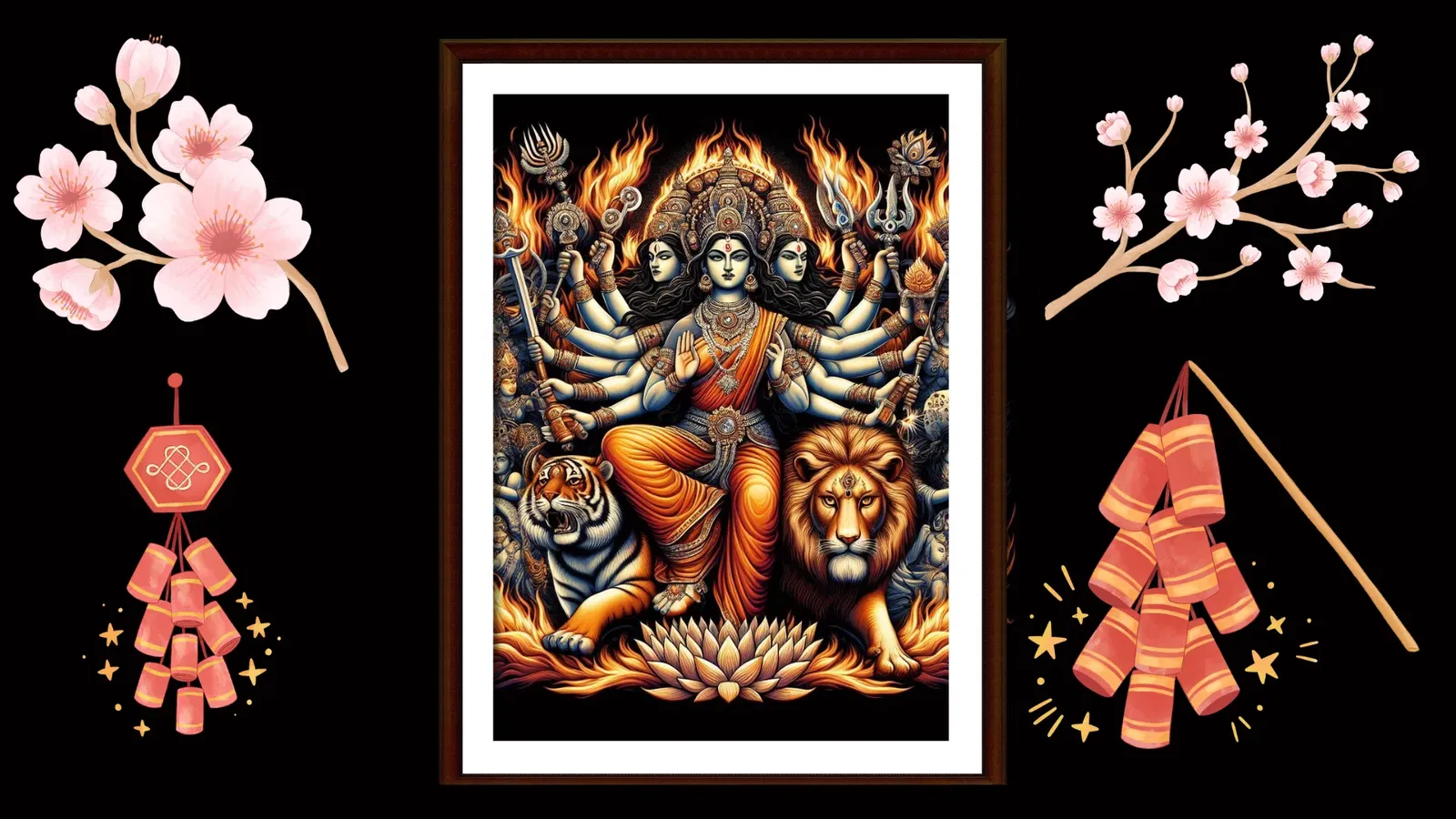
If your mind feels attacked by fear, instability, sudden reversals, or invisible pressure, Khadgamala is one of the rare chants that does not only comfort you, it structures you. It is a Sri Chakra journey disguised as a hymn: name by name, it builds a protective field around the sādhaka. In a traditional language, it can be approached like a mystical armor (kavacha), not as superstition, but as a disciplined inner boundary you learn to live inside.
“When mantra becomes a garland, protection becomes a lived atmosphere, not a hope.”
Quick Answer
Khadgamala means “garland of swords,” a protective mantra-garland of Devi’s powers.
It maps directly to the Sri Chakra enclosures, so Sri Yantra or Sri Meru is the best anchor.
For hostility, slander, or psychic pressure, Bagalamukhi Yantra can support the practice.
Jump Links
Opening: Why People Come to Khadgamala
Most people come to Khadgamala for one reason: life feels unpredictable. Not always outwardly, but inwardly. Thoughts become noisy, relationships become reactive, sleep becomes unstable, and fear starts writing stories in the mind. Khadgamala is not a decorative stotram for such times. It is an inner armor made of names, a weapon-garland of Devi’s powers that gradually trains your mind to stay inside protection, instead of chasing protection.
[Image Placeholder 1: Featured Image, after Opening Paragraph]
Image Prompt: Premium realistic devotional photo of a home altar: Sri Meru or Sri Chakra on a copper plate, red cloth, ghee lamp glow, fresh flowers, japa mala, and a small scripture book, warm sacred mood, sixteen by nine.
Meaning of Khadgamala
In this blog, we shall focus on the famous Khadgamala Stotram of Devi and the process of performing the recital of the Stotram. The Khadgamala Stotram is so full of mysteries, that I find it hard to put it in words. Yet this is my humble attempt to do so.
Khadga + Mala: The Literal Meaning
The word Khadga literally means a sword while the word mala stands for garland. Therefore, Khadgamala means a garland of swords. The Khadgamala Stotram invokes the powerful forms of Sri Lalitha Devi.
Khadgamala as a “Weapon Garland”
It supports overall protection and wellbeing when practiced with steadiness and clean intent. Every weapon of Sri Lalitha Devi symbolizes a distinct Devata. Each Devata represents a supernatural quality or siddhi—yet for most modern sādhakas, the lived expression is often inner: steadier buddhi, fewer fear-spikes, and more dharmic response under pressure.
Every time a person recites the Stotram, they may discover a new meaning of the same phrase. The Stotram is like a treasure chest.
“Khadgamala does not chase danger away; it teaches the sādhaka to live inside Devi’s boundary.”
Khadgamala Quick Meaning Map
| Element | Meaning | What to do with it |
|---|---|---|
| Khadga | Sword, spiritual weapon | Use as a symbol of cutting fear and confusion |
| Mala | Garland, sequence, structure | Chant steadily; do not jump around |
| Weapon Garland | Devi’s powers as living names | Recite with bhavana, not speed |
| Sri Chakra Link | Inner travel through Avaranas | Keep Sri Yantra or Sri Meru nearby |
| Main outcome | Protection with reordering | Treat as daily discipline |

Why This Works
Khadgamala works like structured devotion: a sequence that repeatedly returns your mind to order. The “sword” here is not aggression, it is discernment. In the realm of jnana, the sword represents the power to sever confusion and ego; in bhakti, it becomes a steady shield. Over time, this repetition functions like a mental pilgrimage through the Sri Chakra—one name at a time, so your inner world stops scattering and starts gathering.
“Some prayers ask for help. Khadgamala trains the mind to hold help.”
What This Practice Does and Does Not Do (YantraChants.com TrustStack)
This section is critical for trust and for modern quality systems.
What it does
- Builds steadiness during fear-heavy phases.•Creates a protective devotional routine that reduces mental scatter.
- Helps your mind stay within dharma during conflict, loss, or psychic pressure.
- Strengthens bhakti while quietly sharpening buddhi through repetition and meaning
What it does not do
- It is not a substitute for medical or legal action.
- It does not excuse irresponsible choices.
- It is not meant for show, proof, or debate.
- It is not a shortcut for siddhis in Kali Yuga; it is a discipline for inner sovereignty.
What Sādhakas Commonly Report

When practiced daily with steady time, clean intent, and a stable anchor like Sri Yantra or Sri Meru, sādhakas who undertake Sadhana as per our own Experience at YantraChants.com commonly report quieter inner noise, fewer fear-spikes, improved ability to respond rather than react, and a sense of “protected atmosphere” around the home. Some also describe clearer dreams or a stronger devotional pull during Navaratri. These are subjective inner changes, not guaranteed outcomes, but they are consistent with what disciplined mantra practice tends to cultivate over time.
“Protection is not merely armor. It is alignment.”
Immediate Benefits of Reading Khadgamala
While the benefits of this sacred chant are universal, many spiritual seekers often search for its effects in regional languages to better understand its potency, for instance, khadgamala stotram benefits in kannada.
Recitation can be described traditionally as bestowing siddhis such as Anima, Mahima, Laghima, and Garima. But in this age, the lived meaning becomes subtler:
- Anima becomes spiritual invisibility from unwanted attention and negativity.
- Mahima becomes rightful recognition and gravity.
- Laghima becomes freedom from inner burden and heaviness.
- Garima becomes influence, steadiness, and the ability to shift outcomes through dharma.
Find Your Best Anchor (Sri Yantra / Sri Meru / Bagalamukhi)
This is a calm decision tool — not fear-based. It helps you choose an anchor for Khadgamala practice.
Specific Cultural Example: Khadgamala in Karnataka
In Sringeri, Mysuru, and parts of Bengaluru, Sri Vidya upasakas under Dakshinamurthy sampradaya or Sri Lalita Tripura Sundari parampara recite Khadgamala as part of daily rituals or during Navaratri. The recitation is often done in front of a Sri Chakra or Meru Yantra that is energized and installed on a copper or silver plate.
A traditional Sri Vidya family in Mysuru begins their Navaratri puja with Devi Kavacham, Argala Stotram, Khilakam, followed by Khadgamala. They place a Sri Meru Yantra on a red cloth, offer fragrant flowers, light ghee lamps, and recite Khadgamala many times across the nine days.
The elders explain Khadgamala as a manasika yatra through the Sri Chakra, where each name becomes a step in the inner sanctum, moving from the outer enclosures to the bindu with bhavana.
Where Bagalamukhi Yantra Fits
Khadgamala is a Sri Vidya current that expands the whole field of Devi’s enclosures. Bagalamukhi Devi’s current is narrower and more surgical: stambhana shakti, the power that supports stillness when hostility and adharma are active.
“Khadgamala builds the fortress. Bagalamukhi Yantra strengthens the gate.”
“Some practices heal the heart; Bagalamukhi stabilizes the battlefield so the heart can heal.”
When Bagalamukhi Yantra is the right support tool

- When speech conflict is intense, slander is active, or verbal aggression is constant.
- When you feel repeated energetic invasion, jealousy, or unseen pressure.
- When legal or social hostility is draining the mind.When you need stillness, not reaction
How it supports Khadgamala without diluting it
Khadgamala builds overall protection and inner order. Bagalamukhi Yantra supports the speech-field and conflict-zone, so your mind does not get pulled into reaction. One is whole-field Sri Chakra protection. The other is targeted stambhana stability.
Decision Table for Yantras and Tools
| Your situation | Best primary tool | Support tool | Why it helps |
|---|---|---|---|
| You want Sri Vidya protection and inner reordering | Sri Yantra | Sphatika Mala | Anchors whole-field protection and stabilizes daily repetition |
| You want the strongest stable form of Sri Chakra | Sri Meru | Copper plate and ghee lamp | Intensifies stability and dharana; supports consistent sacred routine |
| You face hostility, slander, psychic pressure | Bagalamukhi Yantra | Yellow cloth and turmeric thread | Supports stambhana stillness so conflict does not drag the mind |
| You want chanting discipline and clarity | Rudraksha Mala or Chandan Mala | Small japa notebook | Strengthens routine, count, and steadiness |
| You want devotional sweetness with focus | Lotus seed mala | Sandalwood incense | Supports calm bhakti atmosphere and gentle focus |
Sri Yantra vs Sri Meru vs Bagalamukhi Yantra
| Feature | Sri Yantra | Sri Meru | Bagalamukhi Yantra |
|---|---|---|---|
| Primary role | Whole-field Sri Chakra harmony and protection | Highest stability form of Sri Chakra anchor | Targeted stambhana protection during hostility |
| Best for | General protection, inner order, Sri Vidya alignment | Deep dharana, stronger anchoring, long sadhana | Speech conflict, slander, psychic pressure, legal stress |
| Practice feel | Expansive, devotional, reorganizing | Strongly stabilizing, grounding, centering | Still, firm, cutting off agitation |
| Ideal pairing | Sphatika Mala | Copper plate and ghee lamp | Yellow cloth and turmeric thread |
| Suitable for | Most sādhakas | Those who want maximum structure | Those facing active negativity or conflict patterns |
Beeja Aksharas in Khadgamala
Khadgamala contains beeja aksharas such as Hreem and Kleem. These sounds are potent and can affect the subtle body. Beginners should not chase intensity. The safe approach is steadiness, correct pronunciation, and humility—and if you are initiated, follow your Guru’s guidance strictly.
If you are not initiated, still read the meaning, chant with devotion, and keep your focus on Sri Lalitha Devi’s grace rather than on “power outcomes.”
Role of Sri Yantram in Khadgamala
Sri Yantra is Yantra Raj. Khadgamala is deeply connected to Sri Lalitha Devi and Sri Chakra. Each layer of the chant corresponds to the yoginis and devatas seated in the enclosures, from the outermost to the bindu.
Why this matters for your practice
When you keep Sri Yantra or Sri Meru near you while chanting, your mind stops drifting. The chant becomes a guided inner yatra rather than mere recitation.
Khadgamala Is Part of a Tantric Text
Khadgamala is revealed in a tantric context. That is why it must be recited with care, humility, and discipline. The safest path is:
- Learn meaning first.
- Chant consistently.
- Keep lifestyle clean during the sadhana window.
- Do not mix too many fierce practices together
How To Chant Khadgamala Stotram
This is a simple, safe, do-able structure.
Step One: Set the space
- Light a ghee lamp facing east. Keep a picture of Sri Lalitha Devi, and place Sri Yantra or Sri Meru in front.
Step Two: Sit with one intention
- Take a simple sankalpa.
- Ask for protection, clarity, and dharmic stability.
- Avoid greedy wishes.
Step Three: Chant once daily, then build
- Start with one recitation daily for seven days.
- If your mind and schedule are stable, move to three recitations daily.

Step Four: Choose a sadhana window
- Pick twenty one days or forty one days and do not break the chain.
Step Five: Close gently
- Offer a simple flower.
- Sit in silence for two minutes.
- End with gratitude, not with demand.
YantraChants.com TrustStack
This is how to judge whether a yantra is spiritually “alive” or just decorative.
What to look for before you buy
- Not mass-printed geometry.
- Proper proportion lines and bindu discipline.
- Bhojpatra or properly prepared metal base when appropriate.
- Clear energization process with mantra discipline.
- Guidance for placement and daily upkeep
Our standard at YantraChants.com
At YantraChants.com, yantras are prepared as sacred tools, not as wall art. For those doing Khadgamala, we recommend Sri Yantra or Sri Meru as the main anchor, and Bagalamukhi Yantra when your concern is hostility, speech conflict, or psychic pressure. We also guide you on the right mala for your temperament, such as Sphatika Mala for cooling clarity, Rudraksha for steadiness, or Chandan beads for devotional softness.
Tools that Stabilize This Practice
If you want Khadgamala to move from “a beautiful chant” into “a stable daily protection field,” anchor it properly. A yantra that is treated only as décor will not support the discipline you are trying to build. At YantraChants.com, we prepare yantras as sacred instruments, drawn or crafted with proportion discipline, and guided with a clear energization approach, so your practice has a steady foundation rather than only emotion.
For authentic Sri Yantra, Sri Meru, Bagalamukhi Yantra, and the right mala support for your temperament, WhatsApp YantraChants.com: +917417238880
Frequently Asked Questions (FAQs) on Sri Khadgamala
Q1. What is the meaning of Khadgamala?
A. Khadgamala means “garland of swords.” It refers to a sequence of Devi’s names and powers arranged like divine weapons that form protection around the sādhaka.
Q2. Is Khadgamala a stotram or a mantra?
A. Many traditions treat it like a mala-mantra because each name functions as a living power-unit, not only as poetic praise. Practically, chant it with discipline, meaning, and devotion.
Q3. What yantra is most aligned with Khadgamala chanting?
A. Sri Yantra is the primary alignment because Khadgamala maps to Sri Chakra enclosures. Sri Meru is an even more stable anchor if you want stronger dharana and structure.
Q4. When should Bagalamukhi Yantra be used with this practice?
A. Bagalamukhi Yantra is supportive when your issue is hostility, slander, speech conflict, jealousy, or psychic pressure. It strengthens stambhana energy so your mind stops getting dragged into reaction.
Q5. Can a beginner chant Khadgamala without initiation?
A. Beginners can start by reading the meaning, chanting with humility, and keeping the focus on devotion and protection. Do not chase “powers.” If you are initiated, follow Guru guidance strictly.
Q6. What is a safe sadhana duration for results you can feel?
A. Twenty one days is a common minimum for noticeable steadiness and protection. Forty one days is stronger for deep habit formation and inner reordering.
Q7. Which mala is best for Khadgamala japa?
A. Sphatika Mala is widely used for cooling clarity and stable repetition. Rudraksha supports steadiness and discipline. Chandan supports devotional softness and calmness.
Q8. What lifestyle helps the chant work better?
A. Keep food simple, avoid intoxicants, maintain clean speech, reduce unnecessary arguments, and keep a fixed daily time. The chant works best when your life becomes orderly.
Q9. Why do people search “khadgamala stotram benefits in kannada”?
A. Many devotees want the benefits explained in their mother tongue so the emotional connection becomes stronger. The practice becomes more intimate when meaning is understood, not only recited.
Q10. How do I choose between Sri Yantra and Sri Meru?
A. Sri Yantra is excellent for most sādhakas. Sri Meru is preferred when you want maximum stability, stronger centering, and a more intense Sri Chakra anchor for long-term practice.

Rohini Devi Dasi