
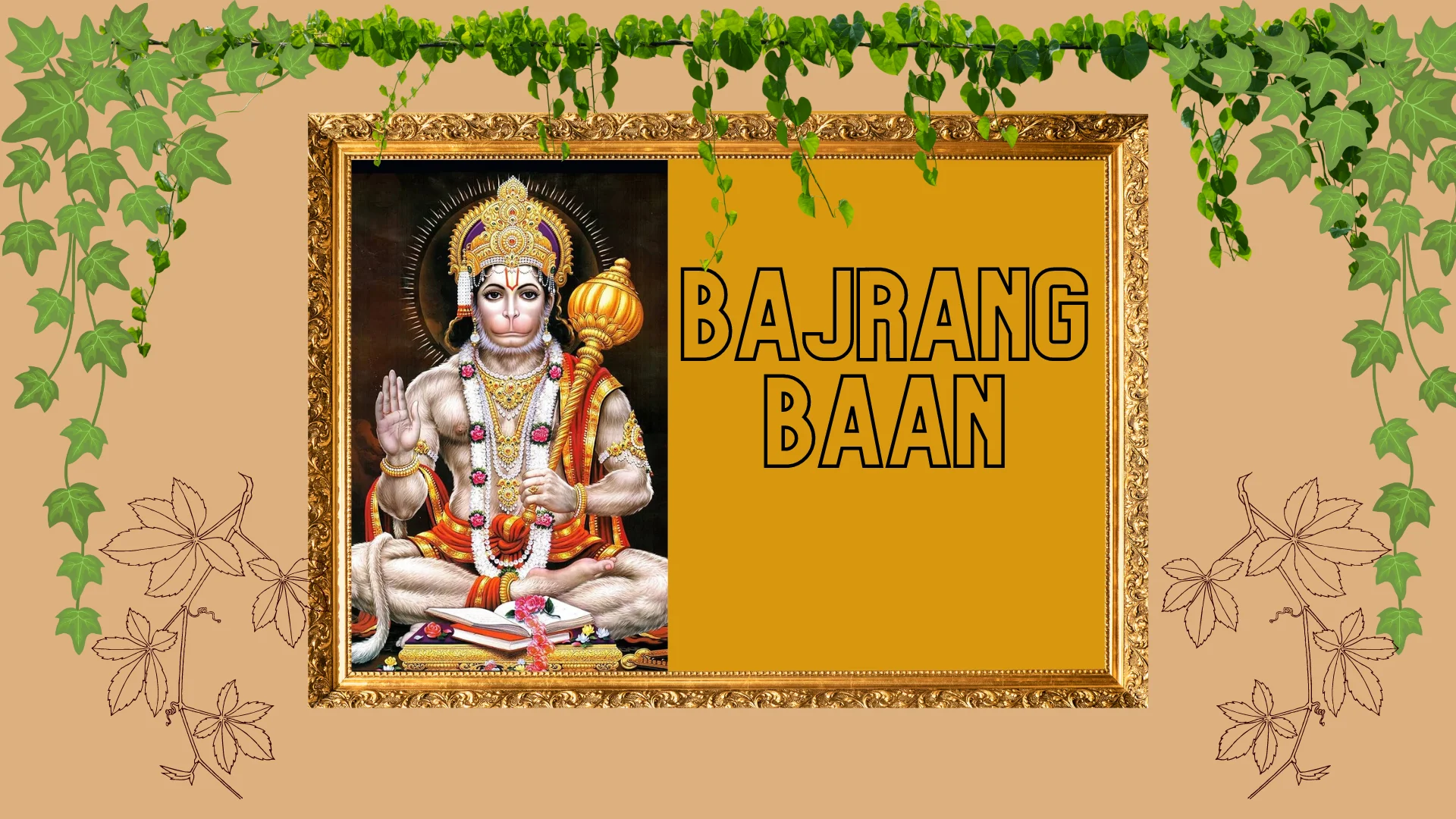
Introduction to Bajrang Baan Benefits
In this post, we shall cover the following aspects of reciting the Bajrang Baan.When should the chaupais of the Bajrang Baan be chanted for the best results. Under what situations should the chaupais be chanted.
Who should and who should not chant the chaupais. A Simple process for Bajrang Baan recitation. Supporting Mantras and Stotrams for the chaupais.
Like the Hanuman Chalisa, the Bajrang Baan is another useful Mantra tool with miraculous powers. People infected with too many material problems should read the chaupais every day without fail.
Listening to the Bajrang Baan daily is not that useful, chanting is always preffered. Chanting is said to purify the mind and environment, inviting divine energy into one’s life. The benefits of listening to Bajrang Baan can sometimes, but rarely include freedom from fear, inner courage, mental clarity, and an increase in spiritual vibration within the home. This can only happen if you have a lot of previous janma sukritis or good merit, otherwise it is rare. Always chant, rather than simply listen. You may listen, if you want to master chanting.

Astrological fixes for Chanting the Baan
Chanting the Bajrang Baan on Tuesdays and Saturdays is auspicious. The malefic effects of the Mars and Saturn planets are immediately nullified if one chants the the chaupais on Tuesdays and Saturdays. People who have Mars in an inappropriate house in their astrological charts should, without fail, chant the chaupais daily.
The chaupais literally mean the arrow called Bajrang or Hanuman. The benefits of Hanuman Baan are both spiritual and material. It is known to destroy subtle negative vibrations and remove black magic, envy, and fear of enemies. Those facing obstacles in work or relationships can see noticeable changes in their environment within a short period. Hanuman Baan works like a spiritual shield, empowering the reciter with courage, determination, and divine protection.
The Bajrang Baan Meaning
The Bajrang Baan Means the Tantrik Arrow of Sri Hanumanji Maharaj. It means the “Arrow that never misses its mark”. It also means that one should use an arrow very very carefully and judiciously. One should never chant the Bajrang Baan mindlessly without caring for its deep meaning and purpose. It has to be used only when the reciter is in deep trouble. It is also necessary that one should not summon Hanumanji just for “utility purpose”, as if the Bajrang Baan is one’s servant and can be used anytime.
Understanding the Bajrang Baan meaning significance helps one approach this sacred composition with reverence. It is not merely a collection of verses, it is a symbolic weapon of faith that aligns the human will with divine strength. The mantra represents the soul’s cry for protection when surrounded by darkness, invoking Hanumanji’s supreme energy to destroy karmic afflictions and restore light.
The arrow can also misfire and hit you back if you use it without guidance under a qualified Guru. This is the actual meaning and philosophy of the Bajrang Baan. Whatever Problems that I describe in this post should be under extreme circumstances and should be used by people who are fundamentally having deep faith in Sri Hanumanj Maharaj’s infinite Power. It is definitely not for anyone and everyone.
The benefits of Bajrang Baan in English can be summarized as protection from negative energies, purification of the aura, and inner transformation through surrender. It strengthens one’s confidence, restores mental balance, and brings spiritual courage. Even when read in translation, the vibration of Hanuman’s name retains its potency, offering protection and clarity to the sincere seeker.
Bajrang Baan in Devanagari with English and Telugu Meaning
॥ दोहा ॥
Devanāgarī:
निश्चय प्रेम प्रतीति ते, बिनय करै सनमान।
तेहि के कारज सकल शुभ, सिद्ध करै हनुमान॥
Roman Transliteration:
Niścaya prema pratīti te, vinaya karai sanmān।
Tehi ke kāraja sakala śubha, siddha karai Hanumān॥
English Meaning:
With steadfast love, faith, and humility, whoever prays to Hanuman with devotion—Hanuman fulfills all their auspicious tasks.
Telugu Meaning:
దృఢమైన విశ్వాసం, ప్రేమతో, వినయంతో హనుమంతుడిని ప్రార్థించినవారి సమస్త శుభకార్యాలు విజయవంతమవుతాయి.
॥ चौपाई ॥
Devanāgarī:
जय हनुमन्त सन्त हितकारी। सुनि लीजै प्रभु अरज हमारी॥
Roman:
Jaya Hanumanta santa hitakārī, suni lījai prabhu arja hamārī॥
English:
Victory to Hanuman, benefactor of saints! O Lord, kindly hear my humble plea.
Telugu:
సద్గురువులకు హితం కలిగించే హనుమంతుడికి జయము! ప్రభూ, నా వినమ్ర ప్రార్థనను ఆలకించుము.
Devanāgarī:
जन के काज विलम्ब न कीजै। आतुर दौरि महा सुख दीजै॥
Roman:
Jana ke kāja vilamba na kījai, ātura dauri mahā sukha dījai॥
English:
Do not delay the tasks of Your devotees, O Hanuman. Hurry swiftly and grant them great joy.
Telugu:
భక్తుల పనులను ఆలస్యం చేయక, వెంటనే వచ్చి వారికి ఆనందం ప్రసాదించుము.
Devanāgarī:
जैसे कूदि सिन्धु वहि पारा। सुरसा बदन पैठि बिस्तारा॥
Roman:
Jaisē kūdi Sindhu vahi pārā, Surasā badan paiṭhi bistārā॥
English:
As You once leapt across the mighty ocean and expanded Yourself to pass through Surasa’s mouth.
Telugu:
ఎలా నీవు సముద్రాన్ని దాటి, సురసా నోటిలో ప్రవేశించావో అలాగే.
Devanāgarī:
आगे जाय लंकिनी रोका। मारेहु लात गई सुर लोका॥
Roman:
Āgē jāya Laṅkinī rokā, mārehū lāt gaī sura lokā॥
English:
When Lankinī blocked Your path, You struck her with a kick, sending her to heaven.
Telugu:
లంకినీ నీ మార్గాన్ని ఆపినప్పుడు, నీవు ఒక కాలు కొట్టి ఆమెను దేవలోకానికి పంపావు.
Devanāgarī:
जाय विभीषण को सुख दीन्हा। सीता निरखि परम पद लीन्हा॥
Roman:
Jāya Vibhīṣaṇa ko sukha dīnhā, Sītā nirakhi parama pada līnhā॥
English:
You bestowed happiness upon Vibhishana, and after meeting Sita, You attained the highest state of bliss.
Telugu:
విభీషణునికి సంతోషం కలిగించి, సీతాదేవిని దర్శించి పరమానందాన్ని పొందావు.
Devanāgarī:
बाग उजारि सिन्धु महं बोरा। अति आतुर यम कातर तोरा॥
Roman:
Bāga ujāri Sindhu mahaṃ borā, ati ātura Yama kātara tōrā॥
English:
You destroyed the gardens of Lanka and terrified Yama, the god of death, with Your valor.
Telugu:
లంకా ఉద్యానాలను నాశనం చేసి, నీ వీర్యంతో యమధర్మరాజుని కూడా భయపెట్టావు.
Devanāgarī:
अक्षय कुमार मारि संहारा। लूम लपेटि लंक को जारा॥
Roman:
Akṣaya Kumār māri saṃhārā, lūma lapeṭi Laṅka ko jārā॥
English:
You killed Akshay Kumar, and by wrapping fire around Your tail, You set Lanka ablaze.
Telugu:
అక్షయ కుమారుడిని సంహరించి, నీ తోకను అగ్నితో చుట్టి లంకను దహించావు.
Devanāgarī:
लाह समान लंक जरि गई। जय जय धुनि सुर पुर महं भई॥
Roman:
Lāha samān Laṅka jari gaī, Jaya Jaya dhuni sura pura mahaṃ bhaī॥
English:
Lanka burned like molten metal, and cries of “Victory, victory!” resounded in the heavens.
Telugu:
లంక లావంలా దహించబడింది; దేవలోకాలలో “జయ, జయ” అనే నినాదాలు మార్మోగాయి.
Devanāgarī:
अब विलम्ब केहि कारण स्वामी। कृपा करहुं उर अन्तर्यामी॥
Roman:
Ab vilamba kehi kāraṇa swāmī, kṛpā karahuṃ ura antaryāmī॥
English:
Now, O Lord, why this delay? Show mercy, O knower of hearts!
Telugu:
ఇప్పుడు ఎందుకీ ఆలస్యం ప్రభూ? అంతరంగాన్ని తెలిసినవాడా, కరుణ చూపుము.
Devanāgarī:
जय जय लक्ष्मण प्राण के दाता। आतुर होइ दुःख करहुं निपाता॥
Roman:
Jaya Jaya Lakṣmaṇa prāṇa ke dātā, ātura hoi duḥkha karahuṃ nipātā॥
English:
Victory to You, O giver of life to Lakshmana! Remove the sorrows of Your anxious devotee.
Telugu:
లక్ష్మణునికి ప్రాణదాతుడవైన హనుమంతుడికి జయము! భక్తుని దుఃఖాలను తొలగించుము.
Devanāgarī:
जय गिरिधर जय जय सुख सागर। सुर समूह समरथ भटनागर॥
Roman:
Jaya Giridhar Jaya Jaya sukha sāgara, sura samūha samartha bhaṭanāgara॥
English:
Victory to the mountain-holder, ocean of bliss, commander of celestial beings!
Telugu:
గిరిధరుడా, ఆనందసాగరుడా, దేవసేనాధిపతీ! నీకు జయము.
Devanāgarī:
ॐ हनु हनु हनु हनु हनुमन्त हठीले। बैरिहिं मारू बज्र की कीले॥
Roman:
Oṃ Hanu Hanu Hanu Hanu Hanumanta haṭhīle, bairihiṃ mārū vajra kī kīle॥
English:
Om! Strike, strike, O resolute Hanuman! Destroy the enemies with thunderbolt blows.
Telugu:
ఓం! దృఢ సంకల్పముగల హనుమంతుడా, శత్రువులను వజ్ర ఘాతాలతో సంహరించుము.
Devanāgarī:
गदा बज्र लै बैरिहिं मारो। महाराज प्रभु दास उबारो॥
Roman:
Gadā vajra lai bairihiṃ māro, mahārāja prabhu dāsa ubāro॥
English:
Take Your mace and thunderbolt, O King Hanuman! Destroy the foes and save Your servant.
Telugu:
నీ గదా, వజ్రం తీసుకొని శత్రువులను సంహరించి, నీ భక్తుని రక్షించుము.
Devanāgarī:
ॐकार हुंकार महाप्रभु धावो। बज्र गदा हनु विलम्ब न लावो॥
Roman:
Oṃkāra huṃkāra mahāprabhu dhāvo, vajra gadā Hanu vilamba na lāvo॥
English:
At the sound of Om and Hoom, O Great Lord Hanuman, rush forth with Your thunderbolt mace without delay.
Telugu:
ఓం, హూం ధ్వనులతో మహా ప్రభూ హనుమంతుడా, ఆలస్యం లేకుండా నీ గదను పట్టుకొని పరుగెత్తుము.
Devanāgarī:
ॐ ह्रीं ह्रीं ह्रीं हनुमन्त कपीसा। ॐ हुं हुं हुं हनु अरि उर शीशा॥
Roman:
Oṃ Hrīṃ Hrīṃ Hrīṃ Hanumanta Kapīśa, Oṃ Huṃ Huṃ Huṃ Hanu ari ura śīśa॥
English:
Om Hrīm Hrīm Hrīm! O Hanuman, Lord of monkeys, pierce the enemies’ hearts and heads!
Telugu:
ఓం హ్రీం హ్రీం హ్రీం! కపీశ్వరుడా, నీ శత్రువుల హృదయాలను, తలలను ఛేదించుము.
Devanāgarī:
सत्य होउ हरि शपथ पायके। रामदूत धरु मारु धाय के॥
Roman:
Satya ho-u Hari śapatha pā-yake, Rāmadūta dharu māru dhā-y ke॥
English:
By Lord Hari’s oath, let this be true—O Rama’s messenger, charge forth and strike!
Telugu:
హరి ప్రమాణంతో ఇది సత్యమవుగాక — రామదూతుడా, దూసుకెళ్లి శత్రువులను సంహరించుము.
Devanāgarī:
जय जय जय हनुमन्त अगाधा। दुःख पावत जन केहि अपराधा॥
Roman:
Jaya Jaya Jaya Hanumanta agādhā, duḥkha pāvata jana kehi aparādhā॥
English:
Victory to the unfathomable Hanuman! What sin of Your devotee causes his suffering?
Telugu:
అపారమైన హనుమంతుడికి జయము! నీ భక్తుడు ఏ పాపం వలన బాధపడుతున్నాడు?
Devanāgarī:
पूजा जप तप नेम अचारा। नहिं जानत कछु दास तुम्हारा॥
Roman:
Pūjā japa tapa nema acārā, nahiṃ jānata kachu dāsa tumhārā॥
English:
Your servant knows nothing of worship, chanting, or rituals, O Lord.
Telugu:
నేను నీ భక్తుడినే కానీ పూజ, జప, తపస్సులు నాకు తెలియవు ప్రభూ.
Devanāgarī:
वन उपवन मग गिरि गृह माहीं। तुम्हरे बल हम डरपत नाहीं॥
Roman:
Vana upavana maga giri gṛha māhīṃ, tumhare bala ham ḍarapata nāhīṃ॥
English:
In forests, mountains, or homes—we fear nothing, for Your strength protects us.
Telugu:
అడవుల్లోనా, గృహాల్లోనా, పర్వతాల్లోనా — నీ బలంతో మాకు భయం లేదు.
Devanāgarī:
पाय परौं कर जोरि मनावों। यह अवसर अब केहि गोहरावों॥
Roman:
Pāya para-uṃ kara jori manāvōṃ, yah avasara ab kehi goharāvōṃ॥
English:
Falling at Your feet with folded hands, I plead—whom else can I call upon now?
Telugu:
చేతులను ముడిచి నీ పాదాలపై వంగి, ఇప్పుడు నేను ఎవరిని వేడుకోవాలి?
Devanāgarī:
जय अंजनि कुमार बलवन्ता। शंकर सुवन धीर हनुमन्ता॥
Roman:
Jaya Añjani kumāra balavantā, Śaṅkara suvana dhīra Hanumantā॥
English:
Victory to Anjani’s mighty son, the courageous Hanuman, born of Lord Shiva!
Telugu:
అంజనమ్మ కుమారుడూ, శివుడి ఆవిర్భావమైన ధైర్యవంతుడా హనుమంతుడా! నీకు జయము.
Devanāgarī:
बदन कराल काल कुल घालक। राम सहाय सदा प्रतिपालक॥
Roman:
Badan karāl kāla kula ghālaka, Rāma sahāya sadā pratipālaka॥
English:
With terrifying form, destroyer of death’s clan, ever aided by Rama, the eternal protector!
Telugu:
భయంకర రూపముతో యమకుటుంబాన్ని నాశనం చేసే వాడా, రాముని సహాయుడా, శాశ్వత రక్షకుడా!
Devanāgarī:
भूत प्रेत पिशाच निशाचर। अग्नि बैताल काल मारीमर॥
Roman:
Bhūta preta piśāca niśācara, agni baitāla kāla mārī-mar॥
English:
Ghosts, spirits, demons, and evil beings—Hanuman, destroy them all!
Telugu:
భూత, ప్రేత, పిశాచ, నిశాచరులందరినీ హనుమంతుడు సంహరిస్తాడు.
Devanāgarī:
इन्हें मारु तोहि शपथ राम की। राखु नाथ मरजाद नाम की॥
Roman:
Inheṃ māru tohi śapatha Rāma kī, rākhū nātha marjāda nāma kī॥
English:
By Lord Rama’s oath, destroy them, and uphold Your sacred name and honor, O Lord!
Telugu:
రాముని ప్రమాణంగా వీరిని సంహరించి, నీ పేరుకు తగిన గౌరవాన్ని కాపాడుము ప్రభూ.
Devanāgarī:
जनकसुता हरि दास कहावो। ताकी शपथ विलम्ब न लावो॥
Roman:
Janakasutā Hari dāsa kahāvo, tākī śapatha vilamba na lāvo॥
English:
You are called the servant of Sita and Hari—by that vow, delay no more!
Telugu:
సీతా దేవి, హరిదాసుడవు కదా — ఆ ప్రమాణం మేరకు ఆలస్యం చేయకముందు రక్షించుము.
Devanāgarī:
जय जय जय धुनि होत अकाशा। सुमिरत होत दुसह दुःख नाशा॥
Roman:
Jaya Jaya Jaya dhuni hot ākāśā, sumirat hot dusaha duḥkha nāśā॥
English:
The skies resound with “Victory, Victory, Victory!” and all unbearable sorrows vanish when You are remembered.
Telugu:
“జయ, జయ, జయ” నినాదాలు ఆకాశమంతా మార్మోగుతాయి; నీ స్మరణతోనే భయంకర దుఃఖాలు తీరిపోతాయి.
Devanāgarī:
चरण शरण करि जोरि मनावों। यही अवसर अब केहि गोहरावों॥
Roman:
Caraṇa śaraṇa kari jori manāvōṃ, yahī avasara ab kehi goharāvōṃ॥
English:
Taking refuge at Your feet with folded hands, I plead—whom else shall I call upon now?
Telugu:
నీ పాదాల వద్ద శరణాగతి చేసి, చేతులు జోడించి వేడుకుంటున్నాను — ఇప్పుడు ఇంకెవరిని పిలవగలను?
Devanāgarī:
उठु उठु चलु तोहिं राम दुहाई। पांय परौं कर जोरि मनाई॥
Roman:
Uṭhu uṭhu calu tohi Rāma duhāī, pāṃya para-uṃ kara jori manāī॥
English:
Arise! Arise! Move forth in Rama’s name! I bow at Your feet and entreat You.
Telugu:
రాముని పేరుతో లేచి, ముందుకు సాగుము! నీ పాదాల వద్ద నమస్కరించి ప్రార్థిస్తున్నాను.
Devanāgarī:
ॐ चं चं चं चं चपल चलन्ता। ॐ हनु हनु हनु हनु हनुमन्ता॥
Roman:
Oṃ caṃ caṃ caṃ caṃ capala calantā, Oṃ Hanu Hanu Hanu Hanu Hanumantā॥
English:
Om! Swift-moving, ever-active Hanuman—destroyer of obstacles—hail to You!
Telugu:
ఓం! వేగవంతుడా, కార్యసాధకుడా హనుమంతుడా! నీకు జయము.
Devanāgarī:
ॐ हं हं हांक देत कपि चञ्चल। ॐ सं सं सहम पराने खल दल॥
Roman:
Oṃ Haṃ Haṃ hāṃka det kapi cañcala, Oṃ Saṃ Saṃ saham parāne khal dal॥
English:
Om! With the sound of Haṃ, frighten and destroy the army of wicked foes.
Telugu:
ఓం! హం ధ్వనితో దుష్టులను భయపెట్టి, వారిని సంహరించుము.
Devanāgarī:
अपने जन को तुरत उबारो। सुमिरत होय आनन्द हमारो॥
Roman:
Apne jana ko turata ubārō, sumirat hoy ānanda hamārō॥
English:
Save Your devotees immediately, O Hanuman, and let their remembrance bring bliss.
Telugu:
నీ భక్తులను వెంటనే రక్షించుము; నీ స్మరణతో వారికి ఆనందం కలుగుగాక.
Devanāgarī:
यहि बजरंग बाण जेहि मारो। ताहि कहो फिर कौन उबारो॥
Roman:
Yahi Bajranga bāṇa jehi māro, tāhi kaho phir kaun ubāro॥
English:
He who is struck by this Bajrang arrow—tell me, who can save him?
Telugu:
ఈ బజరంగ బాణంతో ఎవరిని సంహరించితే, వారిని మరెవరు రక్షించగలరు?
Devanāgarī:
पाठ करै बजरंग बाण की। हनुमत रक्षा करै प्राण की॥
Roman:
Pāṭha karai Bajranga bāṇa kī, Hanumata rakṣā karai prāṇa kī॥
English:
He who recites the Bajrang Baan is protected by Hanuman Himself—body and soul.
Telugu:
బజరంగ బాణం పఠించే వారిని హనుమంతుడు స్వయంగా శరీర, ప్రాణాలతో రక్షిస్తాడు.
Devanāgarī:
यह बजरंग बाण जो जापै। तेहि ते भूत प्रेत सब कांपे॥
Roman:
Yaha Bajranga bāṇa jo jāpai, tehi te bhūta preta saba kāṃpe॥
English:
Whoever chants the Bajrang Baan—ghosts, spirits, and demons tremble before him.
Telugu:
బజరంగ బాణం జపించే వారిని చూసి భూత, ప్రేత, పిశాచాదులు కంపిస్తారు.
Devanāgarī:
धूप देय अरु जपै हमेशा। ताके तन नहिं रहे कलेशा॥
Roman:
Dhūpa dey aru japai hameshā, tāke tana nahiṃ rahe kaleśā॥
English:
He who offers incense and chants it daily—no sorrow or pain can dwell in his body.
Telugu:
ప్రతిరోజూ దీపధూపాలతో జపం చేసే వారి శరీరంలో ఏ కష్టం కూడా నిలవదు.
॥ दोहा ॥
Devanāgarī:
प्रेम प्रतीतिहिं कपि भजै, सदा धरै उर ध्यान।
तेहि के कारज सकल शुभ, सिद्ध करै हनुमान॥
Roman:
Prema pratītihiṃ kapi bhajai, sadā dharai ura dhyān।
Tehi ke kāraja sakala śubha, siddha karai Hanumān॥
English:
He who worships Hanuman with loving faith and keeps Him in his heart always—Hanuman fulfills all his righteous desires.
Telugu:
ప్రేమతో, విశ్వాసంతో హనుమంతుడిని ధ్యానించే వారికీ ఆయన సర్వ శుభకార్యాలు సిద్దిచేస్తాడు.
॥ श्री हनुमते नमः ॥
Salutations to Lord Hanuman — the remover of fear, the destroyer of evil, and the granter of courage and devotion.
శ్రీ హనుమతే నమః — భయాన్ని తొలగించేవాడు, చెడును సంహరించేవాడు, ధైర్యం మరియు భక్తిని ప్రసాదించేవాడు.
How should one chant Bajrang Baan
The reading of the chaupais with faith is compared to an arrow, which never misses its mark. Irrespective of the type of problem, The chaupais serve as a universal solution. Generally, the chaupais are chanted as an auxiliary to the Hanuman Chalisa.
When chanted with devotion, the benefits of Bajrang Baan extend far beyond material relief. It awakens divine courage, reduces fear, enhances focus, and brings auspicious results in health, relationships, and career. The vibration of each chaupai acts as a healing current, dispelling darkness and reinstating faith in divine order.
People who chant the chaupais regularly are known to have good health and long life. Job-related problems, relationship-related problems, Health problems, and financial problems are immediately arrested.To see the effect of the Bajrang Baan, one needs to chant this twice every day, for 21 days, at a stretch. Before Analyzing the Results of Bajrang Baan let us explore the Hanuman Yantra, which can be useful to do Pooja in conjunction with Bajrang Baan.
The Great Sri Hanuman Yantra
What is the Sri Hanuman Yantram?
The Sri Hanuman Yantram is the sacred geometrical embodiment of Lord Hanuman’s divine energy, devotion, and indestructible strength. It is the yantric equivalent of the Hanuman Mantras such as “Om Hreem Hanumate Rudratmakaya Hum Phat” and the Hanuman Gayatri Mantra. This yantra unites the energy of mantra and geometry into a living force that mirrors the qualities of Lord Hanuman, courage, unwavering focus, and service to dharma.
When one chants Lord Hanuman’s mantras before this yantra, the geometry acts as a receiver and transmitter of spiritual vibrations. The outer square with T-shaped extensions represents the fourfold protection of the devotee, symbolizing Lord Hanuman’s guardianship in all directions. The central bindu (dot) is the seat of his consciousness, from which radiates his unbounded energy and wisdom.
The Sri Hanuman Yantra acts as a mirror of faith. Just as Lord Hanuman’s devotion to Lord Rama made him the supreme vessel of divine power, this yantra reflects the inner state of the devotee, amplifying faith, dispelling fear, and instilling clarity of purpose. When worshipped with devotion, the yantra bridges the vibrational field between the devotee’s heart and the cosmic power of Lord Hanuman, making it one of the most potent yantras for protection and success.
Benefits of the Sri Hanuman Yantram
The Sri Hanuman Yantram brings multifaceted blessings to all who approach it with purity and devotion. The first and foremost benefit is protection from negative influences, whether visible or unseen. Lord Hanuman’s energy neutralizes malevolent vibrations, psychic disturbances, and planetary afflictions, restoring peace and balance in the devotee’s aura.
Spiritually, the yantra fosters fearlessness and determination. It empowers the seeker to act with confidence, clarity, and discipline. Those struggling with procrastination, doubt, or anxiety find renewed strength to pursue their purpose. The yantra connects directly with the Muladhara (Root) and Manipura (Solar Plexus) chakras, stabilizing one’s emotional foundation and energizing willpower.
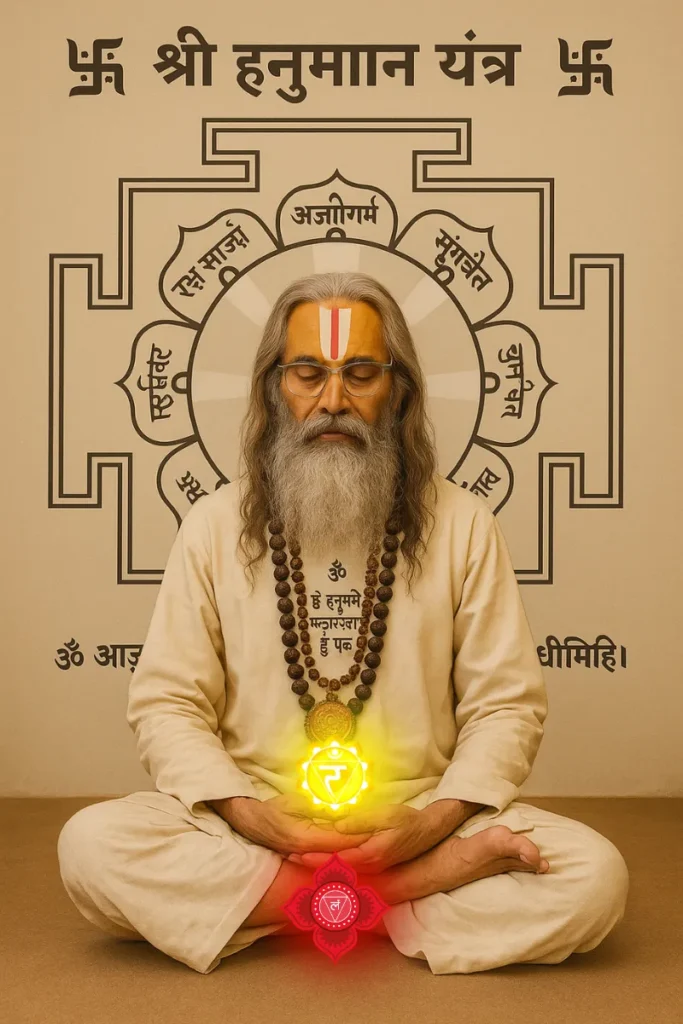
In material life, it brings success in career, protection from enemies, and improved health. The sacred vibrations of the yantra dissolve internal resistance and strengthen pranic vitality. Students and professionals who meditate upon it gain better concentration, memory, and the courage to face challenges with calm decisiveness.
For devotees walking the spiritual path, the Sri Hanuman Yantram awakens bhakti (devotion) and surrender. It softens the ego while magnifying sincerity. Regular practice before this yantra also assists in Karma Shuddhi, the purification of past karmic influences that obstruct progress. As the yantra radiates strength, devotion, and divine humility, it becomes a living presence in the home, temple, or workplace, ensuring auspiciousness and steadfast divine grace.
Structure of the Sri Hanuman Yantram
The Sri Hanuman Yantram follows an intricate geometric structure that carries both protective and awakening energies. The outermost square with four T-shaped portals represents Bhūpura, the earthly enclosure of protection symbolizing the four directions guarded by Lord Hanuman’s cosmic presence. It prevents energy dissipation during meditation and contains the spiritual force generated through mantra japa.
Inside the square are interlocking lines forming a sacred labyrinth. This symbolizes the mind’s journey inward, moving from confusion toward clarity, from duality toward divine unity. The inner lotus structure, typically with eight petals, represents the eight siddhis (mystic powers) associated with Lord Hanuman: Anima, Mahima, Garima, Laghima, Prapti, Prakamya, Ishitva, and Vashitva.
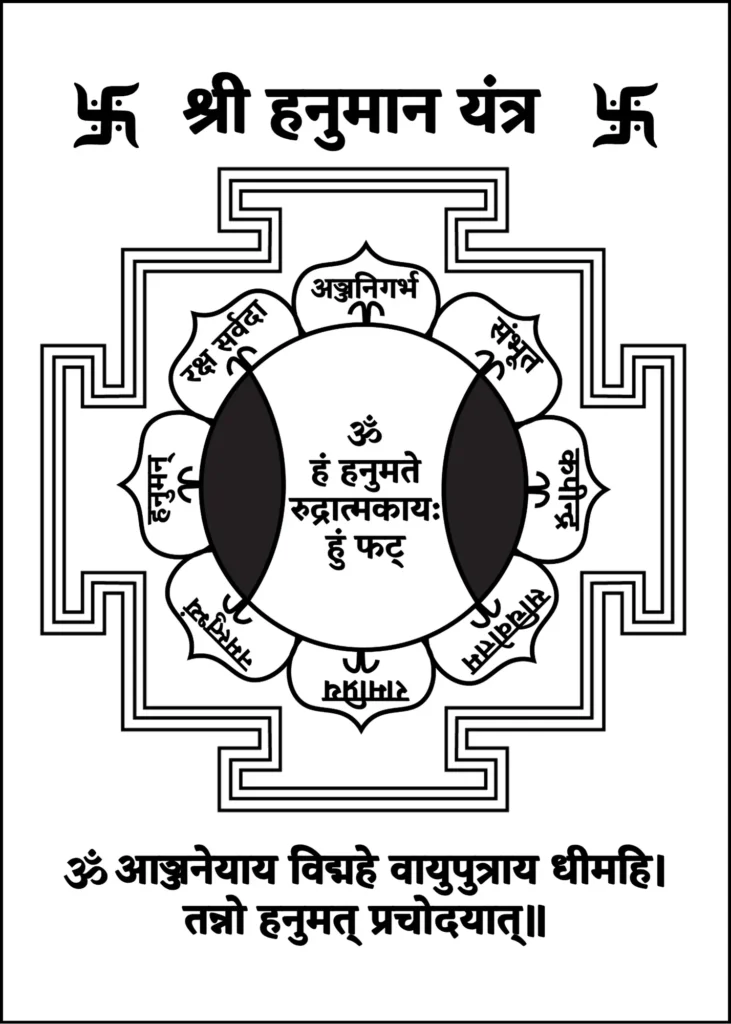
At the heart of the lotus lies the bindu, the central point where the devotee’s consciousness meets the infinite. This bindu is the symbolic seat of Lord Hanuman himself, embodying courage, discipline, devotion, and selfless service. The Sanskrit seed syllables inscribed within the petals and the mantra “Om Hreem Hanumate Rudratmakaya Hum Phat” form the living pulse of the yantra.
Each petal, line, and angle corresponds to a specific vibration of sound and color, collectively forming a psychic architecture that radiates protection, purity, and divine presence. When gazed upon meditatively, the structure leads the mind inward, calming restlessness and igniting devotion.
Geometrical Significance of the Sri Hanuman Yantram
The geometry of the Sri Hanuman Yantram is not merely symbolic but vibrationally functional. The outer square denotes the boundary of the physical realm, invoking Lord Hanuman’s role as the guardian of dharma and protector against inner and outer threats. The four portals invite the divine forces from all directions to dwell within the sacred space.
The eight-petal lotus symbolizes balance between action and contemplation. Each petal channels a siddhi of Lord Hanuman, emphasizing mastery over both physical and subtle planes. The circular enclosure at the center represents eternal consciousness, infinite yet centered, reflecting Lord Hanuman’s pure devotion and stillness amidst infinite power.
The bindu is the focal point of awakening. Meditating upon it channels the mind’s energy toward singular focus (ekāgrata), aligning one’s prana with cosmic rhythm. This geometric journey from the outer square to the bindu mirrors the aspirant’s journey from worldly distractions to divine realization.
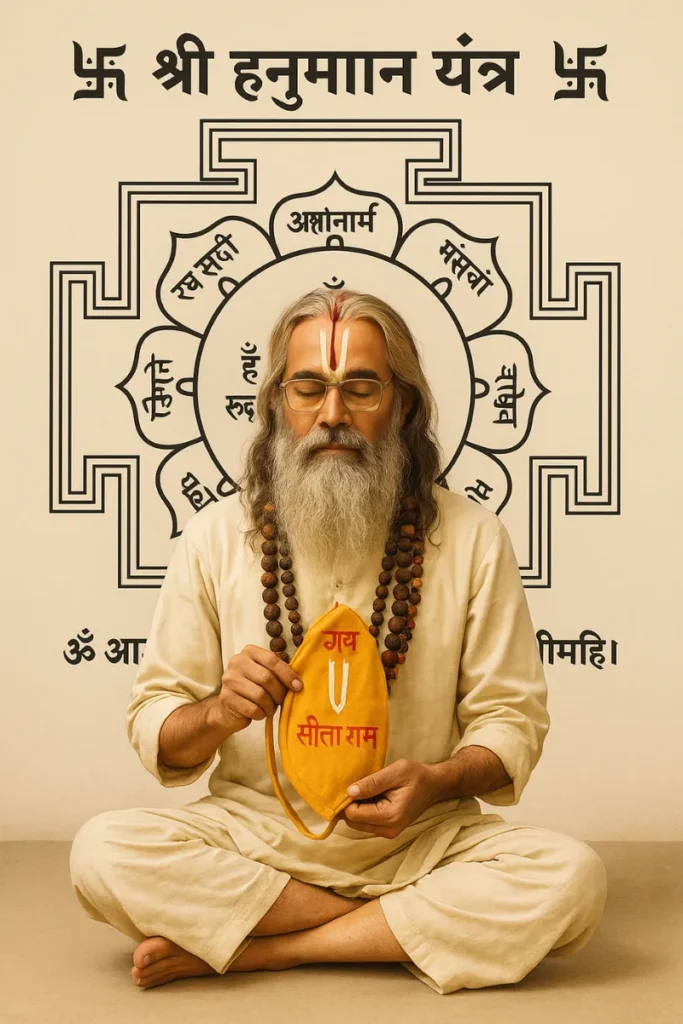
Energetically, the yantra synchronizes the Root, Solar Plexus, and Heart chakras, creating a dynamic field of courage and compassion. This harmonized current enhances aura brightness, increases physical endurance, and calms nervous agitation. Thus, the yantra becomes a living geometrical circuit that transforms chaotic mental energy into focused spiritual power.
Mantras to Activate the Sri Hanuman Yantram
Beeja Mantras:
- ॐ हं हनुमते नमः । (Om Ham Hanumate Namah)
- ॐ ह्रीं हनुमते रुद्रात्मकाय हुम फट् । (Om Hreem Hanumate Rudratmakaya Hum Phat)
Gayatri Mantras:
- ॐ आञ्जनेयाय विद्महे वायुपुत्राय धीमहि तन्नो हनुमत् प्रचोदयात् ।
(Om Aanjaneyaaya Vidmahe Vaayuputraaya Dheemahi Tanno Hanumat Prachodayat) - ॐ रुद्रावताराय विद्महे पवनसुताय धीमहि तन्नो हनुमत् प्रचोदयात् ।
(Om Rudravataraya Vidmahe Pavan Sutaya Dheemahi Tanno Hanumat Prachodayat)
To activate the yantra, one must first perform Guru Deeksha or receive guidance from a realized Guru who understands the lineage of Hanuman worship. The process involves sanctifying the yantra with pure water, sandal paste, red flowers, and lighting a ghee lamp. Chant the Beeja mantra 108 times daily while gazing at the central bindu until the yantra vibrates with a subtle warmth or presence. Over time, it becomes a personalized transmitter of Hanumanic energy that guards the devotee and amplifies spiritual focus.
Preparation of the Sri Hanuman Yantram at YantraChants.com
At yantrachants.com, the Sri Hanuman Yantram is prepared through a lineage-based spiritual process that preserves authenticity and sanctity. Each yantra is meticulously hand-inscribed on Bhojpatra, a sacred Himalayan bark known for its high conductivity of mantra vibrations. The Bhojpatra is purified with Vedic herbs and coated with natural ashtagandha paste before inscription.
The yantra is written by initiated artisans under the supervision of Guruji Shri Damodar Das ji Maharaj, who performs specific Prāṇa Pratiṣṭhā rituals to awaken its energy. During creation, mantras such as “Om Hreem Hanumate Rudratmakaya Hum Phat” are continuously recited, infusing the yantra with vitality.
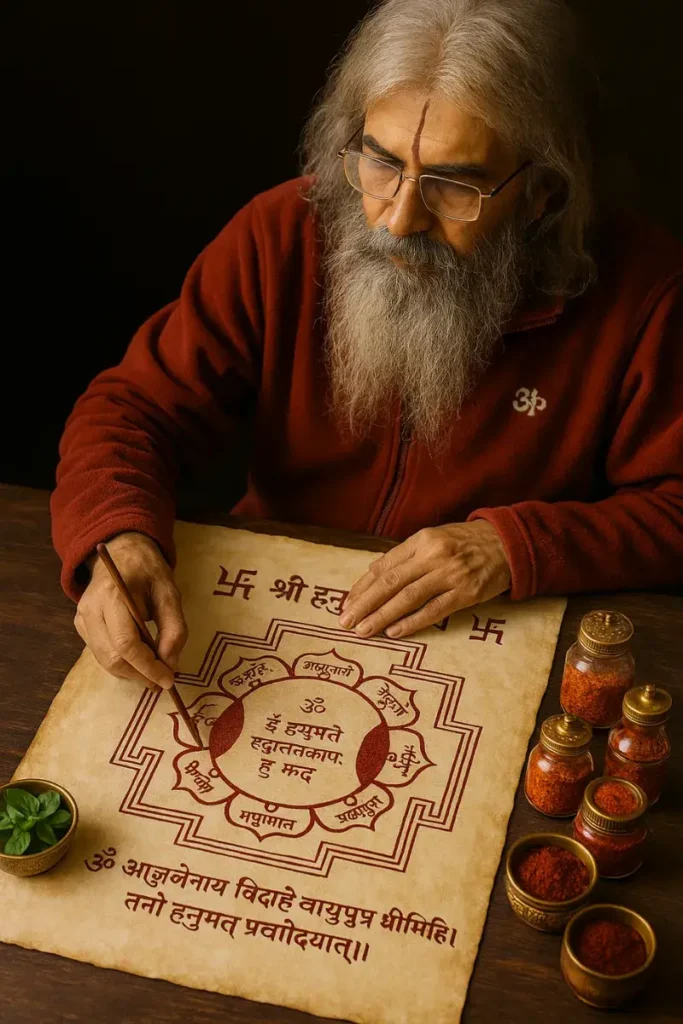
Once complete, the yantra undergoes nyāsa (energy placement) and Raksha pujan (protective sealing) to ensure stability. It is finally wrapped in red silk and sealed within a copper or silver frame, symbolizing Lord Hanuman’s indestructible shield.
The process reflects the philosophy that a yantra is not merely a diagram but a living embodiment of spiritual intelligence. By combining scriptural precision, devotional chanting, and Guru paramparā guidance, YantraChants ensures that each Bhojpatra yantra carries an active pulse of divine energy, ready to support the seeker’s path.
Importance of a Self-Realized Guru
A Self-Realized Guru is the living bridge between mantra and realization. In the context of the Sri Hanuman Yantram, the Guru serves as the divine conductor through whom Lord Hanuman’s blessings flow. Without the Guru’s grace, the yantra remains a potential; with the Guru’s touch, it becomes a living presence.
The Guru’s role is to awaken the śraddhā (deep faith) of the aspirant and attune their energy to the yantra’s rhythm. Through personal guidance, the Guru helps the devotee purify the mind, remove doubt, and focus intention. When this alignment occurs, the yantra begins to reflect the devotee’s consciousness back as light, wisdom, and protection.
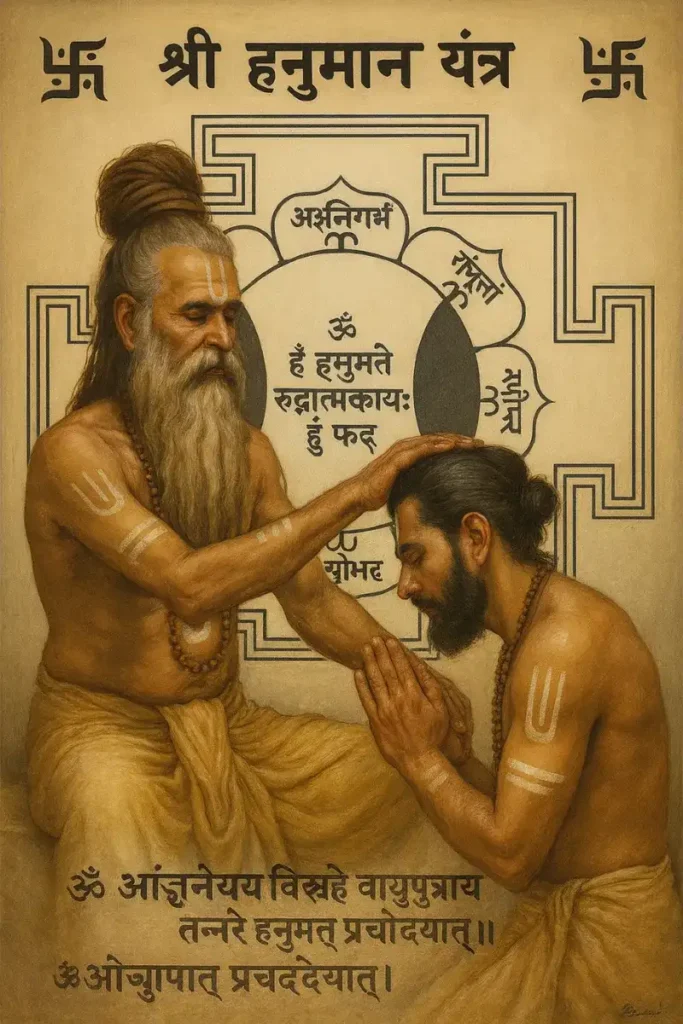
In Hanumanic worship, this relationship embodies the spirit of seva (service) and bhakti (devotion). The yantra becomes a daily reminder of surrender, to serve with humility and courage, just as Lord Hanuman served Lord Rama. Through the Guru’s guidance, the yantra’s energy integrates seamlessly into the practitioner’s life, transforming ordinary acts into sacred service.
Rare Observations in Using the Sri Hanuman Yantram
Many practitioners report that regular use of the Sri Hanuman Yantram results in subtle yet tangible spiritual experiences. These may include inner calmness, sudden clarity during crises, protection from accidents, or intuitive insights during prayer. Some experience warmth or radiance near the altar, symbolizing the yantra’s activation.
During festivals like Hanuman Jayanti, the yantra’s energy becomes pronounced. Lighting a ghee lamp and reciting “Bajrang Baan” or “Hanuman Chalisa” before it enhances spiritual potency. The yantra also serves as a remedy for Saturn-related obstacles and mental unrest.
A rare observation among advanced sadhakas is that the yantra responds to emotional states. When approached with sincerity and surrender, it radiates peace. When neglected or approached with restlessness, it appears inert. This dynamic relationship reminds the devotee that divine presence is not mechanical but responsive, it mirrors consciousness itself.
Devotional Significance of Lord Hanuman
Lord Hanuman represents the eternal flame of devotion (bhakti). He is the perfect disciple, warrior, and servant of truth. His life teaches unwavering loyalty, humility, and strength born from surrender. The Sri Hanuman Yantram encapsulates this bhakti, enabling the devotee to internalize Lord Hanuman’s virtues.
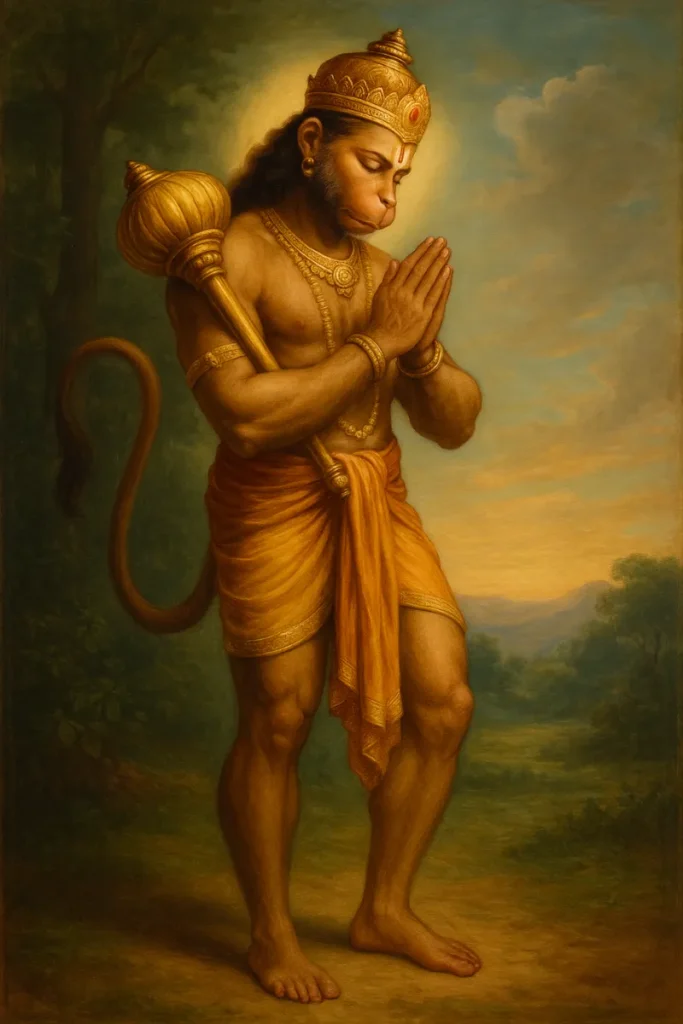
In the path of devotion, Lord Hanuman symbolizes spiritual intelligence in action. His devotion to Lord Rama is not emotional dependence but enlightened surrender, acting as an instrument of divine will. The yantra becomes the medium to cultivate this consciousness: courage without pride, devotion without expectation, and strength without aggression.
To meditate on the yantra is to awaken the Hanuman within, the infinite potential that serves truth and destroys falsehood. It is devotion manifest as divine power, where humility becomes strength and love becomes protection.
How to Combine the Sri Hanuman Yantram with “Bajrang Baan” (Practical Guide)
1) Preparation & Sankalpa
- Place the Sri Hanuman Yantram on a clean altar facing East or North-East (Ishanya). Sit facing East if possible.
- Begin on Thursday, Friday, or Ekadashi. Keep the space uncluttered; light a diya or dhūpa and offer simple sāttvik naivedyam, flowers, a diya, and clean water.
- Set a calm, steady sankalpa (intention) aligned with your need: Protection, Prosperity, Health, Knowledge, Success, Devotion, Business Growth, Obstacle Removal, Spiritual Progress, or Peace.
2) Daily Practice Flow
- Begin with silent breath awareness for 1–3 minutes. Focus softly on the bindu (center) of the yantra.
- Recite a portion of Bajrang Baan, maintaining rhythmic awareness of the syllables.
- Follow this with focused japa of 2 Sri Hanuman Mantras. Let the yantra’s geometry guide your attention from petals to bindu.
- Conclude with gratitude and quiet meditation.
3) Integration & Cautions
- Maintain a rhythm of 40–90 days. Avoid overexertion; let devotion mature naturally.
- When traveling, carry a small photo of the yantra or visualize it mentally. Resume full worship respectfully upon return.
- Keep conduct sāttvik. Seek guidance from your Guru if uncertain. Ensure the altar remains peaceful, uncluttered, and reverent.
FAQs on Sri Hanuman Yantra and Bajrang Baan Practice
Q1. What is the Sri Hanuman Yantram and how does it complement Bajrang Baan?
A. The Sri Hanuman Yantram represents the living geometry of Lord Hanuman’s energy, courage, devotion, and protection. The Bajrang Baan is a verbal current of the same power. When used together, mantra and yantra form a complete circuit: the mantra invokes divine vibration, and the yantra anchors it into physical and subtle space. The result is enhanced protection, fearlessness, and rapid spiritual purification.
Q2. How should I place the Sri Hanuman Yantram at home or office for best results?
A. Place the Sri Hanuman Yantram on a clean altar facing East or North-East (Ishanya). If kept in an office, ensure it faces your seat or desk direction. The space should remain uncluttered and serene. Always keep a diya or incense nearby to maintain a sattvik atmosphere. Avoid placing it directly on the floor, use a copper plate or red cloth as a base.
Q3. Which direction should I face during practice and why?
A. During worship or meditation, face East to align with the solar current representing awakening and illumination. Facing East harmonizes your energy field with cosmic order. Facing North-East connects with Ishanya, the direction of wisdom and divine insight, enhancing concentration and spiritual attunement.
Q4. Which day and time are ideal to begin, and how strict must I be?
A. Begin on a Thursday, Friday, or Ekadashi, as these days are sacred to Lord Hanuman and Lord Vishnu. The early morning Brahma Muhurta (4:00–6:00 AM) is ideal, but evenings during sunset are also auspicious. Consistency matters more than perfection, maintain sincerity and regularity rather than strict timing.
Q5. What are the most appropriate offerings for this practice?
A. Offer simple, sattvik items, fresh flowers (especially marigold or jasmine), pure ghee lamp, sandal paste, betel leaf, clean water, and fruits. Lord Hanuman values purity of heart over opulence. Avoid non-vegetarian food or tamasic substances near the altar, and conclude each offering with gratitude and a brief prayer of surrender.
Q6. How many daily repetitions of 2 Sri Hanuman Mantras are recommended for steady progress?
A. beginners, chanting 108 repetitions of either “Om Ham Hanumate Namah” or “Om Hreem Hanumate Rudratmakaya Hum Phat” is sufficient. Advanced sadhakas may extend to 11 or 21 malas daily. The emphasis should always be on awareness and bhakti, not on mechanical counting. Each syllable should be felt as a heartbeat of Lord Hanuman within.
Q7. How do I correctly set a sankalpa that aligns devotion with practical life?
A. A sankalpa is a sincere intention that bridges devotion and duty. Sit quietly before the yantra, mentally declare your purpose, for example: “May Lord Hanuman bless me with strength, clarity, and protection so that I may serve truth and fulfill my dharma.” Keep it short, selfless, and anchored in spiritual steadiness rather than desire.
Q8. Can I split practice into multiple short sessions if I lack a single long window?
A. Yes. You can divide your practice into two or three smaller sessions, morning, noon, and night. The energy remains continuous as long as your attitude is devotional. Before each session, bow mentally to Lord Hanuman and resume chanting where you left off. Devotion thrives through consistency, not duration.
Q9. How do I cleanse or re-energize the Sri Hanuman Yantram periodically?
A. Every Tuesday or Saturday, gently wipe the yantra with a clean, damp cloth, apply a bit of sandal paste, and light a ghee diya in front of it. Recite the Hanuman Gayatri or Bajrang Baan to refresh the energy field. Avoid using chemical cleaners; instead, use rose water or sacred water (Ganga jal) to maintain sanctity.
Q10. What if my altar space is small, how do I avoid clutter while keeping devotion strong?
A. Even in a compact space, keep clarity and cleanliness. One small framed yantra, a diya, and a flower are enough. If physical space is limited, create mental space, ensure your focus remains centered on devotion rather than decoration. A minimalist altar radiates purity when the heart is sincere.
Q11. How do I combine recitation of Bajrang Baan with Yantra-focused japa?
A. Begin with the Bajrang Baan, which purifies the mind and invokes divine protection. Then shift into mantra japa before the yantra, focusing on its bindu (center). This sequence flows from purification to empowerment, first clearing obstructions, then channeling divine strength through the yantra’s geometry.
Q12. Should I recite Bajrang Baan before or after 2 Sri Hanuman Mantras, or alternate them?
A. Ideally, recite Bajrang Baan first, as it clears subtle blockages and prepares your consciousness. Then chant the 2 Hanuman Mantras for deeper activation. On special days like Hanuman Jayanti or Tuesdays, you may alternate between verses and mantras to harmonize rhythm and intensity.
Q13. What are signs (inner/outer) that the Sri Hanuman Yantram–Bajrang Baan synergy is working?
A. Common signs include increased calmness, confidence, and spontaneous devotion. You may feel warmth near the altar, clearer dreams, or quicker resolution of obstacles. Outer signs may appear as improved circumstances or unexpected protection. The surest indication, however, is an inner sense of unshakable faith and contentment.
Q14. How to select a steady section or verse from Bajrang Baan for daily use?
A. Choose a section that resonates with your need, for protection, focus on verses invoking Lord Hanuman’s fiery aspect; for peace, choose those describing his compassion and wisdom. Consistency is key, reciting the same section daily stabilizes your mental vibration and deepens connection with the yantra’s energy.
Q15. How do I handle pronunciation concerns, IAST/Devanagari, without anxiety?
A. Pronounce with sincerity rather than perfection. The intention (bhāva) carries more weight than phonetic precision. If you are unsure, listen to authentic recitations to guide rhythm and tone. Lord Hanuman values devotion over linguistic expertise, purity of heart is the true mantra.
Q16. Do I need Guru Deeksha for advanced results? What if I do not have a Guru?
A. Guru Deeksha accelerates the yantra’s awakening and ensures safe energy flow. However, if you do not have a Guru, you can still begin humbly with prayer: “May my inner Guru, the Lord within, guide me.” Over time, the sincerity of your practice will attract the right Guru or divine guidance naturally.
Q17. Are there restrictions on who can keep the Yantra or recite the text?
A. The Sri Hanuman Yantram is universal, open to all who approach with reverence and pure intention. There are no caste, gender, or age barriers. Even householders and working individuals may keep it, provided they maintain cleanliness, faith, and respect. The only restriction is misuse or ego-based ritualism.
Q18. Is fasting or vrata required, or purely optional?
A. Fasting is optional. If health allows, you may observe a light fast or fruit diet on Tuesdays or Saturdays to intensify focus. However, Lord Hanuman values service and devotion more than austerity. If fasting weakens the body, practice moderation instead. A peaceful, steady mind is the best offering.
Q19. What should I do if I miss a day or travel unexpectedly?
A. Simply resume from where you left off. There is no loss in continuity if your devotion remains alive. During travel, keep a small photo of the yantra or visualize it mentally before sleep. On returning, light a diya, recite the Hanuman Gayatri, and reestablish your rhythm with gratitude.
Q20. How should I respectfully retire a damaged or faded Yantra?
A. If the yantra becomes worn or damaged, do not discard it casually. Wrap it in clean red cloth, offer flowers, and recite the Hanuman Gayatri. Bury it beneath a peepal tree or flow it respectfully in a clean river. Then install a new yantra with renewed sankalpa and devotion.
Q21. Can I offer tulsi and observe Ekadashi to support this sādhana?
A. Yes. Offering Tulsi leaves and observing Ekadashi vrat enhances sattvik vibrations and pleases Lord Vishnu and Lord Hanuman alike. Tulsi represents purity of devotion, while Ekadashi cultivates discipline. Together, they harmonize the energy field around the yantra and amplify results.
Q22. How do I hold a calm sankalpa without attachment to outcomes?
A. Perform your practice with shraddhā (faith) and vairāgya (detachment). Set your sankalpa clearly, then release it to divine will. The fruit will manifest in perfect timing. Lord Hanuman teaches surrender through strength, trust that whatever unfolds through your practice is already aligned with divine order.
Q23. How long does it typically take to notice changes, and how should I review progress?
A. Subtle changes may begin within 11 to 21 days, though deeper transformation often takes 40 to 90 days. Review progress by observing emotional steadiness, clarity, and reduced anxiety rather than external results alone. True success lies in feeling Lord Hanuman’s presence as inner guidance, strength, and peace.
Results that follow the Bajrang Baan
When a person undertakes even this minimum period of the chaupais recitation, one shall receive astounding results in one’s life. People harassed by enemies or inimical relatives find immediate relief when they chant the Bajrang Baan. There is one caution that one needs to take while chanting the chaupais.
The benefits of Bajrang Baan in English explanation reminds us that these verses bring alignment between human effort and divine grace. Many devotees experience visible changes in luck, protection, and relationships. Faith, consistency, and purity of intention multiply its effects manifold.
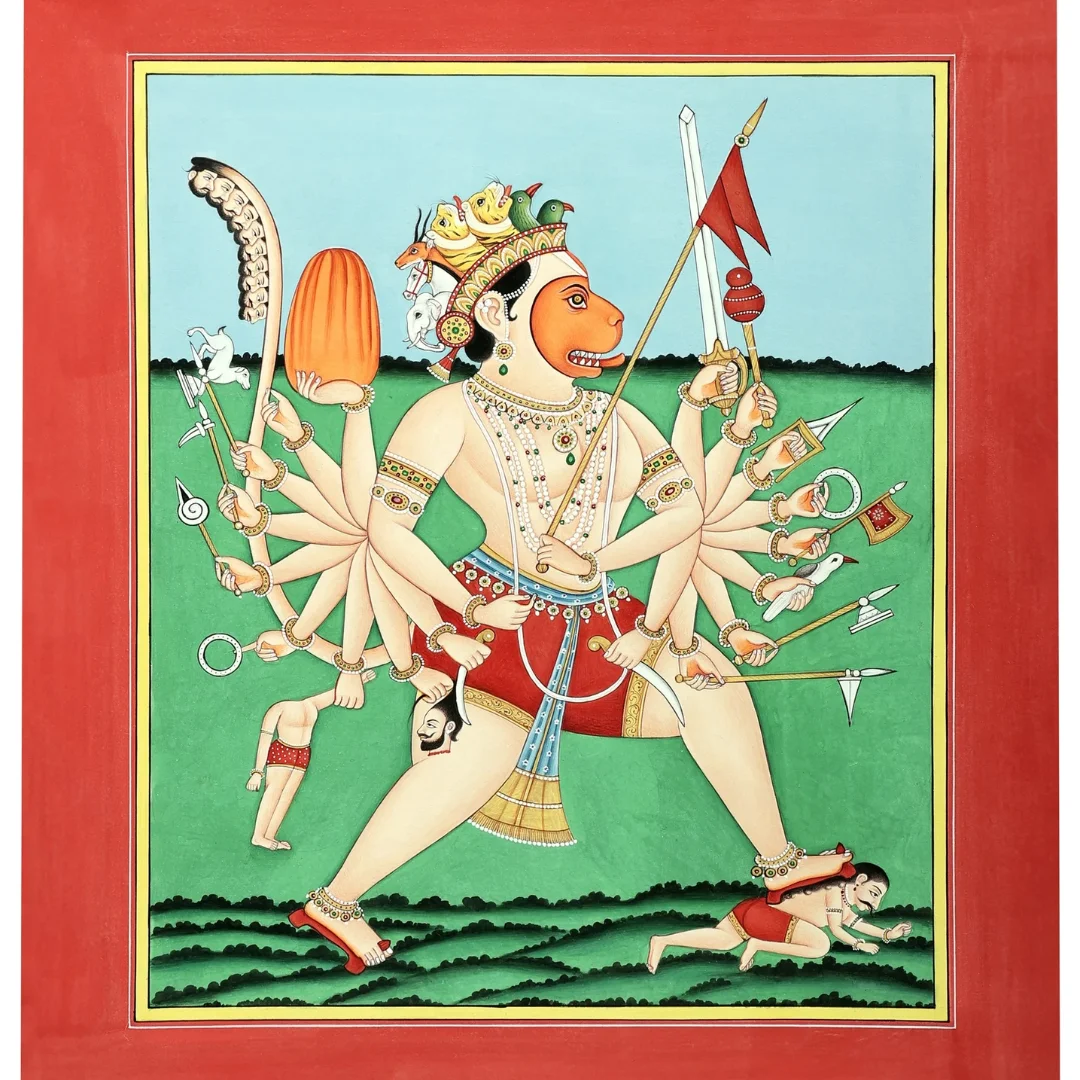
If a person is not a devotee of Hanumanji Maharaj and is surrounded by problems, he can chant the chaupais. This is because the Bajrang Baan is a Tantrik Mantra. The mantra has verses where the reciter reminds Hanumanji Maharaj about His devotion to Sri Rama and Srimati Seeta Devi.
Why should we not make Bajrang Baan a Habit Mantra
The reciter is urging Hanumanji that if he is a true devotee of Sri Ram Sitaji, He should help the reciter. Such a statement should only be made by a person stuck in a great mess because we are inciting the devotion and power of Hanumanji Maharaj. There is no need for anyone to remind the greatest devotee about his devotion to His Lord unless the reciter is in dire straits.
One should avoid unnecessarily invoking Hanumanji Maharaj through the chaupais Instead, one can chant the Hanuman Chalisa or Hanuman Sankatmochan Ashtaka. The chaupais should only be used under very severe conditions.
Who Should Avoid Chanting Bajrang Baan
Thus, non-devotees of Hanumanji Maharaj should avoid reciting the chaupais without reason. However, a person with faith in Hanumanji Maharaj, surrounded by multiple problems, can request Hanumanji to solve his problems through the chaupais. Once the problem is overcome, he can stop the regular chanting of the Bajrang Baan.
On the other hand, if a person is a big devotee of Hanumanji Maharaj, he can chant the chaupais out of love without an ulterior motive.
Wearing a Hanuman locket or kavach during Bajrang Baan chanting further amplifies the energy. The Hanuman locket benefits include shielding the wearer from unseen negative forces, strengthening willpower, and deepening concentration during prayer. The Hanuman kavach / talisman benefits add a protective vibration to one’s aura, especially during intense sadhana or while facing life obstacles. yantrachants.com prepares the talisman for its devotees according to its authentic Sampradaya system.
Who can chant the Bajrang Baan without break
The only motive of such a devotee of Hanumanji is to attain the love and attention of Hanumanji. Only in such a case can a devotee chant the Hanuman Baan without breaks. The chaupais is thus believed to be a powerful mantra that is undertaken to cure dangerous life problems. Once the life problems are neutralized, one should stop chanting the chaupais.
In such uninterrupted devotion, the benefits of Hanuman Baan multiply manifold. It strengthens the devotee’s connection to Hanumanji’s divine consciousness, ensuring protection across lifetimes. The mantra becomes not just a tool but a living force guiding the devotee through every karmic storm.

But an ardent devotee of Hanumanji Maharaj has no restrictions since such a devotee only yearns for Hanumanji’s love. Now I shall reveal a powerful method of recitation of the chaupais, especially for people troubled by enemies, relatives, or who have relationships or severe financial problems.
It is ideal if you chant the chaupais after 9:00 PM. Chanting the chaupais on Tuesdays and Saturdays is very beneficial. One should take a bath and wear red clothes.
For devotees in South India, understanding the Bajrang Baan Telugu meaning helps connect more deeply with the mantra’s essence. Translating and chanting it with awareness of its meaning ensures that the seeker not only repeats the sound but also invokes the power hidden within each syllable. The Telugu rendition carries the same intensity and spiritual charge as the original.
Process of chanting Bajrang Baan
They should light a lamp in a mud container filled with clarified butter. The wick of the lamp should face the west direction. Use a sitting asana made of wool and face the west direction. Chanting the Hanuman Chalisa before reciting the chaupais are auspicious.
Chant the Bajrang Baan 11 or 21 times at a stretch every evening after 9:00 PM. As you chant the chaupais, pray to Hanumanji Maharaj to relieve you from the current problems. One should observe celibacy as you take up the sadhana of chanting the chaupais.
During this sacred process, the benefits of Bajrang Baan begin to unfold almost tangibly. Devotees report emotional calmness, sudden solutions to long-standing problems, and divine dreams guiding them on their next steps. This powerful practice must, however, always be undertaken with humility and faith in Hanumanji’s infinite compassion.
Auxiliary mantras for Chanting the Hanuman Mantra
Women should chant the Khadgamala Stotram or Lalitha Sahasranamam and pray to Devi before invoking the power of Hanumanji Maharaj. This is mandatory. Hanumanji’s power is tremendously masculine, and invoking it, can affect the female body if the female force is not invoked simultaneously. Hence it becomes vital to invoke Devi Shakti before one invokes Hanumanji Maharaj.
In addition to mantra recitation, wearing a Hanuman kavach or sacred talisman protects the sadhaka from psychic interference and strengthens the solar plexus chakra. These Hanuman kavach / talisman benefits act as subtle armor, keeping one grounded while invoking Hanumanji’s dynamic power. Such spiritual aids amplify mantra efficacy and stabilize inner energy.

Hanumanji is also considered the ardent servant of Devi. She shall regulate his powers if Devi Shakti is invoked before chanting the chaupais. Generally, it is necessary to compliment a masculine mantra with a feminine Stotram or mantra.
The chaupais should be considered a temporary yet powerful practice to overcome life-threatening problems. It works best on such problems. The chaupais can be considered similar to the life-saving drug, rendered to a patient fighting for life in the intensive care unit of life situations.
When chanted or heard during times of distress, the benefits of listening to Bajrang Baan provide immediate psychological strength and reassurance of divine protection. The sound vibrations restore balance in the aura, invite Hanumanji’s blessings, and neutralize unseen negative forces surrounding the devotee.